{“content”: “
RIYADH u2014 Saudi Arabia is routing its Hormuz position through French diplomatic infrastructure because every direct negotiating track is structurally closed to Riyadh. The May 31 call between Crown Prince Mohammed bin Salman and President Emmanuel Macron u2014 whose Saudi Press Agency readout specified discussions on “mechanisms and measures to ensure maritime security and freedom of navigation amid ongoing regional challenges” u2014 used the precise vocabulary of the Hormuz dispute in a bilateral format that gives Saudi Arabia deniability while placing its position inside a diplomatic architecture that simultaneously touches Tehran, the 50-nation coalition, and the UN Security Council.
n
The u00c9lysu00e9e published no corresponding readout. France’s presidential diary for May 31 contains no entry for the call, an asymmetry consistent with a conversation requested by Riyadh, not Paris. Saudi Arabia’s Ministry of Foreign Affairs has issued no public statement on the Hormuz blockade, IRGC ceasefire violations against Kuwait, or the PGSA toll system for more than ten consecutive days. In that silence, the MBS-Macron call is the only channel through which Riyadh addressed maritime navigation u2014 and it chose Paris, not Washington, Muscat, or Northwood.
n
The Middle East briefing 3,000+ readers start their day with.
One email. Every weekday morning. Free.
Table of Contents
n
- n
- The Call the u00c9lysu00e9e Did Not Announce
- Why Is Saudi Arabia Absent from Every Hormuz Negotiating Track?
- What Makes France the Only Power That Can Carry Saudi Arabia’s Position?
- A Channel Built Before the War
- How Does Iran Read the French Channel?
- What Does Saudi Arabia’s Silence Cost?
- The Position France Is Carrying
- Why Do Bilateral Calls Work When Multilateral Forums Cannot?
- Frequently Asked Questions
- n
n
n
n
n
n
n
n
n
n
n
n
n
The Call the u00c9lysu00e9e Did Not Announce
n
The Saudi Press Agency released its readout on the evening of May 31. The communiquu00e9 stated that the two leaders discussed “bilateral cooperation relations,” “developments in the region and diplomatic efforts aimed at reinforcing security and stability,” and u2014 in language that maps directly onto the Hormuz dispute u2014 “mechanisms and measures to ensure maritime security and freedom of navigation amid ongoing regional challenges.” The last phrase tracks the operative vocabulary of UN Security Council Resolution 2817, the UK-France coalition mandate, and Saudi Foreign Minister Prince Faisal bin Farhan’s own May 20 statement on the Strait.
n
No corresponding communiquu00e9 appeared on the u00c9lysu00e9e website. France’s presidential diary for May 31 through June 1 contains no entry for the call. Arab News and Asharq al-Awsat ran short, SPA-sourced reports with no analysis of the maritime navigation language. Reuters, the Financial Times, and Bloomberg indexed nothing on the exchange, despite publishing extensive Hormuz coverage during the same week.
n
The asymmetry u2014 Saudi communiquu00e9, French silence u2014 follows a pattern in which the initiating party publicizes a call to demonstrate diplomatic activity while the receiving party declines to frame the conversation. Macron has reason to avoid publicizing a call that Tehran could read as coordination with a Saudi government that has launched strikes on Iranian territory from Prince Sultan Air Base while maintaining no formal war declaration.
n
n
Why Is Saudi Arabia Absent from Every Hormuz Negotiating Track?
n
Saudi Arabia holds no seat at any of the three active Hormuz negotiating architectures. The US-Iran direct track u2014 running through a memorandum of understanding that has gone unsigned for 106 days u2014 is bilateral by design, with Saudi interests structurally present but formally unrepresented. The Oman co-management track, in which Tehran and Muscat are drafting a bilateral framework for Strait governance under a 1974 boundary treaty, excludes all GCC states except Oman. The UK-France 50-nation Hormuz Maritime Navigation Initiative, co-chaired by UK Defence Secretary John Healey and French Armed Forces Minister Catherine Vautrin, counts Bahrain, the UAE, and Qatar among its GCC signatories. Saudi Arabia sent no representative to the April 17 u00c9lysu00e9e summit that launched the initiative, holds no position in the Northwood command structure, and has made no military commitment to the coalition. On June 1, Iran demonstrated precisely why Saudi exclusion is structural rather than incidental: the IRGC struck Ali Al-Salem Air Base in Kuwait while simultaneously allowing the first commercial vessel through Hormuz u2014 a dual-track compression of leverage that Iran Opened Hormuz for Iraq and Bombed Kuwait for America on the Same Morning analyses in full, eight days before the $21.89 billion Aramco dividend falls due. France is one proxy channel for Saudi Hormuz interests; the broader diplomatic response is taking structural form in the Saudi quadrilateral with Egypt, Pakistan, and Turkey — three foreign ministers’ meetings in 31 days, no communiqués, precisely the format of institutionalised coordination Riyadh cannot pursue through any Hormuz track it has been excluded from.
n
The exclusion is structural, not incidental. The UK-France coalition was deliberately constructed outside the US-led Combined Maritime Forces, where Saudi Arabia holds membership. Building a parallel architecture u2014 one that could engage with Iran on the basis of “deconfliction” rather than “enforcement” u2014 required omitting the country Iran frames as a co-belligerent. Any Saudi presence in the coalition would give Tehran grounds to treat the entire initiative as a hostile formation rather than a maritime safety mechanism, undermining the proposition Macron articulated in Nairobi on May 11: that the mission operates “in a coordinated way with Iran.”
n
Saudi Arabia cannot join the US-Iran track without subordinating its position to a bilateral deal over which it has no negotiating power. It cannot join the Oman track because Iran’s invitation extended exclusively to Muscat u2014 “the Strait has nothing to do with the US,” Foreign Ministry spokesman Esmail Baqaei told Tasnim, a formulation that excludes all third parties. And it cannot join the UK-France coalition without acknowledging a military posture its own MOFA has declined to confirm. The result is a country that has absorbed 575 drone attacks, 42 ballistic missiles, and 7 cruise missiles since February 28 while holding no formal position in any of the forums negotiating the conflict’s resolution.
n
What Makes France the Only Power That Can Carry Saudi Arabia’s Position?
n
France occupies a diplomatic position no other major power replicates. It co-leads the 50-nation Hormuz coalition, giving it operational authority over the multinational maritime response. It maintains an active direct channel with Tehran u2014 Macron called Iranian President Masoud Pezeshkian on March 8, 2026, becoming the first Western leader to contact Tehran after the war began, and spoke with him again in early May with a specific passage-for-negotiations proposal. It is deepening defense cooperation with Riyadh, including an $8 billion Rafale deal for 54 aircraft under active negotiation. And it holds a permanent UN Security Council seat, with veto power over any Hormuz-related resolution.
n
No other power occupies all four positions simultaneously. The United Kingdom co-leads the coalition but lacks the Tehran channel and the Riyadh defense relationship at comparable depth. China maintains contact with both Tehran and Riyadh but sits outside the coalition and has shown no interest in maritime enforcement. The United States runs the direct Iran track but cannot carry Saudi positions without converting them into American demands u2014 a transformation that subjects Saudi interests to domestic American politics, where senators like Cruz, Cotton, and Graham are actively working to block any MOU that does not include full dismantlement. The simultaneity of diplomacy and military action was underscored on June 1, when CENTCOM struck Iranian drone C2 infrastructure at Goruk and Qeshm Island while France’s back-channel remained the only active Western line into Tehran.
n
n
“Co-led with the British, bringing together 50 countries and international organisations to enable, in a coordinated way with Iran and by deconflicting the situation with all the countries of the region and the United States, the resumption of maritime traffic as soon as conditions allow.”
n
Emmanuel Macron, Nairobi press conference, May 11, 2026n
n
n
No American or Saudi official has used equivalent language in any public statement on the Strait.
n
n
A Channel Built Before the War
n
The May 31 call did not create the Saudi-French Hormuz channel. It activated an institutional architecture that predates the 2026 conflict. Saudi Arabia and France co-chaired the UN High-Level Conference on Palestinian Statehood in New York on July 28-30, 2025, establishing a joint diplomatic format above the bilateral level u2014 the first time Riyadh paired institutionally with a P5 member outside the US-Saudi relationship for a multilateral initiative.
n
The war accelerated a defense relationship that was already deepening. French Armed Forces Minister Catherine Vautrin met Prince Khalid bin Salman in Riyadh on March 25, 2026 u2014 four weeks into the conflict u2014 to discuss expanding military cooperation “across air, naval, and intelligence domains.” Vautrin “explicitly condemned Iran’s repeated attacks against Saudi territory,” language that no other European defense minister had used. The Rafale negotiations, which had been proceeding at commercial pace before February 28, acquired strategic urgency after the war exposed Saudi Arabia’s dependence on an American supply chain delivering interceptors on an 18-month timeline while Saudi Arabia’s remaining PAC-3 inventory had dropped to an estimated 80-150 rounds.
n
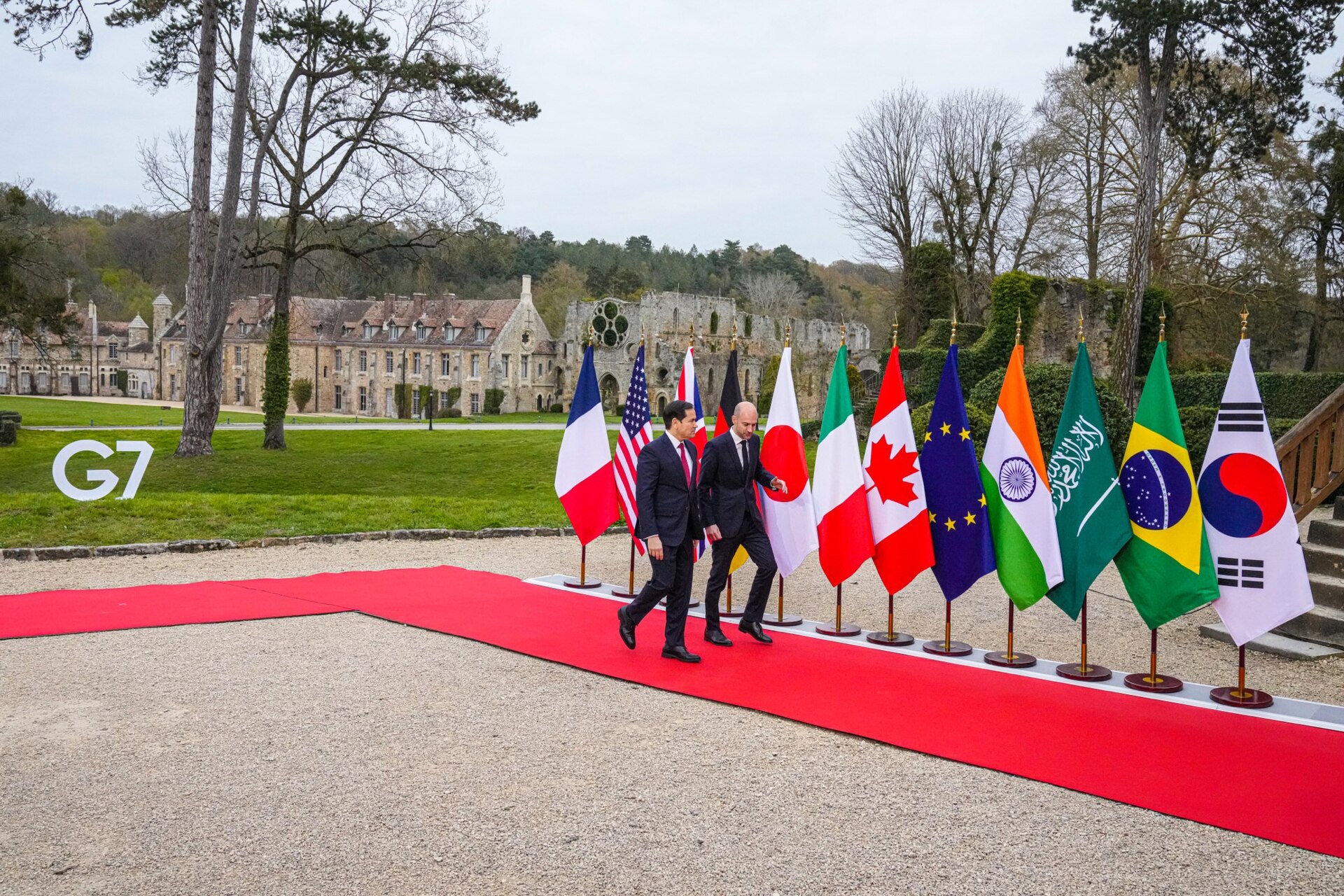
The following day, March 26, France hosted the G7 Foreign Ministers’ meeting at Abbaye des Vaux-de-Cernay. Bin Farhan was present when ministers discussed “efforts to secure maritime routes and shipping, including in the Strait of Hormuz” u2014 the first multilateral forum in which Saudi Arabia participated in a Hormuz discussion under French institutional sponsorship.
n
By April 11, the bilateral language had crystallized. A joint communiquu00e9 between Paris and Riyadh called for “full and safe freedom of navigation” without endorsing the US blockade. France and the UK had publicly declined to participate in the blockade, a position that allowed Paris to articulate opposition to the PGSA toll architecture that Saudi Arabia itself could not voice. The communiquu00e9 was the first Saudi bilateral statement to address Hormuz through the language of international maritime law rather than through the lens of the US-Iran confrontation.
n
How Does Iran Read the French Channel?
n
Tehran does not treat France as a neutral actor. Iranian criticisms focus on three specific French actions: triggering the E3 JCPOA snapback mechanism in August 2025, failing to condemn the June 2025 military strike on Iran, and u2014 in Tehran’s framing u2014 “using the Security Council to legitimize US actions.” Deputy Foreign Minister Kazem Gharibabadi warned in May that any French or British naval deployment near Hormuz would face “a decisive and immediate response.” Iran demands “tangible European measures to lift the sanctions imposed on Iran” before any substantive engagement, according to Eurasia.ro’s May 21 analysis of Tehran’s European diplomacy posture.
n
The adversarial framing coexists with operational engagement. On May 21, Iran’s Ambassador to France, Mohammad Amin-Nejad, gave a one-hour interview from his Paris residence to Bloomberg discussing Iran’s strategy for “monetizing the Strait of Hormuz” and its relations with Arab Gulf neighbors. The choice of venue was not incidental. Tehran uses Paris as a controlled disclosure channel for positions it cannot or will not direct at Washington u2014 willing to pass messages through French diplomatic space while formally rejecting French neutrality.
n
Fortune reported on March 7 that “several European and Middle Eastern nations” were backing Saudi back-channel efforts toward Iran, citing unnamed European officials. France holds the four-point position u2014 coalition co-chair, Tehran channel, Riyadh defense partner, P5 seat u2014 that no other named nation in that report occupies.
n
The structural ambiguity serves both sides. Macron’s May formula treats Hormuz as a bargaining chip for the nuclear file u2014 a framing Tehran finds more engaging than the American “unrestricted navigation” demand. If Saudi Arabia’s Hormuz position is traveling through Paris, it moves through the same diplomatic infrastructure Iran is already using, which may explain why neither side has exposed the mechanism.
n
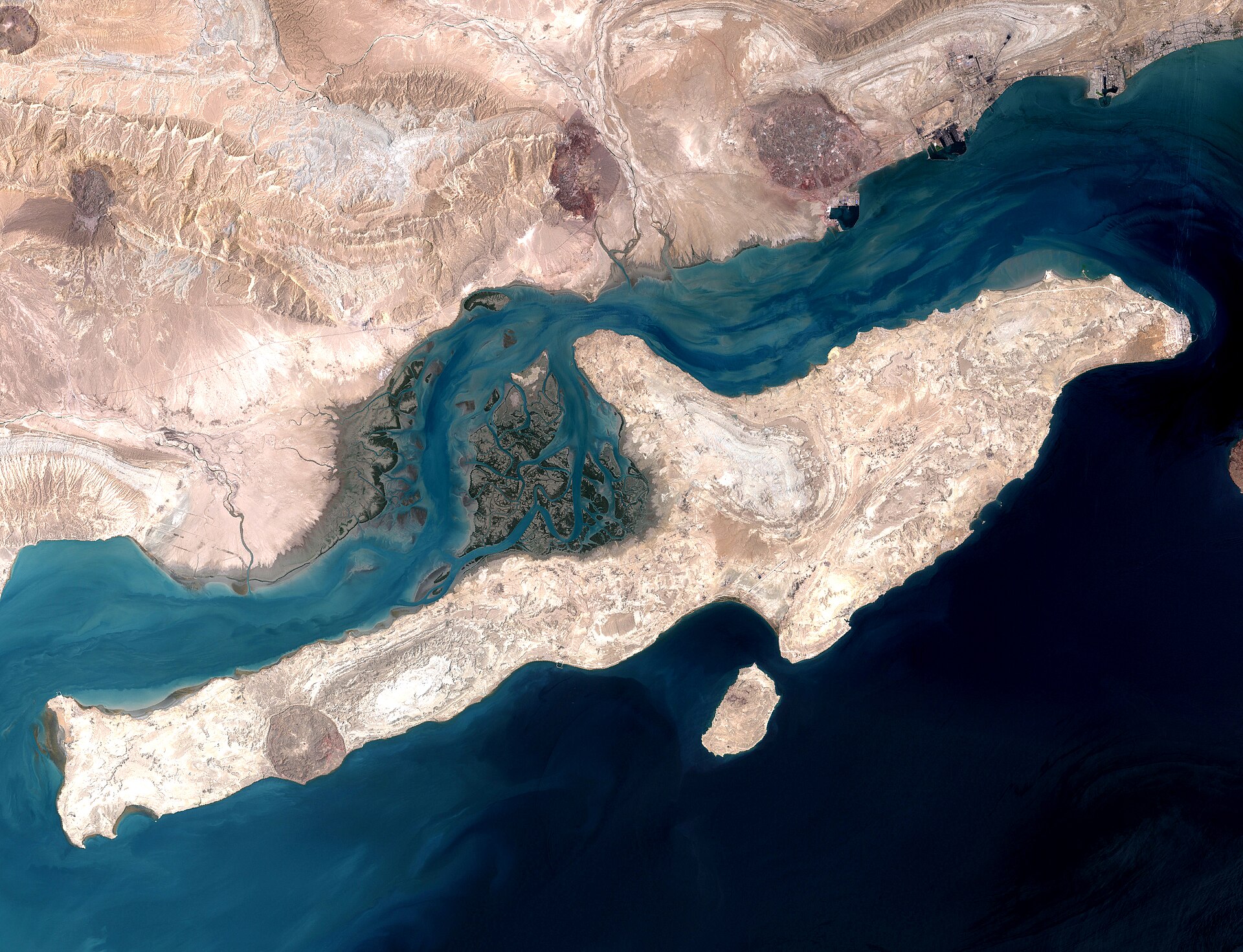
IRGC-affiliated Tasnim and IRNA have not reacted to the May 31 MBS-Macron call. The silence is consistent with Iranian practice of declining to amplify any Saudi acknowledgment of the conflict u2014 a pattern that, in this case, gives Tehran no incentive to publicize a back-channel by criticizing it.
n
n
What Does Saudi Arabia’s Silence Cost?
n
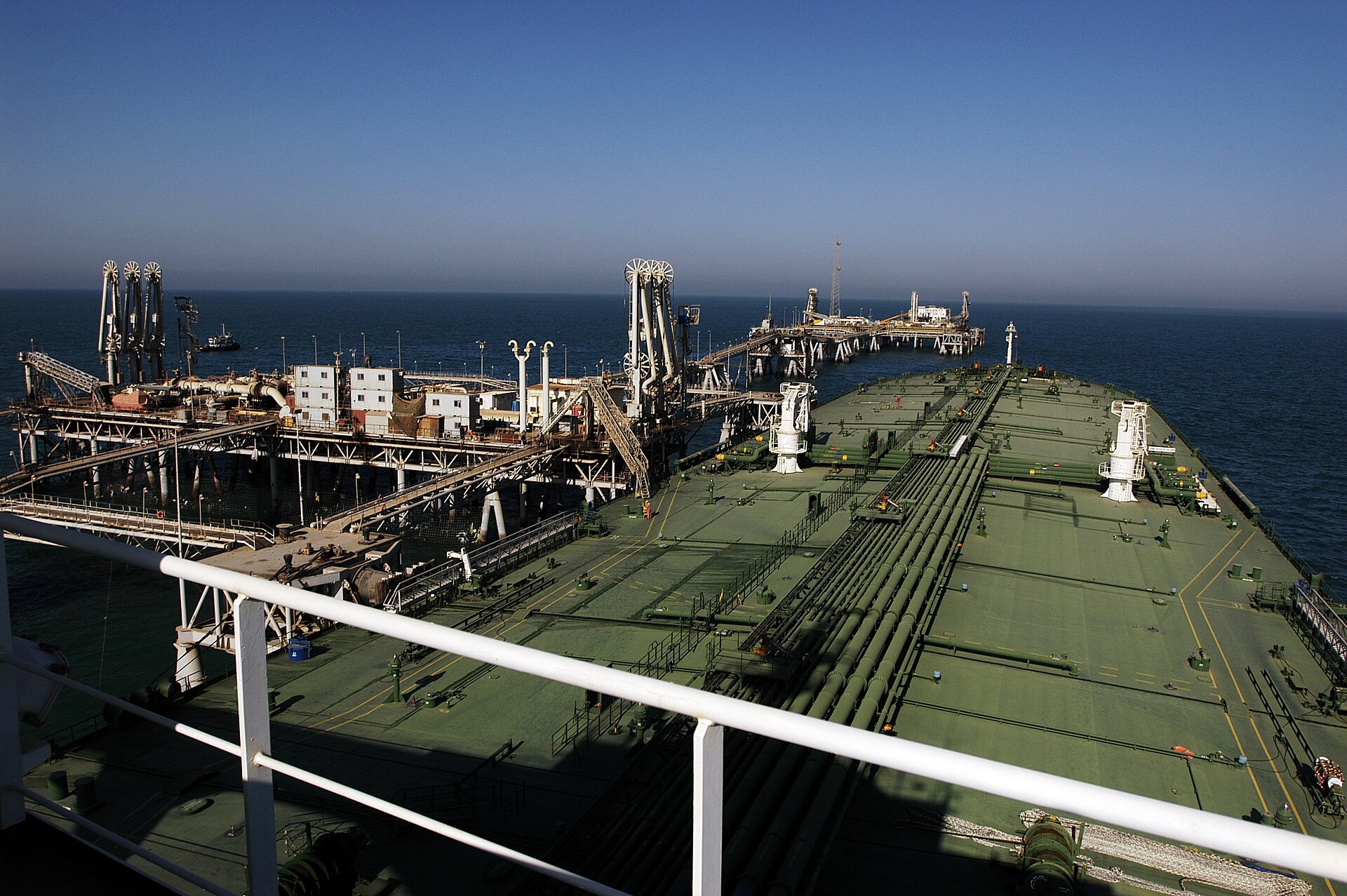
The diplomatic silence carries a fiscal price that compounds daily. Approximately 2.5 million barrels per day of Saudi crude production cannot bypass Hormuz via the East-West Pipeline, which has a maximum capacity of 3 million barrels per day against total production of 7.76 million. At Brent’s May 29 close of $91.37 per barrel u2014 down from a peak of $114.97 on May 4 u2014 Saudi Arabia is operating below every credible estimate of its fiscal breakeven, which ranges from $108 to $111 when PIF commitments are included. The Q1 2026 deficit of SAR 125.7 billion ($33.5 billion) consumed 76 percent of the full-year deficit target in 90 days.
n
The PGSA toll architecture imposes a $2 million per-transit charge on vessels passing through Hormuz, a cost that cascades through Saudi crude pricing on every tanker that hasn’t redirected to the Yanbu terminal on the Red Sea. Aramco’s quarterly dividend of $21.9 billion now exceeds its free cash flow of $18.6 billion u2014 a coverage ratio of 0.85x that the company has never sustained for consecutive quarters. PIF liquid cash has fallen to $15 billion, a six-year low representing 1.6 percent of total assets.
n
Every day without resolution extends the window in which Saudi crude customers renegotiate term contracts at volumes and routing assumptions that lock in the bypass architecture for 2027. China’s Saudi crude imports have fallen from 1.6 million to 600,000 barrels per day since February. Sinopec’s monthly purchases dropped from 10 million to 2 million barrels. The ESPO spread u2014 the price discount of Russian crude relative to Brent u2014 has widened beyond $5.50 per barrel, a threshold above which Asian refiners treat the switch as semi-permanent rather than tactical. Goldman Sachs’s $90 Q4 Brent forecast has been revised upward four times on war-premium assumptions u2014 a price that collapses if the MOU is signed and 800,000 barrels per day of Iranian crude return to market within six months of a deal.
n
| Metric | Figure | Source |
|---|---|---|
| Hormuz-dependent crude production | 2.5M b/d | East-West Pipeline capacity constraint |
| Brent close (May 29) | $91.37/bbl | Bloomberg |
| Fiscal breakeven (PIF-inclusive) | $108-111/bbl | Bloomberg / Goldman Sachs |
| Q1 2026 deficit | $33.5B | Saudi MoF |
| PGSA per-transit toll | $2M | IRGC/PGSA schedule |
| Aramco dividend coverage (Q1) | 0.85x | Aramco quarterly filing |
| PIF liquid cash | $15B (6-year low) | PIF disclosure |
| China crude imports (Feb-Jun) | 1.6M to 600K b/d | Kpler / Bloomberg |
n
n
The Position France Is Carrying
n
If Paris is functioning as Saudi Arabia’s Hormuz proxy, the position it carries is identifiable. Bin Farhan’s May 20 statement u2014 the last substantive Saudi diplomatic comment on the Strait u2014 called for restoring Hormuz to “the state prior to February 28th 2026.” The formulation implicitly rejects both the PGSA toll architecture and the American blockade, demanding a return to the pre-war status quo of unrestricted commercial transit without endorsing the enforcement mechanism Washington has employed to challenge Iran’s Strait control.
n
Saudi Arabia endorsed that position on May 20 and then went silent u2014 no MOFA follow-up, no clarification, no response to the IRGC’s subsequent firing on four vessels near Hormuz on May 28 or the Zolfaghar ballistic missile launched at Kuwait the same day. The silence is a structural requirement of Saudi Arabia’s legal position: any public statement endorsing the US blockade converts Saudi Arabia from damaged bystander to active participant in a war it has not declared under Article 61 of the Basic Law, which reserves war-declaration authority to the King.
n
France’s own Hormuz proposal embeds Saudi interests without naming Saudi Arabia. Riyadh needs commercial traffic restored to protect Hormuz-dependent exports. It needs the PGSA toll system dismantled to halt the erosion of its Asian customer base. And it needs those outcomes achieved without a public Saudi demand that would require acknowledging strikes launched from Saudi soil u2014 a military posture the Ministry of Defense confirmed only through the indirection of a Hajj logistics notice listing “martyrs and injured personnel” camps in Mina.
n
Macron told Pezeshkian that “a return to calm in the Strait will help advance negotiations on nuclear issues, ballistic matters, and the regional situation.” The formula packages Saudi Arabia’s commercial survival interest inside a framework Tehran can engage with u2014 one that addresses Iran’s nuclear file rather than demanding Iranian capitulation on Hormuz. Trump’s latest MOU amendments, sent via courier to Mojtaba Khamenei in an underground bunker, demand an HEU timeline the IAEA cannot verify u2014 a track whose outcome remains uncertain. The French channel gives Saudi Arabia a parallel path that does not depend on American domestic politics or on Iranian willingness to negotiate directly with Washington.
n
n
Why Do Bilateral Calls Work When Multilateral Forums Cannot?
n
A bilateral phone call between two heads of state produces exactly two readouts, and only if both parties choose to publish. The format offers Saudi Arabia something no multilateral forum can: the ability to communicate a position to a P5 member with an active Tehran channel without creating a public record that Iran, the United States, or domestic Saudi audiences can use to establish co-belligerency. A Saudi statement at the UN General Assembly would be parsed by every foreign ministry in the region. A Saudi representative at Northwood would appear in operational briefings accessible to all 27 signatory nations. A Saudi envoy to the Oman track would signal to Tehran that Riyadh is inserting itself into a bilateral process Iran controls.
n
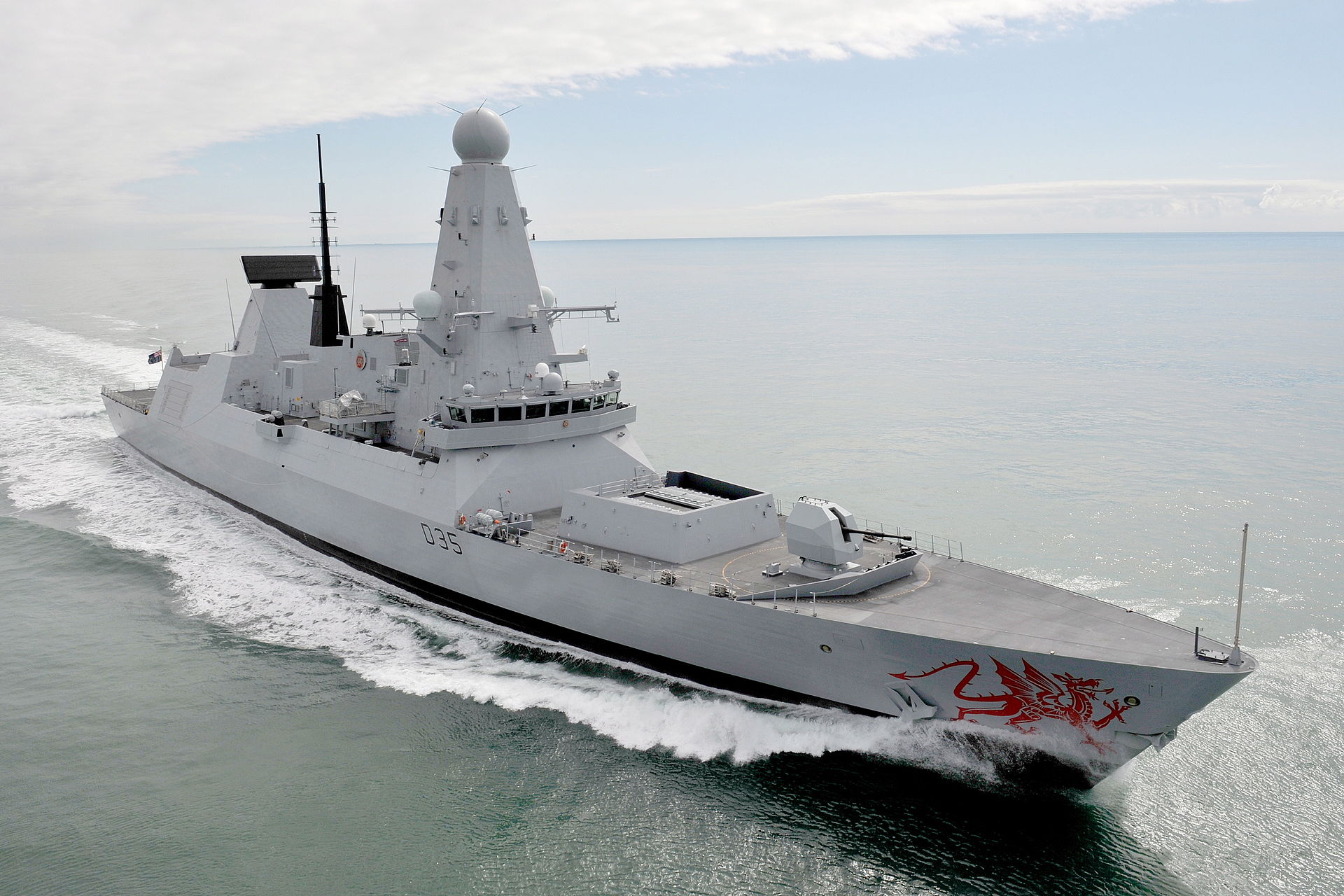
The Bin Farhan-Cooper meeting in London on May 12 followed a similar logic. The two stressed Hormuz reopening and agreed that using the Strait as “a tool for political or economic pressure is a violation of international laws.” Cooper posted about the meeting on X; Bin Farhan did not. The UK announced HMS Dragon, autonomous mine-hunting assets, and Typhoon jets for the Hormuz mission. Saudi Arabia made no equivalent military commitment and issued no operational statement.
n
Saudi Arabia has absorbed the most direct Iranian attacks of any Gulf state since February 28 u2014 more than Bahrain, Kuwait, the UAE, and Qatar combined. It hosts the AWACS and aerial refueling infrastructure at Prince Sultan Air Base that enables American strike operations against Iran. Its territorial integrity depends on an interceptor supply chain it does not control and a Hormuz settlement it cannot negotiate directly. The bilateral call is the instrument that holds this posture together u2014 a format in which Saudi Arabia can advance its position through partners whose public statements it does not have to endorse, deny, or explain. The SPA readout of the May 31 call mentioned “maritime security and freedom of navigation” in 14 words. What France does with those 14 words in Tehran, at Northwood, and at the Security Council is the part that does not appear in any communiquu00e9.
n
Frequently Asked Questions
n
Has France proposed a specific Hormuz deal to Iran?
n
Macron offered Pezeshkian a three-part formula in May 2026: Iran permits passage for its own ships through Hormuz, commits to negotiations on nuclear and ballistic issues with the United States, and in return the US lifts its naval blockade. The proposal treats Hormuz access as a bargaining instrument for the nuclear file rather than as a standalone maritime law dispute u2014 structurally different from both the American “unrestricted navigation” demand and the UK-France coalition’s operational mandate, which focuses on escort and deconfliction rather than political settlement. France’s INSTEX experience u2014 the 2019-2023 trade mechanism designed to circumvent US sanctions on Iran u2014 informs this transactional approach.
n
What did Macron tell Pezeshkian in the March 2026 calls?
n
Macron’s public framing of the March 8 call was confrontational. He posted on X on March 24: “I have just spoken with Iranian President Massoud Pezeshkian. I called on him to put an immediate end to the unacceptable attacks Iran is carrying out against countries in the region, whether directly or through proxies, including in Lebanon and Iraq.” By May, his tone had shifted from condemnation to the transactional passage-for-negotiations offer. The shift from the March 8 call to the May formula took less than eight weeks.
n
Why didn’t Saudi Arabia join the 50-nation UK-France Hormuz coalition?
n
The coalition was deliberately constructed outside the US-led Combined Maritime Forces u2014 where Saudi Arabia retains membership u2014 to preserve Tehran’s willingness to engage with it on deconfliction terms. Saudi membership would have exposed the conflict’s co-belligerency dynamic inside a 50-nation operational structure: Northwood briefings are distributed to all signatory nations, and any Saudi participation would have appeared in documents accessible to countries that have not acknowledged Saudi Arabia’s military role. Riyadh retains CMF membership for the existing enforcement architecture but has no mechanism for entry into the parallel Northwood command without triggering the disclosure problem it has spent four months managing through silence.
n
What institutional knowledge does France bring from the JCPOA?
n
France participated in every stage of Iranian nuclear negotiations from 2013 through 2025 as part of the E3 (alongside the UK and Germany). It was a co-signatory to the 2015 JCPOA, led the INSTEX trade mechanism after the US withdrew in 2018, and in August 2025 triggered the snapback mechanism restoring UN sanctions. Iran formally terminated the JCPOA on October 18, 2025. France possesses a decade of direct institutional knowledge of Iranian nuclear negotiating behavior u2014 including the internal dynamics of Iranian factional splits between the Foreign Ministry and the IRGC u2014 that neither the United States (absent since 2018) nor Saudi Arabia (never party to the agreement) can replicate.
n
Could Saudi Arabia open its own direct channel with Iran on Hormuz?
n
Existing Saudi-Iranian contacts operate at the foreign minister level or below: four documented Bin Farhan-Araghchi meetings and MBS’s Eid phone call with President Pezeshkian, which the Saudi readout described as “purely bilateral.” None reach the decision-making altitude where Hormuz policy is set. Iranian Strait governance runs through the IRGC and Mojtaba Khamenei’s ratification authority, not through the civilian foreign ministry. Saudi Arabia has no channel to the IRGC command structure, no intermediary with access to Mojtaba, and no institutional relationship with the Supreme National Security Council under its current post-Shamkhani configuration u2014 the Beijing-brokered NSA-tier track having gone extinct when Shamkhani was removed. France’s indispensability as a Hormuz back-channel sharpened further on June 1, when Iran’s simultaneous diplomatic and military moves made clear that Tehran was signaling past Trump to the Senate bloc — a message Paris is uniquely positioned to translate in both directions. The same week, FM Faisal ended his own fourteen-day silence with solidarity calls to Jordan, Bahrain, and Qatar — routing nothing through Paris, Washington, or Tehran.
What those channels produced beyond the diplomatic table — the covert military pressure track running in parallel with Enayati’s public performance of normalcy, and the Helsinki non-aggression framework that emerged from it — is the subject of Saudi Arabia Built a Private De-Escalation Track With Iran. The MOU’s Death Makes It the Only One Left. With France now carrying Saudi’s Hormuz position and the US-Iran MOU collapsed as of June 9, that bilateral architecture is the only Saudi-Iranian track still operational. The June 4 Lebanon ceasefire that Iran can deploy as a further ground for MOU rejection — Hezbollah absent as signatory, compliance unverifiable by June 9 — is examined in Hezbollah Did Not Sign the Ceasefire Iran Required.
n”}
France is also the only power co-chairing the Global Alliance for Two-State Solution — the diplomatic instrument most directly aligned with Saudi Arabia’s normalization preconditions. Rubio’s June 3 testimony, which rejected annexation without affirming statehood, widened the gap between Washington and the Alliance’s stated objectives. That asymmetry is examined in Rubio Opposed Annexation. Saudi Arabia Required Statehood.