
WASHINGTON — On May 2, Secretary of State Marco Rubio signed an emergency determination under Section 36(b) of the Arms Export Control Act, authorizing $8.6 billion in immediate air defense sales to four countries under Iranian missile fire: Israel, Qatar, Kuwait, and the UAE. Saudi Arabia — which has fired more Patriot interceptors in this conflict than any country in the system’s 40-year operational history — was not included.
Emergency waivers exist to bypass the 18-month delivery timeline that makes standard Foreign Military Sales inert during active hostilities. Washington has invoked them for Saudi Arabia before — during the first Trump administration, for precision-guided munitions bound for the Yemen campaign. The mechanism is available. Its non-use now, for the state with the deepest interceptor depletion in the coalition, is a decision made inside the US interagency process. It fixes the ceiling on Saudi air defense at a number Riyadh did not set and cannot change without Washington’s consent.
Contents
- The $8.6 Billion Determination
- What Did the Emergency Waiver Give Qatar?
- How Many Interceptors Does Saudi Arabia Have Left?
- Why Did Washington Issue an Emergency Waiver for Qatar but Not Saudi Arabia?
- The Camden Bottleneck
- What Does the $142 Billion Arms Deal Deliver Before 2028?
- How Does Iran Exploit Saudi Arabia’s Interceptor Shortage?
- The Two-Way Ledger
- FAQ
The $8.6 Billion Determination
The emergency sales Rubio approved were not distributed equally. Israel received the largest allocation — interceptors and munitions across multiple tiers of its layered defense architecture. Qatar received $4.01 billion for Patriot reconstitution. Kuwait and the UAE each received packages calibrated to their post-war depletion. All four sales bypassed the standard 30-day congressional review window that normally governs major Foreign Military Sales.
The legal mechanism is narrow and unambiguous. The President — or by delegation, the Secretary of State — certifies that “an emergency condition” requires the sale “in the national security interests of the United States.” The notification to Congress includes a “detailed justification” and a “description of the emergency circumstances.” Approval is unilateral. Congress cannot block the sale within the waiver period. Since 2019, the mechanism’s use has expanded from rare exception to regular instrument — a trajectory the Stimson Center has described as the “normalization of the extraordinary.”
Saudi Arabia’s absence from the May 2 tranche was not treated as a story. Breaking Defense reported the $8.6 billion total and its four beneficiaries without flagging the omission. The Defense News ran the Qatar waiver as standalone coverage. CSIS published Last Rounds? Status of Key Munitions at the Iran War Ceasefire — a technical assessment by Mark Cancian and Chris Park finding that the Saudi consumption rate presented “no comparable precedent in the system’s operational history.” None of these publications connected the depletion data to the waiver selectivity.
The signal had been legible for months. On March 2 — before the Qatar waiver was issued — Middle East Eye reported, citing one western official and one former US official with direct knowledge, that the United States was “stonewalling” Gulf state requests for interceptor replenishment. At least one Gulf state had been “brushed off” after asking about resupply. A second Gulf state responded to US requests for base access by raising air defense commitments and received no affirmative answer.
The Middle East briefing 3,000+ readers start their day with.
One email. Every weekday morning. Free.
| Recipient | Included | US Personnel Hosted | Primary US Facility |
|---|---|---|---|
| Israel | Yes | N/A (bilateral framework) | Multiple |
| Qatar | Yes ($4.01B) | ~10,000 | Al Udeid (CENTCOM FWD HQ) |
| Kuwait | Yes | ~13,500 | Camp Arifjan, Buehring |
| UAE | Yes | ~3,500 | Al Dhafra |
| Saudi Arabia | No | ~2,500–2,700 | PSAB (no SOFA) |
What Did the Emergency Waiver Give Qatar?
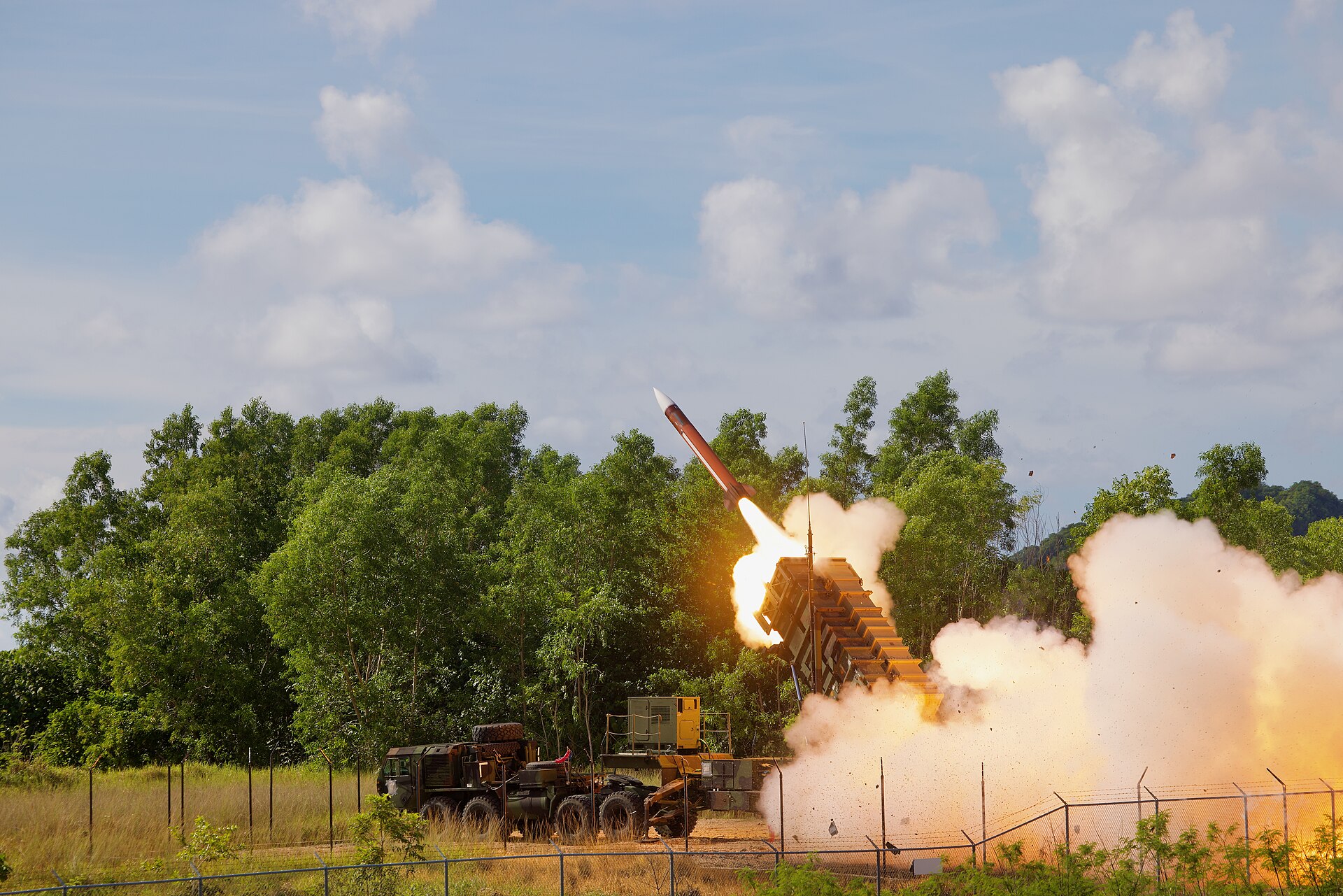
The State Department authorized the immediate sale of 200 PAC-2 GEM-T rounds and 300 PAC-3 MSE interceptors to Qatar under the May 2 emergency determination. The package reconstitutes Qatar’s full-spectrum Patriot air defense to pre-war readiness.
The PAC-2 GEM-T addresses aircraft and older cruise missiles. The PAC-3 MSE — the most advanced interceptor in the Patriot family, equipped with a dual-pulse motor and active radar seeker — engages ballistic missiles and maneuvering cruise missiles at ranges and altitudes the PAC-2 cannot reach. The package also includes spare parts, missile canister consumables, repair and return services, classified and unclassified technical support, and a field surveillance program.
The emergency waiver does not eliminate the production constraint — Lockheed Martin’s Camden, Arkansas facility has a fixed annual output. But it moves Qatar’s order to the front of the queue, ahead of any sale still working through standard DSCA processing. For a single-source interceptor with global demand exceeding supply, position in the production queue determines whether delivery arrives in 2027 or 2029.
Saudi Arabia’s $9 billion PAC-3 request — 730 MSE rounds, approved January 30 through standard DSCA channels — enters this queue behind Qatar’s 300-round order, behind Kuwait’s replenishment, behind the UAE’s, and behind Israel’s multi-tier resupply.
How Many Interceptors Does Saudi Arabia Have Left?
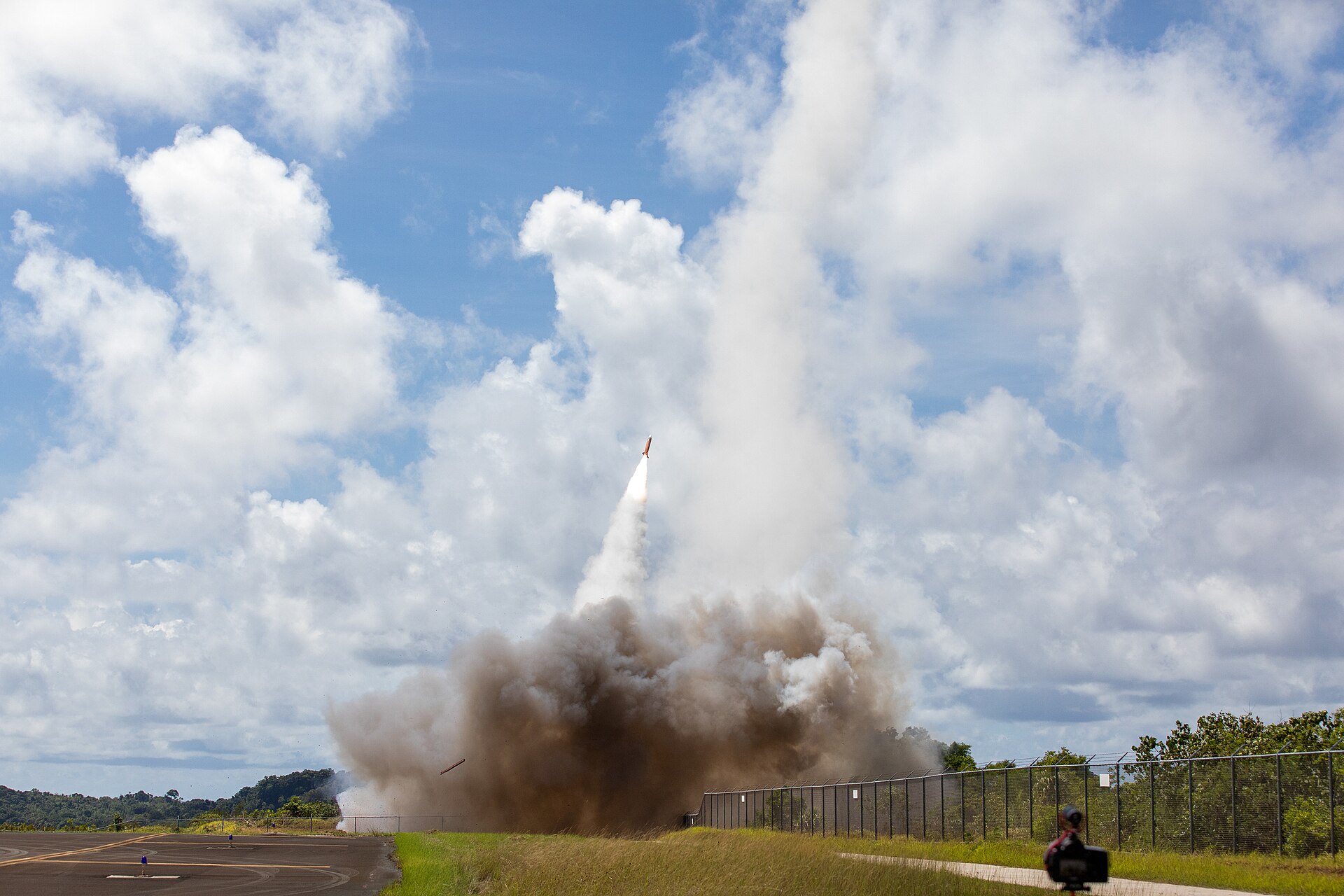
Saudi Arabia entered the war with approximately 2,800 PAC-3 interceptors distributed across 16 Patriot batteries and 108 launchers. In 38 days of combat — roughly March 3 through mid-April — Saudi batteries engaged 894 aerial threats and expended approximately 2,400 rounds. The daily consumption rate averaged 63 interceptors. Lockheed Martin’s entire record production year — 2025 — delivered 620 PAC-3 MSE rounds to all customers worldwide. Saudi Arabia consumed that volume in under ten days.
| Metric | Figure | Source |
|---|---|---|
| Pre-war inventory | ~2,800 rounds | CSIS |
| Combat days | 38 | CSIS |
| Aerial threats engaged | 894 | CSIS |
| Rounds expended (wartime) | ~2,400 | CSIS |
| Daily consumption rate | ~63 rounds/day | Derived |
| Estimated remaining (late May) | 80–150 rounds | HoS analysis |
| Full-intensity coverage | 1.3–2.4 days | Derived |
| Half-intensity coverage | 2.5–4.8 days | Derived |
By the April 22 ceasefire, the remaining inventory stood at approximately 400 rounds under CSIS-derived estimates. That figure has continued to decline. Saudi batteries have provided supplementary coverage for ongoing Iranian-linked strikes against Kuwait — 97 post-ceasefire intercepts documented by the International Institute for Strategic Studies through May 28, including the May 28 barrage of seven ballistic missiles, two cruise missiles, and 26 drones that struck Mina al-Ahmadi for the third time in two weeks. Late May estimates place the remaining Saudi PAC-3 inventory between 80 and 150 rounds. On June 1, CENTCOM struck Iranian drone infrastructure at Goruk and Qeshm Island — a direct US response that preceded a new Kuwait missile wave the same day, drawing further on Saudi intercept reserves.
At the wartime consumption rate of 63 rounds per day, 150 rounds — the upper estimate — represents 2.4 days of full-intensity coverage. Eighty rounds — the lower estimate — represents 1.3 days. At half-rate, which assumes a lower-intensity resumption rather than a full salvo campaign, the runway extends to between 2.5 and 4.8 days. Either figure is measured in days, not the months or years required for resupply to begin arriving from Camden.
The consumption ratio — 2,400 interceptors against 894 threats — is not profligate. Patriot engagement doctrine fires multiple rounds per incoming threat to ensure kill probability above 90 percent. Against the mixed salvos Iran employed — ballistic missiles, cruise missiles, and drones arriving simultaneously in packages designed to saturate layered defenses — multiple engagements per threat is standard doctrine applied at combat scale. CSIS assessed the ratio as consistent with operational protocol.
Why Did Washington Issue an Emergency Waiver for Qatar but Not Saudi Arabia?
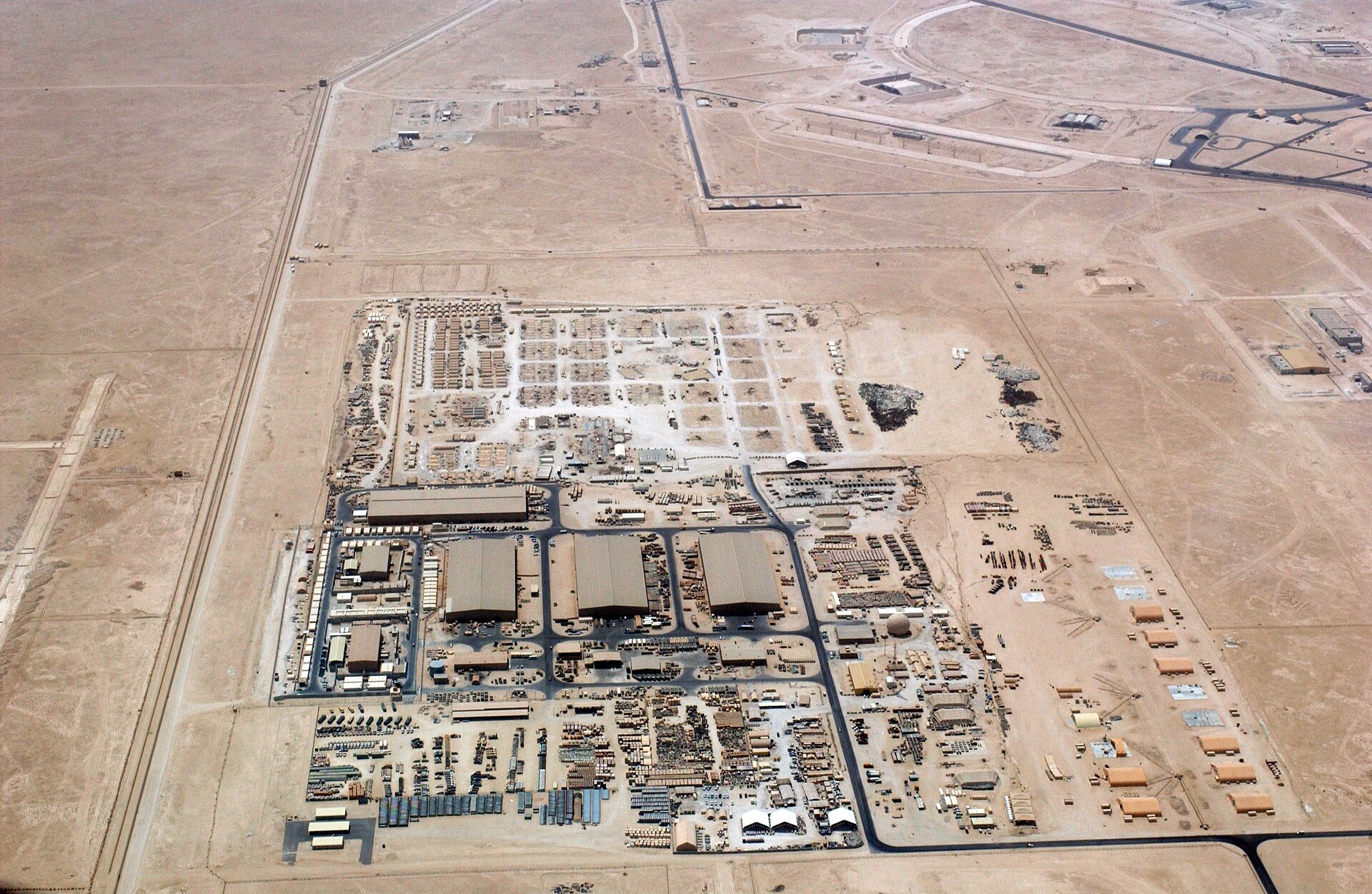
Qatar’s emergency justification rests on a single facility: Al Udeid Air Base, the forward headquarters of US Central Command. Al Udeid houses approximately 10,000 US personnel, the Combined Air Operations Center that directs all CENTCOM air sorties over the Middle East, and the intelligence and logistics infrastructure for the entire theater. A CENTCOM forward headquarters under active missile threat meets the “immediate national security interests” standard for a Section 36(b) emergency determination without ambiguity.
Prince Sultan Air Base — the primary US facility in Saudi Arabia — hosts 2,500 to 2,700 personnel, operates as a forward deployment site for fighter and ISR aircraft, and has been struck by the IRGC three times during the war. One strike destroyed an E-3 Sentry AWACS aircraft (serial 81-0005). Another damaged five KC-135 Stratotanker refueling aircraft across two separate attacks. But PSAB does not house the CENTCOM forward headquarters. It is not the hub of the Combined Air Operations Center. In the bureaucratic grammar of the interagency process, PSAB’s degradation registers as a setback; Al Udeid’s would register as a theater-level crisis.
The distinction is real but insufficient as a complete explanation. PSAB houses American service members under active fire with no Status of Forces Agreement — a legal arrangement that, if anything, should sharpen rather than blunt Washington’s urgency to ensure the host nation can defend the base’s airspace. Saudi Arabia was striking Iran from PSAB while maintaining it was not at war. The United States was operating from Saudi soil while withholding the air defense resupply that protects that soil.
The structural asymmetry extends beyond base infrastructure. As one unnamed Qatari official told The Defense News, in a formulation that captures the institutional weight Qatar holds over Washington: “You are a tenant, not the owner.” Qatar hosts CENTCOM’s nerve center. The relationship grants Doha a form of strategic gravity that Prince Sultan Air Base — struck three times, operating without a SOFA, expendable in ways Al Udeid is not — does not confer on Riyadh.
The precedent record eliminates any procedural argument for Saudi Arabia’s exclusion. In 2019, Secretary Pompeo invoked Section 36(b) for $8.1 billion in arms sales to Saudi Arabia, the UAE, and Jordan — including precision-guided munitions for the Yemen campaign. Congress passed joint resolutions of disapproval. Trump vetoed all 22 of them. The vetoes were sustained. The mechanism has been tested for Saudi Arabia, found constitutionally sound, and — in 2026 — set aside.
| Qatar | Saudi Arabia | |
|---|---|---|
| Sale value | $4.01 billion | $9 billion |
| Interceptors ordered | 300 PAC-3 MSE + 200 PAC-2 GEM-T | 730 PAC-3 MSE |
| Approval mechanism | Emergency waiver (Section 36(b)) | Standard DSCA notification |
| Congressional review | Waived | 30-day standard review |
| Production queue position | Front | Standard processing |
| Earliest delivery | Accelerated (2026–2027) | Mid-to-late 2027 (18+ months) |
| US personnel hosted | ~10,000 (CENTCOM FWD HQ) | ~2,500–2,700 (no SOFA) |
| Base strikes absorbed | Multiple | 3 (1 AWACS destroyed, 5 KC-135s damaged) |
The Camden Bottleneck
The PAC-3 MSE interceptor is manufactured at a single facility: Lockheed Martin’s plant in Camden, Arkansas. In 2025 — a record year — Camden produced 620 rounds for all customers worldwide. Saudi Arabia’s $9 billion order calls for 730 rounds. That order alone exceeds one full year of total global output.
The bottleneck is not news to the Pentagon. In January 2026, the Department of Defense and Lockheed Martin signed a framework agreement targeting 2,000 rounds per year — more than triple current capacity. On April 9, a $4.76 billion contract — 94 percent funded by Foreign Military Sales customers — initiated the acceleration, with a new Munitions Acceleration Center breaking ground at Camden for robotics-enabled production. The contract’s delivery schedule runs through June 30, 2030.
The timeline arithmetic is fixed by physics and manufacturing infrastructure, not by policy intent. Full tripled capacity will not come online before the end of the decade. The 2026–2027 window — the window in which Saudi Arabia’s air defense ceiling is operationally determinative — cannot be served by production capacity that does not yet exist. Every PAC-3 MSE round produced at Camden between now and 2028 is allocated from a fixed pool among competing claimants: the US Army’s own readiness requirements, Israel, Qatar, Kuwait, the UAE, Saudi Arabia, and additional FMS customers including South Korea, Germany, and Japan.
Saudi Arabia’s 730-round order, approved through standard DSCA processing, enters this queue without the priority that an emergency waiver confers. Qatar’s 300-round emergency order enters at the front. Kuwait’s emergency order enters at the front. The UAE’s emergency order enters at the front. The cumulative effect is sequential: four emergency waivers for four countries, each advancing ahead of Saudi Arabia’s standard-process sale. The earliest meaningful delivery of PAC-3 MSE interceptors to Riyadh is mid-to-late 2027. If production acceleration encounters the delays that have characterized every major defense manufacturing ramp since 2020, the timeline extends further.
What Does the $142 Billion Arms Deal Deliver Before 2028?
On May 13, President Trump announced a $142 billion arms package during his visit to Riyadh — the largest single US arms commitment to Saudi Arabia in history, covering air and missile defense, air force modernization, maritime security, and land systems across contracts with Lockheed Martin, RTX, Boeing, Northrop Grumman, and General Atomics. The package contains no emergency waiver. It does not accelerate PAC-3 MSE delivery. It does not address the 80-to-150 interceptors Saudi Arabia holds today.
The package is a commitment for future systems — fighters, radars, naval platforms, and defense infrastructure arriving over the next decade. Its announcement value is diplomatic and commercial. Its operational value in the 2026–2027 window, when Saudi Arabia’s air defense inventory can be measured in single-digit days rather than months, is zero. The coalition governing Hormuz left Saudi Arabia no chair; the arms package it received in Riyadh does not change that.
Hegseth formalized this gap at the Shangri-La Dialogue on May 30, declaring that the United States wants “partners, not protectorates” — naming the Gulf States as models of the new standard, while saying nothing about the legal void that sits beneath the relationship. Saudi Arabia spends 7.1 percent of GDP on defense, double Hegseth’s own 3.5 percent benchmark, and has no mutual defense treaty to show for it.
One day before the announcement, Secretary of Defense Pete Hegseth told the Senate Armed Services Committee that munitions shortages had been “foolishly and unhelpfully overstated.” The denial sits alongside the publicly filed April 9 Lockheed Martin contract, which carries a delivery schedule running through June 2030 specifically because production at current rates cannot meet demand. It also sits alongside Rubio’s May 2 emergency determination, which certified that an emergency condition requiring immediate sale existed for four countries facing the same threat environment Saudi Arabia faces — and excluded the country with the deepest depletion. Hegseth repeated the same “more than suited” stockpile claim weeks later at the Shangri-La Dialogue in Singapore, threatening to restart Iran strikes and insisting US arsenals were adequate for simultaneous Iran and Pacific contingencies — a claim his own acting Navy Secretary had contradicted under Senate oath eleven days earlier.
The gap between announcement and operational reality is not unique to Saudi Arabia — large FMS packages routinely span decades between signature and final delivery. What is unusual is the context: a $142 billion deal announced while the buyer’s air defense inventory is at approximately 5 percent of its pre-war level, with no emergency waiver to accelerate the specific capability the buyer most urgently needs. The $142 billion figure will circulate in defense trade press and diplomatic communiqués for years. Saudi Arabia’s functional air defense, as of late May 2026, depends on fewer interceptors than the single emergency waiver tranche delivered to Qatar contained.
How Does Iran Exploit Saudi Arabia’s Interceptor Shortage?
Iran exploits Saudi Arabia’s interceptor depletion not by advertising it but by sustaining the operational conditions that accelerate it. The IRGC’s salvo architecture — ballistic missiles, cruise missiles, and drones launched in simultaneous mixed packages — forces defenders into maximum interceptor expenditure per engagement regardless of whether any individual projectile penetrates. The cost exchange is structurally asymmetric: $2 million to $6 million per PAC-3 MSE interceptor against $10,000 to $50,000 per Shahed-type drone.
The IISS assessed this dynamic directly in its May 2026 report on Gulf rearming: “High-end interceptors, such as Patriot PAC-2 and PAC-3 missiles, each costing millions of dollars, have repeatedly been used against far cheaper threats” — a “strategic vulnerability, forcing Gulf defenders into an unfavorable cost exchange.” The same report noted that interceptor-to-threat ratios were further compounded by salvo design, where cheap drones absorb expensive interceptors while higher-value ballistic missiles arrive in the same engagement window.
Iranian state media — IRNA, Tasnim, Fars News — have not published explicit coverage naming Saudi PAC-3 depletion figures. The silence is operationally rational: broadcasting the adversary’s inventory status would alert Washington to the intelligence value Tehran is extracting and could accelerate resupply decisions that currently serve Iranian strategic interests by remaining unmade. IRNA and Tasnim have covered the war’s progress extensively without once naming PAC-3 depletion by country.
The exploitation is embedded in the post-ceasefire operational pattern. In the first 51 days of the war, the IRGC launched approximately 1,372 ballistic missiles at GCC targets. After the April 22 ceasefire, Iranian-linked projectiles continued striking Kuwait, with Saudi batteries providing supplementary fire. Each engagement against this sustained pattern draws down the 80-to-150 remaining Saudi rounds without triggering the emergency resupply Washington has authorized for every other frontline state.
The interceptor depletion story acquired a new dimension on June 3, when IRGC drones struck Kuwait International Airport’s Terminal 1 — not a military base but a civilian passenger terminal that had been handling scheduled commercial flights for forty-eight hours. The strike, which killed one civilian, underscores how the cost-exchange asymmetry plays out against infrastructure Saudi air defenses would also need to protect.
Ali Akbar Velayati — senior adviser to the Supreme Leader, a position that sits above the Foreign Ministry chain of command — articulated the strategic frame: “Papers and signatures are not guarantees. The objective guarantee for preserving any agreement is the Strait of Hormuz.” At 80 to 150 remaining rounds, Saudi Arabia’s Patriot batteries would exhaust their full inventory against a single day’s wartime-level salvo — a constraint that mirrors the attrition of US MQ-9 Reaper fleets now 54 airframes below the operational minimum.
The Two-Way Ledger
The relationship between interceptor supply and base access does not run in one direction. In early May, Saudi Arabia suspended US military access to Prince Sultan Air Base and its airspace for Project Freedom — the Hormuz escort mission — forcing operations to proceed without Saudi participation. Washington withholds interceptors. Riyadh withholds airspace. Neither side has acknowledged the connection publicly.
The $142 billion arms announcement arrived approximately one week after the PSAB suspension was lifted. Whether or not the two events are directly linked, the episode clarifies the structural dependency the emergency waiver selectivity creates: Saudi Arabia needs interceptors it cannot produce and cannot source from any other country. The United States needs basing it cannot replicate without host-nation consent. Both sides have demonstrated they understand this, and neither has said so in public.
The dependency is not lost on Gulf defense planners. The Arab Gulf States Institute in Washington assessed the post-war security architecture as “United States Plus” — meaning Washington remains the primary security partner but can no longer function as sole guarantor, a framing that the $142 billion arms package reinforces rather than resolves. AGSI’s defense diversification report stated it plainly: “These pressures are driving a shift from platform-centric defense to system-of-systems resilience. Diversification, in this sense, is not a diplomatic gesture; it is an operational necessity.” The institute specifically identified South Korea as an emerging “supplier of the middle layer” — air defense systems filling the gap between short-range point defense and the PAC-3 MSE tier that Washington controls.
The IISS reached an adjacent conclusion: “Arab Gulf states are looking to replenish and strengthen their air and missile defences following Iranian attacks earlier this year, though rearmament will require overcoming multiple challenges.” The primary challenge is not financial. Saudi Arabia can afford interceptors. The challenge is that the interceptors it needs are manufactured on one production line, in one facility, in one country — and that country has demonstrated that access to that production line is conditional.
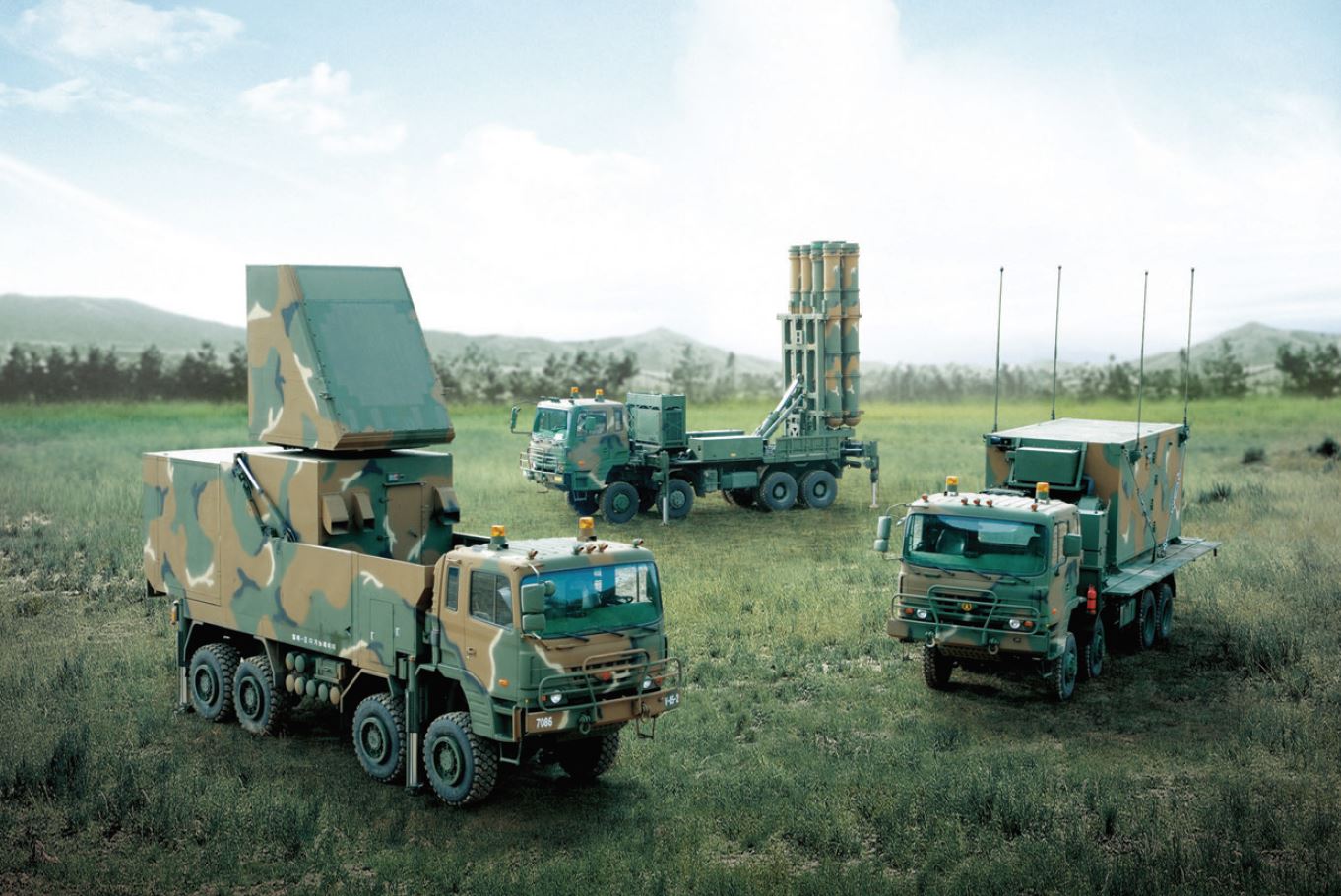
South Korean alternatives — the L-SAM for upper-tier ballistic missile defense, the KM-SAM (Cheongung) for the medium tier — would take three to five years to integrate into the Saudi defense architecture. They would not replace Patriot but could reduce the single-point-of-failure dependency that the May 2 waiver made visible. The timeline for diversification, like the timeline for PAC-3 delivery from Camden, runs well past the window in which Saudi Arabia’s current inventory reaches zero.
The PAC-3’s theoretical success does not eliminate the kinetic residue of interception. On May 30, a Kuwaiti PAC-3 battery successfully destroyed an Iranian Fateh-110 over Ali Al Salem Air Base — but intercepted missile debris that still struck the flight line at Ali Al Salem injured five Americans and destroyed at least one MQ-9 Reaper. A successful intercept and a strike on the protected airfield occurred within the same engagement window.
Iran targeted the logistics infrastructure that supplies those interceptors on June 3: Fateh-110 ballistic missiles struck Camp Arifjan in Kuwait — the Defence Logistics Agency staging node through which every PAC-3 interceptor shipped to the Gulf by sea passes before forward distribution to Saudi Arabia’s batteries. The strike added a new pressure point to the production-to-battery pipeline that Camden’s constrained output already cannot sustain.
Frequently Asked Questions
Has the US ever used an emergency waiver for Saudi Arabia before?
Yes — and the domestic political cost was high. In May 2019, Senators Menendez and Murphy led the congressional response, introducing joint resolutions of disapproval under the Arms Export Control Act after Pompeo invoked Section 36(b) for $8.1 billion in precision-guided munitions sales to Saudi Arabia, the UAE, and Jordan. Congress passed the resolutions. Trump vetoed all 22 of them, and the vetoes were sustained. The administration has since accepted that political cost for Israel, Qatar, Kuwait, and the UAE. It has not accepted it for Riyadh in 2026.
Can Saudi Arabia source PAC-3 interceptors from any country other than the United States?
No. The PAC-3 MSE is manufactured exclusively by Lockheed Martin at Camden, Arkansas. No licensed co-production arrangement exists with any other country. MBDA’s Aster 30 and Rafael’s David’s Sling offer partial functional overlap in the upper-tier air defense role, but neither is interoperable with Saudi Arabia’s existing Patriot fire control architecture — the AN/MPQ-65 radar, engagement control stations, and launcher configurations. Integrating a non-Patriot interceptor into the Saudi air defense network would require years of testing, certification, and infrastructure modification. The PAC-3 MSE is, for the foreseeable future, a sole-source dependency.
How does THAAD factor into Saudi Arabia’s air defense gap?
Saudi Arabia operates seven THAAD batteries — the largest fleet outside the United States — which intercept ballistic missiles at higher altitudes and longer ranges than Patriot can reach. THAAD provides a complementary upper tier but cannot substitute for PAC-3 MSE. THAAD does not engage cruise missiles, which constituted a significant portion of Iran’s mixed salvos. Its interceptor — the THAAD Interceptor, manufactured by Lockheed Martin at a separate facility in Troy, Alabama — faces its own production constraints. THAAD depletion figures are classified, but the same single-source, single-facility bottleneck dynamics apply.
What is the total global PAC-3 MSE backlog?
Outstanding PAC-3 MSE orders from the US Army, Saudi Arabia, Qatar, Kuwait, the UAE, Germany, South Korea, Japan, and other FMS customers exceed 3,000 rounds as of early 2026. Camden’s current annual capacity is 620. Even at the tripled rate of 2,000 per year targeted for 2030, clearing the existing backlog — assuming no new orders and no production delays — would take until approximately 2028–2029. Every new emergency waiver sale lengthens the queue for non-waiver customers. Saudi Arabia’s 730-round order, processed through standard channels, sits behind at least four emergency-priority allocations.
The procurement divergence that produces this queue disparity extends beyond the PAC-3 program: the $1.02 billion NASAMS contract Kuwait signed in May 2026 cleared the FMS pipeline without friction precisely because Kuwait holds the basing infrastructure that converts an arms relationship into a security alliance — the conversion that Saudi Arabia’s $142 billion has not purchased. The same gap emerged on June 3, when the IRGC fired its third strike package against US Fifth Fleet headquarters in Bahrain — and Bahrain, like Saudi Arabia, has no Section 36(b) emergency resupply waiver despite its PAC-3 batteries reaching 87 percent depletion.