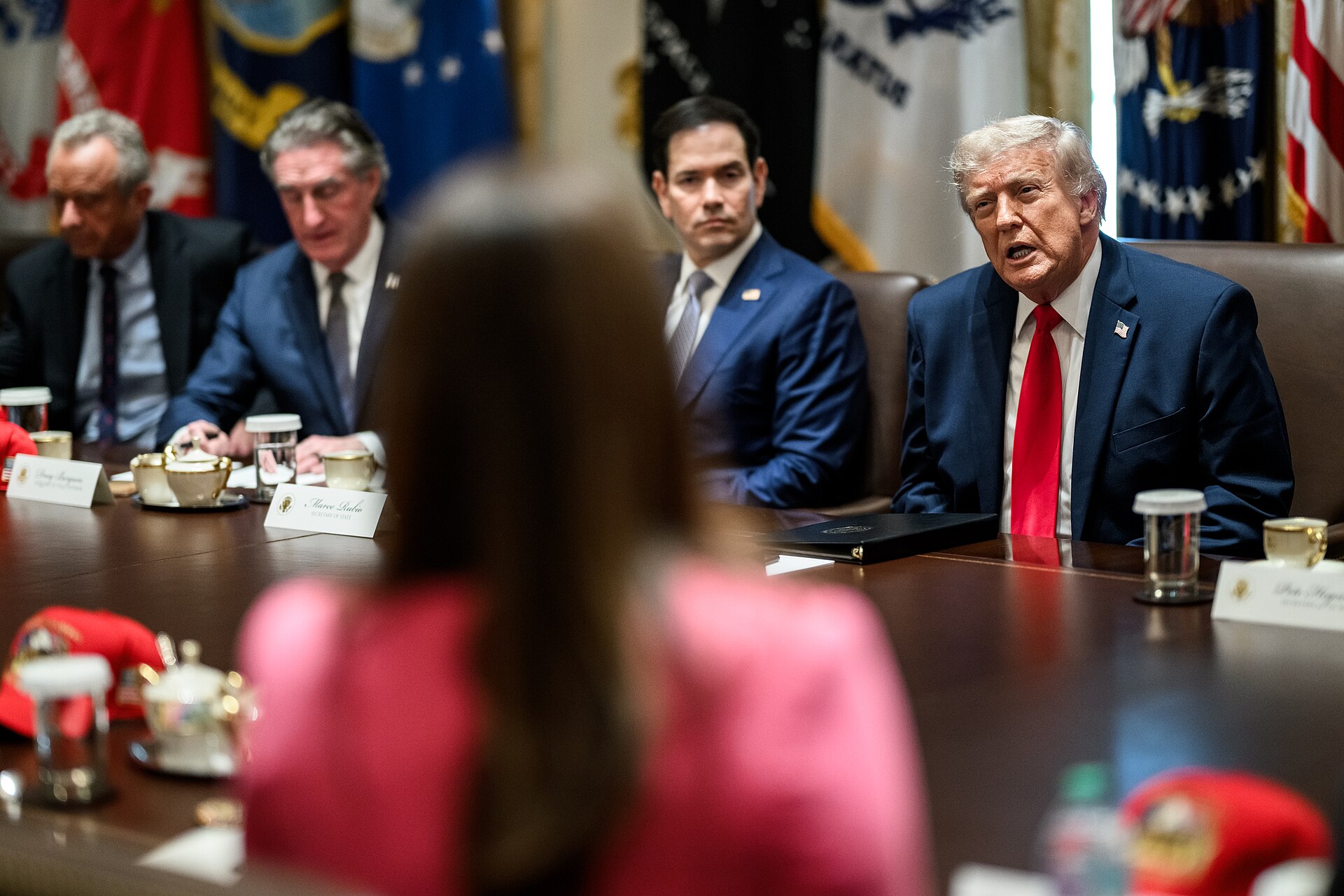
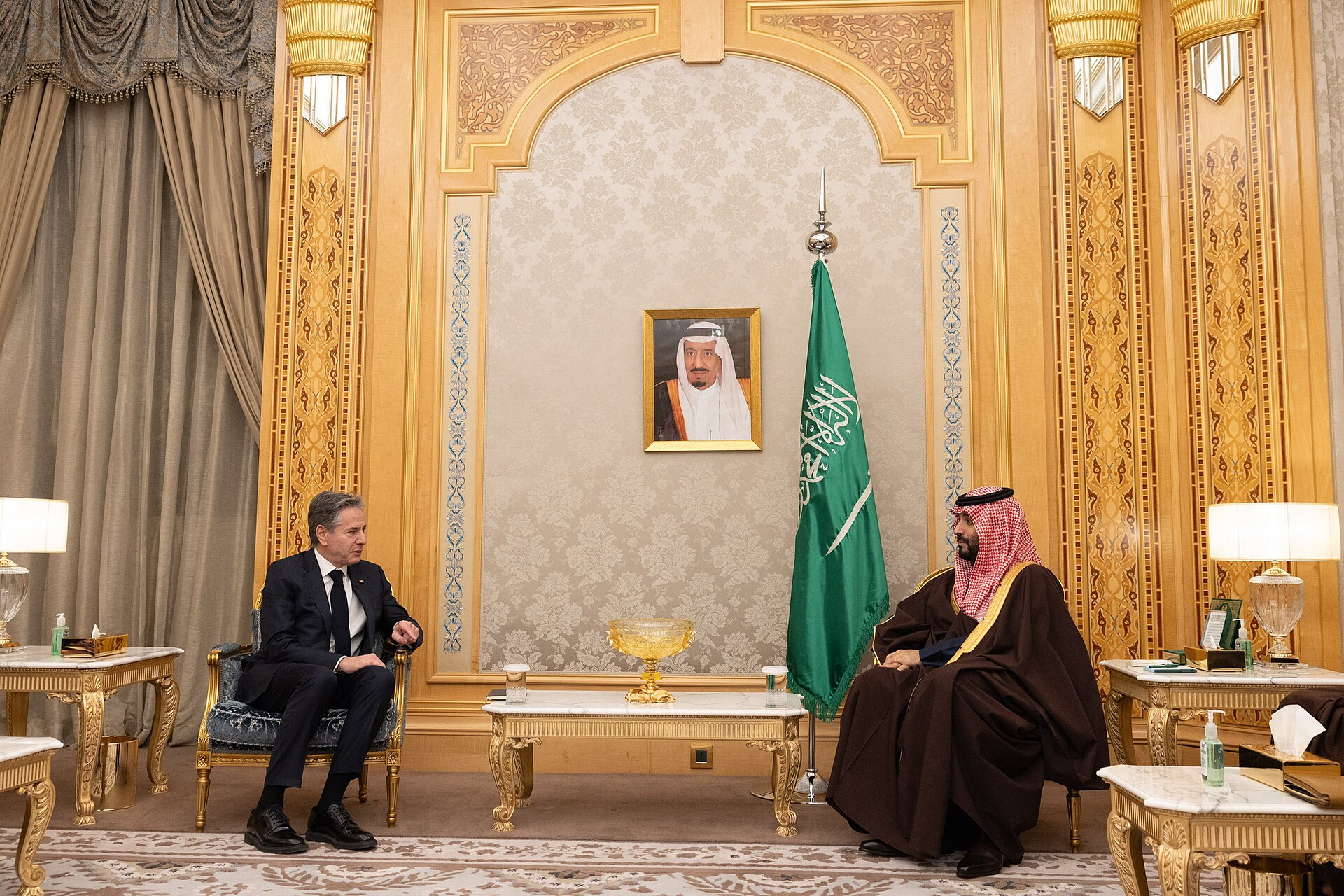
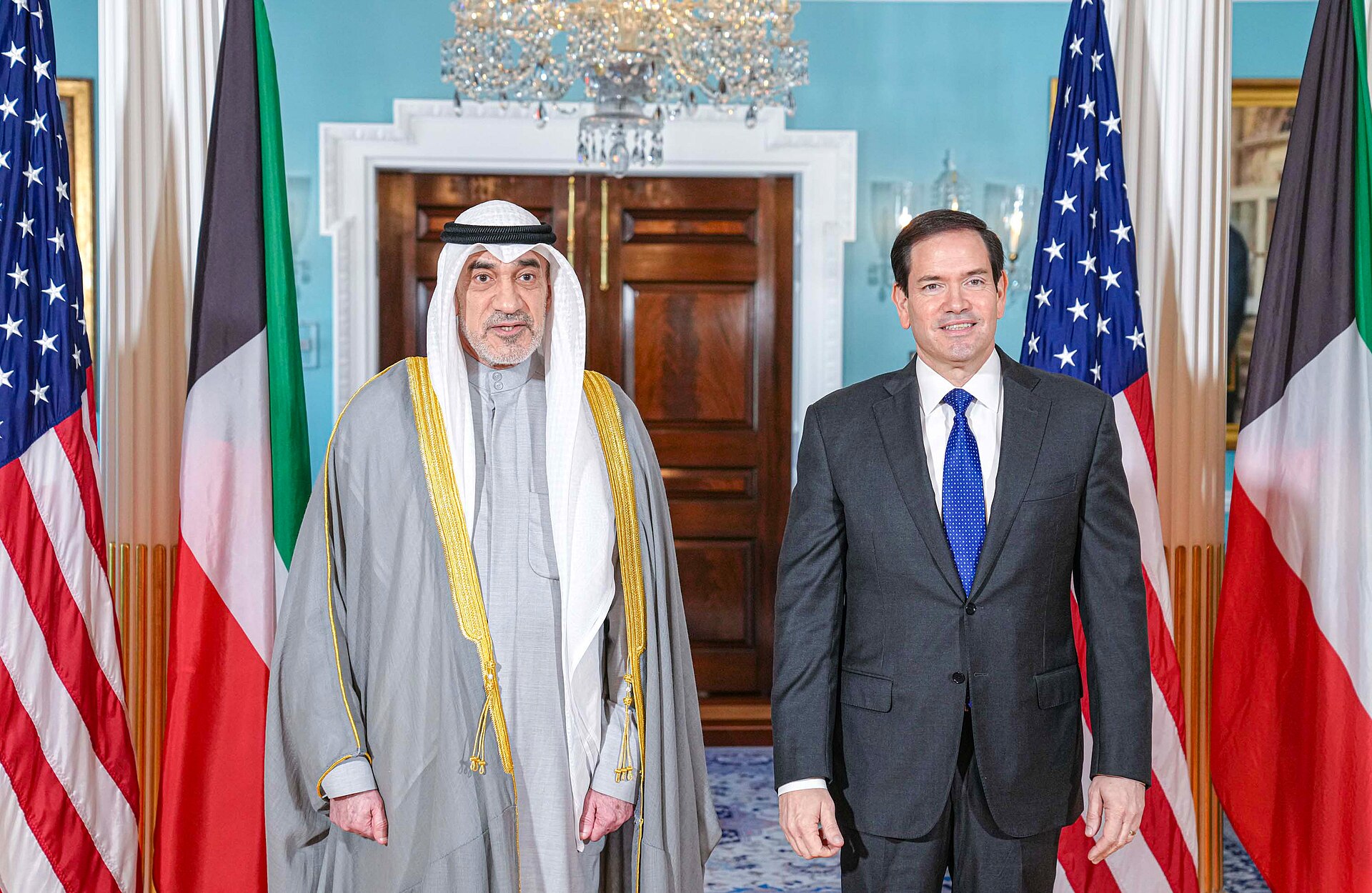
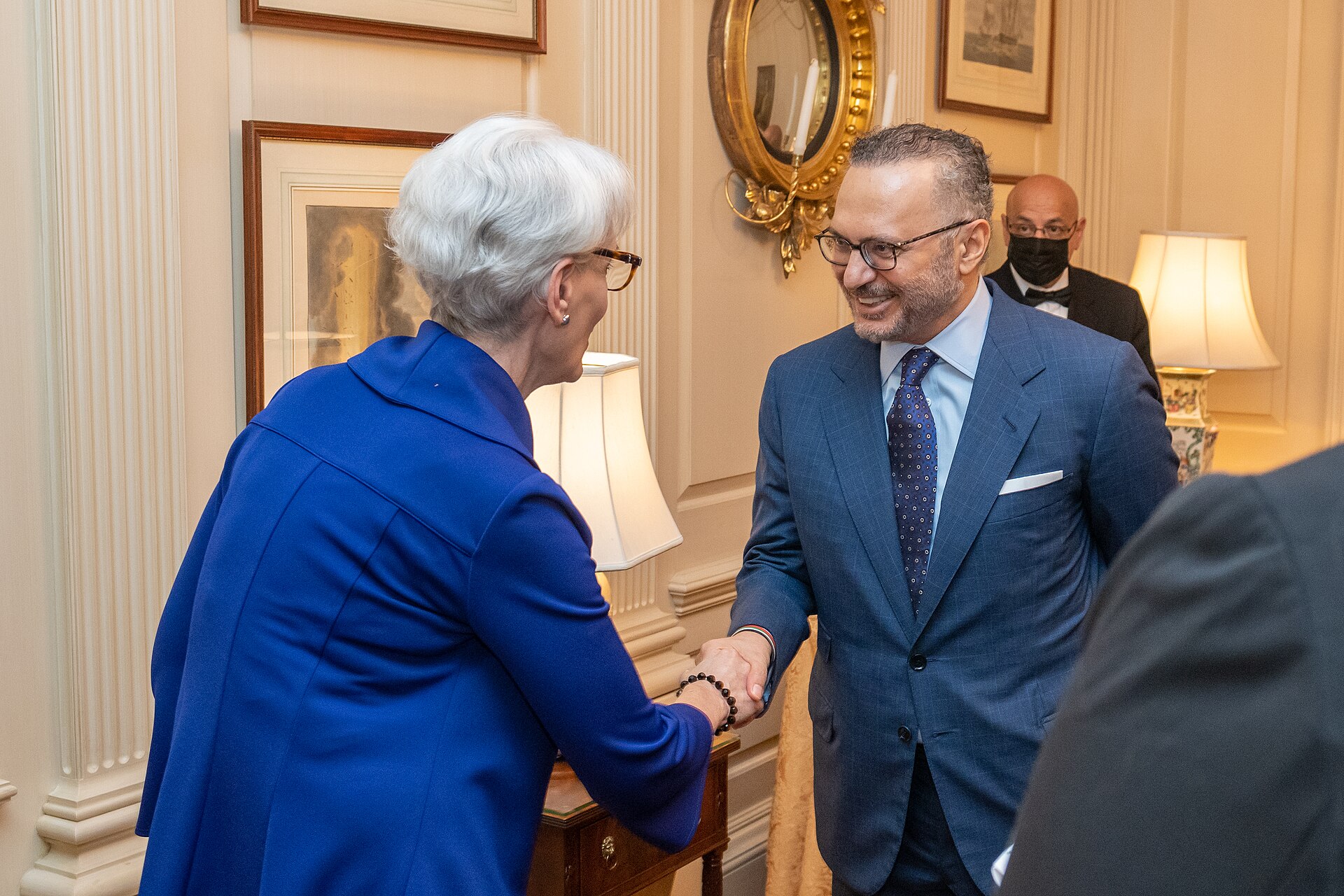
WASHINGTON — Kuwait’s Foreign Minister Sheikh Jarrah Jaber Al-Ahmad Al-Sabah met Secretary of State Marco Rubio at the State Department on June 4, 2026 — less than 24 hours after Iranian missiles and drones struck Kuwait International Airport’s Terminal 1, killing one Indian national and injuring more than 63. The bilateral, confirmed by DVIDSHUB footage and the State Department’s public schedule at 9:30 a.m., is the first between a US cabinet official and any GCC foreign minister since Iran began targeting Gulf civilian infrastructure — and it took place on the same day Kuwait expelled two Iranian diplomats with a 24-hour departure deadline.
Kuwait did not fly to Washington to request sympathy. It arrived having already expelled diplomats, shuttered Iran’s cultural mission, reduced Iranian embassy staffing, intercepted 30 incoming projectiles, and addressed the nation through its Emir — every diplomatic and military lever available to a small Gulf state under fire, pulled within hours. Saudi Arabia responded to the same Iranian strike with a verbal statement of “full support” and no parallel action: no expulsion, no mission reduction, no visit to Washington. The joint position that emerges from this bilateral is one Riyadh must absorb without having shaped, extending Saudi Arabia’s absence to a fourth active diplomatic track on Iran. Later that day, MBS called King Hamad to condemn attacks on Bahrain as “brutal” — the strongest language from Riyadh since the war began, unaccompanied by any expulsion or diplomatic reduction.
Table of Contents
What Kuwait Carried Into the Room
Sheikh Jarrah’s trip to Washington was not improvised. Kuwait’s Foreign Minister had met Pakistan’s Deputy Prime Minister and Foreign Minister Ishaq Dar on June 2, where he praised Islamabad’s role in promoting US-Iran dialogue, and held separate talks with the IAEA Director General Rafael Grossi on June 1, discussing bilateral cooperation, nuclear safety, and regional developments. By the time he sat down with Rubio, Kuwait had been running its own diplomatic track for days — independent of the Saudi-led GCC consensus that Riyadh has spent the war trying to hold together.
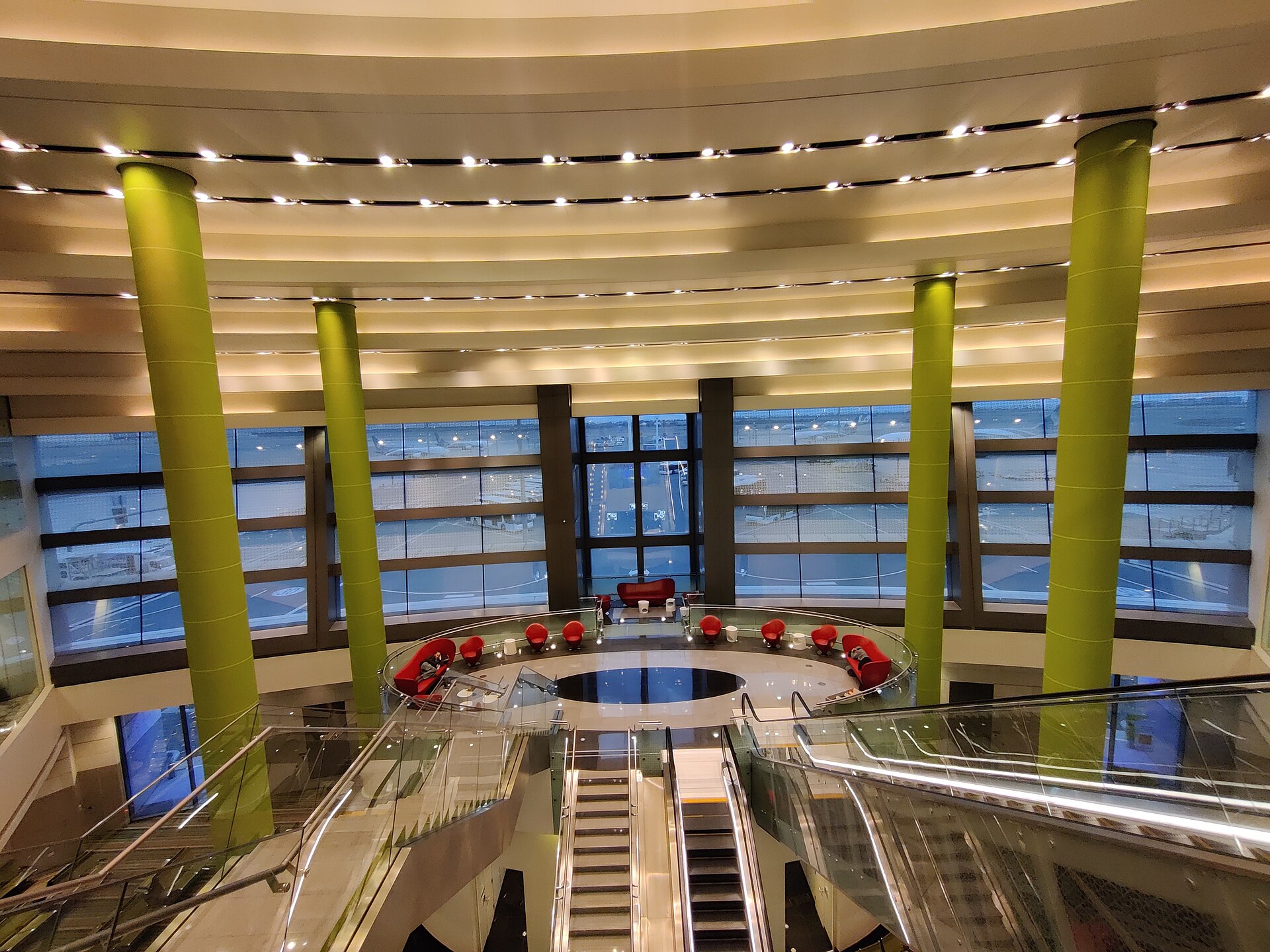
What he brought was a file no other Gulf foreign minister could present in person. Kuwait’s armed forces intercepted 13 Iranian missiles and 17 Iranian drones on June 3, according to Kuwaiti military statements. Deputy Foreign Minister Hamad Suleiman Al-Mashaan had summoned Iran’s chargé d’affaires Hamed Hamid Yaqoubi Far on the same day, delivered a formal protest note, and issued a 24-hour PNG deadline for two diplomats — making Kuwait the second GCC state after the UAE to formally downgrade its Tehran mission in 2026.
Kuwait’s categorical rejection of the use of its territory or airspace in any hostile acts against any country, emphasizing that the false Iranian claims are baseless and do not rely on evidence.
— Kuwait Deputy Foreign Minister Hamad Suleiman Al-Mashaan, delivering the PNG notice, June 3, 2026
The HOS Daily BriefThe Middle East briefing 3,000+ readers start their day with.
One email. Every weekday morning. Free.
Emir Mishal Al-Ahmad Al-Jaber Al-Sabah went further than any Gulf head of state in publicly rebuking Tehran, calling the strikes “an unprovoked attack from a neighboring Muslim country which we consider a friend, and to which we did not allow the use of our land, airspace, or waters for any military action against it.” The phrase “a friend” was precise — diplomatic language for a relationship Kuwait is choosing not to destroy, even as Iran destroys its airport. The denial of Kuwaiti military facilitation was categorical, aimed directly at Tehran’s stated rationale for the strike.
Kuwait’s Ministry of Defence used the phrase “criminal Iranian aggression” in its formal response. The cumulative weight behind Sheikh Jarrah’s visit is in the numbers that the Soufan Center compiled in its May 14 IntelBrief: Kuwait has absorbed 951 Iranian strikes since the war began, with five people killed and 103 injured, a toll exceeded only by the UAE. For a country that maintained relatively stable relations with Iran for the decade before the war, the targeting has been, as Responsible Statecraft noted, “puzzling to regional analysts.”
What Had Rubio Already Put on the Table?
Rubio did not walk into the Kuwait bilateral cold. Two days earlier, in testimony before the Senate Foreign Relations Committee, he publicly enumerated four US conditions for Hormuz reopening for the first time — including explicit naming of the Persian Gulf Security Arrangement toll — and confirmed that the Supreme Leader’s son Mojtaba Khamenei is “increasingly engaging” through written intermediaries. He laid out a two-phase deal structure: Phase 1 covers Hormuz reopening with no sanctions relief; Phase 2 addresses Iran’s highly enriched uranium stockpile and enrichment capacity, with sanctions on the table only then.
That testimony gave Kuwait’s FM a concrete framework to engage with, rather than the ambiguity that has defined most US-Gulf conversations across 97 days of war. Rubio told the committee that Iran had agreed to discuss nuclear aspects it refused a month earlier — a shift he attributed to the courier architecture running through Mojtaba rather than President Pezeshkian’s elected government in Tehran. For Kuwait, which depends entirely on the Strait of Hormuz for its oil exports and has no pipeline bypass of any kind, Phase 1 is not a diplomatic abstraction — it is an economic lifeline whose absence costs Kuwait revenue every day the Strait remains constrained.
The US-Kuwait defense relationship gives the bilateral weight beyond diplomatic courtesy. Approximately 13,500 US forces are stationed across Camp Arifjan — the US military’s primary logistics hub in the region — and Ali Al Salem Air Base, home to the 386th Air Expeditionary Wing, under a 1991 Defense Cooperation Agreement and a 2013 Acquisition and Cross-Servicing Agreement. Kuwait has been a Major Non-NATO Ally since 2004. Saudi Arabia has no equivalent Status of Forces Agreement — a structural asymmetry that gives Kuwait legal standing in Washington that Riyadh does not possess, and mutual legal exposure when Iranian missiles hit both the base perimeter and the passenger terminal in the same barrage.
Why Hasn’t Saudi Arabia Sent Its Own Foreign Minister?
Saudi Arabia’s response to the Terminal 1 strike followed the pattern Riyadh has maintained since mid-May: condemnation without action. The Saudi Foreign Ministry, via the state news agency SPA, “strongly condemned” the attacks as “flagrant Iranian aggression and blatant violation of the sovereignty of the brotherly Kingdom of Bahrain and the brotherly State of Kuwait” and “reaffirmed its solidarity with Bahrain and Kuwait, offering full support for all measures they take to preserve their sovereignty, security, and stability.” The language was firm, the institutional accompaniment absent — no parallel expulsion of Iranian diplomats, no recall of Saudi Arabia’s own ambassador from Tehran, no reduction of mission staff. Saudi Arabia’s last expulsion of an Iranian diplomat was on March 21, 74 days before the Kuwait strike.
Middle East Eye, citing sources familiar with the conversations, reported that Crown Prince Mohammed bin Salman had directly briefed leaders in Bahrain, Kuwait, Qatar, and the UAE. The Saudi position, per those sources, was that “any escalation will be used as a pretext by Tehran to unleash its network of proxies.” Foreign Minister Prince Faisal bin Farhan’s calls have focused on “deescalation” — a posture that sits uncomfortably next to a dead civilian in Terminal 1 and 63 others who were treated at Kuwaiti hospitals on June 3, and that drew a public rebuke from an unexpected quarter.
UAE Presidential Adviser Anwar Gargash, writing on the same day as the Kuwait strike, called the GCC’s overall historical posture “weak” and described the prevailing approach as “shy and complimentary,” calling for a shift to one that is “strictly realistic.” His sharpest line, reported by Khaleej Times and Gulf Business, was directed at exactly the kind of verbal solidarity without parallel action that Saudi Arabia had just demonstrated: “No Gulf state should be left to face targeting alone, as the security of the Arab Gulf states is interconnected, their interests are shared, and their fate is one.” Coming from Abu Dhabi — Riyadh’s closest Gulf partner — it read less as a general statement than as a specific critique of Saudi passivity.
The practical result is that Saudi Arabia is absent from every active diplomatic channel on Iran. It is excluded from the US-Iran courier track running through Mojtaba Khamenei, outside the Oman bilateral channel, and has no seat in the UK-France Northwood maritime coalition that France assembled to carry the Hormuz message Saudi Arabia cannot send. As of June 4, Riyadh was not in the room when Kuwait’s FM presented his country’s case — complete with fresh expulsion orders and a dead civilian — to the US Secretary of State. That is four tracks. Saudi Arabia is on none of them.
The Gulf Iran Split Down the Middle
Kuwait’s bilateral with Rubio did not happen in isolation. GCC Secretary General Jasem Mohamed Albudaiwi issued a formal statement on June 3 calling the Iranian strikes “cowardly attacks on civilian objects, infrastructure, headquarters and diplomatic missions” constituting a “dangerous and unprecedented escalation” that “requires a firm international stance.” The language was the strongest collective framing the GCC Secretariat has produced since the war began — but collective framing and individual action are different things, and Kuwait’s decision to meet Rubio alone underlines the difference.
The structural reason is one the Soufan Center captured in a single sentence in its May 14 IntelBrief: “The war has separated the Gulf states into ‘haves and have-nots,’ with Saudi Arabia and the UAE able to bypass the Strait of Hormuz through pipelines, while Kuwait, Bahrain, and Qatar have no available alternatives to shipping through the Strait.” That infrastructure fact explains more about this bilateral than any diplomatic cable could. Saudi Arabia can route crude through the East-West Pipeline to Yanbu on the Red Sea — a constrained option, given that the IMF made Saudi recovery conditional on Hormuz normalising just 24 hours earlier — but an option that exists. Kuwait has nothing. Every barrel of Kuwaiti crude transits the Strait, making Phase 1 of Rubio’s framework existentially urgent for Kuwait in a way it cannot be for Saudi Arabia.
The Carnegie Endowment identified this fissure in April, warning of “pre-existing economic competition, divergent assessments of Israel, or differing calculations on accommodating U.S. versus Iranian demands” as fault lines between Gulf states. Kuwait’s independent diplomacy in early June — Grossi on June 1, Dar on June 2, Rubio on June 4, all within four days — suggests the fracture is no longer hypothetical. Kuwait is building its own diplomatic track on Iran, doing so in Washington, and doing so without waiting for Riyadh’s permission or participation.
What Tehran Claimed and What Tehran Hit
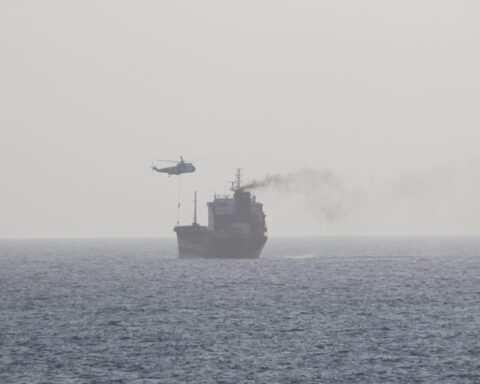
The IRGC’s statement on June 3 claimed responsibility for targeting “Ali Al Salem Air Base in Kuwait, which hosts helicopters, as well as the headquarters of the US Fifth Fleet in Bahrain,” according to IranWire and Al Jazeera. The strikes were framed as retaliation for US attacks on Qeshm Island and an Iranian oil tanker. Terminal 1 — the civilian passenger terminal that had reopened just 48 hours earlier on June 1, where one person was killed and over 63 were injured — went unmentioned in the IRGC’s statement. The gap between the stated target and the actual damage was not addressed.
Iran’s broader rationale, articulated through multiple state media channels, was that Kuwait “bears direct and clear responsibility” for hosting US forces and that Kuwaiti territory and facilities “had been used to support US military operations against Iran.” The Emir’s response was a flat public denial: Kuwait had not allowed its land, airspace, or waters for any military action against Iran. The gap between what Iran claims it struck and what it actually struck is the gap that Kuwait’s Deputy Foreign Minister put on the chargé d’affaires’ desk before issuing the PNG — and the same gap that Sheikh Jarrah carried to Washington.
eAwaz, which tracks Iranian strategic communications, noted that Tehran’s framing positions the attack not as targeting Kuwait directly but as a message to the United States delivered through Kuwait. By flying to Washington and presenting the Terminal 1 file in person to the official negotiating two different versions of a deal with Iran, Kuwait’s FM collapsed the distinction between bystander and participant — a distinction Tehran had been cultivating, and that Saudi Arabia’s own four-nation security bloc had been trying to preserve through its insistence on deescalation.
The Atlantic Council observed in a 2026 dispatch that “some GCC officials and analysts suspect that the US has prioritised the defence of Israel over the GCC in the early phase of the war.” Kuwait’s bilateral with Rubio, regardless of what was discussed inside the room, is the first concrete test of that suspicion since a civilian died in a Gulf airport. Kuwait has 13,500 US troops on its soil, a dead civilian in its terminal, and a formal defence agreement that Saudi Arabia does not have — and as of 9:30 a.m. on June 4, it was asking in person what those commitments are worth on Day 97.
Background
Kuwait and Iran’s diplomatic relationship before 2026 was more stable than either Saudi Arabia’s or the UAE’s ties with Tehran. The two countries navigated a crisis in March 2011, when Kuwait expelled three Iranian diplomats over IRGC espionage charges; Iran reciprocally expelled three Kuwaiti diplomats in April, and ambassadors were fully restored by May — a two-month turnaround from expulsion to normalisation. That cycle was triggered by spying allegations, not civilian casualties, which makes the 2011 precedent a poor template for 2026. As of June 4, Iran had not announced reciprocal expulsions of Kuwaiti diplomats — a departure from the 2011 pattern that may reflect the reduced staffing at Kuwait’s Tehran embassy since February.
The US-Kuwait defence framework dates to Kuwait’s liberation from Iraqi occupation in 1991 — a founding premise that makes the bilateral relationship structurally different from any other Gulf partnership. Kuwait partially funds the US military presence under a cost-sharing arrangement, creating mutual financial obligations that no other GCC state has formalised to the same degree.
The March 2, 2026 joint statement signed by Saudi Arabia, the UAE, Bahrain, Kuwait, Qatar, Jordan, and the United States affirmed the signatories’ “right to self-defense against Iranian attacks.” Kuwait’s bilateral with Rubio takes that collective language and makes it bilateral — moving from shared declaration to a single country’s specific grievance on the Secretary of State’s desk. Saudi Arabia assembled its own security bloc with Egypt, Pakistan, and Turkey and held three ministerial sessions in 31 days without producing a single written communiqué. Kuwait, in one morning at the State Department, may have produced more.
Frequently Asked Questions
Has a State Department readout of the Rubio-Kuwait bilateral been published?
As of publication on June 4, 2026, no official State Department readout had been released. DVIDSHUB published B-roll footage confirming the meeting took place, and the State Department’s public schedule listed it at 9:30 a.m. with a camera spray. State Department readouts of bilateral meetings during the Iran conflict have typically appeared within 12 to 24 hours, though meetings involving sensitive defence or intelligence commitments have occasionally been delayed or issued in abbreviated form. The absence of a same-day readout is not itself unusual.
How does Kuwait’s $1.02 billion NASAMS contract affect its position?
Kuwait signed a $1.02 billion contract with Raytheon on May 26, 2026 for the Norwegian Advanced Surface-to-Air Missile System — a procurement path that diverges from Saudi Arabia’s reliance on PAC-3 interceptors through the standard US Foreign Military Sales process, which carries an 18-month delivery timeline. The NASAMS purchase positions Kuwait to build air defence capacity outside the FMS pipeline, and Kuwait’s willingness to commit $1 billion to its own defence before sitting down with Rubio strengthens its negotiating position: it is not asking the US to protect Kuwait for free, but asking the US to match Kuwait’s own investment with diplomatic and security commitments.
Could Kuwait restore diplomatic relations with Iran as quickly as it did in 2011?
Not at the same pace. The 2011 crisis was triggered by espionage allegations — a category of dispute that both governments had reason to manage quietly. The 2026 case involves a dead Indian national, more than 63 injured passengers, a civilian terminal struck 48 hours after it reopened, and 951 cumulative Iranian attacks on Kuwaiti territory since the war began. Rapid restoration would also require the Emir to walk back his public characterisation of Iran’s strikes as “unprovoked” from “a friend” — language designed to be permanent, not provisional.
Is Oman the only GCC state maintaining full diplomatic relations with Tehran?
Yes. With the UAE closing its Tehran embassy on March 1, 2026 and Kuwait expelling diplomats and shuttering Iran’s cultural mission on June 3, Oman is the only GCC member maintaining a complete diplomatic bridge to Iran. Bahrain downgraded ties with Tehran in 2016 and has not restored them. Saudi Arabia re-established relations through the 2023 Beijing Agreement but has not deployed a new ambassador since the war began. Qatar maintains limited ties. Oman’s position as the sole remaining full diplomatic channel gives Muscat disproportionate influence in any mediation — and means that if the Omani channel closes, no GCC state would retain direct diplomatic access to the Iranian government at ambassadorial level.