
RIYADH — Crown Prince Mohammed bin Salman declined Emmanuel Macron’s invitation to the G7 Evian summit on June 16, citing “prior commitments” — and on the same day, June 12, Saudi Foreign Minister Faisal bin Farhan received Dora Cattuti, Adviser to the French President for the Middle East and North Africa, in Riyadh for a bilateral meeting. The refusal and the reception were not separate decisions. They were the same decision, expressed through two channels: multilateral accountability refused, bilateral access accepted.
Saudi Arabia is now absent from every scheduled multilateral war-management forum in the next ten days — the G7 Evian Arab-leader session on June 16, the Washington Iran follow-on on June 22 — while maintaining private diplomatic contact with the very government hosting the forum it declined. This is Day 105 of the Iran war. On March 26, Faisal bin Farhan attended the G7 Foreign Ministers session at Abbaye des Vaux-de-Cernay and co-signed language on Hormuz maritime security. That language named Saudi Arabia as a victim-state. The Evian session would have required something qualitatively different: a leaders-level co-signatory posture naming Iran as an aggressor requiring sanctions enforcement.
Table of Contents
- What MBS Told Macron — and What He Did Not Say
- The Bilateral That Replaced the Summit
- Why Did Saudi Arabia Attend the March 26 G7 Session?
- What Would Evian Have Required Saudi Arabia to Co-Sign?
- Three G7 Summits, Three Refusals, Three Different Excuses
- The Quartet and the Architecture of Format Selection
- What Does Co-Signing Iran Sanctions Language Cost Riyadh?
- The Ten-Day Diplomatic Vacuum
- Tehran’s Silence on the Refusal
- Frequently Asked Questions
What MBS Told Macron — and What He Did Not Say
The Saudi Press Agency communiqué was three sentences. Mohammed bin Salman thanked Macron “for the invitation to attend the G7 session in the French lakeside resort of Evian on June 16 to discuss the Middle East war.” He excused himself “due to prior commitments.” He reaffirmed “the strength of bilateral relations between the two countries.” That final clause — bilateral relations — was the operative signal. It was not pro forma. It was a policy instruction: France would receive access through bilateral channels, not multilateral ones.
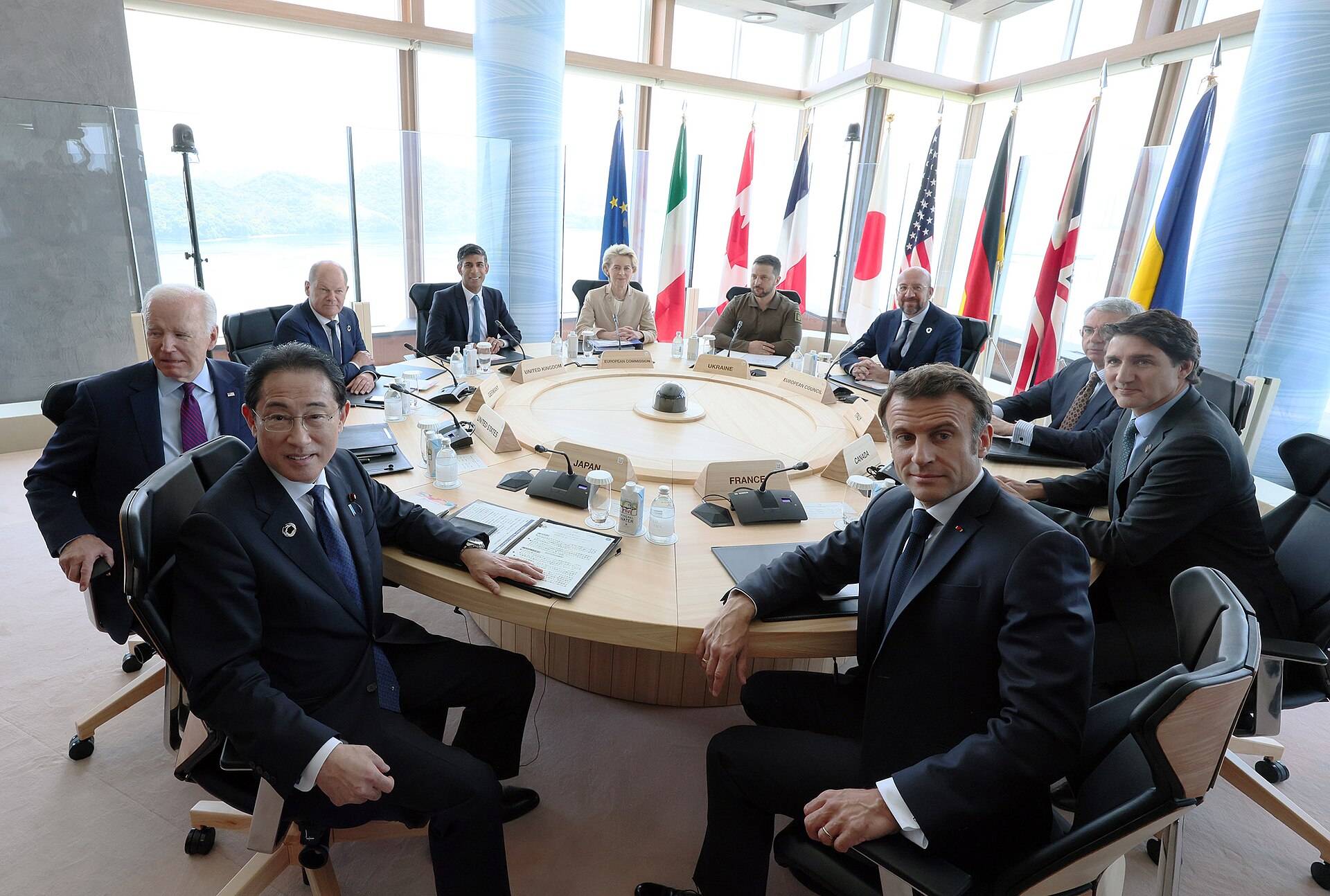
Macron had personally extended the invitation. He asked the leaders of Egypt, Saudi Arabia, Qatar, and the UAE to attend a dedicated Arab-leader session on Tuesday, June 16, to discuss what he described to France 24 as “the closure of the Strait of Hormuz, which has a real impact on our economies” and “negotiations on Iran.” Of the four invited states, Saudi Arabia is the only one that has publicly confirmed it will not attend.
“Prior commitments” is a phrase that does no diplomatic work beyond declining. It names no engagement, no counterpart, no agenda. Hajj 2026 ended on June 9 — seven days before the Evian session. The Hajj rationale that MBS used to decline the 2024 G7 Puglia summit, where he cited “obligations to supervise the work of officials in the Kingdom during Hajj season,” is not available this cycle. The commitments are prior. They are also unnamed.
The Bilateral That Replaced the Summit
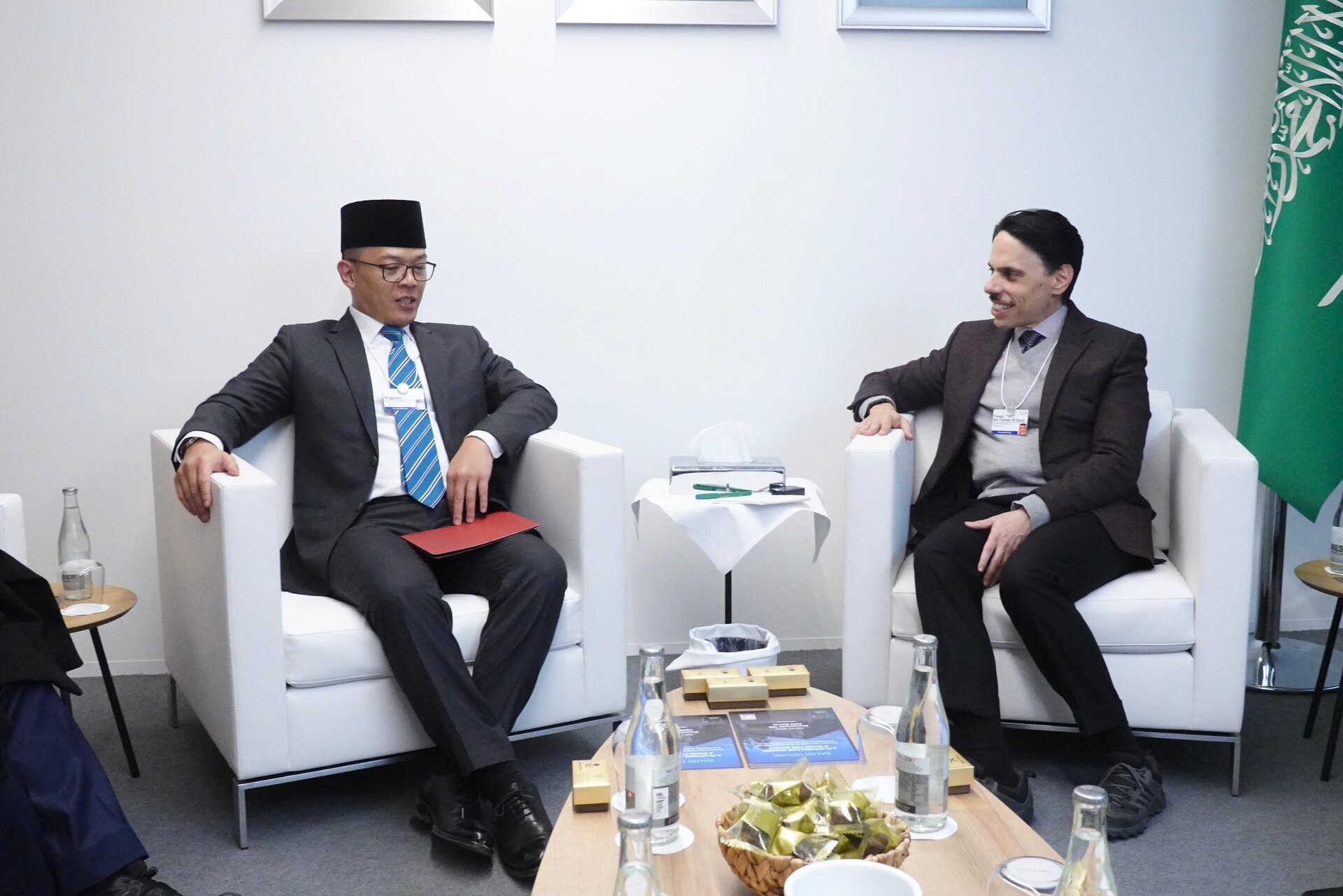
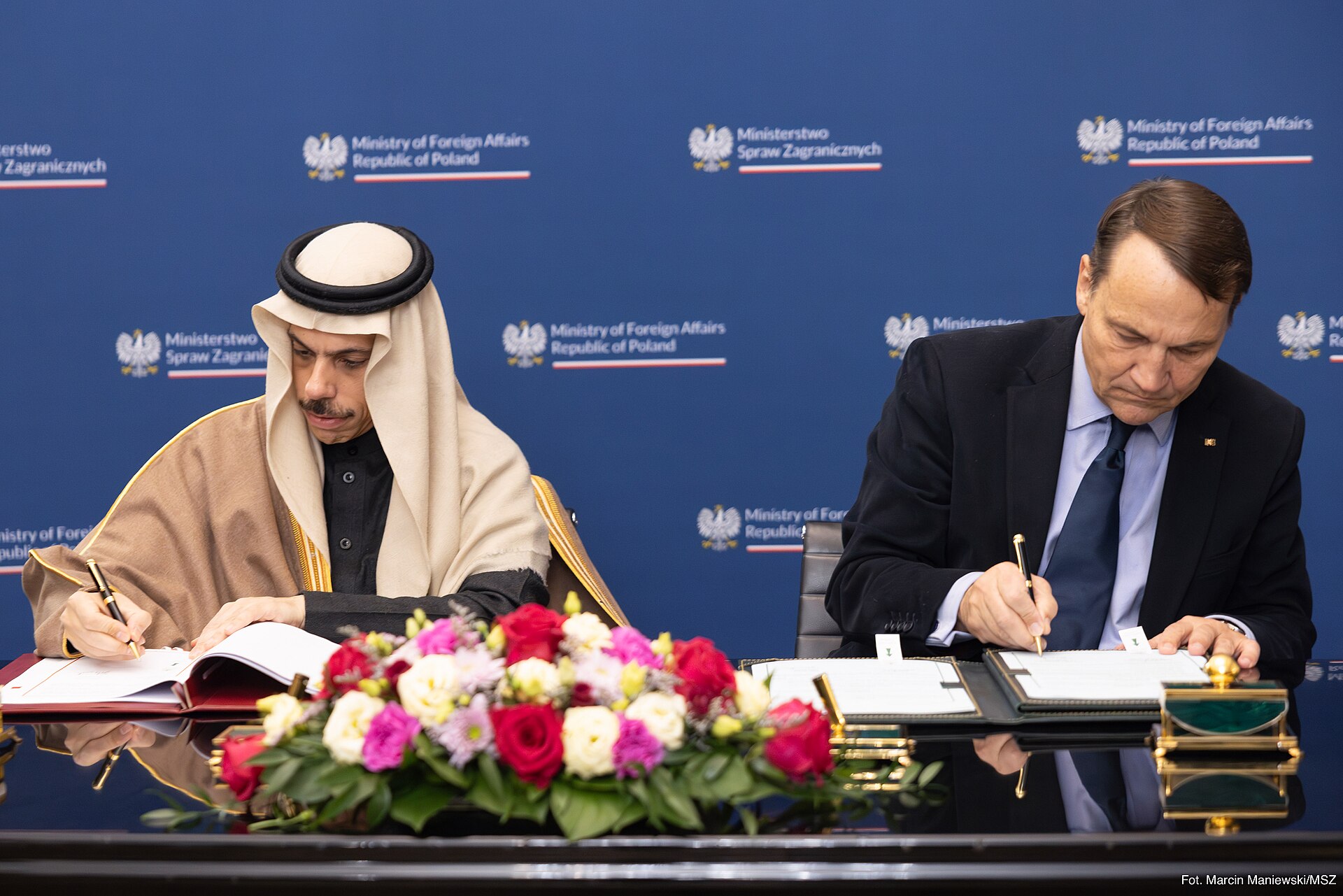
Hours after the SPA communiqué declining Evian, a second communiqué appeared. Faisal bin Farhan received Dora Cattuti in Riyadh. The two “reviewed bilateral relations between their countries, regional developments, and issues of mutual interest,” per Asharq Al-Awsat citing SPA. “Issues of mutual interest” is the standard SPA formula for substantive but undisclosed agenda items. It has no informational content and complete diplomatic content.
The Middle East briefing 3,000+ readers start their day with.
One email. Every weekday morning. Free.
Cattuti’s Élysée portfolio is the Middle East and North Africa. Her visit sits inside a pre-Evian French diplomatic shuttle — a series of bilateral contacts Paris has been conducting ahead of the summit. France has not publicly characterized her Riyadh stop as a substitute for MBS’s Evian attendance. It did not need to. The structure spoke for itself: the head of state declines the multilateral session; the foreign minister receives the summit host’s regional adviser on the same calendar day. The substance that would have been discussed at Evian moved to Riyadh, on Saudi terms, at a level below head-of-state, preserving MBS’s deniability on whatever was agreed.
Asharq Al-Awsat published the two stories — MBS’s refusal and the Cattuti visit — as consecutive items, articles 5283122 and 5283127. Neither the outlet nor any other regional publication connected them editorially. Arab News and Arabian Business reported the refusal as a straightforward diplomatic notice. The juxtaposition — decline the room, receive the room’s organizer privately — went unobserved.
Why Did Saudi Arabia Attend the March 26 G7 Session?
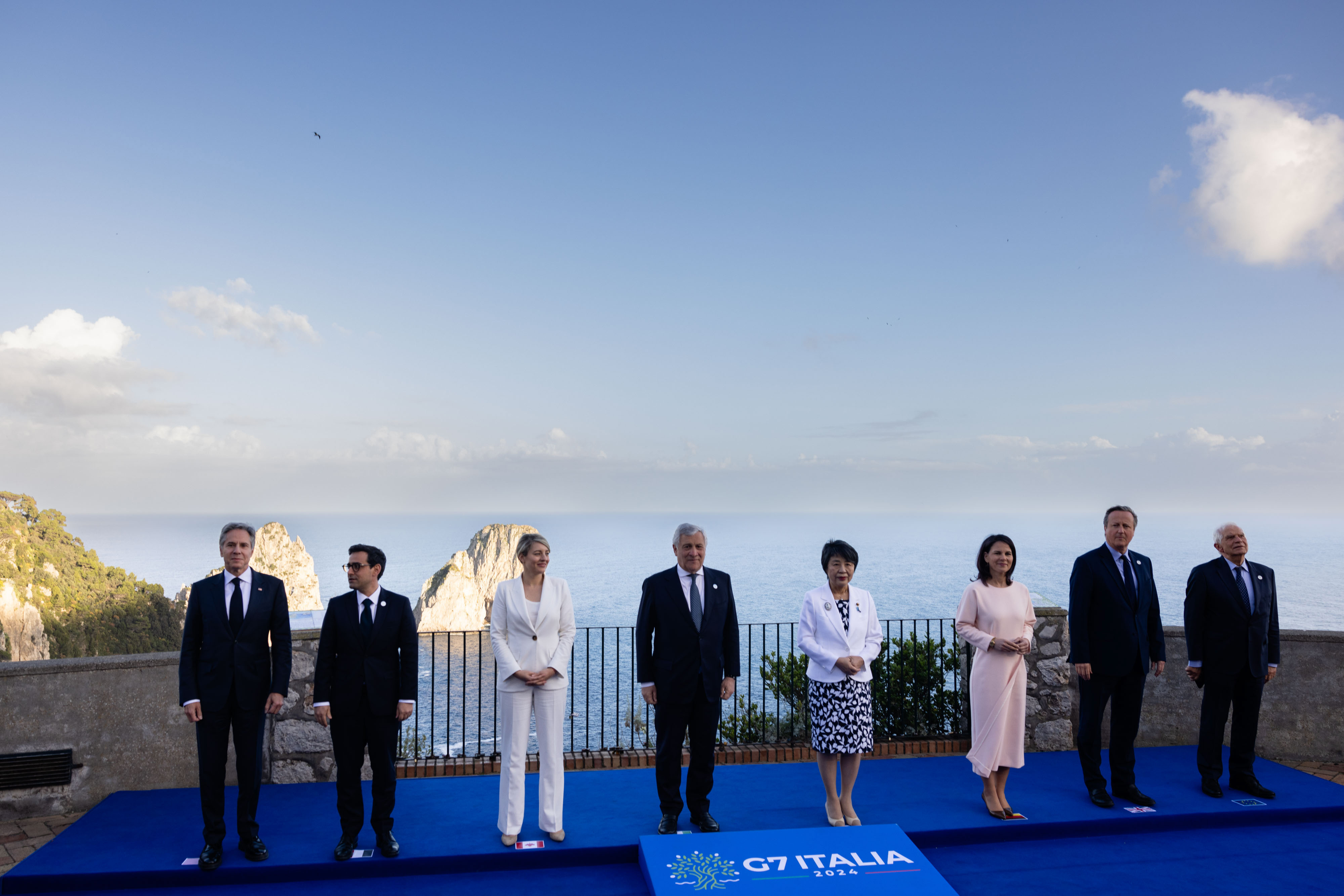
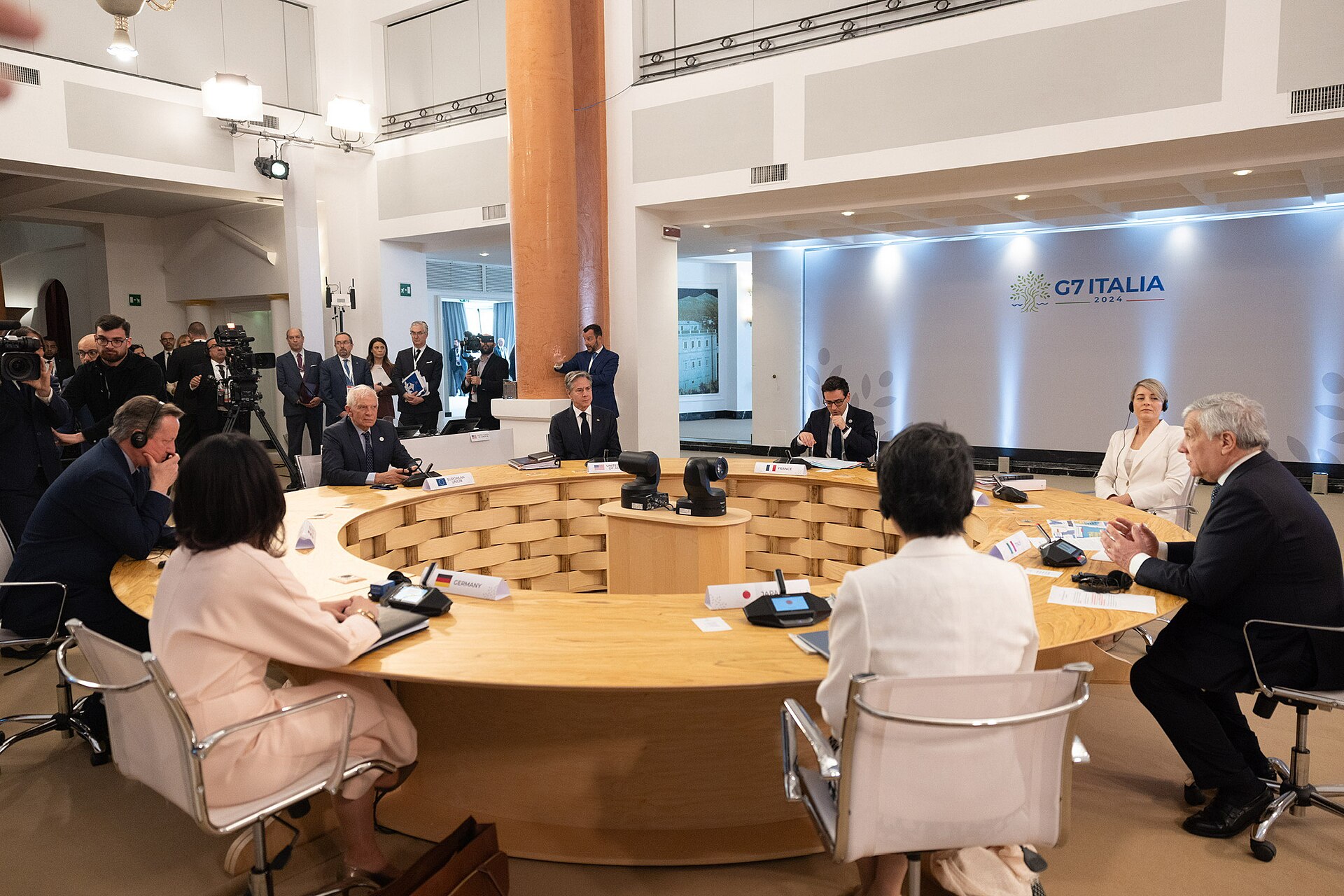
Saudi Arabia has attended exactly one G7-level multilateral forum on the Hormuz crisis during the war. On March 26, Faisal bin Farhan co-signed the G7 Foreign Ministers joint statement at Abbaye des Vaux-de-Cernay — a document that named Saudi Arabia as a victim of attacks and demanded restoration of Hormuz navigation without designating an aggressor.
The joint statement condemned “attacks against civilians and civilian infrastructure” in Bahrain, Kuwait, Oman, Qatar, Saudi Arabia, the UAE, Jordan, and Iraq. The G7 “reaffirmed the absolute necessity to permanently restore safe and toll-free freedom of navigation in the Strait of Hormuz.” Saudi Arabia appeared throughout as a victim-state, not a co-prosecutor. That structural distinction is why March 26 was possible and June 16 was not.
The language was calibrated to Saudi’s constraints. It named a problem — Hormuz closure — without assigning sole responsibility. It listed affected states without designating an aggressor. It demanded restoration of navigation without specifying a sanctions enforcement mechanism. Saudi Arabia could sign because signing cost nothing: no naming of Iran as the party requiring punitive action, no co-signatory exposure to sanctions language, no formal posture that would complicate Riyadh’s maintained claim of non-belligerence toward Tehran.
The Evian session is a different instrument. It is leaders-level, not foreign-ministers-level. The G7 Finance Ministers, meeting in Paris on May 18–19, had already set the frame: they called it “imperative” to restore Hormuz transit and US Treasury Secretary Scott Bessent urged all G7 and allied nations to “follow the sanctions regime to crack down on illicit finance fueling the Iranian war machine.” Bessent explicitly called on European allies to enforce financial sanctions on Iran and Asian allies to target Iran’s shadow fleet. Any Evian statement on Hormuz or Iran would carry that frame forward. MBS would not have been signing a condemnation of Hormuz closure. He would have been co-signing an enforcement posture against Iran.
What Would Evian Have Required Saudi Arabia to Co-Sign?
The G7 Evian summit’s Arab-leader session would have required Saudi Arabia to co-sign language on four war-management items: containing the economic fallout of the US-Israeli campaign against Iran, Hormuz reopening, Iran nuclear negotiations, and Ukraine. Each item names Iran as the problem requiring G7 coordination. No Saudi posture at the table avoids that framing.
The G7 Research Group at the University of Toronto compiled the summit agenda. Its director, John Kirton, assessed that “the first policy priority for the 2026 Evian Summit is now containing the damage done by the US-led war against Iran on global security, trade, energy, economic growth and safety.” That framing — war damage, US-led, against Iran — is not language Riyadh can co-sign while maintaining its non-belligerence position.
French officials dropped plans for a sweeping final communiqué. The summit will produce narrower joint statements on specific topics. This is the detail that confirms the format-selection logic operates at a structural level, not a tactical one. Even with the accountability vehicle weakened — narrower statements rather than a binding communiqué — MBS still declined. The problem was never the strength of the document. The problem was the room.
Any joint statement on Hormuz would have required Saudi Arabia to appear alongside the G7 members who have already adopted Bessent’s sanctions-enforcement frame. Any statement on Iran nuclear negotiations would have positioned Riyadh inside a posture it has spent 105 days avoiding: formal alignment with the coalition prosecuting the war against Iran. Saudi Arabia denied Washington Post claims in March that it had lobbied the United States to strike Iran. Its ambassador channel to Tehran has maintained the position that “zero” Saudi territory is being used for strikes. A co-signed Evian statement on Iran sanctions would have made that denial structurally untenable.
Saudi Arabia was not present at the Finance Ministers session either. It did not need to be. The output was readable: any Evian leaders’ statement on Hormuz would carry forward the Finance Ministers’ enforcement frame, not the Foreign Ministers’ victim-naming frame. The escalation from condemnation to enforcement is the escalation from March 26 to June 16.
The Foundation for Strategic Research in Paris published an assessment in 2026 observing that Middle East transformations mirror a global order characterized by “the primacy of transactional bilateral relations over multilateral approaches.” Saudi Arabia did not need to read the paper. It wrote the operating manual.
Three G7 Summits, Three Refusals, Three Different Excuses
| Summit | Date | Host | Stated Reason for Non-Attendance | Hajj Overlap |
|---|---|---|---|---|
| G7 Puglia, Italy | Jun 13–15, 2024 | Meloni | “Obligations to supervise the work of officials in the Kingdom during Hajj season” | Yes (Hajj began Jun 14) |
| G7 Kananaskis, Canada | Jun 15–17, 2025 | Carney | No stated reason | No (Hajj ended late May) |
| G7 Evian, France | Jun 15–17, 2026 | Macron | “Prior commitments” | No (Hajj ended Jun 9) |
The pattern is three consecutive years of non-attendance with diminishing explanatory power. The 2024 Puglia refusal had a specific, verifiable rationale: Hajj began on June 14, 2024, overlapping the summit. The 2025 Kananaskis refusal had no rationale at all. The 2026 Evian refusal used a formula — “prior commitments” — that is functionally equivalent to no rationale but dressed in diplomatic courtesy.
Saudi Arabia’s status at G7 summits is as an invited “outreach partner,” not a member. Participation is at the host presidency’s discretion. Non-attendance carries no formal diplomatic sanction, no procedural consequence, no reputational cost within the G7 institutional framework. This asymmetry is the feature, not the bug. MBS can decline Macron’s personal invitation and receive Macron’s Middle East adviser on the same day without any institutional mechanism registering a contradiction.
The 2024 Puglia summit was the last G7 leaders’ meeting before the Iran war began. MBS’s absence there was legible as scheduling. His absence at Kananaskis in 2025 — the first wartime G7, eight weeks into the conflict — was legible as avoidance. His absence at Evian in 2026, on Day 105, with the war reshaping every dimension of Saudi Arabia’s security architecture, is legible as doctrine.
The Quartet and the Architecture of Format Selection
Saudi Arabia does participate in multilateral diplomacy during the war. It participates in multilateral diplomacy it designed. The Saudi-Pakistan-Turkey-Egypt Quartet — first convened on March 19, reconvened on March 29, elevated to a senior officials mechanism on April 14 — is the structural expression of format-selection doctrine. Saudi is the convener. No G7 member sits at the table. No Iran-naming obligation exists in the group’s mandate. No co-signatory exposure to sanctions language is possible. Deniability on military posture is preserved by design.
The Quartet’s membership is itself an analytical statement. Pakistan provides an IRGC back-channel through its Interior Minister Naqvi’s Tehran visits — three since the war began — and Army Chief Munir’s dual-letter architecture. Turkey provides NATO adjacency without NATO alignment. Egypt provides Arab League institutional weight without Gulf Cooperation Council entanglement. None of the four members has co-signed any G7 statement on Iran during the war.
Chatham House characterized Saudi Arabia’s broader posture in a 2025 analysis as “managing multipolarity” through a combination of bilateral ties and selective multilateral engagement. The word “selective” does diplomatic work. It implies choice. What the Evian refusal demonstrates is that the selection criteria are not about the subject matter — Saudi Arabia will discuss Hormuz and Iran — but about the format’s accountability architecture. Will the room produce a document? Will the document name Iran? Will Saudi Arabia appear as a co-signatory? If the answer to all three is yes, Saudi Arabia will not be in the room.
The contrast with Egypt, Qatar, and the UAE — the three other Arab states Macron invited — sharpens the point. Egypt co-chairs the Cairo Contact Group on Sudan and has institutional practice co-signing multilateral statements with Western partners. Qatar’s $6 billion credit line to Iran makes its Evian attendance a different kind of signal — Doha can sit at the G7 table precisely because it has already demonstrated independent financial engagement with Tehran. The UAE’s $30 billion India-UAE-Israel corridor gives Abu Dhabi an economic integration rationale for G7 presence that does not depend on Iran posture. Saudi Arabia has none of these structural alibis. For MBS, the only available postures in the Evian room were alignment with the sanctions coalition or visible dissent from it. He chose a third option: the empty chair.
What Does Co-Signing Iran Sanctions Language Cost Riyadh?
The financial constraint is specific. Brent closed at $89.15 on June 12 — a 4.2 percent single-session decline — against Saudi Arabia’s PIF-inclusive fiscal breakeven of $108–111 per barrel. The revenue gap runs at $152–176 million per day. Aramco’s July OSP for Asia was cut by $6 per barrel, to $9.50 over Dubai/Oman — the largest adjustment since 2022.
In this environment, formally co-signing sanctions enforcement language against Iran — the posture Bessent has demanded of all G7 allies — would carry a cascade of costs. It would confirm Saudi Arabia’s alignment with the sanctions coalition, compromising the non-belligerence posture Riyadh has maintained through its ambassador channel to Tehran. It would complicate the three active mediation tracks — Pakistan, Oman, Qatar — all of which already exclude Saudi Arabia but none of which have formally named Saudi as a hostile party. It would expose Riyadh to Iranian reciprocal measures at a moment when IRGC targeting doctrine has already designated Prince Sultan Air Base as a “legitimate target,” per Iranian Parliament Speaker Mohammad Bagher Ghalibaf’s June 7 statement.
The defense dimension compounds the diplomatic cost. Saudi Arabia’s approved $9 billion, 730-round PAC-3 FMS sale from January 2026 cannot produce deliverable interceptors before 2030. Lockheed Martin’s Camden, Arkansas facility manufactures 620 missiles per year. The Pentagon’s FY2027 order of 2,798 rounds at $12.2 billion claims the entire Camden production ramp through the end of the decade. Saudi Arabia needs approximately 2,400 rounds to reconstitute its air defense shield. The FMS backlog stands at 4,300-plus rounds — seven years of output. Co-signing Iran sanctions language while unable to defend against Iran’s response is not a diplomatic risk. It is a military one.
The Ten-Day Diplomatic Vacuum
Between June 12 and June 22, two multilateral forums will address the Iran war. Saudi Arabia will attend neither. The G7 Evian Arab-leader session on June 16 was declined by choice. The Washington Iran follow-on on June 22 excludes Saudi Arabia structurally — Riyadh was not invited.
The distinction matters. Evian is the first wartime forum to which Saudi Arabia was explicitly invited and from which it self-recused. Every prior exclusion — from the Qatar-brokered Tehran contacts to the Oman-mediated Hormuz protocol to the Pakistan dual-letter architecture — was imposed on Riyadh by the structure of the mediation tracks. Evian was an open door. MBS closed it himself.
The ten-day window is not empty of Saudi diplomacy. It is empty of Saudi multilateral diplomacy. Faisal bin Farhan’s reception of Cattuti on June 12 establishes the pattern for what the window will contain: bilateral contacts, below head-of-state level, with undisclosed agendas, producing no co-signed documents. The GCC-Canada ministerial in Manama and the Saudi FM’s June 2–4 contact cluster — six bilateral engagements, none with Rubio or Araghchi — already demonstrated this operating rhythm. The Evian refusal extends it from practice to declared posture.
On June 15, Sadara Chemical Company’s $3.7 billion debt grace period expires. Aramco holds $2.405 billion of that exposure; Dow holds $1.295 billion; twenty-five-plus banks hold the remainder. No creditor communication has been issued. On June 16, the G7 discusses Hormuz. On June 22, Washington discusses Iran. Saudi Arabia will be present at none of these events. The one confirmed Saudi diplomatic act that fell inside that window was bilateral and pointed away from every war forum: on June 11, MBS ordered the resumption of Lebanese exports to the kingdom, lifting a ban that had held for four and a half years — on the same day the IRGC struck eighteen targets in Kuwait and Bahrain. The Sadara deadline, the Evian session, and the Washington meeting fall within the same ten-day window. Riyadh’s diplomatic calendar and its financial calendar are converging on the same silence.
Tehran’s Silence on the Refusal
No IRNA statement, no Tasnim commentary, no Iranian official response to Saudi Arabia’s Evian refusal has surfaced as of June 12. The silence is not an oversight. Tehran has no political interest in drawing attention to Saudi Arabia’s self-exclusion from the G7’s Iran-accountability posture. Every day Riyadh stays out of a room where Iran is named as an aggressor requiring sanctions enforcement is a day Tehran’s diplomatic position improves by subtraction.
Global Times, Chinese state media, characterized the G7’s March 2026 Iran joint statement as “unaccountable” and exposing “the group’s weakness.” The framing implicitly validates Saudi Arabia’s opt-out logic: if G7 Iran statements lack binding force — as Beijing argues — then the cost of signing them is reputational exposure without institutional return. Saudi Arabia did not articulate this reasoning. It did not need to. The refusal is the reasoning.
The Saudi MOFA’s pattern of non-response — no statement on the Evian refusal’s diplomatic implications, no statement on the Cattuti bilateral’s substance, no statement connecting the two — is itself the policy instrument. SPA published the communiqués. The foreign ministry added nothing. The institutional silence between what SPA reports and what the MOFA contextualizes is where Saudi Arabia’s wartime diplomatic doctrine lives. In March, Riyadh denied via Alarabiya citing SPA that it had lobbied Washington to strike Iran and asserted through its ambassador channel that “zero” Saudi territory was being used for strikes against Iran. A co-signed Evian communiqué on Iran sanctions — even a narrower joint statement short of a full communiqué — would have contradicted both denials in documentary form. The empty chair preserves the denial. The bilateral with Cattuti preserves the relationship.
Frequently Asked Questions
Has Saudi Arabia ever attended a G7 summit as an outreach partner?
Yes. Saudi Arabia attended G7 and G8 outreach sessions under King Abdullah in 2008 (Toyako, Japan) and 2013 (Lough Erne, UK). Mohammed bin Salman attended the G20 sessions held alongside G7 summits in 2019 (Osaka) but has declined all three G7 outreach invitations extended directly to him as Crown Prince — Italy 2024, Canada 2025, and France 2026. The distinction is generational: Abdullah treated G7 outreach as a status marker; MBS treats it as an accountability trap.
Could Saudi Arabia have sent a representative to Evian instead of declining entirely?
G7 outreach invitations are addressed to heads of state or government, and the host presidency sets the participation level. Macron’s invitation was to MBS personally. Saudi Arabia could have proposed sending Faisal bin Farhan or another senior official, as it did at the March 26 Foreign Ministers session. The decision to decline outright rather than propose a downgraded delegation signals that the issue was not the level of representation but the format itself — any Saudi presence at the Evian table would have appeared in the joint statement’s signatory record.
What is the Dora Cattuti bilateral’s significance compared to a head-of-state meeting?
Cattuti holds the Élysée’s Middle East and North Africa advisory portfolio — a position roughly equivalent to a senior NSC director in the US system. The meeting with Faisal bin Farhan was minister-to-adviser, one full protocol tier below a head-of-state engagement. This calibration is precise: it allows substantive exchange on Hormuz, Iran, and the Evian agenda while producing no joint statement, no photo opportunity at the leaders’ level, and no documentary record beyond SPA’s five-line readout. The bilateral format permits everything the multilateral format prohibits.
Does Saudi Arabia’s G7 absence affect its defense procurement from G7 member states?
Not directly. Foreign Military Sales are governed by bilateral defense cooperation agreements and Congressional notification procedures (in the US case), not by G7 institutional participation. However, Bessent’s May 19 demand that all allies enforce the Iran sanctions regime introduces an informal linkage: G7 members may increasingly condition defense cooperation on alignment with their Iran posture. The UK’s pending Typhoon maintenance contract and France’s own naval cooperation framework with Riyadh both operate outside the G7 institutional track, which is precisely why Saudi Arabia prefers bilateral defense relationships to multilateral ones.
Why has no competing media outlet connected the MBS refusal and the Cattuti bilateral?
Asharq Al-Awsat published the two items consecutively — articles 5283122 and 5283127 — without editorial linkage. Arab News and Arabian Business reported the refusal as standalone diplomatic notice. The structural reason is that Saudi-owned or Saudi-aligned outlets treat SPA communiqués as discrete events, not as elements of a pattern. Wire services (AFP, Reuters) reported the Evian Arab-leader invitations without cross-referencing Saudi Arabia’s already-confirmed refusal. The Foreign Policy analysis from April 2026, “Why Are the Saudis Sitting Out the War With Iran?”, addressed non-participation in the war but not the format-selection dynamic governing Saudi multilateral diplomacy — the distinction between refusing the substance and refusing the room.