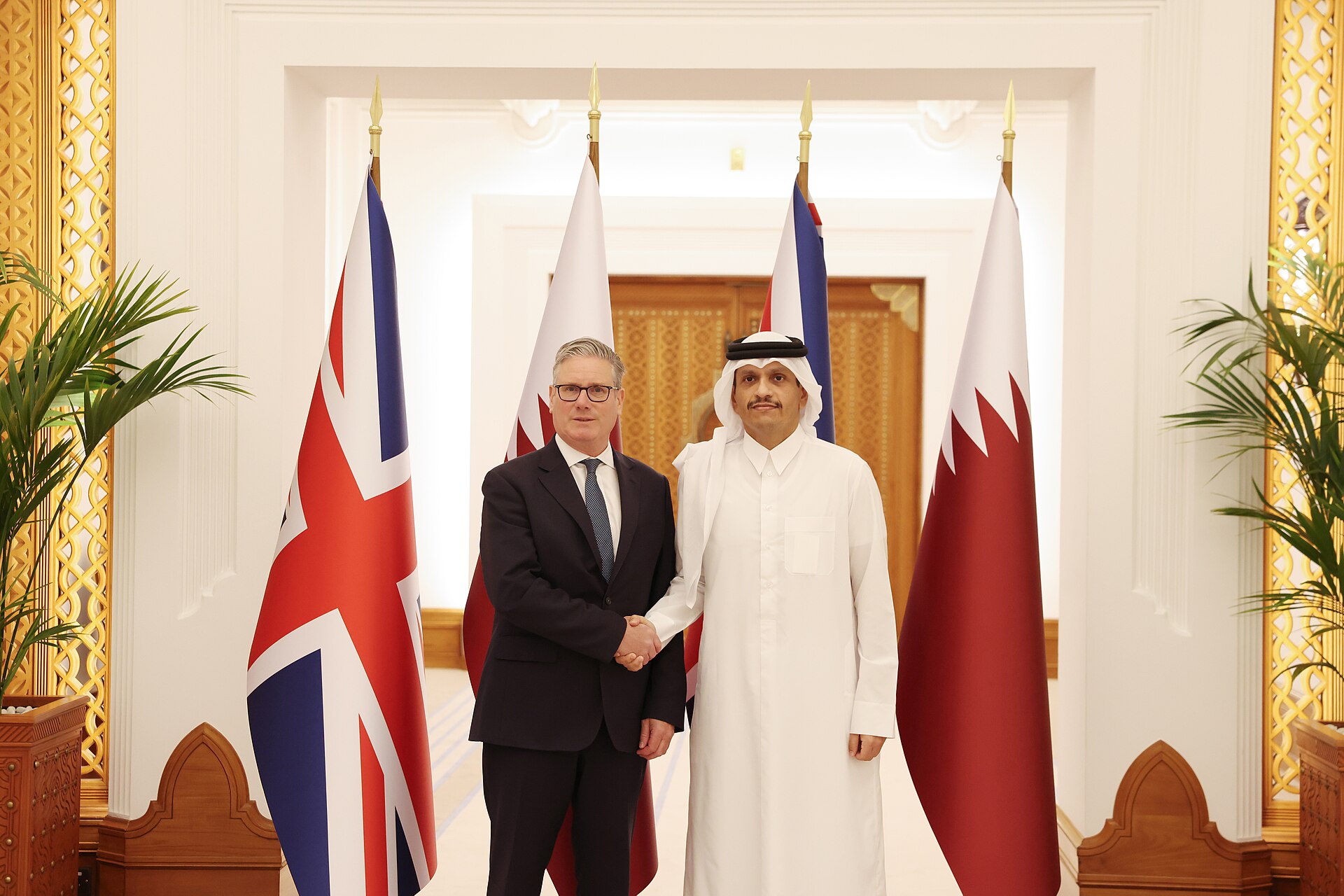
DOHA — On June 8, 2026, Qatar’s Prime Minister Sheikh Mohammed bin Abdulrahman Al Thani took a call from Saudi Foreign Minister Faisal bin Farhan about the Iran conflict, then took a second from Iranian Foreign Minister Abbas Araghchi about the same war. Riyadh placed one call; Tehran placed the other. Qatar answered both — and that asymmetry, one pivot state connecting two principals who will not speak to each other, is now the entirety of Gulf diplomacy on the Iran file.
Every other Saudi channel to Tehran is gone. The Oman track was threatened by Trump on May 28 and suspended by Iran on June 1. The Pakistan track was publicized beyond deniability. Saudi Arabia’s last confirmed contact with Secretary of State Marco Rubio dates to March 2026. What remains is Doha — the capital Riyadh blockaded for three and a half years, from June 2017 to January 2021, specifically because of its relationship with Tehran.
On June 10, Qatar escalated from relay to principal: a Qatari delegation flew directly to Tehran, consulting Washington before departure but not Riyadh — a sequence that defines the trap Saudi Arabia now occupies. Qatar Called Saudi Arabia Before Flying to Tehran — That Is the Trap traces why the “coordination” framing in Doha’s readout obscures a structural dependency Riyadh cannot escape.
This is the channel Saudi Arabia is using on the eve of June 9, when Aramco’s $21.89 billion quarterly dividend comes due against $18.6 billion in free cash flow, when Iran is expected to formally reject the US-brokered MOU framework, and when Brent crude sits roughly fourteen dollars below the kingdom’s fiscal breakeven. Trump declared a ceasefire on Truth Social the same evening Iran launched ballistic missiles at Israel. His version covers none of what Riyadh actually needs.
Contents
- Two Calls on June 8, Zero Saudi Fingerprints on Either
- What Did Qatar Relay Between Riyadh and Tehran on the Same Day?
- How Did Saudi Arabia Lose Every Other Channel to Iran?
- The State Riyadh Blockaded Is Now Its Only Interlocutor
- Why Can Qatar Still Mediate a War It Was Bombed In?
- Trump Declared a Ceasefire. It Covers None of What Saudi Arabia Needs.
- What Does the June 9 Convergence Mean for Saudi Arabia?
- The Name That Does Not Appear in the Readout
- Frequently Asked Questions
Two Calls on June 8, Zero Saudi Fingerprints on Either
The Qatar Ministry of Foreign Affairs confirmed on its official X account that Sheikh Mohammed bin Abdulrahman spoke with Faisal bin Farhan on June 8, hours after Iran launched ballistic missiles at Israel. The two discussed, in Qatar’s phrasing, “the necessity of facilitating mediation efforts between the United States and Iran.” This was the second such call in six days — the first, on June 3, covered “Pakistan-led mediation involving the United States and Iran” and “coordinating support for mediation initiatives aimed at reducing tensions,” per a readout posted on Qatar’s foreign ministry website.
On the same June 8, Araghchi called Sheikh Mohammed. The Peninsula Qatar and Business Standard both reported that the Qatari prime minister “affirmed Qatar’s support for all endeavors aimed at containing escalation and reaching a comprehensive agreement that contributes to consolidating security and stability, and achieves lasting peace in the region.” The Araghchi call also covered “the latest developments in Lebanon” — a subject absent from the Saudi call’s readout.
The Middle East briefing 3,000+ readers start their day with.
One email. Every weekday morning. Free.
The result is that Doha conducted a Saudi relay and a Tehran relay on the same day, on the same subject, through the same official. There is no joint three-way communiqué, though both IranWire and Jordan News have framed the June 8 activity as trilateral — a characterization that is architecturally correct even if no single call contained all three parties. Qatar is the node through which two states that will not speak to each other are speaking about each other.
The Jerusalem Post reported on June 8 that “officials from Egypt, Saudi Arabia, Turkey, Pakistan and Qatar urged the Trump administration to pressure Israel to rein in its strikes on Iran and Beirut, and have also urged Iranian officials to stop attacks on Israel.” If accurate, Saudi Arabia’s Iran-conflict engagement on June 8 ran exclusively through multilateral relays, with Doha handling the Iran end — and Riyadh placing no direct call to Washington, Tehran, or Tel Aviv.
What Did Qatar Relay Between Riyadh and Tehran on the Same Day?
Qatar relayed Saudi and Iranian positions on the US-Iran mediation track on June 8 through two separate bilateral calls with the same Qatari official. The Saudi-Qatar call focused on facilitating mediation; the Iran-Qatar call covered both mediation and Lebanon. The readouts suggest Qatar is operating as a live intermediary, not a passive observer, despite formally disclaiming that role in March 2026.
The June 3 readout is the more revealing of the two Saudi-side calls because it names the mechanism: “Pakistan-led mediation involving the United States and Iran.” By June 8, the language shifted to “facilitating mediation efforts between the United States and Iran” — the Pakistan qualifier dropped, and the verb changed from “coordinating support for” to “facilitating.” In diplomatic grammar, that is an upgrade from observer to operator. Whether the shift reflects a genuine change in Qatar’s role or merely a different drafter cannot be determined from outside, but the trajectory matters: the June 8 language is more active than June 3, arriving at the moment when every other mediation track had collapsed.
Araghchi’s call included a topic absent from both Saudi readouts: Lebanon. Iran’s foreign minister reviewed “the latest developments in Lebanon” alongside mediation efforts, and that inclusion is not incidental. Iran explicitly conditioned its cessation of military operations on Israel not striking Lebanon again — Israel struck Dahiyeh on June 7, killing two and wounding eleven, which is why Iran launched missiles on June 8, which is why these calls happened at all. The Lebanon variable was the trigger for the day’s escalation, and Iran discussed it with Qatar while Saudi Arabia either did not raise it or saw it omitted from the readout. Qatar is carrying two conversations with different agendas, and what Riyadh hears from Doha is not the same briefing Tehran delivered to Doha.
In March 2026, a Qatar prime minister’s advisor stated publicly that “Qatar [is] not engaged in US-Iran mediation, backs diplomatic efforts to end war.” The June 8 calls make that disclaimer functionally inoperative. Qatar is not merely backing diplomatic efforts — it is conducting them, fielding both sides in a single day, and absorbing the information asymmetry between what Saudi Arabia wants to know and what Iran is willing to say.
How Did Saudi Arabia Lose Every Other Channel to Iran?
Saudi Arabia had, at various points since February 28, at least three indirect pathways to influence or receive information from the Iran negotiating process. By June 8, all three were closed — each for a different reason, and none by Saudi Arabia’s own decision.
The Oman channel was the oldest and most institutionalized, hosting proximity talks between the United States and Iran since at least 2012 — Oman’s Foreign Minister Sayyid Badr Albusaidi had said in February 2026 that a resolution was “within our reach.” On May 28, Trump told his Cabinet he would “blow them up” if Oman continued brokering an Iran-Oman joint Hormuz management protocol, according to the Wall Street Journal and Jerusalem Post, and Treasury Secretary Scott Bessent issued a simultaneous financial threat that secured the Omani ambassador’s capitulation the same day. Iran independently suspended its US message exchanges via Oman on June 1, closing the channel from both ends — American coercion from one direction and Iranian withdrawal from the other.
The Pakistan channel was never formal in the way Oman’s was, but it was arguably more direct to Tehran’s decision-makers. Pakistan’s Interior Minister Mohsin Naqvi made three trips to Tehran in three weeks, carrying letters from both Prime Minister Shehbaz Sharif and Army Chief General Asim Munir — a dual-letter structure that gave Tehran a civilian state-to-state channel and a separate IRGC-facing military back-channel. The problem is that the trips were publicly reported by Tasnim, the Daily Pakistan, and Mehr News, and the PGSA toll arrangement was named in the US Senate record during Rubio’s June 2 testimony and Bessent’s June 6 IEEPA invocation. A back-channel that appears in congressional testimony is no longer a back-channel.
Saudi Arabia’s own bilateral contacts tell the same story of contraction. Faisal bin Farhan’s last confirmed call with Rubio dates to March 2026 — a gap now exceeding eighty days — and his last confirmed exchange with Araghchi was May 6, over a month ago. When he broke a fourteen-day silence between June 2 and June 4, the resulting six contacts included Jordan, Bahrain, Qatar, the IAEA’s Rafael Grossi, and messages to Russia and South Korea, but neither Rubio nor Araghchi appeared on the list. Saudi Arabia was excluded from the US-Iran MOU framework from its inception, from the June 4 US-Israel-Lebanon ceasefire trilateral, and from the June 22 Washington follow-on session — a pattern of exclusion that leaves Doha as the only door Riyadh can reach.
| Channel | Nature | Status | Cause of closure |
|---|---|---|---|
| Oman | Formal proximity talks (since 2012) | Frozen | Trump threatened military action May 28; Iran suspended exchanges June 1 |
| Pakistan | IRGC back-channel via dual letters | Publicized | Naqvi trips reported; PGSA toll named in US Senate record |
| Direct bilateral (Rubio) | US diplomatic | Inactive 80+ days | Last FM call March 2026; no contact in June |
| Direct bilateral (Araghchi) | Iran diplomatic | Inactive 33+ days | Last FM call May 6; no contact in June |
| Qatar relay | PM-level intermediary | Active | Two confirmed calls in six days (June 3 and June 8) |
The State Riyadh Blockaded Is Now Its Only Interlocutor
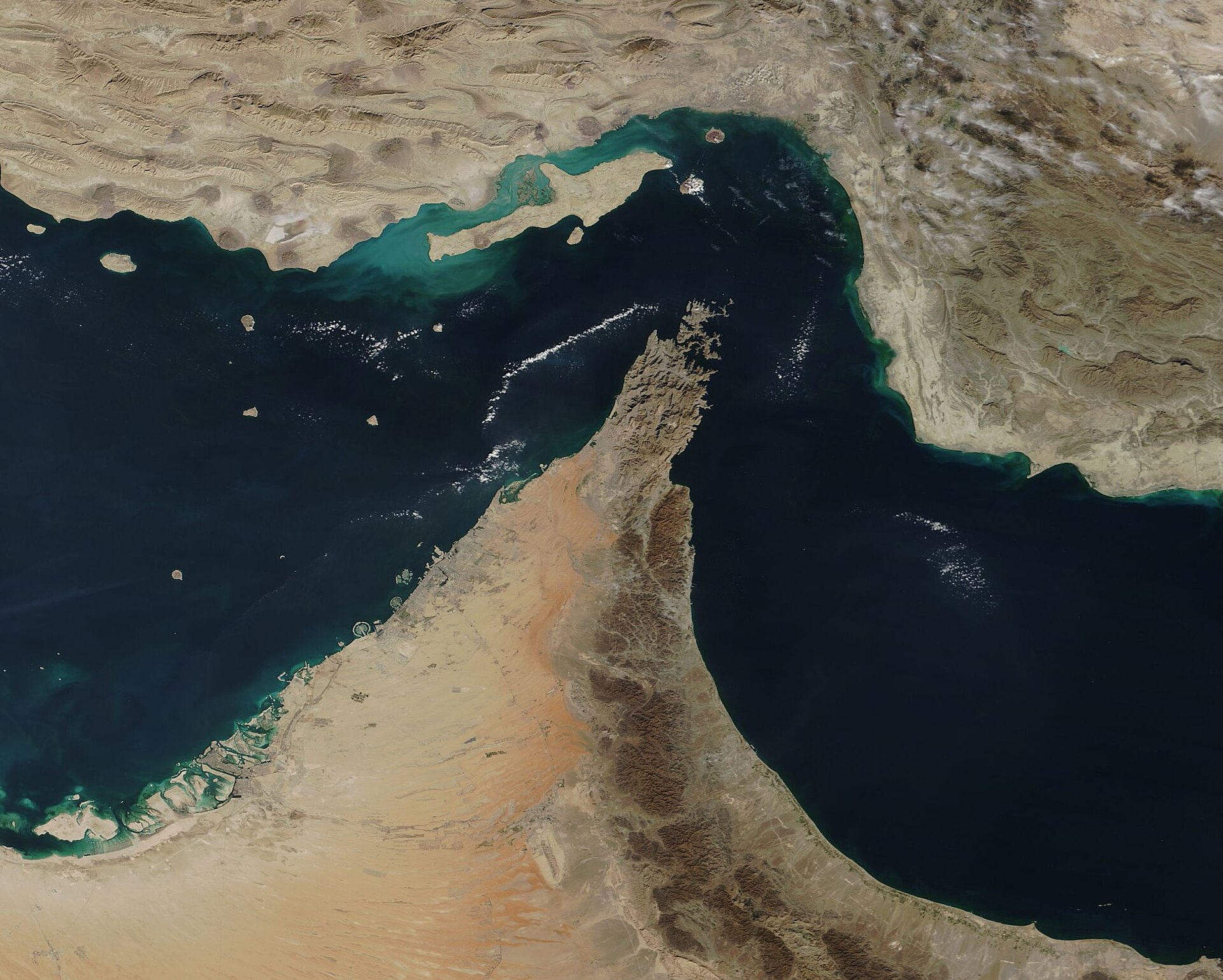
The Saudi-led blockade of Qatar began on June 5, 2017, and lasted until the Al-Ula Declaration on January 5, 2021 — three years and seven months during which Saudi Arabia, the UAE, Bahrain, and Egypt severed diplomatic, trade, and travel ties with Doha. The proximate cause was Qatar’s relationships with Iran, Turkey, and the Muslim Brotherhood, and Saudi Arabia’s core demand was that Doha downgrade its diplomatic relationship with Tehran and close the Al Jazeera network.
Qatar refused every demand and, during the blockade, relied on Iran for airspace access and emergency trade routes. The shared North Field / South Pars gas reservoir — the largest natural gas field on Earth, straddling the maritime boundary between the two states — made a complete severance of Qatar-Iran relations economically impossible regardless of Saudi pressure. The blockade ended in January 2021 at Saudi Arabia’s initiative, when Mohammed bin Salman embraced Qatar’s Emir at the Al-Ula summit and all four blockading states restored relations without Qatar having met a single one of the original conditions.
Five years later, Saudi Arabia is routing its most sensitive diplomatic activity through the very capital it tried to cut off from the world. The infrastructure of ties that Riyadh spent three and a half years attempting to destroy is now the infrastructure keeping it connected to the most consequential diplomatic process of the war. Qatar’s relationship with Iran was the problem in 2017; in 2026, it is the only reason Saudi Arabia has any connection to the negotiations at all. The ECFR’s characterization of Qatar and Oman as the Gulf’s two “safety valves” has narrowed to one — Oman’s valve was shut by a presidential threat, and Qatar’s is the only one still functioning.
Why Can Qatar Still Mediate a War It Was Bombed In?
Qatar preserved its civilian diplomatic channel to Tehran after the March 2026 strikes while expelling only military and security personnel — a deliberate calibration that no other struck GCC state replicated. Its simultaneous role as host of CENTCOM’s largest forward base and holder of direct IRGC contacts gives Doha access that no other Gulf capital retains.
Al Udeid Air Base, southwest of Doha, houses approximately 10,000 US military personnel and serves as CENTCOM’s Combined Air Operations Center. Iran struck Al Udeid on March 3, 2026, in the opening days of the war, and on March 18 struck a Qatari natural gas facility. Qatar declared Iranian military and security personnel persona non grata on March 19 — but kept its civilian diplomats in post, a distinction no other hit GCC state drew.
The UAE closed its Tehran embassy entirely on March 1, becoming the first Gulf state to sever relations completely, and Kuwait expelled two Iranian diplomats on June 3 with a twenty-four-hour departure deadline after the Terminal 1 airport strike. Qatar, by contrast, was the only GCC state to dispatch its foreign minister to Tehran for high-level consultations after being struck, as the Middle East Monitor documented in a June 4 analysis titled “Qatar Chooses Geography Over Ideology.”
The Soufan Center assessed in May 2026 that “the UAE and Bahrain are pushing a tough, militaristic stance toward Iran, while Qatar and Oman prefer a diplomatic approach to ending the war.” The distinction between Qatar and Oman, however, is that Qatar can back its diplomacy with something Muscat cannot: the fact that CENTCOM operates from its soil. A source cited by the Jerusalem Post and Times of Israel described Qatar as “one of at least three back channels between the U.S. and Iran, using their contacts with senior IRGC generals involved in Iran’s decision-making,” and the White House reportedly views Qatar as “especially effective in negotiations with Iran.” A Qatari negotiating team was in Tehran in May 2026 working on ceasefire terms, and Vice President JD Vance met a Qatari mediator on May 8 according to Axios.
The paradox that makes Qatar’s position durable rather than merely convenient is that Al Udeid’s presence on Qatari soil strengthens Doha’s credibility with Tehran. Iran knows Qatar cannot afford to be perceived as a US proxy — the base makes Qatar visibly dependent on the American security umbrella — which means that when Doha relays Iranian positions to Washington, Tehran can be reasonably confident the message is not being filtered through an American lens. A state with no American garrison would be suspected of volunteering for Washington’s preferred framing. Those ten thousand American troops paradoxically guarantee, in Iran’s calculus, that Doha will transmit Tehran’s position faithfully to preserve its own sovereign maneuvering room between the two powers.
Trump Declared a Ceasefire. It Covers None of What Saudi Arabia Needs.
On June 8, the same day Qatar fielded calls from both Riyadh and Tehran, Trump posted on Truth Social: “Both sides, Israel and Iran, are looking to do an immediate CEASEFIRE! Final negotiations on ‘Peace’ are proceeding, subject to ignorance or stupidity getting in its way. The Blockade will remain in place, and in full force and effect, until a ‘Final Deal’ is reached. Things should move quickly.” Arab News, OANN, and Axios all carried the post, and Iran’s foreign ministry responded through its spokesperson the same day: “No one believes that the Zionist regime would carry out any action without prior coordination and cooperation with the United States.”
The post has three problems, each independent of the others. The first is that Trump’s own language concedes the point that matters most to Saudi Arabia’s treasury: “the Blockade will remain in place.” If the blockade means the Strait of Hormuz closure — and no other plausible referent exists in the context of US-Iran negotiations — then even a successful Trump ceasefire leaves Saudi Arabia’s primary export route shut, Brent suppressed at roughly $94 per barrel against the kingdom’s $108 to $111 breakeven, and the daily revenue shortfall unchanged from what it was before the post was written.
The second problem is timing. An Iranian official told a regional news outlet on June 8 that “a deal with President Trump is no longer feasible at this stage,” attributing the collapse to Trump’s handling of Lebanon. Iran had conditioned its cessation of hostilities on Israel not striking Lebanon again; Israel struck Dahiyeh on June 7, in what US officials pre-coordinated according to al-Hadath; Iran launched ballistic missiles at Israel on June 8 in what it framed as the pre-declared True Promise 5 operation, triggered by the Khatam al-Anbiya warning issued on June 1-2 in Hebrew. The ceasefire Trump described was contradicted by the military events of the day he described it.
The third problem is what the post omits. There is no reference to the MOU framework that has been the container for US-Iran negotiations since the spring, no reference to Iran’s demand for $12 billion in frozen assets as a precondition for any Hormuz action, and no reference to the June 9 Aramco dividend convergence. The ceasefire Trump described is a bilateral Israel-Iran arrangement that leaves the Gulf’s economic war — the dimension that costs Saudi Arabia roughly $100 million per day in revenue suppression — entirely outside its scope.
What Does the June 9 Convergence Mean for Saudi Arabia?
Three pressures converge on June 9: Aramco’s $21.89 billion quarterly dividend exceeds free cash flow by $3.29 billion; Iran’s formal MOU rejection closes the last Hormuz negotiating framework; and the IMF has tied Saudi recovery to a strait Trump’s own ceasefire keeps closed. None of the three is addressed by his Truth Social declaration.
The dividend shortfall is a function of oil prices, not mismanagement, but the gap between Brent and the fiscal breakeven is chronic rather than episodic — the table below captures the arithmetic. Saudi Arabia’s Q1 2026 fiscal deficit of 125.7 billion riyals already consumed 76 percent of the full-year target, and Goldman Sachs projects the full-year figure at 300 to 330 billion riyals. The MOU rejection, expected since Araghchi declared “no tangible progress” on June 5, formalizes what was already obvious — but formalization matters because it closes the Oman proximity-talks framework that has structured US-Iran engagement for over a decade. The IMF’s PR 26181, published on June 3, publicly links Saudi creditworthiness to an outcome Riyadh cannot influence and Tehran has no incentive to deliver — the first time the Fund has attached chokepoint conditionality to any Gulf state’s outlook.
| Indicator | Value | Threshold | Gap |
|---|---|---|---|
| Aramco Q1 dividend (payable June 9) | $21.89B | Q1 free cash flow: $18.6B | –$3.29B |
| Brent crude (approx.) | ~$94/bbl | Saudi fiscal breakeven: $108–111/bbl | –$14 to –$17/bbl |
| Q1 fiscal deficit | SAR 125.7B | Full-year budget: SAR 165B | 76% consumed in Q1 |
| Goldman full-year deficit projection | SAR 300–330B | Budgeted: SAR 165B | 1.8–2.0× target |
| Hormuz status | Closed (PGSA toll regime) | Open | Unchanged under Trump ceasefire |
| US-Iran MOU | Formal rejection expected June 9 | Framework operational | No successor framework identified |
| IMF Article IV conditionality | Recovery “contingent on Hormuz normalising” | No prior chokepoint conditionality | First for any Gulf state |
Each of these pressures would be manageable alone, but together they form the background against which the Qatar relay must be understood. The call Faisal bin Farhan placed to Doha was not routine consultation — it was the last diplomatic input Saudi Arabia could make before a day when the dividend exceeds cash flow, the negotiating framework dissolves, and the international community’s assessment of Saudi recovery is formally tied to a strait that remains closed under every scenario anyone has described, including the president’s own best case.
The Name That Does Not Appear in the Readout
In both the June 3 and June 8 Qatar MOFA readouts of the Saudi-Qatar calls, the language describes the discussion in terms of “promoting security and stability across the region” and “facilitating mediation efforts between the United States and Iran.” Saudi Arabia’s name appears as a participant in the call but not as a party with positions, demands, or proposals. There is no mention of Saudi fiscal exposure, Hormuz transit, oil revenue, or any specific Saudi interest — the readout presents Riyadh as a concerned regional stakeholder consulting with a mediator, not as a principal in the negotiations that will determine whether its primary export route reopens.
This ambiguity serves Riyadh in three directions at once. If Qatar’s mediation produces a deal, Saudi Arabia was not at the table and cannot be accused — by Iran, by Israel, or by its own conservative establishment — of having legitimized engagement with Tehran on terms it did not negotiate. If the mediation fails, Saudi Arabia was consulting, not negotiating, and bears no responsibility for the collapse. The same pattern held when Saudi Arabia assembled a quadrilateral security bloc with Egypt, Pakistan, and Turkey — three ministerial sessions in thirty-one days and zero communiqués. Riyadh’s preferred format for consequential diplomacy is one that generates no document attributing any position to the kingdom.
On the evening of June 8, Qatar’s prime minister had spoken to both sides of a war about the possibility of ending it, and the state that needs the war to end more urgently than either belligerent had left no mark on the conversation except a name on a call log. The back-channel Saudi Arabia blockaded for three and a half years because it connected Doha to Tehran is, as of June 8, the only channel connecting Riyadh to anything at all. The readouts will never say so, because the channel’s value depends entirely on the fiction that it does not exist. Operation Nasr — the IRGC’s June 8–9 strike on Nevatim and Tel Nof — provided the most severe stress test of that covert framework yet, and it held: two consecutive operations, zero Saudi targets.
Frequently Asked Questions
Has Qatar formally accepted a mediation role between Saudi Arabia and Iran?
Formally, no. A Qatar prime minister’s advisor stated on March 24, 2026, that Qatar was “not engaged in US-Iran mediation” and merely backed “diplomatic efforts to end war.” The June 8 calls are operationally indistinguishable from mediation regardless of the label. Qatar has a deep precedent for this kind of unnamed intermediary function — it mediated the 2008 Doha Agreement that ended the Lebanon crisis, hosted the 2020 US-Taliban negotiations, and served as the primary back-channel in the 2023-2024 Hamas-Israel hostage talks, in each case operating as a relay rather than a named party. The formal disclaimer is itself part of the architecture: mediators who claim to be mediating become targets for blame when talks fail.
Could Saudi Arabia open a direct channel to Iran without going through Qatar?
The institutional framework for direct contact exists. The 2023 Beijing Agreement, brokered by China, restored Saudi-Iranian diplomatic relations and reopened embassies in both capitals. Iran’s Ambassador to Saudi Arabia, Alireza Enayati, was pointedly preserved in post when Saudi Arabia expelled five military-track diplomats on March 21 — a calibrated signal that the civilian channel remains legally available. The barrier is political, not procedural: a direct Saudi-Iran conversation about the MOU or Hormuz would put Riyadh on record in a negotiation from which Washington explicitly excluded it, and would force Saudi Arabia to either endorse or oppose terms it has no power to shape. The Qatar relay avoids that dilemma by keeping Saudi Arabia’s engagement one degree removed from the negotiating principals.
What leverage does Qatar have over the outcome of US-Iran negotiations?
Qatar cannot compel either Washington or Tehran to accept terms, but it controls the quality, timing, and framing of information passing between them. In the 2023-2024 Hamas-Israel hostage negotiations, Qatar demonstrated that the mediator’s influence lies in sequencing — which proposal reaches which party first, how preconditions are characterized before reaching the principal, and whether back-channel signals are amplified or dampened in transmission. Qatar’s simultaneous access to IRGC decision-makers and the White House, confirmed by Jerusalem Post and Times of Israel sources citing contacts with “senior IRGC generals involved in Iran’s decision-making,” means Doha can verify claims in real time that neither Washington nor Tehran can independently cross-check without Qatari cooperation.
Why has Saudi Arabia not expelled Iran’s ambassador despite over one hundred days of war?
Preserving Ambassador Enayati’s status maintains the legal shell of the Beijing Agreement and keeps the option of direct reactivation available if conditions change. There may also be a Chinese dimension: Beijing brokered the 2023 normalization, has diplomatic capital invested in its survival, and has become a more important partner for Riyadh as American security commitments to the kingdom have degraded during the war. Kuwait’s experience offers a comparison — after expelling two Iranian diplomats on June 3, Kuwait retained its chargé d’affaires structure, signaling punishment rather than severance. Saudi Arabia has not even taken that intermediate step, maintaining instead a posture of full diplomatic relations with a state whose military has struck Saudi territory multiple times since February 28. The preserved ambassadorial channel sits alongside the Qatar relay as part of a broader Saudi posture of keeping every institutional door formally open while walking through none of them.