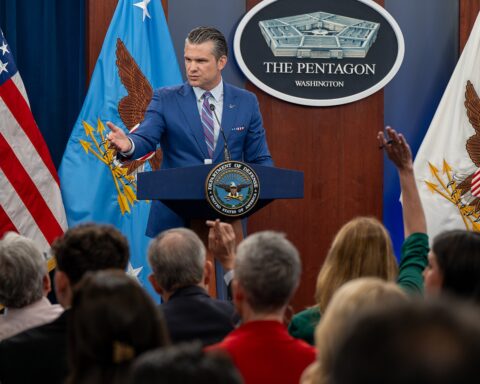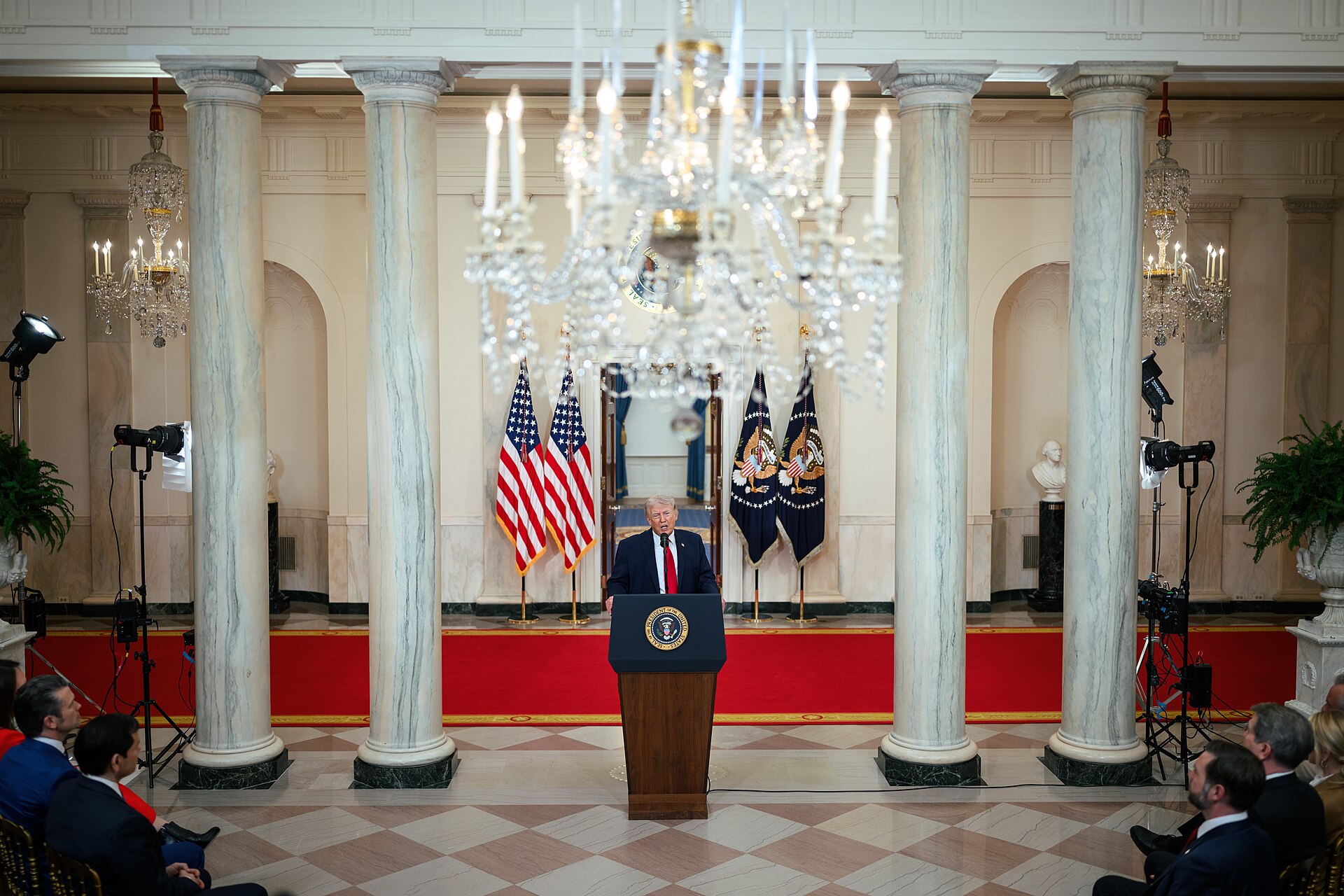

WASHINGTON — President Donald Trump threatened on June 28 that Iran “will no longer exist” if the United States is “forced to militarily complete the job” it started, the most extreme language any sitting US president has used toward Iran during an active conflict. The threat, posted on Truth Social hours after Iran’s Islamic Revolutionary Guard Corps struck US military installations in Kuwait and Bahrain, marks the first time Trump has employed state-elimination framing in a crisis that his own administration is simultaneously attempting to resolve through a 60-day diplomatic agreement.
“There may come a point when we are no longer able to be reasonable, and will be forced to militarily complete the job that we very successfully started,” Trump wrote. “If that happens, the Islamic Republic of Iran will no longer exist!”
The post arrived on Day 11 of the Islamabad Memorandum of Understanding, a 14-point agreement signed June 17 that established a 60-day window for comprehensive US-Iran negotiations. The MOU contains no mechanism for pausing that clock — not for ceasefire violations, not for diplomatic suspensions, and not for presidential threats of annihilation. The deadline remains approximately August 16.
Table of Contents
- The Sequence: Strikes, Counterstrikes, and a Truth Social Post
- From ‘Complete the Job’ to ‘No Longer Exist’
- What Does the IRGC’s ‘Complete Halt’ Threat Mean for the MOU?
- Kuwait and Bahrain Condemn — but Who Defends?
- The Market That Did Not Spike
- Why Has Saudi Arabia Said Nothing?
- Background
- Frequently Asked Questions
The Sequence: Strikes, Counterstrikes, and a Truth Social Post
The escalation cycle that produced Trump’s threat began on June 27, when an IRGC drone struck the M/T Kiku, a tanker carrying approximately 2 million barrels of crude oil near the Strait of Hormuz. US Central Command responded by striking 10 Iranian military targets in and near the strait — missile and drone storage facilities and coastal radar sites, according to CENTCOM — in what Trump described as retaliation “for violating the Cease Fire Agreement, AGAIN!”
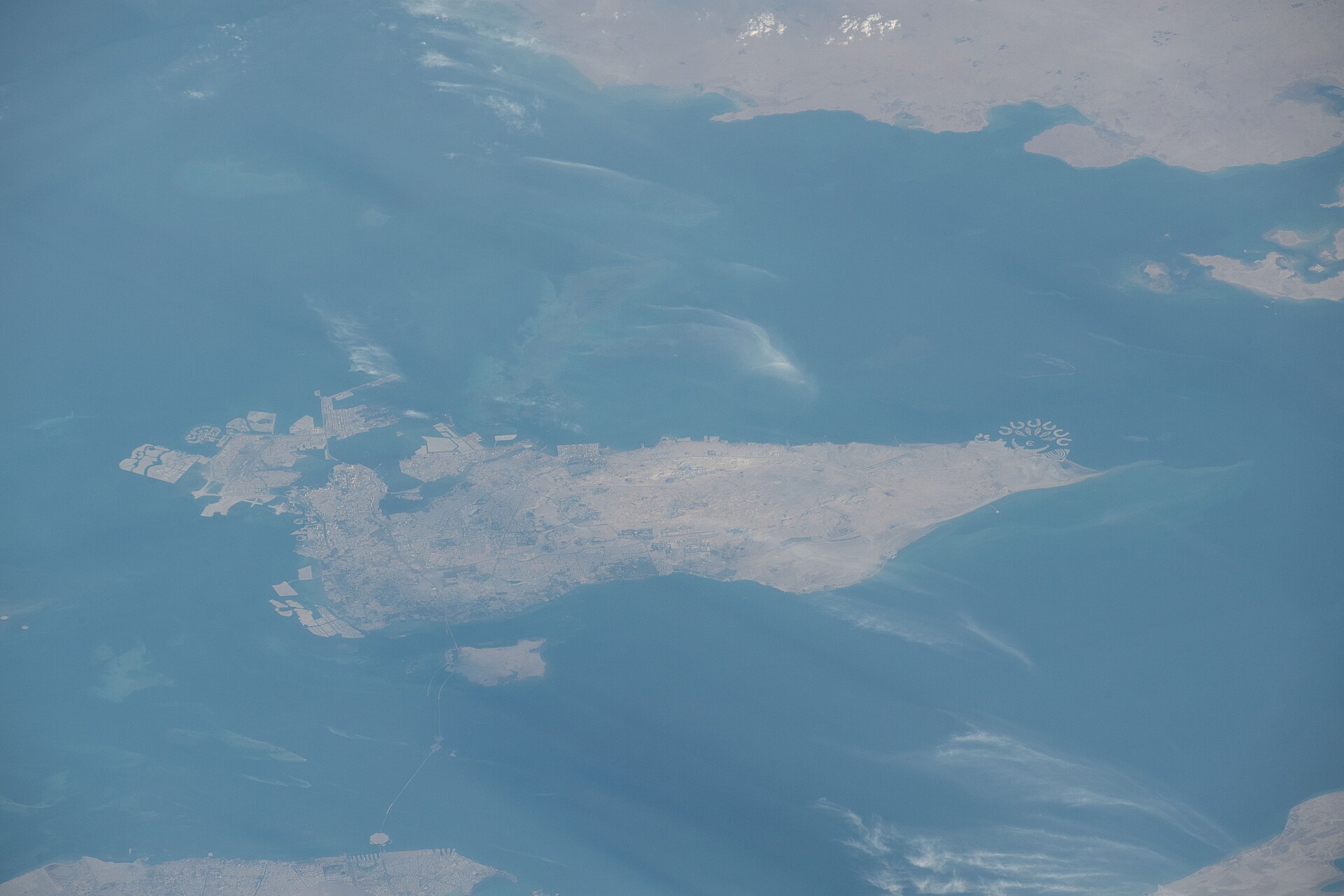
The IRGC answered those strikes between 02:00 and 03:00 local time on June 28 with what it described as “joint missile and drone attacks targeting US military sites in Kuwait and Bahrain.” Ali Al Salem Air Base in Kuwait and Naval Support Activity Bahrain in Juffair — headquarters of the US Fifth Fleet — were both hit. CENTCOM said the attacks caused “no casualties or major impacts.”
That assessment carries its own history. In January 2020, after Iran struck Al-Asad Air Base in Iraq, Trump initially said “No Americans were harmed.” The Pentagon subsequently confirmed 109 US service members were diagnosed with traumatic brain injuries, revising its casualty figures at least five times. A later review found CENTCOM had “not properly documented” those injuries, according to Military Times and NPR reporting.
The Middle East briefing 3,000+ readers start their day with.
One email. Every weekday morning. Free.
Trump’s Truth Social post followed the IRGC strikes. His full statement opened by referencing the CENTCOM strikes on Iranian targets before delivering the state-elimination threat quoted in full in the background section below.
The IRGC, for its part, issued its own escalatory warning on June 28 via Press TV: “Any enemy aggression, whatever the pretext, even against insignificant targets, will have a crushing response. This will be our future approach.” The statement cited Clause 1 of the Islamabad MOU — the same clause both sides have repeatedly invoked to justify their own strikes while accusing the other of violation.
From ‘Complete the Job’ to ‘No Longer Exist’
Trump’s Iran rhetoric has followed a discernible escalation ladder across seven years. The June 28 statement sits at the top.
In August 2019, Trump warned that “if Iran wants to fight, that will be the official end of Iran. Never threaten the United States again!” The language was conditional and asset-focused — a threat against a country’s capacity, not its existence as a state. In January 2020, after the killing of IRGC commander Qassem Soleimani, Trump threatened “52 Iranian sites… hit very fast and very hard, including cultural sites.” He later backed away, telling reporters, “I like to obey the law,” according to PBS and Cornell Chronicle reporting.
Operation Epic Fury, launched in late February 2026, carried stated White House objectives: destroy Iran’s ballistic missile and drone capabilities, annihilate its navy, sever proxy support networks, destroy the defense industrial base, and prevent nuclear weapon acquisition. None of those objectives used state-elimination language. At the G7 summit in Évian on June 17, Trump claimed US forces had destroyed “84-85 percent” of Iran’s ballistic missile arsenal — language framed around degraded capability, not regime or state destruction. US intelligence agencies assessed that Iran retained roughly 70 percent of its ballistic missile capacity, according to reporting by the Jerusalem Post.
The distance between “destroy capabilities” and “will no longer exist” is the distance between a military campaign and a threat of civilizational annihilation. Operation Epic Fury’s objectives, however ambitious, described a bounded set of military outcomes. Trump’s June 28 language describes an unbounded one.
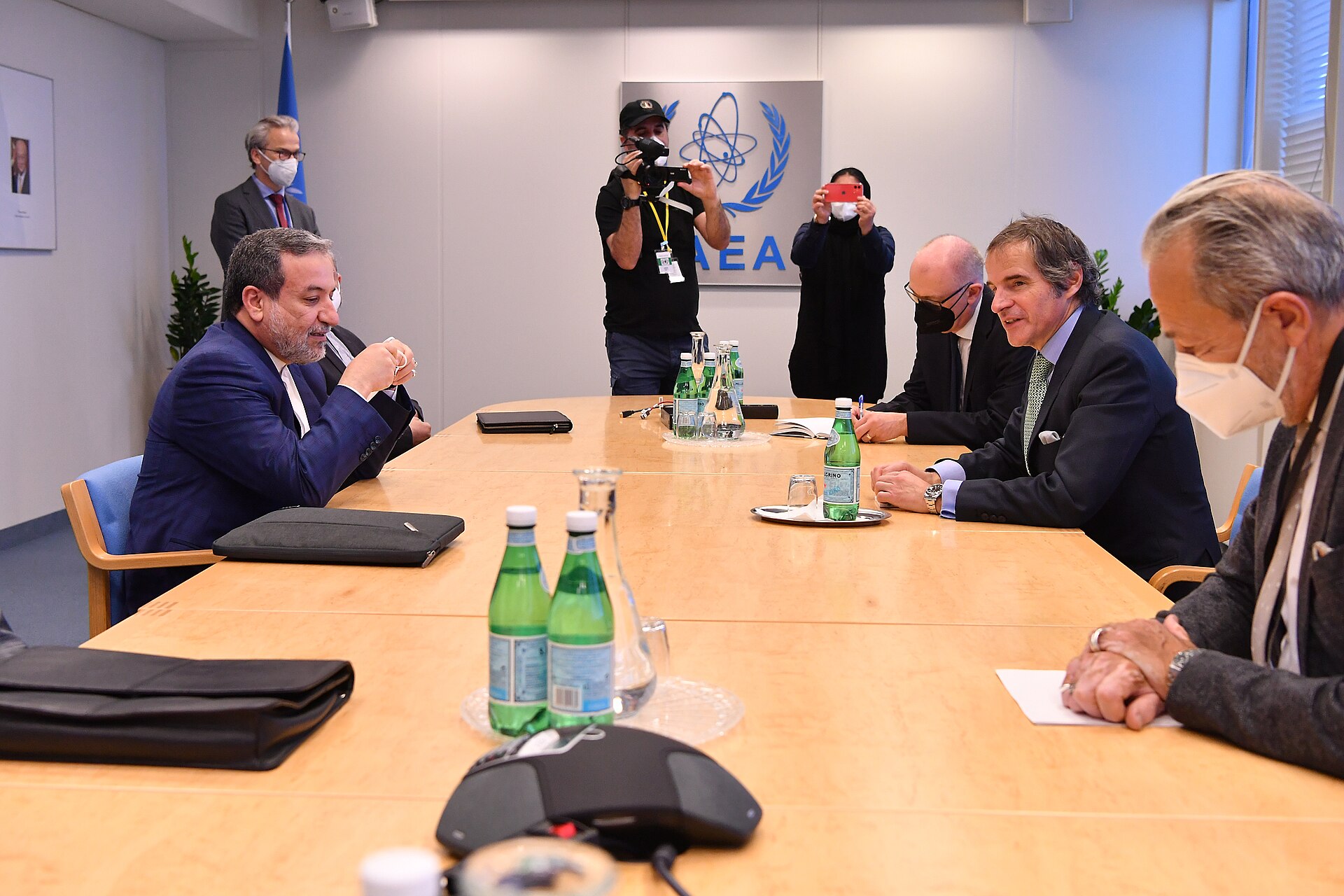
That distinction matters for the MOU. The Islamabad Memorandum was built around the premise that both sides would negotiate a comprehensive agreement within 60 days. Its architecture — three working groups, a High Level Committee co-mediated by Pakistan and Qatar, technical delegations led by US envoy Steve Witkoff and Iran’s foreign minister Abbas Araghchi — presupposes the continued existence of both parties as negotiating entities.
A US president publicly threatening Iranian state elimination while that architecture is nominally active introduces a contradiction the MOU’s drafters did not anticipate and its text does not address.
What Does the IRGC’s ‘Complete Halt’ Threat Mean for the MOU?
The IRGC’s June 28 statement, carried by Iran’s Press TV, was explicit: “Violating the ceasefire is contrary to Clause 1 of the Islamabad Memorandum of Understanding and will result in the complete halt of all diplomatic processes.”
The source of that statement matters as much as its content. The “complete halt” language came from the IRGC — not from Iran’s Foreign Ministry, not from President Masoud Pezeshkian, and not from lead negotiator Araghchi. The civilian-military split within the Iranian government is not a diplomatic abstraction. Iran International reported on May 31 that Pezeshkian had threatened resignation, “citing total takeover by IRGC commanders.” The IRGC’s claim to speak for “all diplomatic processes” is an assertion of authority over a domain the Iranian presidency has contested.
The MOU itself contains no mechanism for a “complete halt.” There is no pause button. Senator Tim Kaine of Virginia, addressing the question of whether the 60-day clock could be frozen, said he did “not believe the statute would support that,” according to Al Jazeera and CBS News reporting. The clock runs. The deadline of approximately August 16 holds whether or not Iran’s diplomats return to the table.
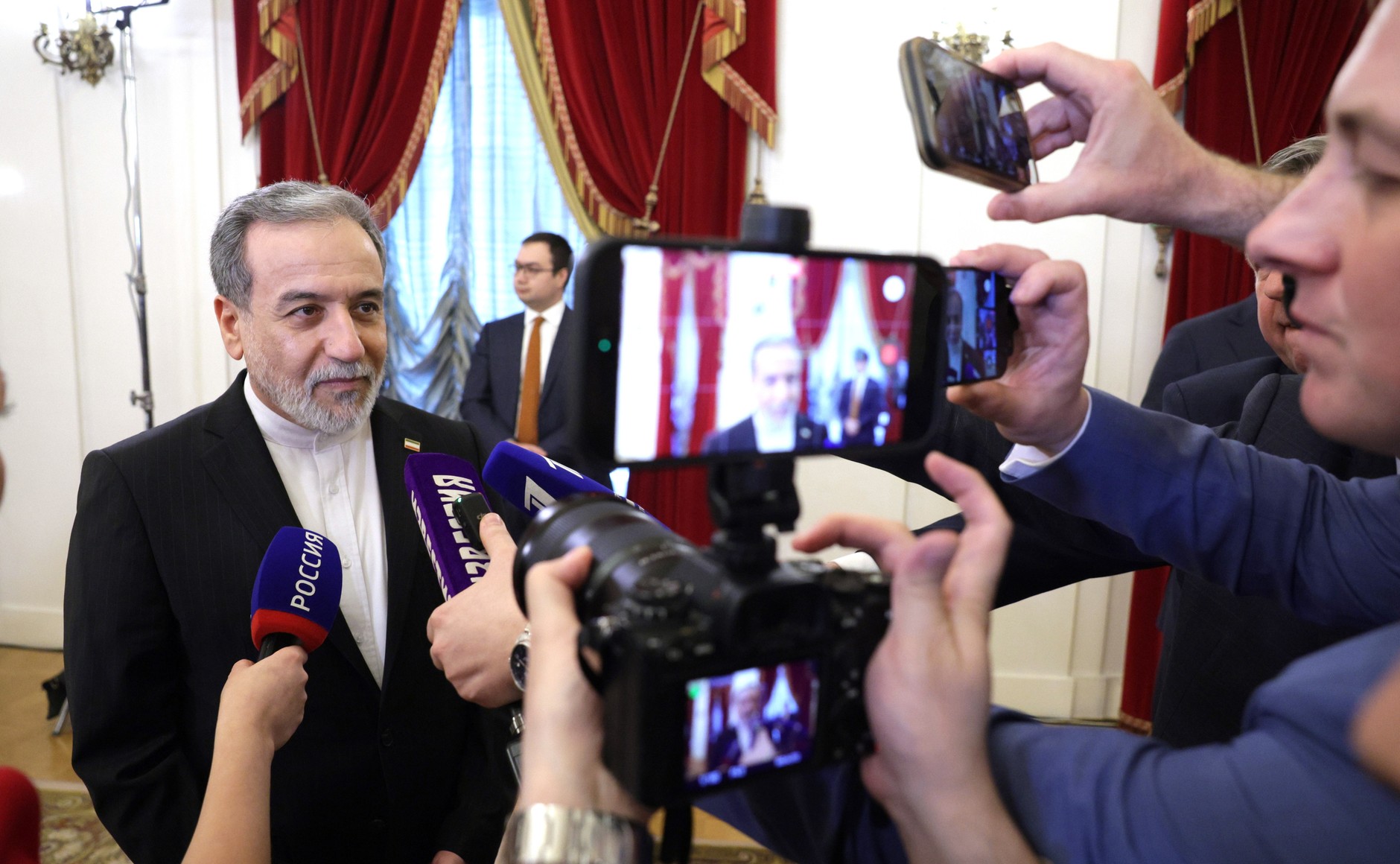
Iran has made this threat before. Within 24 hours of the MOU’s signing on June 17, Iran suspended its entire 60-day negotiation period over Israeli attacks in Lebanon, citing Clause 1 — the same clause invoked on June 28. The talks resumed. A US-Iran roadmap was agreed in Geneva on June 21, with technical delegations continuing at Bürgenstock, Switzerland. No next public round is currently scheduled.
The IRGC’s “complete halt” language should be read alongside Trump’s “no longer exist” language. One side threatens to end the talks. The other threatens to end the state. Neither position is compatible with the MOU’s operating assumption: that 60 days of negotiation will produce a comprehensive agreement.
Wendy Sherman, former US nuclear negotiator, assessed the timeline earlier in June: “I can assure you they will not get all of this done in 60 days.”
Kuwait and Bahrain Condemn — but Who Defends?
The IRGC’s June 28 strikes hit sovereign territory of two Gulf Cooperation Council member states. The responses were calibrated to condemn without committing to action.
Kuwait’s Ministry of Foreign Affairs called the strikes a “flagrant violation of its sovereignty” and issued “condemnation and strongest denunciation of the repeated heinous Iranian aggressions,” according to ABC News reporting. Bahrain’s MOFA condemned what it described as “renewed Iranian aggression against its territory” and called the attack “a dangerous escalation,” according to Reuters and the Bahrain News Agency.
GCC Secretary-General Jasem Mohamed AlBudaiwi went further in tone, calling the attack on Bahrain “treacherous” and warning it “will undermine ongoing peace efforts,” as reported by Fox News. The language was strong. The commitments were absent.
No GCC member state invoked the council’s collective defense provisions. No joint military response was announced. The pattern is consistent with the GCC’s posture throughout the conflict: individual condemnation, collective inaction. Kuwait, Bahrain, and the GCC secretariat each responded in their own name. None asked others to respond in theirs.
The Pentagon has confirmed 13 US service members killed in the Iran conflict; independent tallies reach 15, according to GlobalSecurity.org data current to June 27. Those casualties were sustained on GCC-hosted bases. The question of who defends those bases — whether the host nation, the GCC collectively, or only CENTCOM — remains unanswered by any formal statement from the council.
The Market That Did Not Spike
The oil market’s reaction to June 28 was the opposite of what a state-elimination threat might be expected to produce. Brent crude settled down 4.34 percent at $71.99 per barrel. West Texas Intermediate fell 3.74 percent to $69.23 — the first WTI close below $70 since February 27, the day before the Iran war started, according to CNBC.
The market priced Trump’s language as noise, not signal. Traders responded not to the threat of Iranian state elimination but to the accumulating evidence that the conflict has not removed enough supply to offset a global surplus. The International Energy Agency has projected a 3.7-million-barrel-per-day full-year surplus for 2026. Goldman Sachs has set a Brent target of $75. Kuwait lifted its force majeure on June 18, ramping 1.4 million barrels per day — 89 times its formal OPEC+ increment — with no GCC mechanism to slow it.
The full accounting of MBS’s silence on the IRGC strikes extends beyond the diplomatic record into Saudi Arabia’s balance sheet: the kingdom’s $33.5 billion Q1 deficit consumed 76% of its full-year target in 90 days, with Goldman Sachs projecting the full-year gap at $80–90 billion if current prices hold.
The full accounting of MBS’s silence on the IRGC strikes extends beyond the diplomatic record into Saudi Arabia’s balance sheet: the kingdom’s $33.5 billion Q1 deficit consumed 76% of its full-year target in 90 days, with Goldman Sachs projecting the full-year gap at $80–90 billion if current prices hold.
The full accounting of MBS’s silence on the IRGC strikes extends beyond the diplomatic record into Saudi Arabia’s balance sheet: the kingdom’s $33.5 billion Q1 deficit consumed 76% of its full-year target in 90 days, with Goldman Sachs projecting the full-year gap at $80–90 billion if current prices hold.
The full accounting of MBS’s silence on the IRGC strikes extends beyond the diplomatic record into Saudi Arabia’s balance sheet: the kingdom’s $33.5 billion Q1 deficit consumed 76% of its full-year target in 90 days, with Goldman Sachs projecting the full-year gap at $80–90 billion if current prices hold.
The full accounting of MBS’s silence on the IRGC strikes extends beyond the diplomatic record into Saudi Arabia’s balance sheet: the kingdom’s $33.5 billion Q1 deficit consumed 76% of its full-year target in 90 days, with Goldman Sachs projecting the full-year gap at $80–90 billion if current prices hold.
The full accounting of MBS’s silence on the IRGC strikes extends beyond the diplomatic record into Saudi Arabia’s balance sheet: the kingdom’s $33.5 billion Q1 deficit consumed 76% of its full-year target in 90 days, with Goldman Sachs projecting the full-year gap at $80–90 billion if current prices hold.
The full accounting of MBS’s silence on the IRGC strikes extends beyond the diplomatic record into Saudi Arabia’s balance sheet: the kingdom’s $33.5 billion Q1 deficit consumed 76% of its full-year target in 90 days, with Goldman Sachs projecting the full-year gap at $80–90 billion if current prices hold.
The full accounting of MBS’s silence on the IRGC strikes extends beyond the diplomatic record into Saudi Arabia’s balance sheet: the kingdom’s $33.5 billion Q1 deficit consumed 76% of its full-year target in 90 days, with Goldman Sachs projecting the full-year gap at $80–90 billion if current prices hold.
The full accounting of MBS’s silence on the IRGC strikes extends beyond the diplomatic record into Saudi Arabia’s balance sheet: the kingdom’s $33.5 billion Q1 deficit consumed 76% of its full-year target in 90 days, with Goldman Sachs projecting the full-year gap at $80–90 billion if current prices hold.
The full accounting of MBS’s silence on the IRGC strikes extends beyond the diplomatic record into Saudi Arabia’s balance sheet: the kingdom’s $33.5 billion Q1 deficit consumed 76% of its full-year target in 90 days, with Goldman Sachs projecting the full-year gap at $80–90 billion if current prices hold.
The full accounting of MBS’s silence on the IRGC strikes extends beyond the diplomatic record into Saudi Arabia’s balance sheet: the kingdom’s $33.5 billion Q1 deficit consumed 76% of its full-year target in 90 days, with Goldman Sachs projecting the full-year gap at $80–90 billion if current prices hold.
The full accounting of MBS’s silence on the IRGC strikes extends beyond the diplomatic record into Saudi Arabia’s balance sheet: the kingdom’s $33.5 billion Q1 deficit consumed 76% of its full-year target in 90 days, with Goldman Sachs projecting the full-year gap at $80–90 billion if current prices hold.
The full accounting of MBS’s silence on the IRGC strikes extends beyond the diplomatic record into Saudi Arabia’s balance sheet: the kingdom’s $33.5 billion Q1 deficit consumed 76% of its full-year target in 90 days, with Goldman Sachs projecting the full-year gap at $80–90 billion if current prices hold.
The full accounting of MBS’s silence on the IRGC strikes extends beyond the diplomatic record into Saudi Arabia’s balance sheet: the kingdom’s $33.5 billion Q1 deficit consumed 76% of its full-year target in 90 days, with Goldman Sachs projecting the full-year gap at $80–90 billion if current prices hold.
The full accounting of MBS’s silence on the IRGC strikes extends beyond the diplomatic record into Saudi Arabia’s balance sheet: the kingdom’s $33.5 billion Q1 deficit consumed 76% of its full-year target in 90 days, with Goldman Sachs projecting the full-year gap at $80–90 billion if current prices hold.
The full accounting of MBS’s silence on the IRGC strikes extends beyond the diplomatic record into Saudi Arabia’s balance sheet: the kingdom’s $33.5 billion Q1 deficit consumed 76% of its full-year target in 90 days, with Goldman Sachs projecting the full-year gap at $80–90 billion if current prices hold.
The full accounting of MBS’s silence on the IRGC strikes extends beyond the diplomatic record into Saudi Arabia’s balance sheet: the kingdom’s $33.5 billion Q1 deficit consumed 76% of its full-year target in 90 days, with Goldman Sachs projecting the full-year gap at $80–90 billion if current prices hold.
The full accounting of MBS’s silence on the IRGC strikes extends beyond the diplomatic record into Saudi Arabia’s balance sheet: the kingdom’s $33.5 billion Q1 deficit consumed 76% of its full-year target in 90 days, with Goldman Sachs projecting the full-year gap at $80–90 billion if current prices hold.
The full accounting of MBS’s silence on the IRGC strikes extends beyond the diplomatic record into Saudi Arabia’s balance sheet: the kingdom’s $33.5 billion Q1 deficit consumed 76% of its full-year target in 90 days, with Goldman Sachs projecting the full-year gap at $80–90 billion if current prices hold.
The full accounting of MBS’s silence on the IRGC strikes extends beyond the diplomatic record into Saudi Arabia’s balance sheet: the kingdom’s $33.5 billion Q1 deficit consumed 76% of its full-year target in 90 days, with Goldman Sachs projecting the full-year gap at $80–90 billion if current prices hold.
The full accounting of MBS’s silence on the IRGC strikes extends beyond the diplomatic record into Saudi Arabia’s balance sheet: the kingdom’s $33.5 billion Q1 deficit consumed 76% of its full-year target in 90 days, with Goldman Sachs projecting the full-year gap at $80–90 billion if current prices hold.
The full accounting of MBS’s silence on the IRGC strikes extends beyond the diplomatic record into Saudi Arabia’s balance sheet: the kingdom’s $33.5 billion Q1 deficit consumed 76% of its full-year target in 90 days, with Goldman Sachs projecting the full-year gap at $80–90 billion if current prices hold.
The full accounting of MBS’s silence on the IRGC strikes extends beyond the diplomatic record into Saudi Arabia’s balance sheet: the kingdom’s $33.5 billion Q1 deficit consumed 76% of its full-year target in 90 days, with Goldman Sachs projecting the full-year gap at $80–90 billion if current prices hold.
For Saudi Arabia, the arithmetic has only worsened. The kingdom requires $108 to $111 per barrel to balance its fiscal budget. Brent at $71.99 leaves a gap of $36 to $39 per barrel — roughly $175 million to $195 million per day in foregone revenue. The Persian Gulf Security Administration’s implied fee of $1 per barrel, the war-risk insurance premiums of $3 million to $8 million per vessel, and the restricted Hormuz transit corridor add costs that the price decline does not offset.
The market’s indifference to Trump’s threat reflects a structural judgment: that the war has already priced in its worst plausible supply disruption, and that the threat of Iranian state elimination — however unprecedented in presidential rhetoric — does not change the volume of oil reaching refineries.
Why Has Saudi Arabia Said Nothing?
No statement has been confirmed from Saudi Arabia’s Ministry of Foreign Affairs responding to either the IRGC’s June 28 strikes on Kuwait and Bahrain or Trump’s “no longer exist” threat. The silence is consistent with a pattern that has held throughout the conflict: Saudi Arabia condemns Iranian strikes when they hit Gulf neighbors but makes no defense pledges, and avoids public comment on US escalatory rhetoric.
The strategic logic of that silence, however, shifts when the US president publicly names Iranian state elimination as a possible endgame. Saudi Arabia has stated its territory and airspace will not be used for offensive military action against Iran. Crown Prince Mohammed bin Salman has been described in reporting by the New Republic and the Times of Israel as privately pushing Trump to intensify pressure on Iran, calling the conflict “a historic opportunity” to reshape the Middle East — while speaking regularly with Trump.
The gap between that reported private posture and the public silence is the space in which Saudi policy operates.
Endorsing Trump’s state-elimination language would implicate Riyadh in an objective no Arab state has publicly supported. Condemning it would antagonize the patron whose $142 billion arms deal, signed in May 2025, remains the foundation of Saudi Arabia’s defense modernization. Ignoring it — the current approach — becomes harder to sustain as the language escalates.
Saudi Arabia is absent from all three Phase 2 working groups under the MOU. Its only recorded input into the nuclear track is Foreign Minister Prince Faisal bin Farhan’s statement at an ECFR event in Vienna: “Verification is key.” The enrichment ceiling will be negotiated without a Saudi representative in the room. The US-Saudi 123 Agreement on civil nuclear cooperation, signed May 13, omits all three pillars of the nonproliferation “Gold Standard” — Additional Protocol, enrichment renunciation, and reprocessing renunciation.
A US administration that simultaneously sells Saudi Arabia nuclear technology, threatens Iranian state elimination, and excludes Riyadh from the negotiations that will determine Iran’s nuclear future has placed Saudi Arabia in a position where silence may be the only rational short-term response — and an inadequate long-term one.
Background
The Islamabad Memorandum of Understanding was signed electronically on June 17, 2026, establishing a 60-day negotiation window for a comprehensive US-Iran agreement. Pakistan and Qatar serve as co-mediators. A Phase 2 roadmap was agreed in Geneva on June 21, creating three working groups and a High Level Committee with technical delegations led by Steve Witkoff and Jared Kushner for the US and Abbas Araghchi and Mohammad Bagher Ghalibaf for Iran.
The MOU has no enforcement mechanism, no named arbitrator, and no escalation protocol. Both sides have cited Clause 1 — which calls for a ceasefire on “all fronts including Lebanon” — to justify their own military actions while accusing the other of violation. The IRGC-CENTCOM deconfliction cell in Doha, confirmed by Vice President JD Vance on June 26, was physically co-located at or near Al Udeid Air Base when the IRGC struck Al Udeid and three other bases without using the cell’s communication channel.
The IRGC has been designated a Foreign Terrorist Organization by the United States since April 2019. IAEA inspectors have had no access to Iranian enrichment facilities for more than 97 days. The agency has been unable to verify 440.9 kilograms of highly enriched uranium at 60 percent U-235 — enough, if further enriched, for multiple nuclear devices. MOU Point No. 8, the only clause with an explicit IAEA mandate, addresses HEU downblending.
Secretary of State Marco Rubio’s public framing of the Hormuz reopening as “a predicate that opens the door to Phase 2” diverged from language used by Trump and Vance. State Department spokesman Tommy Pigott called reports of internal disagreement “a tired and fake narrative,” insisting that “Secretary Rubio and the entire administration is 100 percent in lockstep behind President Trump,” according to CNN.
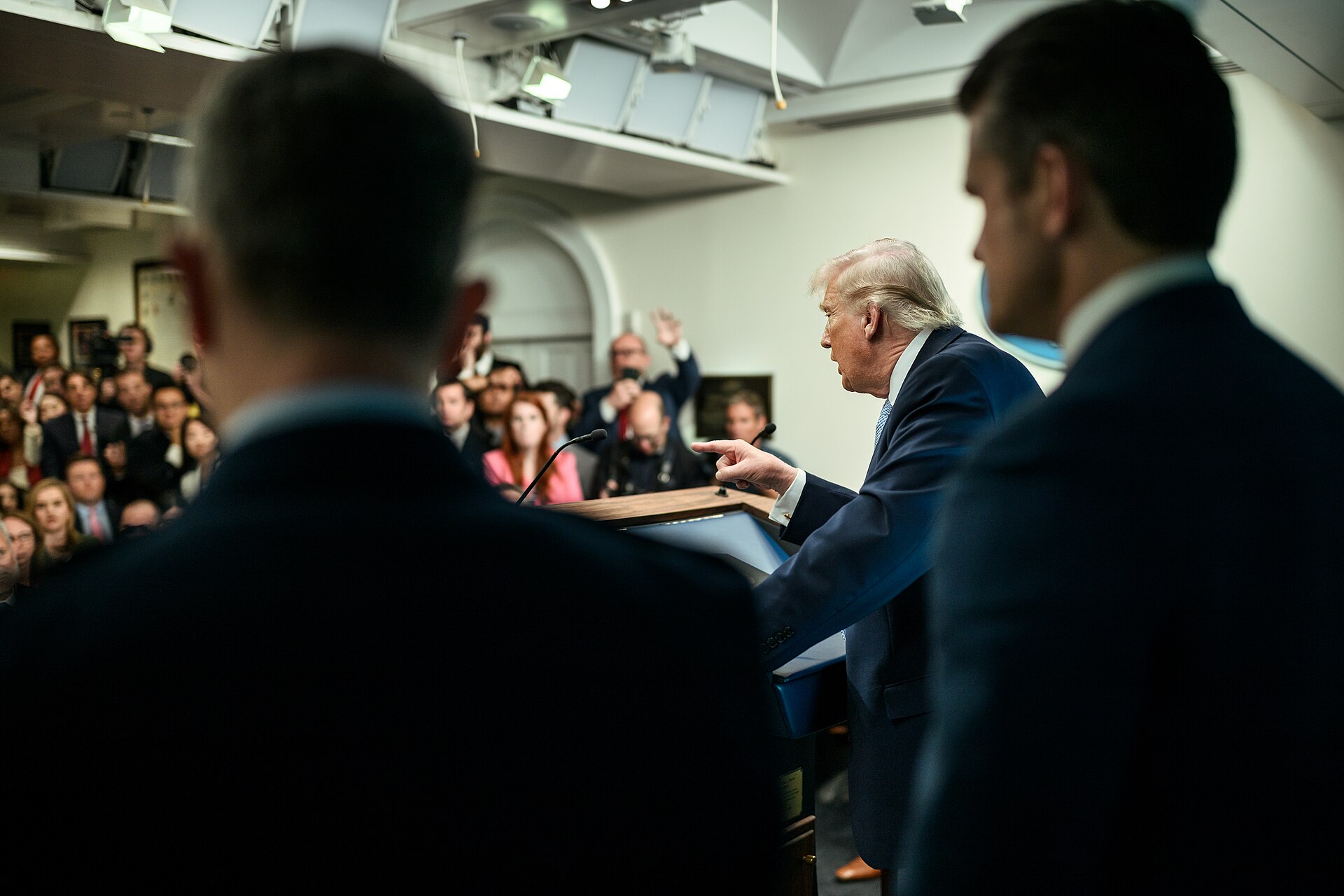
“There may come a point when we are no longer able to be reasonable, and will be forced to militarily complete the job that we very successfully started. If that happens, the Islamic Republic of Iran will no longer exist!”
— Donald Trump, Truth Social, June 28, 2026
The distance between that statement and the MOU’s negotiating framework is the distance the next 49 days must cover — with no mechanism for bridging it, no arbiter to enforce it, and no precedent for a 60-day diplomatic process surviving a presidential threat to eliminate one of the two parties at the table.
Frequently Asked Questions
Has the United States ever threatened the elimination of a state during active negotiations with that state?
In modern diplomatic history, no sitting US president has publicly threatened the elimination of a state with which the US was simultaneously engaged in formal negotiations. During the Korean War, President Truman discussed the possible use of nuclear weapons at a November 1950 press conference but did not threaten the elimination of North Korea or China as states, and the remark prompted British Prime Minister Clement Attlee to fly to Washington for emergency consultations. Trump’s June 28 language — issued while a 60-day negotiation clock runs — has no direct parallel in US diplomatic practice.
Can Congress force the administration to stop military operations against Iran under the War Powers Resolution?
The US Senate voted in May 2026 on a war powers resolution aimed at constraining military action against Iran, according to Roll Call and Reuters. Trump dismissed the vote as “poorly timed and meaningless,” according to Fox News. The War Powers Resolution of 1973 requires the president to withdraw forces within 60 days absent congressional authorization, but enforcement depends on political will. Senator Tim Kaine argued the administration’s existing statutory authority does not support pausing the 60-day war powers clock, but the resolution has historically been treated by presidents of both parties as advisory rather than binding. No court has enforced its withdrawal provisions against a sitting president during active hostilities.
What is Iran’s current verified nuclear capacity?
As of June 28, IAEA inspectors have been denied physical access to Iranian enrichment facilities for more than 97 days. Iran’s last declared stockpile included 440.9 kilograms of uranium enriched to 60 percent U-235 — the highest purity level short of weapons-grade (90 percent) — unverified since June 10, 2025, according to IAEA records. The breakout timeline — the time required to enrich enough material for a single nuclear device — has been estimated by the Arms Control Association and other nonproliferation analysts at less than two weeks at 60 percent enrichment levels. However, weaponization (designing and building a deliverable warhead) requires additional steps that intelligence agencies assess would take at least several months. MOU Point No. 8 calls for HEU downblending but specifies no timeline, no verification protocol, and no consequence for non-compliance.
What role have European allies and NATO played in the Iran conflict?
Trump has expressed frustration that NATO allies did not join Operation Epic Fury. NATO Secretary-General Mark Rutte responded by pointing to European bases used by 4,000 to 5,000 US aircraft as a European contribution to the effort. No NATO member has contributed combat forces to the Iran campaign. No European government or NATO official has publicly responded to Trump’s June 28 “no longer exist” statement. The European Union has called for de-escalation in general terms without addressing Trump’s specific language.
Has Iran’s oil export infrastructure been destroyed?
Operation Epic Fury targeted Iran’s military infrastructure — missile sites, drone facilities, naval assets, and radar installations — rather than its oil export infrastructure. Kharg Island, which handles approximately 90 percent of Iran’s crude exports, was not struck, according to available US and Iranian government statements. The Strait of Hormuz remains partially operational under the Persian Gulf Security Administration’s corridor system, though transits have fallen from 43 to 12 per day since the PGSA declared the strait closed, according to Windward AI maritime tracking data. Iran’s oil revenues have declined due to reduced transit volumes and lower prices, but its export infrastructure remains physically intact. Also on June 28, an Aramco helicopter crashed at Ras Tanura, killing all 14 people aboard — the deadliest single incident at the terminal since the war began, occurring as four Bahri VLCCs loaded there remained unable to transit Hormuz.