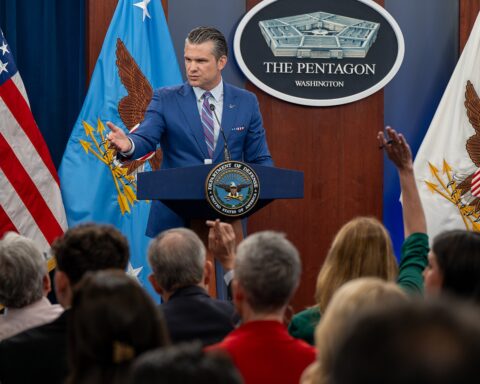
WASHINGTON — CENTCOM struck Iranian minelayer infrastructure on June 27 and 28, 2026, naming the targets explicitly in its post-strike communique and grafting a military enforcement mechanism onto a Memorandum of Understanding that, eleven days earlier, had deliberately refused to name one. The 14-point text signed at Bürgenstock on June 17 left mine clearance to “best efforts for safe passage of commercial vessels” under Article 5, named no arbitrator, set no protocol, and gave the Lake Lucerne monitoring group no emergency authority — which means the Pentagon is now simultaneously a signatory to the framework and the unilateral instrument the framework refused to write into itself.
Saudi Arabia, holding the largest commercial exposure to the mines still in the water and four Bahri very-large crude carriers loaded at Ras Tanura with roughly $582 million of stranded cargo, has no seat at the Bürgenstock diplomatic table and no role in CENTCOM targeting cells. The country bearing the highest cost of the threat sits outside both the document that failed to address it and the strikes that are now improvising a substitute. Iran cited the MOU to justify breaking it on June 27; the United States is now striking under the same instrument it signed.
Table of Contents
- The Vacuum the Text Created
- What the March 10-11 Strikes Already Established
- How Many Mines Are Still in the Water?
- Why Did the MOU Not Name an Enforcer?
- The Saudi Exposure Nobody Is Discussing
- Insurance, OFAC, and the Circular Dependency
- Why the IMO Paused the Escort Plan
- The Earnest Will Comparison the MOU Failed to Make
- Enforcement Roles Without Saudi Arabia
- Can the Corridor Be Cleared Inside Phase 2?
- Frequently Asked Questions
The Vacuum the Text Created
The MOU’s drafters confronted a structural problem at Bürgenstock that they could not resolve through language: any clause naming an enforcer for mine clearance would have required Iran to accept United States military authority over the Strait of Hormuz, and no Iranian negotiator could sign that under domestic political conditions set by the Supreme Leader. The workaround was textual rather than operational — Article 5’s “best efforts for safe passage of commercial vessels” formulation left the enforcement question open, named no arbitrator, and pushed the substantive mechanism into a future agreement the parties have not yet drafted.
Eleven days later that vacuum has been filled by force rather than text, with CENTCOM confirming on June 27-28 that its strikes targeted “Iranian military surveillance infrastructure, communication systems, air defense sites, drone storage facilities, and minelayer capabilities” — the first time the Pentagon has explicitly included mine-warfare infrastructure in a public target list while a signed diplomatic framework was in force. The Hill and CBS News carried the language live; the Iranian foreign ministry did not contest the wording, only the legality.
What the strikes do not address is the inventory of mines already deployed — bottom mines in 60-to-90 metres of water with no recorded position, surface mines that Iran admits it can no longer track, and the limpet stockpile available to IRGC combat divers operating from civilian craft. Targeting launch platforms suppresses new deployment without removing the pre-positioned threat, which is the operational distinction the MOU’s drafters chose to elide rather than name.
What the March 10-11 Strikes Already Established
The June 27-28 strikes are not the first time the United States has destroyed Iranian minelayers in the Strait of Hormuz, and the existence of the March 10-11 precedent — when US forces sank 16 mine-laying vessels weeks before the MOU was signed — is the single most important fact for understanding what happened this weekend. The Pentagon established the targeting category before the diplomatic framework existed, kept the category active through the negotiating window, and resumed striking under it on Day 11 of Phase 2 without consulting the Bürgenstock signatories.
The Middle East briefing 3,000+ readers start their day with.
One email. Every weekday morning. Free.
Military Times, Fox News, and NBC reported the March 11 totals at the time; the figure was not contested by Tehran, which staged no funeral cortege for the lost crews. The strikes were treated by both sides as a permitted move within the pre-MOU operational environment — a posture the United States has now extended into the post-MOU environment without textual permission, because the text did not address the question either way.
Al Jazeera’s tally, drawing on Stimson Center analysis, places Iran’s residual minelaying capability at “upward of 80% to 90% of its small boats and mine layers” even after the March losses, meaning the 16 vessels destroyed in spring represented neither a decisive blow nor a deterrent. Stimson’s read — that Iran can “feasibly lay hundreds of mines in the waterway” if it chooses — defines the asymmetry: striking platforms degrades capacity at the margin, but the threat curve does not bend without a clearance operation no party has yet committed to.
How Many Mines Are Still in the Water?
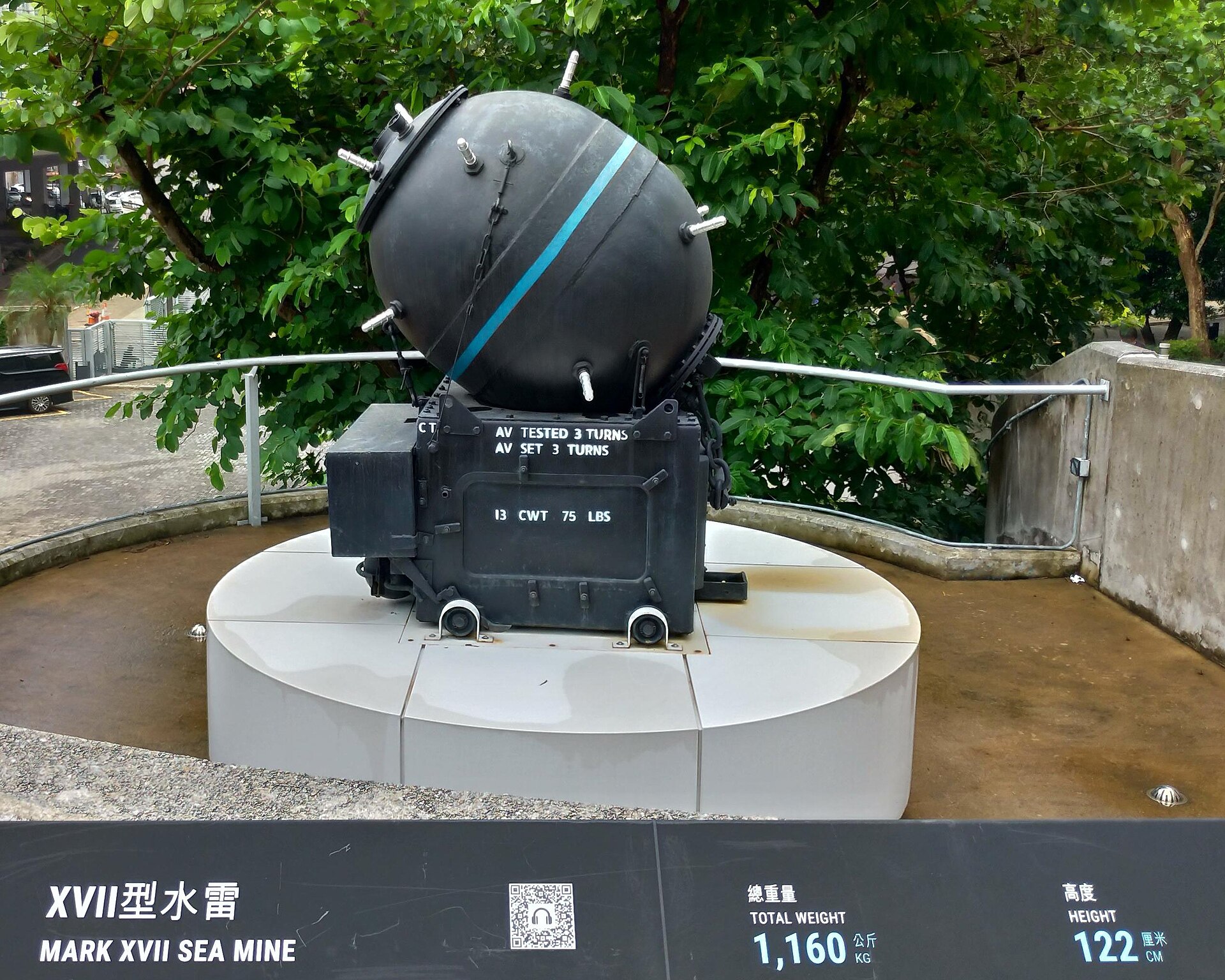
Western intelligence assessments cited by CBS News place the confirmed inventory in the Strait at approximately one dozen — Iranian-manufactured Maham 3 and Maham 7 limpet mines, identified by US intelligence as of early spring 2026 — against an Iranian stockpile estimated at 2,000 to 6,000 across all classes. The gap between the confirmed inventory and the deployable stockpile is the policy problem: Iran could deploy hundreds of additional mines within days, from platforms no surveillance grid has consistently located.
Iran reportedly “lost track” of mines it had already laid, according to US officials briefing the New York Times and relayed by the Jerusalem Post and Euronews in April 2026, citing decentralized IRGC deployment with no clear command chain or position recording. Bottom mines in 60-to-90 metres of water with no position log cannot be located by surface sweep alone, requiring uncrewed underwater vehicles, side-scan sonar grids, and weeks of methodical sector clearance — capabilities the MOU did not address, fund, or assign.
The clearance timetable estimates split the field. Five western maritime security sources cited by TechTimes assessed 40-to-50 days as a best-case figure using conventional minesweepers and UUVs; Kpler’s analysis, quoted by Geopolitical Monitor, placed the comprehensive estimate closer to six months. Naval mine clearance doctrine, repeated across decades of US Navy training material, holds that clearing a minefield takes up to 200 times longer than laying one — an asymmetry the strikes against minelayers do not change, because the strikes do not retrieve the mines already deployed.
Why Did the MOU Not Name an Enforcer?
The answer turns on what Iran could accept and what the United States could concede, and the negotiating record now visible through Tehran Times, Al Jazeera, and the IISS Survival commentary makes the structural problem unambiguous. Any clause assigning mine-clearance authority would have required Iran to accept a foreign — almost certainly American — naval presence inside the Strait under a treaty Iran was signing voluntarily. The Supreme Leader’s pre-set ceiling, documented in earlier HOS coverage of the MOU’s mine-clearance language, did not permit that concession.
The drafters chose vagueness as the bridge — “best efforts” as the Article 5 formulation, no arbitration body, no emergency protocol for the Lake Lucerne monitoring group, no defined trigger for outside intervention — and pushed the substantive question into a follow-on agreement that may never be drafted because Phase 2’s 60-day clock is short, the agenda is overloaded, and the parties disagree on what an enforcer would even look like. The result is a framework that documents the dispute without resolving it, and the United States has now resolved the dispute unilaterally by acting where the document declined to speak.
The IISS Survival assessment from June 2026 stated the position bluntly: “With both sides poised for escalation, there is no plausible military option for reopening the Strait of Hormuz.” The CSIS framing — that Iran’s tools impose “risk and uncertainty, even if it is no match for the U.S. Navy” — captures the political problem rather than the military one. The US Navy can suppress new mine deployment indefinitely; it cannot, by striking, deliver a corridor commercially safe enough for Lloyd’s underwriters to clear, which is the threshold Saudi crude needs.
The Saudi Exposure Nobody Is Discussing
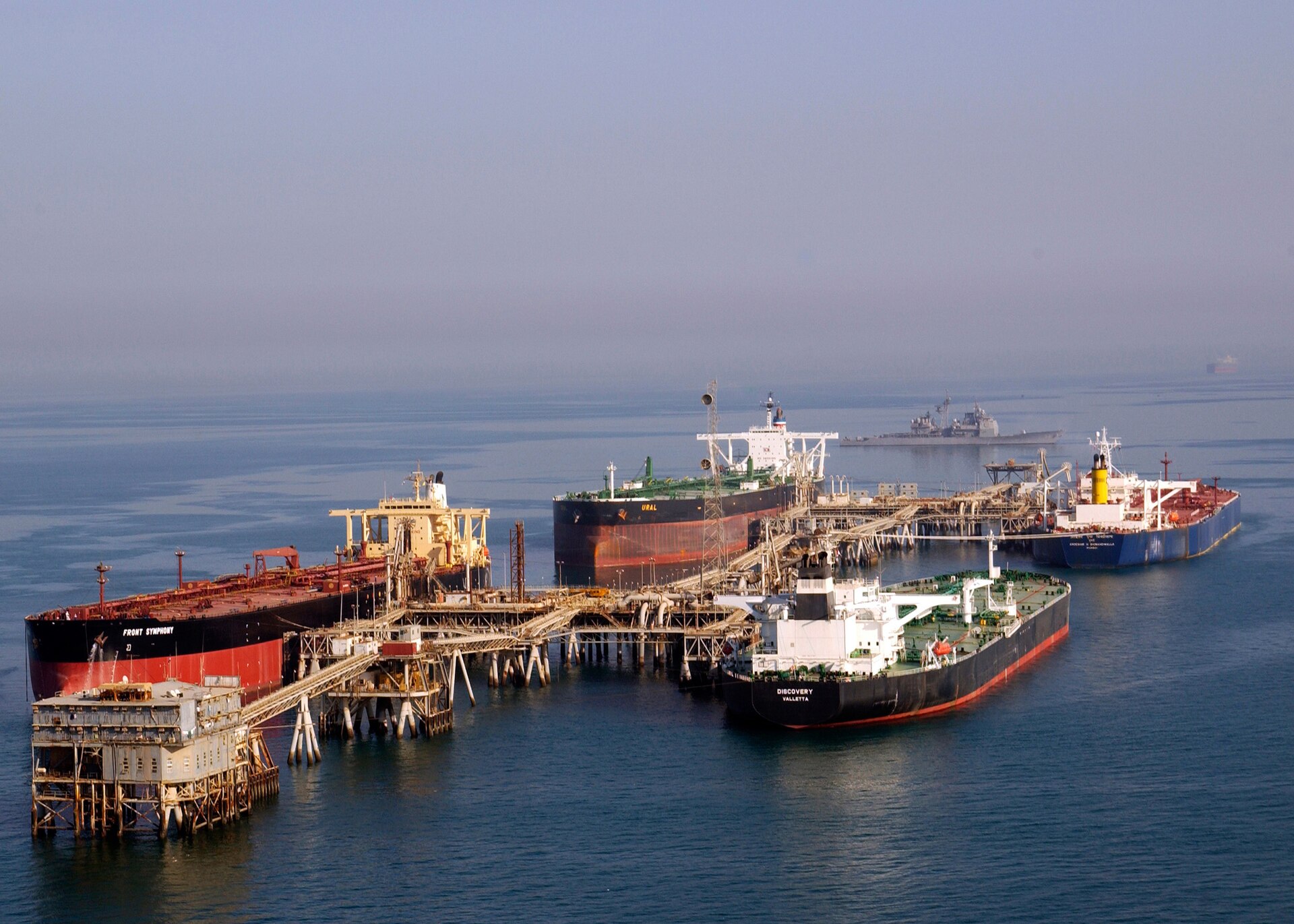
Four Bahri very-large crude carriers loaded at Ras Tanura on June 26 and 27 with approximately two million barrels of crude each, the first such loadings since March 8, against a corridor where IMO escort had been paused two days earlier, P&I cover was withdrawn, the IRGC-CENTCOM deconfliction cell in Doha had been bypassed, and mines of unknown location remained on the seabed. The combined exposure, at June 28 Brent prices around $72.86 per barrel, sits near $582 million in stranded value — covered fully by prior HOS reporting on the eight-million-barrel trap at Ras Tanura.
Saudi Arabia holds no exemption from the Persian Gulf Shipping Authority’s $1-per-barrel transit fee — Russia, China, India, Iraq, and Pakistan do — and at pre-war Saudi volumes the implied PGSA exposure runs $5.5 million per day, $2 billion per year, while Brent trades roughly $36 to $39 below the Saudi fiscal breakeven of $108 to $111 per barrel. The daily revenue gap implied by that arithmetic is $160 million to $175 million; Aramco’s Q1 free cash flow ran at 0.85 times the dividend; the kingdom’s Q1 fiscal deficit reached SAR 125.7 billion.
None of this exposure has produced a Saudi seat at any table that matters. The June 18 Bahri convoy of Shaden, Jaham, and Awtad ran AIS-off through the Qeshm-Larak corridor under conditions HOS detailed in its February-first-barrel coverage; the cost was absorbed unilaterally, the diplomatic credit accrued elsewhere, and the kingdom’s input into Phase 2 has been confined to Foreign Minister Faisal bin Farhan’s single ECFR Vienna line — “verification is key” — as previously catalogued in HOS coverage of the enrichment ceiling exclusion.
Insurance, OFAC, and the Circular Dependency
The insurance picture is the part of the story that escapes most diplomatic coverage and matters most to the operators actually deciding whether to sail. All twelve International Group P&I clubs cancelled war-risk cover for Hormuz transit; Lloyd’s and Chubb launched a new consortium on June 19, 2026 offering up to $200 million primary capacity for hull and protection-and-indemnity risk, plus a separate $200 million cargo facility — and OFAC sanctions guidance creates a circular dependency that may make the new capacity unusable for the vessels that need it.
The dependency works as follows: any vessel paying the PGSA’s per-barrel fee, or accepting an Iranian safe-passage guarantee, becomes uninsurable under current US sanctions guidance because the payment or guarantee constitutes a transaction with a designated entity. Lloyd’s Market Association stated that “safety concerns, not insurance availability, [are] driving reduced vessel traffic in the Strait of Hormuz” — a careful formulation that puts the policy decision back on shipowners and the kinetic environment, and removes the underwriter from the chain of causation.
War-risk premiums sit at 2.5 to 3 per cent of hull value per voyage, against a pre-conflict baseline of 0.1 per cent — a 25-to-30-times multiple that compounds with the OFAC exposure. For a VLCC with hull value around $120 million, the war-risk premium per voyage now runs $3 million to $3.6 million; for the four Bahri tankers at Ras Tanura the implied insurance cost alone reaches $12 million to $14.4 million before fuel, before crew hazard premiums, before the PGSA fee Saudi Arabia would need a US Treasury exemption to legally pay.
Why the IMO Paused the Escort Plan
Arsenio Dominguez, Secretary-General of the International Maritime Organization, paused the Hormuz evacuation and escort operation on June 26 after the IRGC drone strike on Ever Lovely — the Singapore-flagged 8,500-TEU Evergreen Marine boxship — and his stated reason cut through the diplomatic vocabulary: the IMO needed “to reconfirm that the necessary safety guarantees continue to be in place for the ships on our evacuation list and all those in the region.” Eleven thousand sailors were on the list; none of them were Saudi crew, because Bahri crews were already loading at Ras Tanura under separate arrangements.
The pause is the single most important institutional fact of MOU Day 11, and it is the one neither Washington nor Tehran has reckoned with publicly. The IMO is the closest thing the Strait of Hormuz has to a neutral maritime authority, and the Secretary-General’s decision to pause an active escort operation signals that the multilateral safety architecture cannot operate inside the kinetic environment the MOU left intact. HOS coverage of the Ever Lovely strike documented the sequence in detail; the institutional consequence is the suspension of the only neutral coordinating mechanism the corridor possessed.
RUSI’s June commentary identified the southern corridor — the route the MOU implicitly relied on as the safe passage — as now “subject to active IRGC enforcement,” which contradicts the document’s working assumption that the corridor required no Iranian approval. The MOU treated the corridor as a geographical fact; the IRGC has treated it as a permission regime. Those two readings are incompatible, and the IMO pause is the institutional acknowledgement that they cannot be reconciled while the strikes and counter-strikes continue.
The Earnest Will Comparison the MOU Failed to Make
Between 1987 and 1988 the United States ran Operation Earnest Will — the largest naval convoy operation since the Second World War, with more than 30 warships assigned to the operation at its height and dedicated to escorting reflagged Kuwaiti tankers through the Tanker War. The operation was kinetic from day one, defined in scope, named in command, and matched to the threat. The 2026 MOU’s “best efforts” clause offers nothing comparable in institutional commitment and nothing comparable in command authority.
The Samuel B. Roberts precedent — when an Iranian contact mine struck the frigate on April 14, 1988, blew a 21-foot hole in her hull, wounded ten sailors, and triggered Operation Praying Mantis — defined the US reactive posture for a generation: a mine strike justified a one-day surface engagement that destroyed half the Iranian Navy. The 2026 inversion is that CENTCOM is now acting preventively against minelayers under a signed MOU, before any Saudi-flagged or US-flagged vessel has been mined, on intelligence rather than on a Roberts-style trigger event.
That inversion changes the politics in ways the MOU’s drafters did not address. Earnest Will was a unilateral US convoy operation conducted outside any treaty framework; the 2026 strikes are a unilateral US enforcement operation conducted inside a treaty framework that declined to authorise them. Iran’s reading — that the strikes themselves constitute the MOU violation — is internally consistent within Article 1’s “permanent termination of military operations on all fronts” language, even where the US reading treats Article 5 as the controlling clause and the strikes as the remedy for Iranian non-compliance.
Tehran’s mining threat to the Strait of Hormuz is designed to impose maximum costs by halting commercial traffic, raising oil prices, and forcing the United States into a slow, hazardous, and politically fraught clearance campaign. It is the deliberate execution of a strategy Tehran has refined since the tanker wars in the 1980s.
Stimson Center, “Five Things to Know About Iranian Minelaying,” 2026
Enforcement Roles Without Saudi Arabia
The table below sets out the institutional roles that have emerged across the diplomatic and enforcement tracks, with the Saudi position recorded against each. The pattern is not subtle: the kingdom most exposed to the threat sits outside every coordinating, signing, or enforcement role that has been assigned, and its single substantive contribution to the nuclear track — Foreign Minister Faisal bin Farhan’s ECFR Vienna comment — was not delivered inside any Phase 2 forum.
| Track | Lead Party | Saudi Role | Commercial Exposure |
|---|---|---|---|
| MOU diplomatic framework (Bürgenstock) | US, Iran, Qatar, Pakistan, Switzerland | Not a signatory | Highest in GCC by export volume |
| Lake Lucerne monitoring group | Swiss FM (chair), MOU signatories | No observer status reported | $160–175M/day Brent shortfall |
| Mine-clearance enforcement (de facto) | CENTCOM | No targeting consultation | 4 Bahri VLCCs (~$582M stranded) |
| IMO escort/evacuation plan | IMO Sec-Gen Dominguez (paused) | Bahri crews outside list | 11,000 sailors on the wider list |
| P&I and war-risk insurance | Lloyd’s/Chubb consortium ($200M each) | OFAC PGSA-fee exposure unresolved | $12–14.4M premium for 4-tanker convoy |
| Phase 2 nuclear track | US, Iran, IAEA | FM ECFR Vienna comment only | 440.9 kg HEU at 60% unverified |
| PGSA transit-fee exemption regime | Iran (PGSA) | No exemption granted | $5.5M/day, $2B/year implied |
What the table shows when read horizontally is that the Saudi position is consistent across every column — exposed financially, absent institutionally — and that this consistency is not the product of any single negotiating failure. It is the cumulative result of seven independent tracks, each of which has assigned authority to a party other than Riyadh, and none of which has built in a mechanism for Saudi consultation as the situation escalates.
Can the Corridor Be Cleared Inside Phase 2?
Phase 2 runs sixty days from June 17 to approximately August 16, 2026, and the question of whether the corridor can be made physically safe inside that window is the operational test of whether the MOU framework can survive its own arithmetic. The 40-to-50 day western maritime-security estimate is a best case that assumes uncontested clearance, intact UUV fleets, and continuous access to the corridor — three conditions the IMO pause, the IRGC deconfliction-hotline refusal, and the continuing strike exchange make implausible.
Kpler’s six-month estimate is the more honest figure given current conditions, which would push the comprehensive clearance date into December 2026 — well past Phase 2’s expiry, past the PGSA fee’s default reversion to $1 per barrel after the 60-day waiver, and past the point at which Saudi fiscal-year planning can absorb the daily revenue gap without sovereign-asset drawdown. The arithmetic of Phase 2 was always tight; the strikes have not relaxed it.
The IRGC’s June 27 statement closed with a line that should be read as the operational forecast rather than rhetoric: “If the aggression is repeated, our response will be broader than this.” Tehran’s escalation ladder still has rungs above the Kiku strike and Al Udeid, and the United States has not signalled where its own ladder ends. HOS coverage of the June 27 IRGC strikes set out how the IRGC framed those attacks as compliant with the MOU; the same logic now justifies broader retaliation if CENTCOM strikes continue. The credibility of Iranian damage claims became a live dispute after CENTCOM reported no casualties or major impacts from the overnight June 28 IRGC strikes on Kuwait and Bahrain, even as Tehran claimed eight installations destroyed.
Frequently Asked Questions
Did the MOU authorise the June 27-28 US strikes against minelayers?
No clause in the 14-point MOU explicitly authorises strikes against Iranian minelayer infrastructure, and Article 1’s “permanent termination of military operations on all fronts” language provides Iran’s basis for treating the strikes as a violation. The US reading relies on Article 5’s “best efforts” language to argue that Iranian failure to deliver safe passage opens the door to unilateral enforcement, but no arbitration mechanism exists to resolve the dispute between the two readings — which is itself a structural drafting choice rather than an oversight.
How does the Persian Gulf Shipping Authority fee structure work in practice?
The PGSA’s published rulebook covers a 40-category form, the Larak corridor as the designated transit lane, a $1-per-barrel fee waived for the first 60 days from the MOU signing, and a post-60-day fee marked “to be determined” — meaning the default reversion on August 16 is to a fee Iran has not yet set and that no MOU clause caps. Russia, China, India, Iraq, and Pakistan hold exemptions; Saudi Arabia does not, and the OFAC sanctions overlay means even paying the fee in good faith would expose Bahri to secondary-sanctions risk.
What is the Lloyd’s-Chubb consortium and does it cover Saudi tankers?
The consortium, launched June 19, 2026, offers up to $200 million in primary capacity for hull and protection-and-indemnity risk in the Strait of Hormuz and a separate $200 million cargo facility — total wrap of $400 million, structured as a syndicate to spread Lloyd’s underwriter exposure. Coverage in principle extends to any flag, but the OFAC circular dependency means a Saudi vessel paying the PGSA fee may find the policy unenforceable, and Bahri has not publicly stated whether it has placed the four current cargoes inside the consortium or has self-insured them.
Why did the IMO pause and not the underwriters?
The Lloyd’s Market Association’s June statement that “safety concerns, not insurance availability” were driving reduced traffic was a deliberate institutional positioning move: the underwriters declined to be the cause of the corridor closure, pushing the decision back onto shipowners and flag states. The IMO, by contrast, has institutional duty to crew safety under the SOLAS Convention and could not maintain an escort plan without the safety guarantees Iran withdrew when the IRGC drone struck Ever Lovely. The split is between commercial risk-pricing on one side and treaty-based crew protection on the other.
What does “Maham 3 and Maham 7” mean for clearance operations?
The Maham series are Iranian-manufactured limpet mines designed for deployment by combat divers against hull-mounted targets — a different threat profile from the bottom-influence and contact mines Iran has historically used for area-denial. Clearance for limpet mines requires diver inspection of each individual hull at port and en route, not sector-sweep methodology, which is why the presence of Maham types in the US intelligence picture extends the realistic clearance horizon beyond the bottom-mine timeline estimated by Kpler and the western maritime sources.
Has Saudi Arabia made any public statement on the CENTCOM minelayer strikes?
Riyadh has issued no statement specific to the June 27-28 strikes against minelayer infrastructure as of this writing, continuing the pattern documented in prior HOS coverage of Saudi non-response on the Bahrain strike. The Foreign Ministry’s silence runs alongside Bahri’s commercial decision to load four VLCCs at Ras Tanura on the same days, which suggests an operational comfort with the US strike posture even where the diplomatic position remains unstated.