
MANAMA — Iran’s Islamic Revolutionary Guard Corps struck four US military installations across the Gulf on June 27 — Al Udeid Air Base in Qatar, Ali Al Salem Air Base in Kuwait, Al Dhafra Air Base in the UAE, and the US Fifth Fleet headquarters at Juffair, Bahrain — and senior Iranian figures immediately framed the attacks not as an escalation but as enforcement of the memorandum of understanding both sides signed ten days earlier.
Mohsen Rezaei, military adviser to Supreme Leader Khamenei and former IRGC commander, accused Washington of “violating the first article of the memorandum of understanding by supporting the actions of its proxy forces in the region” and separately of “violating the fifth article by continuing to create tensions in the Strait of Hormuz,” according to Sunday Guardian Live and CBS News. On X, Rezaei added: “The response to the violation of any article of the memorandum of understanding will be swift and decisive.”
By citing specific MOU articles rather than rejecting the framework, Tehran has positioned itself as the aggrieved compliant party — a posture that recasts every subsequent US military response as a potential contract breach under Iran’s reading. Saudi Arabia, which holds no seat in any of the three Phase 2 negotiating tracks and faces accumulating PGSA corridor fees once the 60-day waiver expires around August 16, sits at the intersection of all three exposed tracks with no voice in the framework now being invoked as enforcement authority.
Table of Contents
The Articles Rezaei Cited
Article 1 of the MOU, as published in full by Time Magazine on June 17, declares “immediate and permanent termination of military operations on all fronts, including in Lebanon” and commits both parties to “refrain from the threat or use of force against each other” while ensuring “the territorial integrity and sovereignty of Lebanon.”
Iran’s reading extends the article beyond the bilateral US-Iran relationship. Rezaei accused Washington of violating Article 1 “by supporting the actions of its proxy forces in the region,” a formulation that redefines any US military activity at GCC-based installations as a continuation of prohibited hostilities. Iran’s foreign ministry formalized this interpretation on June 26, stating that “the use of regional bases and facilities during the recent US and Israeli strikes on Iran showed that Washington did not value the security of its Gulf partners” and demanding GCC states prevent “any use of their territory and facilities by third parties for military aggression against Iran,” according to Al Jazeera.
Article 5, also in the Time Magazine text, requires Iran to make “best efforts” for safe passage of commercial vessels with “no charge for 60 days” from the Persian Gulf to the Sea of Oman and to “conduct dialogue with Oman to define the future administration and maritime services in the Strait of Hormuz in discussion with other Persian Gulf littoral states.”
The Middle East briefing 3,000+ readers start their day with.
One email. Every weekday morning. Free.
Rezaei’s Article 5 claim — that the US is “continuing to create tensions in the Strait of Hormuz” — inverts the standard accusation. CENTCOM on June 26 had described its strikes on four Iranian coastal targets as a “calibrated course correction” in response to the IRGC’s drone attack on the container vessel Ever Lovely, a Singapore-flagged 8,500-TEU Evergreen Marine ship struck on June 25 approximately 7.5 nautical miles southeast of Dahit, Oman, in the IMO Hormuz corridor. Under Iran’s reading, the US retaliatory strikes — not the Ever Lovely attack — constituted the Article 5 violation.
Four Bases, Four Sovereignties
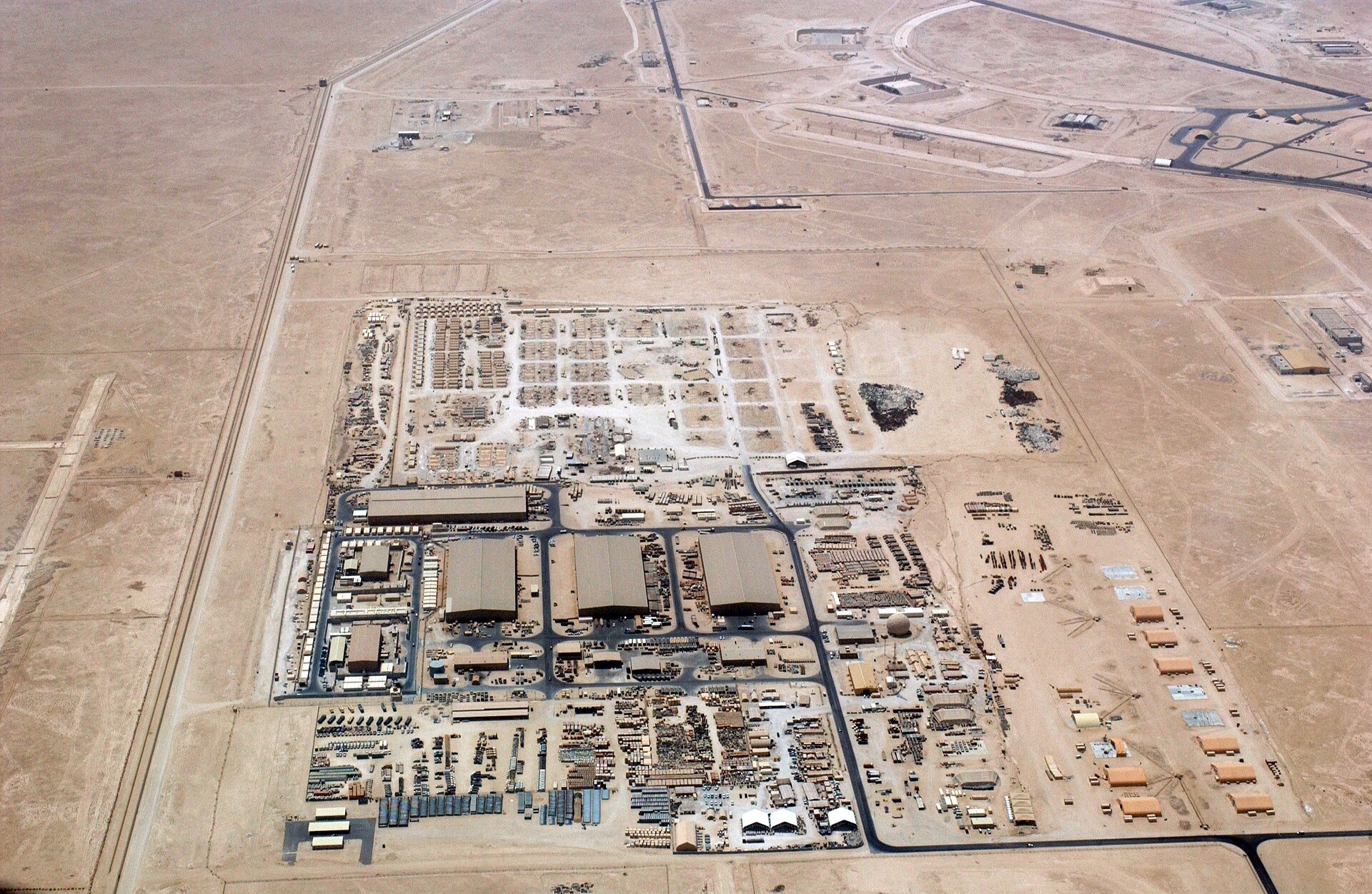
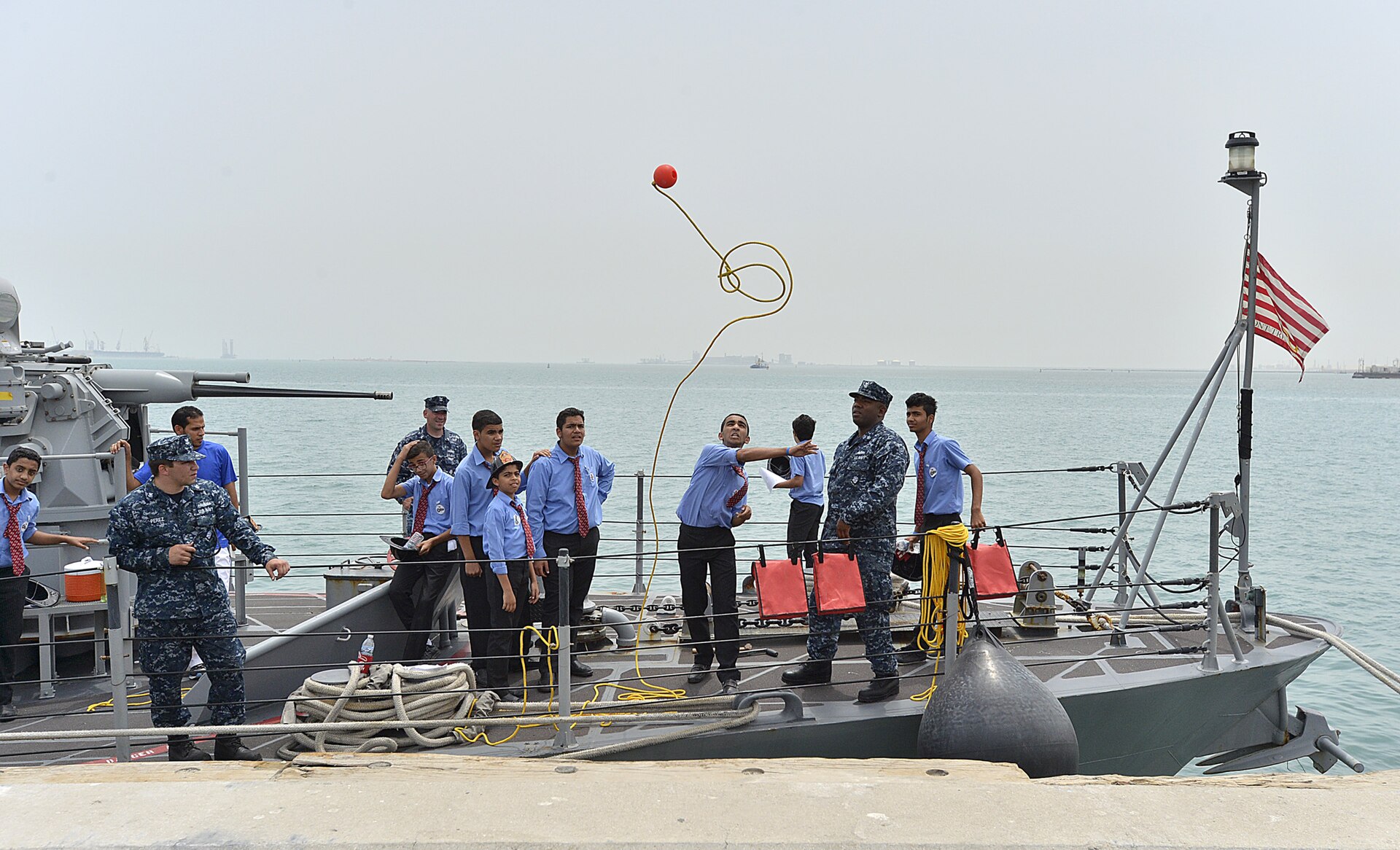
The IRGC’s June 27 target list spanned four sovereign Gulf states. Qatar’s Ministry of Defence confirmed Al Udeid Air Base was struck and reported no casualties, according to GlobalSecurity.org and Al Jazeera. Bahraini authorities confirmed explosions at Juffair, the headquarters of the US Fifth Fleet. Kuwait and the UAE had not issued separate confirmations of strikes on Ali Al Salem and Al Dhafra as of June 27 reporting.
The geographic spread is itself an assertion. Iran struck across the GCC simultaneously, reinforcing the foreign ministry’s June 26 warning that any GCC state hosting US forces used against Iran bears shared responsibility under Article 1. The choice to hit all four countries at once forecloses the interpretation that Tehran was sending a limited signal to one government.
Saudi Arabia condemned the strikes on Bahrain through its Ministry of Foreign Affairs, offering “solidarity” and “full support for all measures” but making no defense pledge, no invocation of Peninsula Shield, and no reference to the Sakhir Declaration’s “indivisibility” clause adopted 48 hours earlier on June 25. GCC Secretary General Albudaiwi used harder language, describing the attacks as “treacherous drone attacks.”
Vice President JD Vance responded on X: “Violence will be met with violence,” according to Times of Israel and Fox News. IRGC spokesman Hossein Mohebi, also on June 27, rejected Vance’s earlier suggestion of direct communication: “Claims by American officials regarding the establishment of a direct line between Iran and the United States concerning the Strait of Hormuz are completely false,” Al Jazeera reported. Vance had confirmed a broader IRGC-CENTCOM deconfliction cell in Doha on June 26 — a channel that was also not used before the June 27 strikes.
Does the MOU Name an Enforcer?
It does not. Chatham House, in a June 22 analysis titled “The US-Iran memorandum of understanding nods to international law. Can that be taken seriously?”, observed that the MOU “rests on ‘good faith’, probably as far as the sides could go to avoid giving the impression of a formal treaty, while indicating their intention to comply.” The MOU was styled as a memorandum of understanding rather than a treaty specifically to avoid US Senate ratification, rendering it non-binding under US domestic law while Iran treats it as a source of enforcement authority.
The absence of a dispute mechanism — no tribunal, no third-party arbiter, no agreed procedure for determining which party is in breach — means the party that acts last can always frame its response as justified. Iran is currently occupying that position. The specific legal logic Iran used to get there — invoking Articles 1 and 5 as both shield and sword — is examined in Iran Cited the MOU to Justify Breaking It.
Gibson Dunn, in a client legal alert, argued that the bilateral framework allows the US to retain “the unilateral right to snap back enforcement instantly.” But Chatham House identified the structural constraint: the MOU “promises that the US will not deploy additional forces to the region, thus renouncing further threats of force to enforce the final deal, and will remove its forces from the proximity of Iran within 30 days after the final deal.” The Atlantic Council assessed the arrangement more bluntly: “An MOU without any follow-on deal will be volatile and impossible to sustain on its own.”
“The Trump administration and Iran have shown contempt for the UN Charter: The US attacked Iran without permissible cause and assassinated much of its leadership; Iran attacked its neighbours — non-belligerents — and closed the Strait of Hormuz. How seriously can an agreement between such parties be taken?”
— Chatham House, June 22, 2026
The Recursive Claim Cycle
The sequence from June 25 to June 27 illustrates the mechanism. On June 25, the IRGC struck the Ever Lovely in the Hormuz corridor. On June 26, six US aircraft struck four Iranian coastal targets — missile and drone storage facilities plus radar stations — in what CENTCOM described as a response to “unwarranted aggression against commercial shipping” that “clearly violated the ceasefire,” per Al Jazeera’s reporting of the CENTCOM statement.
Iran’s response on June 27 — the four-base strike — cited the US retaliation of June 26 as itself a violation. Rezaei’s X post, the foreign ministry’s June 26 demand to GCC states, and the IRGC’s targeting across four countries all treated the US strikes not as a proportionate response to the Ever Lovely attack but as an independent breach of Articles 1 and 5 requiring its own answer. The same framework produced the overnight June 28 IRGC strikes on Kuwait and Bahrain, which the IRGC presented as a continuation of the same lawful response sequence.
The recursive structure is embedded in the MOU’s architecture. Article 5 assigns Iran responsibility for “arrangements for safe passage” but names no enforcer if Iran fails to provide them. If the US strikes Iranian targets to enforce Article 5, Iran invokes Article 1 — the prohibition on the use of force — to reframe the enforcement action as a new violation. Each cycle generates a fresh Iranian legal claim without requiring Tehran to acknowledge the predicate act.
Tasnim, Iran’s semi-official news agency, has separately stated that Bloomberg’s published MOU text contained “inaccuracies and major omissions,” as reported by the Palestine Chronicle. The claim preserves interpretive flexibility: Tehran can cite specific articles when useful while disputing the published text’s completeness when challenged on the same provisions.
Where Is Saudi Arabia in This Framework?
Saudi Arabia holds no seat at any of the three Phase 2 negotiating tables — nuclear terms, sanctions architecture, and Hormuz administration. Foreign Minister Faisal bin Farhan’s only recorded input to the nuclear track remains the phrase “verification is key,” delivered at the European Council on Foreign Relations in Vienna, as documented by the Al Jazeera Centre for Studies and confirmed in prior reporting.
The exposure runs across three tracks simultaneously. On Hormuz transit: two Bahri VLCCs were actively loading at Ras Tanura as of June 26, carrying approximately 2 million barrels each, with a third vessel positioned nearby, according to DiscoveryAlert and OilPrice.com. Those barrels must cross a corridor now governed by a framework in which Iran claims enforcement authority and the IMO has paused escort operations. IMO Secretary General Arsenio Dominguez confirmed the pause was to “reconfirm that the necessary safety guarantees continue to be in place for the ships on our evacuation list and all those in the region,” per Reuters.
The first Saudi crude transit since February crossed Hormuz on June 18; the June 27 strikes have redrawn the risk calculus for subsequent passages.
On PGSA fees: the Persian Gulf Shipping Authority’s 60-day toll-free window runs from the MOU’s June 17 signing and expires around August 16. The PGSA’s published terms assign full liability to vessel owners for passages outside PGSA-designated routes near Larak Island. At $1 per barrel on current Saudi export volumes, daily exposure is $5.5 million — approximately $2 billion annually — on crude trading at $72.86 per barrel on June 27 against a Saudi fiscal breakeven of $108-111 per barrel, a gap of $35-38 per barrel.
On Phase 2: the 60-day negotiating clock had approximately 51 days remaining as of June 27. IAEA Director General Rafael Grossi warned on June 26 at the Japan National Press Club in Tokyo of a “war of statements” between the US and Iran over inspection access, while 440.9 kilograms of highly enriched uranium at 60 percent U-235 have gone unverified for over eleven months by NPT monitoring standards. The Iran-Oman “Strait of Hormuz Committee,” announced June 24 by Iranian and Omani officials, gives institutional permanence to Article 5’s “dialogue with Oman” requirement — a bureaucratic vehicle for Iran’s administrative claim over the corridor that exists independently of both the 60-day window and any Phase 2 outcome.
Background
The MOU was signed on June 17, 2026, in Geneva, with the full 14-point text published by Time Magazine. Its designation as a memorandum of understanding rather than a treaty was deliberate: formal treaty status would have required US Senate ratification and subjected Iran to reciprocal obligations under the Vienna Convention on the Law of Treaties. The MOU format avoids both, creating a framework where enforcement depends entirely on the parties’ contested interpretations of “good faith.”
Iran’s assertion of sovereign enforcement over Strait of Hormuz commercial traffic has a direct precedent in the Tanker War of 1984-88, when Tehran targeted neutral vessels under claims of sovereign maritime rights and the US responded with Operation Earnest Will, a 14-month military escort for reflagged Kuwaiti tankers. The current framework replaces kinetic interdiction with institutional corridor control through the PGSA and the Iran-Oman committee — achieving through bureaucratic permanence what the 1984-88 campaign attempted through naval force.
Hormuz transit volumes had been recovering before June 27: 43 transits recorded on June 25 and a corridor-high 49 on June 24, according to Al Jazeera and shipping trackers. Brent crude had fallen more than 10 percent for the week to approximately $72.86, driven by market expectations of corridor normalization — a price trajectory that the June 27 strikes interrupted at the point where Saudi Arabia was least positioned to absorb further compression against its $108-111 fiscal breakeven.
Frequently Asked Questions
What is the legal difference between an MOU and a treaty under US law?
A treaty requires two-thirds Senate approval under Article II of the US Constitution and carries the force of domestic and international law. An MOU is an executive agreement binding only the current administration, revocable unilaterally without legislative process. The Iran MOU was styled to avoid Senate review, which means it lacks the enforcement mechanisms available under treaty frameworks — no International Court of Justice jurisdiction, no Vienna Convention protections, and no snap-back procedure anchored in statute. Iran’s decision to cite MOU articles as enforcement authority treats the document as something closer to a treaty than the US intended it to be.
Has Iran previously used legal frameworks to justify military action in the Gulf?
During the Tanker War of 1984-88, Iran cited UNCLOS provisions on territorial waters and exclusive economic zones to justify intercepting commercial vessels. The current approach goes further: rather than citing standing international law, Tehran is citing a specific bilateral agreement as the source of enforcement authority. The shift from general international law to agreement-specific citations creates a different constraint for respondents, who must argue simultaneously that the MOU is not enforceable as a legal instrument and that Iran is violating it as a political commitment.
Can Oman block Iran’s institutional claims through the joint Hormuz committee?
Article 5 instructs Iran to “conduct dialogue with Oman to define the future administration and maritime services in the Strait of Hormuz in discussion with other Persian Gulf littoral states.” The language assigns Iran the lead role; Oman is the interlocutor, not the co-equal. The Iran-Oman Strait of Hormuz Committee, announced June 24, operates on terms proposed by Tehran. Oman has historically maintained neutrality between Iran and the GCC, mediating the 2023 US-Iran prisoner exchange and hosting back-channel diplomacy — a posture that limits Muscat’s willingness to obstruct committee proceedings even when its output formalizes Iranian corridor control.
What happens to PGSA fees if the MOU collapses before Day 60?
The PGSA was founded on May 5, 2026 — 43 days before the MOU was signed — and has never been dissolved. Its fee structure, corridor designations, and liability terms exist independently of the MOU’s 60-day negotiation window. If the MOU collapses, the PGSA’s pre-existing framework remains operational by default: $1 per barrel for commercial transit through designated routes near Larak Island, with vessel owners bearing full liability for alternative routes. The fee waiver is a feature of the MOU, not of the PGSA; removing the MOU removes the waiver without removing the toll authority Iran already established.
Why has the energy market not priced in the June 27 escalation?
Brent at $72.86 on June 27 reflected a market that had priced in corridor normalization based on transit volume data — 49 transits on June 24 was the highest count since the PGSA corridor opened. The June 27 strikes hit US military bases, not oil infrastructure or commercial shipping lanes, and energy markets historically respond to supply disruption rather than geopolitical escalation absent direct tanker targeting. The risk that has not been priced is second-order: if the strike-counterstrike cycle continues and Iran suspends the toll waiver or restricts corridor access, Saudi crude volumes routed through Hormuz face simultaneous fee imposition and transit uncertainty.
The same day as these strikes, Saudi Aramco had four Bahri VLCCs loading at Ras Tanura — the first Ras Tanura loadings since March 8 — sailing into a strait Iran declared closed within hours, with no US naval escort available and no PGSA clearance confirmed for the convoy.