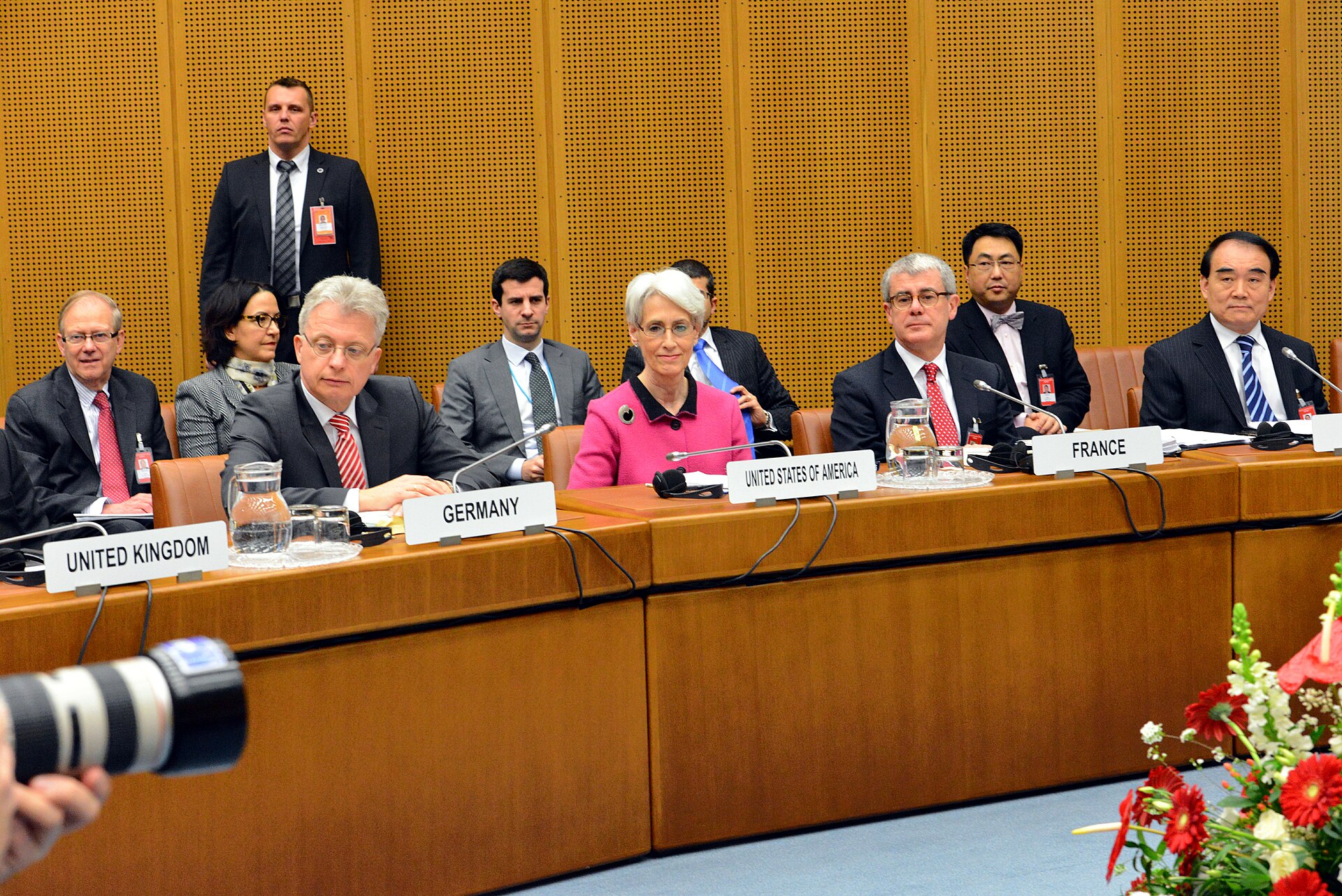

DOHA — Iran’s Islamic Revolutionary Guard Corps struck four US military installations across the Persian Gulf on June 27 and cited the very agreement those bases were supposed to uphold as legal justification — invoking Articles 1 and 5 of the Iran-US Memorandum of Understanding, the same 14-point document that the United States simultaneously accused Iran of violating by launching the strikes. The MOU, signed ten days earlier at a Geneva ceremony both governments framed as a diplomatic breakthrough, contains no mechanism for adjudicating this kind of mutual accusation: no named arbitrator, no defined consequence for breach, and no termination clause — which means neither side can formally kill it, neither side can prove the other violated it first, and the instrument will likely remain technically in force even as both parties use it to justify military operations against each other.
The structural result is an agreement that has been simultaneously invoked and breached by both signatories within ten days of its signing, in front of a monitoring body that exists only on paper and a mediating state — Qatar — whose own territory was among the targets. Saudi Arabia, which has no seat at the MOU table and no role in Phase 2 negotiations, is paying the financial consequences of this legal vacuum at a rate of approximately $5.5 million per day in implied PGSA exposure, with four loaded Bahri supertankers stuck at Ras Tanura and a Phase 2 clock that, if it collapses, defaults the PGSA toll to $1 per barrel on approximately August 17.
Table of Contents
- What Does the MOU Actually Say About Enforcement?
- How Did Both Sides Claim Victim Status Simultaneously?
- Who Has Standing to Declare the MOU Dead?
- Both Sides Violated and Neither Side Was Found Liable
- What Happens to the Phase 2 Clock?
- Saudi Arabia Pays for a Dispute It Cannot Join
- Can Qatar Still Mediate After Al Udeid?
- The Treaty That Refuses to Die
- Frequently Asked Questions
What Does the MOU Actually Say About Enforcement?
The MOU’s 14-point text contains exactly one provision that addresses compliance monitoring, and it reads like a placeholder that was never filled in. Point 14 — the final clause of the document — states that “an executive mechanism will be established to monitor the successful implementation of this MOU and the future compliance of the final deal,” according to the text published by Arab Center Washington DC and confirmed by NPR and CNN in their June 17-18 coverage of the signing. No entity is named, no authority is defined, no timeline for establishment is given, and the verb tense is future — “will be established” — which, ten days later, remains accurate only in the sense that the mechanism still does not exist.
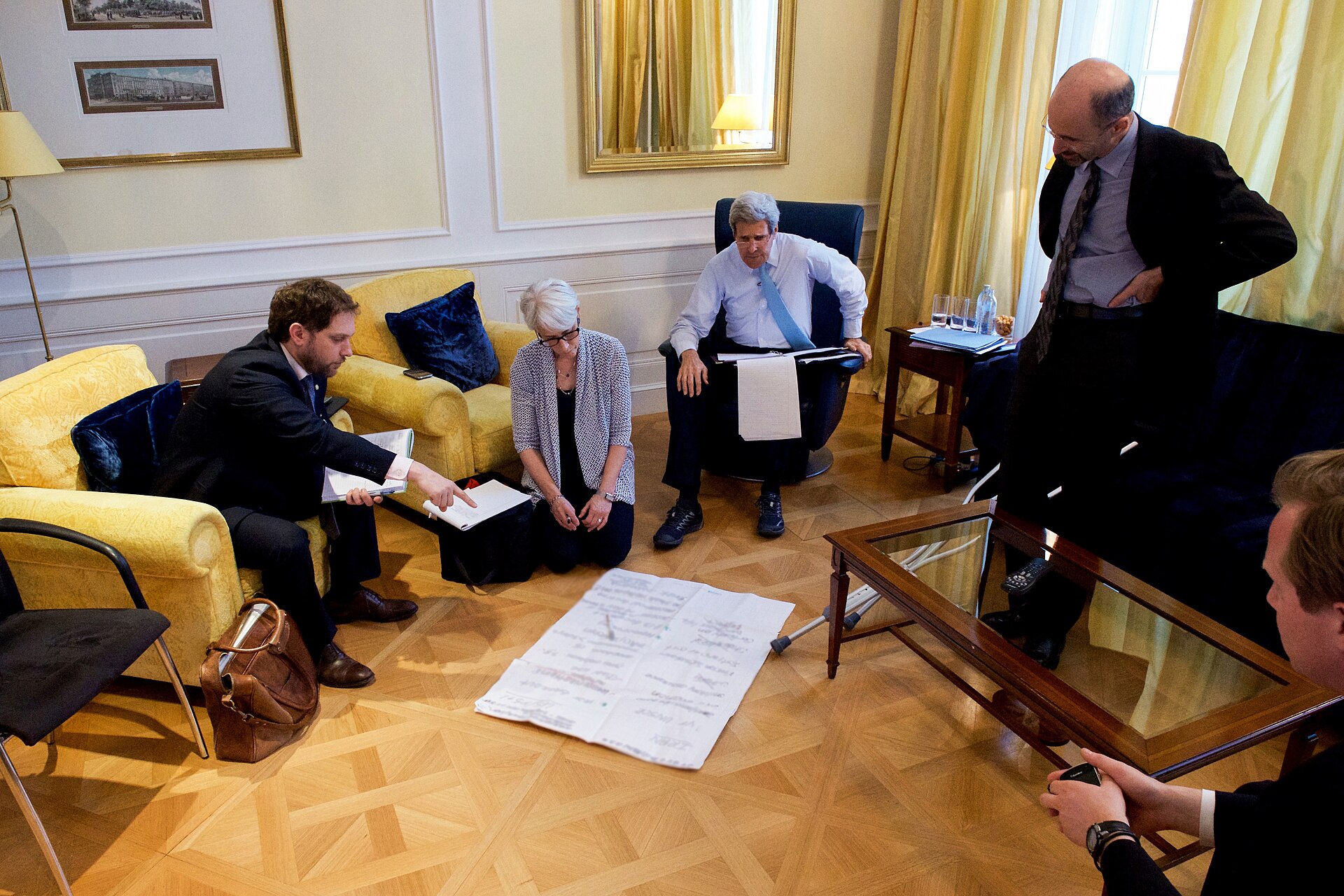
The Lake Lucerne meeting on June 22, co-chaired by Qatar and Pakistan as the MOU’s named mediators and guarantors, produced three working groups: nuclear, sanctions, and monitoring/dispute resolution. The monitoring and dispute resolution group is the closest thing the MOU has to an adjudicatory body, and as of June 27 — five days after its creation and zero days after the most serious mutual breach claim in the agreement’s brief life — it had not convened an emergency session, issued a statement, or published a ruling of any kind. The Institute for National Security Studies in Tel Aviv described the enforcement vacuum in terms that deserve quotation at length: “It is unclear who will comprise it, what role the International Atomic Energy Agency will play within it, what its authorities will be, how disputes will be resolved, what will constitute a violation, and what sanctions will be imposed in response.”
The Doha Institute’s analysis cut closer to the structural problem, characterizing the MOU as a ceasefire instrument dressed as a peace treaty — an assessment, published within days of the signing, that anticipated the exact failure mode now playing out. The instrument was designed to hold long enough for Phase 2 negotiations to begin, not to survive a genuine test of compliance. Ten days was apparently too much to ask.
How Did Both Sides Claim Victim Status Simultaneously?
Both governments have constructed mirror-image first-mover narratives, each accusing the other of breaking the MOU before they were forced to respond in kind, and the sequence matters because it determines — or would determine, if anyone had standing to rule — which party’s military actions constitute a violation and which constitute lawful self-defense. Iran’s attribution chain runs as follows: Israeli Defense Forces continued operations in Lebanon after the MOU’s Article 1 mandated cessation of hostilities on “all fronts,” a clause Iran’s Foreign Minister Abbas Araghchi interpreted explicitly to include IDF withdrawal from Lebanese territory. “When we reached a ceasefire, we declared it across all fronts, with particular emphasis on Lebanon,” Araghchi stated, adding that “any continued occupation of Lebanese territory will be regarded by us as a violation of the memorandum of understanding” (CBS News, mid-June 2026).
The Middle East briefing 3,000+ readers start their day with.
One email. Every weekday morning. Free.
When the IRGC drone struck the Ever Lovely — an 8,500-TEU Singapore-flagged Evergreen Marine container ship — on June 25 in the Oman/IMO Hormuz corridor, Tehran framed it not as an initiation but as a response to prior Israeli violations that the US had failed to cure, since Israel is not a party to the MOU and the US has declined to constrain IDF operations in Lebanon. When CENTCOM struck Iranian coastal radar and missile storage sites on June 26 in retaliation for the Ever Lovely attack, Iran characterized those strikes as the first overt American breach of Article 1. The June 27 IRGC strikes on Al Udeid, Ali Al Salem, Al Dhafra, and Juffair were therefore, in Tehran’s legal framing, “defensive retaliation” under Articles 1 and 5 — not a new breach but a lawful response to the prior American one (Al Jazeera live blog; GlobalSecurity.org Day 120 update, June 27, 2026).
The American narrative inverts the same chain with the same confidence. Trump called the June 25 drone strike on the Ever Lovely a “foolish violation” of the ceasefire (CBS News, June 26-27), making the CENTCOM retaliation on June 26 a lawful response to Iran’s breach, making the IRGC’s June 27 base strikes an escalation beyond any plausible interpretation of defensive action. Both narratives are internally consistent, both rely on identical text, and neither can be adjudicated — because the MOU provides no mechanism for determining who violated first, what constitutes a violation, or what threshold of military action triggers the agreement’s collapse. Andrea Dessi of the American University of Rome captured the design flaw precisely: “Both sides have a specific interest in demonstrating that their ability to control or command the strait is in their hands” (Al Jazeera, June 27, 2026).
“The MoU is extremely delicate and has the possibility of collapsing at any moment.”Andrea Dessi, American University of Rome, Al Jazeera, June 27, 2026
Who Has Standing to Declare the MOU Dead?
Neither government has answered this question, and neither can — because the MOU was deliberately constructed to avoid the mechanisms that would make such a declaration possible. Under international treaty law, the Vienna Convention on the Law of Treaties (VCLT) Article 60 provides for suspension or termination on material breach: a party may invoke a material breach by the other side as grounds for suspending the treaty’s operation in whole or in part. But the Trump administration has insisted the MOU is not a treaty, specifically to avoid congressional review under the Iran Nuclear Agreement Review Act of 2015 (INARA), which requires the president to submit any nuclear agreement with Iran for a 30-day or 60-day review period. Gibson Dunn’s advisory analysis flagged “legal risks” in this classification (Foreign Policy, June 23, 2026), and the Foundation for Defense of Democracies argued the MOU is subject to INARA regardless of the administration’s characterization (FDD, June 22, 2026).
The practical consequence of this classification dispute is that the MOU exists in a category the international system has no established protocol for — an instrument that is not a treaty (per the US position), not governed by VCLT violation and suspension rules, not backstopped by a UN Security Council resolution (unlike the JCPOA, which had Resolution 2231’s snapback mechanism), and not subject to any named court, tribunal, or arbitral body. The Valdai Discussion Club captured the structural trap with analytical precision: “The memorandum does not solve the dispute; it institutionalizes a temporary pause in the dispute,” adding that “the question is whether either side still possesses sufficient credibility to make negotiation meaningful.” As of approximately 22:00 UTC on June 27, neither side had formally declared the MOU dead — which is the most telling indicator of the instrument’s true function, because it serves both governments better as a violated agreement they can cite than as a dead one they cannot.
Both Sides Violated and Neither Side Was Found Liable
The closest structural precedent for what is happening to the Iran-US MOU is the Minsk II agreement of 2015, which contained no arbitration body, no named enforcer, and ambiguous sequencing of commitments between Russia, the Donbas separatist forces, and Ukraine. The OSCE’s Special Monitoring Mission recorded 320,130 armistice violations in 2016 alone — one year after the agreement’s signing — and could observe but not adjudicate (Beyond Intractability; Carnegie Endowment). Both parties violated simultaneously, neither was found liable, and the agreement became dead letter while remaining technically in force — a status it maintained for seven years until Russia’s February 2022 full-scale invasion of Ukraine formally buried it.
The MOU’s trajectory already mirrors the early Minsk II pattern with uncomfortable precision: mutual violation claims within the first two weeks, no adjudicatory body capable of ruling on them, both parties continuing to reference the agreement’s framework while acting in ways that violate its terms, and a monitoring mechanism that exists on paper but has issued no findings. The critical difference is temporal, and it works against the MOU’s survival: Minsk II had years to decompose slowly into irrelevance, while the MOU’s 60-day Phase 2 clock introduces a hard deadline that Minsk II lacked. When the 60-day window closes around August 17, the PGSA fee defaults to $1 per barrel, and the financial consequences of the agreement’s zombie status become concrete, measurable, and overwhelmingly Saudi.
The JCPOA offers the contrasting structural lesson — an agreement that, whatever its other flaws, contained an enforcement mechanism. Resolution 2231’s snapback provision, which the E3 invoked on August 28, 2025, with UN sanctions reimposed by September 27, 2025, gave the JCPOA something the MOU entirely lacks: a defined consequence for non-compliance, administered by a named multilateral body with standing to act. The MOU has no snapback equivalent, no UN resolution backstopping it, and no multilateral body with the authority to declare a violation. It is, in the Doha Institute’s formulation, a ceasefire masquerading as a treaty — and it is now a ceasefire that both parties have broken while insisting the other party broke it first.
What Happens to the Phase 2 Clock?
The 60-day Phase 2 negotiating window opened on June 17 and runs until approximately August 17 — Day 61 — regardless of whether either party has formally suspended or terminated the MOU, because the MOU contains no suspension mechanism. There is no provision for pausing the clock on breach, no force majeure clause, and no mutual consent procedure for extending the window. The clock runs on calendar time, indifferent to the legal status of the instrument it serves, and ten days have already elapsed.
The Phase 2 working groups — nuclear, sanctions, and monitoring/dispute resolution — were established on June 22 at Lake Lucerne, and the monitoring group, the one body that could in theory address the mutual breach claims now on the record, has not convened since the June 27 strikes. Wendy Sherman, the former US Under Secretary of State who negotiated the JCPOA over 18 months of continuous negotiation, assessed the 60-day window’s adequacy before it was even tested: “I can assure you they will not get all of this done in 60 days.” The gap between what the JCPOA required (18 months) and what the MOU allows (60 days, minus days consumed by mutual strikes) is not merely a scheduling problem — it is a structural indicator that the instrument was designed to create the appearance of a negotiating framework rather than the reality of one.
The Phase 2 clock creates a particular kind of trap, because its expiration triggers a consequence the MOU’s text never explicitly addresses: the PGSA’s $1-per-barrel transit fee, currently waived during the 60-day window, reverts automatically on Day 61. No party needs to invoke it, no party needs to declare the MOU dead, and no adjudicatory body needs to rule. The fee activates by default, and Saudi Arabia — which has no seat at the table, no vote on the clock, and no mechanism for pausing it — absorbs the cost as the financial hostage to a deadline neither plaintiff nor defendant is trying to meet.
Saudi Arabia Pays for a Dispute It Cannot Join
The Arab Center Washington DC assessed Saudi Arabia’s structural position with unusual directness: “The Islamabad Memorandum leaves Saudi Arabia with a hard set of choices and no clean way through them.” The center’s fuller analysis captures the kingdom’s strategic dilemma in a single sentence: “Saudi Arabia wants the war over, and at the same time fears a settlement that puts Iran’s economy back on its feet, frees it to fund its allies, gives it sway over Hormuz, and lets it back into a Levant where its grip had just loosened.” Saudi Arabia is not a party to the MOU, not a participant in Phase 2 negotiations, not a member of any working group, and not named in any of the instrument’s 14 points. Yet it is the entity most exposed to the financial consequences of the MOU’s collapse.
Four Bahri VLCCs loaded approximately 8 million barrels of crude at Ras Tanura and cannot transit Hormuz after Iran re-declared the strait closed on June 27, simultaneously with the IRGC base strikes. The crude aboard those four vessels is worth approximately $582 million at Brent’s June 27 closing price of $72.86. On the same day, the Kiku — a 300,866-DWT VLCC carrying 2 million barrels loaded at Qatar’s Al Shaheen Offshore Terminal, bound for Singapore — was struck by an unidentified projectile on its starboard bridge wing at 08:00 UTC (UKMTO confirmed bridge damage, all crew safe, no pollution, vessel continuing passage), and the Joint Maritime Information Centre raised the Hormuz threat level from “moderate” back to “substantial.” Brent’s June 27 close of $72.86 against Saudi Arabia’s fiscal breakeven of $108-111 per barrel represents a shortfall of approximately $35-38 per barrel; at the kingdom’s export run rate, that translates to a revenue deficit in the range of $160-175 million per day.
Hasan Alhasan, a senior fellow at the International Institute for Strategic Studies, framed the structural imbalance that the MOU has exposed rather than created: the Gulf states cannot rely on a non-aggression pact “in the absence of a credible Arab Gulf deterrence capability,” arguing that “the Arab Gulf states must first redress the strategic imbalance with Iran through credible deterrence, enhanced and integrated defense and robust resilience measures” (IISS Online Analysis, June 2026). Saudi Arabia’s June 27 statement condemned Iran’s strike on Bahrain but made no defense pledge — a response that confirmed the deterrence gap Alhasan described, issuing diplomatic language without military commitment at the moment when the MOU’s failure had made military reality the only language that mattered. The next morning, Iraq’s Foreign Minister Fuad Hussein extended a formal invitation to all six GCC states and Iran for an eight-party Baghdad summit — placing Saudi Arabia in an identical bind on the diplomatic track: every silence is itself an answer, as Baghdad Sent the Invitation Saudi Arabia Cannot Answer examines.
Can Qatar Still Mediate After Al Udeid?
Qatar is simultaneously a guarantor of the MOU and a target of the military action its guaranteed instrument was supposed to prevent, which is a structural contradiction that no amount of diplomatic dexterity can resolve. Qatar’s Ministry of Defense confirmed that Al Udeid Air Base — the largest US military installation in the Middle East, co-located on Qatari sovereign territory — was struck by the IRGC on June 27, with no casualties reported. Qatar’s Prime Minister Al Thani traveled to Switzerland as a co-mediator for the Phase 2 talks, and Qatar brokered the June 19 Lebanon ceasefire renewal that was a precondition for Araghchi’s participation in negotiations — the same ceasefire whose collapse Iran subsequently cited as grounds for suspending its delegation.
The legal absurdity is structural, not incidental: Qatar cannot adjudicate an Iranian violation claim when Iran’s violation struck Qatari soil, and a mediator whose territory has been bombed by one party is either no longer neutral or so lacking in authority that its mediation is functionally decorative. Pakistan, the other named guarantor, pulled its prime minister from the Bürgenstock Phase 2 talks before they collapsed on Day 1. The monitoring and dispute resolution working group, which Qatar and Pakistan co-established five days before the June 27 strikes, has no emergency convening protocol, no hotline, and no public procedure for handling precisely the scenario now unfolding — a simultaneous attack on a mediator-guarantor’s sovereign territory by the party whose compliance that mediator is supposed to verify.
The IRGC’s rejection of the deconfliction hotline — a US-Iran channel with CENTCOM and IRGC representatives operating in Doha, publicly confirmed by Vice President Vance (Times of Israel) — removes the last informal communication mechanism that might have substituted for the formal one the MOU never created. The agreement has no court, its mediator has been struck, its guarantor has withdrawn, and its deconfliction channel has been refused — four institutional failures in a single day, each compounding the others. The IRGC followed with overnight strikes on Kuwait and Bahrain on June 28, extending the same compliance-framing logic to a second salvo.
The Treaty That Refuses to Die
The most instructive detail about the MOU’s current status is that neither government wants to declare it dead, even as both accuse the other of killing it, and this is not paradoxical — it is rational. A dead MOU reverts the PGSA fee immediately, removes the diplomatic framework that gives both sides cover to continue selective compliance, and eliminates the 60-day clock that keeps Phase 2 theoretically alive. A violated MOU, by contrast, gives both parties something to cite, something to accuse the other of breaking, and something to point to when asked why military operations continue despite a nominal ceasefire. The zombie MOU — violated, unadjudicated, technically in force — is more useful to both Washington and Tehran than a formally dead one would be.
NBC News documented the interpretive chaos that attended the MOU from its first hours: the US took hours to confirm Hormuz was open despite MOU text stating “traffic will immediately start”; Trump and Pezeshkian re-signed the agreement, with Trump doing so at a Versailles dinner; sanctions waiver details remained unclear from Day 1. The instrument was born ambiguous, lived ambiguous, and is now being killed ambiguously — or, more precisely, being simultaneously killed and kept alive by both parties, because the MOU’s designers built something too vague to enforce and too useful to abandon. Iran’s response on June 28 — a “6+2” Gulf security framework proposed from Baghdad the same morning the IRGC struck Ali Al Salem and Juffair — presented the affirmative face of the same coercive logic: an offer of dialogue backed by the same instruments the MOU was supposed to constrain. The same morning, Araghchi issued a formal demand to Kuwait and Bahrain that they deny US forces use of their territory — extending the MOU’s compliance-citation logic into a post-strike legal architecture for future strikes, documented in Iran Struck First, Then Issued the Rules.
“A critical analysis of the text reveals that the Islamabad Memorandum is not a comprehensive peace treaty; it is an extended 60-day regional ceasefire masquerading as one.”Doha Institute (Arab Center for Research and Policy Studies), June 2026
The drone strike on the Ever Lovely eight days into the MOU was the first operational test of the agreement’s enforcement vacuum, and Grossi’s warning of a “war of statements” over Iran’s nuclear program applies with equal force to the MOU itself — a war of legal citations in which both sides wield the same document against each other, in the absence of any referee, in front of an audience of one. Saudi Arabia, which cannot vote, cannot arbitrate, cannot negotiate, and cannot transit the strait, is paying $5.5 million a day for the privilege of watching a treaty with no court collapse in a conflict it cannot join, and neither plaintiff nor defendant has any interest in ending the case. The GCC’s parallel enforcement vacuum — a collective defense treaty that declares “attack on all” and produces no deployment — is examined in The GCC Declared ‘Attack on All’ — Not One Soldier Moved.
The stand-down that restored the MOU hours later — brokered by phone, with no written document and no named enforcer — demonstrated that the agreement could self-reinstate on the same terms it had already failed to enforce, confirming the enforcement void is structural, not incidental.
Frequently Asked Questions
Does the MOU have a formal expiration date?
No. The MOU’s 14-point text contains no expiration date, no sunset clause, and no termination trigger. The 60-day Phase 2 window (June 17 to approximately August 17) is a negotiating deadline, not a termination mechanism — the MOU could theoretically persist beyond Day 61 even without a deal, while the PGSA’s $1-per-barrel fee reverts automatically at that point regardless of the MOU’s status.
Has any country formally recognized the MOU as a binding treaty under international law?
No government — including the two signatories — has classified the MOU as a treaty. The Trump administration avoided treaty status to bypass INARA’s congressional review requirement. Iran has relied on the MOU’s internal Articles rather than the Vienna Convention, since invoking the Convention would implicitly concede treaty status. Gibson Dunn and FDD have argued INARA review is triggered regardless — unresolved in US courts as of June 27.
What is the PGSA’s legal basis for collecting transit fees after Day 61?
The PGSA predates the MOU — founded May 5, 2026, forty-three days before the MOU’s June 17 signing — and grounds its fee authority in Iran’s claim of regulatory jurisdiction over Hormuz under a disputed UNCLOS reading. The MOU’s waiver is a temporary overlay. When it expires, the dispute shifts to UNCLOS Article 38 (transit passage rights) versus Article 26(2) (fees for “specific services rendered”), a maritime question that predates the MOU entirely.
Could the UN Security Council intervene to enforce the MOU?
Effectively no. Unlike the JCPOA — embedded in Resolution 2231, with a snapback mechanism — the MOU has no UN resolution backstopping it. Any enforcement action would require a new Security Council resolution. Russia and China hold veto power and have shown no inclination to sponsor one. The same P5 dynamics that paralyzed the Council on Iran-related matters since 2020 apply in full here.
The stand-down that restored the MOU hours later — brokered by phone, with no written document and no named enforcer — demonstrated that the agreement could self-reinstate on the same terms it had already failed to enforce, confirming the enforcement void is structural, not incidental.