
DUBAI — On June 25, an IRGC drone struck the Ever Lovely, an 8,500-TEU Evergreen Marine container vessel transiting 7.5 nautical miles southeast of Oman’s port of Dahit — squarely inside the corridor that Oman and the IMO had announced two days earlier as a safe alternative to Iran’s designated routes. One day later, on June 26, Aramco began loading the first crude tankers at Ras Tanura since March 8. Those tankers will exit the Persian Gulf through the same corridor that a drone had just hit. The MOU signed June 17 at Versailles commits Iran to use “best efforts” for safe passage. It does not define which routes qualify. It does not name an enforcement body. It does not specify consequences for a strike on a vessel outside Iran’s designated lanes. The IRGC did not claim to have broken the agreement. It claimed the Ever Lovely was never inside it.
Table of Contents
- What Happened to the Ever Lovely
- Two Corridors, One Strait, No Agreement on Which Is Legal
- What Does ‘Best Efforts’ Actually Guarantee?
- The PGSA Framework Iran Never Dissolved
- Why Did the IMO Pause Evacuations?
- Ras Tanura Loaded Into an Active Strike Zone
- War-Risk Premiums and the Lloyd’s Problem
- Does Saudi Arabia Have Any Lever Left?
- From Earnest Will to Best Efforts
- Frequently Asked Questions
What Happened to the Ever Lovely
The Ever Lovely, a Singapore-flagged container vessel operated by Evergreen Marine, was struck on its starboard side at approximately 7.5 nautical miles southeast of Dahit, Oman, on June 25. Bridge windows and the exterior overhang were damaged. The main engine and navigation systems remained operational. There were no casualties. Two US officials confirmed the strike was carried out by an IRGC drone, making it the first attack on a commercial vessel since the MOU took effect on June 17.
The vessel was not transiting under the IMO’s evacuation framework. It was using the Oman-published southern corridor independently — a distinction that matters because the IMO’s safety guarantees, such as they were, applied to vessels on its evacuation list. The Ever Lovely was not on that list. It was operating on the assumption that a corridor announced by a sovereign state and endorsed by the UN’s maritime authority was safe to use.
Before the strike, Windward maritime intelligence had identified five vessels turned back by the IRGC on the southern corridor. A sixth lost its AIS signal. The Ever Lovely was the seventh vessel to encounter IRGC enforcement on a route Iran had publicly declared “highly dangerous and prohibited” — but the first to be hit.
Two Corridors, One Strait, No Agreement on Which Is Legal
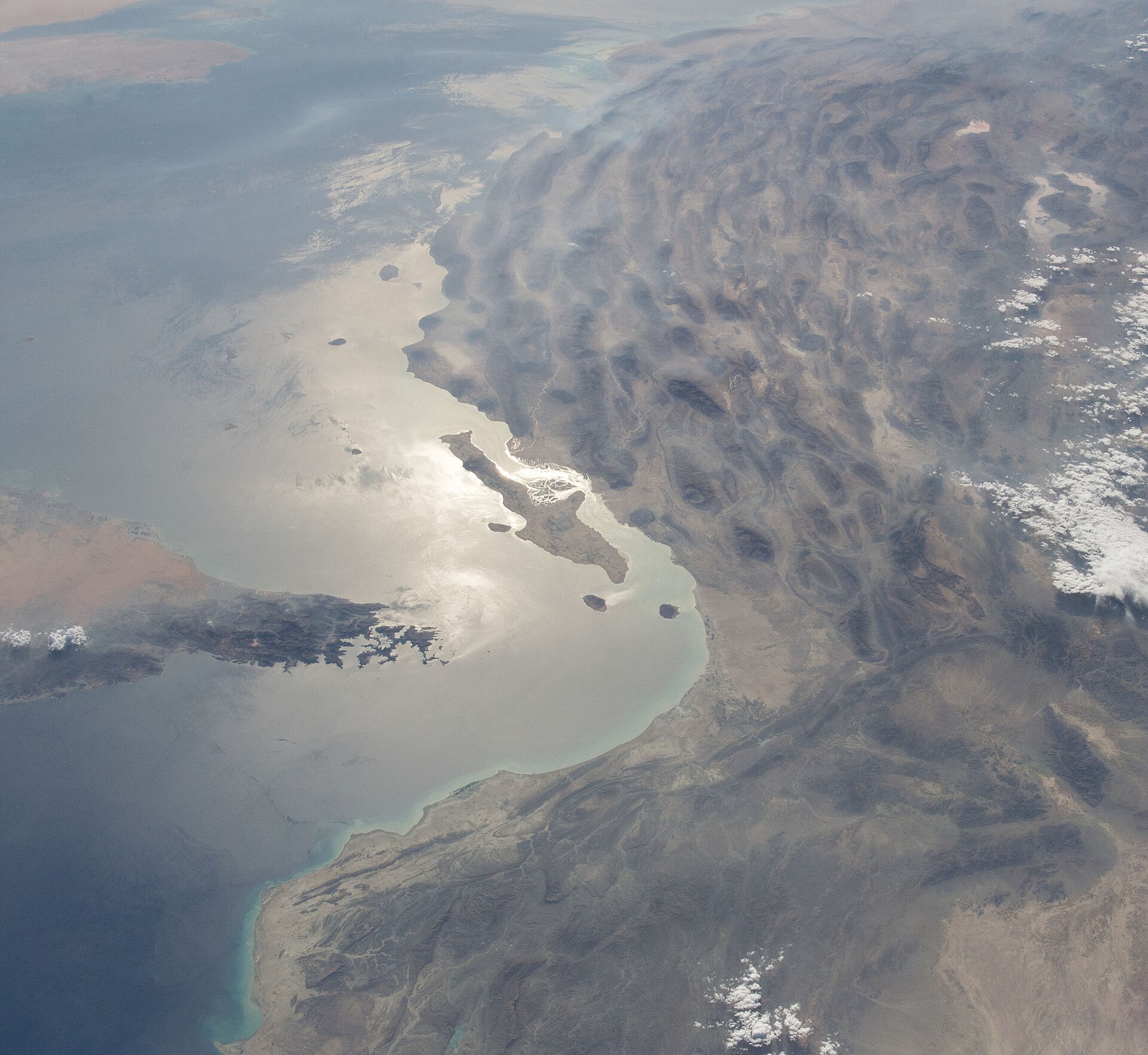
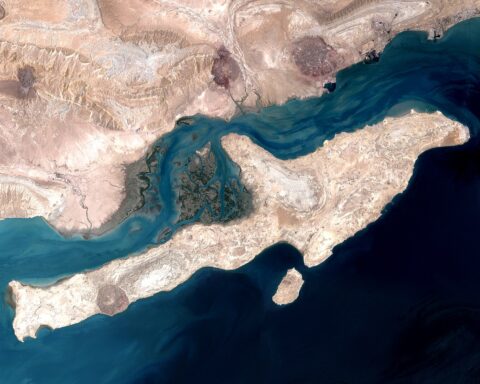
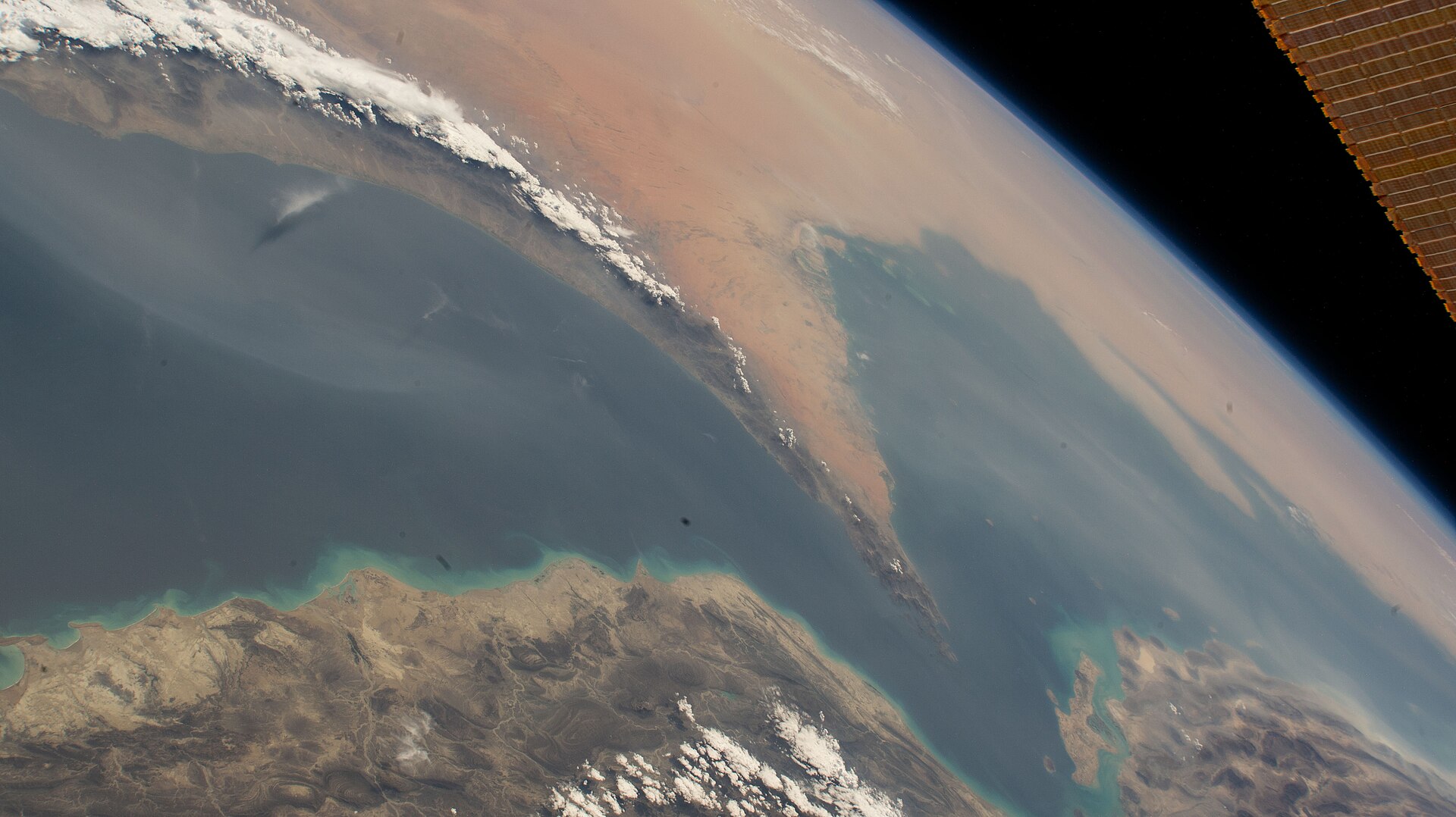
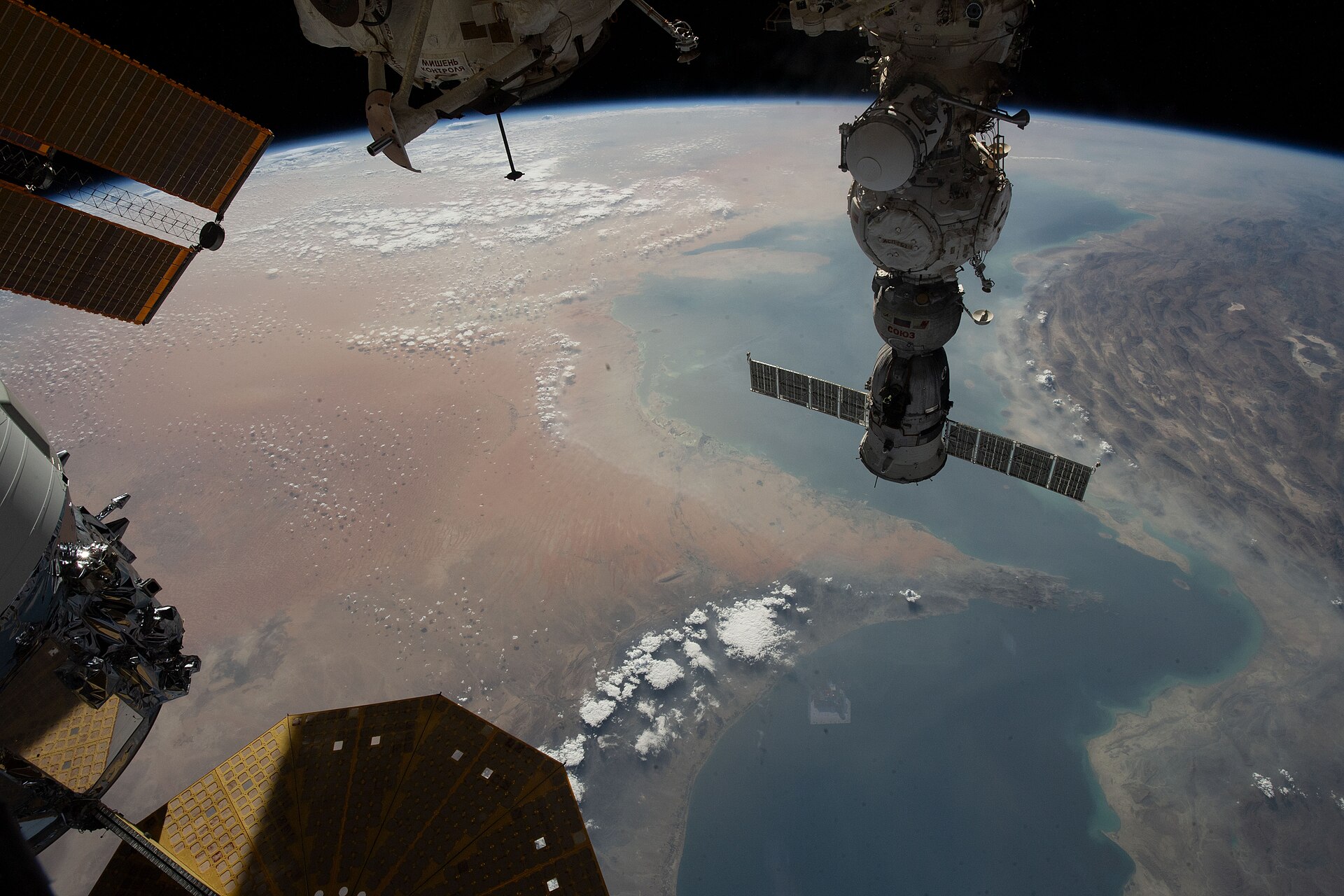
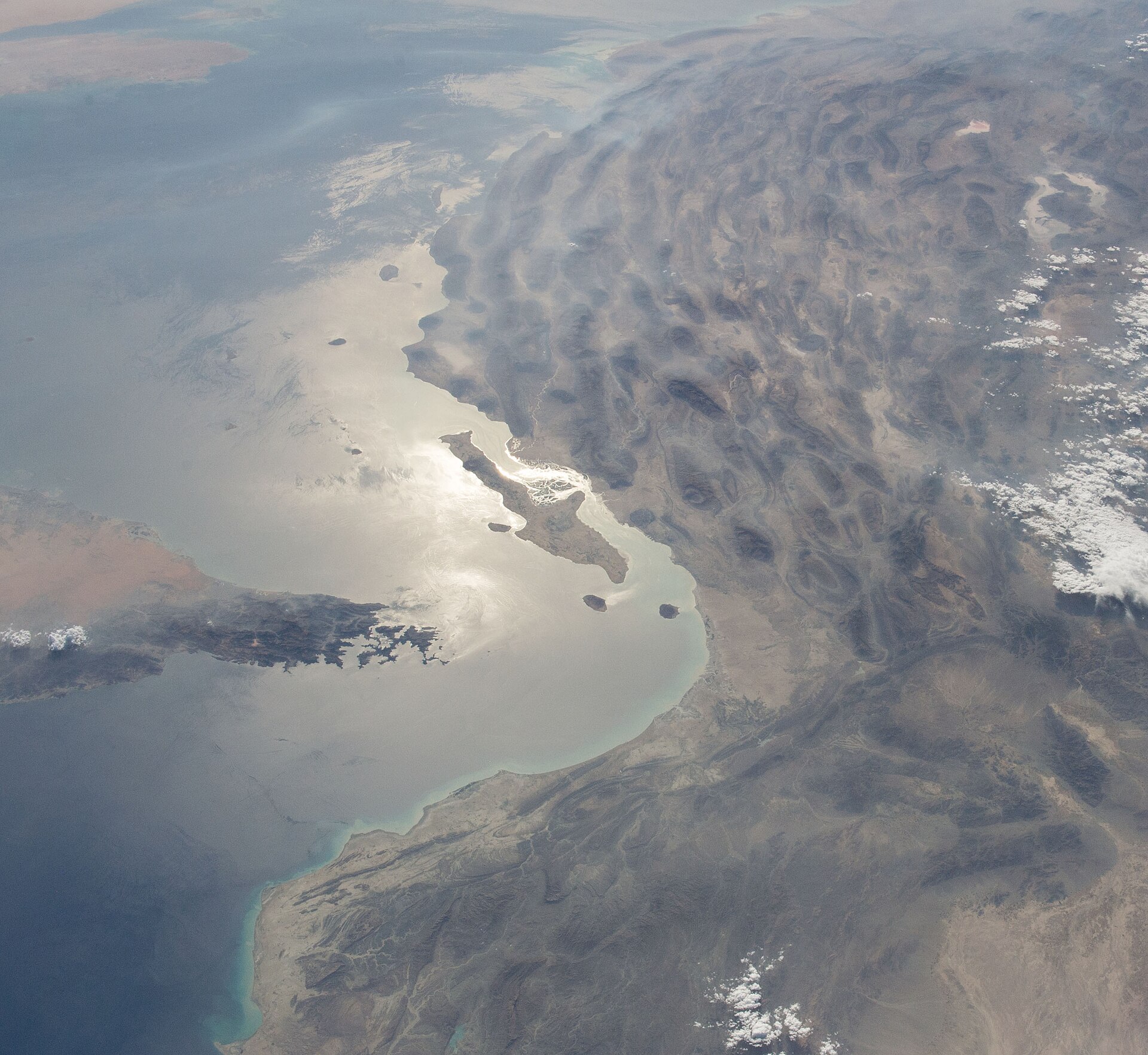
On June 23-24, Oman published six authorized eastbound waypoints defining a southern corridor through the Strait of Hormuz. The corridor routes traffic closer to the Omani coast and farther from the Iranian-controlled islands of Qeshm and Larak. Oman’s foreign ministry stated that future transit arrangements “do not involve imposing any transit fees.” The IMO endorsed the route as part of its broader evacuation plan for the roughly 600 vessels and 11,000 mariners stranded in the Gulf since the crisis began.
The IRGC responded within hours. “The only authorized route for passing through the Strait of Hormuz is the one declared by the Islamic Republic of Iran,” its official Telegram channel stated. “Vessel traffic outside these routes is extremely dangerous and prohibited.”
The Middle East briefing 3,000+ readers start their day with.
One email. Every weekday morning. Free.
The PGSA — the Persian Gulf Shipping Authority that Iran established on May 5, forty-three days before the MOU — posted a parallel warning on X: consequences from unauthorized routes “shall be the responsibility of the owner, operator, and vessel commander.”
Two transit regimes now operate simultaneously in the same body of water. Iran’s PGSA-designated corridor runs through the northern channel near Qeshm and Larak, requiring Iranian pre-authorization and — outside the MOU’s 60-day waiver window — a $1-per-barrel fee. Oman’s corridor runs through the southern channel closer to Musandam. Neither regime recognizes the other. The MOU text does not acknowledge that an alternative corridor exists, much less adjudicate between them.
What Does ‘Best Efforts’ Actually Guarantee?
The operative clause of the MOU, signed by Trump at the Palace of Versailles during dinner with Macron on June 17 and by Pezeshkian in Tehran, reads: “Upon the signing of this MOU, the Islamic Republic of Iran will make arrangements using its best efforts for the safe passage of commercial vessels with no charge, for 60 days only, from the Persian Gulf to the Sea of Oman and vice versa.”
In contract law, “best efforts” is a recognized lesser standard. It does not guarantee an outcome — it obligates the promisor to attempt one. The clause contains no definition of “safe passage,” no specification of which routes qualify, no named guarantor, no dispute mechanism, no third-party monitoring body, and no consequences for incidents. The 60-day clock runs from June 17 to approximately August 16, regardless of whether the corridor functions.
Iran’s legal position after the Ever Lovely strike rests on the gap in the text. The MOU commits Iran to “make arrangements” for safe passage. Iran can argue — and has effectively argued, through the IRGC and PGSA statements — that its arrangements are the PGSA-designated northern corridor. A vessel that bypasses those arrangements and uses an Oman-published route that Iran never authorized is, in this reading, outside the MOU’s scope. Iran’s “best efforts” were directed at one corridor. The Ever Lovely was on a different one.
This is not a frivolous argument. The MOU’s drafters — and the “best efforts” language has drawn scrutiny since the text became public — left the geographic scope undefined. They created a political commitment without the contractual architecture to make it enforceable. Whether this was intentional ambiguity to secure the signing or a drafting failure is unknowable from the outside. The effect is the same. Iran would put this enforcement gap to direct use on June 27, when it invoked Articles 1 and 5 to justify simultaneous strikes on four US bases — a sequence analyzed in Iran Cited the MOU to Justify Breaking It.
The PGSA Framework Iran Never Dissolved
The PGSA was established on May 5, 2026 — forty-three days before the MOU was signed. It requires vessels to submit a 40-category pre-authorization form, transit through the Larak corridor under Iranian-designated routing, and — outside the MOU’s 60-day fee waiver — pay $1 per barrel. The PGSA regime was built as an assertion of Iranian sovereignty over Hormuz transit. The MOU did not dissolve it, modify it, or acknowledge it by name.
Two legal frameworks now coexist. The MOU provides a 60-day toll-free window. The PGSA provides the underlying authorization mechanism that determines which vessels qualify. Iran treats the MOU as a temporary overlay on the PGSA — a fee waiver, not a regime replacement. The PGSA’s pre-authorization requirement, its corridor designation, and its liability framework all remain in force. When the 60-day window closes around August 16, the PGSA’s $1-per-barrel fee structure reverts by default.
The Ever Lovely strike exposed what this dual framework means operationally. The PGSA’s June 25 statement — posted before the drone hit — functioned as a pre-published liability waiver. Iran notified the world that vessels on unauthorized routes bore their own risk. Then it enforced that notification. The sequence was not impulsive. It followed the PGSA’s internal legal logic with a precision that suggests it was planned as a demonstration.
| Feature | MOU (June 17) | PGSA (May 5) |
|---|---|---|
| Effective date | June 17, 2026 | May 5, 2026 (43 days earlier) |
| Duration | 60 days (~Aug 16) | No expiry |
| Transit fee | Waived for 60 days | $1/barrel (waiver during MOU window) |
| Route designation | Not specified | Larak corridor, Iran-designated waypoints |
| Pre-authorization | Not mentioned | 40-category form required |
| Enforcement body | None named | IRGC (de facto) |
| Liability for unauthorized transit | Silent | “Owner, operator, and vessel commander” |
| Dispute mechanism | None | None |
Why Did the IMO Pause Evacuations?
Within hours of the Ever Lovely strike, IMO Secretary-General Arsenio Dominguez suspended the organization’s evacuation plan. “I have decided to temporarily pause the evacuation plan’s implementation in order to reconfirm that the necessary safety guarantees continue to be in place for the ships on the evacuation list and all those in the region,” Dominguez said in an official briefing.
The evacuation plan had assisted approximately 600 vessels and 11,000 stranded mariners since the MOU took effect. Its suspension did not affect vessels already underway — 172 ships had transited since June 18 — but it froze all new departures under the IMO’s coordination framework. For comparison, pre-war Hormuz handled more than 100 transits per day.
Dominguez’s second statement was more pointed: “The safety of seafarers remains paramount, and therefore, to ensure a coordinated approach and navigational safety, the evacuation plan will be paused until further clarity is obtained.” The phrase “until further clarity is obtained” is diplomatic language for a specific problem: the IMO does not know whether Iran considers its evacuation corridor to be inside or outside the MOU’s scope, and the MOU text does not answer the question.
Jakob Larsen, chief safety and security officer at BIMCO, the world’s largest shipowner association, called the strike “a set-back in the plans to evacuate ships and resume transits.” He had previously noted that “the wording of the U.S.-Iran memorandum of understanding is currently not sufficiently clear.” The Ever Lovely converted his concern from prospective to demonstrated.
June 24 — the day before the strike — had recorded 49 AIS-visible transits, the highest single-day count of the crisis. The Ever Lovely reversed that trajectory in a single drone flight.
Ras Tanura Loaded Into an Active Strike Zone
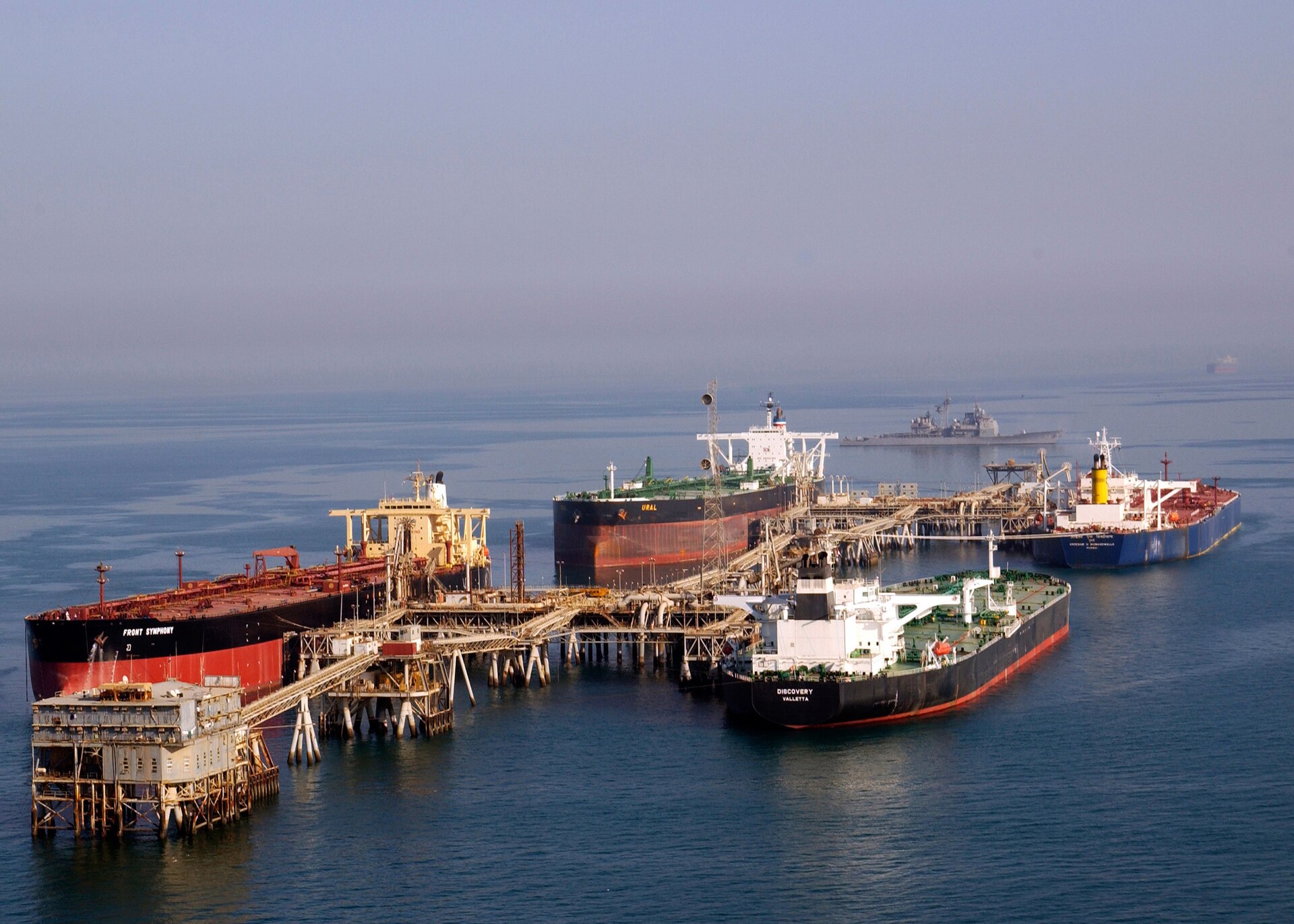
On June 26, Aramco began loading crude at Ras Tanura for the first time since March 8 — a gap of 110 days. Two Bahri VLCCs were taking on approximately 2 million barrels each. A third VLCC waited at anchor. The terminal restart was planned before the Ever Lovely strike and was not postponed because of it. The previous Bahri convoy — tankers Shaden, Jaham, and Awtad, carrying roughly 6 million barrels — had crossed Hormuz on June 18 without confirmed incident but with AIS switched off during the Qeshm-Larak corridor transit. Neither Bahri nor Aramco confirmed whether the PGSA fee was paid on that first convoy.
Every barrel loaded at Ras Tanura must exit through the Strait of Hormuz. Saudi Arabia’s only alternative export route is the East-West Pipeline to Yanbu on the Red Sea, which operates at its maximum capacity of 7.0 million barrels per day. Crude above that ceiling has no path to market except Hormuz. Aramco’s last Ras Tanura cargo — bound for China — departed March 8. Since then, Saudi Arabia’s eastern crude exports have been functionally shut.
The timing is not coincidental but it is uncomfortable. The Bahri VLCCs loading at Ras Tanura on June 26 will transit the strait within days. They will pass through contested water where, 24 hours earlier, a drone struck a container vessel that was operating on the corridor Oman had designated as the safe alternative to Iran’s lanes. The Bahri tankers will carry Saudi crude — the commodity Iran has the greatest strategic interest in controlling. They will do so without naval escort (the US has not offered one), without IMO coordination (the evacuation plan is paused), without Saudi naval presence (the Royal Saudi Naval Forces have no operational capability in the strait), and under an insurance regime that remains at 20 to 30 times the pre-war baseline.
Brent crude closed at $74.43 on June 26, down 1.11 percent. Saudi Arabia’s fiscal breakeven sits between $80 and $91 per barrel. The gap — $14 to $17 per barrel on the day Ras Tanura restarted — means every barrel loaded is sold at a loss relative to budget assumptions, transited through a corridor whose safety cannot be guaranteed, and insured at rates that erase a further slice of the margin.
War-Risk Premiums and the Lloyd’s Problem
War-risk insurance premiums for Hormuz transit fell from approximately 5 percent of hull value at the conflict peak to 2-3 percent after the MOU was signed. They had not reached pre-war levels. The pre-war baseline was 0.1 percent of hull value. At current rates, a VLCC insured at $120 million faces a war-risk premium of $2.4-3.6 million per transit — down from $6 million at the peak but still 20 to 30 times the peacetime cost.
The Ever Lovely strike will push premiums back up. How far depends on whether underwriters classify it as an isolated incident or a pattern resumption. Lloyd’s Joint War Committee, which designates conflict zones for insurance purposes, has not removed the Hormuz conflict-zone designation. Its criteria for removal: “formal removal of conflict zone designation, sustained incident-free passage, settled geopolitical picture.” None of these conditions existed before June 25. They exist less now. The Ever Lovely strike occurred eight days into the MOU’s 60-day window — far short of any reasonable definition of “sustained incident-free passage.”
For a Bahri VLCC carrying 2 million barrels of Arab Light at $74.43 per barrel — $149 million in cargo value — the war-risk premium alone ranges from $2.4 million to $3.6 million. Add port-risk surcharges, deviation premiums, and the P&I club loadings that have not been publicly disclosed, and the total insurance cost for a single Ras Tanura cargo approaches $5-8 million. How the London market closed the strait before Iran did — through the withdrawal of charterers’ liability war risk extensions, not merely a premium spike — is the structural failure that keeps costs at this level regardless of what the MOU says. At $1 per barrel, the PGSA fee on 2 million barrels would add another $2 million if the 60-day waiver expires before the tanker completes its voyage.
| Component | Pre-War | Post-MOU (Pre-Strike) | Post-Strike (Est.) |
|---|---|---|---|
| War-risk premium (% of hull) | 0.1% | 2-3% | 3-5% (est.) |
| Cost on $120M hull | $120,000 | $2.4-3.6M | $3.6-6.0M (est.) |
| Cargo war-risk | Nominal | ~$500K-1M | ~$1-2M (est.) |
| PGSA fee (2M bbl, if waiver expires) | N/A | Waived | $2M |
| Total per transit | ~$200K | ~$3-5M | ~$5-10M (est.) |
Does Saudi Arabia Have Any Lever Left?
On June 25 — the same day as the Ever Lovely strike — a GCC-US joint statement issued from Manama rejected “any tolls, fees, or attempts to assert control” over Hormuz and affirmed “free, unconditional, and unrestricted navigation” as “essential to regional and global security.” The statement recognized Qatar and Pakistan as MOU mediators. Saudi Arabia issued no separate statement on the attack.
Saudi Arabia is not a party to the MOU. It has no seat at Phase 2 negotiations, where the nuclear file and — theoretically — Hormuz governance will be discussed. It has no enforcement role in either the PGSA or IMO frameworks. Qatar has emerged as the Gulf mediator for the process that will determine Hormuz’s long-term status. The GCC-US joint statement is the strongest instrument available to Riyadh, and it is a statement of principle, not a mechanism.
The structural problem is exposure without agency. Saudi Arabia is the largest-volume user of the Hormuz corridor — 5.5 million barrels per day when operating at full eastern capacity — and the party with the least influence over how the corridor functions. Its fiscal breakeven gap of $14-17 per barrel at current Brent prices means it cannot afford to wait for the corridor question to be resolved. Ras Tanura had to restart. But restarting commits Aramco’s tankers to a route that a drone hit the day before, governed by an agreement Riyadh did not sign, monitored by an agency that has paused operations. On the same day Ras Tanura restarted, IAEA Director General Grossi warned from Tokyo of a “war of statements” over Iran nuclear inspections — with Iran’s deputy foreign minister publicly conditioning IAEA access on full sanctions termination and no inspection arrangement in place.
“The wording of the U.S.-Iran memorandum of understanding is currently not sufficiently clear.”
Jakob Larsen, Chief Safety & Security Officer, BIMCO
The GCC-IMO letter of May 21, signed by five of six GCC states, had demanded that Iran’s PGSA fee regime be treated as a violation of international maritime law. Oman, whose corridor became the alternative route, did not sign. The letter was sent twenty-seven days before the MOU was signed. The MOU did not reference it, did not resolve the fee question beyond the 60-day waiver, and did not create a channel through which GCC objections could be heard during Phase 2. Kuwait, which lifted its force majeure and began ramping production, uses the same corridor without bearing equivalent risk — its volumes are smaller, its fiscal position less stressed, and its exposure to PGSA fees proportionally lower.
From Earnest Will to Best Efforts
The last time Iran attacked neutral commercial shipping in the Strait of Hormuz at this scale, the United States responded with Operation Earnest Will — the largest naval convoy operation since World War II. From July 1987 to September 1988, the US Navy re-flagged Kuwaiti tankers under American colors and escorted them through the strait with guided-missile cruisers, frigates, and minesweepers. Iran’s campaign ended not through a corridor agreement but through Operation Praying Mantis in April 1988, which destroyed a substantial portion of Iran’s naval surface capability in a single day.
In 2026, the response to the same problem — Iranian attacks on commercial shipping in a chokepoint that carries roughly 20 percent of the world’s traded oil — is a memorandum of understanding that uses “best efforts” language, names no enforcement body, and was signed at two different locations by two leaders who have not met. The 1988 approach deployed hull-mounted five-inch guns. The 2026 approach deployed fourteen points of unsigned diplomatic text. That gap remained on full display when CENTCOM reported no casualties or major impacts from June 28 IRGC strikes on Kuwait and Bahrain while Iran claimed eight installations destroyed — two governments, one news cycle, irreconcilable claims.
The comparison is not offered to argue for military escalation. It is offered to calibrate what “safe passage” has historically required in this specific waterway and what the current framework provides. When Operation Earnest Will began, the US was escorting roughly 2 million barrels per day through the strait. Saudi Arabia alone needs to push 5.5 million barrels per day through the same water. The enforcement mechanism is weaker. The volumes are larger. The insurance costs are higher. The alternative — a global market already oversupplied — offers no pricing cushion.
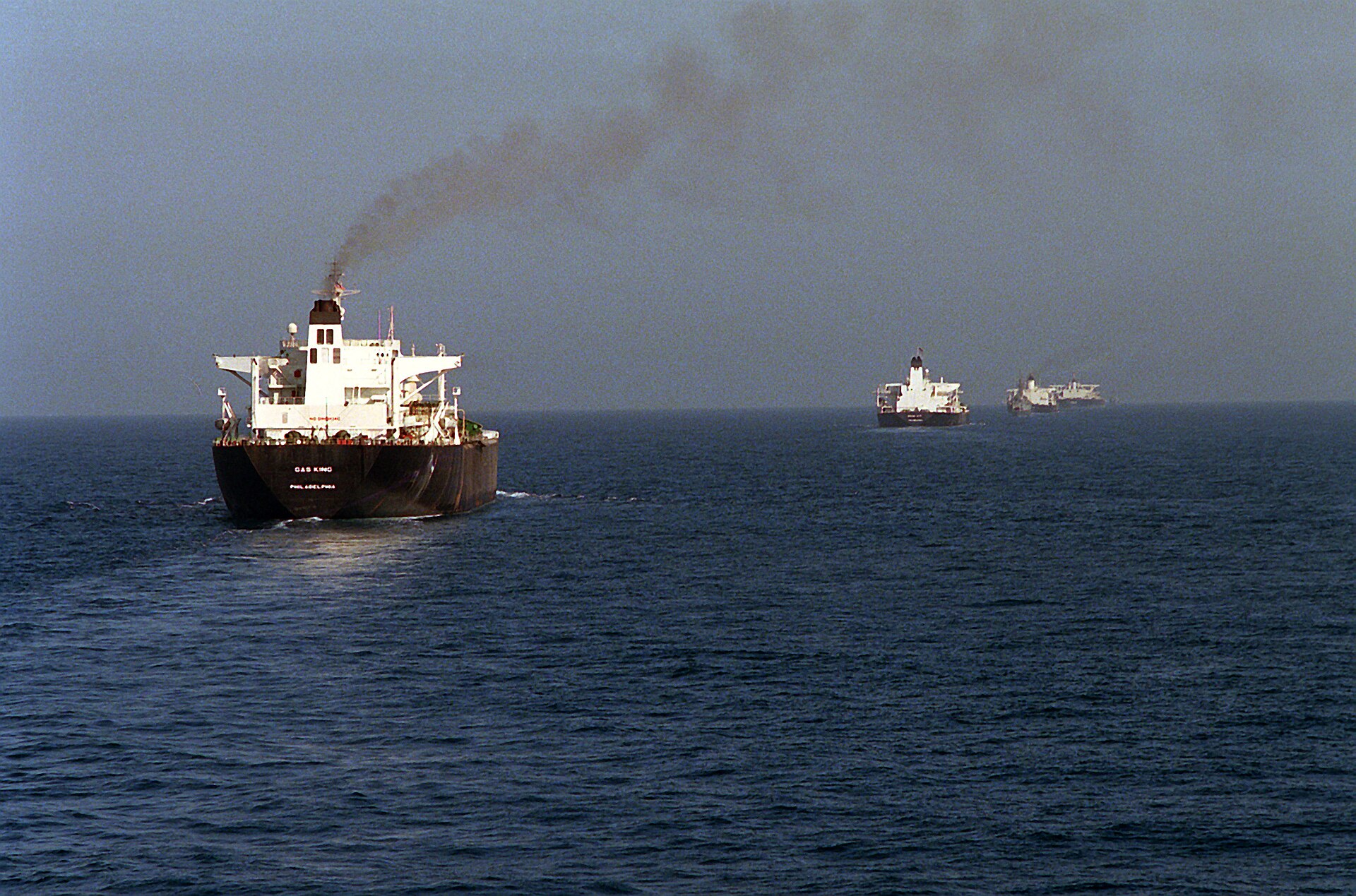
The MOU’s architects face a problem the Tanker War’s participants eventually solved with force: Iran’s willingness to use the strait as a coercive instrument does not respond to text. It responds to capability. The “best efforts” clause is a political bridge designed to last 60 days. Nine of those days have been spent. Eight days in, a drone hit a container ship. The remaining 51 days will determine whether the bridge holds or whether Saudi Arabia finds itself loading tankers into a corridor that is open by agreement and closed by enforcement.
The answer came three days later. By June 29, the corridor had collapsed to four vessels — from the post-MOU peak of 70 on June 24 — completing the reversal the Ever Lovely strike had started.
Frequently Asked Questions
Was the Ever Lovely part of the IMO evacuation convoy?
No. The Ever Lovely transited independently using the Oman-published southern corridor. It was not on the IMO’s evacuation vessel list, which covered approximately 600 stranded ships. The IMO’s evacuation framework paused after the strike, but the Ever Lovely was never operating under its coordination. This distinction matters because Iran can argue its MOU commitments applied only to vessels using Iran-designated routes or the IMO-coordinated framework — not to independent transits on corridors Iran explicitly rejected.
Can Iran legally claim the strike did not violate the MOU?
The MOU’s text provides Iran with a defensible — if cynical — legal argument. The “best efforts” clause does not define which routes constitute “safe passage.” Iran designated its PGSA corridor as the authorized route and publicly warned that the Oman/IMO corridor was “highly dangerous and prohibited” before the strike occurred. The PGSA posted a pre-published liability disclaimer. Under strict textual reading, Iran’s “best efforts” were directed at its own corridor, and the Ever Lovely chose a route Iran had explicitly excluded. No arbitration mechanism exists to test this interpretation. The argument’s strength lies not in its moral weight but in the absence of any forum where it can be challenged.
What happens when the 60-day MOU window closes around August 16?
The PGSA’s $1-per-barrel fee — currently waived — reverts by default. For Saudi Arabia at full eastern capacity (5.5 million barrels per day), this represents approximately $5.5 million per day or $2 billion per year. The fee’s reversion is not contingent on Phase 2 negotiations producing an alternative arrangement. It is the default state. Phase 2 talks, which began at Bürgenstock and are scheduled to address nuclear enrichment and regional security, have no formal mandate to resolve the PGSA fee structure. The fee question exists in a governance vacuum between the expired MOU and a Phase 2 process that may not reach it.
Why did Saudi Arabia not delay the Ras Tanura restart after the strike?
Saudi Arabia’s fiscal position does not permit delay. At Brent $74.43 — $14-17 per barrel below the fiscal breakeven of $80-91 — every day of export curtailment deepens the deficit. Saudi Arabia recorded a Q1 2026 deficit of SAR 125.7 billion. Yanbu, the only alternative export terminal that bypasses Hormuz, operates at its maximum 7.0 million barrels per day capacity. Aramco had not loaded a Ras Tanura cargo since March 8, a 110-day halt. Riyadh’s calculation appears to be that the fiscal cost of continued closure exceeds the security risk of loading into a contested corridor — a judgment that prices the drone strike as an acceptable cost of resumed exports.
How does the Ever Lovely strike affect war-risk insurance for Hormuz transits?
Lloyd’s Joint War Committee, which had not removed the Hormuz conflict-zone designation before June 25, now has a demonstrated enforcement failure to weigh. Underwriters who had begun reducing rates based on the MOU’s political signal must re-price for a corridor that Iran struck eight days after signing. For Saudi Arabia, the insurance cost per VLCC transit — $3-5 million post-MOU, likely rising to $5-10 million post-strike — represents a structural per-barrel cost that compounds the fiscal breakeven gap and the PGSA fee exposure. That re-pricing was overtaken two days later when Iran struck Bahrain, Kuwait, and Jordan directly — a retaliatory chain that began with the Ever Lovely strike on June 25 and ended with the first IRGC drone salvo against GCC sovereign territory since the MOU was signed, as documented in Iran Struck Four Bases and Called It Compliance and in Saudi Arabia Condemns Iran’s Strike on Bahrain but Makes No Defense Pledge.
By June 27, four Bahri VLCCs were loading at Ras Tanura as Iran simultaneously re-declared the strait closed following its strikes on US bases — the same retaliatory cycle the Ever Lovely strike set in motion, now trapping an estimated eight million barrels at the terminal with no escort pathway and no confirmed PGSA clearance.