DUBAI — Commercial traffic through the Strait of Hormuz collapsed to fewer than five AIS-visible vessels on Sunday, down from 70 crossings four days earlier — the busiest single day since the strait partially reopened under the Islamabad MOU, according to maritime analytics firm Kpler.
The reversal followed IRGC strikes on four US military installations on June 28, Iran’s formal re-declaration of Hormuz closure on June 27, and an IRGC drone hit on the Singapore-flagged container vessel Ever Lovely on June 25. An oral stand-down agreed Sunday ahead of Doha technical talks on Monday had not, by midday Gulf time, produced a measurable return of commercial shipping to the waterway.
Table of Contents
The Recovery Arc
From the MOU’s signing on June 17 to its high-water mark seven days later, Hormuz saw a rapid if fragile commercial revival. Vortexa, the London-based cargo-tracking firm, reported average daily tanker crossings rising from roughly six per day during the pre-MOU blockade to more than 20 in the week after signing, with 36 tanker crossings recorded on June 22 alone. VLCC and larger vessels — carrying the highest per-voyage insurance exposure — climbed from fewer than two crossings per day to approximately seven. Container and dry-bulk movements recovered more slowly, constrained by higher war-risk premiums relative to cargo value.
Kpler recorded 29 tanker transits and 53 commercial vessel crossings on June 24, totaling 70. Even at that peak, the figure represented roughly 50 to 58 percent of the pre-conflict baseline of 120 to 140 daily transits documented by the EIA before the crisis began in February.
| Date | Daily Transits | Source | Event |
|---|---|---|---|
| Pre-conflict | 120–140/day | EIA | Baseline (pre-Feb 2026) |
| Pre-MOU | ~6 tankers/day | Vortexa | Blockade conditions |
| June 22 | 36 tankers | Vortexa | Post-MOU recovery |
| June 24 | 70 total (29 tankers) | Kpler | Post-MOU peak |
| June 25 | 43 | Windward AI | Ever Lovely strike; IMO pause |
| June 27 | <10 | Live trackers | Re-closure declared |
| June 28 | <10 | Live trackers | Four US bases struck |
| June 29 (AM) | 4–5 AIS-visible | HormuzTracking.com | Oral stand-down agreed |
Windward AI tracked 43 crossings on June 25, the last partial-recovery day before the IRGC struck the Ever Lovely in Omani waters. By June 28, daily crossings had fallen below 10. By Sunday morning, HormuzTracking.com’s live AIS feed showed four.
A caveat on the data: some tracking services, including Fox News Digital and RFERL citing US officials, have reported cumulative Saturday-Sunday totals of 22 to 28 vessels transiting under the partial ceasefire. Rigzone described traffic as continuing “despite fresh concerns.” The disparity likely reflects capture timing — early-morning AIS snapshots versus full-day tallies — rather than fundamentally different realities. Either figure represents a near-total reversal of the post-MOU trajectory.
The Middle East briefing 3,000+ readers start their day with.
One email. Every weekday morning. Free.
What Drove the Reversal?
The collapse unfolded in three stages across four days.
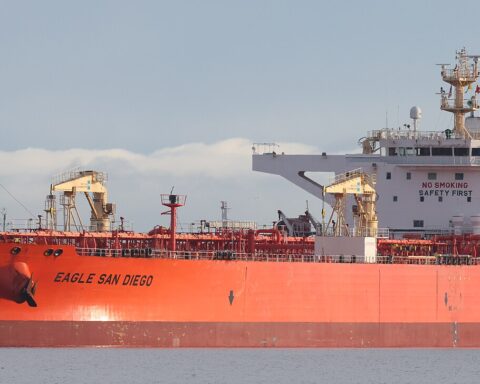
On June 25, an IRGC drone struck the Ever Lovely, an 8,500-TEU Evergreen Marine container vessel sailing under Singapore flag, approximately 7.5 nautical miles southeast of Dahit, Oman — inside the corridor that the IMO and Oman had jointly designated as an alternative transit route. The strike landed on a corridor established specifically to provide an alternative to IRGC-supervised lanes. IMO Secretary-General Arsenio Dominguez paused the organization’s Hormuz evacuation plan, which covered roughly 600 vessels and 11,000 mariners.
I have decided to temporarily pause the evacuation plan’s implementation in order to reconfirm that necessary safety guarantees continue to be in place for ships on the evacuation list and all those in the region.
Arsenio Dominguez, IMO Secretary-General, June 25, 2026
On June 27, Iran’s Khatam al-Anbiya Central Headquarters — the IRGC’s supreme operational command — reinstated a complete maritime blockade, citing what it described as structural US breaches of the MOU, according to Iranian state media including Press TV and IRNA. The declaration reversed the partial reopening that the agreement had enabled 10 days earlier.
On June 28, IRGC ballistic missiles struck Al Udeid Air Base in Qatar, Ali Al Salem Air Base in Kuwait, Naval Support Activity Bahrain in Juffair, and Al Dhafra Air Base in the UAE. The IRGC cited MOU Articles 1 and 5 — the provisions that nominally committed both parties to de-escalation — as justification. Commercial shipping, already retreating after the Ever Lovely hit and the re-closure declaration, effectively stopped.
Three Routes, No Authority
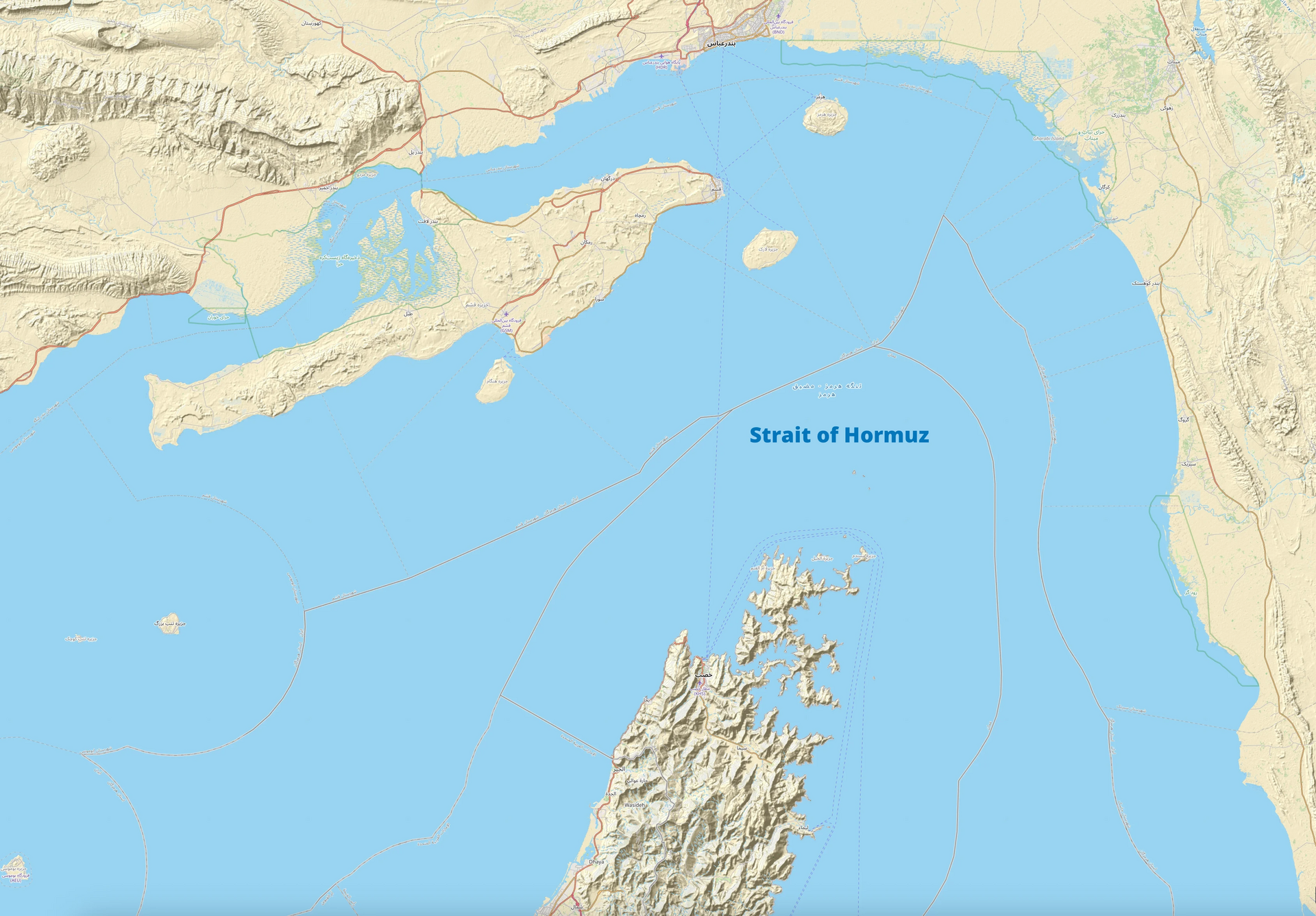
The physical geography of Hormuz is now contested at the level of which lane a vessel may lawfully use. Three competing navigation corridors exist simultaneously. The original middle-strait route remains nominally open but under IRGC supervision, requiring vessels to maintain continuous radio contact with IRGC Navy. A second route, designated unilaterally by the IRGC, runs through Iranian-controlled waters to the north. A third — the Omani/IMO southern corridor, 7.5 nautical miles southeast of Dahit — was established as an alternative for vessels seeking to avoid IRGC-supervised lanes.
The IRGC rejected the third option on June 25. “The only authorised transit routes through the Strait of Hormuz are those designated by the Islamic Republic of Iran,” the Guard stated in a communiqué published by IRNA, adding that any route established without Tehran’s coordination is “unacceptable and dangerous.” The Ever Lovely was struck on that corridor hours later.
The route dispute predates the MOU. The IRGC designated its preferred corridors in early March, shortly after the initial closure declaration. The Omani/IMO alternative emerged in May as part of Dominguez’s evacuation framework. The MOU’s text names neither route nor designates any passage as authoritative — an ambiguity the IRGC has resolved unilaterally.
The Persian Gulf Strait Authority — Iran’s unilateral maritime administration, established May 5, 43 days before the MOU — continues to require mandatory pre-clearance for all transits. Its active fee waiver suspends per-transit charges but not the pre-clearance requirement. The PGSA pre-positioned a liability disclaimer on its X account before the June 25 strikes began. The administrative infrastructure Iran built before the temporary framework was signed remains operational regardless of whether that framework holds. The precise nature of that compliance architecture — 40-category pre-clearance forms, IRGC-designated corridors, and a liability disclaimer Iran published before its own strikes began — is examined in detail in PGSA clearance requirements the White House told ships to ignore.
Can the Insurance Market Sustain a Reopening?
The financial infrastructure supporting Hormuz transit had already frayed before this week’s collapse. War-risk premiums stand at 2.5 to 3 percent of hull value per voyage, according to Lloyd’s Market Association and S&P Global — 25 to 30 times the pre-conflict baseline of 0.1 percent. Between six and 12 International Group P&I clubs have withdrawn cover for Persian Gulf voyages entirely, according to S&P Global tracking of club circulars through June 28. Why the DFC facility failed to restore commercial shipping infrastructure — and why the P&I exclusion in the $20 billion facility is the structural gap that no diplomatic communiqué from Doha has addressed — explains why the insurance market’s withdrawal has outlasted the MOU’s signing by weeks.
“Safety concerns, not insurance availability, [are] driving reduced vessel traffic in the Strait of Hormuz,” LMA said in a statement this year — a distinction that matters primarily to insurers. For a shipowner deciding whether to transit, the practical outcome is the same: inadequate cover, unquantifiable liability, and no named enforcer in the MOU to assign responsibility if a vessel is hit.
The MOU’s Article 5 commits parties to “best efforts for safe passage of commercial vessels.” It establishes no transit floor, names no arbitrator, provides no emergency protocol, and creates no liability mechanism. Both the UK Parliament’s research briefing CBP-10636 and a CSIS analysis documented this enforcement gap before the June 28 collapse confirmed it. Article 5’s demining clause carries the same deficit: Iran used it on June 29 to reject Macron’s France-Oman clearance coalition, confirming that demining under the MOU is Iran’s exclusive domain — with no enforcer and no penalty for non-completion.
The contrast with the last comparable operation is direct. Operation Earnest Will, the 1987–88 US-led convoy escort operation, deployed more than 30 warships, conducted 127 escort missions, and moved 270 vessels through the strait over 14 months. Its command authority was unambiguous: the US Navy designated convoy routes, set transit schedules, and assumed operational liability for escorted vessels. The 2026 MOU substitutes “best efforts” language from the same parties that struck each other’s bases 11 days after signing it.
Financial Markets and Physical Reality
Brent crude recovered to $73.41 per barrel by Sunday afternoon after reports of the oral stand-down and confirmation that Doha technical talks would proceed Monday — clawing back from a June 28 close of $71.99, which had itself marked a 4.34 percent single-day decline. ING analysts described the market’s response as “too optimistic,” citing the gap between price recovery and underlying shipping conditions.
The price movement reflected the market assigning value to diplomatic optionality: a scheduled negotiation, a ceasefire of uncertain duration, the possibility that talks might yield something more durable than the MOU’s paper commitments. The physical state of the waterway — between four and 28 vessels transiting, depending on data source and capture time, against a pre-conflict baseline of 120 to 140 — told a different story.
Aramco had resumed loading at Ras Tanura between June 25 and 27, the first crude loadings at the terminal since March 8, with Bahri VLCCs taking on approximately four million barrels. Those cargoes are now stranded with no confirmed transit corridor out of the Gulf. Saudi Arabia’s fiscal breakeven of $108 to $111 per barrel, per Goldman Sachs, stands $35 to $39 above the current Brent price.
The MOU’s 60-day clock, now at Day 12, runs regardless of whether talks produce results or the ceasefire holds. “I can assure you they will not get all of this done in 60 days,” former US Deputy Secretary of State Wendy Sherman has said. On Day 61, PGSA fee activation — at a rate schedule Iran has not yet published — becomes the default.
Background
The Islamabad MOU, signed June 17, 2026, between the United States and Iran with Pakistan as primary mediator and Qatar as co-mediator, established a 60-day framework for phased de-escalation. It followed three months of IRGC-declared Hormuz closure, US Operation Epic Fury airstrikes, and escalating military exchanges that killed 13 confirmed US service members and an undisclosed number of Iranian military and civilian personnel.
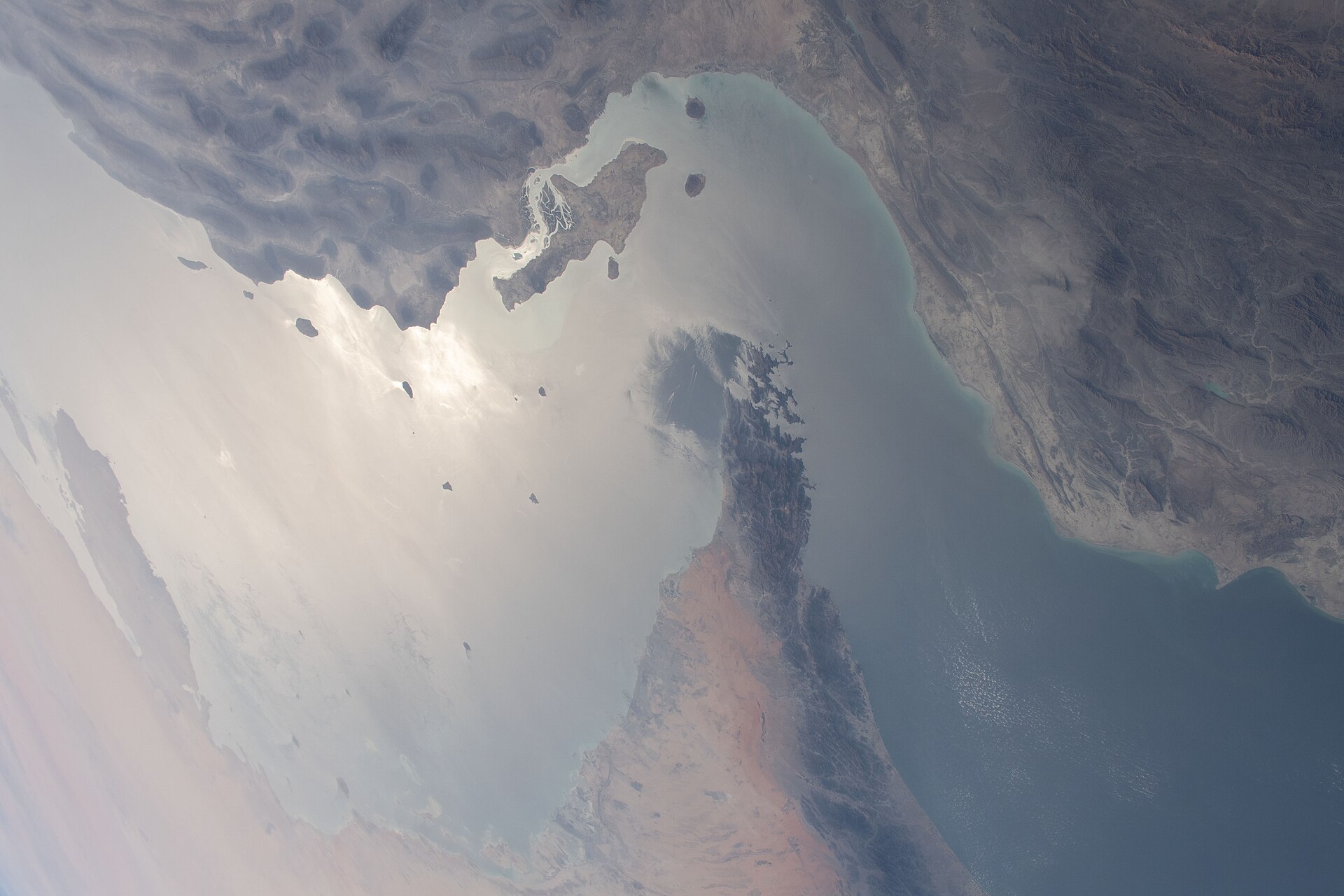
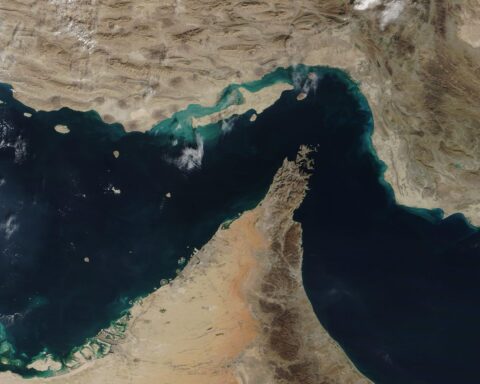
The Strait of Hormuz carries approximately 20 to 21 million barrels per day of crude and refined products, representing roughly 25 percent of world seaborne oil trade and 20 percent of global LNG shipments, according to the EIA. Since the IRGC’s initial closure declaration in March, daily transits have fluctuated between near-zero and the post-MOU peak before collapsing again this week.
The MOU’s enforcement architecture has been tested repeatedly since signing. Iran has cited the same provisions to justify both compliance and military action. The United States has invoked the same text to characterize those actions as violations. No third-party arbitrator exists to adjudicate between them. The oral stand-down agreed June 29, brokered in part by Qatar’s Emir Tamim, carries no written amendment to the original text.
Saudi Arabia holds no seat in any of the MOU’s three operative elements: the negotiating framework, the mediator structure, or the IRGC-CENTCOM deconfliction cell at Al Udeid. Its exposure to Hormuz disruption — through the price gap, stranded Bahri VLCC cargoes, and an estimated $5.5 million per day in PGSA pre-clearance costs — is borne without structural influence over the mechanism producing it.
Frequently Asked Questions
How does the PGSA pre-clearance process work?
Vessels seeking to transit Hormuz under Iran’s framework submit a 40-category form to the PGSA via its online portal at pgsa.io, listing cargo type, destination, flag state, crew nationality, and operational data. The PGSA designates the Larak corridor as its primary transit lane. During the 60-day MOU fee waiver, no per-transit charge applies, but the pre-clearance requirement and associated data collection continue. After Day 60, the PGSA has indicated fees will be set by vessel class and cargo type, though no published rate schedule exists.
What happened to the vessels covered by the IMO evacuation plan?
The IMO’s evacuation plan, announced in May 2026, covered approximately 600 commercial vessels and 11,000 mariners stranded or anchored in Persian Gulf ports since the initial Hormuz closure in March. Dominguez paused implementation on June 25 after the Ever Lovely strike. Those vessels remain at anchor across UAE, Bahraini, Kuwaiti, and Saudi ports. Their P&I coverage status varies — some retain war-risk riders purchased before the crisis; others have seen policies lapse or decline renewal. No revised evacuation timeline has been announced.
Has any party formally invoked UNCLOS over the Hormuz dispute?
No. Iran’s legal position rests partly on UNCLOS Article 26(2), which permits charges “levied for specific services rendered to the ship” — a provision Tehran uses to frame PGSA fees as service charges rather than sovereignty assertions. UNCLOS Article 38 guarantees transit passage through international straits, which Hormuz qualifies as under the 1982 Convention. No state has filed an ITLOS case, and no government has formally challenged Iran’s PGSA at the UN level.
What is the current status of IAEA inspections in Iran?
IAEA inspectors have had no verified access to Iranian nuclear facilities for approximately 97 days, since approximately March 24, 2026. The agency’s last documented inventory — 440.9 kilograms of uranium enriched to 60 percent U-235 — remains unmonitored. MOU Point No. 8, the only explicit IAEA mandate in the 14-point text, addresses HEU downblending but sets no timeline for restoring inspector access. Iran’s Deputy Foreign Minister Gharibabadi stated June 25 that access “will be reviewed only within framework of final agreement” after sanctions are terminated.
Could alternative export routes bypass Hormuz entirely?
Not at current scale. Saudi Arabia’s East-West Pipeline to Yanbu on the Red Sea has a maximum throughput of approximately 7.0 million barrels per day. The UAE’s Abu Dhabi Crude Oil Pipeline to Fujairah bypasses Hormuz with 1.5 million bpd capacity. Iraq’s Basra-Ceyhan line through Turkey adds limited volume subject to separate disruptions. Combined, these alternatives handle roughly 8.5 million bpd of the 20 to 21 million that Hormuz normally carries, leaving more than 12 million bpd without an overland route.
Even as Hormuz transit remained near historic lows, Aramco executed its first confirmed spot crude sales of the conflict: six million barrels shipped on three supertankers to South Korea, Japan, and China via the Oman corridor — evidence the route is functional, though Aramco is discounting below a slashed OSP to sustain Asian demand. Full details: Aramco Sells Six Million Barrels at a Discount to Keep Asia Buying.