RIYADH — The Wall Street Journal reported this week that President Trump has privately told senior staff — including Defense Secretary Pete Hegseth and Joint Chiefs Chairman Gen. Dan Caine — that he will not resume full-scale military operations against Iran and is comfortable letting negotiations run past the August 18 deadline for a nuclear deal. The disclosure strips the Memorandum of Understanding of its only coercive enforcement mechanism and exposes Saudi Arabia to the full weight of a framework it had no role in drafting, no seat in implementing, and now no American military backstop to enforce.
The MOU’s 60-day clock — signed June 17, 2026 — was always the single load-bearing wall in a structure Saudi planners could neither inspect nor reinforce. With that wall quietly removed, Riyadh faces a compound failure: the Persian Gulf Security Administration’s $1-per-barrel transit fee auto-activates if the deadline lapses without a deal, costing the kingdom roughly $5.5 million per day at pre-war export volumes. The PAC-3 batteries Saudi Arabia depends on for air defense leave with the 2,300 US troops whose withdrawal is under active review — and the limitations of Saudi Arabia’s Hanwha M-SAM-II contract mean the Korean alternative Riyadh signed covers the wrong intercept altitude entirely. And Foreign Minister Prince Faisal bin Farhan’s visit to Beijing this week — while Doha negotiations proceeded without a Saudi representative in the room — reads less like diversification and more like the opening move of a country that has begun to price in American abandonment.
Table of Contents
- The Private-Public Gap
- What Happens if August 18 Passes Without a Deal?
- The JCPOA Precedent Iran Is Running
- Why Does the MOU Have No Snapback Mechanism?
- Zero Seats at Every Table
- How Does the Troop Withdrawal Compound the Deadline Failure?
- The PGSA Tollbooth Runs Itself
- Tehran’s Free Option
- Faisal in Beijing Is Not Diversification
- Frequently Asked Questions
The Private-Public Gap
Trump’s private position — reported by the WSJ through sourcing attributed to conversations with Hegseth and Caine about whether to abandon diplomacy and resume strikes — is not a reversal. It is a confirmation of what Tehran has tested three times before. PBS NewsHour documented at least three instances in which Trump issued Iran-related deadlines and subsequently delayed or abandoned them: a 48-hour Hormuz ultimatum on March 21, an April 7 ceasefire deadline, and a post-MOU secondary pressure deadline. None produced military action. None imposed a cost on Iran for letting the clock expire.
The public signal arrived before the private one. On June 17 — the day the MOU was signed — Trump told reporters in Paris that the August 18 date “could take longer” and “I don’t view it as hard.” The Hill’s Julia Manchester filed the quote. It was syndicated widely. The WSJ reporting this week merely reveals that the private guidance to the Pentagon now matches the public statement: the White House is “no longer treating that date as firm.”
For coercive diplomacy to function, the threat must be restricted, believable, and paired with a diplomatic escape. Thomas Schelling articulated this framework six decades ago. The public-private gap destroys the second criterion. Iran does not need to guess whether the August 18 deadline carries military consequences. Three prior test cases delivered the answer. The WSJ reporting removed whatever residual ambiguity remained.
The IRGC made this assessment explicitly. On May 3, 2026, an IRGC-affiliated statement carried by Al Arabiya and Middle East Eye read: “There is only one way to read this: Trump must choose between an impossible military operation or a bad deal with the Islamic Republic of Iran.” That formulation — “impossible military operation” — was not rhetoric. It was a structural reading of the same evidence the WSJ later confirmed.
The Middle East briefing 3,000+ readers start their day with.
One email. Every weekday morning. Free.
What Happens if August 18 Passes Without a Deal?
If August 18 passes without a final agreement, three consequences activate automatically: the PGSA transit fee reverts to $1 per barrel, costing Saudi Arabia roughly $5.5 million per day; the MOU’s inspection framework lapses; and the United States — per WSJ reporting — has privately decided not to resume military operations. None require Iranian action to trigger.
Three things activate on or near August 18 if no final agreement is reached. First, the PGSA transit fee — waived for the MOU’s 60-day window — reverts to its default rate of $1 per barrel for all tanker traffic transiting the Strait of Hormuz. At Saudi Arabia’s pre-war export volumes of approximately 5.5 million barrels per day, this amounts to roughly $5.5 million daily, or about $2 billion annualized. Second, the MOU’s inspection and verification framework — such as it is — ceases to operate, leaving 440.9 kilograms of 60%-enriched uranium unmonitored in a country whose chief negotiator has publicly barred IAEA access to the three bombed sites. Third, the United States faces a binary choice: resume military operations or accept the new status quo. The WSJ reporting indicates Trump has already made that choice privately.
None of these consequences require Iranian action. The PGSA was established before the MOU and survives it. The inspection blackout — now at 121 days and counting — predates the deadline. The American decision not to re-escalate was made in a room Saudi Arabia was not in. The deadline’s expiry is not a trigger; it is the removal of the last fiction that something would be triggered.
The JCPOA Precedent Iran Is Running
Iran’s negotiators have run this playbook before, and they won. The Joint Comprehensive Plan of Action carried a November 2014 deadline. That deadline was missed. Talks were extended to July 1, 2015. On June 30, 2015 — one day before the extended deadline — the P5+1 granted a further seven-day extension. The deal was eventually signed on July 14, 2015, two and a half months past the original deadline.
During the earlier Joint Plan of Action period (2013–14), while negotiations continued past their initial deadlines, Iran received approximately $700 million per month in frozen-asset releases. The extensions were not cost-free to the negotiating counterparts; they were revenue-generating for Tehran. A 2026 NPR retrospective on the JCPOA process documented that Iranian negotiators appeared “to say no to everything and see what actually matters” to the American side, requiring negotiators to return “at the same issue 10 or 12 times over weeks or months.”
The 2026 parallel is structural, not superficial. Working groups were only confirmed on July 1, with Doha producing procedural frameworks rather than substantive agreements. The next meeting has been delayed past July 9 due to funeral processions for the former supreme leader, consuming five negotiating days at zero cost to Iran. Fifteen of the MOU’s 60 days have elapsed. Substantive discussions on enrichment levels, inspection protocols, and sanctions architecture have not begun. At this rate, the August 18 deadline will arrive before the central questions have been formally tabled — precisely the condition under which extensions become inevitable.
The difference between 2014 and 2026 is the cost structure. In 2014, deadline extensions came with frozen-asset releases — a concession, but a finite one. In 2026, deadline extension comes with the PGSA fee-waiver remaining in limbo, continued IAEA inspector absence from Iran’s enriched-uranium stockpiles, and an American president who has told his defense secretary he will not resume strikes. Iran’s incentive to delay is not just tolerable; it is profitable.
Why Does the MOU Have No Snapback Mechanism?
The 2026 MOU contains no procedure for reimposing sanctions if Iran violates its terms. A&O Shearman’s legal analysis found the 14-point document “makes no mention of a mechanism to reimpose sanctions if Iran cheats.” Any new UN sanctions require a Security Council resolution that Russia and China can veto. The JCPOA’s snapback expired in 2023 and was not reproduced.
The JCPOA contained a snapback provision — a procedure under which sanctions could be reimposed if Iran violated its commitments, bypassing the veto power of any single UN Security Council member. The E3 (Britain, France, Germany) invoked this mechanism on August 28, 2025, triggering the reimposition of sanctions on September 27, 2025. That mechanism expired with the JCPOA’s sunset clauses. It does not exist in the 2026 MOU.
A&O Shearman’s legal analysis of the 14-point MOU found that it “makes no mention of a mechanism to reimpose sanctions if Iran cheats.” Gibson Dunn’s review reached the same conclusion and added a structural observation: any new Iran-related UN Security Council resolution would require passage through a body where Russia and China hold veto power. The JCPOA’s snapback was designed to circumvent exactly this problem. Its absence from the MOU is not an oversight; it reflects the diplomatic reality that no equivalent mechanism could survive Russian and Chinese opposition in 2026.
The practical effect is asymmetric. If Iran violates the MOU — as Ghalibaf’s July 2 declaration barring IAEA access to bombed sites arguably does — the United States has two options: resume military operations (which Trump has privately ruled out) or negotiate new sanctions at the Security Council (where Russia and China will veto). Iran’s violations carry no automatic cost. American violations — such as the IRGC strikes on Ali Al Salem and Juffair that occurred within the MOU’s first two weeks — were resolved through a Qatari-brokered phone call and an oral stand-down that amended nothing in writing.
For Saudi Arabia, the absence of a snapback transforms the August 18 deadline from a pressure point into an expiry date. When August 18 passes — and the WSJ reporting makes clear it will pass without military consequence — there is no mechanism to restore coercive pressure short of a new Security Council resolution that cannot pass or a military operation the president has ruled out. The MOU becomes, by default, the permanent framework.
Zero Seats at Every Table
Saudi Arabia holds no formal representation in either of the core negotiating tracks that will determine its security environment. The Doha technical talks — where working groups were confirmed on July 1 — proceed without a Saudi delegate. The Geneva nuclear track, focused on enrichment and inspection protocols, excludes Gulf states entirely.
This is not for lack of effort. The Atlantic Council documented in June 2026 that Saudi Arabia joined a quadrilateral mediation effort alongside Egypt, Turkey, and Pakistan specifically because Riyadh “wanted a seat at the table, not just a ceasefire.” The same Atlantic Council dispatch assessed that “confidence in the reliability of Washington as an ally has likely diminished, though the Gulf states remain dependent on US hard-security projection from bases in their countries.”
The dependency is the trap. Saudi Arabia cannot walk away from the American security umbrella — its PAC-3 and THAAD batteries require US contractors to operate, its Link-16 data networks are maintained by approximately 2,300 US personnel, and the WSJ reported this week that withdrawal of those personnel is under active review. But Saudi Arabia also cannot influence the process that determines whether that umbrella remains. The kingdom is a price-taker in a negotiation whose terms it will bear disproportionately.
Iran FM spokesman Baqaei’s July 1 statement — “Iran is currently not negotiating with the United States at all” — and Deputy FM Gharibabadi’s description of contacts as a “communication channel” to report MOU breaches illustrate the information asymmetry. Saudi Arabia cannot verify whether Iran is negotiating, whether the US is making concessions, or whether the August 18 deadline retains any meaning. It learned that the deadline had been privately abandoned the same way the public did: through the Wall Street Journal.
How Does the Troop Withdrawal Compound the Deadline Failure?
Two WSJ reports published the same week describe convergent failures: the deadline removes the coercive backstop against Iran, while the troop withdrawal removes the defensive backstop for Saudi Arabia. Together they leave a kingdom that can neither deter Iranian pressure through American threats nor defend against it through American hardware — since roughly 2,300 US personnel operate the Patriot and THAAD systems Saudi Arabia cannot run independently.
The convergence of two WSJ reports published the same week published the same week — Trump’s private abandonment of the August 18 deadline and the “active review” of US troop withdrawal from Saudi Arabia — creates a compound exposure that neither development would produce alone. The deadline failure removes the coercive backstop against Iran. The troop withdrawal removes the defensive backstop for Saudi Arabia. Together, they describe a kingdom that can neither deter Iranian pressure through American threats nor defend against it through American hardware.
The numbers are specific. Roughly 2,300 US personnel in Saudi Arabia maintain the PAC-3 Patriot batteries, THAAD launchers, and Link-16 command-and-control networks that constitute the kingdom’s integrated air and missile defense system. These are not advisory positions; they are operational ones. The PAC-3 system requires Lockheed Martin IESP contractors for maintenance and software updates. When the troops leave, the contractors leave with them — as documented in detail last week.
The stockpile situation compounds the dependency. Approximately 86% of Saudi Arabia’s PAC-3 interceptor inventory has been expended — roughly 400 rounds remain from a pre-war stockpile of approximately 2,800. The Camden, Arkansas facility that manufactures replacement rounds produces about 620 per year. Saudi Arabia’s order cannot be fulfilled before mid-2027 at the earliest. If US troops withdraw before that inventory is replenished, the kingdom will possess an air defense system it cannot maintain, stocked with interceptors it cannot replace, facing a threat the United States has privately decided it will not address militarily.
| System | Status | US Dependency |
|---|---|---|
| PAC-3 Interceptors | ~400 remaining (~86% depleted) | Camden produces ~620/yr; order unfilled until mid-2027 |
| THAAD Batteries | Operational (US-crewed) | Requires US Army operators; no Saudi-trained crews |
| Link-16 Networks | Operational | Maintained by ~2,300 US personnel |
| IESP Contractors | Active | Depart with US military withdrawal |
| E-3G AWACS | Destroyed (March 27, 2026) | No replacement in pipeline |
The PGSA Tollbooth Runs Itself
The Persian Gulf Security Administration — established by Iran before the MOU, not dissolved by the MOU, and merely paused through a 60-day fee waiver — represents the kind of institutional mechanism that survives the collapse of the framework that contained it. A&O Shearman’s analysis of the MOU confirmed that the agreement waived PGSA fees for the negotiation window but did not require the dissolution of the PGSA itself. If August 18 passes without a deal, the fee structure reactivates as a default. No Iranian action is required. No new declaration, no enforcement operation, no diplomatic confrontation. The tollbooth was built to run itself.
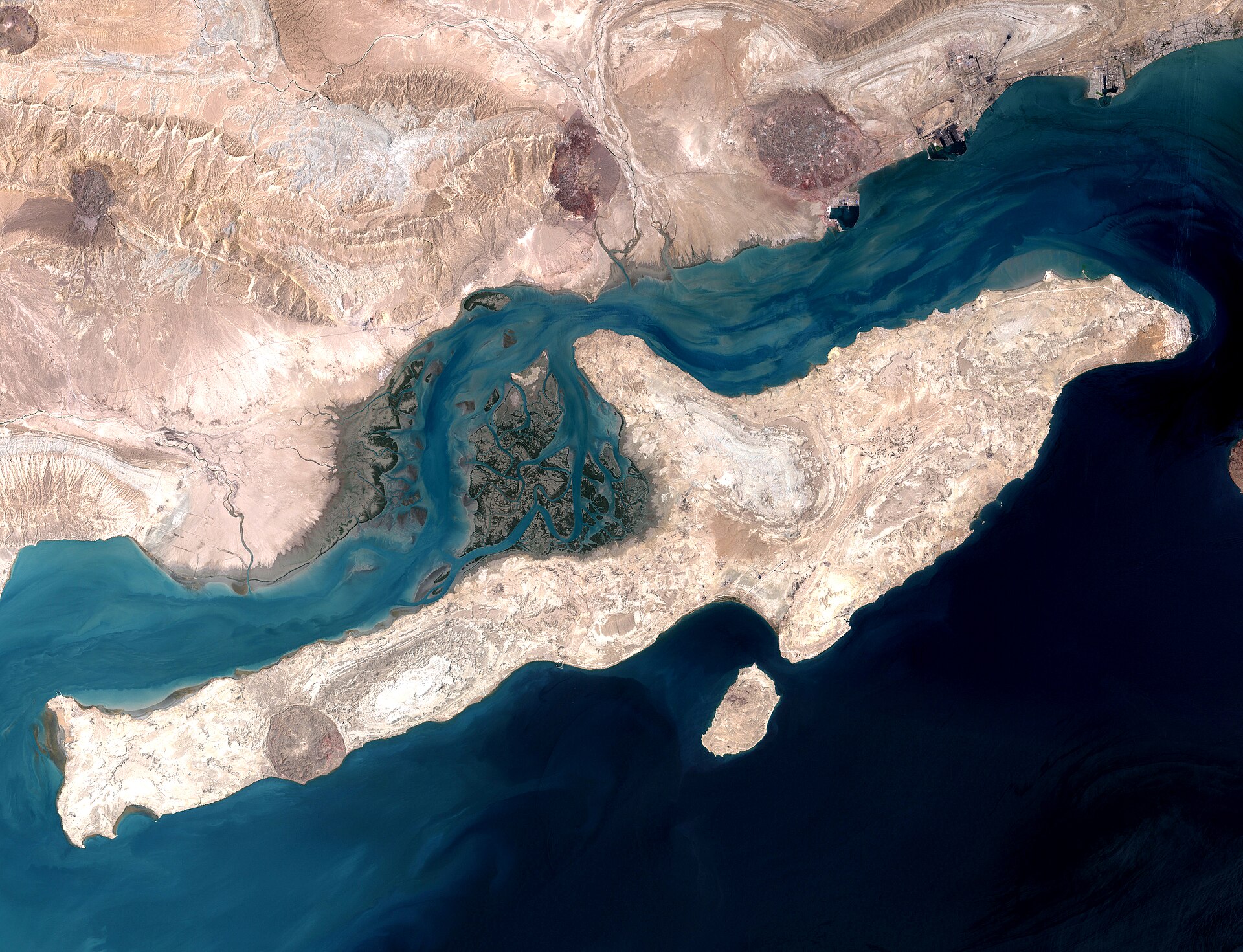
The fee is $1 per barrel for all tanker traffic transiting the Strait of Hormuz. At Saudi Arabia’s pre-war export volume of approximately 5.5 million barrels per day through Hormuz, the annualized cost approaches $2 billion. Per VLCC transit — each carrying roughly two million barrels — the fee amounts to approximately $2 million. These are not theoretical figures; the PGSA collected fees during the 43-day pre-MOU period and demonstrated the institutional capacity to enforce compliance through the pre-clearance system that governs Hormuz transit.
Aramco’s recent decision to sell six million barrels at a discount through the Oman corridor — routing tankers through AIS-dark Hormuz crossings to reach Asian buyers — reflects a company already pricing PGSA risk into its commercial operations. July’s Arab Light OSP was cut by $6 per barrel to a $9.50 premium over Oman/Dubai, down from $19.50 at the May peak. The discount trajectory — $10 per barrel in two months — is not a demand story. It is a Hormuz credibility story, and the credibility has been further damaged by the revelation that the deadline backstopping the fee waiver is privately defunct.
Iran collects the fee. Saudi Arabia pays it. The United States — which negotiated the waiver — has privately decided it will not enforce the deadline whose expiry restores the fee. At $5.5 million per day, every week of extension past August 18 costs Saudi Arabia approximately $38.5 million in PGSA fees alone, paid to the country whose nuclear program the deadline was supposed to constrain.
Tehran’s Free Option
A free option, in financial terms, is a position that carries no downside risk and unlimited upside. The private abandonment of the August 18 deadline has given Iran exactly this. Tehran can test the clock’s softness — delay procedurally, bar inspectors, condition talks on frozen-asset releases — at zero cost. If the deadline holds, Iran loses nothing it currently possesses. If the deadline slips, Iran retains its enrichment infrastructure, its PGSA revenue mechanism, and its position at the table, while the United States has spent its credible threat.
The procedural drag is already visible. Fifteen of 60 MOU days have elapsed. Working groups were formed only on July 1. The next Doha session is delayed past July 9 due to funeral processions. Ghalibaf declared on July 2 that IAEA access to Fordow, Natanz, and Isfahan is barred “under any circumstances” by two domestic laws — a parliament vote of 221-0 and a Supreme National Security Council directive. Deputy FM Gharibabadi stated on June 30 that inspectors would return only “within the framework of a final agreement and as a result of practical action by the other side to end all sanctions.” These are not negotiating positions. They are preconditions designed to consume the clock.
Iran International documented in April and May 2026 an “unprecedented rift in Iran’s hardline camp” over the talks, with some figures “increasingly arguing that Iran should openly pursue nuclear weapons capability as a deterrent against future attacks.” The rift itself serves Tehran’s negotiating position — it signals to Washington that delay might produce an outcome worse than a bad deal, creating pressure to extend rather than confront. Every extension validates the strategy and strengthens the case for the next one.
The JCPOA precedent is specific. Iran received $700 million per month in frozen-asset releases while negotiations ran past their 2014 deadline. Pezeshkian has already publicly claimed that $6 billion in frozen assets from the Qatar pool has been “already agreed” — a claim the US denied and Qatar has not addressed. Whether or not the $6 billion claim is accurate, it demonstrates that Tehran treats deadline extensions as revenue opportunities, not concessions.
Faisal in Beijing Is Not Diversification
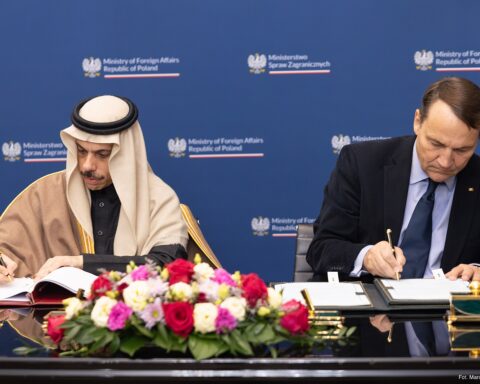
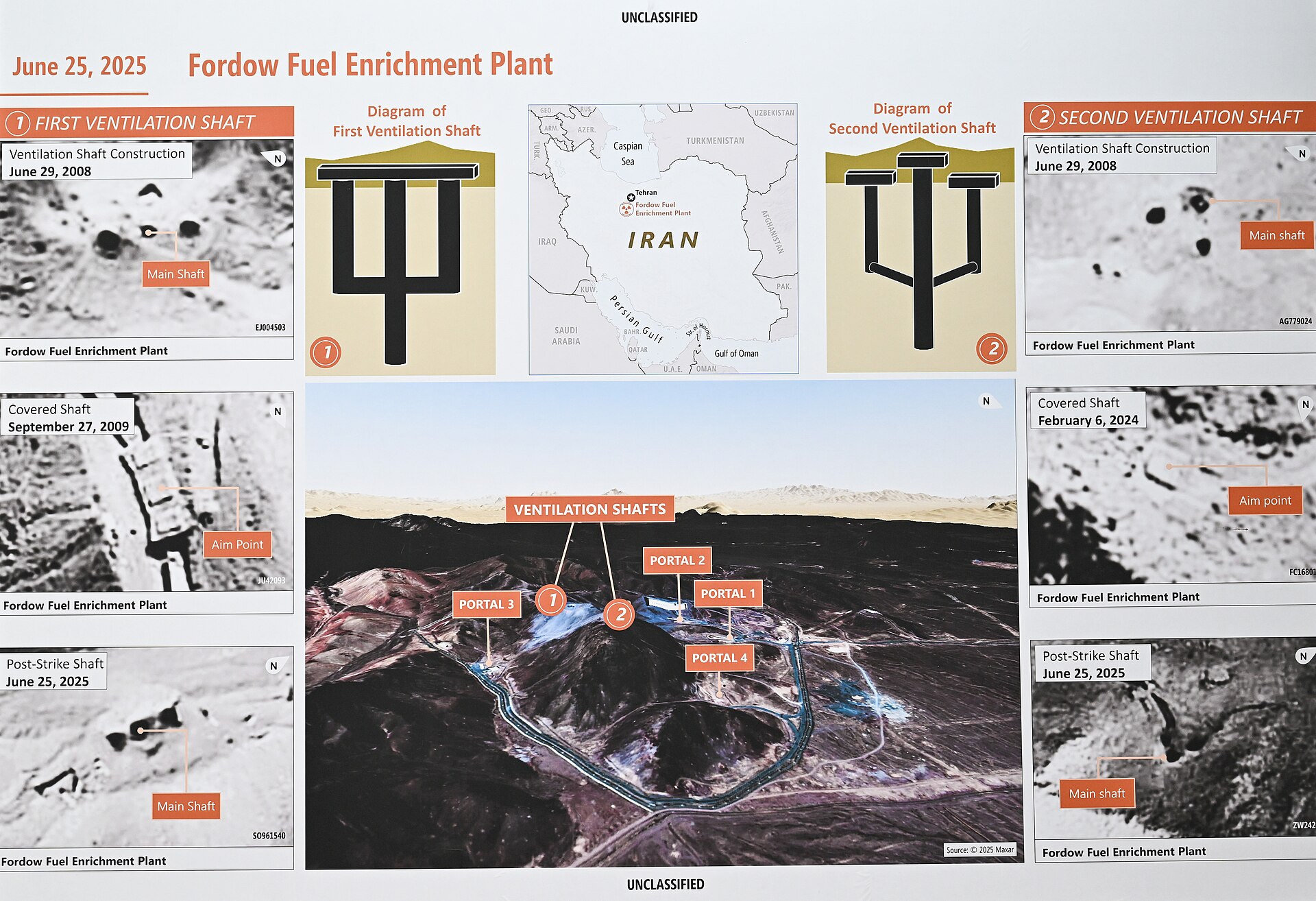
Foreign Minister Prince Faisal bin Farhan arrived in Beijing on July 1 — the same day the Doha technical talks concluded without Saudi representation. The visit produced a joint statement with Chinese Foreign Minister Wang Yi that included explicit freedom-of-navigation language for the Strait of Hormuz — language that, as documented earlier this week, China gave Riyadh but denied Tehran. The coastal-state UNCLOS carveout that Beijing typically invokes to protect Iranian sovereignty claims over the strait was removed from the Saudi joint statement.
The timing was not coincidental. Riyadh scheduled the Beijing visit to coincide with Doha precisely because the kingdom needed to demonstrate that its exclusion from the US-Iran track did not leave it without options. But the nature of the option reveals the depth of the problem. China cannot replace American air defense systems. It cannot supply PAC-3 interceptors. It cannot operate THAAD batteries. What China can offer is diplomatic language and, potentially, a market for Saudi crude that does not transit Hormuz — though even that is constrained by pipeline capacity through Yanbu, which handles roughly 4 million barrels per day against pre-war Hormuz volumes of 7 to 7.5 million.
The Beijing visit functions as a hedge, but a hedge against a risk that has already materialized is not a hedge. It is a response. Saudi Arabia’s $1 billion pledge to China’s Board of Peace — announced February 19, 2026 — remains unpaid as of June 1, with $0 deposited in the designated World Bank account. The pledge itself follows the pattern documented by Bruce Riedel at Brookings in the context of the 2017 $110 billion arms deal with the US — announced at $110 billion, delivered at somewhere between $14.5 and $25 billion. Riyadh’s financial commitments to Beijing may follow the same trajectory. But the visit’s strategic value does not depend on disbursement. It depends on the signal: Saudi Arabia is shopping for a security patron because the current one has privately decided to stop enforcing the framework that determines the kingdom’s exposure.
What happens on Day 61 — when the MOU expires and the question of what follows becomes unavoidable — now depends less on what happens in Doha or Geneva than on whether Riyadh can construct an alternative security architecture before the American one finishes unwinding. The Beijing visit suggests the crown prince has begun that calculation. The $0 in the World Bank account suggests it has not yet produced results.
| Deadline | Date | Stated Consequence | Outcome |
|---|---|---|---|
| Hormuz Ultimatum | March 21–23, 2026 | Military action within 48 hours | No military action; deadline passed |
| Ceasefire Deadline | April 7, 2026 | Resumption of operations | Extended; no operations resumed |
| Post-MOU Secondary Pressure | Late June 2026 | Unspecified escalation | No escalation; WSJ confirms privately abandoned |
| MOU Final Deal | August 18, 2026 | Implied military resumption | Privately abandoned per WSJ; “not a hard deadline” per Trump (Jun 17) |
Frequently Asked Questions
What is the legal basis for the August 18 deadline?
The deadline derives from the 60-day MOU window signed June 17, 2026 — not from any statute, treaty, or UN resolution. Senator Tim Kaine noted that existing US statute “won’t support” a pause mechanism within the MOU, meaning Congress has no procedural lever to enforce or extend the date. The deadline’s force was always political, not legal, and depended entirely on the credibility of the military threat behind it.
Can Saudi Arabia bypass the PGSA fee by routing exports through Yanbu?
Partially. The East-West Pipeline delivers crude to Yanbu on the Red Sea coast, bypassing Hormuz entirely. But Yanbu’s effective throughput is approximately 4 million barrels per day — against pre-war Hormuz export volumes of 7 to 7.5 million bpd. The 3 to 3.5 million barrel-per-day gap cannot transit without passing through the strait, and those barrels would be subject to the PGSA fee. Red Sea routing also adds approximately 4,500 nautical miles to Asian delivery routes, increasing freight costs by an estimated $3 to $5 per barrel.
Has Iran signaled willingness to extend the MOU past August 18?
Iran has not addressed extension directly — and the MOU contains no extension mechanism. There is no procedure for formally prolonging the 60-day window: no clause authorizing an extension, no joint body empowered to grant one, and no UNSC resolution that could enforce new terms. Any extension would require a new agreement negotiated from scratch, giving Iran a fresh opportunity to extract concessions as the price of agreeing to continue talking.
What role does the JCPOA snapback play in the current framework?
None. The E3 invoked the JCPOA’s snapback provision on August 28, 2025, reimposing UN sanctions on September 27, 2025 — the last time the mechanism could be used before it expired with the JCPOA’s sunset clauses. The 2026 MOU contains no equivalent. Gibson Dunn’s legal review confirmed that any new sanctions mechanism would require a UN Security Council resolution subject to Russian and Chinese vetoes, making the snapback’s successor effectively impossible to enact.
How many negotiating days remain before August 18?
As of July 2 (Day 15 of 60), 45 calendar days remain. But the funeral procession period from July 4 to July 9 consumes five of those days, and the next Doha session is not scheduled until after July 9 at the earliest. If sessions occur weekly with standard diplomatic scheduling gaps, roughly six to eight substantive negotiating sessions are possible before August 18 — for an agreement covering enrichment levels, inspection protocols, sanctions relief sequencing, PGSA dissolution, and IAEA site access that Iran’s chief negotiator has already declared off-limits.
The five-day funeral procession period from July 4 to July 9 adds a further complication to the diplomatic calendar: Saudi Arabia’s absence from the Khamenei funeral ceremony in Tehran signals where Riyadh’s diplomatic posture sits as the August 18 deadline approaches.
The formal communication channel for MOU violations established at the second Doha round on July 2 addresses one gap this article identified — but the channel formalizes reporting only; the Hormuz fee dispute and the question of what follows August 18 remain without resolution after the July 2 session.
On July 3, the enforcement gap identified here produced its next data point: Ghalibaf threatened to “resume proportionate actions” if Article 1 Lebanon obligations go unmet during the July 4–9 diplomatic pause — with no enforcement body constituted to receive or adjudicate the claim. The July 3 warning and the Article 12 vacuum that enables it.
The five-day pause also gave Iran’s hardliner bloc uncontested runway: the Paydari Party launched a formal Article 77 ratification challenge against the MOU, framing Ghalibaf and Pezeshkian as constitutional usurpers. How the funeral pause became hardliner runway.