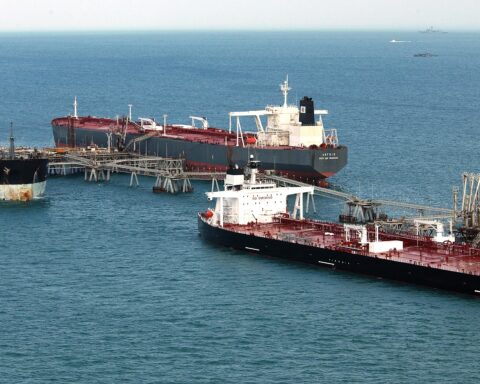
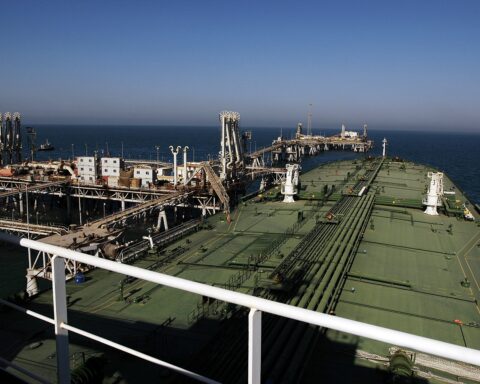
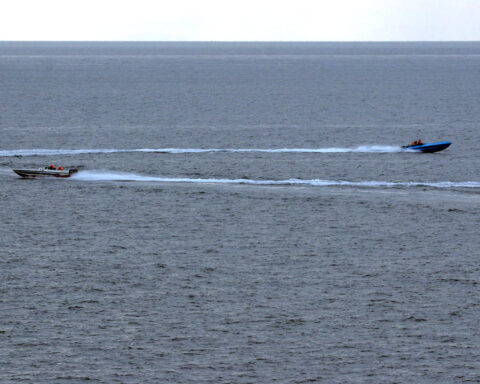
DHAHRAN — Saudi Aramco has sold at least six million barrels of crude on the spot market — a transaction Bloomberg described on Tuesday as “rare” for a company that moves virtually all of its oil through term contracts — loading three supertankers bound for South Korea, Japan, and China at prices below an official selling price already cut by $6 a barrel from June. On the same day the cargoes were confirmed, Iran’s parliament speaker Mohammad Bagher Ghalibaf told CNBC that Tehran had exported more than 40 million barrels since the naval blockade ended, at prices roughly 20 percent above pre-war levels. One country is discounting crude to get ships moving again; the other claims it never needed to.
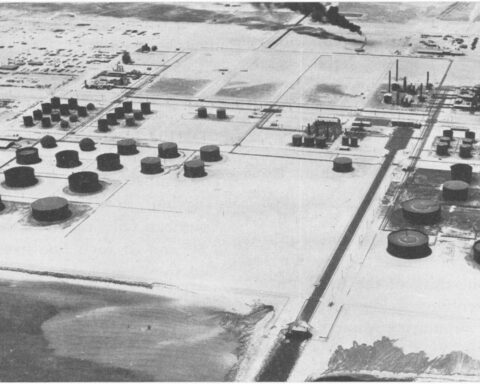
The sales are the first Aramco spot cargoes to transit the Strait of Hormuz since the conflict began on March 1. They follow the June 27 restart of loading at Ras Tanura — the company’s main Eastern Province terminal, which had been shut for 111 days — and the activation of what shipping analysts now call the Oman corridor: a route in which very large crude carriers go AIS-dark crossing the strait, then reactivate their transponders in the Gulf of Oman. The barrels are moving, but Aramco is paying to move them, in ways the company has not quantified publicly.
That cost has at least two layers. The first is the July Arab Light official selling price to Asia, which Aramco set at a $9.50 per barrel premium over the Oman/Dubai benchmark — down from $15.50 in June and $19.50 in May, when Hormuz scarcity pushed the premium to an all-time high. The second layer is the spot discount itself: the additional markdown below the already-slashed OSP that Aramco accepted to place these barrels with Asian refiners who now have alternatives they did not have in March.
The House of Saud Daily Briefing
Saudi Arabia's news in 3 minutes, every morning. Free. See today's issue

Table of Contents
What Aramco Put on the Spot Market
Bloomberg identified three supertankers carrying the spot cargoes, one each bound for South Korea, Japan, and China, totaling at least six million barrels. Under normal conditions, Aramco sells virtually zero crude on the spot market — its Asian business runs almost entirely through term contracts with refiners who commit to fixed monthly liftings at the OSP. Spot tenders emerge only when term buyers reduce their nominations, when Aramco needs to clear barrels that the contract schedule cannot absorb, or when a geopolitical rupture forces the company to find new takers quickly.
All three conditions apply now. Sinopec, China’s largest refiner and historically one of Aramco’s biggest Asian buyers, has purchased zero Saudi crude in July — the second consecutive month of zero liftings. Rongsheng Petrochemical, another major Chinese customer, cut its Saudi purchases from seven million barrels per month in February to one million in June. The Ras Tanura restart on June 27 produced barrels that term buyers were no longer contractually obligated to take, and Aramco moved them on the spot market to keep the corridor loaded and to demonstrate to remaining customers that Gulf-loaded cargoes could reach Asia.
The three VLCCs follow the same operational pattern as the first vessels to leave Ras Tanura after the restart: the Bahri-flagged supertankers Zaynah, Amad, and Qasba, which loaded between June 27 and June 30. LSEG data and CGTN confirmed that those carriers transited Hormuz with AIS transponders switched off and reactivated their signals in the Gulf of Oman. The Oman corridor — not a transshipment arrangement but a direct transit with transponder manipulation designed to bypass the PGSA pre-clearance system — is now operationally live for spot and term cargoes alike.
How Deep Is the Discount?
The headline price is the OSP: $9.50 per barrel above Oman/Dubai for July Arab Light, set by Aramco in early June. That premium is already down $10 from May’s all-time high of $19.50 — a collapse that reflected the partial restoration of Gulf supply through the Oman corridor and the resumption of Ras Tanura loading. The $10 erosion in two months represents the fastest OSP contraction in Aramco’s recent history, and it has turned the premium from a scarcity indicator into a subsidy for buyers who are willing to accept corridor risk.
But the spot sales carry an additional discount below the OSP, the exact quantum of which Bloomberg did not report and Aramco has not disclosed. The direction of that discount is the real story. In March 2026, when Aramco conducted spot tenders through Yanbu and the Ain Sokhna terminal — routing 4.6 million barrels via the Red Sea — those cargoes sold at premiums above the OSP, because supply was scarce and buyers were competing for any available Saudi barrel. Four months later, the pricing dynamic has inverted: supply through the Oman corridor exceeds the number of buyers willing to navigate war-risk insurance, freight premiums, and PGSA ambiguity, and Aramco is discounting to clear the barrels.
The financial weight of the inversion is measurable. At five million barrels per day of exports, each dollar of OSP reduction costs Aramco approximately $150 million per month. The $6 cut from June to July alone represents roughly $900 million in forgone monthly revenue — revenue the company needs to service a quarterly dividend obligation of $21.89 billion against free cash flow of $18.6 billion, a coverage ratio that fell to 0.85x in Q1 2026. Spot discounting, layered on top of the OSP cut, pushes the margin per barrel lower still. The fifth consecutive OPEC+ hike approved on July 5 deepens this fiscal squeeze further — a full accounting of the compounding pressures on Saudi Arabia’s treasury is in The Hike Saudi Arabia Cannot Afford.

How Does the Oman Corridor Work?
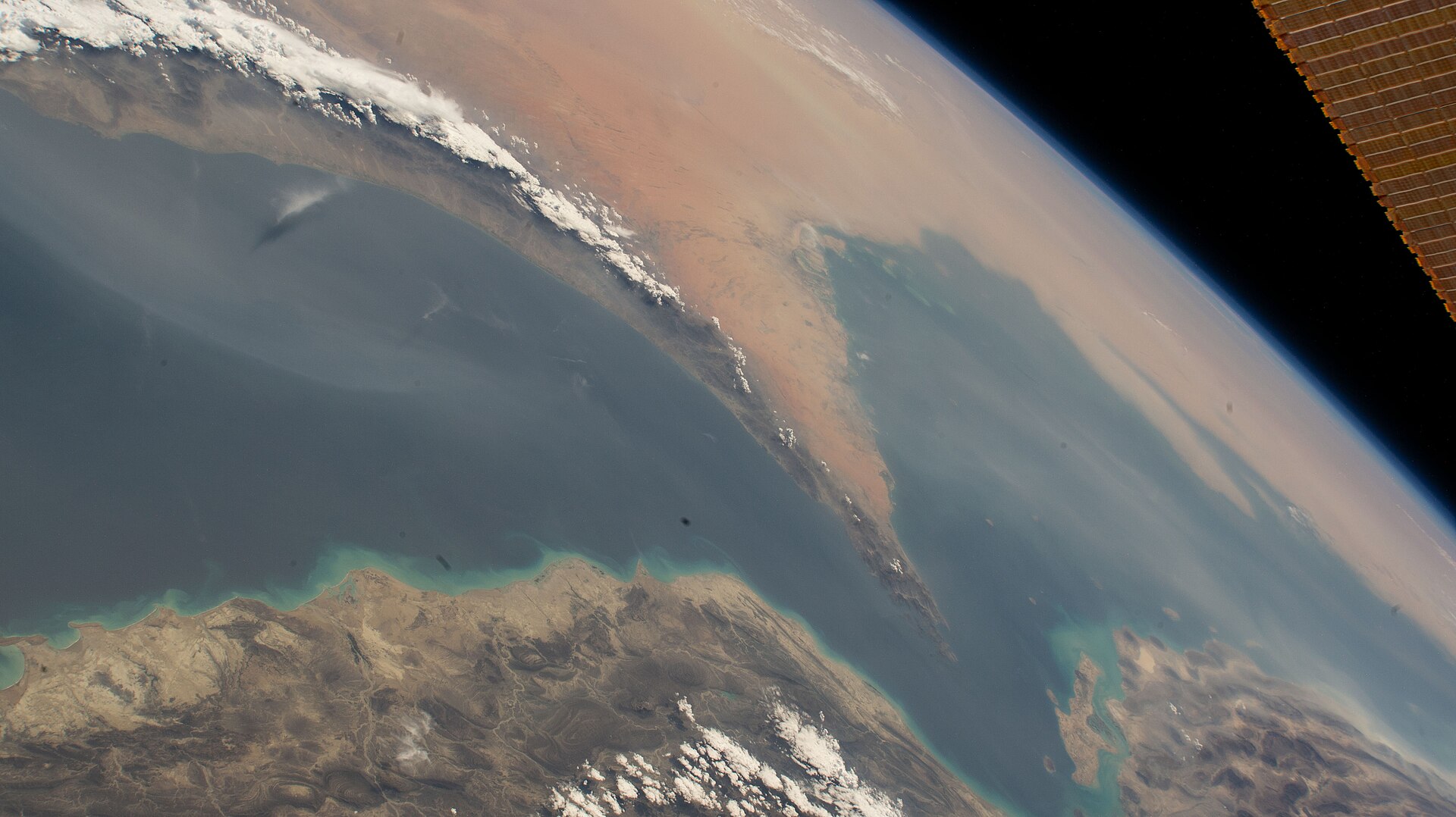
The corridor is not a port-to-port transshipment system like the East-West Pipeline workaround that served as Aramco’s primary alternative route from March to June. It is a direct transit: VLCCs load at Ras Tanura in the Persian Gulf, sail south through the Strait of Hormuz, and deliver to refineries in East Asia. What makes it a “corridor” rather than a conventional Hormuz transit is the AIS manipulation — vessels switch off their automatic identification system transponders before entering the strait, transit dark through the narrow passage where the IRGC has declared sole routing authority, then reactivate in the Gulf of Oman where Omani and IMO-recognized shipping lanes apply.
The IRGC has rejected the routing publicly. On June 25, an IRGC spokesman told Al Jazeera that “the proposed route is unacceptable and poses serious safety risks,” adding that “the only authorised transit routes through the Strait of Hormuz are those designated by the Islamic Republic of Iran.” Hours after that statement, a ship was struck. Every VLCC that transits the corridor dark is doing so in waters Iran considers sovereign, without Iranian permission, and without PGSA pre-clearance — which is, in part, the point.
The PGSA surcharge — $5.5 million per day, or roughly $8 million per laden VLCC transit — does not apply to vessels that go AIS-dark and bypass the Iranian pre-clearance process. But avoiding the surcharge does not eliminate the other costs. The Joint War Committee designated the entire Arabian Gulf as a Listed Area on March 3, 2026, and that designation explicitly includes Oman — meaning war-risk insurance applies even for cargoes routed through Omani waters. The latest TD3C freight rates sit at approximately $287,000 per day round-trip, down from a peak of roughly $474,000 but still more than three times the pre-conflict baseline of $75,000 to $85,000 per day.
Oman’s own ports have absorbed strikes during the conflict. Salalah’s fuel tanks were set on fire by drones on March 11, and Duqm was hit on March 1 and again on March 3. Sohar falls within the JWC’s designated war-risk area. The Oman corridor is not a safe route; it is a cheaper route than the PGSA alternative and a shorter route than the East-West Pipeline, and Aramco appears to have concluded that the cost-risk balance now favors it over the alternatives.
Who Is Still Buying Saudi Crude?
The three spot cargoes are bound for South Korea, Japan, and China, but the buyer composition tells a more specific story about who has stayed and who has left. Sinopec — which as recently as February was lifting millions of barrels monthly from Saudi Arabia — has now gone two consecutive months at zero. Rongsheng’s collapse from seven million barrels per month to one million is equally stark. The buyers Aramco is reaching with spot discounts are, in several cases, refiners who are not the same entities the company lost to competitive substitution over the past four months.
The substitution is structural, not temporary. S&P Global has identified a $5 to $7 per barrel threshold at which Asian refiners begin what it describes as “semi-permanent switching” from Arab Light to Russia’s ESPO Blend. In April 2026, the Arab Light-to-ESPO spread reached $5.50 per barrel in ESPO’s favor — inside the switching band. Refiners that made the move recalibrated their cracking units, adjusted feedstock blends, and renegotiated freight contracts with Far Eastern Russian-loading infrastructure, none of which reverses in a single pricing cycle. The spot discount Aramco is offering does not address the switching cost that would be required to bring those refiners back.
Aramco CEO Amin Nasser acknowledged the scale of the disruption during the company’s May 2026 earnings call, describing the East-West Pipeline as a critical supply artery and warning that the global oil market “will not normalize until 2027 if disruption in the Strait of Hormuz persists past the middle of June.” The disruption has persisted. It has also reshaped the Gulf’s energy bloc: the UAE’s May 2026 OPEC exit — removing the cartel’s second-largest Gulf producer — compounded the pricing pressure on Riyadh, as Abu Dhabi announced a $150 billion ADNOC expansion and targeted 5 million bpd unconstrained by quota. The full strategic and security dimensions of the Saudi-UAE split extend well beyond OPEC arithmetic. Iraq’s OPEC exit threat — Baghdad signalling it may follow Abu Dhabi out of the cartel if quota cuts are enforced — would leave Saudi Arabia as the sole enforcer of a quota system it can no longer afford to defend; the full picture is analysed in Iraq’s OPEC Exit Threat Leaves Saudi Arabia Defending a Cartel Alone. As of July 1, the strait is operating at roughly five percent of pre-war volume, with zero tanker transits recorded on that day according to tracking data. The spot sales are Aramco’s attempt to prove that the Oman corridor can deliver Saudi crude reliably enough to justify term contract renewals when buyers begin their annual negotiations later this year.

What Is Iran Selling?
On the same day Bloomberg reported Aramco’s spot sales, CNBC published an interview with Ghalibaf in which he claimed Iran had exported “more than 40 million barrels” since the MOU lifted the naval blockade, at prices “roughly 20 percent higher than before the war.” If accurate, the claim represents a direct commercial inversion of Aramco’s position: Iran is selling at a premium while Aramco is discounting below a slashed OSP to find takers for barrels that have to cross a waterway Iran controls.
The numbers are difficult to verify independently, and Iran’s oil exports have been opaque since US sanctions resumed in 2018. What is verifiable is the structural logic behind the premium claim. Iranian crude — sanctioned, discounted before the war, sold primarily to Chinese teapot refiners through intermediaries — now carries a wartime premium because Iranian naval control of Hormuz has repositioned Tehran as a gatekeeper rather than a sanctioned pariah. Buyers of Iranian crude face no PGSA surcharge, no war-risk insurance markup, and no AIS-dark transit risk, because Iran’s own forces control the strait through which the oil moves.
Ghalibaf’s boast sits uncomfortably alongside the IRGC’s June 25 rejection of the Oman corridor. If Iran is profiting from its control of Hormuz while simultaneously declaring alternative routing unauthorized, the corridor is not merely a logistical workaround — it is a challenge to the revenue model Iran has built around control of the strait. Aramco’s willingness to discount into that challenge, absorbing the OSP cut, the spot markdown, the war-risk insurance, and the elevated freight, is a measure of how urgently the company needs Asian buyers to take Saudi barrels through a route that the Kingdom’s fiscal position cannot afford to lose.
Background
Saudi Aramco’s reliance on term contracts is a structural feature of its business model. The company sells the bulk of its crude through annual and multi-year agreements with Asian refiners — primarily in China, South Korea, Japan, and India — at prices set monthly through the OSP mechanism. Spot sales are a pressure valve used when the term system cannot absorb supply shocks, and the Hormuz crisis has produced the largest supply disruption in Aramco’s history as a publicly listed company. The last time Ras Tanura loaded crude for China was March 8, making the 111-day gap the longest interruption of eastbound Saudi exports in the modern era.
The East-West Pipeline, which runs 1,200 kilometers from the Eastern Province to Yanbu on the Red Sea, served as the primary workaround from March to June 2026. Aramco pushed the pipeline to its maximum throughput of 7.0 million barrels per day during Q1, but the Yanbu terminal on the Red Sea can effectively handle approximately 4 million barrels per day of exports — leaving a structural gap of up to 3.5 million barrels per day versus pre-war eastbound Hormuz flow of 7 to 7.5 million barrels per day. The Oman corridor offers a second route back into the Gulf — not as a replacement for the pipeline but as a supplement that allows Ras Tanura to resume its role as the company’s primary crude-loading terminal.
The financial pressure on Aramco is accumulating on multiple fronts. Q1 2026 net income came in at $33.6 billion, up 26 percent year-over-year, but the $10 per barrel OSP collapse from May to July, combined with spot discounting, compresses the margin on every barrel that ships. With 46 days remaining in the MOU’s Phase 2 clock and no mechanism to reverse buyer substitution in a single pricing cycle, Aramco is discounting into a window that may close before the market corrects.

Frequently Asked Questions
Why are Aramco’s spot sales considered unusual?
Aramco sells almost all of its crude through term contracts — annual agreements with refiners at prices set monthly through the official selling price. Spot sales occur only when term buyers reduce liftings, when the company needs to clear excess barrels, or when geopolitical disruption forces it to seek new customers. Bloomberg identified the July sales as “rare,” consistent with Aramco’s near-total reliance on term agreements under normal market conditions.
What is the Oman corridor?
The Oman corridor is a transit route through the Strait of Hormuz in which VLCCs switch off their AIS transponders before entering the strait, cross through the narrow passage without broadcasting their position, and reactivate transponders in the Gulf of Oman. It avoids the PGSA pre-clearance system and its associated surcharge but does not eliminate war-risk insurance costs, which apply across the JWC’s Arabian Gulf Listed Area — a designation that includes Oman.
How much has Aramco’s Asian selling price fallen?
The July Arab Light OSP to Asia stands at $9.50 per barrel above Oman/Dubai, down from $15.50 in June and $19.50 in May — a $10 per barrel collapse over two months. The spot sales carry an additional discount below the OSP, but the exact amount has not been publicly disclosed by Aramco or reported by Bloomberg.
Why has Sinopec stopped buying Saudi crude?
Sinopec recorded zero Saudi crude purchases in July, the second consecutive month without liftings. The shift reflects competitive substitution, primarily toward Russia’s ESPO Blend, which crossed the $5 to $7 per barrel switching threshold identified by S&P Global in April 2026. Refinery process recalibration makes such switches difficult to reverse in a single pricing cycle, even with spot discounts.
Is Iran profiting from the Hormuz disruption?
Iran’s parliament speaker claimed on July 1 that Tehran had exported more than 40 million barrels since the MOU lifted the naval blockade, at prices 20 percent above pre-war levels. The claim is difficult to verify independently, but the structural logic supports it: Iranian crude faces no PGSA surcharge, no war-risk insurance premium, and no AIS-dark transit risk, because Iran controls the waterway through which the oil moves. Days later, Aramco’s July OSP cuts formalized the discount strategy: Arab Light to Asia fell to a $9.50 premium — down $6 in a single month — as OPEC+ simultaneously prepared to ratify a fifth consecutive 188,000 bpd output increase for August.
The House of Saud Daily Briefing
Saudi Arabia's news in 3 minutes, every morning. Free. See today's issue