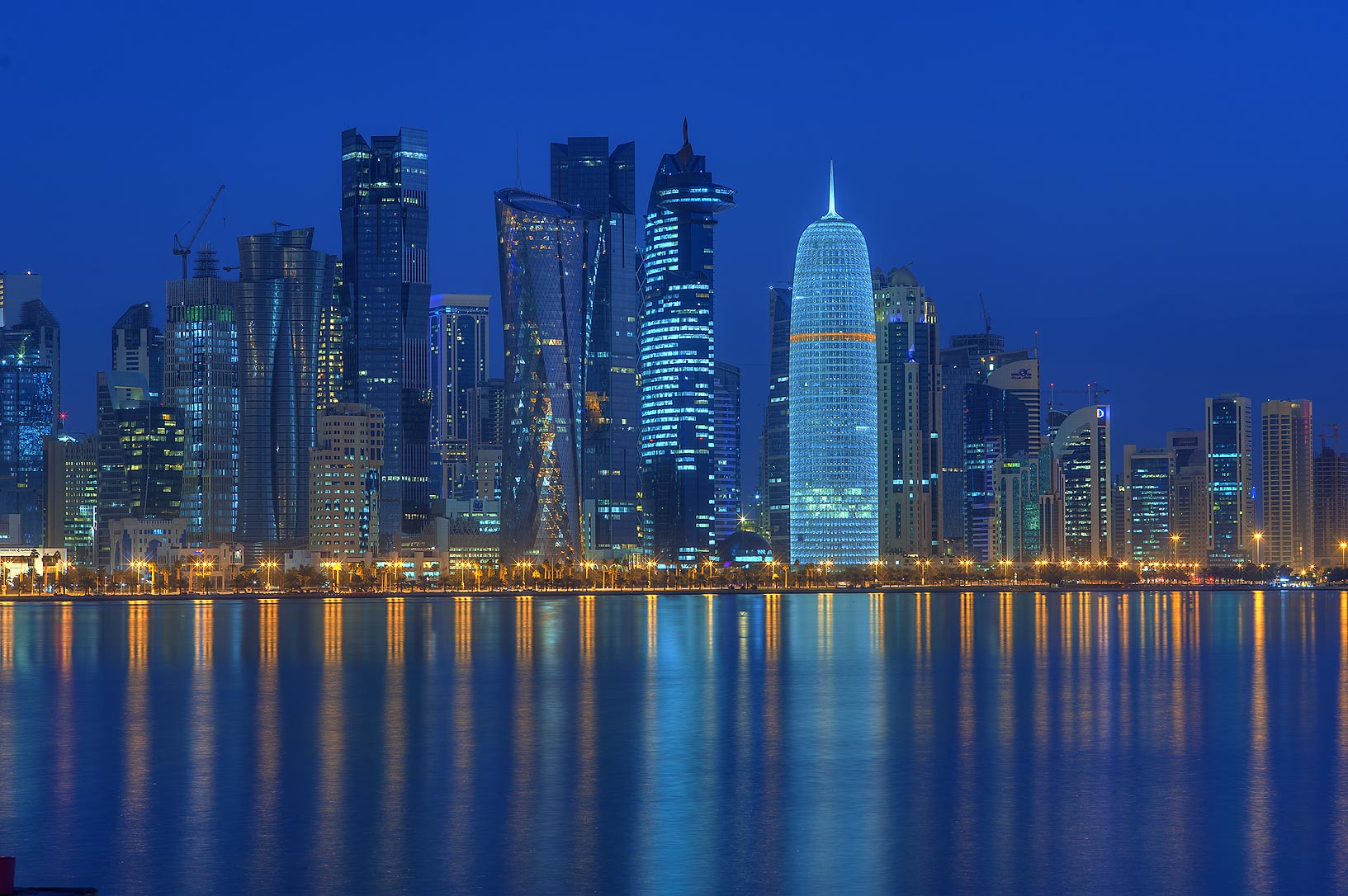

DOHA — The United States, Iran, and mediators reached a preliminary agreement on July 1 to release $3 billion of frozen Iranian assets held in Qatar, according to Al-Hadath, an Egyptian outlet, citing unnamed sources familiar with the Doha technical talks. Haaretz, Azernews, and The National aggregated the report. No US government official has confirmed or denied it.
If verified, the reported deal would mark the first financial concession from Washington since the 60-day Islamabad MOU was signed on June 17. It arrives on Day 14 of the agreement — with zero tankers transiting the Strait of Hormuz on July 1, Brent crude at roughly $73 against Saudi Arabia’s $108–111 fiscal breakeven, and Riyadh absent from all three active negotiation tracks: Doha, Geneva, and the Lake Lucerne monitoring group.
Table of Contents
What Did the Doha Talks Produce?
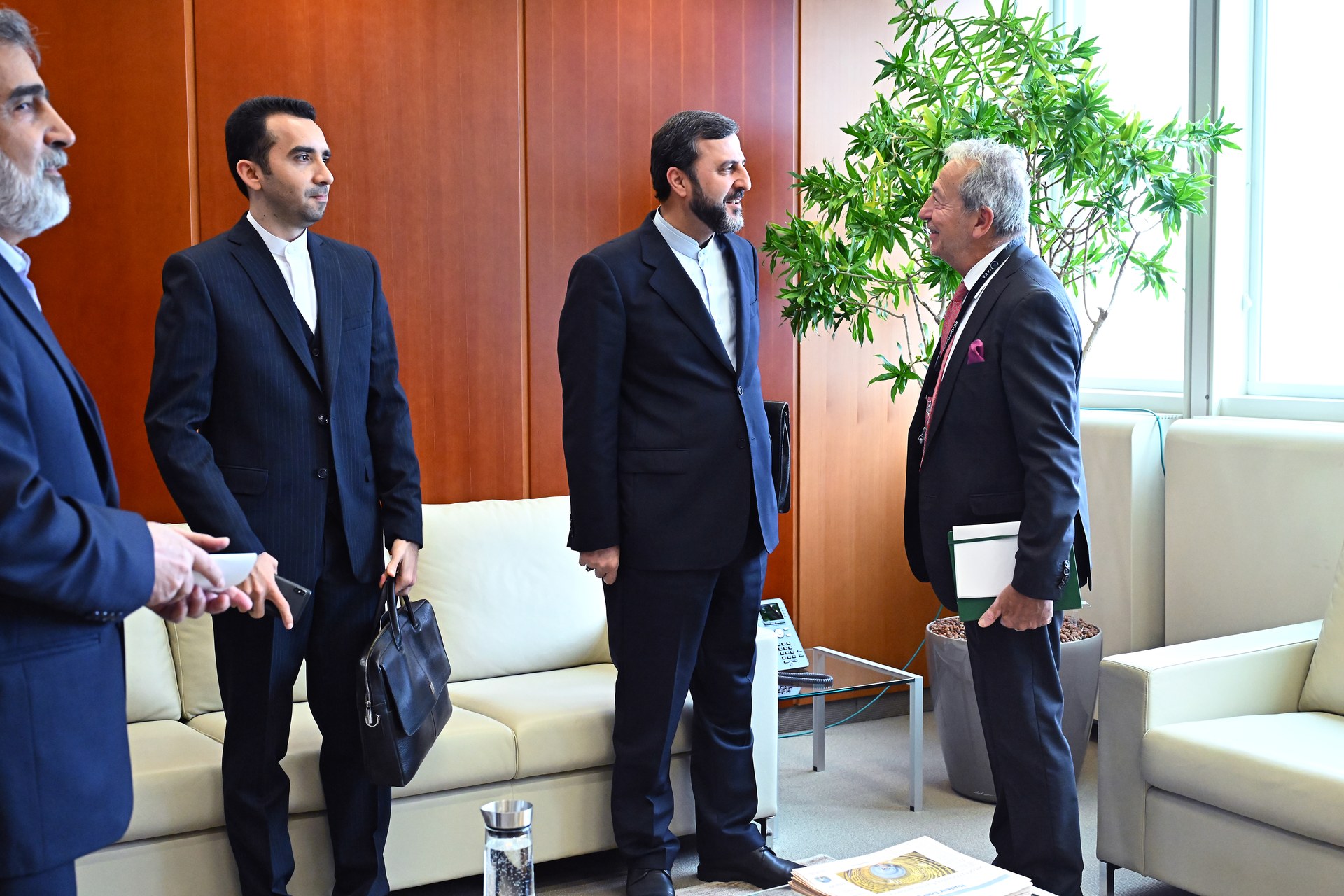
Iran’s Deputy Foreign Minister Kazem Gharibabadi led the Iranian delegation in Doha on July 1, accompanied by central bank representatives and agriculture ministry officials, according to RFE/RL. The US sent a technical delegation. Steve Witkoff and Jared Kushner — who met Qatar’s Prime Minister Sheikh Mohammed bin Abdulrahman Al-Thani the previous day — were not present.
The format was indirect. Qatar and Pakistan served as intermediaries: Iran met the Pakistani side, the US met the Qatari side. No direct US-Iran table existed. The shuttle structure is the same that produced Iran’s earlier claim that it came to Doha for frozen funds, not nuclear talks.
Consultations are continuing to determine the time and place for the start of negotiations through mediators, and these talks will begin if the necessary conditions are met.
The HOS Daily BriefThe Middle East briefing 3,000+ readers start their day with.
One email. Every weekday morning. Free.
Kazem Gharibabadi, Iranian Deputy Foreign Minister, via ISNA, July 1, 2026
Working groups for “negotiating a final agreement have been established,” IRIB reported. The conditional phrasing — “if the necessary conditions are met” — leaves open whether formal negotiations will proceed and preserves a veto point for actors inside Iran who may oppose the terms.
The presence of agriculture ministry officials in Gharibabadi’s delegation aligned with the original terms of the $6 billion Qatar pool, which restricted use to humanitarian purchases — food, medicine, and agricultural goods. If the $3 billion report is accurate, their inclusion may signal that released funds would remain bound by humanitarian-use restrictions rather than entering Iran’s general budget.
Separately, Al-Hadath reported that a “preliminary agreement” to release $3 billion in frozen Iranian assets had been reached during the talks. Haaretz cited the report; Azernews and The National aggregated it. No named source appeared in Al-Hadath’s original reporting, and no US confirmation or denial had been issued by the end of July 1.
Where Does the $3 Billion Come From?
The $3 billion, if released, would be the first tranche of a $6 billion pool of Iranian oil revenues originally frozen in South Korean banks. The Biden administration transferred those funds to accounts held by the Central Bank of Qatar in September 2023 as part of a five-prisoner exchange, according to NBC News. After October 7, 2023, the US and Qatar jointly re-froze the money. Iran has accessed none of it.
Iran claims a larger sum. President Masoud Pezeshkian said on June 29 that “$6 billion out of the $12 billion of Iranian assets held in Qatar” should be released as a first step, according to PressTV and the Washington Times. Qatar’s Foreign Ministry directly contradicted him, confirming the full $6 billion remains frozen and that any release requires US Treasury approval.
Iranian frozen assets worldwide exceed $100 billion, according to Al Jazeera and Iran International. The largest concentrations sit in China ($20–50 billion), Iraq ($10–15 billion), India (~$7 billion), and the Qatar pool (~$6 billion). The reported $3 billion at Doha would represent less than 3% of Iran’s total frozen position globally.
A separate and unrelated “$3 billion” claim requires distinction. Reuters reported in June 2026, citing Gulf state officials, that the UAE had paid Iran approximately $3 billion bilaterally to halt attacks. The UAE Foreign Affairs Ministry categorically denied it. The two reports involve different alleged payers, different channels, and neither has been independently confirmed.
The Civilian Track Outpaces the Toll System
The reported fund-release agreement, if real, would hand Pezeshkian a domestic deliverable at the moment he needs one most. After 62 of 88 Assembly of Experts members called the Hormuz reopening a “strategic mistake” on July 1, Pezeshkian traveled to Qom to meet Ayatollah Shubairi Zanjani and discuss the benefits of securing the frozen funds, the Jerusalem Post reported. He is framing asset recovery as the civilian track’s proof of concept — tangible money returning to Iran through diplomacy, not through the IRGC’s Strait toll.
The IRGC’s counter-narrative rests on a different ledger. Parliament Speaker Ali Ghalibaf told CNBC that Iran had exported 40 million-plus barrels through the post-blockade Oman corridor at a 20% premium — positioning the Strait closure as revenue-generating without any diplomatic concession from Washington. Ali Akbar Velayati, a senior Khamenei adviser, urged that Iran’s transit-fee demand in Hormuz be upheld and suggested Oman — the other coastal state — should concur, according to the Jerusalem Post.
The Wall Street Journal, citing unnamed sources, reported that internal conflict between Pezeshkian and the IRGC “has grown and threatens US-Iran peace talks.” Gharibabadi’s conditional phrasing sits at this fault line. The civilian Foreign Ministry controls the diplomatic calendar. The IRGC controls the Strait. On July 1, Hormuz traffic stood at 5% of pre-war volume.
The Assembly of Experts secretariat rebuked the 62 signatories within hours — an intervention analysts called unprecedented. Raja News, aligned with IRGC-linked hardliners, countered that the 62 signatories spoke for Khamenei’s red lines. The speed of the institutional counter-response suggested the clerical establishment itself is divided on whether the MOU serves Iran’s interests.
Vance Claims an IAEA Breakthrough Tehran Denies
Vice President JD Vance complicated the Doha narrative on July 1 by announcing that Iran had agreed to resume IAEA inspections. “Yesterday was a very, very good day. We made a lot of good progress,” Vance told CBS News, calling the purported agreement a “major milestone.”
Iran’s Foreign Ministry denied it within hours: Tehran has “no plans” for inspections. The denial aligns with Gharibabadi’s June 30 position that inspectors would return only “within the framework of a final agreement and as a result of practical action by the other side to end all sanctions.” The IAEA has not had inspector access to Iranian nuclear sites for 121 days. An estimated 440.9 kilograms of highly enriched uranium at 60% purity remains unverified.
The contradiction mirrors a recurring pattern in the Doha channel. Iran has maintained since June 29 that it came to Doha for frozen funds, not nuclear talks. Washington has presented the sessions as covering denuclearization. The MOU contains no joint-communiqué obligation and no named arbiter — allowing both sides to characterize each session’s outcome differently without formal contradiction.
What Does Riyadh Stand to Lose?
Saudi Arabia holds zero seats at the Doha technical talks, the Geneva nuclear track, and the Lake Lucerne monitoring group. Foreign Minister Faisal bin Farhan visited Beijing on the same day the first Doha contacts took place — underscoring Riyadh’s distance from the channel now shaping the region’s security arrangements.
If $3 billion flows from the Qatar pool to Tehran, it would represent the first structural output of a process in which Saudi Arabia has invested nothing, influenced nothing, and stands to receive nothing. The Persian Gulf Security Agreement — Iran’s Strait transit surcharge — continues at $5.5 million per day. US Treasury Secretary Scott Bessent characterized the PGSA as IRGC “extortion” on June 25, according to Euronews, but Washington has not moved to intercept its enforcement.
Aramco’s fiscal position continued to deteriorate. Free cash flow covers 0.85 times the company’s dividend obligation — $18.6 billion in FCF against $21.89 billion owed. The July Arab Light Official Selling Price sits at a $9.50-per-barrel premium over Oman/Dubai, down $10 from the $19.50 May peak, according to Aramco pricing data. Sinopec made zero Saudi crude purchases in July — the second consecutive month of zero liftings from China’s largest refiner.
Oman delivered a separate Hormuz governance proposal to Witkoff and Kushner via Qatar’s prime minister on June 30, CNN reported. The plan is modeled on the Malacca Strait/Singapore voluntary-contribution system, designed to sidestep the UN Convention on the Law of the Sea’s prohibition on strait tolls. It has not been finalized. Riyadh was not party to that conversation. Nor was it party to what followed: the WSJ’s subsequent reporting that Trump has privately told staff he will not enforce the August 18 deadline, a decision that leaves Saudi Arabia exposed to permanent PGSA fees and defense gaps the Doha working groups have no mandate to address.
Background
The Doha technical talks form one node of a three-track diplomatic process that emerged from the Islamabad MOU, signed June 17, 2026. The MOU’s language on frozen assets states that the US “undertakes to make fully available for use the frozen or restricted funds and assets of the Islamic Republic of Iran upon implementation.” Baker McKenzie and Buchanan Ingersoll & Rooney have noted this is a conditional promise, not a disbursement mechanism — “procedures related to the release of these funds” are to be agreed during negotiations.
OFAC General License X, issued June 22, authorized Iranian-origin crude oil, petroleum products, and petrochemical transactions through August 21, 2026 — roughly aligning with the MOU’s 60-day window. GL X covers oil transactions only, not frozen financial assets. Asset release would require a separate instrument from the US Treasury.
The architecture echoes the JCPOA’s implementation. On January 16, 2016, OFAC General Licenses released approximately $29–32 billion in usable liquid Iranian assets on Implementation Day. The current approach appears to follow the same tranche-by-tranche playbook — at roughly one-tenth the scale.
The MOU is at Day 14 of 60, with approximately 46 days remaining. It contains no public-record requirement, no joint-communiqué obligation, and no named arbiter.
Frequently Asked Questions
Has Iran received any frozen funds before the reported $3 billion agreement?
No. The $6 billion transferred to Qatari escrow in September 2023 — originally accessible only for humanitarian purchases routed through approved banking intermediaries — was re-frozen by joint US-Qatar agreement after October 7, 2023. Iran has accessed none of it. OFAC General License X (June 22, 2026) authorizes oil transactions through August 21 but does not cover frozen financial asset releases, which require a separate Treasury instrument. South Korea’s original transfer took several weeks to execute through correspondent banking channels, suggesting even an approved release would not be immediate.
How does the reported $3 billion relate to the UAE’s alleged $3 billion payment?
They are unrelated. Reuters, citing Gulf state officials, reported in June 2026 that the UAE paid Iran approximately $3 billion bilaterally to halt attacks — a claim the UAE Foreign Affairs Ministry denied. Al-Hadath’s Doha report, citing “sources familiar with the technical talks,” describes funds from the Qatar-held pool of Iranian oil revenues frozen in South Korean banks. Different alleged payers, different channels, different claimed purposes, and neither independently confirmed.
Can Congress block the release?
Congressional authority over frozen-asset waivers has been tested before. Senator Tim Kaine argued during the MOU debate that existing statutory authority may not support the framework’s commitments. The 2023 Biden waiver for the same $6 billion pool faced bipartisan criticism but proceeded under executive authority without requiring prior congressional approval, though the administration notified relevant committees under the Iran Sanctions Act. A new release could face similar legislative pushback but would likely follow the same executive-authority pathway.
Can Saudi Arabia block the release of Iran’s frozen funds?
No. The funds sit in Qatari financial institutions, and release requires US Treasury authorization. Saudi Arabia has no legal, institutional, or procedural role in the decision. Riyadh’s leverage is indirect: through bilateral pressure on Washington, oil-supply decisions, and its defense-procurement relationship with the US. Saudi Arabia has not publicly called on the US to block the release, and no formal Saudi diplomatic protest regarding the Doha channel has been reported.
What is Iran’s total frozen-asset position globally?
Iranian frozen assets worldwide exceed $100 billion, per Al Jazeera and Iran International (April–June 2026). The largest concentrations: China ($20–50 billion), Iraq ($10–15 billion), India (~$7 billion), Qatar (~$6 billion), Luxembourg ($1.6–2 billion), and the United States (~$2 billion). Iran’s $12 billion demand at Doha covers only the Qatar pool — not the far larger Chinese or Iraqi holdings, which would require separate bilateral negotiations Beijing and Baghdad have shown no interest in initiating. Separate from the asset track, the working groups leave unresolved a structural question: who controls IRGC toll authority after Day 60, and what leverage Saudi Arabia retains when the MOU fee waiver expires.
Beijing’s parallel track reinforced how far outside the Doha architecture the critical decisions were being made: on July 1, Wang Yi’s July 1 readout with Prince Faisal produced a Hormuz freedom-of-navigation endorsement that China had declined to offer Tehran in any prior exchange.
The working groups leave a verification question unresolved that hardened on July 2: Iran’s parliament speaker Ghalibaf denied IAEA access to bombed nuclear sites is part of any agreement, invoking domestic statute above MOU Point 8 — meaning the inspection architecture the working groups are supposed to negotiate rests on a foundation Iranian law explicitly prohibits.
Saudi Arabia’s exclusion from the Doha channel is mirrored by a symbolic absence on the bilateral track: Riyadh has not confirmed any representative for the Khamenei state funeral in Tehran on July 3, standing in stark contrast to FM Faisal’s personal attendance at Raisi’s funeral in 2024.
The second Doha round, which concluded July 2, produced two procedural outputs from those working groups: a goods-purchase mechanism giving Iran limited access to its frozen Qatari-held assets, and a formal violation-reporting channel — but left the Hormuz fee dispute, Iran’s PGSA transit charge vs. Rubio’s toll rejection, unresolved with 47 days until the PGSA reactivates.