
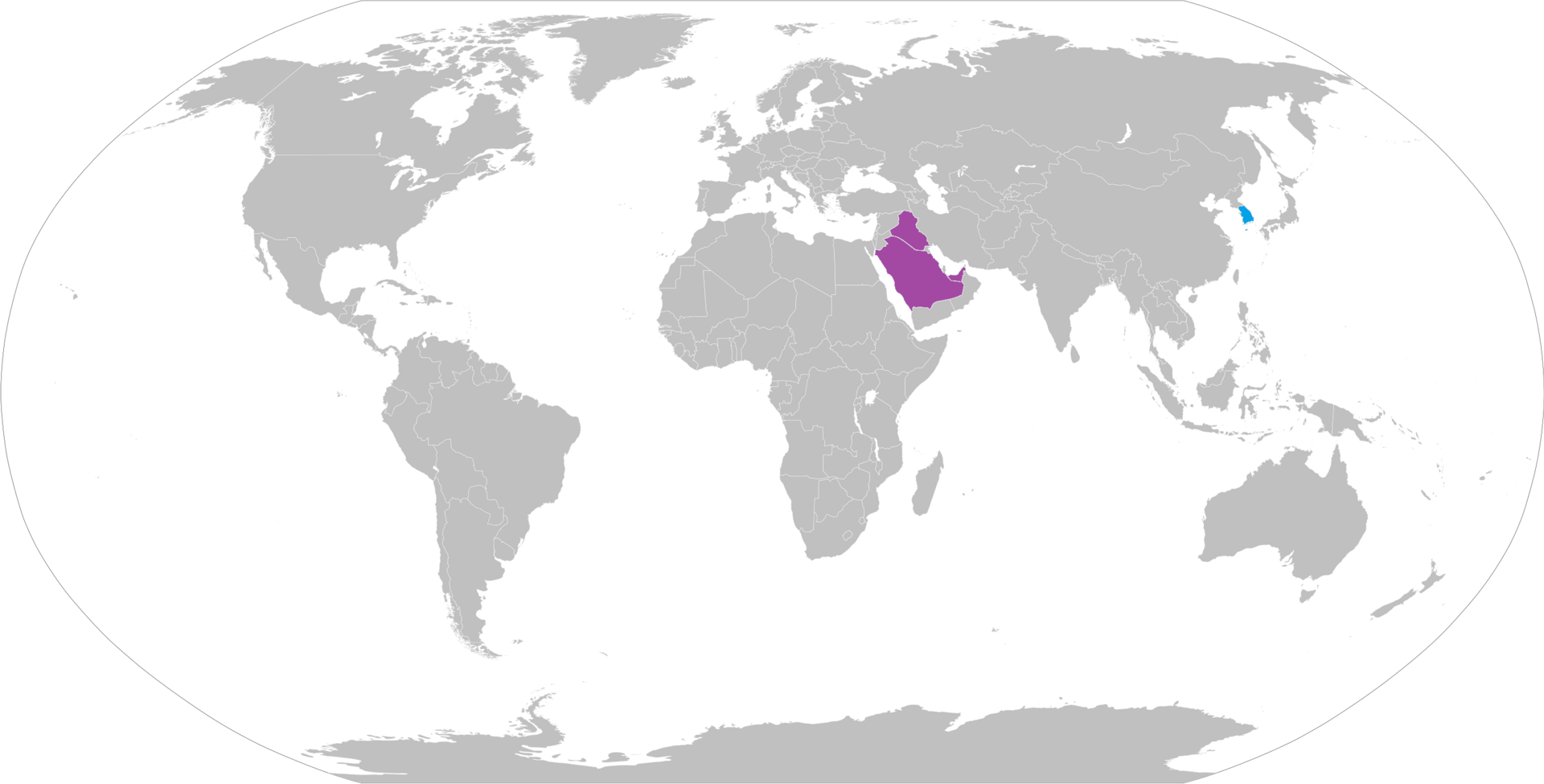
RIYADH — Saudi Arabia has paid $867 million to Hanwha Systems for radars that see ballistic missiles at 20,000 metres, and another $2.2 billion to LIG Nex1 for interceptors that kill them between 15 and 20 kilometres up — a purchase designed for a war Iran is no longer fighting. The Islamic Revolutionary Guard Corps shifted to solid-fuel Zolfaghar rounds three months ago, arriving at Ali Al Salem and Juffair at Mach 5 in their terminal dive, and the terminal dive is the one altitude band the Cheongung-II was never built to cover. Iran exploited that altitude gap directly on July 9, when the Artesh followed the IRGC’s July 8 ballistic barrage by striking the sensor nodes — the satellite antenna, the early-warning radar feeds — that survived the interceptor depletion.
The M-SAM-II contract, signed in February 2024 and re-announced at the World Defense Show in Riyadh this February, promises first deliveries in 2028 — two years after Iran’s True Promise 4 campaign has already exceeded seventy strike phases, two years after the PAC-3 magazine dropped to roughly four hundred rounds, and two years after the 2,300 US personnel who operate the Link-16 backbone at Prince Sultan Air Base began packing. Riyadh has bought a very good missile. It has bought it against the wrong threat, on the wrong timeline, into a battle-management architecture that will not exist by the time the crates arrive.
Table of Contents
- The Altitude Gap Nobody Is Advertising
- What Happens When Link-16 Leaves With the Americans?
- Why Won’t the First Battery Arrive Until 2028?
- The UAE Precedent Riyadh Refuses to Read
- The Zolfaghar Answer to the X-Band Radar
- Can LIG Nex1 Actually Build Ten Batteries in Time?
- The Magazine Math Nobody Wants to Publish
- The Contract That Was Never About the Missile
- Frequently Asked Questions
The Altitude Gap Nobody Is Advertising
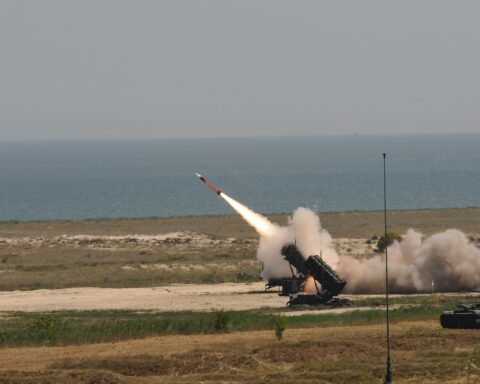
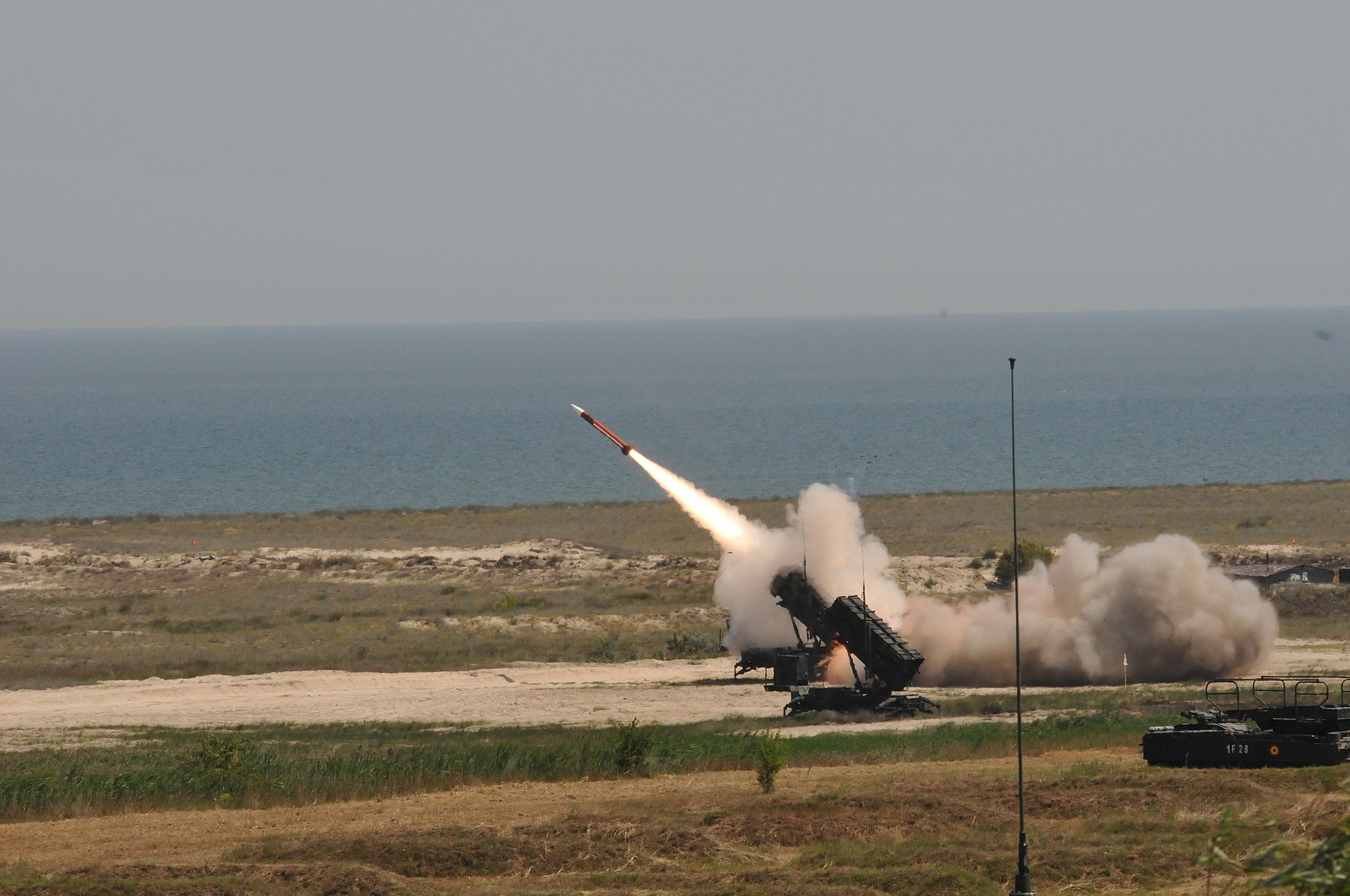
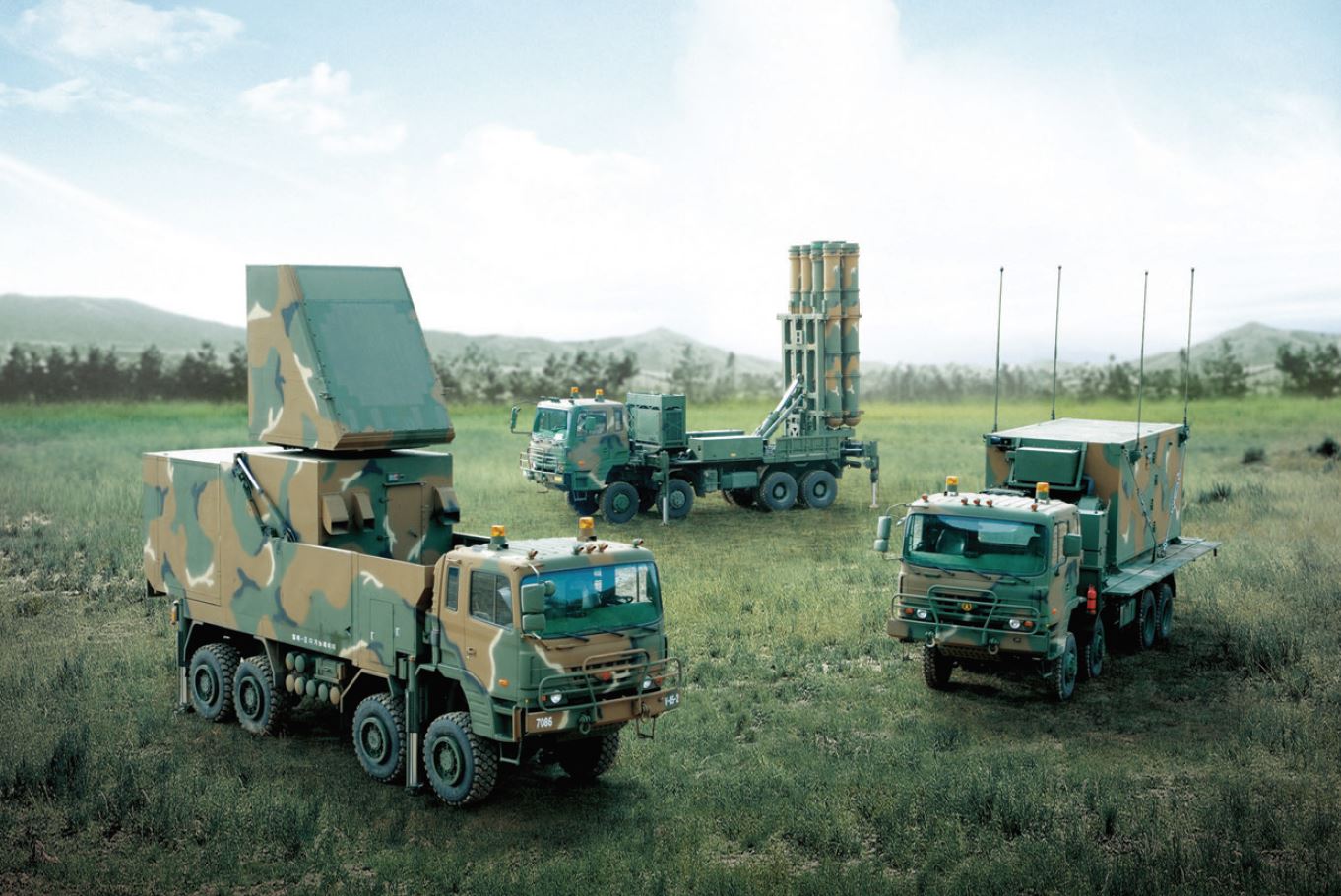
The Cheongung-II — sold to Riyadh under the deal that Hanwha’s booth staff at WDS 2026 confirmed would begin delivering in 2028 — engages ballistic threats at fifteen to twenty kilometres altitude, using a hit-to-kill interceptor that reaches Mach 5 and an X-band passive phased-array radar tracking up to forty simultaneous targets. That envelope is the engineering signature of a system built by South Korea’s Agency for Defense Development to shoot down North Korean Scud and Nodong variants before they crossed the 38th parallel, and it does that job with the ninety-six percent success rate that lawmaker Yu Yong-weon disclosed to the National Assembly after the Emirati batteries went hot in March.
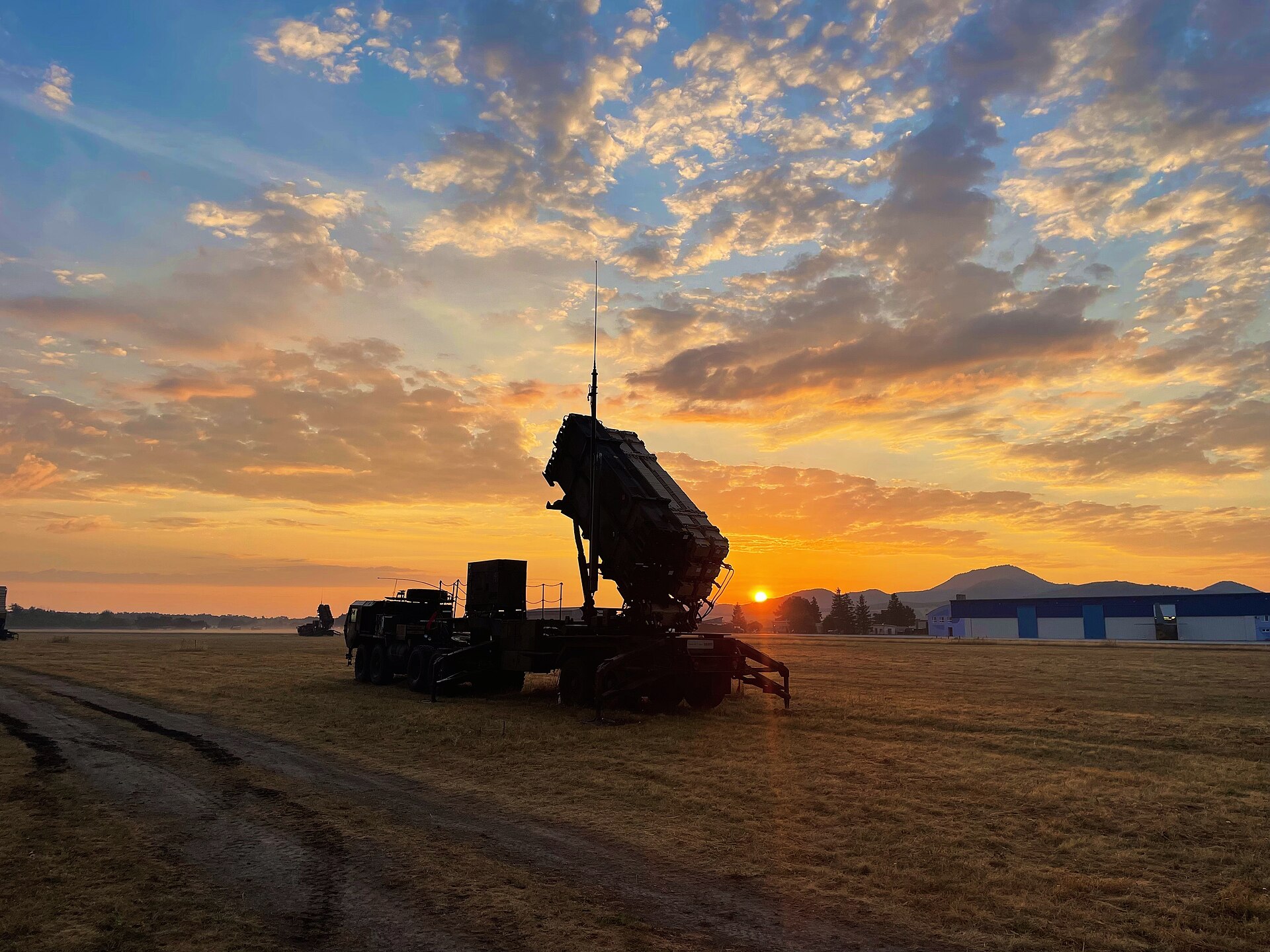
Iran does not fire Scuds at Saudi Arabia any longer, and the missiles it does fire spend almost no time in the Cheongung-II’s kill box. The Zolfaghar, IRGC-Aerospace Force’s workhorse against Ali Al Salem and Juffair, cruises at high altitude for the mid-course phase and then commits to a steep terminal dive that carries it through the fifteen-to-twenty kilometre band in seconds before continuing to a maneuvering endgame at low altitude. The PAC-3 MSE, whose active Ka-band seeker takes over the terminal problem below fifteen kilometres, is designed precisely for that final flight phase — and it is the interceptor Saudi Arabia has almost run out of, with roughly four hundred rounds left in a magazine that started the war at 2,800.
The Cheongung-II does not replace the PAC-3. It sits above it. The two systems were designed as complementary layers in a stack that also includes THAAD at the upper endo- and exo-atmospheric edge, and removing the terminal-phase layer while adding to the mid-course layer does not close a gap. It widens the seam through which the Zolfaghar is already flying.
The Layer Cake, Priced and Depleted
Each system does a different job in a different band of the sky, and none of them substitutes for another when the layer beneath it runs dry. Saudi state media has not published this comparison, and neither has the Ministry of Defence.
The Middle East briefing 3,000+ readers start their day with.
One email. Every weekday morning. Free.
| System | Intercept Phase | Altitude | Range | Threat Optimized For |
|---|---|---|---|---|
| PAC-3 MSE | Terminal | <15 km | 15-20 km | Ballistic missile warheads (point defense) |
| M-SAM-II (Cheongung-II) | Mid-course/early terminal | 15-20 km | 40-50 km | TBMs, cruise missiles (area defense) |
| THAAD | Upper endo-/exo-atmospheric | 40-150 km | 200 km | Long-range ballistic missiles |
Saudi Arabia’s air defense layers as of July 2026. PAC-3 MSE stockpile is approximately 86% depleted; THAAD and M-SAM-II are both US-operated/US-integrated at present.
The table understates the crisis. THAAD in Saudi service is manned by American crews and slaved to an American command net, and the PAC-3 batteries at Prince Sultan and Al Kharj are maintained by the same 2,300 US personnel Riyadh restricted from Operation Project Freedom in May — when Saudi Arabia grounded 43 US warplanes at Prince Sultan Air Base for four days, the precipitating act behind the current rift. The only layer Saudi Arabia will unambiguously own by 2028 is the Korean one — and it is the one layer that does not touch the altitude where Iran’s warheads actually detonate.
What Happens When Link-16 Leaves With the Americans?
The UAE fired the Cheongung-II in combat for the first time between March 1 and March 10, engaging twenty-nine of thirty identified air targets and losing only one to leakage, which is where the ninety-six percent figure Yu quoted originates. What the Korean lawmaker did not add, and what the IISS did in its March monograph Defending the Skies of the Arab Gulf States, is that the Emirati batteries did not fight alone. They fought inside a US-managed battle-management framework, cued by American AWACS tracks, deconflicted against PAC-3 and THAAD shots over the same corridors, and passed target-quality data through Link-16 terminals that only exist in the Gulf because Washington installed them.
“None of the weaponry is very useful without the right sensors and training, with deconfliction between ground-based and airborne assets required if the weaponry is to be used effectively,” the IISS wrote. That is the sentence Riyadh has to answer, and the answer today is that the sensors and the deconfliction are provided by an American command cell that is being asked to leave. The 2,300 personnel at Prince Sultan operate the Link-16 backbone, staff the battle-management cells, and maintain the very PAC-3 launchers Saudi Arabia depends on for the terminal layer. Their departure is not a diplomatic inconvenience. It is the removal of the nervous system that lets any of the interceptors talk to each other.
The Cheongung-II arriving in 2028 will be a Korean system built for the Korean Peninsula, integrated at delivery into a Korean fire-control architecture, and needing bespoke bridging work to plug into whatever Link-16 infrastructure Saudi Arabia still has by then. The UAE did that work with American engineers on site. Saudi Arabia, on current trajectory, will not. That is the Link-16 integration crisis the trade press keeps not naming — the Korean system is coming into a house whose electrical wiring is being pulled out at the same time.
Why Won’t the First Battery Arrive Until 2028?
Contract to launcher-in-the-desert is a four-year problem in the best case and a longer one when the production line is already committed. The Saudi deal was signed in February 2024. Hanwha’s WDS 2026 representative gave the delivery window as 2028, with Iraq’s ten-battery Cheongung-II order — signed later — sliding into a delivery slot after Saudi Arabia’s is filled. That is the number Riyadh has to plan around, and it does not close the gap the PGSA fee auto-activation on August 18 is about to open.
Two years and two months of exposure sit between now and the earliest Saudi Cheongung-II fire unit going operational, and the historical baseline for delivery-to-operational conversion is not delivery-day itself. The UAE signed for ten batteries in January 2022 and had two of them combat-ready when Iranian missiles started arriving in March 2026 — a fifty-month conversion window between contract and partial deployment, and Abu Dhabi had American integration engineers helping the whole time. Riyadh, buying under an accelerated 2024 signature and a strained US relationship, will not beat that curve. It will lag it.
The realistic Saudi picture is one or two batteries in the sky by late 2029, meaningful mass by 2031, and the full ten-battery force closer to 2033. Iran’s next True Promise campaign will not wait, and the fee clock inside the Doha MOU runs at $5.5 million a day the moment the August 18 window slips, a fact that has been the subject of increasingly nervous Doha working-group traffic through late June and early July.
The UAE Precedent Riyadh Refuses to Read
Abu Dhabi bought the same system, from the same vendor, on the same production line, four years and one month before Riyadh did. When the missiles started falling, two of ten batteries were live. The Emirati Ministry of Defence tallied 174 ballistic missiles detected and 161 destroyed before impact — a combined number that included THAAD and PAC-3 shots alongside the Cheongung-II, not the Korean system alone.
The two-of-ten operational figure is the number that should be pinned to every desk in the Saudi Ministry of Defence. It is the empirical answer to the question of how much air defence money actually buys in the window it takes to install and integrate a Korean system into a Gulf sky, and it is the number that tells Riyadh what its own posture will look like in the summer of 2028 — even if the delivery timelines hold, even if Hanwha’s radars ship exactly on schedule, even if LIG Nex1’s interceptor factory does not fall behind.
Two batteries out of ten, defending an area against the strike rate the IRGC has already normalized, means a fractional coverage window that the Zolfaghar was designed to walk around.
The Emiratis had the American umbrella overhead when they did this. The Saudis, having signed security understandings with Ankara, Islamabad, and Cairo in the same weeks the White House was threatening to withhold PAC-3 resupply, will not.
The Zolfaghar Answer to the X-Band Radar
The IRGC-Aerospace Force did not move from liquid-fuel Qiam variants to solid-fuel Zolfaghars because the old rounds ran out. It moved because solid-fuel rounds compress the pre-launch signature to minutes — no fuelling column, no visible tanker convoy, no fifteen-hour warning window that lets an X-band radar cue a full engagement chain against a garden-of-forking-paths shot list. Defence Security Asia’s March analysis called the shift a deliberate counter-adaptation to Gulf air-defence improvements, and the timing of the switch — coinciding with the UAE Cheongung-II going hot — leaves little room for coincidence.
Tehran has not commented on the Saudi Hanwha contract by name. Tasnim, the IRGC-linked outlet that has covered every Riyadh procurement decision since the war began with lengthy sneers, has said nothing about the ninety-six percent kill rate against Iranian designs, and the silence is louder than the coverage. Acknowledging that the Cheongung-II works would damage the deterrence posture the IRGC has spent two campaign cycles building. Not acknowledging it lets the counter-adaptation do the work quietly — the shift to solid fuel, the maneuvering reentry vehicle, the CEP under ten metres that the Zolfaghar carries into its terminal dive.
The Iranian answer to a fifteen-to-twenty kilometre kill box is to be there for a shorter time. The Iranian answer to an X-band radar cueing forty simultaneous targets is to send more than forty, and to send them in the seven-minute solid-fuel launch window that a Cheongung-II battery has to see, classify, and shoot. Al Mayadeen has been calling the IRGC posture a “sustained attrition strategy” since March, and the arithmetic of attrition is not on the side of the defender.
Can LIG Nex1 Actually Build Ten Batteries in Time?
LIG Nex1 produces roughly 300 M-SAM-II interceptors a year and can assemble a maximum of eight complete batteries in a calendar year, according to Defense Express and the KEIA analysis published this spring. Saudi Arabia has ordered ten batteries. That is fifteen months of dedicated Cheongung-II production if nothing else moves through the line — but the line is not empty. Iraq’s ten-battery order is already queued behind Riyadh’s. UAE follow-on orders are in Korean domestic press. Seoul’s own DPRK-facing requirements draw on the same interceptor stock, and the Korea Times reported in April on the internal tension between domestic drawdowns and Gulf export demand.
Three hundred interceptors a year, against the strike rate the IRGC demonstrated across seventy phases of True Promise 4, is the number to hold in mind. The IISS, in its May monograph Rearming After the War, wrote that rebuilding depleted inventories will require “extended production cycles measured in months or years, imposing temporal constraints that cannot be mitigated by short-term funding injections alone.” The Saudis have plenty of funding. They cannot pay LIG Nex1 to build a second production line by 2028, and they cannot pay Camden, South Carolina to accelerate PAC-3 MSE beyond the 620-round annual ceiling Raytheon has already committed to.
The IISS noted in May 2026 that production cycles for high-end interceptors are measured in months or years — a tempo that bears no relationship to consumption rates in high-intensity warfare. The Saudi order for ten Cheongung-II batteries buys, at full delivery, roughly 320 interceptors on launchers and a reload stock that depends on how quickly LIG Nex1 can supply consumables into a shooting war it has never fought.
The Magazine Math Nobody Wants to Publish
Ten fully deployed batteries give Saudi Arabia 320 Cheongung-II interceptors ready to launch — thirty-two per battery across four launcher vehicles carrying eight tubes each. That is the theoretical maximum, achieved only when every battery is operational, every launcher is loaded, and every reload has arrived from Korea. Iran fired more than seventy strike phases into the Gulf between February and late March, and if a hypothetical eleven-day peak drew from the pre-war Patriot magazine at the rate the actual campaign did, a Cheongung-II magazine of 320 rounds would not survive a week of the same tempo.
The cost-exchange argument matters: a Patriot round costs four million dollars and shoots down a Shahed-136 worth twenty thousand. AGSI and the IISS have both made the case for cheaper Korean interceptors on those grounds, with the IISS warning in Rearming After the War that “high-end interceptors costing millions of dollars have been used against far cheaper drone threats” and that “in campaigns designed around attrition, this cost-exchange mismatch becomes a structural strategic vulnerability.”
A cheaper interceptor is only useful if enough of them exist. The Cheongung-II’s price advantage evaporates the moment the line runs dry, and 300 rounds a year from LIG Nex1 runs dry quickly against the seventy-phase strike campaign the IRGC demonstrated in True Promise 4. Riyadh has not bought a magazine. It has bought the promise of one, delivered in tranches, into a war that has already normalized the tempo required to empty it.
The Contract That Was Never About the Missile
NBC News reported in May that the White House had threatened to withhold PAC-3 resupply after Riyadh refused Washington access to Saudi airspace for Operation Project Freedom, the Hormuz escort mission. That threat is the accelerant behind the Korean deal. The February 2024 signature predated the fight, but the WDS 2026 re-announcement — at a defence expo in Riyadh, in front of Gulf press, timed to the week the Emiratis were shooting down Zolfaghars — was a diplomatic signal aimed at Washington as much as it was a procurement update. The timeline has become more urgent following reports that Washington is weighing a punitive PSAB drawdown that would remove the US operators the PAC-3 system requires to function.
The AGSI framing captures the political logic. Gulf states are facing “a material crisis of availability rather than a political crisis with Washington,” AGSI wrote, and diversification has become “an operational necessity rather than a diplomatic gesture.” South Korean systems are, in AGSI’s phrase, “faster to deliver, comparatively cheaper (each interceptor costing about one-third the cost of a Patriot missile), and politically less encumbered.” The last three words are the ones Riyadh underlined. Seoul does not require Saudi Arabia to explain its Hormuz posture to Congress, does not condition delivery on Yemen ceasefires, and does not fold missile sales into an omnibus bill on human rights certification.
The problem is that the interceptor that is politically less encumbered is also physically less matched to the threat. Iran’s counter-adaptation to Gulf air-defence improvements is calibrated to the layers Riyadh had, and buying a mid-course area-defence system does not fix a terminal-phase point-defence hole. It buys Mohammed bin Salman a photograph with the LIG Nex1 chairman and a receipt he can wave at Washington the next time the PAC-3 pipeline is threatened. It does not stop the next Zolfaghar. And the Saudi crown prince, whose entire external-security proposition depends on the visible ability to defend Aramco assets against the kind of strike that arrived at Ras Tanura on June 28, needs those missiles more than Ghalibaf needs the MOU to hold, and everyone in Doha knows it.
What the Cheongung-II Actually Fixes
None of this is an argument that the Korean purchase was worthless. The Cheongung-II is a genuinely capable mid-course and cruise-missile interceptor, and against the parts of the Iranian arsenal that fit its envelope — older Ghadr variants at longer standoff, cruise missiles inbound from Yemen, Shahed-series drones penetrating the mid-tier air-defence layer — it will do useful work. Against a saturation shot mixing decoys and drones with two or three real ballistic threats, the X-band radar and hit-to-kill interceptor combination is a serious upgrade over what Saudi Arabia currently fields between the Skyguard low-tier and the PAC-3 terminal layer.
The KEIA analysis is honest about what the Korean portfolio does and does not close. The Cheongung-II is a partial solution — good for medium-altitude area defence, weak on Iron Dome-class low-altitude problems, absent at the long-range interception tier THAAD occupies. Riyadh has bought a middle layer. It has not bought a stack, and the layer it has bought does not touch the altitude where Iran’s most dangerous shots detonate.
A serious Saudi air-defence posture would pair the Cheongung-II acquisition with an equivalent-tempo terminal-phase procurement — either accelerated PAC-3 MSE with American co-production licensing at a Saudi facility, or a Korean, Turkish, or Israeli terminal-phase system procured on the same timeline. The February–March 2026 diversification wave brought orders to South Korea, Turkey, China, Ukraine, and the UK. Not one of those orders included a fielded, combat-proven, terminal-phase point-defence interceptor. That is the omission the M-SAM-II contract announcement was designed to distract from, and it is the omission the Zolfaghars will find first.
The Two Years Between Now and 2028
The MOU clock runs at Day 16 of 60 as of the beginning of this month. The PGSA fee auto-activates on August 18 if the parties do not close the gaps still open in the Doha working groups. The PAC-3 magazine is approximately 86 per cent depleted with roughly 400 rounds left. The Camden facility can build 620 replacement interceptors a year. LIG Nex1 can build 300. The 2,300 Americans at Prince Sultan are packing. The first Saudi Cheongung-II battery is not due until 2028, and the UAE precedent says two of ten will be operational when it does. That depleted magazine is now simultaneously exposed to a second threat axis: Houthi military spokesman Yahya Saree threatened a comprehensive response against Saudi airports and Aramco infrastructure on July 3, after Saudi warplanes failed to prevent a Houthi delegation from reaching Tehran for the Khamenei funeral.
Between now and then, Saudi Arabia has to hold the sky over the Eastern Province with that depleted PAC-3 stockpile, a THAAD battery it does not fully control, and whatever mid-tier legacy systems have not been drained by the March campaign. It has to do that while the American command net that ties the layers together is being withdrawn under sovereignty pressure Riyadh itself applied. And it has to do that against an adversary that has already demonstrated the counter-adaptation to the exact system Riyadh is waiting on. The July 7 IRGC Hormuz strikes have added a second dimension to that calculus: whether Washington can retaliate at all from Prince Sultan Air Base — given the base-access constraints Saudi Arabia itself imposed during Project Freedom.
Yu Yong-weon called the Cheongung-II performance in the UAE ninety-six percent. That number is real. The number Riyadh should be watching is two — the number of batteries the UAE had operational when the missiles arrived. That is the empirical answer, and it is the one that no delivery-schedule press release from Hanwha will change.
Frequently Asked Questions
What is the total value of the Saudi Cheongung-II contract?
The full package is approximately 4.27 trillion Korean won, or about $3.1 billion, split between LIG Nex1 as prime contractor and Hanwha Systems as radar supplier. Hanwha’s share is $867 million for the multifunction radars. The contract covers ten complete batteries, associated interceptors, training packages, and initial spares.
Which Iranian missile designs does the M-SAM-II struggle against?
Beyond the Zolfaghar, the maneuvering Fattah-1 hypersonic glide vehicle presents a specific challenge — its terminal maneuvering exceeds the M-SAM-II tracking gate design assumptions. The Kheibar Shekan solid-fuel MRBM also mismatches the engagement envelope through steep terminal approach angles that compress the intercept window below what the X-band radar was optimized to handle.
Has Saudi Arabia considered the Israeli David’s Sling as an alternative?
Israeli air-defence exports to Gulf states remain politically blocked despite the 2020 Abraham Accords framework. Riyadh explored David’s Sling procurement channels informally through 2024 but abandoned the pathway after normalization talks collapsed in October 2023. The Cheongung-II acquisition partly filled the medium-tier gap the David’s Sling would have addressed, though with different sensor and interceptor characteristics.
Can Saudi Arabia license co-production of the M-SAM-II domestically?
Preliminary discussions between LIG Nex1 and Saudi Arabian Military Industries (SAMI) on assembly-line technology transfer began at IDEX 2025 but have not produced a formal offset agreement. Korean defence export policy generally restricts full technology transfer of ADD-developed systems, limiting Saudi domestic production to secondary components and final integration rather than complete interceptor manufacture.
What is the interceptor unit cost of the Cheongung-II compared to PAC-3 MSE?
A Cheongung-II interceptor is estimated at approximately $1.3 million per round, roughly one-third the $4 million unit cost of a PAC-3 MSE. However, Cheongung-II unit costs assume Korean domestic production economics; Gulf export contracts have historically added 15-25 percent for logistics, training, and offset obligations, narrowing the real cost differential. That same PAC-3 depletion is the structural backdrop for Saudi Arabia’s July 4 Hodeidah targeting declaration — coercive signaling toward Yemen because Iran remains off-limits during the sixty-day MOU window. See: Saudi Arabia Threatened Hodeidah Because It Cannot Threaten Iran. Israel had already struck Hodeidah, Ras Isa, and As-Salif under Operation Black Flag; the target convergence created a liability Saudi Arabia’s denial architecture cannot contain. The interceptor deficit also explains why no airstrike followed al-Maliki’s declaration: the day after, Houthis killed 15 government troops in Jabal Dabbas, Hodeidah — demonstrating the credibility gap that depleted magazines create. That same depletion explains why Saudi Arabia’s failure to activate the GCC’s mutual defense mechanism after Iran struck Kuwait and Bahrain was not a diplomatic choice — it was the operational consequence of an interceptor stock 86 percent exhausted before the first GCC member was attacked. The same depletion gap shaped Iran’s decision to include the Bushehr Nuclear Power Plant perimeter in the July 9 strike retaliation — calculating that Saudi Arabia’s depleted PAC-3 inventory could not guarantee protection of its own territory, let alone project deterrence to Tehran.