
RIYADH — Saudi Arabia is assembling a post-war security partnership with Turkey, Pakistan, Egypt, and Qatar — four countries that collectively cannot replicate the integrated air and missile defense the kingdom is losing as the United States withdraws troops and interceptor stockpiles — a rupture whose immediate trigger was Riyadh’s Project Freedom veto that launched the current rift. Four foreign minister-level meetings in three months have produced the outline of a joint security framework that carries real diplomatic weight and limited military substance.
The countries Riyadh is aligning with politically are not the ones filling its defense gaps. The actual hardware — lower-cost interceptors and counter-drone systems — is coming from South Korea and Ukraine, according to the Arab Gulf States Institute. The emerging axis provides nuclear ambiguity through Pakistan’s Strategic Mutual Defense Agreement and a message to Washington that alternatives exist. Whether those alternatives can intercept a ballistic missile is a separate question, and one that defense officials in Riyadh have not answered publicly.
The axis rests on four propositions — Turkish drones, Pakistani nuclear ambiguity, Egyptian conventional mass, and Qatari purchasing power. The question is whether any of them can substitute for the integrated air defense architecture the United States built and maintained in the Gulf over three decades.
Table of Contents
- Four Foreign Ministers in Three Months
- What Does the Saudi-Pakistan Defense Agreement Actually Guarantee?
- Can This Axis Defend Saudi Airspace?
- Where the Hardware Is Actually Coming From
- The Baghdad Pact Walked This Path Before
- What Does Tehran Make of the New Axis?
- Why Build an Alliance That Cannot Deter?
- Frequently Asked Questions
Four Foreign Ministers in Three Months
Foreign Policy’s Anchal Vohra described it on July 1 as “a new Saudi-Led Axis with Qatar, Turkey, Pakistan, and Egypt — but not the UAE.” The framing is deliberate: this is an informal alignment rather than a defense treaty, built on what Vohra identified as “deepening mistrust between Riyadh and Abu Dhabi” and catalyzed by a war with Iran that has inflicted “substantial pain on Persian Gulf states.”
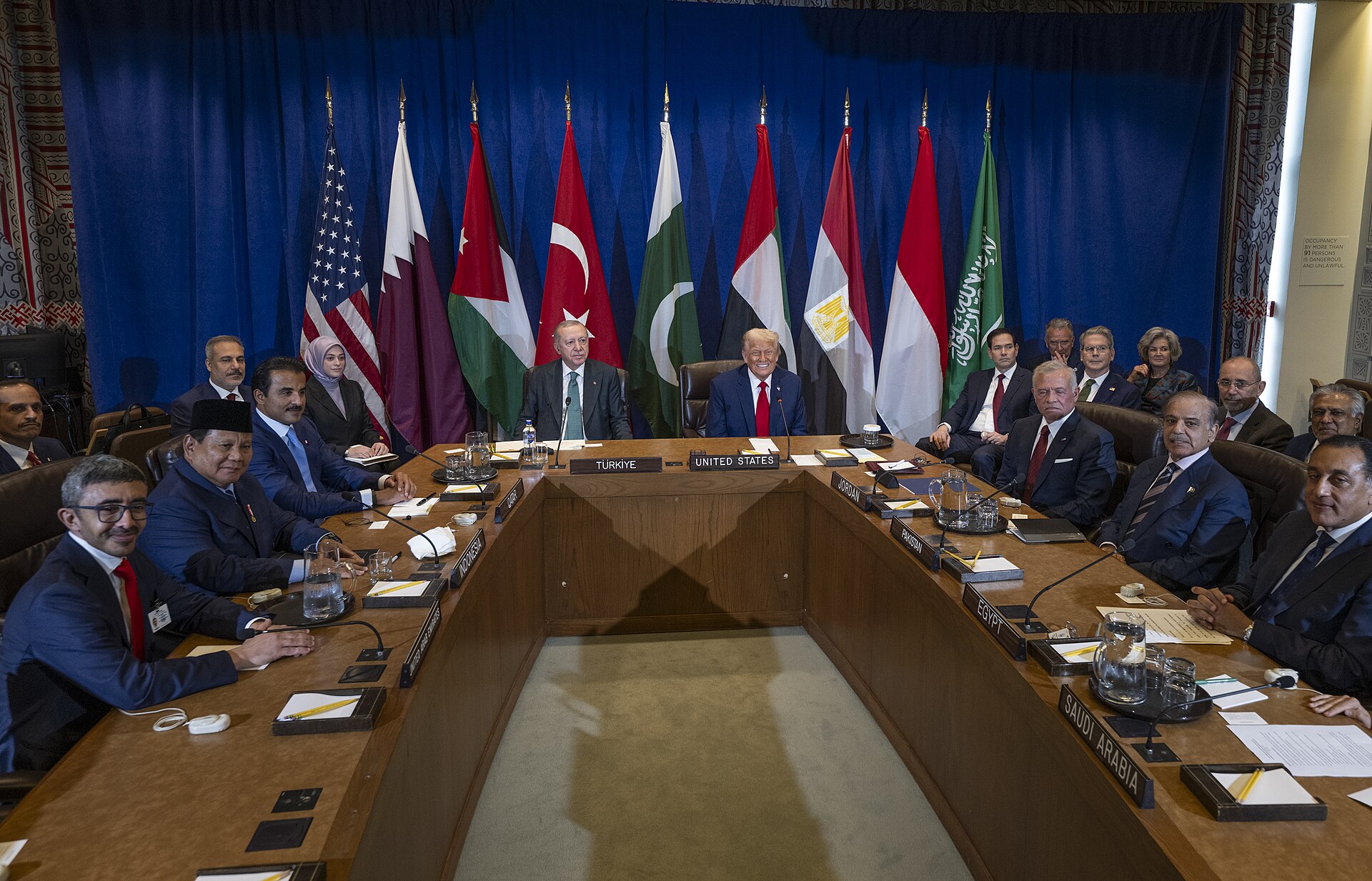
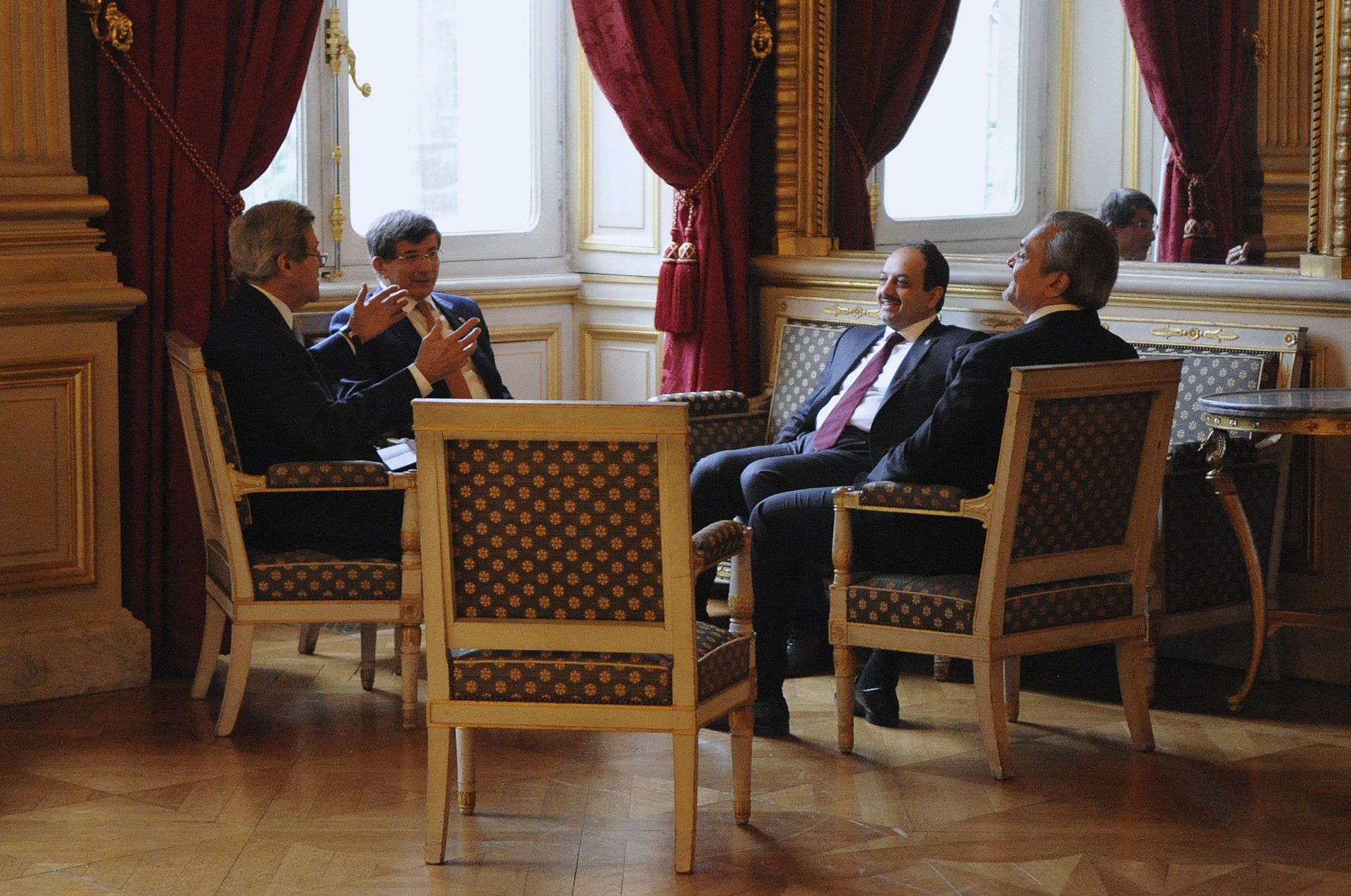
The diplomatic cadence has been fast. Turkey, Pakistan, Saudi Arabia, and Egypt’s foreign ministers met in Riyadh on March 19 in a session explicitly framed around “combining their capabilities within a joint security framework,” according to the Al Jazeera Centre for Studies and the Middle East Council on Global Affairs. Three more ministerial meetings followed in quick succession — the fourth, in Cairo on June 21, made the format look less like a one-off and more like a standing consultation mechanism. The International Institute for Strategic Studies characterized the grouping in May as “a new Middle Eastern quadrilateral,” an analytical description that stopped short of evaluating its deterrence capacity.
The missing member is the UAE. Abu Dhabi’s departure from OPEC and the broader fracture with Riyadh over the post-war order have reshaped GCC dynamics so thoroughly that the emerging axis reads as a replacement for a collective defense architecture that existed on paper until the day it was tested. On June 28, the GCC’s 167th Ministerial Council invoked collective defense for the first time in its forty-five-year history. Not one soldier moved.
The Middle East briefing 3,000+ readers start their day with.
One email. Every weekday morning. Free.
The bloc has no joint command, no integrated force structure, no mutual defense clause ratified by all four parliaments. What it has is a rhythm — four meetings in ninety days — and a Saudi crown prince who needs to demonstrate, particularly to Washington, that Riyadh has options beyond the bilateral relationship that is rapidly thinning.
What Does the Saudi-Pakistan Defense Agreement Actually Guarantee?
The Strategic Mutual Defense Agreement signed at Al-Yamamah Palace on September 17, 2025 — by Crown Prince Mohammed bin Salman and Prime Minister Shehbaz Sharif — commits both countries to treat aggression against one as aggression against both. The text does not mention nuclear weapons. Everything useful about the agreement lives in that omission.
Pakistani Defense Minister Khawaja Mohammad Asif told GeoTV the following day that “Pakistan’s nuclear weapons capabilities will be made available to Saudi Arabia under the agreement.” He partially retracted within hours. The Arms Control Association called it “the first time a state with nuclear weapons outside the NPT has made an extended nuclear deterrence commitment to another state.” A Saudi official, speaking to reporters at the signing ceremony, used a formulation designed to preserve ambiguity on every dimension: “This is a comprehensive defensive agreement that encompasses all military means.”
The ambiguity is the product, not a deficiency. Pakistan’s nuclear doctrine is explicitly India-focused — no publicly documented scenario envisions nuclear use against Iran or in defense of a Gulf state. The Asia-Pacific Leadership Network’s 2025 assessment of the SMDA characterized the Pakistani guarantee as “paper promises.” Brookings, in its analysis of the pact that same year, concluded that the signal to Tehran and Washington — the suggestion that escalation against Saudi Arabia now carries a nuclear dimension, however theoretical — mattered more than any actual military capability the agreement could deliver.
Pakistan’s track record on Saudi security requests makes the “paper promises” characterization harder to dismiss. In April 2015, a joint session of parliament voted unanimously for neutrality when Riyadh requested aircraft, naval vessels, and ground troops for the Yemen campaign. What followed was not neutrality: Pakistan’s navy deployed in support of the Saudi naval blockade, and an additional 1,000 troops arrived in February 2018, supplementing the 1,600 already present, according to The Diplomat. Islamabad has maintained 1,500 to 2,000 troops in Saudi Arabia continuously since the 1970s, regardless of what any parliamentary vote declared.
The pattern is consistent — symbolic distance, quiet operational support — and it maps onto what the SMDA is likely to produce. Not a Pakistani nuclear umbrella over Riyadh. Not a brigade deploying to the Eastern Province. Instead, a standing ambiguity that forces Iranian strategic planners to account for a scenario they assess as improbable but cannot dismiss as impossible.
Can This Axis Defend Saudi Airspace?
After approximately forty days of Iranian strikes, Saudi Arabia, the UAE, and Qatar were “pushed into a high-tempo defensive posture,” according to the Arab Gulf States Institute’s 2026 assessment “Beyond the U.S. Umbrella.” The AGSI framing was specific: what the Gulf faces is “not a political crisis of alliance with Washington but a material crisis of availability.” The question for the new axis is whether any of its four members can address it.
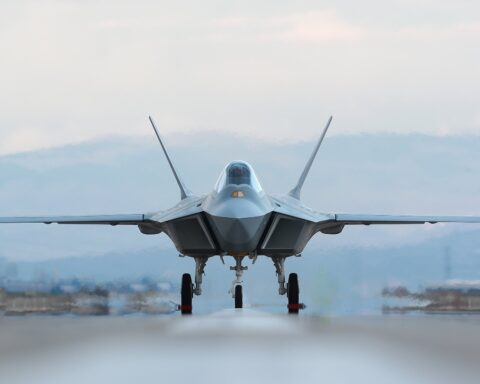
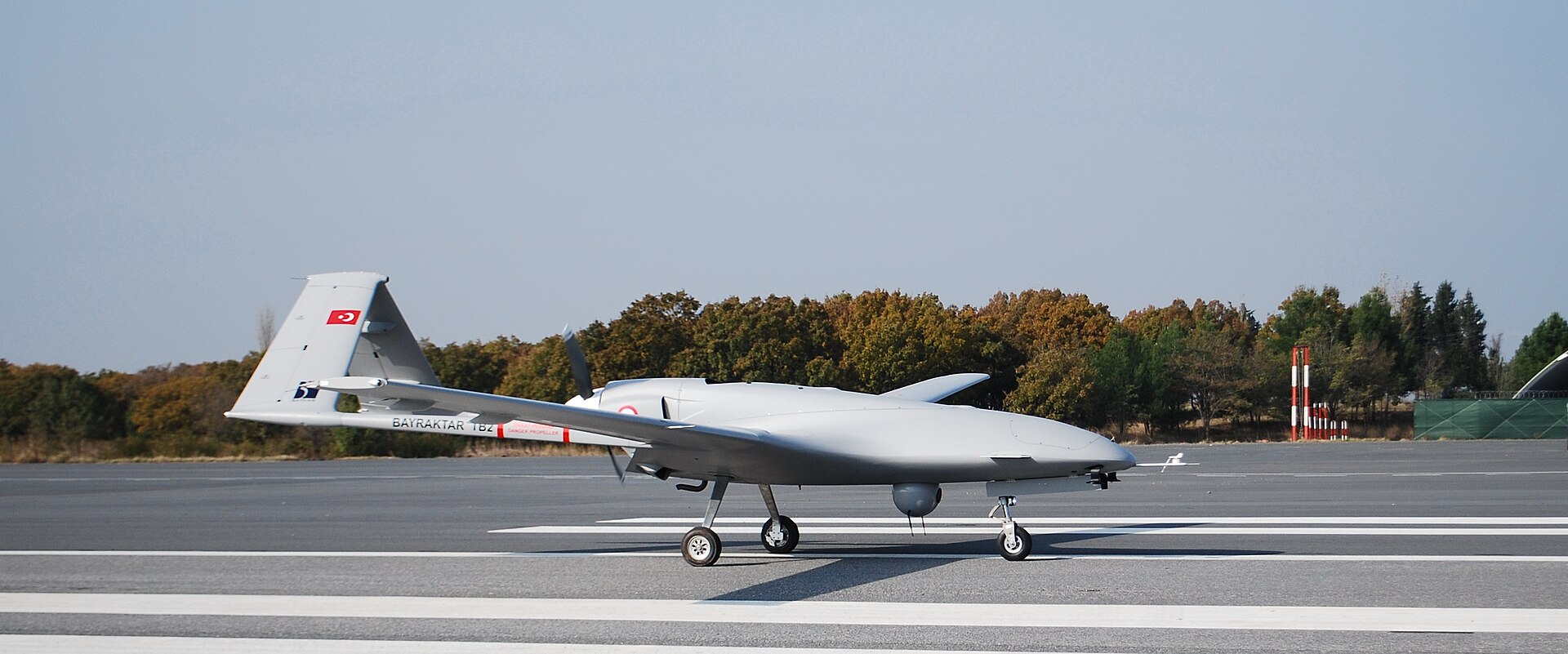
Turkey offers the most advanced defense industrial base of the four. The Baykar Akinci armed UCAV deal, signed in July 2023 at approximately $3 billion, was at the time “the biggest defence and aviation export contract in the history of the Turkish Republic,” according to Breaking Defense, and Saudi operators graduated from Akinci training in October 2025. President Erdogan’s February 3, 2026 visit to Riyadh produced additional defense industry agreements including a Saudi joint investment in the KAAN stealth fighter program. “There is a joint investment with Saudi Arabia in this,” Erdogan said, “and we can implement this partnership at any moment.” SAMI, the Saudi Arabian Military Industries holding company, signed technology-transfer agreements with three Turkish defense firms for land systems the same year.
The constraint is interoperability. NATO Secretary General Stoltenberg said in 2019 that the S-400 system Turkey purchased from Russia “is not possible to integrate” into NATO’s integrated air and missile defense architecture. When Iran launched ballistic missiles in March 2026, Turkey did not activate its S-400 batteries — it used other interceptors. US officials told reporters in December 2025 that Ankara was moving toward “getting rid of the Russian system altogether.” Until it does, Turkish air defense data cannot feed into the American-origin systems Saudi Arabia depends on — and those American systems are leaving with the troops.
Egypt fields the largest conventional force among the four — 438,500 active troops, the tenth-largest military globally according to GlobalMilitary.net — and operates approximately forty Dassault Rafales, with the full order of fifty-five aircraft in F3R standard completing delivery in 2026. That makes Egypt the largest Rafale operator outside France. But Egyptian doctrine is explicitly non-expeditionary. A senior Egyptian military official told Manara Magazine in 2024 that “Egypt does not have military bases abroad and has no intention of establishing any — the air force is its long arm.” The military budget stands at $2.7 billion per year, according to Army Recognition, and roughly half the ground force — some 220,000 troops — is committed to Sinai.
Pakistan’s military is the largest among the four axis members by personnel, but its capabilities are the least transferable to Saudi Arabia’s air defense requirements. The Pakistani troops already stationed in the kingdom perform advisory and training functions, not integrated air defense operations. Pakistan’s air defense inventory is built around Chinese-origin systems designed for South Asian threat scenarios, and its nuclear arsenal — the SMDA’s unstated centerpiece — cannot be forward-deployed to the Gulf without triggering an Indian strategic reassessment that neither Islamabad nor Riyadh wants. The Bulletin of Atomic Scientists observed that the SMDA creates “extended nuclear deterrence” in theory. In practice, Pakistan’s entire strategic posture faces east.
Qatar’s contribution is financial and logistical rather than kinetic. The Qatar Emiri Air Force operates Rafales, F-15QA Ababils, and Eurofighter Typhoons — a force that scored Qatar’s first-ever aerial kills in March 2026 — but the entire Qatari military comprises 16,500 active personnel. Al Udeid Air Base hosts US CENTCOM’s forward headquarters. Qatar hosts the base; it does not command what operates from it. The $15.4 billion defense budget, according to GlobalMilitary.net, funds procurement at scale but cannot purchase the manpower or institutional depth that deterrence requires.
Where the Hardware Is Actually Coming From
The AGSI’s 2026 assessment identified the emerging supplementary suppliers for Gulf air defense diversification: South Korean lower-cost interceptors and Ukrainian counter-UAS systems. Neither South Korea nor Ukraine belongs to the political axis being assembled in Cairo and Riyadh. The countries attending the quarterly foreign minister meetings and the countries manufacturing the interceptors Saudi Arabia needs are two separate lists.
| Requirement | Available from Axis Members | Emerging Supplier |
|---|---|---|
| Medium-range interceptors | None — no axis member manufactures or exports interceptors | South Korea (Cheongung / KM-SAM) |
| Counter-UAS / counter-drone systems | Turkey produces offensive UCAVs, not defensive counter-UAS | Ukraine (EW systems, kinetic micro-interceptors) |
| Armed reconnaissance UCAVs | Turkey (Baykar Akinci — sole operational capability overlap) | Turkey |
| Extended nuclear deterrence | Pakistan (SMDA — doctrine India-focused; “paper promises,” APLN 2025) | No supplier |
South Korea’s Cheongung system — a medium-range surface-to-air missile that entered service with the Republic of Korea Armed Forces in 2015 — has been exported to Iraq and the UAE, and its manufacturer LIG Nex1 has production capacity unconstrained by the NATO supply chain bottlenecks that have throttled PAC-3 replenishment. Ukraine’s counter-UAS technology carries a different competitive advantage: two years of continuous high-intensity drone warfare have produced operational refinements and iterative design improvements that no peacetime test range can replicate. Saudi Arabia’s $867 million Hanwha Cheongung-II contract — the largest Korean defense export to the Gulf — is analyzed in detail in what South Korea’s Cheongung-II actually buys Riyadh — and what it doesn’t.
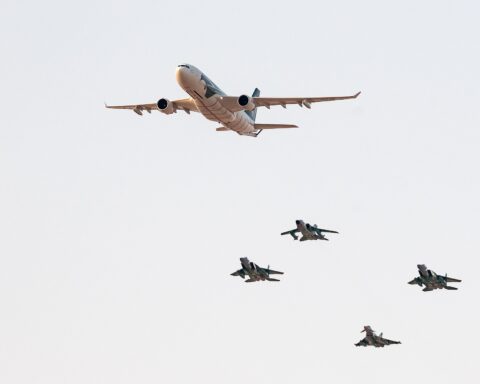
The gap is structural, not accidental. Turkey’s defense industry produces drones and armored vehicles — not the air defense interceptors that forty days of Iranian missile strikes depleted. Pakistan manufactures the JF-17 fighter under Chinese co-production but has never exported an integrated air defense system. Egypt operates foreign-supplied air defense batteries; it does not manufacture them. Qatar purchases at a rate that makes it one of the world’s largest per-capita defense spenders, but it produces nothing domestically. The Western stopgaps have been modest too: in September, Britain committed one RAF Voyager tanker to refuel Saudi jets for a matter of weeks, on defensive missions only.
Foreign Policy’s July 1 coverage framed the axis as a security formation. The AGSI, writing the same month, identified entirely different countries as the ones that would actually fill the defense gap.
The Baghdad Pact Walked This Path Before
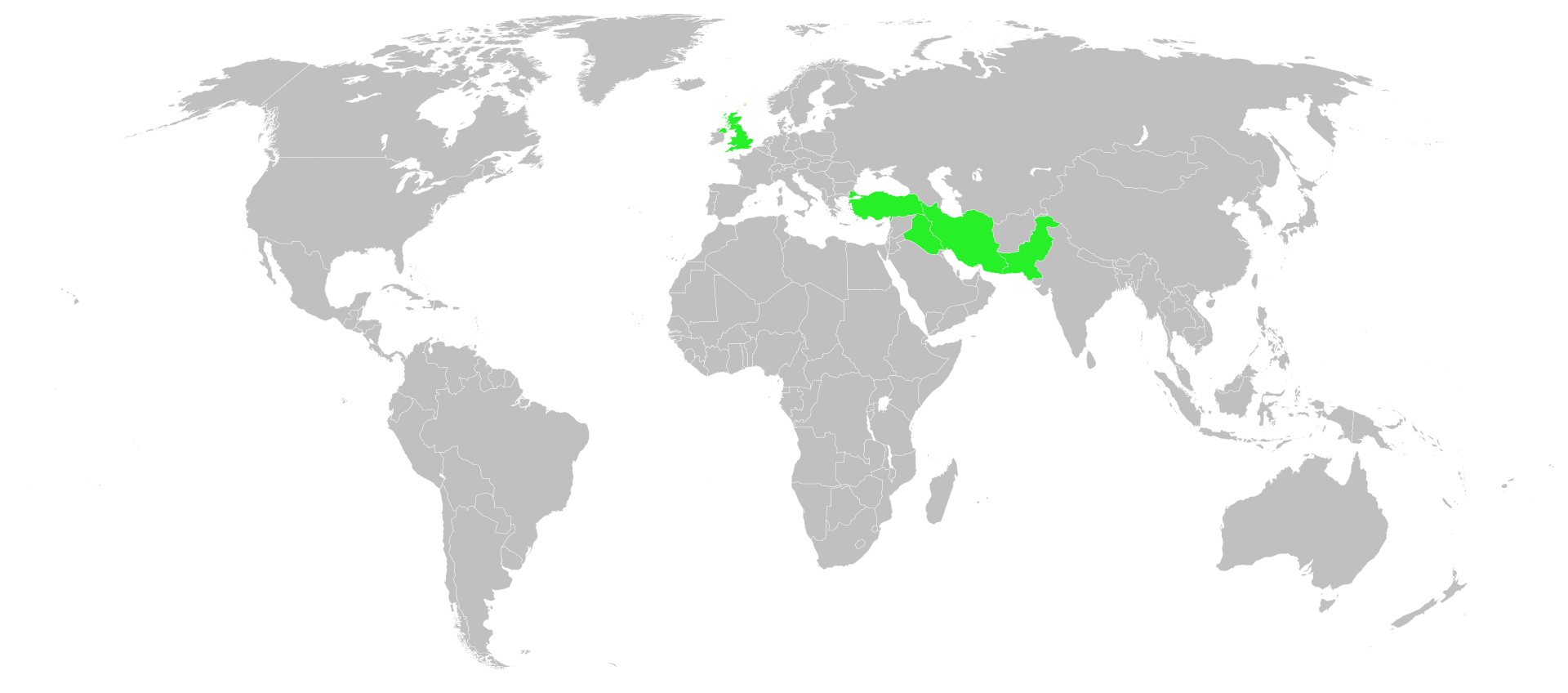
Turkey and Pakistan were founding members of the Baghdad Pact in 1955, alongside Iraq, the United Kingdom, and Iran. The alliance collapsed four years later when Iraq withdrew following its 1958 revolution — a reminder that multilateral security arrangements in the Middle East tend to survive exactly as long as the domestic politics of their weakest member permit. Two of the four states in the current axis have a documented structural tendency toward multilateral hedging rather than binding defense commitments.
The parallel extends beyond Turkey and Pakistan. The Baghdad Pact failed because it depended on members whose primary security concerns lay elsewhere — Iraq with its domestic instability, Pakistan with India, Iran with its own impending revolution. The current axis faces an analogous structural tension: Turkey’s primary security focus remains Syria, the Kurdish question, and the Eastern Mediterranean; Pakistan’s is India and the Afghan border; Egypt’s is Sinai, Libya, and the Nile water dispute with Ethiopia. Saudi Arabia’s Iran crisis is, for each partner, a secondary strategic concern competing for attention and resources with a primary one closer to home.
Chatham House’s January 2026 assessment was direct: “Talk of a Turkish military alliance with Saudi Arabia and Pakistan reflects Ankara’s opportunistic ‘hedging’ strategy.” Turkey’s participation is driven by defense export revenue, regional influence, and a bargaining position with Washington on F-35 reinstatement — not by a binding commitment to Saudi security. Erdogan’s KAAN investment language — “at any moment” — reads less like a delivery timeline and more like an expression of optionality.
The Saudi-Egypt financial relationship complicates the security logic from a different direction. Combined Gulf financial support to Egypt since 2011 totals between $92 billion and $114 billion, according to Chatham House estimates, including a $22 billion pledge in April 2022 alone. The Stimson Center described the relationship in 2025 as a “new strategic naval axis” centered on Red Sea and Bab el-Mandeb security — a framing that positions Egypt as a security provider. Set Egypt’s military budget against $92 billion in Gulf support over fifteen years and the dependency runs in the opposite direction from what the Stimson Center’s framing suggests.
What Does Tehran Make of the New Axis?
Tehran does not treat the axis as a single bloc. Iran manages each member separately — Turkey through gas pipeline economics and the Syrian buffer zone, Pakistan through the IP gas pipeline and Balochistan border security, Egypt through minimal direct engagement, Qatar through the Doha channel that has been mediating the MOU. Iran’s first use of the MOU violation-communication channel established during the Doha round was to flag a US breach of Clause 1 regarding Lebanon — not to address any Saudi or Pakistani action. The limits of that tolerance became visible on July 4, when Pakistan’s UN Ambassador simultaneously condemned Iran’s strikes on Bahrain and Kuwait at a Security Council emergency session — demonstrating the exact pressure points in Islamabad’s four-way balancing act.
That dynamic — Iran managing Pakistan separately from the Doha track — is exactly why Riyadh routed its message through Islamabad after the second Doha round ended. Saudi FM Faisal called Pakistan’s FM Dar the same day, using the Pakistan channel to reach a negotiating table Saudi Arabia cannot formally attend. That call also made Islamabad the sole source of Saudi situational awareness on the Doha round — a dynamic analysed in detail in the context of Sharif’s concurrent flight to Tehran.
Iranian state media — Tasnim and Press TV — have framed the emerging alignment as a “Sunni bloc,” a sectarian label engineered to do specific domestic work in each member state. In Pakistan, where Shia Muslims constitute an estimated 15 to 20 percent of the population, the framing pressures Islamabad to distance itself from any overtly anti-Iran posture. Tehran’s hold on Pakistan is not only rhetorical: if Islamabad moves too visibly against Iranian interests, Tehran can threaten the Iran-Pakistan gas pipeline, a project Pakistani domestic opinion has long expected to deliver affordable energy and which Iran has used as both incentive and instrument for over a decade.
The sectarian framing targets Egyptian domestic opinion from a different angle. Egypt’s military establishment has historically positioned itself as nonsectarian and pan-Arab, and Cairo’s visible participation in an axis Tehran labels as a Sunni bloc risks complicating Egyptian diplomatic relationships with Baghdad and Beirut — both capitals with Shia political constituencies Cairo cannot afford to alienate. Tehran’s approach is to raise the domestic cost of participation for each axis member without confronting the formation directly — cheaper and more durable than treating it as a military threat.
The nuclear dimension of the SMDA draws Tehran’s attention but apparently not its alarm. Pakistan’s nuclear arsenal was designed, funded, tested, and deployed against a single adversary: India. The Carnegie Endowment and CSIS Nuclear Network have documented the history of Saudi financial backing for Pakistan’s nuclear program — from the development phase of the 1970s and 1980s through post-1998 oil subsidies provided in anticipation of international sanctions — but that history produced a relationship, not a deployment doctrine. No Pakistani war game, strategic review, or publicly available planning document addresses nuclear use outside the South Asian theater.
Chatham House assessed in May 2026 that Gulf states “should no longer rely on America for security guarantees” — and that China would not fill the vacancy. The judgment applies equally to Beijing’s growing commercial and diplomatic relationship with Riyadh and to the freedom-of-navigation language Wang Yi gave Faisal but denied Tehran during their July 1-2 bilateral in Beijing. China sells diplomatic positioning, not security guarantees. So, in a different register, does the new axis.
Why Build an Alliance That Cannot Deter?
Because the alternatives have already failed. The American military umbrella is contracting — troops withdrawing, PAC-3 interceptors depleted to 86 percent of pre-war stocks, IESP contractors departing with the units they support. The GCC’s collective defense mechanism produced its first invocation and zero deployments. The UAE is pursuing a foreign policy that no longer aligns with Saudi priorities. China provides diplomatic cover and trade volume but will not station forces or sign a mutual defense treaty. That is the menu. The axis with Ankara, Islamabad, Cairo, and Doha is what Riyadh can order from it. The Houthi axis has already moved to exploit that gap: on July 3, Saree threatened a comprehensive strike against Saudi airports and Aramco infrastructure — a threat calibrated to the same PAC-3 depletion that Riyadh’s new security partnerships cannot address.
The signal to Washington is the most calculated component. The SMDA’s nuclear ambiguity arrived in September 2025, five months before Iran’s first strikes, at a moment when Congressional opposition to Saudi arms sales remained entrenched. The formation of the quadrilateral in Riyadh on March 19, weeks after hostilities began, added three more names to the implicit message. Saudi Arabia was not requesting Washington’s approval to build new security relationships — it was informing Washington that the relationships were already under construction.
The fiscal environment makes the construction harder. Brent crude traded at $70.65 intraday on July 2, according to Kitco and CNBC — back to pre-war levels for the first time since February, and well below the $80 to $85 per barrel fiscal breakeven estimated by the IMF and Oxford Economics. Bloomberg Economics calculates Saudi Arabia requires $96 per barrel. The kingdom’s Q1 2026 deficit hit $33.5 billion against a full-year target of $44 billion — a pace the fiscal compression already visible across Saudi commercial operations cannot sustain. The July Arab Light Official Selling Price fell to a $9.50 premium over Oman/Dubai, down from $19.50 in May — a $10 per barrel collapse in two months.
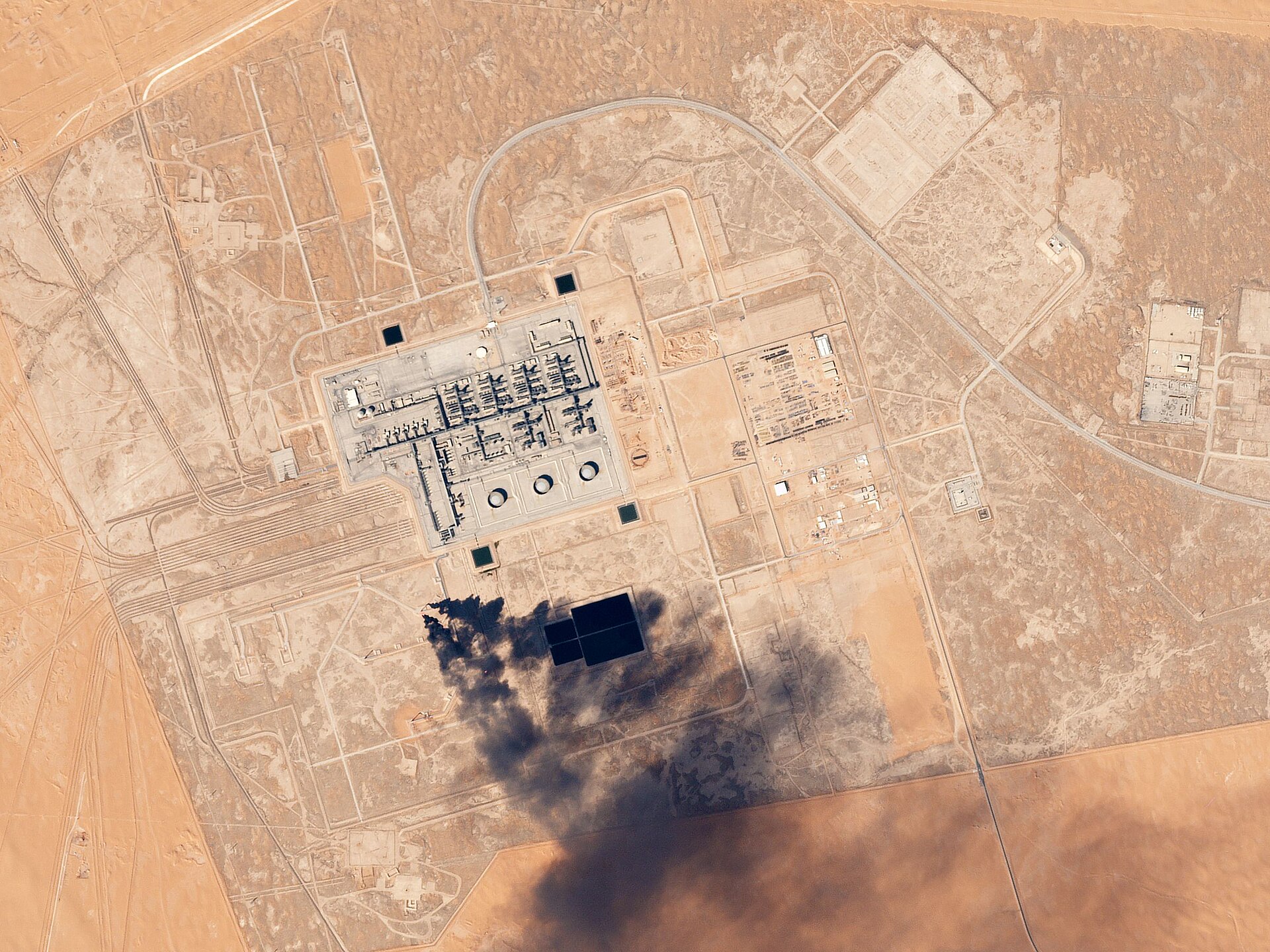
Riyadh is building an alliance that will not stop Iranian missiles, with countries whose structural incentives favor hedging over commitment, at a moment when the fiscal margin for security investment is shrinking. The kingdom’s fifth consecutive OPEC+ output hike of 188,000 barrels per day is expected Sunday. The Akinci UCAVs are in production. The South Korean interceptors and Ukrainian counter-drone systems — the hardware that will actually address Saudi Arabia’s air defense gap — are being procured through separate channels, negotiated by separate teams, and none of those officials attended the Cairo meeting on June 21. The Quintet’s funeral delegations on July 3 reflected the same hedging calculus: Turkey sent a vice president, Pakistan a prime minister, and Saudi Arabia sent its deputy foreign minister rather than FM Faisal — the rank signal Riyadh sent to Tehran is examined here.
Frequently Asked Questions
Has Saudi Arabia sought nuclear weapons through Pakistan before?
Saudi Arabia provided financial backing for Pakistan’s nuclear weapons program throughout the 1970s and 1980s, with an implicit understanding — documented by the Carnegie Endowment and CSIS Nuclear Network — that Pakistani missiles would provide a nuclear umbrella in return. After Pakistan’s May 1998 nuclear tests triggered international sanctions, Riyadh reportedly provided oil subsidies to cushion the economic fallout. In October 2003, Crown Prince Abdullah visited Islamabad in what multiple nonproliferation researchers have described as an arrangement allowing Saudi Arabia to obtain nuclear technology or weapons if existentially threatened. No transfer has ever been publicly documented, and the 2025 SMDA leaves the nuclear question in the same deliberate ambiguity.
How does Qatar’s defense spending compare to its military size?
Qatar’s $15.4 billion annual defense budget produces the highest per-capita military expenditure of any country in the emerging axis, despite fielding only 16,500 active personnel — less than 4 percent of Egypt’s 438,500. The disparity reflects a procurement-intensive model focused on acquiring advanced platforms from multiple Western suppliers rather than building force-projection capacity. Qatar has never deployed military forces unilaterally outside its borders and relies on the CENTCOM presence at Al Udeid for its de facto external security guarantee — an arrangement that gives Doha hosting influence but not command authority.
What is Turkey’s KAAN fighter and what is Saudi Arabia’s role?
The KAAN, formerly designated TF-X, is a fifth-generation stealth fighter under development by Turkish Aerospace Industries that completed its maiden flight in February 2023. President Erdogan confirmed during his February 2026 Riyadh visit that Saudi Arabia’s SAMI has a joint investment commitment in the program, though financial terms have not been disclosed. The KAAN is not expected to enter serial production before the early 2030s, and its initial variants will rely on General Electric F110 engines — an American component that subjects the entire program to US export control regulations and congressional notification requirements.
Could China replace the United States as Saudi Arabia’s security guarantor?
Chatham House assessed in May 2026 that “China will not displace the US as regional security guarantor, but it could play an important role building a new regional order.” The PLA Navy’s only overseas facility is a logistics support base in Djibouti, approximately 2,000 kilometers from the Strait of Hormuz. Beijing maintains no mutual defense treaty with any Gulf state and has focused its regional engagement on energy purchases, infrastructure financing, and selective diplomatic mediation — including the March 2023 Saudi-Iran normalization agreement. China’s July 2026 bilateral with Saudi Foreign Minister Faisal in Beijing produced freedom-of-navigation language on Hormuz but no defense commitment. On July 4, Saudi Arabia’s coalition translated that same logic into an explicit targeting declaration against Hodeidah, Ras Isa, and Sanaa Airport — signaling through Yemen while the MOU holds Iran off-limits. See: Saudi Arabia Threatened Hodeidah Because It Cannot Threaten Iran. The same logic that forces Riyadh to signal through Yemen also shapes Saudi Arabia’s plan to host a Gulf-Iran reconciliation summit — a format with no Emirati partner and no Iranian counterpart authorized to commit.