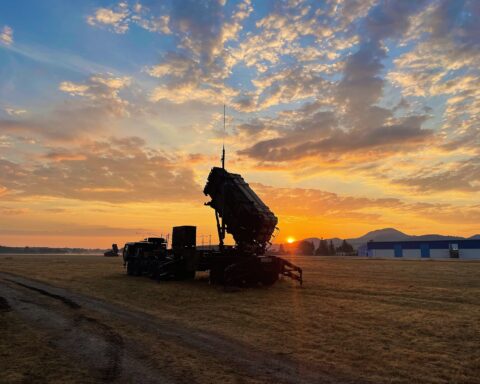
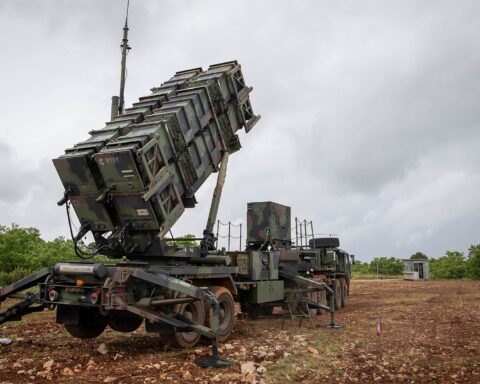
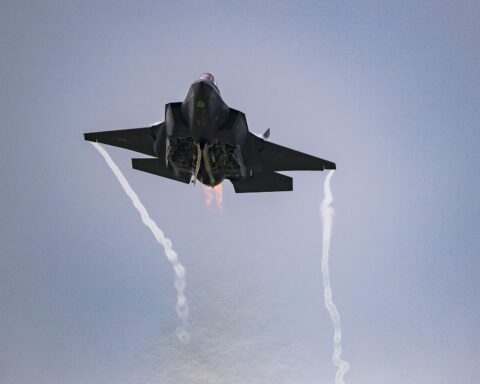
RIYADH — Every GCC country operating Patriot air defense — Saudi Arabia, Qatar, the UAE, and Bahrain — has reached near-zero interceptor inventory simultaneously on Day 100 of the Iran war, creating the first synchronized belt failure since Operation Epic Fury began on February 28. The concurrent depletion is qualitatively more dangerous than any individual country’s shortage because each national collapse pushes its defensive burden onto Saudi Arabia’s remaining 80 to 150 PAC-3 MSE rounds, accelerating the depletion of the belt’s last functional reserve through gap-filling rather than direct attrition.
Saudi Arabia alone has expended roughly 2,650 to 2,720 PAC-3 MSE rounds — 95 to 97 percent of its pre-war inventory — with Qatar, the UAE, and Bahrain adding hundreds more, primarily PAC-3 MSE and GEM-T, according to The Defense News. Lockheed Martin’s only production facility for the PAC-3 MSE cannot replace them in any timeframe relevant to the ongoing conflict. Saudi Arabia’s surviving rounds, spread across 16 batteries and 108 launchers, constitute the overwhelming majority of what the belt has left.
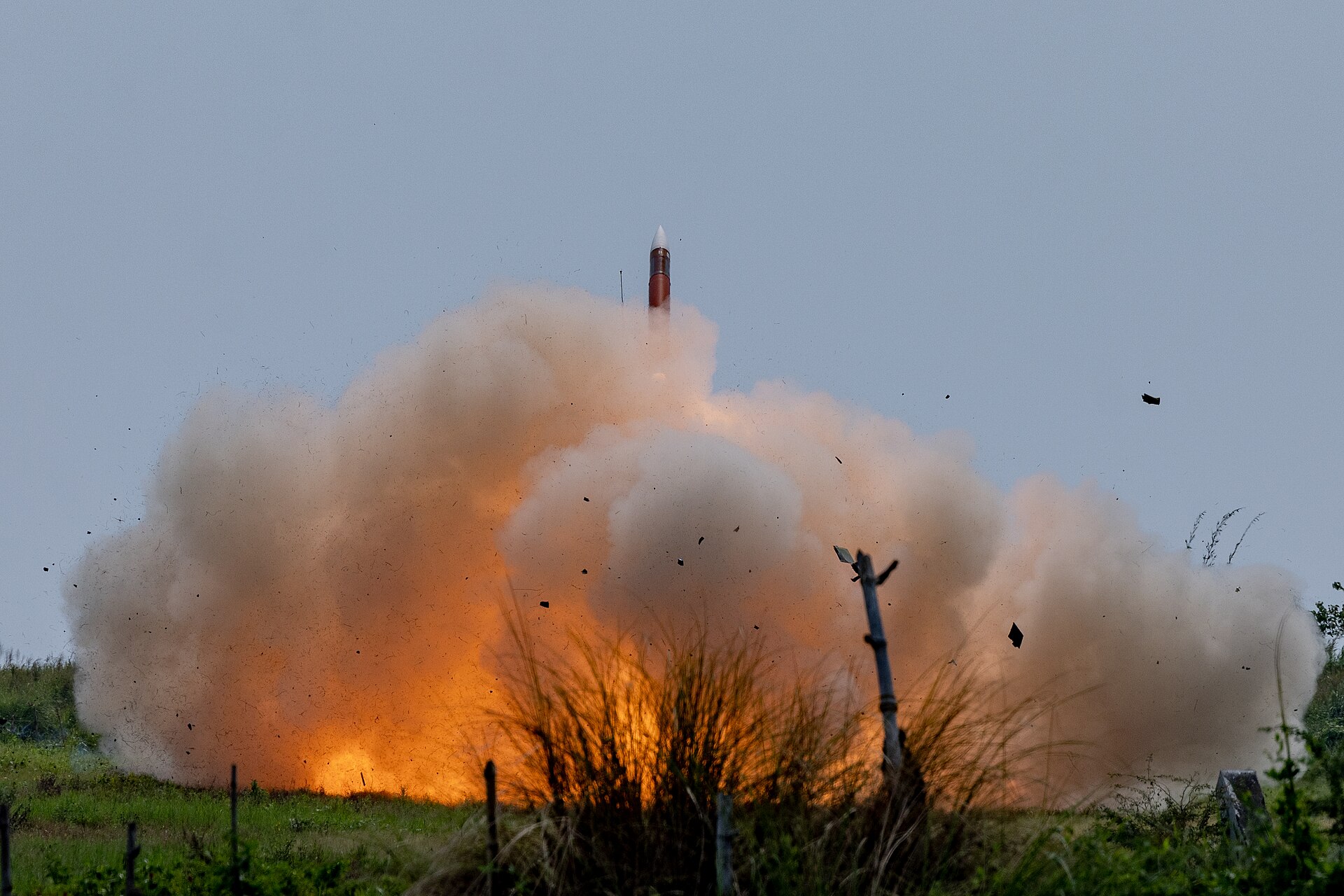
Table of Contents
- The Arithmetic of Synchronized Failure
- How Did Four Countries Run Out at the Same Time?
- Why Is Partial Belt Collapse More Dangerous Than Uniform Depletion?
- What Can Saudi Arabia’s Remaining Interceptors Actually Cover?
- The Belt Went Blind Before It Went Empty
- Who Received Emergency Waivers and Who Did Not?
- The Camden Bottleneck
- The IRGC Stopped Draining the Belt and Started Routing Through It
- Frequently Asked Questions
The Arithmetic of Synchronized Failure
In the first four days of Operation Epic Fury, US and GCC Patriot batteries fired 943 interceptors — equivalent to 18 months of output from Lockheed Martin’s Camden, Arkansas facility, the only production line in the world for the PAC-3 MSE. No conflict since the 1973 Yom Kippur War has consumed air defense ammunition at this rate. More than 5,000 total munitions were exchanged in the first 96 hours, according to FPRI.
By the end of March, the belt had absorbed at least 1,372 missile attacks and 4,415 drone attacks across the four Patriot-operating states, according to FPRI’s cumulative tally. The UAE took the heaviest single-country volume: approximately 378 ballistic missiles, 15 cruise missiles, and 1,835 drones. Qatar received 203 missiles and 87 drones in the first 18 days. Bahrain, with the belt’s smallest pre-war magazine of roughly 60 PAC-3 MSE rounds, faced repeated strikes on NSA Bahrain — home to 9,000 US naval personnel operating under a 1992 bilateral SOFA.
| Country | Pre-War PAC-3 MSE | Day 100 Estimate | Depletion | Emergency Waiver |
|---|---|---|---|---|
| Saudi Arabia | ~2,800 | ~80–150 | 95–97% | None |
| Qatar | Not disclosed | Near-zero | >90% | $4.01B (500 rounds, May 2026) |
| UAE | Not disclosed | Near-zero | >90% | Separate emergency approvals |
| Bahrain | ~60 | ~8 | ~87% | Excluded from $8.6B waiver |
Sources: Saudi Arabia and Bahrain figures from HOS tracking and FR Doc 2026-10920. Qatar estimate from Bloomberg, March 2026; Qatar denied and announced review of legal measures. UAE estimate from Breaking Defense, March 2026; UAE stopped sharing differentiated intercept data in mid-March.
Each country’s shortage has been analyzed as a discrete national crisis. The Carnegie Endowment argued in March that “only collective action among the GCC states is likely to get them out of this dilemma” — a prescription that assumed the four countries still had something left to pool.
The Middle East briefing 3,000+ readers start their day with.
One email. Every weekday morning. Free.
How Did Four Countries Run Out at the Same Time?
The IRGC distributed strikes across all four Patriot-operating states simultaneously rather than concentrating fire on one country at a time. By saturating Qatar, the UAE, Bahrain, and Saudi Arabia concurrently from February 28 onward, Iran prevented any single country from conserving interceptors to serve as a belt-wide reserve — ensuring synchronized depletion rather than sequential exhaustion.
The distribution was not proportional to country size or strategic value — it was calibrated to the interceptor arithmetic of each national stockpile.
Qatar’s depletion became public first. Bloomberg reported in March that the country had approximately four days of Patriot capacity remaining at its current burn rate. The Qatar International Media Office called the estimates “deeply irresponsible” and announced it was reviewing “all appropriate options, including legal measures.” Bloomberg did not retract.
The UAE’s situation emerged differently — through silence. After absorbing the war’s heaviest single-country volume, the UAE stopped sharing differentiated intercept data with media by mid-March. Breaking Defense, which had been tracking the UAE’s “outsized share” of incoming fire, lost access to the granular country-level figures it had been publishing. The IISS noted in March that the UAE remained “the only GCC country indigenously developing air-defence systems” — a distinction that has not yet translated into operational interceptor production.
Bahrain’s arithmetic was always the most exposed. Sixty PAC-3 MSE rounds constituted one of the smallest Patriot inventories in any US-allied country. Three separate IRGC strikes on NSA Bahrain — at Mina Salman and Juffair — have reduced that number to approximately eight. The White House acknowledged the broader problem on March 5, when an unnamed official told CBS News that Washington had told Gulf allies it was “creating a task force to get them new supplies, but it wasn’t happening as quickly as they needed.”
Why Is Partial Belt Collapse More Dangerous Than Uniform Depletion?
Partial belt collapse forces surviving batteries to cover defensive geometries they were never positioned to fill, consuming interceptors at higher rates per engagement. When one node fails, neighboring batteries extend into sectors with suboptimal angles and longer intercept flight times — degrading efficiency and magazine life simultaneously while giving the IRGC a choice of approach vectors through the gaps.
The GCC Patriot belt was designed as a series of overlapping national defense zones. Saudi Arabia’s 16 batteries covered Saudi airspace. Qatar’s batteries covered Qatari airspace. Bahrain’s covered Bahrain’s. The overlap at national boundaries provided redundancy — if one battery lost track, an adjacent battery in the neighboring country could engage. That architecture depended on every node carrying a magazine deep enough to sustain its share of the intercept load.
When Bahrain’s magazine reached near-zero, the 25-kilometer King Fahd Causeway connecting Bahrain to Saudi Arabia’s Eastern Province became the boundary between a defended sector and a nearly undefended one. Saudi batteries positioned to cover Dhahran, Dammam, and the Aramco facilities at Ras Tanura are now the nearest capable interceptor units to Bahrain’s airspace. But they are not positioned for that geometry. Engaging targets approaching Manama from the east requires Saudi batteries to fire at extended range and unfavorable angles, consuming more rounds per engagement than they would against threats entering their own sector.
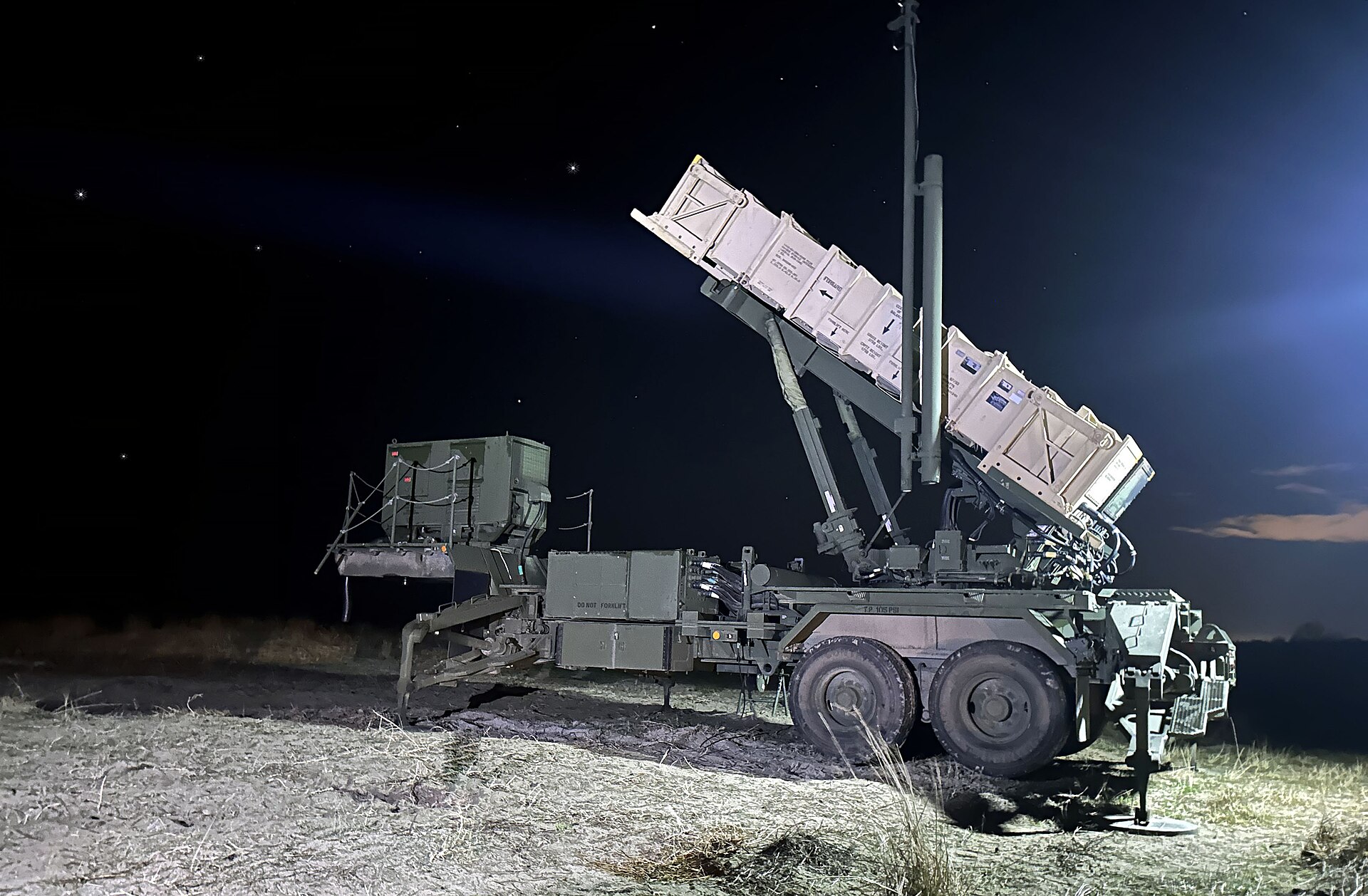
The same dynamic applies along every national boundary in the belt. Each country’s collapse does not remove one country’s air defense in isolation — it degrades the per-round efficiency of every surviving battery near the boundary. A White House official told CBS News in March that Gulf states “now need to be selective about which objects to blow up — and which not to.”
Uniform depletion — all four countries thinning at the same rate toward the same low level — would at least preserve geometric optimality. Every battery would engage only threats in its designed sector, at its designed angles, until its magazine ran out. Partial collapse eliminates that discipline. Saudi batteries covering their own sector plus portions of Bahrain’s and Qatar’s fire more rounds total, at worse ratios, than Saudi batteries covering Saudi Arabia alone. The gap-filling burden does not add linearly. It compounds.
The IRGC does not need to know the precise round count of each battery to exploit this. It needs only to observe which sectors generate intercepts and which have gone silent. A country that stops intercepting — because it has run out or is rationing — becomes a routing corridor. Partial failure gives the IRGC something that uniform depletion would not: a choice of approach vectors into the belt’s interior.
What Can Saudi Arabia’s Remaining Interceptors Actually Cover?
Saudi Arabia retains 80 to 150 PAC-3 MSE — 3 to 5 percent of its pre-war stockpile of 2,800 rounds, distributed across 16 batteries and 108 launchers. Most launchers carry zero or one round. The physical infrastructure is intact, but its magazines are operationally starved and cannot cover the belt’s original defensive geometry.
Before February 28, the Patriot architecture covered the kingdom’s critical nodes: oil processing at Abqaiq and Ras Tanura, military installations at Prince Sultan Air Base and King Abdulaziz Air Base, the capital at Riyadh, and the western-coast cities of Jeddah and Yanbu. Sixteen batteries across a territory roughly one-fifth the size of the continental United States provided layered coverage with enough depth to absorb sustained saturation attacks.
At 80 to 150 rounds, the mathematics force a choice that did not exist at 2,800. A battery with two remaining interceptors can engage exactly two targets before it becomes an empty launcher with a functioning radar — visible to IRGC reconnaissance but unable to defend anything behind it. Saudi commanders must now decide which facilities receive the surviving interceptors and which are left without active coverage. Abqaiq processes roughly 7 million barrels of oil per day. Ras Tanura is the world’s largest offshore oil-loading facility. Prince Sultan Air Base hosts the US combined air operations center.
The gap-filling burden makes the arithmetic worse. Saudi batteries extending coverage into Bahrain’s sector or Qatar’s sector consume rounds at higher rates per engagement — and each round spent covering a neighbor’s airspace is one that cannot defend a Saudi facility. The September 2019 Abqaiq-Khurais drone attack temporarily halved Saudi oil output after a single engagement cycle went uncontested. The belt’s design assumed that Saudi interceptors would defend Saudi territory. On Day 100, they are stretched across geometries that include Bahrain’s airspace, portions of Qatar’s, and the maritime approaches that Bahrain’s batteries were positioned to cover.
The Belt Went Blind Before It Went Empty
The IRGC’s targeting sequence did not begin with the batteries. It began with the sensors. Qatar’s AN/FPS-132 Block 5 UEWR — a $1.1 billion early warning radar installed in 2013, according to Congressional Research Service records, one of only a handful of such systems deployed outside the continental United States — was struck in the war’s opening days. The UAE’s AN/TPY-2 THAAD radar at Al Ruwais was confirmed destroyed via satellite imagery within the first 72 hours, according to CNN and Defence Security Asia.
These were not random targets. The UEWR and the AN/TPY-2 provided the belt’s long-range detection and tracking — identifying incoming ballistic missiles at ranges far beyond what individual Patriot battery radars achieve. Without them, each battery relies on its own AN/MPQ-65 radar: shorter detection range, less reaction time, later and less favorable engagement geometry. Each degraded intercept burns more rounds per target.
The IRGC Aerospace Force declared “missile dominance” after the radar strikes. The claim was premature regarding the batteries themselves, which continued firing for months afterward. It was accurate regarding the sensor architecture that made those batteries efficient. Every interceptor fired after the UEWR and AN/TPY-2 were destroyed was fired under degraded conditions — each round less effective than it would have been with the full early-warning network intact.
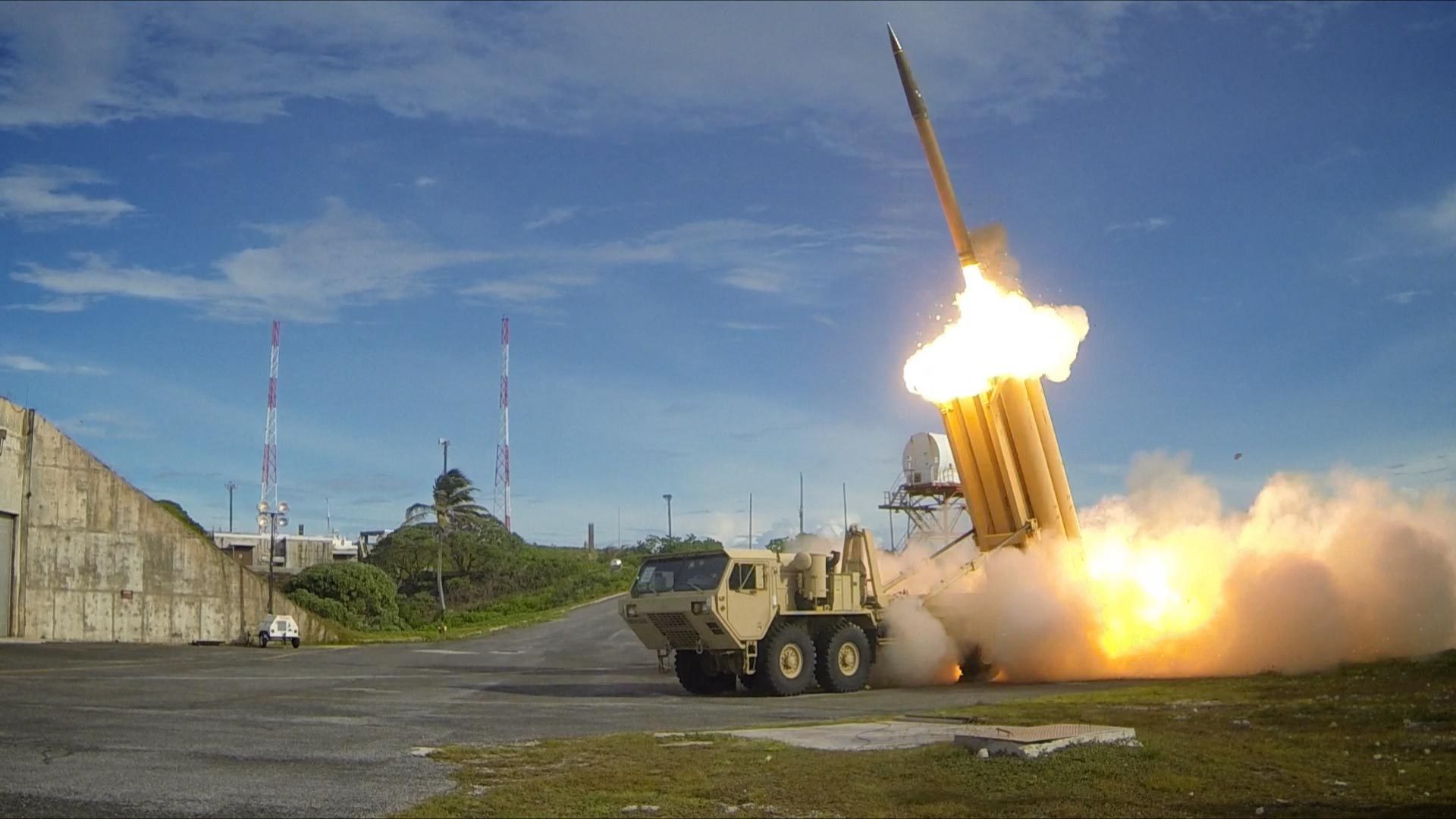
CSIS assessed in April that THAAD interceptors had been “burned through” at rates exceeding 80 percent — up to 290 of a pre-war inventory of 360. But the surviving THAAD rounds in the UAE’s sector are operationally inert without the AN/TPY-2. A THAAD interceptor without its radar is stored ammunition, not a defense capability. An unnamed analyst told National Defense Magazine in March: “The burn rate is too high to maintain success, and the supply chain is weak… each passing day the stockpile numbers are plummeting.”
Who Received Emergency Waivers and Who Did Not?
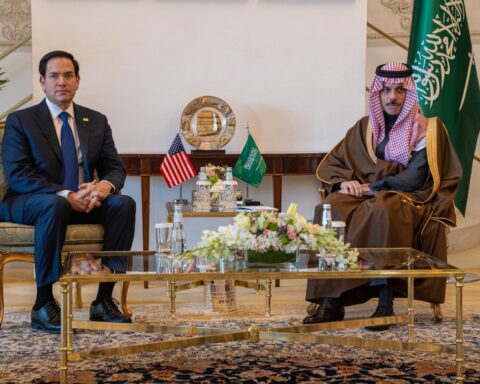
Qatar received a $4.01 billion emergency waiver in May 2026 for 500 Patriot interceptors — 200 GEM-T and 300 PAC-3 MSE — through the State Department, as reported by Army Recognition. Saudi Arabia, which has lost more interceptors in absolute terms than any other GCC state, received no equivalent emergency approval. Bahrain was excluded from Secretary Rubio’s $8.6 billion May 2 emergency arms package. The waiver geography does not track with depletion severity.
Qatar’s 500 rounds — if delivered — would partially restore its magazine but not reconstitute pre-war depth. Delivery remains subject to production constraints at Camden, where the Pentagon’s own FY2027 order for 2,798 PAC-3 MSE rounds at $12.2 billion claims the facility’s entire production ramp through 2030. Qatar’s waiver authorizes a purchase. It does not accelerate the production line.
Saudi Arabia’s resupply moves through standard Foreign Military Sales — the same pipeline as peacetime orders, subject to the same lead times that apply when no war is being fought. The FR Doc 2026-10920 filing on June 1 added 50 PAC-3 MSE to Saudi Arabia’s standard FMS allocation with an 18-month delivery window. FPRI documented in May that every PAC-3 MSE carries a 24-month missile lead time and a separate 30-month lead time for the solid rocket motor — and those clocks start only once an order clears the production queue. Fifty rounds in 18 months for a country burning through interceptors daily.
The broader production economics reinforce the bottleneck. FPRI reported that the April 2026 PAC-3 contract — $4.7 billion total — was 94 percent funded via FMS, meaning production capacity serves US military requirements before any allied order. FPRI assessed that FMS orders sit 6 to 12 months behind US priority in the queue. For Saudi Arabia, that additional delay layers on top of the 24-to-30-month production lead time that begins only after the order reaches the front of the line.
The Camden Bottleneck
Camden currently produces approximately 620 PAC-3 MSE interceptors per year. Replacing Saudi Arabia’s losses alone — with zero rounds allocated to any other customer — would consume more than four years of Camden’s entire output. Adding Qatar’s, the UAE’s, and Bahrain’s expenditures extends that timeline further; Qatar’s and UAE’s pre-war stockpiles were not publicly disclosed, making a precise aggregate impossible.
Lockheed Martin’s stated target is 2,000 rounds per year by 2030. Even at that rate, which depends on a production ramp that has not begun, replacing Saudi Arabia’s losses alone would take approximately 16 months — again assuming exclusive allocation. The global FMS Patriot backlog stands at more than 4,300 rounds, equivalent to seven years of Camden’s current annual production. RUSI assessed in March that “years” would be needed to rebuild interceptor stocks across the Gulf.
“Demand for these systems is at an all-time high and production of many of them remains slow.”
— IISS, “Challenge for the Gulf States: Rearming After the War,” May 2026
| Resupply Metric | Figure | Source |
|---|---|---|
| Camden current annual output | ~620 PAC-3 MSE/year | FPRI, May 2026 |
| Camden 2030 target output | ~2,000 PAC-3 MSE/year | Lockheed Martin |
| Time to replace Saudi losses alone (current rate) | 4+ years | Calculated (Saudi only; Qatar/UAE undisclosed) |
| Time to replace Saudi losses (2030 rate) | ~16 months | Calculated (Saudi only; 2,680 ÷ 2,000) |
| Global FMS Patriot backlog | 4,300+ rounds | FPRI, May 2026 |
| PAC-3 MSE missile lead time | 24 months | FPRI, May 2026 |
| Solid rocket motor lead time | 30 months | FPRI, May 2026 |
| FMS delay behind US priority | 6–12 months | FPRI, May 2026 |
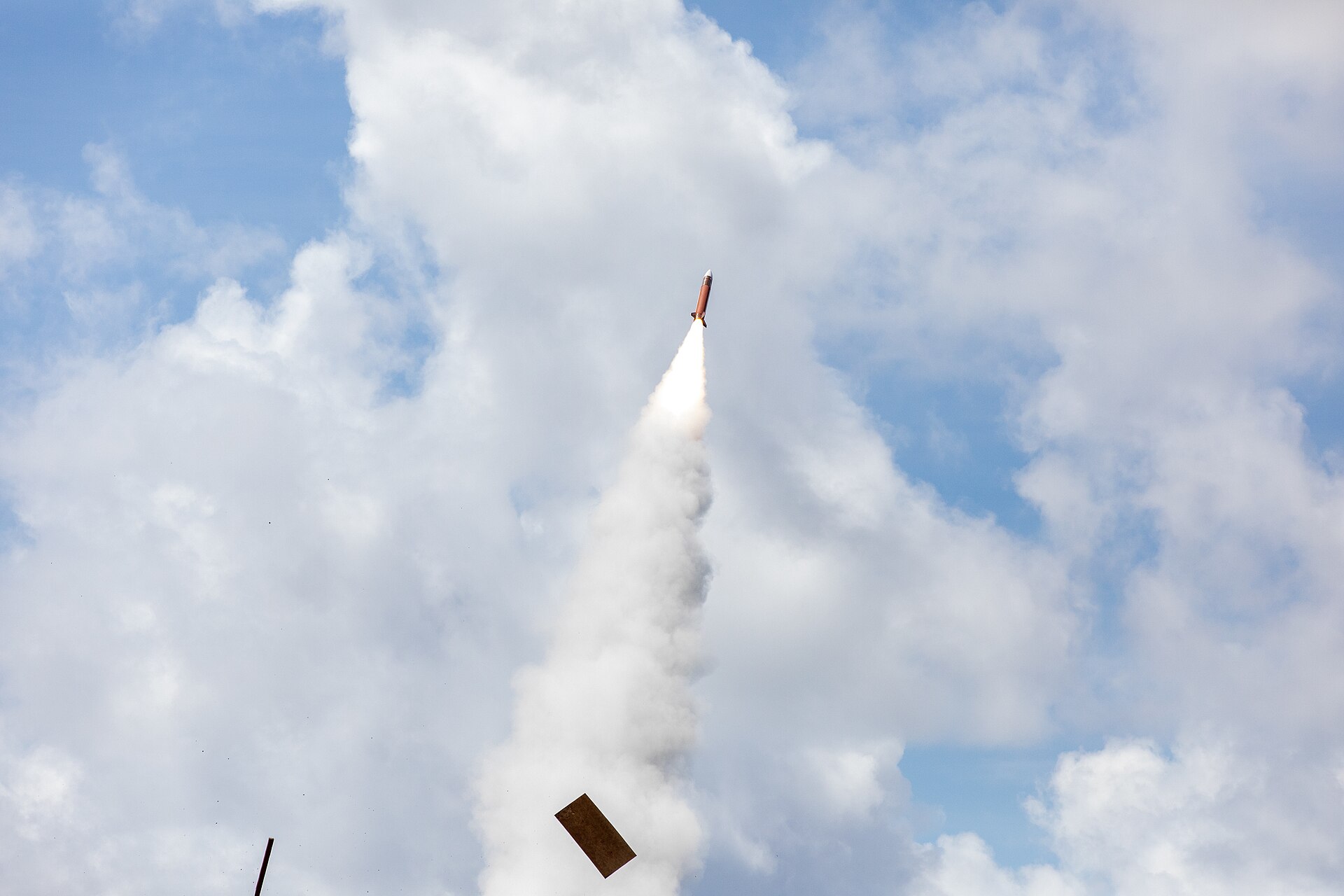
No alternative source exists for the PAC-3 MSE round. Kuwait’s $1.02 billion NASAMS contract with Raytheon — the only completed non-Patriot air defense procurement during the war — addresses cruise missiles and drones, not the ballistic threat that only PAC-3 MSE and THAAD can intercept. Poland refused a US request to transfer existing Patriot batteries to the Gulf. Boeing’s seeker — which FPRI identified as a component with no alternative supplier — adds a separate production constraint that the ramp to 2,000 rounds per year has not yet resolved.
The IRGC Stopped Draining the Belt and Started Routing Through It
On March 10, the IRGC confirmed through AFP a doctrinal shift: it would now fire only “missiles with payloads of 1,000 kg or more.” The announcement was not an escalation for its own sake. It was an adaptation to depleted magazines. When interceptors are abundant, an attacker must overwhelm through sheer volume — hundreds of missiles to exhaust thousands of rounds. When interceptors are scarce, the attacker can shift to heavier payloads that make each impact costlier to absorb and each decision not to intercept unacceptable.
The Iran War Map tracking shows the geographic dimension of this shift. IRGC strikes in late May and June have concentrated on the belt’s weakest points — Bahrain’s eight remaining rounds, Kuwait’s civilian airport infrastructure — rather than distributing evenly across all four states. The distribution pattern has inverted: where the first month’s strategy was simultaneous saturation to achieve synchronized depletion, the Day 100 strategy routes strikes through the nodes where depletion is already complete.
The Day 99 dual-capital salvo demonstrated the mechanics. Seven ballistic missiles were fired simultaneously at two targets in two countries — Ali Al Salem airbase in Kuwait and NSA Bahrain at Juffair. Six were intercepted by US and Bahraini air defense combined. One malfunctioned in flight. Against pre-war magazine depths, seven ballistic missiles would have been absorbed with rounds to spare and the IRGC would have spent seven expensive missiles to accomplish nothing. Against a belt where Bahrain’s magazine is nearly empty, seven simultaneous inbounds force near-total magazine expenditure on a single engagement — Bahrain had to treat each as a live threat or accept unintercepted ballistic impacts on a US naval base housing 9,000 personnel.
IRGC Spokesman Brigadier General Hossein Mohebbi went further on June 4, claiming on PressTV that a malfunctioning US Patriot interceptor — not an Iranian missile — struck Kuwait International Airport’s Terminal 1. The claim was propagandistic. But it signaled that the IRGC is tracking not just where its missiles land but how the belt’s interceptors behave in flight — the kind of diagnostic intelligence that informs target selection and routing for subsequent salvos.
On Day 100, US forces struck radar installations at Goruk and Qeshm Island as Iran launched another drone wave — four drones were shot down. The US is degrading Iranian sensors; the IRGC is probing a belt that has less capacity to respond with each engagement. Tasnim — the IRGC’s news outlet — announced on June 1 that formal MOU talks were suspended and placed both Hormuz blockade and Bab al-Mandab escalation on its agenda. The timing was not incidental. It came at the moment when GCC air defenses were least able to absorb a new front. The same day, Israel established a dual-use industrial targeting precedent at Mahshahr that applies with equal legal force to Jubail Industrial City — and Saudi Arabia has built no counter-argument in a hundred days of war.
Frequently Asked Questions
Could THAAD interceptors fill the gap left by depleted Patriot magazines?
THAAD and PAC-3 MSE cover different layers of the threat envelope — THAAD engages ballistic missiles at higher altitudes during terminal phase, while PAC-3 MSE handles lower-altitude and shorter-range intercepts. The two systems are not interchangeable. THAAD’s own inventory is severely depleted: CSIS assessed in April that up to 290 of 360 pre-war THAAD interceptors had been consumed. The Payne Institute estimates annual THAAD production at approximately 96 rounds per year, with no emergency acceleration pathway comparable to Camden’s PAC-3 ramp. At that rate, replacing THAAD losses alone requires more than three years of dedicated output — and the destroyed AN/TPY-2 radar at Al Ruwais means surviving THAAD rounds in the UAE sector cannot be employed regardless of quantity.
How does the GCC’s interceptor expenditure compare to Ukraine’s Patriot consumption?
Ukraine requires approximately 60 PAC-3 MSE per month to defend against Russian Iskander-M salvos, according to IISS estimates — about 720 per year, which already exceeds Camden’s entire current annual output of 620 rounds. The GCC’s total wartime expenditure in 100 days represents a daily burn rate roughly five times Ukraine’s peak consumption, though distributed across four countries rather than one. The two crises now compete for the same single production line. One factor in the GCC’s higher per-round expenditure: Ukraine’s Patriot batteries retain their full organic and national sensor architecture, giving each intercept better detection range and engagement geometry than GCC batteries operating without their UEWR and AN/TPY-2 early warning radars.
Have GCC states attempted to procure non-US air defense interceptors?
The IISS reported in May 2026 that multiple GCC states have approached South Korea, the United Kingdom, and Ukraine about alternative interceptor sources. None of these countries produce rounds compatible with the PAC-3 system — South Korea’s KM-SAM (Cheolmae-2) and the UK’s CAMM family operate on entirely different launchers, radars, and fire-control architectures. The UAE is the only GCC country with an indigenous air defense development program, according to the IISS, but its Edge Group systems are years from operational production at the scale needed to substitute for Patriot coverage. No non-US interceptor can be loaded into a Patriot launcher.
Why did Poland refuse to transfer Patriot batteries to the Gulf?
Polish Defense Minister Władysław Kosiniak-Kamysz stated on March 31, 2026, that Poland would not transfer its Patriot batteries to the Middle East. Poland operates two Patriot fire units acquired under a $4.75 billion contract signed in 2018, positioned to defend against Russian ballistic and cruise missile threats on NATO’s eastern flank. The refusal reflected a structural constraint across every allied Patriot operator: Germany, the Netherlands, Japan, and Greece all maintain their own Patriot deployments against their own national threat environments, and none offered to divert batteries or interceptor stocks to the Gulf. Every Patriot system transferred out of Europe would open a gap that Russia could exploit — a trade-off no NATO defense ministry was willing to make. The strategic stakes of that depletion sharpened on June 7, when Iranian parliamentary speaker Ghalibaf re-designated PSAB and US bases across the region as legitimate targets following Israel’s Dahiyeh strike — a re-designation directed at the same air defense infrastructure whose magazines this article documents as functionally exhausted. On Day 100, with those magazines empty and TP5 executing against Ramat David, Who Does Saudi Arabia Call When the Third Front Opens? traces the structural gaps that left Riyadh without a call to make.
On June 8, those gaps became physical exposure: Israel struck five Iranian provinces, Trump’s request to Netanyahu for restraint was defied, and Saudi Civil Defense issued — then lifted without explanation — a missile alert for Al Kharj Governorate. Israel Strikes Iran After Trump Asked Netanyahu Not To Retaliate documents the PSAB alert, the Trump-Netanyahu rupture, and the consequences for Saudi Arabia’s 80 to 150 remaining interceptors. Iran’s three-capital overnight retaliation on June 10 — hitting US bases in Bahrain, Kuwait, and Jordan — drew directly on the depletion arithmetic documented here; Iran Struck Three Capitals Overnight. The Fourth Is Counting Its Interceptors. traces why Saudi Arabia was the only capital excluded. The same depletion arithmetic shapes Saudi Arabia’s exposure to market framing: on Day 103, US Energy Secretary Wright’s claim that Hormuz traffic is rising very meaningfully moved Brent down 3.42%, compressing the war risk premium that funds the defense posture documented here.