ISLAMABAD — When Pakistan Foreign Minister Ishaq Dar called Saudi Foreign Minister Prince Faisal bin Farhan on July 3, Riyadh received a briefing on the Doha talks it did not co-author, from a capital whose prime minister was boarding a flight to Tehran for a funeral Riyadh chose not to attend. The call, confirmed by Pakistan’s Foreign Ministry, constituted Saudi Arabia’s sole documented source of situational awareness on negotiations that carry $242 million in direct Saudi financial exposure across the remaining 44 days of the Islamabad Memorandum of Understanding.
That Riyadh learned what happened in Doha through Islamabad — not from Doha, not from Washington, not from its own delegation — is no longer a diplomatic inconvenience. It is an informational dependency. The agreement governing the Strait of Hormuz bears Pakistan’s name. The April talks that produced it were hosted on Pakistani soil. The next round of negotiations may return there. And the country announcing the July 4–9 pause in talks and the resumption timeline is Pakistan, not any Gulf state. Saudi Arabia signed a mutual defense pact with Islamabad in September 2025. It sends $9.34 billion a year in worker remittances. It cannot convert either into a chair at the table where its own PGSA liability is being decided.
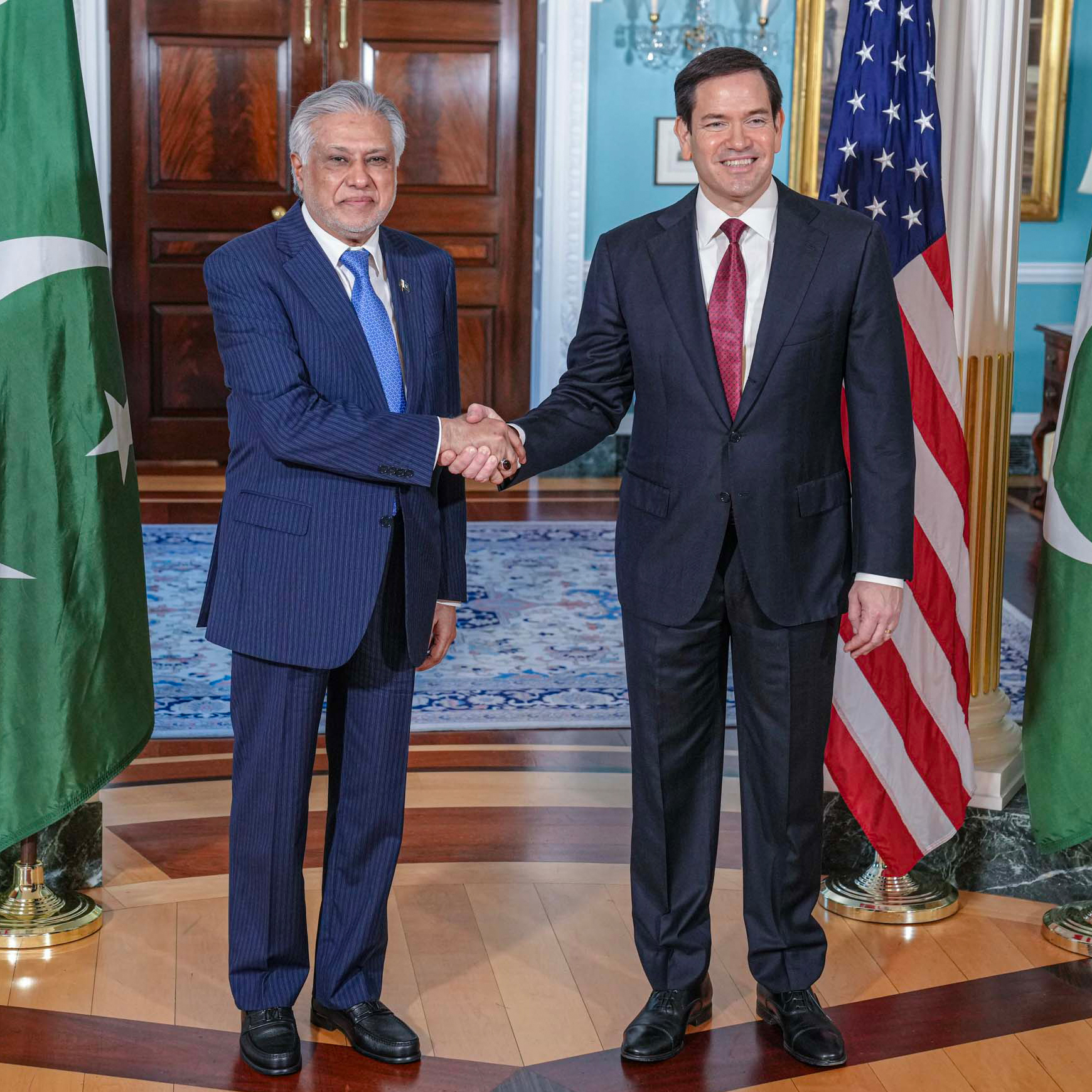
Table of Contents
- What Did the Faisal-Dar Call Reveal About Saudi Access?
- The Architecture Lives in Islamabad
- Why Is Pakistan at the Funeral and Saudi Arabia Is Not?
- The Structural Engine: Dual Neutrality
- Can Riyadh Buy Access With $9.34 Billion in Remittances?
- The Defense Pact That Does Not Open Doors
- The Zia Precedent: Pakistan Has Done This Before
- What Pakistan Gains From the Pivot
- Does Saudi Arabia Have an Alternative Channel?
- Frequently Asked Questions
What Did the Faisal-Dar Call Reveal About Saudi Access?
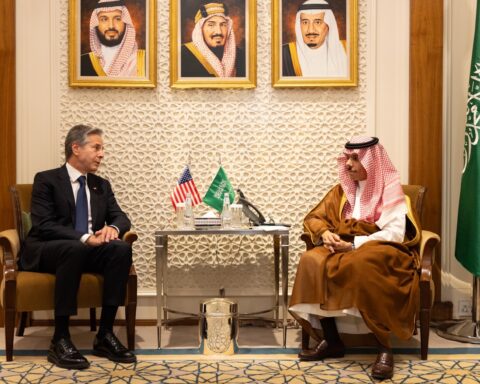
Pakistan’s Foreign Ministry posted the readout on its official account at @ForeignOfficePk within hours of the call. The two ministers “discussed the regional situation especially the recent round of mediations in Doha, expressed satisfaction on the positive progress made during this negotiation and hoped that the discussions would continue in near future,” the statement read. Prince Faisal “appreciated Pakistan’s steadfast commitment to the implementation of the Islamabad MoU.”
The House of Saud Daily Briefing
Saudi Arabia's news in 3 minutes, every morning. Free. See today's issue
Dar discussed. Faisal appreciated. The verbs are not interchangeable. One party held information; the other received it. Asharq Al-Awsat’s readout carried the same structure: the Saudi foreign minister “expressed satisfaction with the positive progress achieved” — phrasing that describes a reaction, not a contribution.
No Saudi statement, from the Foreign Ministry or the Saudi Press Agency, offered an independent account of what happened in Doha during the July 1–2 round. The kingdom’s sole public position on the talks came through the Dar call, as it did after the first Doha round. Arab News and Asharq Al-Awsat — both Saudi-owned outlets — reported the event as “Saudi FM receives phone call from Pakistan.” Riyadh was the receiver.
The Doha round itself involved Kazem Gharibabadi representing Iran in indirect format, with US envoys Steve Witkoff and Jared Kushner on the other side. Pakistan and Qatar operated as the mediating layer. Saudi Arabia held zero seats in any configuration. The kingdom’s $242 million PGSA exposure — 44 remaining MOU days at $5.5 million per day — was on the table in Doha without a Saudi representative in the room.
The Architecture Lives in Islamabad
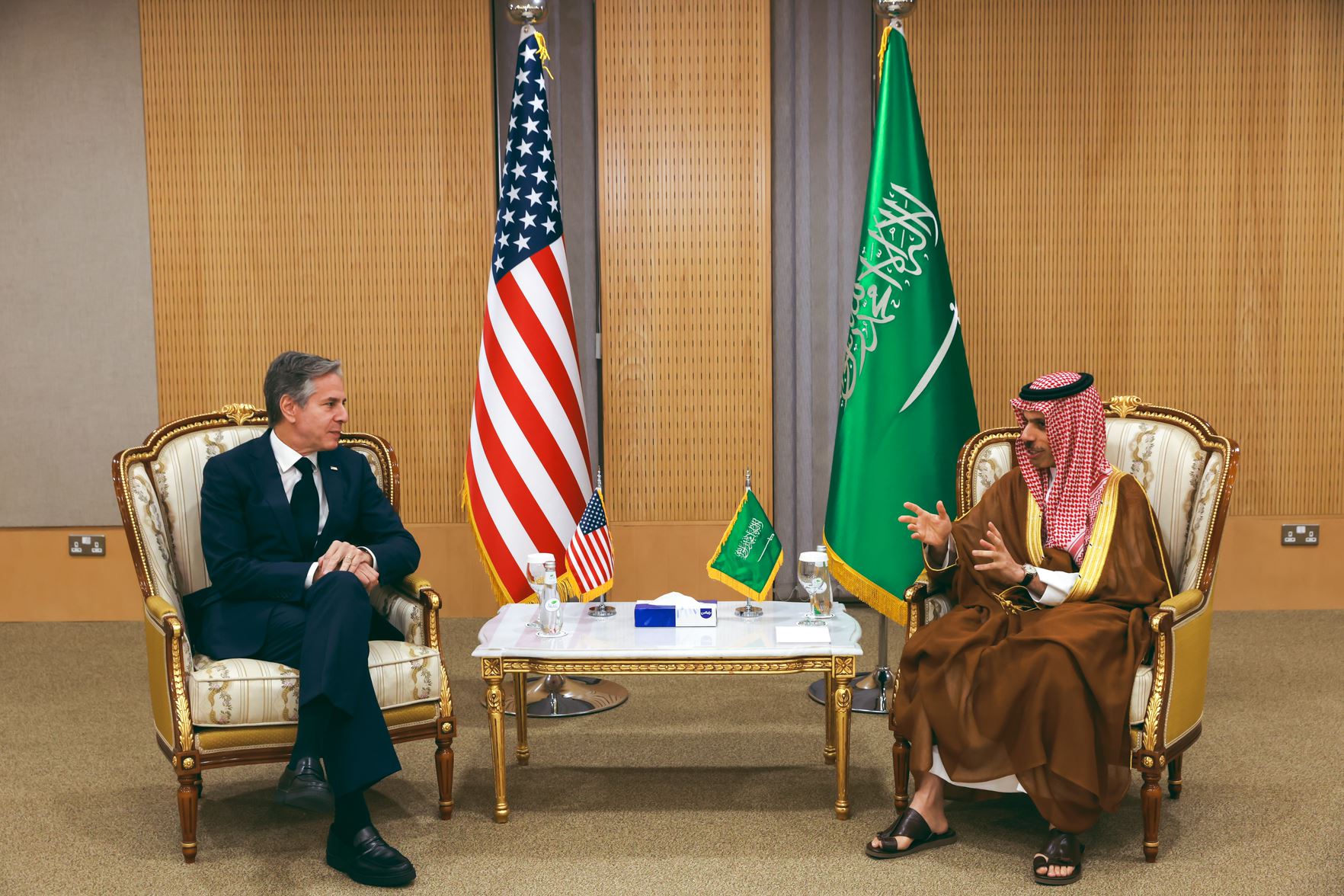
The agreement at the center of the current US-Iran diplomatic track is formally titled the Islamabad Memorandum of Understanding. It was negotiated at the Islamabad Talks of April 11–12, 2026 — the highest-level direct US-Iran diplomatic contact since the 1979 revolution, hosted by Pakistan with both delegations on Pakistani soil simultaneously. Trump signed remotely from Versailles during the G7 on June 17.
Pakistan co-mediated the MOU alongside Qatar. The document’s 14 articles govern the Hormuz ceasefire, IAEA access parameters, and the PGSA fee structure that determines Saudi Arabia’s daily financial obligation. Every enforcement question, every interpretive dispute, every clause-sequencing decision under Article 13 runs through a framework that Pakistan helped design and that carries Pakistan’s capital in its name.
On July 3, Pakistan’s Foreign Office spokesman Tahir Andrabi confirmed that Islamabad is “under consideration” as the venue for the next round of US-Iran talks after the July 4–9 funeral pause. If the talks return to Islamabad, Saudi Arabia will find the negotiation not only named after the Pakistani capital but physically located there — a city where Riyadh maintains an embassy but holds no diplomatic role in the Iran channel.
The July 4–9 pause itself was announced by Pakistani and Qatari officials, not by any Gulf foreign ministry. NPR reported on July 2 that talks would suspend for the Khamenei funeral period; Pakistan Today confirmed the resumption timeline on July 3. Riyadh did not issue a statement acknowledging the pause, the timeline, or the planned resumption. The calendar of the negotiation that governs Saudi Arabia’s Hormuz fee exposure is being set by Islamabad.
Why Is Pakistan at the Funeral and Saudi Arabia Is Not?
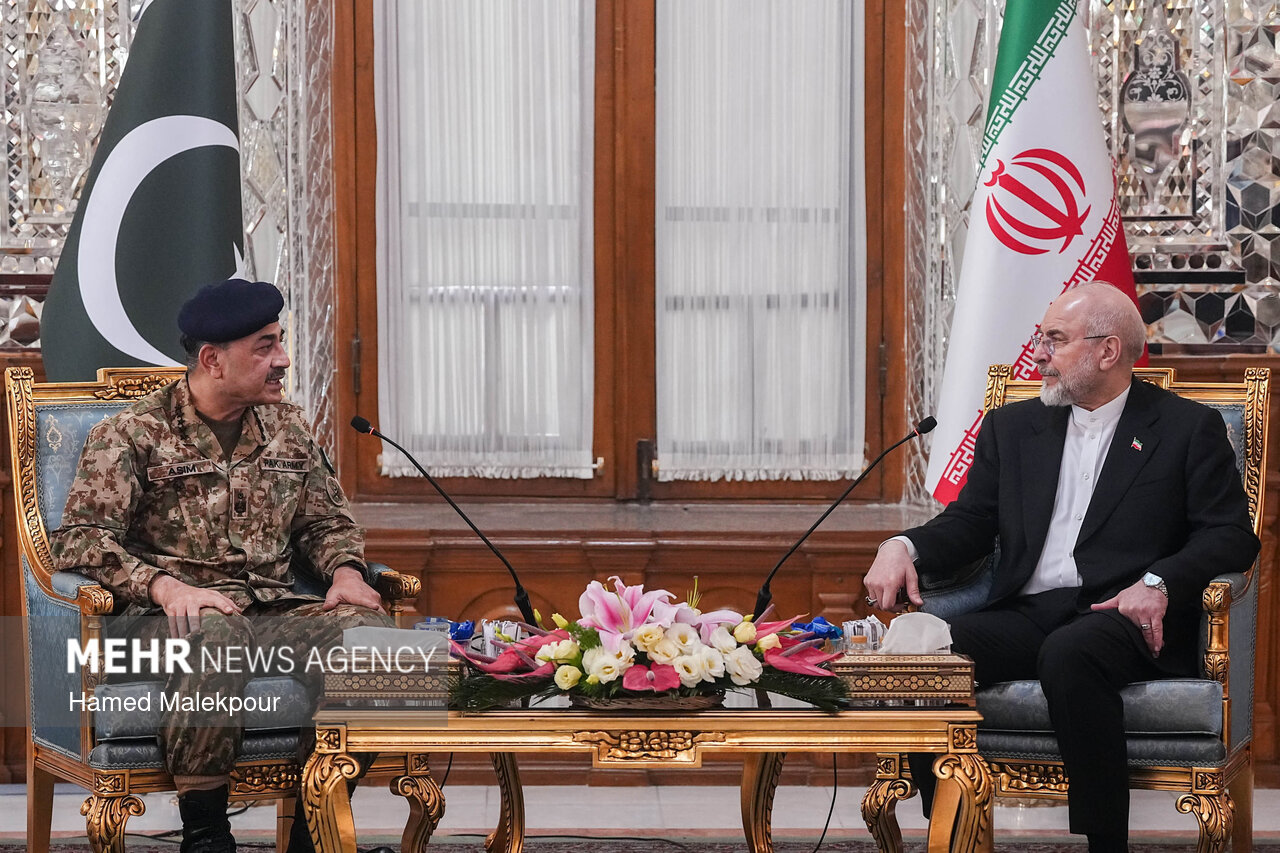
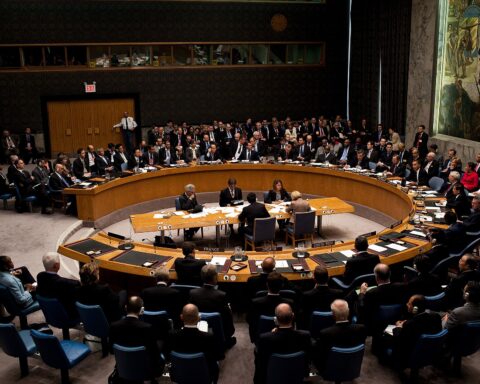
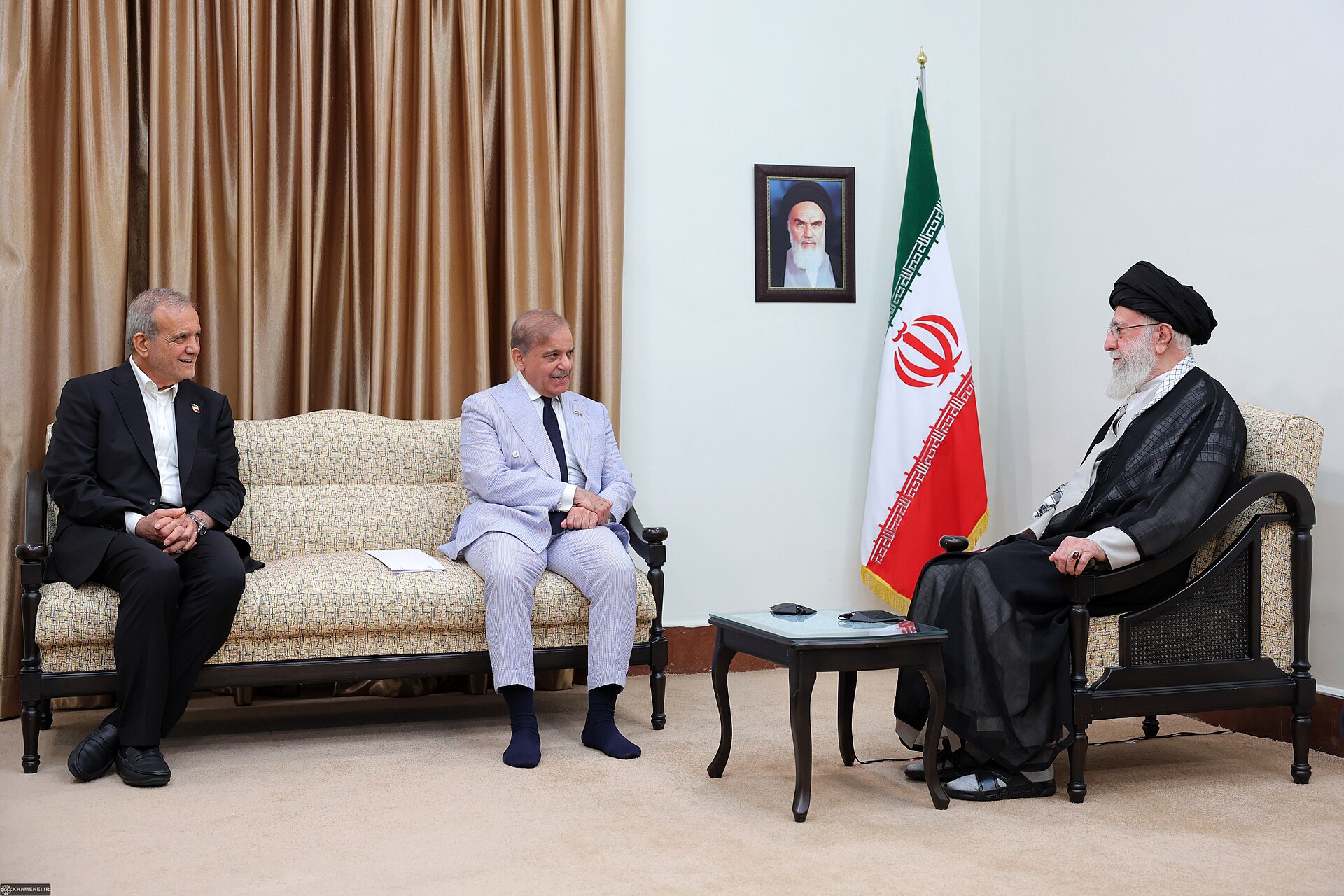
Pakistan dispatched its highest-ranking composite delegation to the Khamenei funeral in Tehran on July 3–5. Prime Minister Shehbaz Sharif leads the delegation — head-of-government level. Deputy Prime Minister and Foreign Minister Ishaq Dar accompanies him. Army Chief Field Marshal Asim Munir also traveled to Tehran, making Pakistan the only mediating country to send both its civilian and military leadership to the ceremony. On the same day Sharif and Munir arrived in Tehran, Pakistan’s UN Ambassador Asim Iftikhar Ahmad condemned Iran’s strikes on GCC states at the Security Council emergency session called by Bahrain — illustrating who Pakistan actually speaks for at the Security Council when Tehran and Riyadh both need an answer simultaneously.
Al Jazeera’s live blog on July 3 documented over 100 countries represented. China sent He Wei, a senior National People’s Congress member. Russia sent Dmitry Medvedev. India sent a deputy foreign minister. No GCC head of state appeared on published attendee lists. Saudi Arabia, as previously reported, issued no condolence statement, confirmed no delegation, and has not had a senior official in Tehran since Foreign Minister Faisal attended the Raisi funeral in May 2024. The Saudi military attaché was expelled from Tehran in March 2026. Riyadh ultimately sent Deputy FM El-Khereiji to the funeral — a lower rank than the FM Faisal who attended Raisi’s ceremony. What the delegation choice signalled is analysed here.
Pakistan’s 15-plus percent Shia population — the world’s second largest after Iran, drawn from roughly 240 million citizens — gives Islamabad a domestic political stake in the transition that no Sunni Gulf monarchy can replicate. The funeral attendance is not performative. It is constituency management for a government that governs across the sectarian divide, and it produces diplomatic access that Riyadh cannot match at any price point.
The Times of Israel headlined Sharif’s attendance on July 3 by calling him “a key US-Iran mediator” — identifying Pakistan’s prime minister not by his bilateral relationship with Iran but by his function in the US-Iran channel, a function Saudi Arabia does not hold.
The Structural Engine: Dual Neutrality
Pakistan hosts zero US military bases. Iran did not target Pakistan during the Hormuz war. CNN reported in April 2026 that this dual neutrality — non-alignment with both Washington’s basing architecture and Tehran’s target list — is the structural engine of Pakistan’s mediation role. Neither side had to accept a venue pre-committed to the other’s military posture.
The Stimson Center described Pakistan’s mediation as driven by “a combination of necessity and structural constraints” — energy dependence on the Gulf (85-plus percent of oil and LNG imports), an 800-kilometer land border with Iran, and the need to prevent conflict spillover into Balochistan. The International Crisis Group called Pakistan “a new player in the quest for a U.S.-Iran breakthrough” whose emergence reflects simultaneous access to Washington, Tehran, and Riyadh.
Saudi Arabia, by contrast, carries structural disqualifications on both sides. Riyadh’s $110 billion defense relationship with Washington, its MNNA-adjacent security cooperation, and its role as host to US military facilities in the Eastern Province make it unacceptable to Tehran as a neutral venue. And Saudi Arabia’s public alignment with the Trump administration’s maximum-pressure posture — including its September 2025 defense agreements with Turkey, Pakistan, and Egypt — makes it structurally implausible as a mediator between the parties.
Iran’s PressTV reported on April 14 that Tehran was “in continuous message exchange with mediator Pakistan” after the Islamabad Talks — language that explicitly elevated Islamabad’s channel status. No Iranian source has used equivalent language about Saudi Arabia at any point during the MOU period. The question of who holds authority over Iran’s MOU commitments has sharpened: Mojtaba Khamenei, the Supreme Leader whose approval the MOU nominally requires, has not appeared in public since his inauguration and will not attend his father’s funeral.
Can Riyadh Buy Access With $9.34 Billion in Remittances?
Saudi Arabia is Pakistan’s largest source of worker remittances: $9.34 billion in fiscal year 2025, roughly 24 percent of Pakistan’s total remittance inflows, according to Arab News and State Bank of Pakistan data. The kingdom holds over $2.8 billion in bilateral investment agreements with Islamabad across 34 separate instruments tracked by the Observer Research Foundation.
The financial relationship is asymmetric, and the asymmetry runs in Riyadh’s favor on paper. Pakistan needs Saudi employment for its labor surplus and Saudi capital for its chronic current-account deficit. But the Dar-Faisal call demonstrates that economic dependency does not convert into diplomatic access. Riyadh can move Pakistani labor markets and Pakistani bond yields. It cannot move Pakistani mediation calendars.
Pakistan’s value to the US-Iran channel is precisely its non-alignment — the quality that makes it acceptable to both parties. If Islamabad were to subordinate its mediation posture to Saudi preferences, it would forfeit the neutrality that gives it access in the first place. The Chatham House assessment from April 2026 was direct: Pakistan gains “regional relevance, energy access, and trade” from mediation. Those gains exceed what Saudi remittances can offset, and they carry a conditionality that remittances do not — Pakistan must remain credibly independent to keep them.
Pakistan-Iran bilateral trade is approaching $5 billion annually, according to Business Recorder and Pakistan Observer reporting. The revival of the Iran-Pakistan gas pipeline — the so-called Peace Pipeline — is estimated to reduce Pakistan’s energy import costs by 10 to 15 percent, per the Institute for Security and Development Policy. These are not trivial numbers for an economy that spent most of 2023 running double-digit inflation and has carried elevated borrowing costs since. They represent a counterweight to Saudi financial influence that did not exist at this scale before the Hormuz crisis created the demand for Pakistani mediation.
The Defense Pact That Does Not Open Doors
Saudi Arabia signed a Strategic Mutual Defense Agreement with Pakistan in September 2025, under which “aggression against one” constitutes “aggression against both.” The pact was part of a broader security architecture that included parallel agreements with Turkey and Egypt, designed to compensate for the anticipated US military drawdown from the Gulf.
The defense pact has not produced diplomatic access. Riyadh’s mutual-defense partner is simultaneously the host, co-architect, and potential next venue of negotiations from which Saudi Arabia is excluded. The agreement obliges Pakistan to treat an attack on Saudi Arabia as an attack on itself. It does not oblige Pakistan to grant Saudi Arabia a seat at the US-Iran table, and Islamabad has not offered one.
A former three-star Pakistani general, quoted by Al Jazeera on April 14, described the tension directly: “Pakistan can hold both roles [mediator and Saudi military ally] only if deployment remains strictly defensive, time-bound, and transparently limited. The moment the theatre shifts to offensive operations, or the perception of offensive coordination emerges, the dual role collapses.”
The IISS identified a “new Middle Eastern quadrilateral” of Egypt, Pakistan, Saudi Arabia, and Turkey forming in May 2026. But of the four members, Pakistan is the only one with active access to the US-Iran channel. Turkey maintains relations with both sides but was not involved in the Islamabad Talks or the Doha rounds. Egypt’s role has been confined to public statements. Saudi Arabia has neither access nor visibility.
The defense pact gives Riyadh a military guarantee. It does not give Riyadh information. And in a negotiation where the MOU’s structural ambiguities are being resolved in real time — clause sequencing under Article 13, PGSA fee suspension timelines, IAEA access parameters — information is the operative currency. Saudi Arabia is paying $5.5 million a day for a PGSA whose terms are being interpreted in rooms where Pakistan sits and Saudi Arabia does not.
The Zia Precedent: Pakistan Has Done This Before
Pakistan’s dual-alignment posture during the Iran-Iraq War of 1980–1988 established the template. President Zia-ul-Haq maintained official neutrality despite sustained pressure from both Washington and Riyadh to back Iraq. Pakistan deployed approximately 40,000 military personnel to Saudi Arabia in advisory and protective roles while maintaining functional diplomatic and trade ties with Tehran. The deployment was framed as defensive — protecting Saudi territory, not fighting Iran — and the framing held for eight years.
The current configuration mirrors the Zia-era structure with one addition: Pakistan is not merely maintaining ties with both sides but actively mediating between them. The 1980s model proved that Islamabad could simultaneously garrison Saudi facilities and engage Tehran without losing credibility with either. The 2026 model tests whether it can mediate between Washington and Tehran while holding a mutual defense treaty with Riyadh — a higher-order balancing act, but one built on the same structural foundation.
The US State Department validated the model explicitly. A State Department press secretary described the Pakistanis as “incredible mediators” in April 2026, language posted to the department’s official Facebook account. Pakistan’s MNNA status, granted in 2004, gives Washington formal institutional cover to channel diplomacy through Islamabad without the complications of engaging a non-treaty partner.
The Al Jazeera Centre for Studies described Pakistan’s emergence as “the Islamabad Opening” — a structural diplomatic shift, not a temporary convenience.
What Pakistan Gains From the Pivot
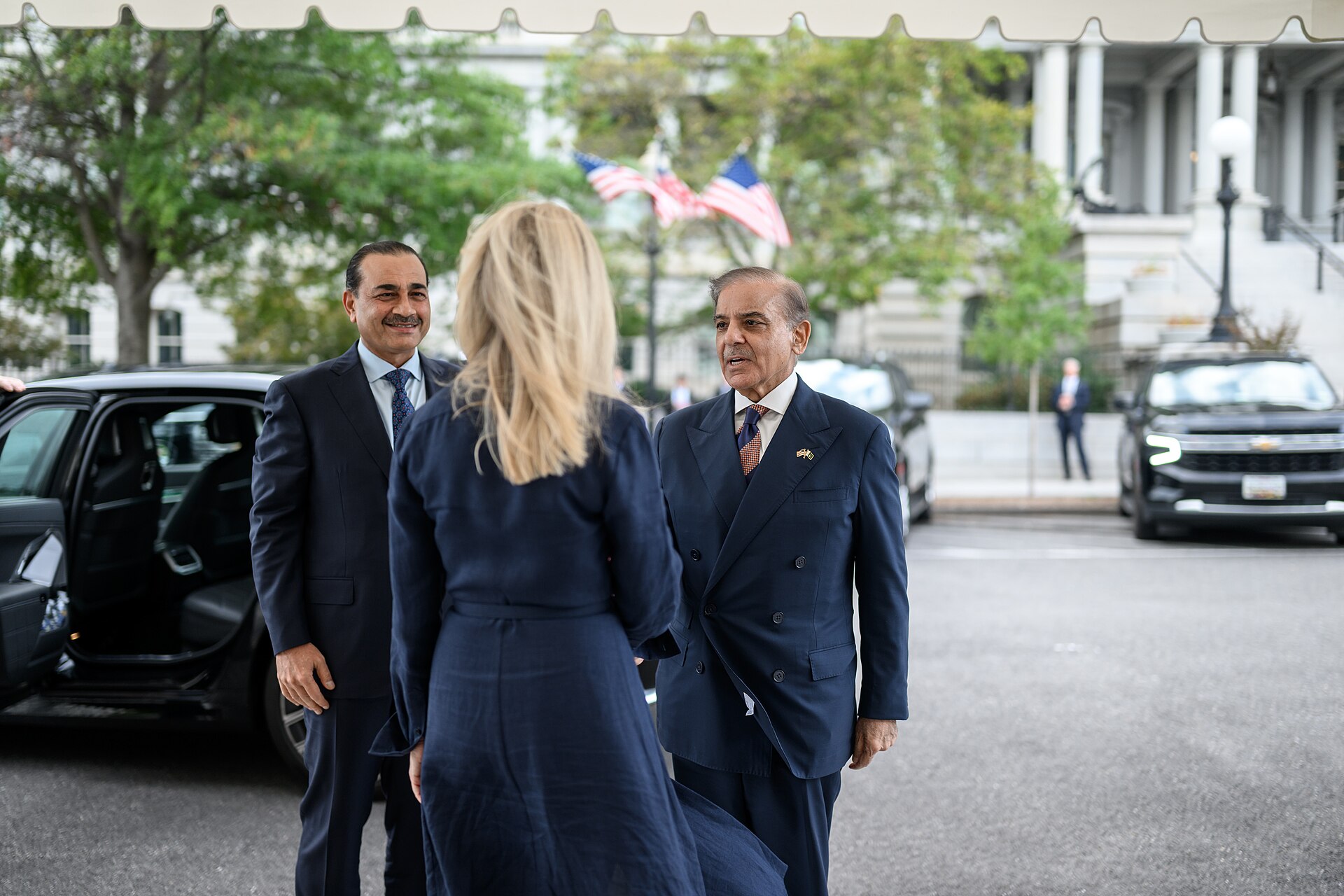
Chatham House assessed in April 2026 that Pakistan’s mediation is self-interested, not altruistic: “regional relevance, energy access, and trade” — categories that map directly onto Pakistan’s most acute structural deficits. Before the Hormuz crisis, Pakistan was peripheral to Gulf diplomacy. It did not participate in the JCPOA negotiations, was not consulted on the Abraham Accords, and played no documented role in the 2023 Saudi-Iran rapprochement brokered by Beijing. The Islamabad Talks reversed that position in a single weekend in April 2026, and every subsequent round has reinforced it.
Pakistan-Iran bilateral trade has grown from below $1 billion during the maximum-pressure era to nearly $5 billion annually. The Hormuz crisis opened overland trade corridors through Balochistan that sanctions had closed. The Iran-Pakistan gas pipeline, dormant since US sanctions pressure killed it in the 2010s, is back under active discussion.
Saudi Arabia’s financial relationship with Pakistan — the remittances, the investment agreements, the defense spending — predates the mediation. It is not conditional on Pakistan’s diplomatic role. The mediation gains, by contrast, are new and conditional on Pakistan maintaining its neutrality. Islamabad will protect the new gains, which require independence, rather than sacrifice them for old gains, which do not.
Does Saudi Arabia Have an Alternative Channel?
Saudi Arabia’s options for independent access to the US-Iran negotiation are limited by structural constraints, not by a lack of diplomatic effort. Prince Faisal’s July 1–2 visit to Beijing produced a joint statement with explicit freedom-of-navigation language for the Strait of Hormuz — a diplomatic achievement, but one that gave Riyadh Chinese language commitments, not visibility into the Doha channel. The Beijing visit occurred on the same days as the Doha talks, and Riyadh’s readout from Doha still came through Islamabad.
The Oman channel remains partially available. Oman co-developed the PGSA fee regime and maintains functional ties with Tehran dating to the 2013 JCPOA back-channel. But Muscat’s role in the current round has been limited to Hormuz governance proposals, not primary mediation. Oman was not a co-architect of the MOU and does not hold the institutional position that Pakistan built through the April talks.
Qatar is the other co-mediator, and Riyadh has a more functional relationship with Doha than it had before the 2017–2021 blockade. But Qatar’s mediation role is structurally inseparable from Pakistan’s — the two operate as a pair, and Doha has not offered Saudi Arabia separate access to its mediation track. The $6 billion in frozen Iranian assets held in Qatar since the October 2023 refreezing gives Doha its own financial interests in the negotiation outcome that do not align with Saudi preferences.
The direct Washington channel — Prince Faisal to Secretary Rubio, MBS to Trump — exists but has not produced Saudi inclusion in the Iran talks. The US described Pakistan, not Saudi Arabia, as its preferred mediation partner. The Manama Joint Statement of June 25, which Saudi Arabia signed alongside Bahrain, addressed missiles and final-deal parameters but did not grant Riyadh a seat in the Doha or Islamabad negotiation format. Saudi Arabia co-signed a set of demands for any final agreement. It did not co-author the process for reaching one.
The pattern across all alternative channels is consistent. Saudi Arabia can obtain commitments from Beijing, military cooperation from Ankara and Cairo, and readouts from Islamabad. It cannot obtain a seat at the table where the Islamabad MOU is being implemented. The deficit is not bilateral — it is architectural. The mediation structure was built without a Saudi pillar, and no amount of parallel diplomacy has produced one.
Frequently Asked Questions
What is the Islamabad Memorandum of Understanding?
The Islamabad MOU is the ceasefire and diplomatic framework agreement governing the Strait of Hormuz crisis, co-mediated by Pakistan and Qatar and signed on June 17, 2026. It contains 14 articles covering the Hormuz ceasefire, IAEA inspection access under Point 8, and the Persian Gulf Shipping Authority (PGSA) fee structure. The 60-day Phase 2 implementation period runs to August 15, with 44 days remaining as of July 3. The MOU’s Article 12 enforcement body has never been constituted. Article 13 creates a sequencing gate that blocks final negotiations until earlier clauses are implemented — a structural ambiguity being resolved in real time, without Saudi Arabia in the room.
Why can’t Saudi Arabia join the US-Iran talks?
The exclusion is structural, not personal. Iran refuses to negotiate in any venue with a US military presence or pre-committed security alignment. Saudi Arabia hosts US military facilities in the Eastern Province, signed a $110 billion defense framework with Washington, and publicly aligned with Trump’s maximum-pressure posture — all disqualifying factors from Tehran’s perspective. Riyadh also lacks the sectarian bridge that gives Islamabad domestic credibility in Tehran: Pakistan’s Shia population of 36-plus million exceeds the total population of most Gulf states. The mediation format was established as Pakistan-Qatar in April 2026 and has not expanded. Saudi efforts to enter through parallel channels — Beijing, the Manama Joint Statement, direct appeals to Washington — have produced policy coordination with the US but not a chair at the mediation table.
How much is Saudi Arabia paying through the PGSA while excluded from talks?
The PGSA imposes fees of $5.5 million per day on Hormuz transit, accruing as Saudi liability for oil shipments through the strait. With 44 MOU days remaining as of July 3, Saudi Arabia’s residual exposure stands at approximately $242 million. The PGSA fee suspension under the MOU expires on August 18. If the MOU collapses or the fee suspension lapses without renewal, the PGSA auto-activates at the $5.5 million daily rate. The PGSA was itself sanctioned by OFAC on May 27, 2026, creating a dual impossibility for charterers: paying the fee violates US sanctions, while not paying risks Iranian enforcement action. The Day 60 MOU deadline falls on August 15, three days before the PGSA suspension expires on August 18.
Has Pakistan mediated between rivals before?
Pakistan maintained dual alignment throughout the Iran-Iraq War of 1980–1988, deploying approximately 40,000 troops to Saudi Arabia in defensive roles while preserving full diplomatic relations with Tehran. President Zia-ul-Haq resisted US and Saudi pressure to support Iraq directly. More recently, Pakistan mediated between Saudi Arabia and Iran in 2019 after the Aramco Abqaiq attack, though that effort produced no public agreement. The current mediation represents Pakistan’s first role as lead mediator — rather than back-channel participant — in a US-Iran negotiation. The distinction matters: Pakistan is not passing messages between principals. It co-wrote the framework document, hosted the initial talks, and is being considered as the next venue. Field Marshal Asim Munir’s simultaneous roles — Saudi defense partner and Tehran funeral attendee — reflect the Zia-era model updated for a conflict in which Pakistan holds institutional centrality, not peripheral balance.
What happens to the talks during the July 4–9 funeral pause?
The Doha indirect talks paused on July 4 for the Khamenei funeral period, with resumption expected after July 9. Pakistan and Qatar announced the timeline — no Gulf state issued a parallel statement. During the pause, PM Shehbaz Sharif, FM Ishaq Dar, and Army Chief Field Marshal Asim Munir are in Tehran for the funeral, conducting bilateral meetings with Iranian officials and representatives from 100-plus countries. The pause creates a 5-day gap in which 5 of the remaining 44 MOU days elapse without negotiation, compressing the window for resolving outstanding issues — including Hormuz fee governance, IAEA access under Point 8, and frozen-asset disbursement from the $6 billion Qatar pool. The Day 60 deadline falls on August 15, three days before the PGSA fee suspension expires on August 18. Talks resumed with a qualitative shift: Saudi-owned broadcasters reported on July 4 that the next round, confirmed for July 11 in Islamabad, will place nuclear issues explicitly on the agenda for the first time — with Field Marshal Munir as the senior Pakistani interlocutor and Saudi Arabia still without a seat.
The choice of rank for Saudi Arabia’s condolence — Deputy FM El-Khereiji, not FM Faisal — adds another layer to the informational and diplomatic asymmetry Islamabad now exploits: El-Khereiji Carried the Condolences Faisal Did Not Deliver.
The House of Saud Daily Briefing
Saudi Arabia's news in 3 minutes, every morning. Free. See today's issue