post_content
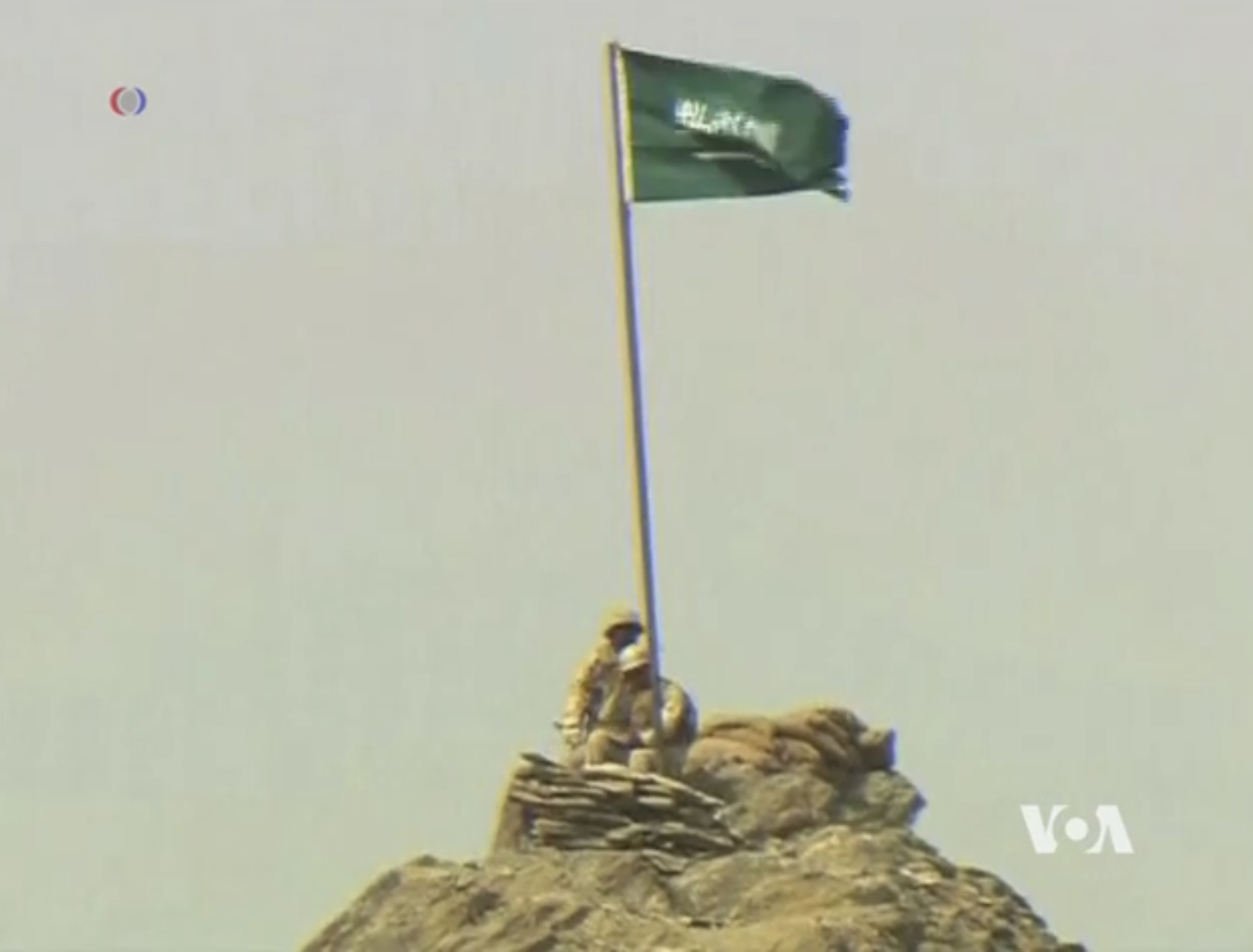
ADEN — Houthi forces killed at least 15 Yemeni government troops in a ground assault on Jabal Dabbas in the Hays district of Hodeidah governorate early Saturday, according to Yemeni Minister of State Walid al-Qudaimi and medical officials who provided hospital admission figures to AFP. An anonymous pro-government military officer described the attack as “the deadliest Houthi attack in years.”
\n
The offensive began late Friday — less than 24 hours after Saudi-led coalition spokesperson Major General Turki al-Maliki publicly named Hodeidah port, Ras Isa oil terminal, As-Salif port, and Sanaa International Airport as targets for strikes with “unprecedented determination and force.” As of Saturday evening, no coalition airstrike has followed.
\n
 \n
\n\n
The Middle East briefing 3,000+ readers start their day with.
One email. Every weekday morning. Free.
Table of Contents
\n
- \n
\n
\n
The Assault on Jabal Dabbas
\n
Houthi units launched the offensive late Friday night, advancing on positions held by the 14th Infantry Brigade — also known as the Second Zaraniq Brigade — of the National Resistance forces’ First Infantry Division, according to Sheba Intelligence, a Yemeni military analysis outlet. The attackers advanced under heavy artillery cover toward government-held barracks on the mountain overlooking Hays city.
\n
The tactical sequence followed a deliberate escalation pattern. Snipers deployed first, responsible for the majority of initial casualties. Drone and mortar fire followed. By the early hours of Saturday, Houthi fighters had temporarily seized government positions before a counterattack pushed them back, Sheba Intelligence reported. Government forces regained all lost ground by dawn.
\n
Al-Qudaimi posted on X that the troops had been killed “defending their land and dignity.” He reported 15 government troops killed and more than 50 Houthi fighters killed, with dozens wounded on both sides. An anonymous military official told AFP the fighting was “fierce,” confirming 23 government soldiers wounded in addition to the dead.
\n
Two medical officials provided a higher death count — 16 — to Arab News and The New Arab, based on hospital admissions at facilities receiving the wounded. Wire agencies had earlier cited a figure of 14 before al-Qudaimi’s revised count.
\n
The discrepancy across sources — 14, 15, and 16 — remains unresolved. No independent verification is available. The UN Mission to Support the Hudaydah Agreement, which would have been the monitoring authority for this area, ceased operations when its mandate expired March 31, 2026.
\n
What Did the Coalition Threaten Twenty-Four Hours Earlier?
\n
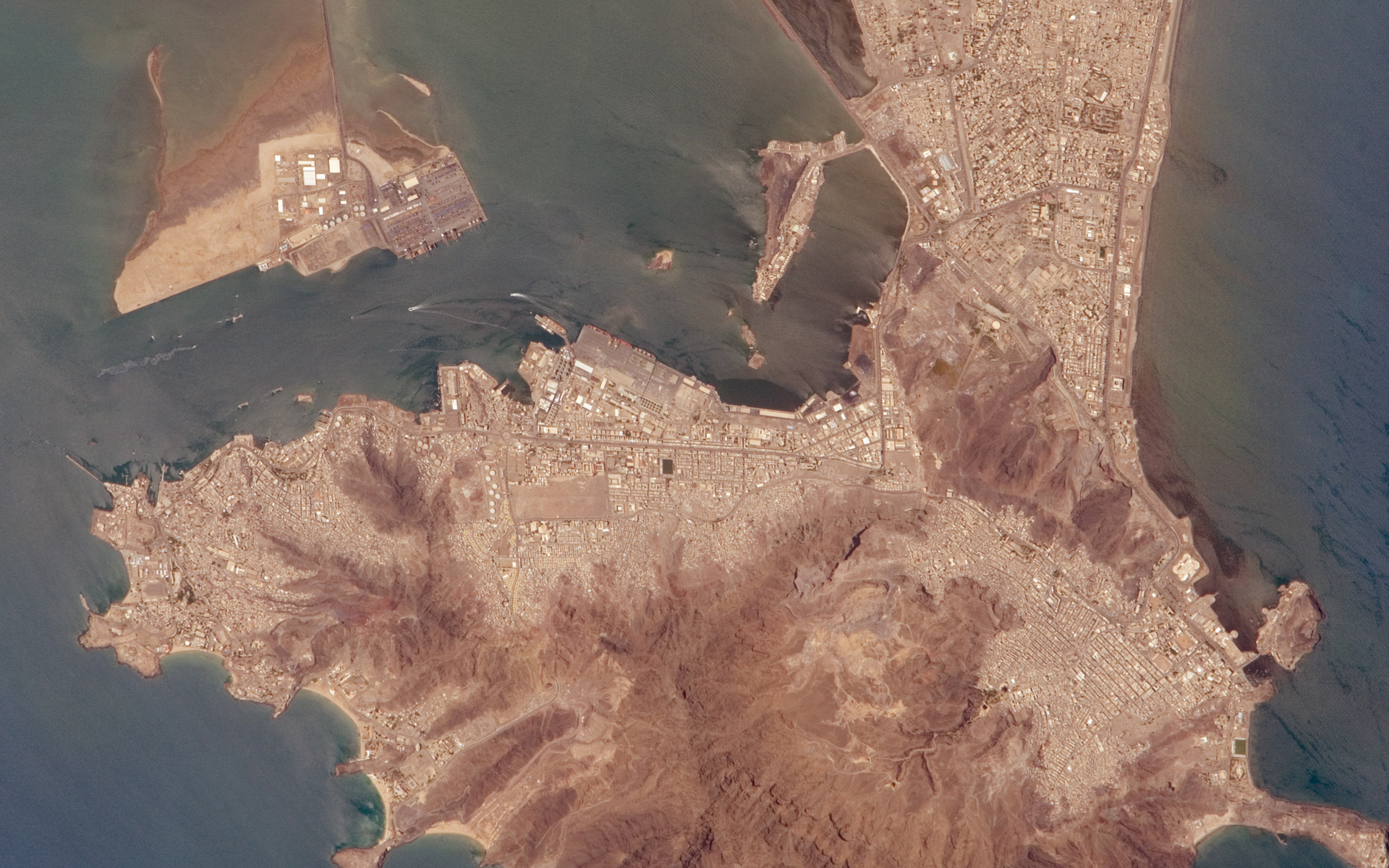
On July 4, Major General al-Maliki issued a statement naming specific infrastructure as potential strike targets: Hodeidah port, Ras Isa oil terminal, As-Salif port, Sanaa International Airport, power stations, and industrial facilities. The coalition would act, he said, with “unprecedented determination and force.” He characterized Houthi military statements as “an attempt to divert attention away from their grave violations against the brotherly people of Yemen.”
\n
The statement represented a departure from previous coalition warnings. Since the April 2022 ceasefire, coalition threat language had relied on generalized formulations — “all necessary measures” — without attaching specific targets to specific consequences, as The New Arab noted in its July 4 coverage. Al-Maliki’s statement was the first to name individual ports and terminals.
\n
The target list was identical to the infrastructure Israel struck during Operation Black Flag on July 6–7, 2025, when Israeli forces hit Hodeidah, As-Salif, and Ras Issa ports along with the Ras Katib power plant and the Galaxy Leader vessel, deploying at least 60 munitions. That operation was triggered by a Houthi attack on the Greek-owned Magic Seas in the Red Sea.
\n
 \n
\n\n
Al-Maliki’s statement arrived two days after Houthi military spokesman Yahya Saree issued his own warning on July 3: “a comprehensive response targeting [Saudi Arabia’s] airports and vital interests on land and at sea.” The coalition’s July 4 naming of ports was a direct reply to Saree’s July 3 naming of airports. Both sides had now attached specific nouns to their threats.
\n
Why Has No Coalition Strike Followed?
\n
As of Saturday evening, no Saudi-led coalition airstrike targeting Houthi positions in Hodeidah governorate has been reported — either in response to the Jabal Dabbas assault or in execution of the July 4 threat.
\n
The coalition has not conducted air operations against Houthi-controlled territory since the April 2022 truce. Resuming strikes would require breaking a four-year operational pause — a structurally different proposition from routine deterrence maintenance. The Yemen Data Project documented 25,054 total coalition air raids between 2015 and 2022. The pause since then is the longest unbroken cessation in the war’s history.
\n
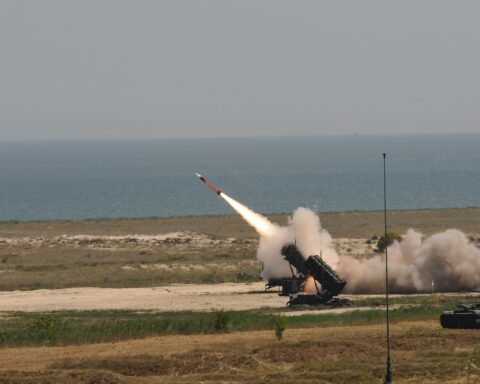
Saudi Arabia’s operational capacity has changed since 2022. Approximately 400 PAC-3 MSE interceptor rounds remain from a pre-war stock of roughly 2,800 — an 86 percent depletion rate, as previous reporting on the kingdom’s air defense procurement has documented. The Camden, Arkansas production facility manufactures approximately 620 rounds per year for all global customers. First new Saudi deliveries are not expected before 2028, according to Janes.
\n
U.S. Integrated Equipment Support Program contractors, who maintain Saudi integrated air and missile defense systems, are departing with U.S. troops under the ongoing drawdown. The E-3G Sentry airborne early warning aircraft at Prince Sultan Air Base was destroyed on March 27. The maintenance and sensor architecture that supported coalition air campaigns from 2015 to 2022 is not the architecture available in July 2026.
\n
\n
“MBS learned two painful lessons over the Saudi intervention in Yemen: one, there is a cost to impulsive decision-making; two, there is no such thing as a quick war. Instead, Saudi Arabia has almost reverted to form, favouring caution, patience and long-term positioning over short-term gains.”
\n— Chatham House, May 2026\n
\n
Israel’s capacity to strike Hodeidah — demonstrated in Operation Black Flag — operates under different constraints. Israel has no PAC-3 attrition problem, no U.S. troop drawdown dependency, and no MOU diplomacy creating political costs for escalation. When al-Maliki named the same ports Israel struck a year earlier, the coalition was borrowing a target list from an actor whose freedom of action it does not share.
\n
The coalition has issued multiple high-profile warnings since April 2022 without conducting strikes on Hodeidah. Each unfulfilled statement narrows the corridor for the next one. The Jabal Dabbas assault — 15 government troops killed while the coalition’s “unprecedented force” promise was less than 24 hours old — is the most concentrated test of that pattern to date.
\n
Houthi Buildup and Tactical Logic
\n
The Jabal Dabbas offensive was not improvised. Houthi militias had brought their “largest reinforcements” to the Dabbas Mountains and areas south of Al-Jarahi before the attack, according to Yemen Online and Sheba Intelligence. The buildup preceded al-Maliki’s July 4 statement — the offensive was planned before the coalition issued its threat, not in response to it.
\n
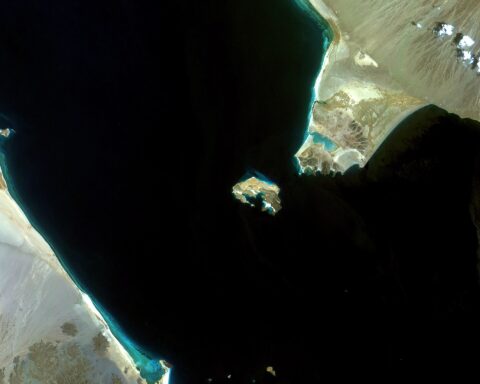
Sheba Intelligence assessed the attack as an attempt “to regain battlefield initiative, test the readiness of opposing forces and demonstrate that it can still mount ground offensives.” The Hays front sits astride the coastal corridor connecting Hodeidah to Mokha and on to Bab al-Mandab. Control of Jabal Dabbas provides elevation over Hays city and the surrounding lowlands.
\n
The New Arab had previously reported that “the Houthis have been deterred from joining Tehran’s defense effort by concerns that the US or Israel might destroy the key port of Hodeidah.” The July 5 offensive operated in a different register: a ground assault on government-held military positions, not an attack on coalition assets or international shipping. It tested whether al-Maliki’s threat applies to ground combat in the governorate or only to the port infrastructure he named.
\n
Houthi deputy information minister Mohammed Mansour had previously stated the group was “conducting this battle in stages, and closing the Bab al-Mandab strait is among our options.” The Jabal Dabbas assault targeted the ground corridor to Bab al-Mandab without triggering the maritime escalation thresholds that would invite an Israeli or American response.
\n
No Houthi or Ansar Allah statement claiming victory or acknowledging the Jabal Dabbas operation has been issued. Al Jazeera reported: “There was no immediate comment from the Houthis on the alleged clashes.” Houthi media typically does not acknowledge ground retreats. Government forces retook all positions by dawn — the operation inflicted casualties without holding territory.
\n
The Institutional Void
\n
The Stockholm Agreement, signed December 13, 2018, stipulated a Hodeidah ceasefire, mutual withdrawal, UN monitoring, and a commitment to channel port revenues toward civil servant salaries. UNMHA was established in 2019 to implement its terms.
\n
UNMHA’s mandate expired March 31, 2026, after UNSC Resolution 2813 passed in January with a 13-0-2 vote. China and Russia abstained. The United States stated at the Security Council that “Houthi obstructionism has left the Mission without a purpose.” The resolution’s passage removed the last neutral monitoring body for a governorate where ceasefire terms are no longer externally verified.
\n
The competing death tolls from Jabal Dabbas — 14 from early wires, 15 from al-Qudaimi, 16 from hospital records — are a product of this vacuum. Without UNMHA observers, casualty verification depends on belligerent statements and anonymous medical officials.
\n
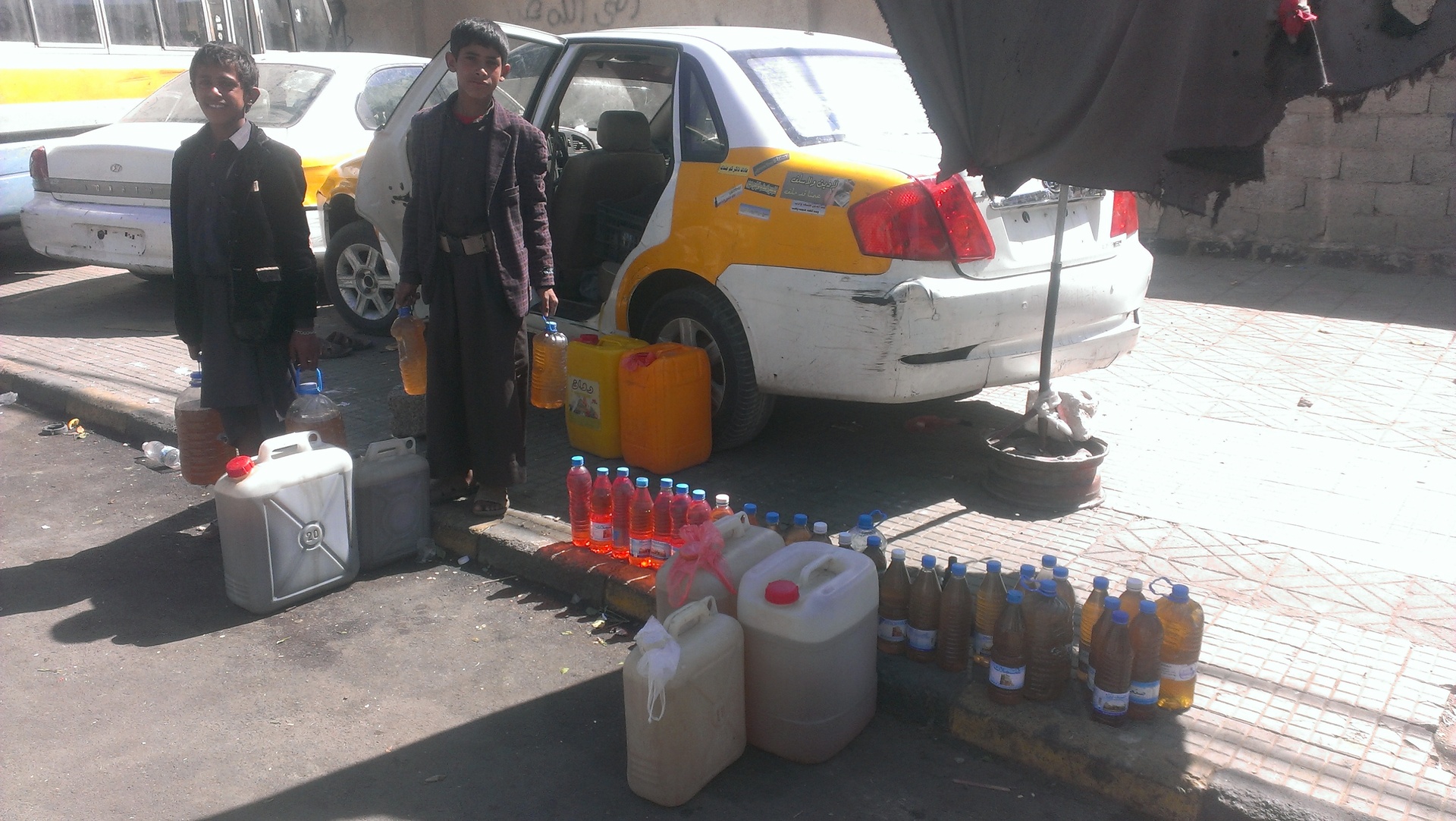
Hodeidah port handles approximately 70 percent of Yemen’s commercial imports and 80 percent of humanitarian assistance entering the country. In January–February 2026, the ports of Hodeidah, Salif, and Ras Issa received 1.1 million metric tons of food, a 31 percent year-over-year increase, according to Yemen’s Coordination of Social Organizations.
\n
Any coalition strike on the infrastructure al-Maliki named on July 4 would directly affect these supply lines. His statement did not address humanitarian continuity provisions or alternative delivery corridors.
\n
 \n
\n\n
Diplomatic Context
\n
The Jabal Dabbas offensive fell on Day 18 of the 60-day US-Iran Memorandum of Understanding. The third round of Doha talks is paused from July 4 to 9 for Ayatollah Ali Khamenei’s funeral in Tehran. Saudi Arabia faces $253 million in Persian Gulf Shipping Authority fee exposure, accumulating at $5.5 million per day from August 18 if the current fee suspension is not renewed.
\n
Saree’s July 3 warning — targeting Saudi airports and vital interests — and al-Maliki’s July 4 naming of Yemeni ports created a mutual posture in which both sides specified consequences neither has yet imposed. The 15 dead at Jabal Dabbas sit inside that gap: government troops killed in the governorate whose port the coalition promised to defend, by the force whose spokesman the coalition promised to deter.
\n
| Date | Actor | Statement / Action | Follow-through |
|---|---|---|---|
| July 3 | Yahya Saree (Houthi spokesman) | “Comprehensive response targeting airports and vital interests on land and at sea” | No attack on Saudi airports reported |
| July 4 | Maj. Gen. al-Maliki (coalition) | Named Hodeidah port, Ras Isa, As-Salif, Sanaa Airport as targets; promised “unprecedented force” | No coalition airstrike as of July 5 |
| July 4–5 | Houthi ground forces | Launched assault on Jabal Dabbas, Hays district; 15–16 government troops killed | Positions retaken by government counterattack at dawn |
\n
\n
The coalition’s four-year air campaign pause, its degraded air defense posture, and the diplomatic constraints of the US-Iran MOU window each independently limit the escalation al-Maliki’s language implied. The coalition threatened Hodeidah on July 4. The Houthis attacked in Hodeidah governorate on July 5. The coalition’s response, so far, has been silence.
\n
Frequently Asked Questions
\n
Where is Jabal Dabbas?
\n
Jabal Dabbas is a mountain position in the Hays district of Al Hudaydah Governorate, on Yemen’s Red Sea coast approximately 100 kilometers south of Hodeidah city. The Hays front sits along the coastal corridor connecting Hodeidah to Mokha and on to the Bab al-Mandab strait. Control of the mountain provides elevation and observation over Hays city and the surrounding Tihamah coastal plain.
\n
What is the 14th Infantry Brigade?
\n
Also known as the Second Zaraniq Brigade, it is part of the First Infantry Division of the National Resistance forces — a coalition-aligned Yemeni formation operating in the Hodeidah coastal sector. The Zaraniq are a tribal grouping from the Tihamah coastal plain with a longstanding presence in anti-Houthi resistance formations. The brigade holds forward positions on the southern approaches to Hodeidah.
\n
Why do casualty figures differ across sources?
\n
Wire services initially reported 14 dead based on early field counts. Yemeni Minister of State Walid al-Qudaimi posted a figure of 15 on X. Two medical officials cited 16 based on hospital admission records. The discrepancies likely reflect the sequence of reporting — field estimates preceding hospital tallies — and the absence of a neutral verification body since UNMHA’s mandate expired March 31, 2026. Before its expiry, UNMHA maintained liaison officers on both sides of the Hodeidah front who could cross-reference casualty claims.
\n
Has Saudi Arabia struck Hodeidah before?
\n
The Saudi-led coalition conducted extensive air operations against Houthi targets in Hodeidah from 2015 to 2022, including strikes on port infrastructure. The Yemen Data Project documented 25,054 total coalition air raids across Yemen in that period. No coalition air operations against Houthi-controlled areas have been recorded since the April 2022 ceasefire. Separately, Israel struck Hodeidah, As-Salif, and Ras Issa ports in Operation Black Flag on July 6–7, 2025, deploying at least 60 munitions — the first non-coalition military strikes on the port.
\n
What is the PGSA and why does it constrain Saudi decision-making?
\n
The Persian Gulf Shipping Authority is an Iranian-administered body levying transit fees on vessels passing through the Strait of Hormuz. Saudi Arabia faces approximately $253 million in accumulated fee exposure, accruing at $5.5 million per day from August 18, 2026, if the current fee suspension expires without renewal under the US-Iran MOU framework. Escalation in Hodeidah could provoke Houthi retaliation against Saudi shipping infrastructure or airports — Saree’s July 3 threat named both — while the kingdom’s degraded PAC-3 inventory and ongoing loss of U.S. IADS maintenance capacity limit its ability to absorb a retaliatory strike.
\n
The maritime corollary arrived within hours: the Houthis sank two ships and seized eleven hostages in 48 hours — inside the same funeral pause that grounded the coalition’s air response on July 5.
\n\n
The maritime dimension of the same non-response pattern was confirmed between July 6 and 9: the Magic Seas and Eternity C were both sunk with zero coalition airstrikes, killing four crew and leaving eleven in Houthi custody inside the same window al-Maliki had named all four Hodeidah installations as targets.
The Houthi response to the runway strike ended the truce and opened a second front: Yahya Saree formally declared the de-escalation phase over and struck Abha International Airport and King Khalid Air Base at Khamis Mushait with ballistic missiles and drones, activating the exact retaliatory framework Saree had threatened on July 3 after the failed interception attempt.
The coercion gap closed on July 13, when Saudi-backed forces struck the runway at Sanaa International Airport to block a Mahan Air aircraft returning a Houthi delegation from Khamenei’s funeral in Tehran — ending the aviation truce and the two-year de-escalation phase in a single strike.