ISLAMABAD — The United States and Iran will resume negotiations on July 11 in Islamabad with nuclear issues explicitly on the agenda for the first time since the Islamabad Memorandum of Understanding was signed on June 17, according to Saudi-owned broadcasters Al Hadath and Al Arabiya reporting on July 4. The confirmation of venue, date, and nuclear-track scope marks a qualitative shift from the Doha monitoring rounds that preceded it — and it arrives while Pakistan’s Field Marshal Asim Munir is still in Tehran for Ayatollah Khamenei’s funeral, standing among the same IRGC commanders he first built ties with a decade ago.
The round will address three items: sanctions relief for Tehran, Iran’s frozen funds abroad, and nuclear issues. That third item activates the gate built into Article 13 of the MOU, which conditions final-agreement negotiations on “beginning of implementation” of five preliminary paragraphs — ceasefire compliance, naval withdrawal, Hormuz transit measures, oil-export waivers, and frozen-asset release. Saudi Arabia carries $253 million in Persian Gulf Security Arrangement exposure across the remaining 43 days of the framework. It has no signatory role, no mediator status, and no observer seat in the room where its financial fate will be shaped. Its situational awareness depends entirely on a phone call between Foreign Minister Ishaq Dar and his Saudi counterpart Prince Faisal bin Farhan — a secondary channel delivering summaries of decisions Riyadh cannot influence.
Table of Contents
Why July 11 Is Different From Doha
The two rounds of talks held in Doha between June 30 and July 2 operated under a narrow mandate: monitoring compliance with the MOU’s implementation paragraphs on Hormuz transit, ceasefire adherence, and frozen-asset mechanics. Qatar, as co-mediator alongside Pakistan, hosted what amounted to a progress review — working groups were confirmed, a goods-purchase mechanism for the $6 billion Qatar-held pool was outlined for humanitarian use, and both sides agreed to resume at the earliest opportunity after Khamenei’s funeral. The nuclear file was not on the table. Vice President JD Vance told CNN on July 1 that “technical negotiators” would “start talking” about the nuclear issue as the next substantive step, characterizing it as downstream from Doha’s agenda rather than part of it.
The July 11 session inverts that sequence. Al Hadath and Al Arabiya, both Saudi-owned outlets, reported on July 4 that the agenda explicitly includes nuclear issues alongside sanctions and frozen funds — the first confirmation that Article 13’s gate has been judged open enough to walk through. The venue shift from Doha back to Islamabad reinforces the transition: Pakistan is the co-mediator and MOU co-signatory whose prime minister personally witnessed the agreement’s electronic signing on June 18, whereas Qatar hosted the monitoring forum. Returning to Islamabad signals that what comes next is not implementation review but final-deal negotiation.
Neither Washington, Tehran, nor Islamabad had officially confirmed the July 11 date as of July 4. Al Hadath reported that the Iranian delegation’s composition remains pending finalization following Khamenei’s funeral ceremonies, which run through July 9 across Tehran, Qom, and Mashhad. CBS News reported that Qatar characterized Doha as showing “positive progress” and that both sides committed to resuming talks at the earliest time following the funeral processions — a timeline consistent with July 11.
Pakistan’s Dual Credential
Pakistan’s centrality in these talks is not a product of geography or convenience. It is a product of a specific man’s biography. Field Marshal Asim Munir began building institutional ties with Iran’s security apparatus during his 2016–2017 tenure as Pakistan’s director-general of military intelligence, a period during which he maintained contacts with then-Quds Force commander Qassem Soleimani and IRGC commander Hossein Salami, according to Fox News Digital. Those contacts — which the Foundation for Defense of Democracies’ Bill Roggio has called “a massive red flag for the Trump admin” — are precisely what made Munir acceptable to Tehran when Washington needed a channel that Iran would answer.
The Middle East briefing 3,000+ readers start their day with.
One email. Every weekday morning. Free.
On July 3, Munir traveled to Tehran alongside Prime Minister Shehbaz Sharif and Foreign Minister Ishaq Dar for Khamenei’s funeral — the highest-ranking Pakistani delegation at any foreign state funeral in recent years, per Outlook India and Pakistan Today. The optics are not incidental: the same field marshal who will co-chair the nuclear-track mediation in Islamabad on July 11 stood in Tehran’s funeral procession beside IRGC officials he has known for a decade. As retired Pakistani General Ahmed Saeed told Fox News Digital, Munir has “for months served as an informal back channel between Washington and Tehran.” The White House Press Secretary was more direct, calling the Pakistanis “incredible mediators” and expressing appreciation for “their friendship and efforts to bring this deal to a close.”
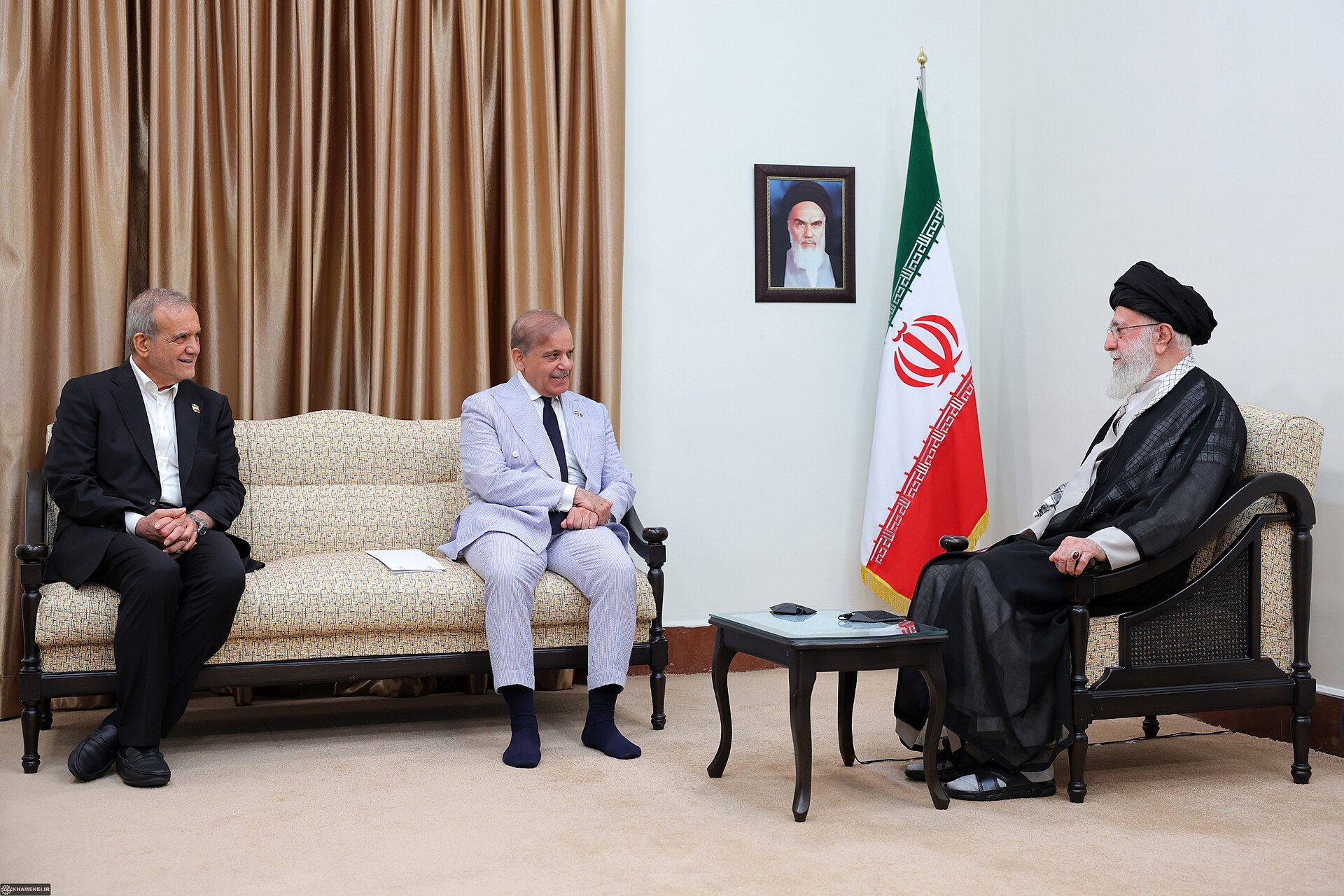
The Al Jazeera Centre for Studies framed Pakistan’s position structurally: Islamabad “has simultaneous working channels with not only Washington and Tehran, but also Beijing and the Gulf capitals,” and was “the only state in the region to condemn the attacks against Iran” in February 2026 — a stance that “did not go unnoticed in Tehran.” Pakistan co-developed a joint China-Pakistan five-point peace initiative that gave Beijing a framework for endorsing the mediation, adding a layer of international legitimacy that no other regional actor could provide. The April 11–12 Islamabad Talks — the first direct US-Iran negotiations since 1979 — lasted 21 hours across three rounds, with a 300-member US delegation (Vance, Witkoff, Kushner) facing a 70-member Iranian team (Ghalibaf, Araghchi), all mediated by Sharif, Munir, and Dar.
What Does Saudi Arabia Know?
The Islamabad Memorandum designates two co-mediators: Pakistan and Qatar. Saudi Arabia is not a signatory, not a mediator, and holds no observer status. The Quintet framework — Saudi Arabia, Qatar, Turkey, Pakistan, and Egypt — operated as a consultative body around the MOU’s formation but carries no formal role in its implementation or the negotiations it enables. Arab Center DC’s June 2026 analysis, “Limiting the Damage,” stated the structural dilemma plainly: Saudi Arabia “wants the war over, and at the same time fears a settlement that puts Iran’s economy back on its feet, frees it to fund its allies, gives it sway over Hormuz.”
Riyadh’s sole informational pipeline runs through FM Dar’s briefings to FM Faisal. Following the Doha rounds, both foreign ministers expressed “satisfaction with positive progress and hope for a peaceful solution,” according to Asharq Al-Awsat — diplomatic language that reveals nothing about the substance of what was agreed, the sequencing of what comes next, or the compromises being discussed. The July 11 session will negotiate terms that directly affect Saudi Arabia’s security architecture, energy revenues, and regional positioning, yet Riyadh will learn the outcomes only after they are reached, filtered through a Pakistani foreign minister whose primary obligation is to the mediation process rather than to any single Gulf capital.
The financial dimension makes the information asymmetry concrete. The PGSA fee suspension expires on August 18. If the talks produce no outcome that extends or eliminates Iran’s Hormuz toll framework by that date, the $5.5 million daily fee auto-activates against Saudi-linked tanker operators — a mechanism Iran has shown no inclination to waive unilaterally. Saudi Arabia’s $253 million in cumulative exposure across the MOU’s remaining days is a bet placed on negotiations it cannot see, in a room it cannot enter, on a timeline it cannot extend. That structural exclusion extends to the Saudi back-channel with Tehran: who signs for Iran in the Saudi back-channel examines the authority problem that makes Riyadh’s European-intermediary channel structurally open but constitutionally unresolvable.
The Article 13 Gate
Article 13 of the 14-point MOU is the sequencing mechanism that separates implementation from final agreement. It conditions the opening of nuclear-track negotiations on “beginning of implementation” of paragraphs 1 (ceasefire), 4 (naval withdrawal), 5 (Hormuz transit measures), 10 (oil-export waivers), and 11 (frozen-asset release). The Doha rounds addressed progress on several of these — as detailed in the prior section — but the standard for “beginning of implementation” is nowhere defined in the MOU’s public text. There is no named arbiter, no quantitative threshold, and no joint communiqué obligation that would force agreement on whether the gate has been met.
The INSS, Israel’s Institute for National Security Studies, offered the most skeptical reading of this architecture in its June 2026 analysis: “The deferral of detailed discussions on the nuclear issue to the final agreement constitutes an achievement for Iran, as it allows Tehran to conduct the next round of negotiations from a more advantageous position, after the United States has already begun to relinquish some of its key leverage.” In practical terms, the US has already ceased military operations under paragraph 1, begun discussions on Hormuz transit normalization under paragraph 5, and signaled willingness to discuss oil waivers — all before the nuclear conversation has formally opened. The Arms Control Association flagged that “addressing verification measures necessary for an effective, durable agreement will be challenging to negotiate in 60 days, and drawing out the talks could risk that Trump loses interest in the negotiations.”
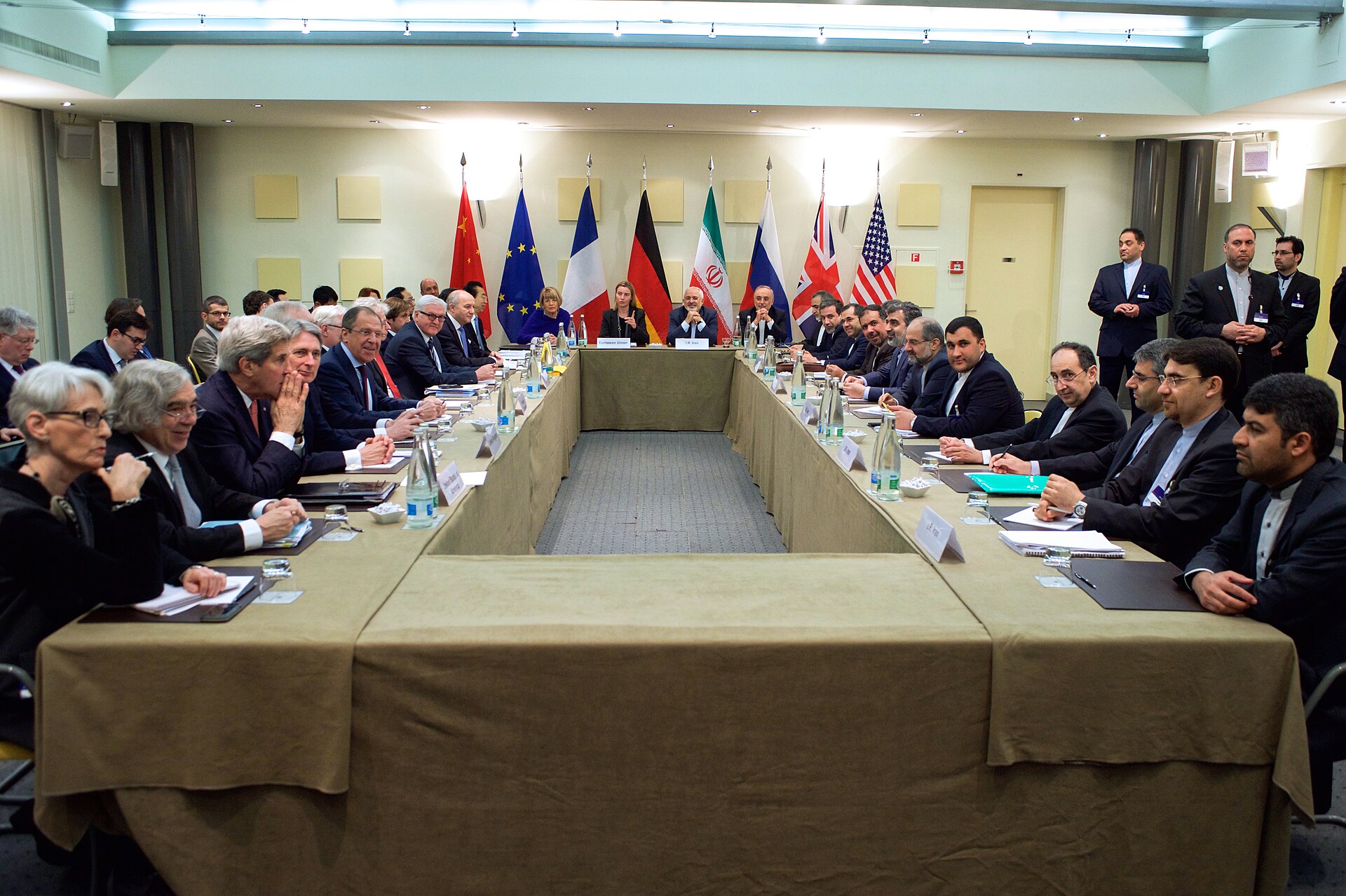
That the July 11 date was reported by Saudi media rather than by any of the three parties (US, Iran, Pakistan) adds an additional layer of ambiguity. Al Hadath and Al Arabiya are both owned by Saudi interests and have historically served as outlets for information Riyadh wishes to make public — which raises the question of whether the leak itself constitutes Saudi Arabia’s only available lever: shaping the narrative of talks it cannot attend. Neither the US State Department, Iran’s Foreign Ministry, nor Pakistan’s MFA had confirmed the date or agenda as of July 4.
Iran’s Nuclear Position Entering the Room
Iran approaches July 11 with a publicly stated position that the nuclear file should be deferred indefinitely. Foreign Minister Abbas Araghchi said in May 2026 that the transfer of enriched uranium is “not on the agenda” and that the US “cannot be trusted,” adding that “given the great difficulty of this issue in negotiations with the Americans, this issue has almost reached a stalemate — therefore, we must postpone it to the next stages of negotiations.” At the April Islamabad Talks, Araghchi told mediators from Pakistan, Egypt, Turkey, and Qatar that there was “no consensus inside the Iranian leadership about how to address the US demands,” according to Axios — an admission that Iran’s internal divisions on the nuclear question are as much an obstacle as American demands.
The hardline position was articulated by Iranian lawmaker Mahmoud Nabavian, who called inclusion of the nuclear issue in any framework a “strategic mistake” that encouraged US demands for removing nuclear material from Iran or suspending enrichment for decades. President Masoud Pezeshkian has vowed “never to compromise or negotiate” Iran’s missile capabilities, per PBS NewsHour, and 62 of 88 members of the Assembly of Experts — the body that selects Iran’s Supreme Leader — denounced the Hormuz reopening as a “strategic mistake” in late June. Speaker Ghalibaf warned on July 3 via ISNA that “if the US and Zionist regime fail to fulfil commitments, Iran will resume proportionate actions.”
Against this domestic backdrop, the Iranian delegation’s composition remains unconfirmed. The funeral period — running through July 9 — has consumed the political bandwidth of every senior official. Iran has barred IAEA inspectors from all bombed nuclear sites, maintaining a 121-day blackout, with 440.9 kilograms of highly enriched uranium at 60 percent purity remaining unverified. The gap between what Article 13 nominally requires and what Iran is prepared to discuss in practice will define whether July 11 produces a framework or a rupture.
Forty-Three Days
As of July 4, the MOU is on Day 17 of its 60-day framework. Forty-three days remain before the agreement’s expiry, and with it the fee suspension that keeps the PGSA from activating its $5.5 million daily toll on Saudi-linked Hormuz transit. The funeral pause — July 4 through July 9 — consumes six of those days without negotiating progress. July 11 arrives on Day 24, leaving 36 days to negotiate, agree, and begin implementing a nuclear framework that the Arms Control Association has characterized as unrealistically compressed for verification architecture alone.
The timeline compounds Saudi Arabia’s structural disadvantage. Aramco has already slashed its July Arab Light Official Selling Price by $6 per barrel — a $10-per-barrel collapse from May’s peak — hemorrhaging $900 million per month in forgone revenue at current export volumes. Sinopec has purchased zero Saudi crude for two consecutive months. The PGSA’s August 18 activation would add a direct financial penalty atop revenue losses that are already structural: Aramco’s free cash flow covers only 0.85 times its dividend obligation. Every day the talks continue without Saudi input is a day Riyadh’s financial exposure grows on a clock it can neither read nor reset.
Pakistan, by contrast, enters July 11 with compound credibility. Sharif co-signed the MOU. Munir maintained the back channel. Dar briefs both Faisal and Araghchi’s team. The CFR assessed that Pakistan achieved “something many diplomats from wealthy democracies and leading global organizations had failed at for nearly five decades: producing direct talks between Washington and Tehran.” Whether that achievement translates into a nuclear framework within 36 days — or whether it produces another 21-hour session that ends without agreement, as the April round did — will determine whether Saudi Arabia’s $253 million bet on a process it cannot see was a calculated wager or a structural concession it never chose to make.
Frequently Asked Questions
Who will lead the US delegation at the July 11 Islamabad talks?
The delegation composition has not been confirmed as of July 4. At the April 11–12 Islamabad Talks, the US sent a 300-member team led by Vice President JD Vance, Special Envoy Steve Witkoff, and Senior Adviser Jared Kushner. However, Trump cancelled a planned Witkoff/Kushner follow-up trip to Pakistan on April 25, and subsequent Doha rounds were conducted at lower “technical negotiator” level. Whether the nuclear-track elevation to Article 13 status warrants a return to principal-level representation remains unclear.
Can Saudi Arabia join the talks as an observer?
Not under the current MOU architecture. The agreement designates only Pakistan and Qatar as co-mediators, and the Quintet (Saudi Arabia, Qatar, Turkey, Pakistan, Egypt) holds no formal status in the implementation or negotiation process. Saudi Arabia would need a structural amendment to the MOU — requiring US and Iranian consent — to gain any form of access. No such amendment has been discussed publicly.
What happens if the 60-day MOU framework expires without a nuclear deal?
The MOU contains no automatic extension clause and no snapback mechanism, according to legal analysis by A&O Shearman and Gibson Dunn. The PGSA fee suspension lapses on August 18 regardless of negotiating status. Both sides would then need to negotiate a new framework from scratch — or extend the existing one by mutual consent, a condition that would require Iran to agree without the leverage of expiring US concessions already granted.
Has Pakistan confirmed the July 11 date officially?
No. As of July 4, the date has been reported exclusively by Saudi-owned media outlets Al Hadath and Al Arabiya. Pakistan’s Ministry of Foreign Affairs, the US State Department, and Iran’s Foreign Ministry have not issued confirmations. The Iranian delegation’s composition is described as pending finalization after Khamenei’s funeral ceremonies conclude on July 9, suggesting formal confirmation may not come until July 8 or 9 at the earliest.
What is Iran’s current enriched uranium stockpile?
Iran holds 440.9 kilograms of highly enriched uranium at 60 percent purity — enough, if further enriched to weapons-grade 90 percent, for approximately two nuclear devices according to arms control estimates. That threshold is why the IAEA blackout matters: without inspector access to the bombed sites at Fordow, Natanz, and Isfahan, there is no independent verification of whether the stockpile has grown, been transferred, or been further enriched since June 10, 2025. That verification deficit is compounding alongside a separate institutional gap: while Pakistan opens the nuclear track in Islamabad, NATO’s Ankara summit placed Hormuz on the Alliance’s collective agenda — a development that puts Saudi Arabia, excluded from both the Islamabad nuclear track and NATO’s Hormuz table, in the position of the most exposed state in neither room.
The exclusion pattern extends to the fee framework itself. On July 4, Iran’s ambassador to China confirmed that Hormuz tolls are “definite” post-MOU, and specified that China would receive “special treatment” — a designation Saudi Arabia was not offered. Iran’s envoy confirmed the fee framework would extend to friendly nations, creating a two-tier transit regime in which states that supported Tehran during the war gain a material advantage Saudi Arabia cannot negotiate its way into from outside the room. Pakistan’s formal guarantor role in the same framework — and what it means for Saudi Arabia’s structural exclusion — is examined in Pakistan Holds the Guarantee Saudi Arabia Cannot Buy.
The nuclear agenda’s formal addition to Islamabad’s July 14-15 round, combined with Saudi Arabia’s exclusion despite restoring all diplomatic channels with Washington, confirmed that channel access and nuclear leverage are separate instruments. That gap is documented in Faisal Got the Call — Riyadh Did Not Get the Seat.