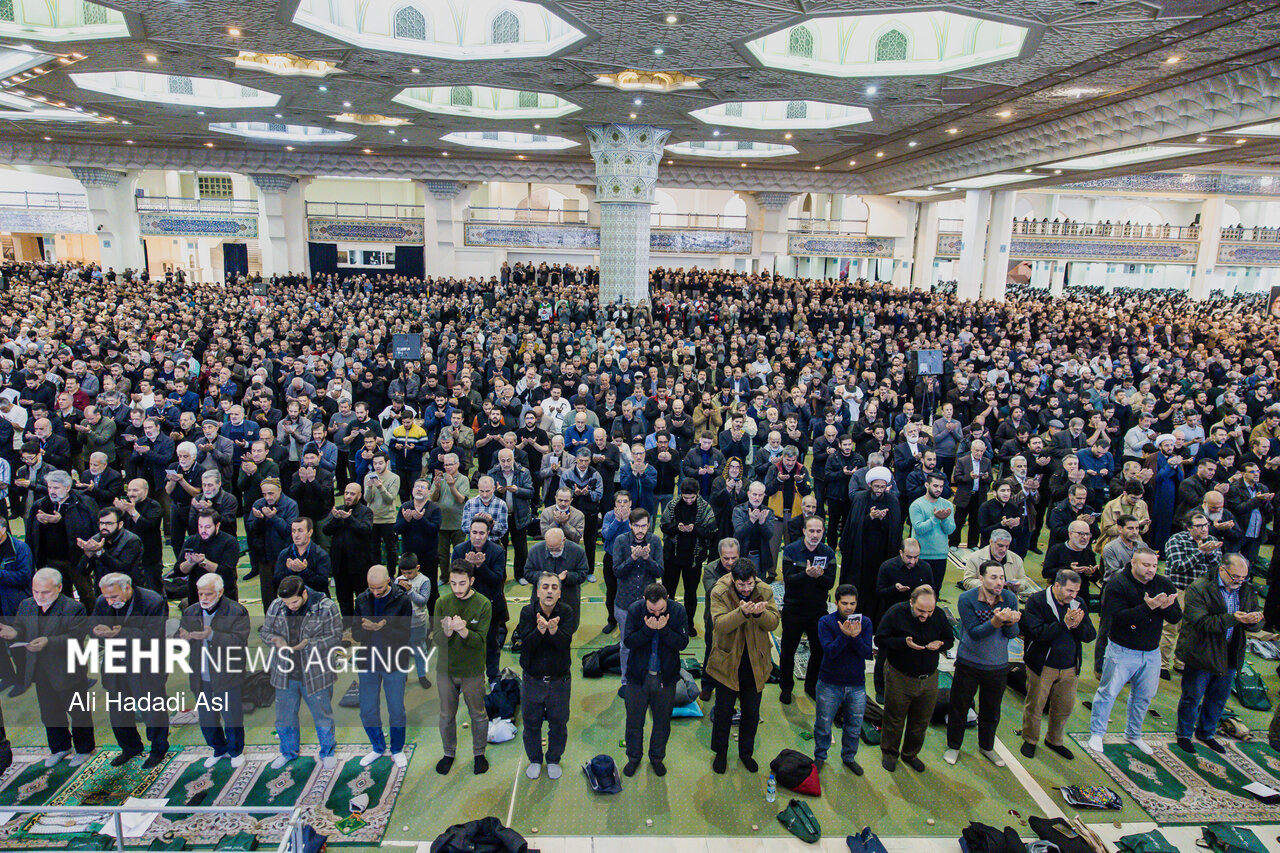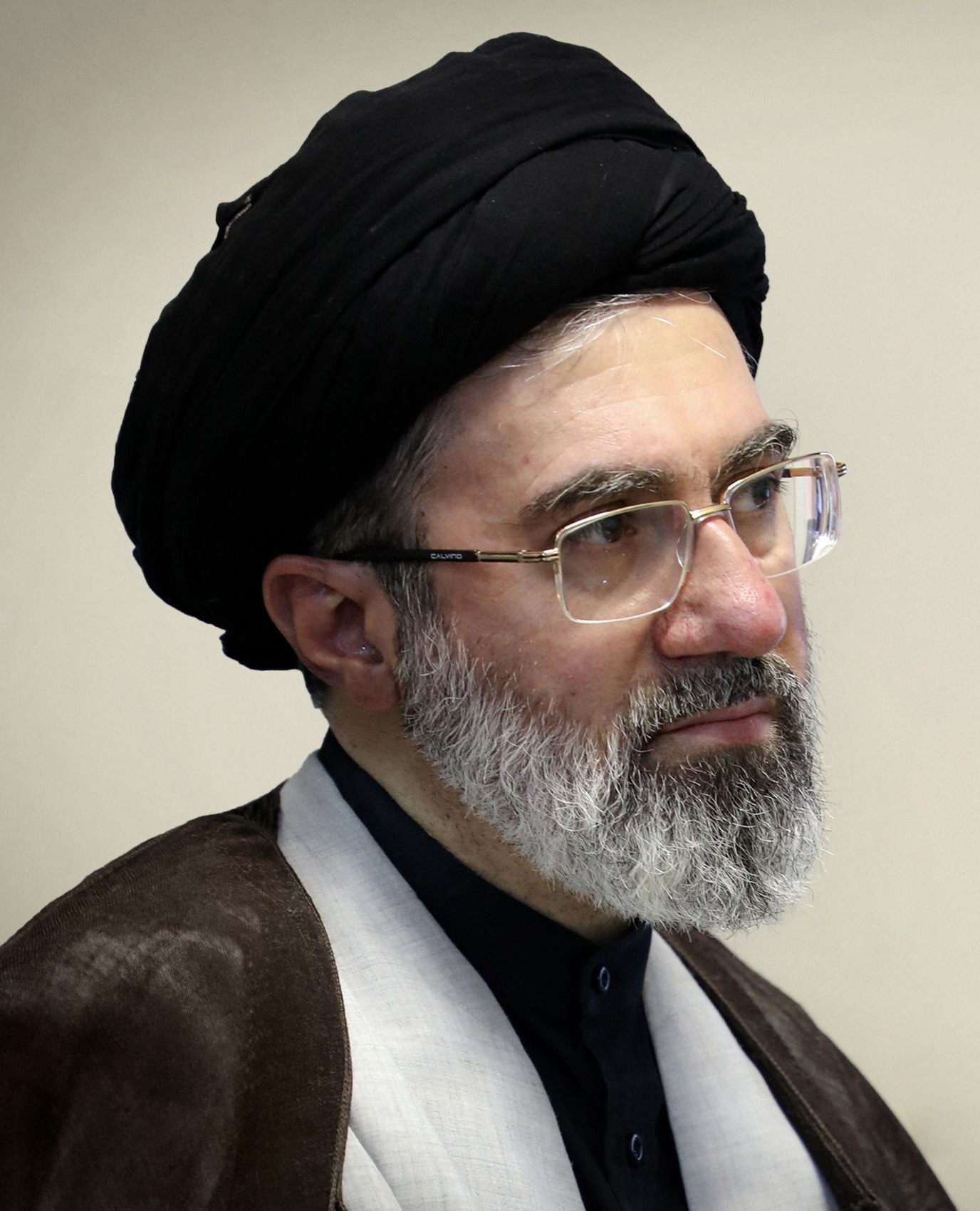

TEHRAN — Three of Ali Khamenei’s sons — Mostafa, Meysam, and Masoud — prayed beside their father’s coffin at Tehran’s Imam Khomeini Grand Mosalla on July 5. The fourth, Mojtaba Khamenei — Iran’s Supreme Leader since March 9 — was absent. He had asked to attend. Iranian security officials refused.
The security rationale is real: Israeli Defense Minister Israel Katz has publicly called Mojtaba “marked for death.” But it obscures the physical facts underneath. Three people close to Mojtaba’s inner circle told Reuters that his face was disfigured in the February 28 strike on the Supreme Leader’s compound, and that he suffered a significant injury to one or both legs. Four senior Iranian officials told the New York Times in April that he had undergone three leg surgeries, awaits a prosthetic, and requires further plastic surgery for facial burns. In 127 days as Supreme Leader, Mojtaba has not shown his face, used his voice, or appeared in any verified setting.
The US-Iran MOU reaches Day 60 around August 17-18 — 42 days from now. Every extension requires Article 176 confirmation from the Supreme Leader. That confirmation can currently take only one form: an unverifiable written statement, from a leader who explicitly dissented from the original agreement, whose physical capacity to produce such statements has been contradicted by three independent sourcing streams and affirmed only by a Health Ministry claim that he needed “two or three stitches.”
Table of Contents
- What Do the Reuters Sources Say About Mojtaba’s Injuries?
- Three Brothers at the Coffin
- How Does Iran’s Official Account Compare to Independent Sourcing?
- What Does 127 Days Without a Verified Appearance Mean?
- Who Holds Confirmation Power When the Supreme Leader Cannot Appear?
- The MOU Was Signed by a Man Who Dissented From It
- What Does Riyadh’s $253 Million Exposure Rest On?
- Frequently Asked Questions
What Do the Reuters Sources Say About Mojtaba’s Injuries?
Three people close to Mojtaba Khamenei’s inner circle told Reuters, in reporting published July 5, 2026, that his face was disfigured in the February 28 attack and that he suffered a significant injury to one or both legs. The Reuters account — carried by CNBC, Tribune India, and CBC — is the most recent independent sourcing on his physical condition and the first to use “disfigured” with direct inner-circle attribution.
The Reuters reporting builds on a New York Times account published in late April, in which four senior Iranian officials described a more granular picture: Mojtaba’s leg had been operated on three times, he was awaiting a prosthetic, he had undergone surgery on one hand and was slowly regaining function, and he had severe facial burns for which additional plastic surgery was planned. The four officials were not identified, but the Times published their account at a level of medical specificity — three surgeries, prosthetic, burn treatment — that no other outlet had matched at that point.
US Defense Secretary Pete Hegseth provided the earliest on-record foreign-government statement in March 2026, saying that Mojtaba was “wounded and likely disfigured.” Hegseth’s characterization predated the NYT’s four-official sourcing by roughly a month and aligned with what those officials would later describe in clinical detail.
The Middle East briefing 3,000+ readers start their day with.
One email. Every weekday morning. Free.
An intelligence assessment reported by Asharq Al-Awsat and Kyiv Post on April 7 went further, describing Mojtaba as “critically ill and unconscious in Qom, unable to be involved in any decision making.” The late-April NYT sourcing partially revised this picture: Mojtaba was “mentally sharp and engaged,” the four officials said, but physically impaired. The trajectory from “critically ill and unconscious” in early April to “mentally sharp” but awaiting a prosthetic and facial reconstruction in late April describes a man recovering cognition while remaining unable to stand, walk unsupported, or show his face without visible evidence of the injuries Iran’s Health Ministry characterized as requiring stitches.
The February 28 attack on the Supreme Leader’s compound killed Ali Khamenei at age 86, along with Mojtaba’s mother, his wife, and his son. Mojtaba survived. The scope of what he survived — and the physical cost — has been the subject of a four-month contest between Iran’s state apparatus and every independent account that has emerged since.
Three Brothers at the Coffin
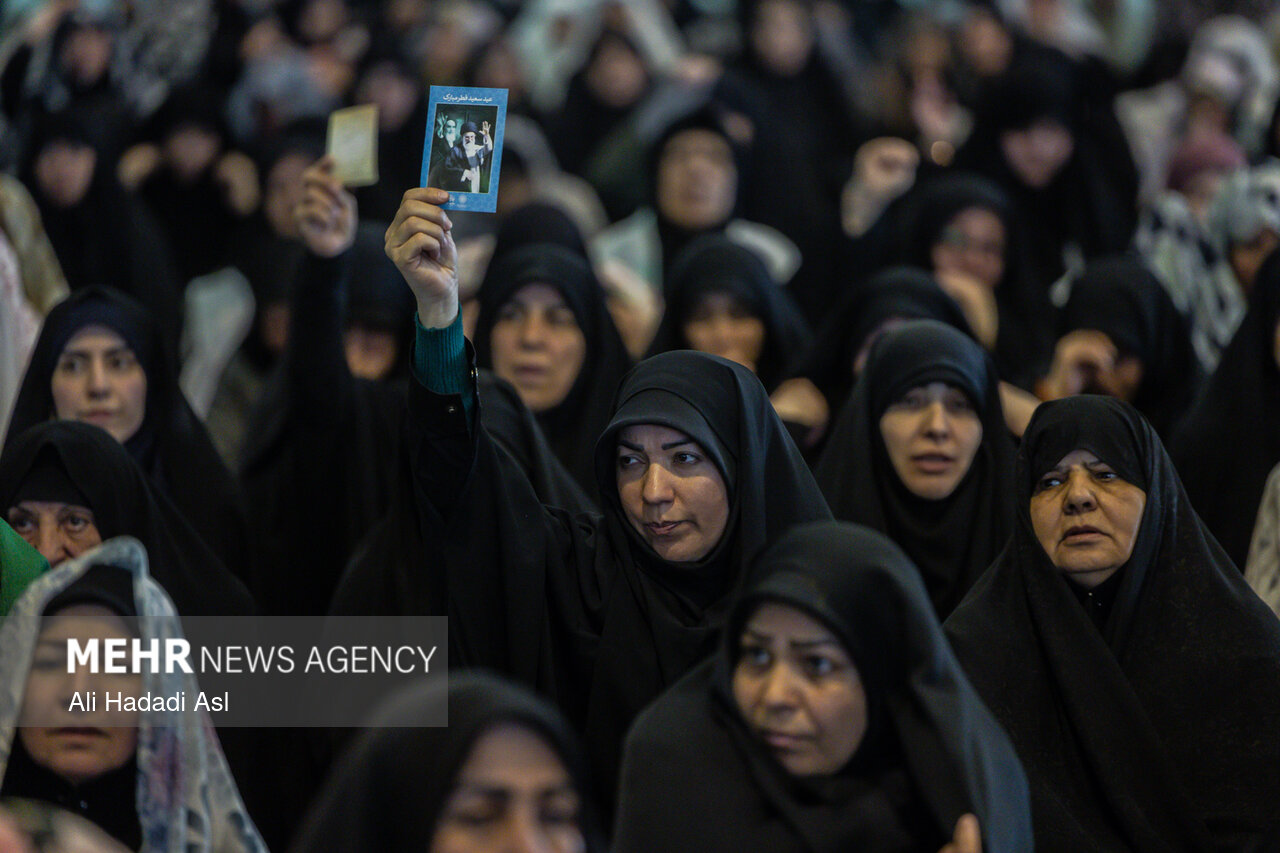
Iranian state television’s July 5 broadcast from the Imam Khomeini Grand Mosalla showed Mostafa, Meysam, and Masoud Khamenei performing funeral rites beside their father’s coffin. The camera lingered. The three brothers were identifiable. The fourth — the one who holds the office their father held for 35 years — was not present.
Mojtaba had told officials he wanted to attend and recite the prayer of the dead over his father’s body, according to reporting by the New York Times and Jerusalem Post on July 3-4. Iranian security officials rejected the request. Their stated rationale: Israel could assassinate him or use the appearance to track his location. Katz’s public statement — that Mojtaba was “marked for death” — gave the rationale an adversary-confirmed foundation.
But the funeral’s ritual architecture told a separate story. State media announced that senior Shia clerics — not the Supreme Leader — would lead funeral prayers in each of Iran’s three principal cities: Ja’far Sobhani in Tehran, Naser Makarem Shirazi in Qom, Hossein Nouri Hamedani in Mashhad. Iran International reported on July 4 that Mojtaba was “not listed to lead funeral prayers.” The framing let state media avoid explaining why the sitting Supreme Leader — the dead man’s son — could not perform the most elemental religious duty of his station at the most consequential funeral in the Islamic Republic’s history since Ruhollah Khomeini’s death in June 1989.
The three brothers’ presence was itself a calibrated signal. Mostafa, Meysam, and Masoud are not the designated successor. They could appear because their deaths would not trigger a constitutional crisis. Their visibility confirmed what the ceremony’s organizers already knew — the brother who held the office could not safely or physically be there.
What the July 5 broadcast added to the funeral’s institutional record was the visual evidence: three sons standing beside a coffin, and a fourth whose Reuters-sourced injuries — disfigured face, severe leg damage — explained the absence in terms the security rationale alone could not.
How Does Iran’s Official Account Compare to Independent Sourcing?
Iran’s Health Ministry issued one statement on Mojtaba Khamenei’s injuries, in March 2026. It described wounds as “superficial” cuts to the face, head, and legs requiring “two or three stitches” on the leg and “no special procedures.” The ministry stated that the injuries did not “deface his features and appearance.” That statement has not been updated, amended, or withdrawn — not after the New York Times’ April reporting, not after Hegseth’s on-record confirmation, and not after Reuters’ July 5 inner-circle account.
| Source | Date | Attribution | Face | Legs | Other |
|---|---|---|---|---|---|
| Iran Health Ministry | March 2026 | Official statement | “Superficial” cuts; did not deface “features and appearance” | “Two or three stitches”; no special procedures | Head cuts |
| Pete Hegseth (US DefSec) | March 2026 | On-record | “Wounded and likely disfigured” | Not specified | — |
| Asharq Al-Awsat / Kyiv Post | April 7, 2026 | US-Israeli intelligence memo | — | — | “Critically ill and unconscious in Qom” |
| New York Times | Late April 2026 | Four senior Iranian officials | Severe facial burns; plastic surgery planned | Three surgeries; prosthetic pending | Hand surgery; slowly regaining function; “mentally sharp” |
| Reuters | July 5, 2026 | Three inner-circle sources | “Disfigured” | “Significant injury to one or both legs” | — |
Every independent account — American, Israeli, and Iranian — contradicts the Health Ministry’s characterization. The spectrum runs from Hegseth’s “likely disfigured” to the NYT’s prosthetic-and-plastic-surgery detail to Reuters’ direct use of “disfigured” from inner-circle sources. The ministry’s “two or three stitches” sits alone at one end of a credibility gap that four months of reporting have only widened.
All communications attributed to Mojtaba since February 28 have been text-only written statements. No audio recording. No video appearance. No photograph. No verified in-person meeting with any foreign or domestic official has been reported by any independent outlet. Iran International and Euronews both note that 127 days have passed without a verified appearance of any kind — the entirety of a Supreme Leader’s tenure conducted in writing, from an undisclosed location, without the man behind the statements ever being seen.
What Does 127 Days Without a Verified Appearance Mean?
In 127 days as Supreme Leader, Mojtaba Khamenei has not performed a single one of the public legitimation rituals that consolidated every previous holder of the office. No public bay’ah — the oath of allegiance from senior officials and clerics. No Friday prayer leadership in Tehran. No televised address. No confirmed in-person meeting with any head of state, foreign minister, or military commander reported by an independent outlet.
Public bay’ah — in which senior clerics, IRGC commanders, and government officials formally pledge allegiance in a visible ceremony — has never taken place. Friday prayer leadership at Tehran University, which Ali Khamenei used as a periodic projection of authority during politically charged weeks, has been conducted by designated substitutes. The SNSC, which the Supreme Leader chairs under Article 176, has not held a verifiable in-person session with Mojtaba presiding.
Ali Khamenei appeared publicly within hours of being selected as Supreme Leader in June 1989. He used Friday sermons, public addresses, and crisis-moment appearances — during the 2009 Green Movement crackdown, the JCPOA debates, and the Soleimani funeral in January 2020 — to project the authority the office required. An invisible Supreme Leader has no precedent in the Islamic Republic’s 47-year history.
“Mojtaba is not yet in full command or control.”
— Sanam Vakil, Director of the Middle East and North Africa Programme, Chatham House, via the New York Times, April 2026
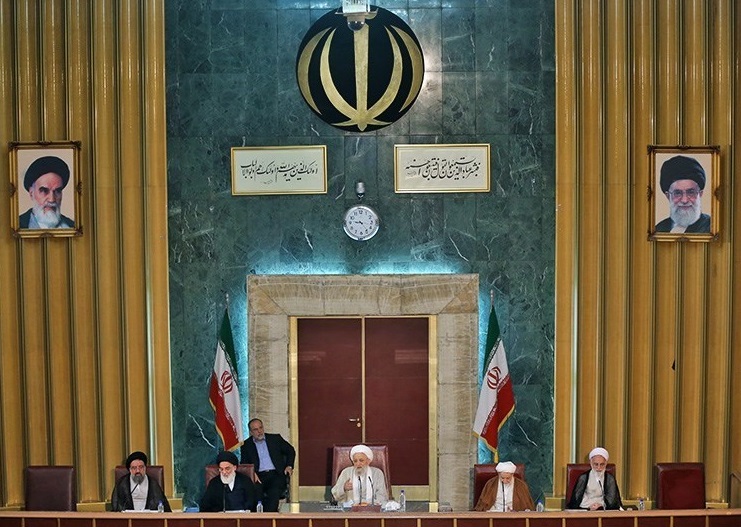
Mojtaba’s selection itself lacked the institutional markers of legitimate succession. The IRGC applied what Critical Threats documented as “repeated contacts and psychological and political pressure” on Assembly of Experts members beginning March 3. The AoE’s first session was held online because in-person meetings could not be convened on security grounds. Mojtaba was announced as Supreme Leader on March 8-9, 2026 — eight to nine days after the attack, in a process driven by military pressure rather than clerical consensus.
The institutional consequences have compounded. The Assembly of Experts — the body that selected Mojtaba — subsequently saw 62 of its 88 members (70 percent) publicly characterize the MOU as “a strategic mistake,” according to IranWire reporting on the AoE divide. The governing clerical body does not endorse the agreement that Mojtaba conditionally approved. Time magazine published a cover story on April 21 headlined “Iran’s Supreme Leader No Longer Reigns Supreme,” framing the power migration toward the IRGC that Mojtaba’s physical absence has accelerated.
On July 1, Ghalibaf’s interview on IRIB — Iranian state television — was cut short after approximately 20 minutes, reportedly following statements touching on nuclear commitments. The Supreme Leader, 127 days invisible, issued no comment on the nuclear positions Ghalibaf had been discussing.
Who Holds Confirmation Power When the Supreme Leader Cannot Appear?
Article 176 of Iran’s constitution vests the Supreme Leader with confirmation authority over every decision of the Supreme National Security Council. This is not advisory — it is a procedural requirement. No SNSC decision takes legal effect without the Supreme Leader’s confirmation. Since February 28, Mojtaba has exercised this power exclusively through written statements: text-only documents with no independent verification mechanism, no audio component, no video component, and no witnessed signature.
The constitutional architecture did not anticipate this scenario. Article 176 assumes a Supreme Leader who can appear, speak, and act in settings where his identity and agency are independently verifiable. The mechanism by which confirmation currently operates — anonymous text attributed to an unseen leader — has no precedent in the Islamic Republic’s constitutional history and no procedural safeguard against intermediary control over the confirmation process.
Article 111 provides the constitutional remedy for Supreme Leader incapacity. If the Supreme Leader “becomes incapable of performing constitutional duties, or loses one of the qualifications mentioned,” the Assembly of Experts has the authority to remove or replace him. On formal acknowledgment of incapacity — or on death or resignation — Article 111 immediately triggers a Temporary Leadership Council composed of the President (Masoud Pezeshkian), the Chief Justice (Gholamhossein Mohseni-Eje’i), and one jurist from the Guardian Council selected by that council’s clerical members. The Temporary Leadership Council exercises all Supreme Leader duties — including Article 176 confirmation — until the AoE elects a replacement “in the shortest possible time.” The constitution sets no hard deadline for that replacement.
But invoking Article 111 would require the Assembly of Experts to formally acknowledge that the IRGC’s chosen successor — selected under military pressure barely nine days after the attack — is physically unable to hold office. No faction currently has an incentive to trigger this process. The IRGC, which drove the selection, would face the admission that its candidate is incapacitated. Pezeshkian’s government, which depends on Mojtaba’s conditional MOU approval for its negotiating authority, would lose whatever legitimacy derives from the current arrangement. The Paydari hardliners, who oppose the MOU, could benefit from Article 111 — but could benefit more from leaving the current arrangement intact and attacking its legitimacy from outside.
The result is constitutional limbo. The sitting Supreme Leader may be incapacitated, but no institution will formally say so. Article 111 remains un-triggered. Article 176 confirmation authority stays nominally with Mojtaba. And every SNSC decision — including any future action on the MOU — rests on unverifiable written text from a leader whose physical capacity is confirmed only by a Health Ministry claim of “two or three stitches” and contradicted by every independent source that has spoken since.
The MOU Was Signed by a Man Who Dissented From It
On June 18, 2026, Mojtaba Khamenei issued a written statement granting conditional permission for the US-Iran MOU. The statement’s operative sentence was not an endorsement.
“In principle, I held a different opinion. However, based on the commitment given to me by the honorable President, as the head of the Supreme National Security Council, on behalf of himself and the other members regarding the safeguarding of the rights of the Iranian nation and the Resistance Front, and their explicit acceptance of responsibility for it, I granted permission for it.”
— Mojtaba Khamenei, written statement, June 18, 2026 (via IranWire, Al Jazeera, Washington Examiner)
The statement did three things simultaneously. It recorded Mojtaba’s dissent from the MOU’s substance. It transferred political liability to Pezeshkian and the SNSC. And it established that the agreement exists not because the Supreme Leader supports it but because the Supreme Leader chose — in writing, without appearing — not to block it. The permission was conditional, personal, and explicitly disclaimed responsibility for outcomes.
The negotiating mandate underpinning the MOU sits on its own set of fractures. Ghalibaf, who has led Iran’s engagement in the Doha process, holds the office of Majlis speaker — a legislative position with no constitutional authority over treaty-class commitments. IranWire’s analysis noted that Ghalibaf can negotiate positions but cannot sign. His approach has been to construct structural vetoes within the agreement’s own terms, loading obligations onto the US side. His mandate to negotiate at all derives from Khamenei Sr. — the original Supreme Leader who authorized the track — not from Mojtaba, who explicitly distanced himself from the agreement Ghalibaf is negotiating.
On July 3, Ghalibaf told ISNA: “If US and Zionist regime fail to fulfil commitments, Iran will resume proportionate actions.” The threat was issued by a Majlis speaker whose constitutional authority to make it does not exist, under a mandate from a dead Supreme Leader, with conditional permission from a living Supreme Leader who has not appeared to confirm whether the mandate still holds.
The Paydari hardliner faction has already identified the vulnerability. Their argument: the MOU required Majlis ratification under Article 77, and Pezeshkian exceeded his executive authority. Any renewal of MOU terms via Mojtaba written statement is maximally exposed to this attack — Paydari can argue the statement is unverifiable, that the original MOU was never properly ratified, and that the funeral-period window is precisely the kind of moment when an illegitimate renewal could be advanced without constitutional scrutiny. The 62 of 88 AoE members who called the MOU “a strategic mistake” provide the clerical constituency for that challenge.
What Does Riyadh’s $253 Million Exposure Rest On?
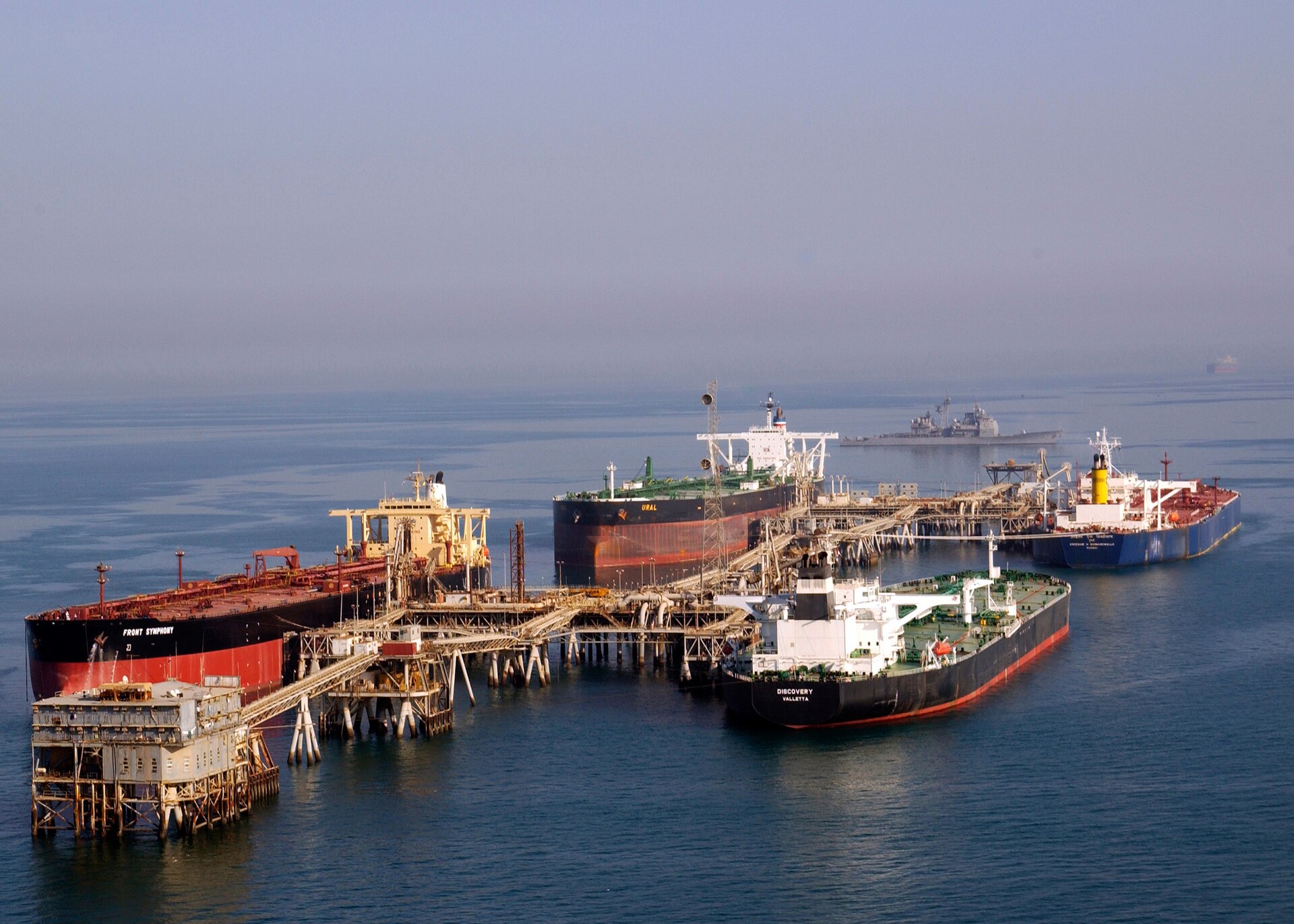
Saudi Arabia’s Persian Gulf Strait Authority exposure stands at $253 million in total assessed fees, with $5.5 million per day accumulating from August 18 — Day 60 of the MOU — if the fee-suspension window expires without extension. Any extension requires fresh Article 176 confirmation from the Supreme Leader, through the SNSC mechanism described above.
The signing-authority chain for any extension runs through three links. The first — Ali Khamenei, who authorized the original negotiating track — is dead. The second — Mojtaba, who conditionally approved the MOU while recording his dissent — has not appeared in 127 days, communicates only through unverifiable text, and may be physically unable to perform the public confirmation rituals that would give an extension domestic political durability. The third — Pezeshkian and the SNSC, to whom Mojtaba transferred “responsibility” — lacks constitutional authority to act without a fresh Article 176 confirmation from the second link in the chain.
Riyadh’s exposure calculations have conventionally treated the MOU’s expiry risk as a diplomatic variable: whether Tehran and Washington can reach terms, whether Ghalibaf’s veto architecture blocks extension, whether the Paydari faction forces rejection. The physical incapacity of the Supreme Leader adds a variable that diplomacy cannot address. A counterpart whose facial disfigurement prevents public appearance and whose leg injuries may prevent the standing, walking, and ritualistic participation that legitimation in the Islamic Republic requires is not a counterpart who can be pressured or engaged through normal diplomatic channels. He is a counterpart whose institutional capacity to confirm any agreement is itself an open question.
Today is Day 18. The $253 million in total assessed PGSA fees becomes actionable on Day 60 — 42 days from now. In the intervening period, any SNSC decision on the fee-suspension framework requires Article 176 confirmation from a Supreme Leader whose most recent physical description, from three Reuters inner-circle sources, includes “disfigured” face and severe leg injury. The AoE members who called the MOU a strategic mistake — 70 percent of the governing clerical body — provide the domestic environment in which any renewal, however issued, will be received.
| Data point | Figure | Source |
|---|---|---|
| Days since Mojtaba’s last verified appearance | 127 (as of July 5) | Iran International, Euronews |
| Leg surgeries undergone | 3 (prosthetic pending) | New York Times, April 2026 — four officials |
| Iran Health Ministry characterization | “Superficial; two or three stitches” | Kurdistan24, Health Ministry statement, March 2026 |
| MOU day count (July 5) | Day 18 of 60 | MOU framework |
| PGSA total Saudi exposure | $253 million | Maritime Executive; MOU reporting |
| PGSA daily accrual post-Day 60 | $5.5 million per day (from August 18) | MOU framework; maritime reporting |
| AoE members calling MOU “strategic mistake” | 62 of 88 (70%) | IranWire, AoE reporting |
| Days from selection to announcement | 8-9 days (March 8-9) | Assembly of Experts; Critical Threats |
| Funeral prayer substitutes assigned | 3 (Tehran, Qom, Mashhad) | Iran International, July 4, 2026 |
The negotiating track that became the MOU was authorized by one Supreme Leader — Ali Khamenei, who died before the agreement existed. The agreement was conditionally approved by a second Supreme Leader — Mojtaba, who explicitly dissented from it. It reaches Day 60 under conditions where the second Supreme Leader’s physical ability to reauthorize it has been contradicted by Reuters’ inner-circle sources, the New York Times’ four-official account, and a US Defense Secretary’s on-record assessment — and affirmed only by a Health Ministry statement that has not been updated in four months. The man who holds the confirmation power has not been seen in any verified setting since February 28 — 127 days ago.
Frequently Asked Questions
Has any foreign government confirmed a face-to-face meeting with Mojtaba Khamenei since February 28?
No. Pakistan’s Prime Minister Shehbaz Sharif and Army Chief General Asim Munir attended Ali Khamenei’s funeral in Tehran — the highest-ranking delegation from any Quintet member — but neither Pakistani official claimed to have met Mojtaba in person. China sent Vice Foreign Minister He Wei, at the same sub-foreign-minister diplomatic tier as Saudi Arabia’s Deputy FM El-Khereiji, and Beijing has not reported any meeting with Mojtaba. Pakistan’s dual positioning as UNSC member and Quintet state has not extended to independently verifying the physical condition of the leader whose constitutional approval underpins the agreement Islamabad helped broker. The only government to comment publicly on Mojtaba’s physical state has been the United States, through Hegseth’s March statement. No diplomatic encounter with Mojtaba has been independently verified in 127 days.
How did the 1989 Supreme Leader succession differ from 2026?
Khomeini died on June 3, 1989, producing no incapacity ambiguity — a dead leader triggers Article 111 automatically. The Assembly of Experts met in person within hours. The succession was contested on clerical rank: Khamenei Sr. lacked marja (source of emulation) status, which was then a constitutional requirement under Article 109. The AoE resolved the gap during the same emergency session through a constitutional amendment to Article 109 removing the marja requirement — a procedural improvisation that took hours, not weeks. Khamenei appeared publicly immediately after selection and led Friday prayers within days. In 2026, the AoE’s first session was held online, the selection took 8-9 days under documented IRGC military pressure, and 127 days later the selected Supreme Leader has still not appeared in any public or verified private setting.
Could Mojtaba delegate his Article 176 confirmation power to another official?
No mechanism exists in the Iranian constitution for the Supreme Leader to delegate Article 176 SNSC confirmation authority. The power is vested in the office, exercisable only by the officeholder or — upon formal invocation of Article 111 (death, resignation, or acknowledged incapacity) — by the three-person Temporary Leadership Council. Any informal delegation to a deputy, advisor, or IRGC commander would carry no constitutional standing. The current arrangement, in which written statements attributed to Mojtaba serve as de facto Article 176 confirmations, is itself a workaround for which no constitutional provision exists — a mechanism adopted under emergency conditions that has now persisted for 127 days without institutional review or legal challenge.
What was the April 7 intelligence assessment, and how did the picture evolve?
On April 7, 2026, Asharq Al-Awsat and Kyiv Post reported a US-Israeli intelligence memo describing Mojtaba as “critically ill and unconscious in Qom, unable to be involved in any decision making.” The assessment reflected conditions roughly five weeks after the February 28 attack. Later that month, the New York Times’ four-official sourcing described Mojtaba as “mentally sharp and engaged” but physically impaired — a trajectory from critically ill and unconscious to conscious but incapacitated. The Health Ministry’s March claim of “superficial” injuries requiring stitches was never updated to reflect either the deterioration described in the April 7 memo or the partial cognitive recovery (paired with severe physical impairment) described in the late-April NYT reporting. As of July 5, the ministry’s March statement remains the Islamic Republic’s sole official account of the Supreme Leader’s medical condition.
What is the Temporary Leadership Council that Article 111 would activate?
If the Assembly of Experts formally acknowledges the Supreme Leader’s incapacity — or upon his death or resignation — Article 111 activates a Temporary Leadership Council of three members: the President (currently Masoud Pezeshkian), the Chief Justice (currently Gholamhossein Mohseni-Eje’i), and one jurist from the Guardian Council selected by the council’s six clerical members. This body exercises all Supreme Leader duties — Article 176 SNSC confirmation, command of the armed forces, Guardian Council supervision, media authority — until the Assembly of Experts elects a new Supreme Leader. The constitution mandates replacement “in the shortest possible time” but imposes no hard deadline. In practice, the absence of a deadline means a triggered Temporary Leadership Council could operate for months, introducing a collective-leadership dynamic for which the Islamic Republic’s post-1989 institutional architecture — built around a single Supreme Leader — has no structural preparation.
The same July 5 ceremony that produced these physical revelations also produced an IRGC-podium declaration that killing the US president was a religious duty. The kill-threat Ghalibaf now carries into Doha round three arrived from the same state apparatus whose compliance the MOU requires. The incapacity questions raised by Mojtaba’s absence bear directly on the conditional mandate Pezeshkian carries to Islamabad — a delegation whose author remains constitutionally unreachable.
Six days after the funeral, Mojtaba issued a written revenge declaration — his seventh statement as Supreme Leader — still without appearing on video or in any verified physical setting. The July 11 statement extended the absence documented here to 127 consecutive days. See: Mojtaba Khamenei Called for Revenge After 127 Days Without Appearing.