
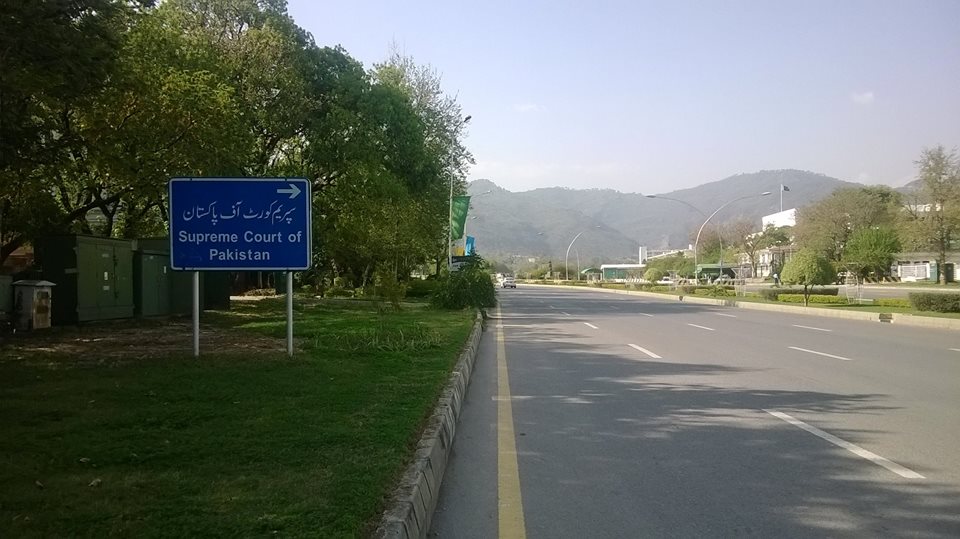
ISLAMABAD — Pakistan will host the third round of US-Iran negotiations on July 14-15, according to government sources cited by Geo.tv. The format has changed. In April, this city seated Vice President Vance across from Parliamentary Speaker Ghalibaf for twenty-one hours of talks that produced the Islamabad Memorandum of Understanding — the only binding instrument of this negotiating cycle. The July round will seat experts. Tehran has not announced its delegation and says it will not until Ayatollah Khamenei’s funeral ceremonies conclude.
n
The framing matters more than the date. “Technical talks,” Pakistani sources told Geo.tv — “Iranian and American experts on technical matters.” In the grammar of nuclear diplomacy, “technical” is a ceiling, not a description. Technical rounds refine language and identify impasse. They do not produce binding political decisions on enrichment, sanctions, or verification — the issues the MOU’s fourteen points defer to a sixty-day window now more than one-quarter consumed. Day 19 of 60 passed on July 6. The Persian Gulf Strait Authority’s $5.5 million daily fee on Saudi crude through Hormuz auto-activates on August 18, whether or not anyone at the table holds the authority to prevent it.
n
n
The Middle East briefing 3,000+ readers start their day with.
One email. Every weekday morning. Free.
Table of Contents
n
- n
- What Does ‘Technical-Level’ Mean in Iran Nuclear Diplomacy?
- Twenty-One Hours in April — the Benchmark That No Longer Applies
- Why Can a Technical Round Not Resolve the Supreme Leader’s Conditionality?
- The Signing-Authority Chain Ends in an Empty Room
- Who Leads Iran’s Delegation — and What Does That Signal?
- The Sixty-Day Clock and the Fee That Runs Itself
- Can Pakistan Bridge the Gap Between Process and Decision?
- The Architecture of Productive Failure
- Frequently Asked Questions
- n
n
n
n
n
n
n
n
n
n
n
n
n
What Does ‘Technical-Level’ Mean in Iran Nuclear Diplomacy?
n
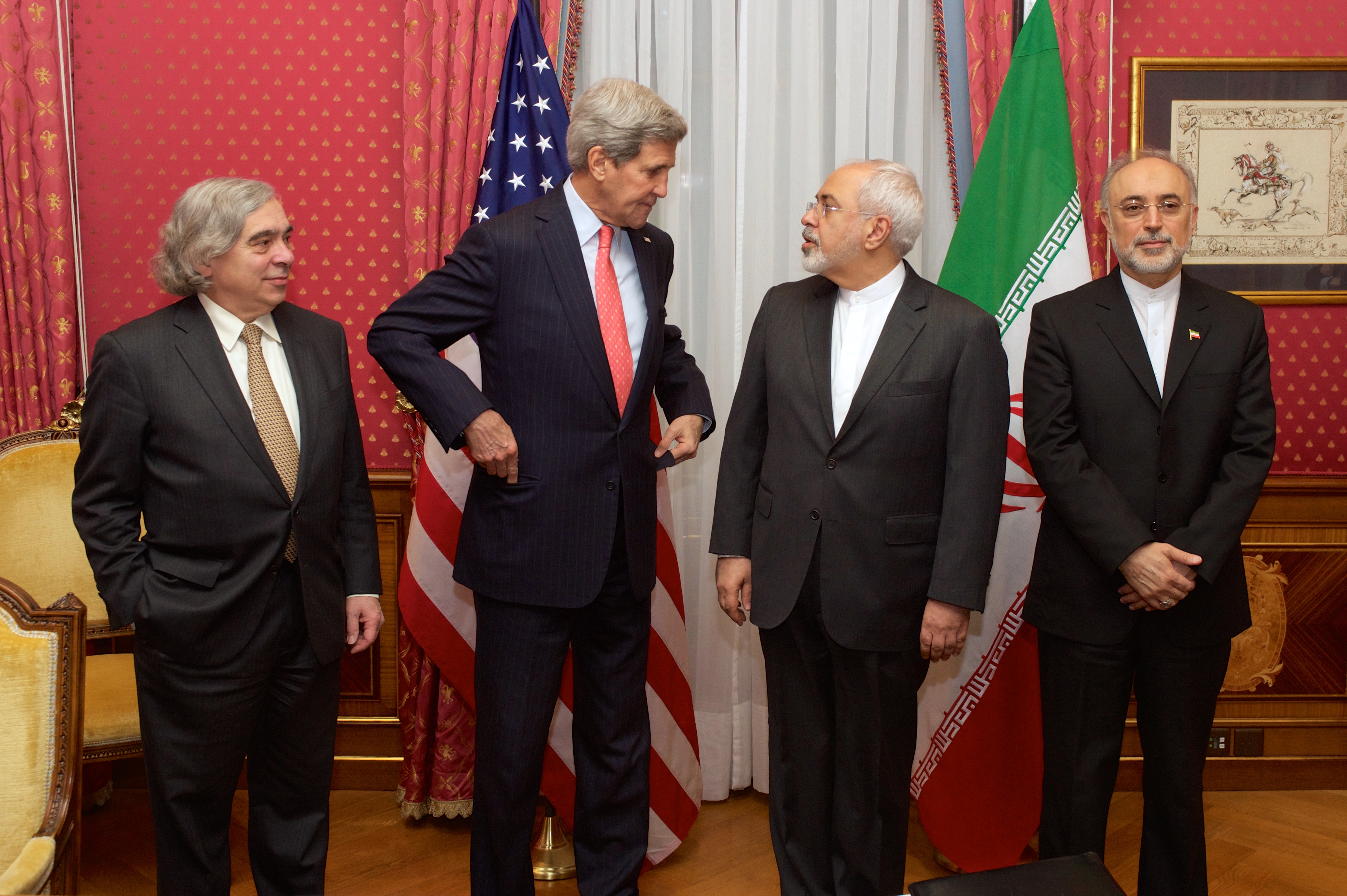
Technical-level negotiations in the US-Iran framework convene subject-matter experts — nuclear engineers, legal specialists, sanctions analysts — to refine treaty language, align working papers, and map areas of agreement or impasse. They lack the mandate authority to make binding political commitments on enrichment disposition, sanctions relief, or verification scope. Those decisions require principal-level or foreign-minister-level sessions, a structural distinction established by the JCPOA negotiating architecture between 2013 and 2015.
n
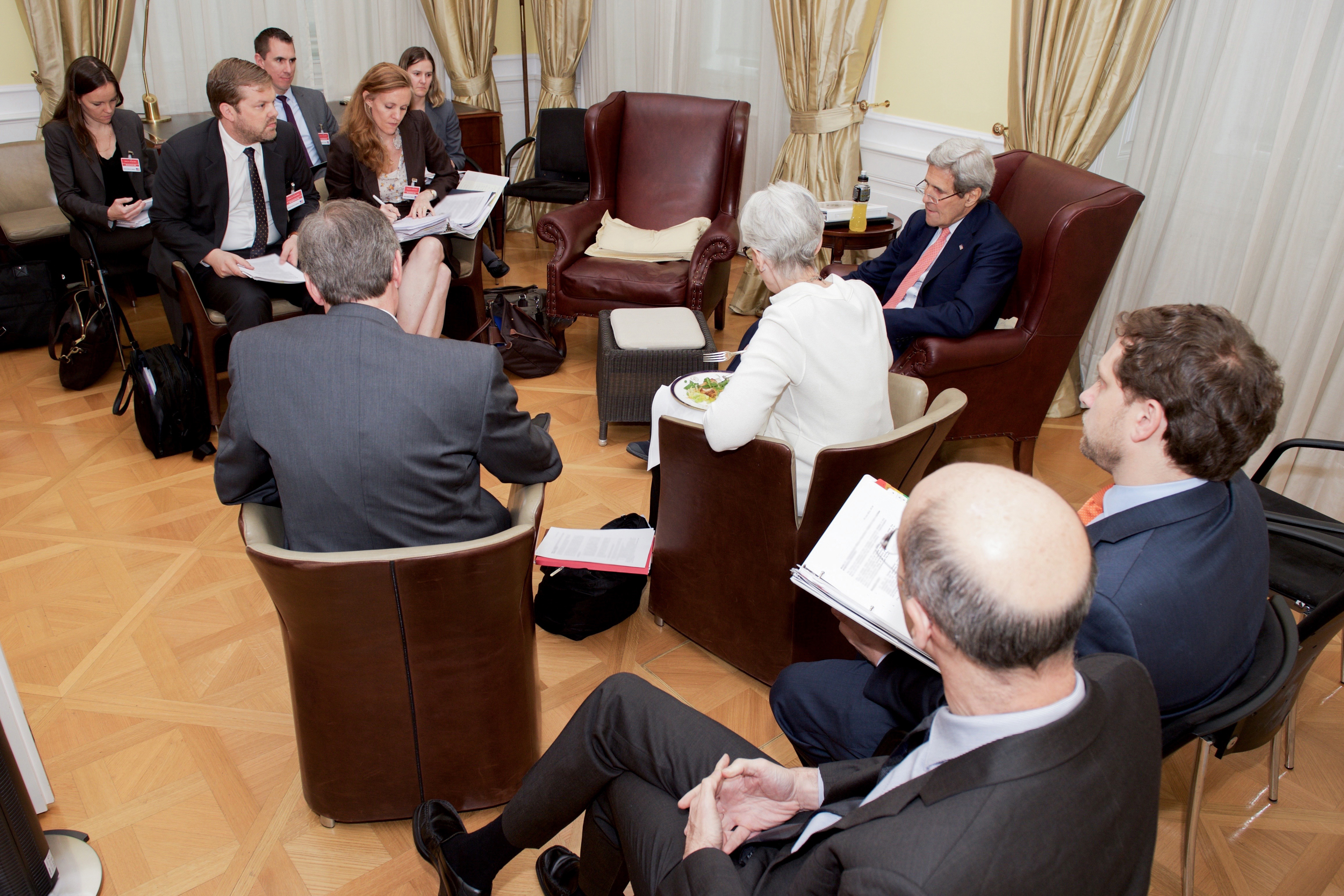
The Vienna talks that produced the Joint Comprehensive Plan of Action operated on a formal multi-level structure. Expert working groups ran in parallel with political-director sessions, but served different functions. When Secretary of State Kerry and Foreign Minister Zarif sat across the table, enrichment caps could be agreed and verification protocols finalized. When their deputies and nuclear engineers met, the outputs were bracketed text — options and formulations for the principals to choose between. The escalation ladder ran: expert level, political directors, foreign ministers. Enrichment disposition was never resolved below the foreign-minister tier.
n
The Islamabad MOU’s fourteen points defer the hardest questions — enrichment disposition, full sanctions relief, IAEA verification scope, the fate of Iran’s 440.9-kilogram stockpile of highly enriched uranium at 60% — to the sixty-day negotiating window. The Arms Control Association assessed in June that resolving those issues within sixty days would be “challenging to negotiate” even at the political level. July 14-15 is not the political level.
n
n
Twenty-One Hours in April — the Benchmark That No Longer Applies
n
The first Islamabad round opened on April 11 with an indirect session — Pakistani mediators shuttling between the US and Iranian delegations in separate rooms at the Prime Minister’s House. By the second session, the format shifted to direct talks. The marathon ran twenty-one continuous hours and concluded on April 12 with the MOU.
n
The US delegation numbered roughly three hundred, led by Vice President Vance alongside Special Envoys Steve Witkoff and Jared Kushner. Iran brought seventy, led by Parliamentary Speaker Ghalibaf and Foreign Minister Abbas Araghchi. Pakistan’s mediating team — Prime Minister Shehbaz Sharif, Army Chief Asim Munir, Foreign Minister Ishaq Dar — participated at the highest institutional level Islamabad could field. The round was political in every structural sense: principals with mandate authority, direct engagement, and an output — the MOU itself — that committed both parties to a timeline.
n
Ghalibaf’s presence carried constitutional weight. As Speaker, he operated at the edge of Iran’s domestic authority structure — above the foreign minister, below the Supreme Leader and the Supreme National Security Council. His delegation included Mahmoud Nabavian, a lawmaker affiliated with the Paydari (Stability) Front. Nabavian participated in the talks, returned to Tehran, and posted on X: “People of Iran, is a coup underway?” He called the nuclear negotiations a “strategic mistake” and demanded Araghchi’s removal from the foreign ministry. IranWire confirmed the post.
n
n
“People of Iran, is a coup underway?”
n
— Mahmoud Nabavian, Paydari-affiliated MP, after participating in the April Islamabad round as a member of Iran’s negotiating team. Source: IranWiren
n
n
The inclusion of a Paydari figure in April was designed to co-opt the ultraconservative faction — to make them complicit in the process. The faction used the access differently. Nabavian did not dissent from outside the negotiating room. He dissented from within it, and the Paydari Front’s institutional position has only hardened since. The faction that labeled the MOU a “coup” is now expected to supply the lead negotiator for the July round.
n
Why Can a Technical Round Not Resolve the Supreme Leader’s Conditionality?
n
Mojtaba Khamenei’s June 18 written statement endorsed the MOU conditionally: he had “granted permission” only because President Pezeshkian assured him “the rights of the Iranian nation and the Resistance Front” would be protected. The conditionality is open-ended — a precondition attached to a consent, not consent itself. No technical delegation can determine whether those assurances have been honored. Only the Supreme Leader can adjudicate his own conditions, and he has not appeared publicly in 127 days.
n
The conditionality’s design is its function. Mojtaba did not attach specific, measurable benchmarks — a particular enrichment threshold, a sanctions-relief sequence, a verification framework with named inspectors and named sites. He attached a subjective standard: the “rights of the Iranian nation and the Resistance Front.” Any negotiating output, at any round, can be retroactively declared to have violated those rights. The standard for exercising the veto has no external referent, no quantitative trigger, and no institutional body empowered to assess it independently.
n
The Supreme National Security Council — the constitutional body that would ordinarily translate a Supreme Leader’s directive into actionable negotiating positions — cannot self-adjudicate whether Mojtaba’s conditions have been met. Article 176 of Iran’s constitution vests supervisory authority over the SNSC in the Supreme Leader. The SNSC executes; it does not interpret. When the interpretive authority communicates only through unverified written statements released via state media — and has not been confirmed in any in-person meeting by an independent outlet since February — the SNSC operates in a space that is constitutionally functional but politically frozen.
n
The Middle East Council on Global Affairs identified two fault lines in the US-Iran framework: technical feasibility and political authority. The July round in Islamabad addresses the first axis. It cannot reach the second. A session of “experts on technical matters” can produce a working paper on enrichment-suspension formulas. It cannot produce the political judgment that Mojtaba’s conditionality language requires — the judgment that the “Resistance Front’s rights” have been adequately protected by whatever formula the experts draft. That judgment lives in a room in Tehran that no one outside Mojtaba’s immediate circle appears able to enter.
n
The Signing-Authority Chain Ends in an Empty Room
n
The authority chain for any final deal runs: Ali Khamenei, who authorized the negotiating track and is now dead; Mojtaba Khamenei, who conditionally endorsed it and communicates only through written statements; President Pezeshkian and the SNSC, who lack constitutional authority to act without fresh Article 176 confirmation from the Supreme Leader. The chain is broken at its second link. The authority gap that makes the Islamabad round inconclusive also makes the Saudi back-channel with Iran structurally unresolvable: no one on Iran’s side can close a deal that Mojtaba has not yet approved.
n
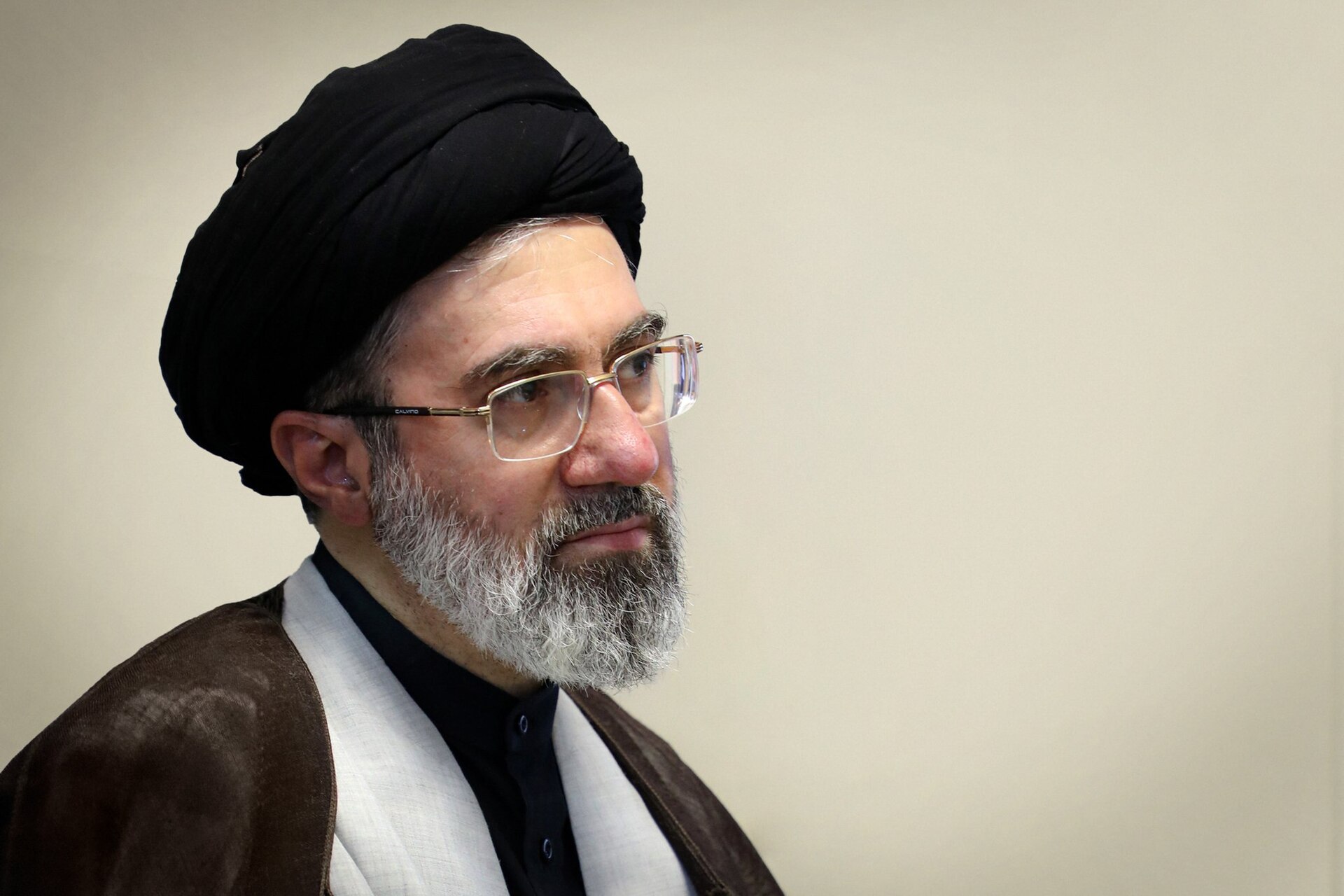
Three sources close to Mojtaba’s inner circle told Reuters his face was disfigured in the February 28 strike. Four senior Iranian officials told the New York Times in April that he has undergone three leg surgeries, awaits a prosthetic, and requires further plastic surgery. He has not appeared publicly in 127 days — no bay’ah ceremony, no Friday prayer leadership, no televised address, no confirmed in-person meeting with any head of state or military commander reported by an independent outlet. At his father’s funeral on July 3-4, his three brothers carried the coffin. Mojtaba was absent.
n
n
Sixty-three of eighty-eight Assembly of Experts members signed the June 29 “red line” statement — a near-supermajority of the institution constitutionally empowered to monitor, and in theory remove, the Supreme Leader. The statement warned negotiators against compliance with MOU terms the signatories consider unacceptable. The AoE does not negotiate. It supervises the Supreme Leader and, through that supervisory authority, constrains the negotiating ceiling from above. When nearly 72 percent of the body signals hardline opposition to the terms on the table, the range of outcomes any delegation can bring home narrows to a corridor Mojtaba’s conditionality may have already foreclosed.
n
Ghalibaf, interviewed on IRIB on July 4, said diplomacy “should be used to preserve military gains and must be backed by defence capabilities.” He characterized the war as a “divine blessing.” Twenty minutes of the broadcast were censored by the network. The regime’s own public communications architecture is self-censoring on the substance of the negotiation at the moment the negotiation most needs clarity on what Tehran’s domestic authority structure will accept.
n
Who Leads Iran’s Delegation — and What Does That Signal?
n
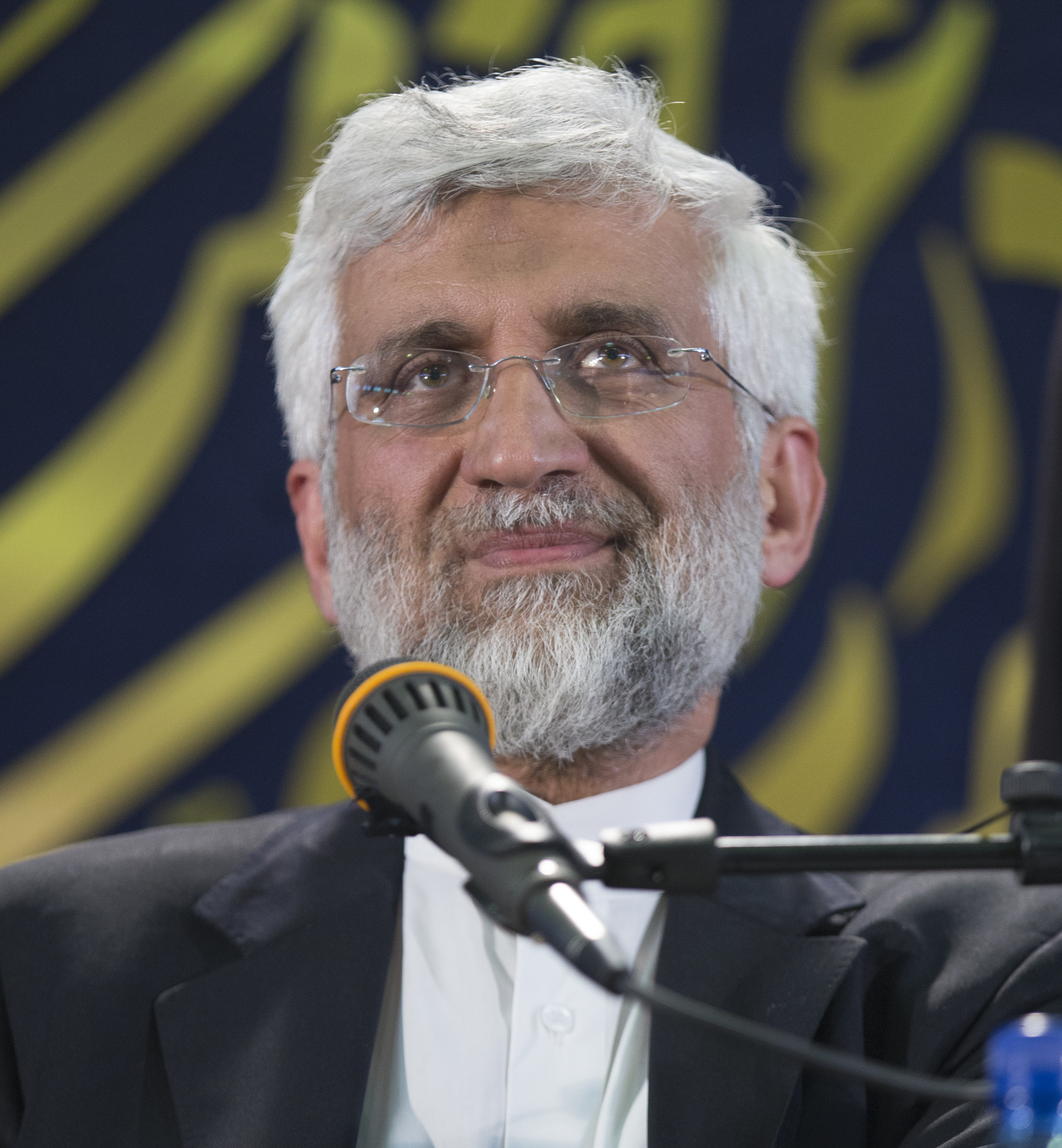
Saeed Jalili, 60, is expected to replace Ghalibaf as Iran’s lead negotiator, according to Iran International reporting from late April. Jalili served as Iran’s chief nuclear negotiator from 2007 to 2013 under President Ahmadinejad, ran for president three times, and leads the Paydari (Stability) Front — the ultraconservative faction whose lawmaker called the MOU a “coup” after participating in the April Islamabad talks. Iran International reported his expected appointment follows Ghalibaf’s departure amid backlash over the inclusion of nuclear issues in the Doha discussions. No formal announcement has been made.
n
Jalili’s expected appointment carries a structural ambiguity that the “technical” framing both creates and exploits. If he leads the delegation, his political weight — former SNSC secretary, Paydari leader, three-time presidential candidate — either upgrades the technical session by placing a figure of that stature in the room, or is formally constrained by the round’s own designation. A “technical” round, regardless of who attends, cannot produce the political-level commitments the MOU defers to its sixty-day window. The framing determines the ceiling. Jalili’s presence would raise the floor without lifting the ceiling — an arrangement that produces status without decision.
n
n
Unconfirmed reports tracked by Iran analyst Raz Zimmt on X suggest Jalili has been removed as the Supreme Leader’s representative to the SNSC and replaced by Ali Bagheri Kani. If accurate — and the data here is thin, limited to a single unverified social-media report — the expected lead negotiator no longer holds the institutional role that connected him to Mojtaba’s decision-making apparatus. He would arrive in Islamabad carrying the Paydari Front’s reputation but none of the SNSC’s mandate authority.
n
Tehran’s decision to withhold its delegation announcement until after the funeral is not a scheduling constraint. It is positional. Whoever Iran sends to Islamabad on July 14 will signal what Mojtaba’s circle has decided about the round’s permissible scope. A senior Paydari figure under a “technical” label extends the ambiguity. A genuine team of deputy-ministerial experts confirms the round is procedural. Iran’s first announcement after the funeral period — a period that consumed MOU Days 17 through 22 with no force-majeure clause to recover them — will function as the regime’s opening move in a round that begins before anyone sits down at the table.
n
The Sixty-Day Clock and the Fee That Runs Itself
n
| Date | MOU Day | Event | Session Level |
|---|---|---|---|
| June 17 | 0 | MOU signed at Burgenstock | Political (VP / Speaker) |
| June 22-23 | 5-6 | Doha Round 1 | Indirect / Technical |
| July 1-2 | 14-15 | Doha Round 2 | Indirect / Technical |
| July 4-9 | 17-22 | Khamenei funeral pause | No sessions |
| July 14-15 | 27-28 | Islamabad Round 3 | Technical (experts) |
| August 16 | 60 | MOU 60-day window expires | — |
| August 18 | 62 | PGSA fee auto-activates | — |
n
n
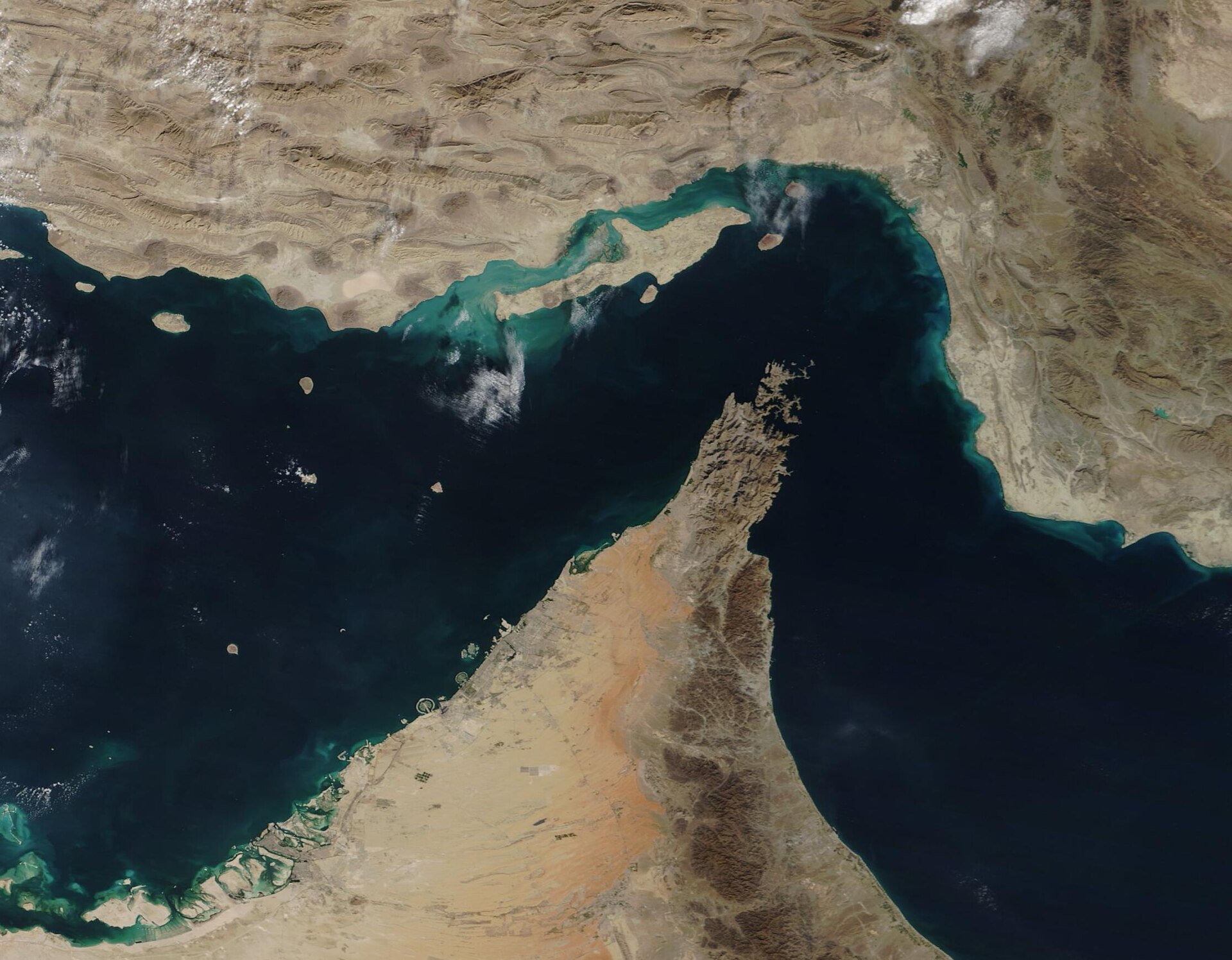
The MOU was signed June 17. The sixty-day negotiating window expires August 16. The Persian Gulf Strait Authority’s fee structure — $1 per barrel on all Strait of Hormuz transit, suspended during the MOU window — auto-activates on August 18. A&O Shearman confirmed in its legal analysis: the MOU waived PGSA fees for the negotiating period but did not require the dissolution of the PGSA as an institution. The fee reactivates as a default.
n
At Saudi pre-war export volumes of approximately 5.5 million barrels per day through Hormuz, the daily charge is $5.5 million. The outstanding PGSA balance stands at $253 million. No Iranian action is required for activation. The fee is not a decision Tehran must make. It is a consequence that occurs unless a deal prevents it — a structural asymmetry that the Foundation for Defense of Democracies flagged when it described the MOU as “poorly drafted” with a “murky legal status,” containing elements of both binding and non-binding instruments without resolving the ambiguity.
n
The MOU’s own language compounds the timeline problem. The deal must be reached within “60 days extendable with mutual consent.” Tehran holds the extension veto. If Iran declines to extend, August 16 is the hard boundary. If Iran agrees, the conditions of extension become a new negotiating surface — one that Mojtaba’s open-ended conditionality covers as fully as it covers the original terms. Either path serves the structural veto.
n
n
“The Trump administration has insisted that Iran must give up its enrichment program entirely. Some formulas — such as a multiyear suspension — could in theory bridge the gap, but the central problem is that the administration cannot credibly offer meaningful sanctions relief, which in turn makes Iran less willing to show flexibility on enrichment.”
n
— Mohammad Ayatollahi Tabaar, Carnegie analystn
n
n
Iran’s HEU stockpile at 60% enrichment — 440.9 kilograms, enough for multiple weapons depending on further enrichment — has gone unverified by the IAEA since June 10, 2025. That stockpile-verification gap now exceeds 390 days — a separate and longer clock than the inspector-access blackout that the IAEA Director General flagged at 121 days in his February 27, 2026 report. Ghalibaf told IRIB on July 2 that IAEA access to bombed sites at Fordow, Natanz, and Isfahan was barred “under any circumstances” by two domestic laws — one passed unanimously by parliament, the other endorsed by the SNSC. MOU Point 8 contains no explicit clause requiring access to bombed sites, a gap the Arms Control Association identified as one of several that make the sixty-day timeline functionally unachievable at any delegation level.
n
n
Can Pakistan Bridge the Gap Between Process and Decision?
n
Pakistan’s mediation operates at the highest level Islamabad can sustain — Army Chief Munir co-signed the MOU, Prime Minister Sharif attended the April round, and Foreign Minister Dar has briefed Saudi counterpart Prince Faisal on the Doha outcomes. Munir’s dual credentials as a MOU co-signatory and a figure with documented IRGC-era ties from 2016-17 give Pakistan a positional credibility that no other mediating state possesses. But positional credibility is not decision-forcing authority.
n
The Diplomat assessed Pakistan’s structural ceiling in July with unusual directness: “Pakistan’s influence comes from its location, military establishment, and diplomatic reach, which give it a seat at the table, but its economy is still too fragile to support the same kind of long-term role.” Munir can convene a room. He cannot compel a political decision from a leadership structure in Tehran where the sole figure authorized to adjudicate the conditionality — Mojtaba — communicates only through state-media text and has not met any foreign official in a verified setting.
n
Pakistan’s mediating function does create a channel that would not otherwise exist for Riyadh. Saudi Arabia holds no seat, no signatory role, and no observer status in the US-Iran framework — a structural exclusion that makes the kingdom dependent on Dar’s briefings to Faisal for visibility into negotiations that directly determine its PGSA exposure. The July 14-15 round will produce a readout. Dar will relay it. And Saudi Arabia will learn, secondhand, whether the session that consumed two more days of the sixty-day window moved any closer to a deal that would prevent the $5.5 million daily fee from reactivating on its crude exports through Hormuz.
n
The Architecture of Productive Failure
n
Doha Round 1, on June 22-23, produced agenda alignment. Doha Round 2, on July 1-2, produced a communications channel for flagging MOU violations and a goods-purchase mechanism for $6 billion in frozen Qatari-held Iranian assets — humanitarian purchases only, no cash transfers. Qatar confirmed “positive progress.” Vice President Vance told CNN on July 1 that talks were “going well” and that discussions on nuclear issues “would start soon.” The Hormuz fee regime: unresolved.
n
Iran’s first use of the newly created communications channel was not to advance compliance. Tehran filed a violation notice against Washington, citing the Lebanon ceasefire breach under MOU Article 1 — the consequence of Operation Epic Fury. The infrastructure the Doha rounds built is being used offensively, to document American defaults, not as a mechanism for Iranian progress toward the MOU’s fourteen points. The channel works. Its purpose has been redirected.
n
Each round since the MOU has produced enough output to justify convening the next one — a channel here, a working group there, an agenda item refined. The outputs are genuine. None is trivial. A communications channel for violation notices has operational value. A humanitarian-goods mechanism for frozen assets addresses a real Iranian need. But none of these outputs is the binding political decision that resolves enrichment disposition, sanctions architecture, IAEA verification scope, or the PGSA fee regime. The process generates product. The product is not a deal.
n
On Day 20 of the ceasefire window, the IRGC provided its own assessment of what the MOU’s Article 5 “best efforts” commitment means in practice: a missile struck the Al Rekayyat, a Qatari state-owned LNG carrier transiting the Strait of Hormuz. No arbitrator exists under Article 12 to rule on the breach, and no snapback provision activates. The pattern is identical to the signing-authority gap this article documents — obligations without enforcers. Iran Hit the Host covers the Day 20 strike and the MOU’s enforcement void. The US retaliation question that followed is structural, not merely strategic: Washington can strike Iranian coastal infrastructure, but the air campaign requires Prince Sultan Air Base — a base whose availability Saudi Arabia has already put in question.
n
The pattern serves Mojtaba’s conditional endorsement with mechanical precision. Each technical round that passes without a political-level session consumes MOU days while leaving the conditionality untouched. By the time a political round is convened — if it is — the August 18 PGSA deadline may already have lapsed or been tacitly extended under terms that render the original conditionality moot. A veto exercised through absence looks different from one exercised through confrontation. There is no rejection letter, no walkout, no statement of opposition. There is a series of productive technical rounds, a narrowing window, and an authority gap that was never closed because the person who could close it has not appeared in public since February.
n
The escalation ladder above the technical level is not merely understaffed. The political-director equivalent — Ghalibaf — is being replaced. The foreign minister — Araghchi — remains a Paydari removal target. Above them, the Supreme Leader has undergone three surgeries and communicates only in writing. The ladder has no top rung. The July 14-15 session in Islamabad will seat experts in a room built for principals, in a window designed for a deal that requires an authority no one at the table can supply.
n
n
Frequently Asked Questions
n
What happened during the July 4-9 funeral pause, and did it consume MOU negotiating days?
n
Ali Khamenei’s multi-day funeral ceremonies ran July 3-9, during which Iran suspended delegation-related decisions and no negotiating sessions were held. The MOU contains no force-majeure clause for domestic political events, so Days 17 through 22 of the sixty-day window elapsed without any mechanism to recover them. The funeral pause was structurally equivalent to five blank negotiating days — consumed by an event no party could have scheduled at the time the MOU was signed, but which the MOU’s drafters did not account for. Representatives from over 50 countries attended, including Pakistan’s PM Sharif and Army Chief Munir, but no confirmed GCC heads of state. Saudi Arabia sent Deputy FM El-Khereiji — a rank below the FM-level representation it sent to President Raisi’s funeral in May 2024.
n
Has any US-Iran negotiation ever produced a binding outcome at the technical level?
n
No. The 2015 JCPOA required foreign-minister-level agreement between Kerry and Zarif in Vienna. The 2013 Joint Plan of Action (interim agreement) required P5+1 political directors. The 2023 prisoner-swap arrangement was negotiated at the political level through Omani mediation. In the current cycle, the MOU was produced at the VP/Speaker level — the highest US-Iran engagement since the JCPOA. Technical rounds have produced framework documents, bracketed treaty text, and working papers in every prior cycle, but no commitments on enrichment ceilings, sanctions architecture, or verification protocols have ever been finalized below the foreign-minister tier.
n
What is the PGSA’s legal basis, and why was it sanctioned by the US?
n
Iran cites UNCLOS Article 26(2), which permits coastal states to levy charges for “specific services rendered to the ship.” The PGSA was constituted on May 5, 2026, and requires vessels transiting a designated five-nautical-mile corridor between Qeshm and Larak islands to register via pgsa.ir and pay $1 per barrel. The US Treasury’s OFAC designated the PGSA on May 27, 2026, creating a compliance trap for commercial shipping: vessels that pay face secondary-sanctions exposure, vessels that refuse face Iranian enforcement in the strait. Iran has also introduced a separate mandatory insurance scheme that multiple maritime-law analysts — including those cited by Iraq Business News and TechTimes — describe as a de facto transit fee layered on top of the declared PGSA charge.
n
Could a political-level round be convened before August 16?
n
Structurally possible but institutionally unlikely on the Iranian side. Iran would need to nominate a principal-level delegation — at minimum the foreign minister or a figure with equivalent SNSC mandate authority. Araghchi faces Paydari demands for his removal. Jalili’s SNSC representative status is disputed. Ghalibaf has been sidelined. The one figure who could credibly authorize a political-level commitment — Mojtaba — has not been independently verified as physically capable of conducting state business. Israeli military-intelligence sources told the Times of Israel there is “no indication” Mojtaba has approved the MOU’s specific terms, only that a conditional written endorsement exists. Even if a political round were convened in the first week of August, approximately fifteen MOU days would remain — a timeline the Arms Control Association assessed as insufficient for resolving enrichment disposition, sanctions relief, and IAEA verification scope simultaneously. While Tehran’s authorization gap stalls the Islamabad track, a separate institutional development in Ankara moved the Hormuz question into a new diplomatic framework: NATO’s Ankara summit placed Hormuz on the Alliance’s collective agenda, a forum where Saudi Arabia — the state most exposed to the PGSA fee regime — holds no seat.
n
What is Iran’s “friendly nation” exemption and does the Islamabad round address it?
n
Interior Minister Rahmani Fazli named China as a “friendly nation” exempt from PGSA fees in late June, creating a tiered fee structure that places Saudi Arabia in a triple bind: accepting the classification system legitimizes the PGSA, rejecting it risks hostile classification, and silence defaults to non-friendly rates. The Islamabad technical round has no mandate to address the PGSA’s fee-tier architecture — that is a political-level decision with direct fiscal consequences for every Hormuz-transit state. The round’s agenda, as described by Pakistani government sources, covers “technical matters” related to the MOU’s implementation framework, not the PGSA’s operational fee regime or its nation-classification system. Fitch Ratings’ July 11 Saudi sovereign review placed the PGSA deadline in a direct fiscal frame: the agency affirmed A+ while forecasting only 0.6 percent GDP growth for 2026, with the $253 million August 18 PGSA liability among the factors weighing on its sovereign outlook.
While the Islamabad technical round stalled behind the authorization gap this article documents, Iranian FM Araghchi flew to Muscat on July 11 for direct talks with Oman FM Busaidi — activating the one venue where the Hormuz countdown is being actively managed, in a capital where Saudi Arabia has no seat, no observer, and no formal channel. The Muscat session is examined in Muscat Holds the Only Hormuz Channel Still Open.
n