
TEHRAN — Mojtaba Khamenei, Iran’s supreme leader since March 8, 2026, has not appeared publicly in approximately 120 days. U.S. Defense Secretary Pete Hegseth described him on March 13 as “wounded and likely disfigured.” Four senior Iranian officials told The New York Times in late April that he awaits a prosthetic leg and plastic surgery for severe facial burns.
Iran’s Office of the Supreme Leader declared him in “full health” on May 8. The contradiction — externally confirmed medical incapacity against official denial, with no appearance to settle the question — sits at the center of Iran’s governance crisis on Day 18 of a 60-day nuclear memorandum of understanding.
The opacity his father used to govern worked because the backstop was always available: when questions arose, the leader could appear and the questions ended. Four NYT sources describe injuries severe enough to eliminate that option. Iran now faces a forced choice: confirm the injuries and accept Washington’s framing of a weakened leader, or deny them and produce an appearance that 120 days have failed to yield.
Table of Contents
- What Did Hegseth Disclose About Mojtaba’s Injuries?
- How Has Tehran Responded to the Medical Claims?
- The Opacity Instrument His Father Used and He Cannot
- Who Holds Command Authority on Day 18?
- Can the Assembly of Experts Trigger an Incapacity Finding?
- The Funeral His Brothers Attended and He Did Not
- What Does the Medical Gap Mean for the Nuclear Talks?
- The Forced Choice Tehran Cannot Avoid
- Frequently Asked Questions
What Did Hegseth Disclose About Mojtaba’s Injuries?
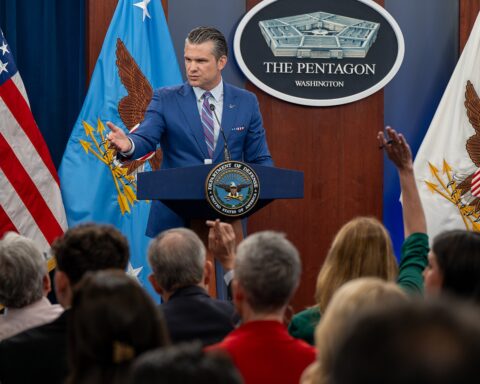
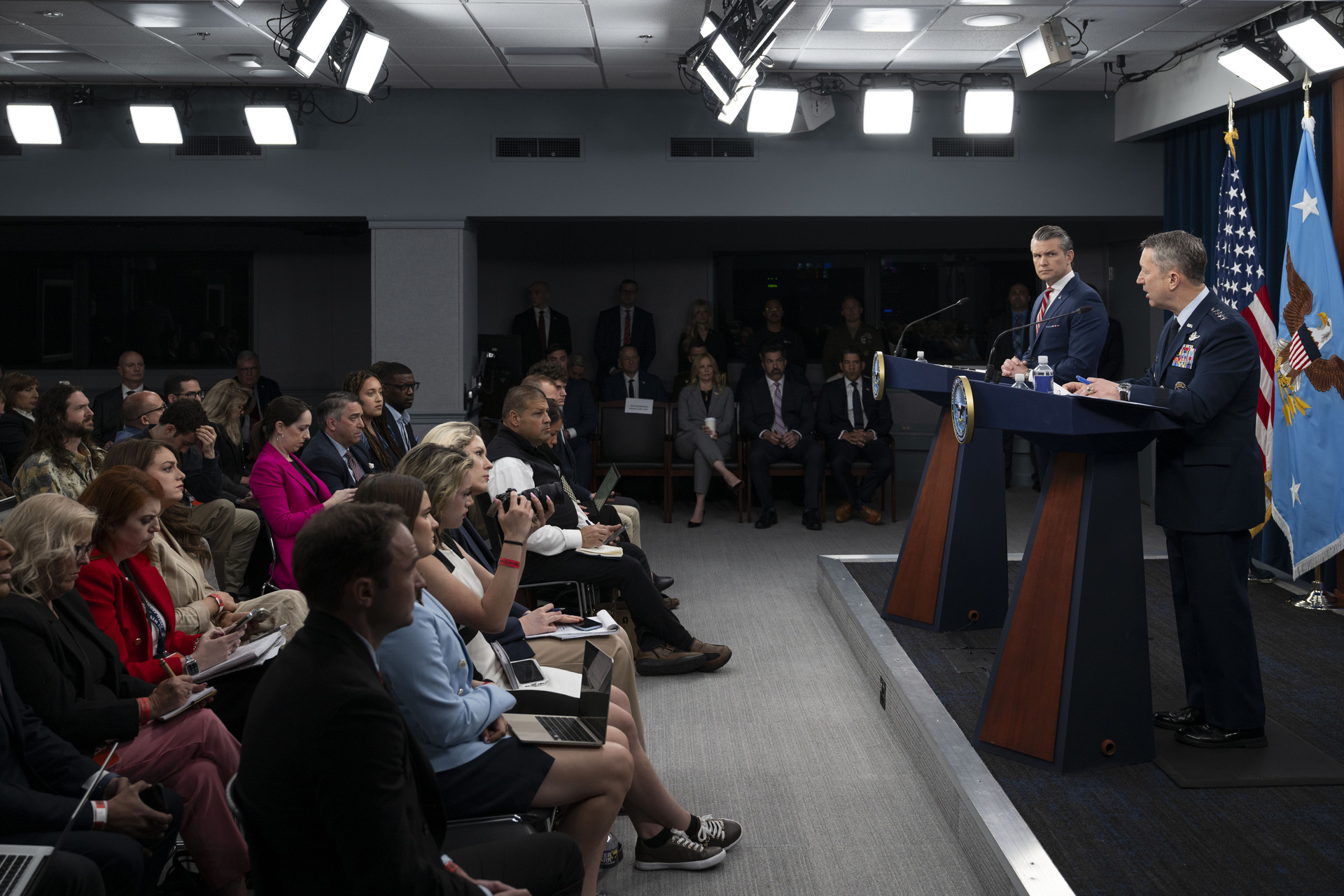
Pete Hegseth made the statement at an official Department of Defense briefing on March 13, 2026, five days after Mojtaba’s elevation. “We know the new so-called not-so supreme leader is wounded and likely disfigured,” he told reporters. The Hill, Axios, Bloomberg, and Fox News carried the remark simultaneously. It was the U.S. Secretary of Defense on the record at the Pentagon podium — not a leak, not a backgrounded intelligence judgment.
Six weeks later, The New York Times published the most detailed account of Mojtaba’s condition to date, drawing on four senior Iranian officials. One leg had been operated on three times; he was awaiting a prosthetic. One hand had undergone surgery, with function slowly returning. His face and lips had been “burned severely, making it difficult for him to speak.” He would eventually need plastic surgery. The Hill, RFE/RL, and GlobalSecurity.org all cited the NYT report, which constituted the first multi-source Iranian confirmation of the injuries’ scope.
A separate document — a U.S./Israeli intelligence memo published by Kyiv Post and Asharq Al-Awsat on April 7 — described Mojtaba as “critically ill and unconscious in Qom, unable to be involved in any decision making.” The memo named three IRGC veterans as holding de facto state control: Ahmad Vahidi, the IRGC Commander-in-Chief; Mohammad Bagher Zolghadr; and Mohsen Rezaei. Whether the memo described conditions at the time of writing or during the immediate aftermath of the February 28 attack that preceded Mojtaba’s elevation remains disputed.
The Middle East briefing 3,000+ readers start their day with.
One email. Every weekday morning. Free.
The NYT sources offered a more textured picture. Mojtaba was “mentally sharp and engaged,” they said, participating in governance via audio conferencing. Sanam Vakil, Director of the Middle East and North Africa Programme at Chatham House, told the Times he was nevertheless “not yet in full command or control.” A leader who can think but cannot appear occupies a constitutional category the Islamic Republic’s founders did not design for.
How Has Tehran Responded to the Medical Claims?
Iran has issued four distinct layers of medical information since March 2026, each conceding more than the last while insisting the injuries remain minor. No audio recording, video, or public appearance has accompanied any of them.
The first layer came from the Health Ministry. A spokesman told Kurdistan24 in March that the injuries were “minor, superficial” — “a few stitches on his leg.” That formulation tracked with the government’s initial posture: Mojtaba had been hurt, but barely.
The second layer appeared on state television within days. Broadcasters labeled Mojtaba a “Jaanbaz” — a term reserved in Iranian political culture for injured war veterans, carrying connotations of sacrifice and physical suffering. Iran International and Kurdistan24 both flagged the shift. “Jaanbaz” acknowledged more than stitches without specifying what.
By May, the third layer had arrived. Mazaher Hosseini, a senior official in the Office of the Supreme Leader, told Iran International on May 8 that the injuries comprised “an ankle issue, a healed back injury, and a small crack behind the ear.” He simultaneously declared Mojtaba in “full health.” The National, the Abu Dhabi-based English daily, observed that “almost every official who spoke about Khamenei emphasized he is in perfect health, yet each official clouded the scene rather than resolving ambiguities.”
The fourth layer is silence. No official has responded to Hegseth’s Pentagon statement. No denial has been issued regarding the NYT four-source report. No correction has been demanded. Iran’s approach to the most detailed public account of its supreme leader’s condition has been to behave as though the account does not exist.
The pattern is itself the disclosure. “A few stitches” in March became “ankle, back, and ear” by May. Each revision widened the anatomical scope while insisting the total was minor. The NYT’s four sources describe a fifth stratum — prosthetic limb, burned face, impaired speech — that Iran has neither confirmed nor denied. The trajectory from the first four layers suggests why.
The Opacity Instrument His Father Used and He Cannot
Ayatollah Ali Khamenei governed the Islamic Republic for 37 years, and for long stretches he governed by proxy. Written decrees issued in his name. Speeches delivered by subordinates. Decisions communicated through his office without his physical presence. The opacity was not a vulnerability. It was the instrument of authority itself. When Khamenei Sr. chose to appear, the appearance confirmed control. When he chose not to, the silence read as deliberation.
The 2014 prostate surgery demonstrated the protocol. The operation was disclosed. Iranian state television released a walking video. The sequence — disclosure, controlled absence, visual proof of recovery — functioned as a governance mechanism disguised as a health update. The backstop was always available: when questions arose, the leader could appear, and the appearance ended the questions.
Mojtaba cannot replicate this. The NYT’s four sources describe injuries that make the backstop physically unavailable. The facial injuries the NYT described preclude the walking-video equivalent his father deployed twelve years ago. The opacity instrument requires a latent possibility — the possibility that the leader could appear, and therefore his decision not to reflects choice rather than constraint. Without that possibility, silence becomes evidence of incapacity rather than evidence of command.
“Mojtaba is not supreme; he might be leader in name, but he is not supreme the way his father was.”
Ali Vaez, Iran Director, International Crisis Group — CNN, April 21, 2026
Vaez characterized Mojtaba as “subservient to the Revolutionary Guards” — a dependency his father spent decades ensuring ran in the opposite direction. Vakil’s Chatham House assessment reinforced the structural point: Mojtaba was being “presented with fait accompli presentations,” she told the Times. The passive construction is a diagnosis. A supreme leader who receives briefings designed to ratify decisions already made by others occupies a different institutional position than one who directs the deliberation. The elder Khamenei’s opacity masked a leader who chose when to speak. His son’s opacity masks a leader who, by multiple sourced accounts, cannot.
Who Holds Command Authority on Day 18?
Constitutional command authority on Day 18 of the MOU rests with Mojtaba Khamenei. Article 110 of Iran’s constitution vests the supreme leader with exclusive powers over foreign policy, defense, and the authority to declare war and peace. No delegation mechanism exists outside the incapacity provisions of Article 111. As long as Mojtaba holds the title, he holds the authority.
Operational reality has split from the constitutional text. The U.S./Israeli intelligence memo published by Kyiv Post named Vahidi, Zolghadr, and Rezaei as the IRGC veterans exercising de facto state power. Vahidi’s first public appearance — at Khamenei Sr.’s funeral on July 4, reported by NBC News — confirmed a command function the memo described months earlier.
Majlis Speaker Mohammad Bagher Ghalibaf occupies a separate lane. He co-led the Iranian negotiating team at the Doha rounds and has been the most visible face of Iran’s MOU engagement. On July 3, he told ISNA that Iran would “resume proportionate actions” if the United States and Israel failed to honor commitments. A day earlier, he told IRIB that IAEA access to bombed nuclear sites was barred under two domestic laws — a parliament vote of 221-0 and a Supreme National Security Council directive.
But Ghalibaf is a Majlis speaker with no constitutional authority over treaty-class commitments. The structural veto he embedded in the MOU — five articles placing obligations on the U.S. side — was a legislative maneuver, not an executive one. When the July 11 Islamabad talks address nuclear issues, sanctions, and frozen funds, the Iranian delegation will bring a negotiator whose institutional ceiling falls below the decisions the agenda requires.
Mojtaba’s first public statement, issued in writing on March 12 and read on Iranian television, gestured at the scope of authority he claims. “We will seek compensation for the war through any possible means,” the statement warned. “If they refuse, we will take from their assets as much as we deem necessary, or we will destroy their assets.” The language was maximalist. The medium — written text, delivered by proxy, four days after elevation — was not.
Can the Assembly of Experts Trigger an Incapacity Finding?
The Assembly of Experts is the sole body constitutionally empowered to dismiss a supreme leader for incapacity. Article 111 requires a two-thirds majority — 59 of 88 members — to invoke what amounts to the Islamic Republic’s closest analogue to the U.S. Twenty-Fifth Amendment. The parallel is imprecise. The Twenty-Fifth requires a medical determination transmitted to Congress. Article 111 does not define incapacity in clinical terms, does not specify diagnostic criteria, and vests the judgment entirely in a political body drawn from the seminary establishment.
The AoE has not moved against Mojtaba. But the body’s institutional posture is documented. On July 1, 62 of 88 members — 70 percent, comfortably exceeding the two-thirds threshold Article 111 requires — voted to declare the MOU a “strategic mistake.” The AoE secretariat rebuked the declaration within hours, calling it “unprecedented.” Raja News, aligned with the IRGC, amplified the vote as reflecting Khamenei Sr.’s red lines.
The institutional arithmetic is plain. The body that would adjudicate incapacity has already declared the supreme leader’s signature diplomatic initiative an error. Seventy percent opposition to the MOU does not automatically translate into an incapacity vote. But the predisposition is on record, and Article 111 gives the 62 a mechanism they have already shown the willingness to wield against the deal Mojtaba’s representatives are negotiating.
The March 1-8 precedent makes the mechanism tangible. For seven days after the February 28 attack, a three-member Article 111 council — President Pezeshkian, Judiciary Chief Mohseni-Ejei, and Guardian Council member Arafi — exercised full supreme leader powers, including command of the armed forces and authority over war and peace. The council governed until Mojtaba’s elevation on March 8. The activation was for vacancy, not incapacity. But it proved the mechanism executes in hours, the institutional infrastructure exists, and the transition protocol does not require deliberation.
Pezeshkian’s trip to Qom on June 30 — to address the Seminary Teachers, the same constituency the AoE rebuke had mobilized — was calibrated to this audience. His claim that the MOU was “in full and continuous coordination with the supreme leader” attempted to reframe the 62/88 vote: triggering Article 111 would mean overruling the very leader the clerics claim to defend. Whether that argument holds depends on whether the 62 believe the supreme leader they voted against is in fact coordinating anything, or whether they believe what the NYT’s four sources and the U.S. Secretary of Defense have already said publicly.
The Funeral His Brothers Attended and He Did Not
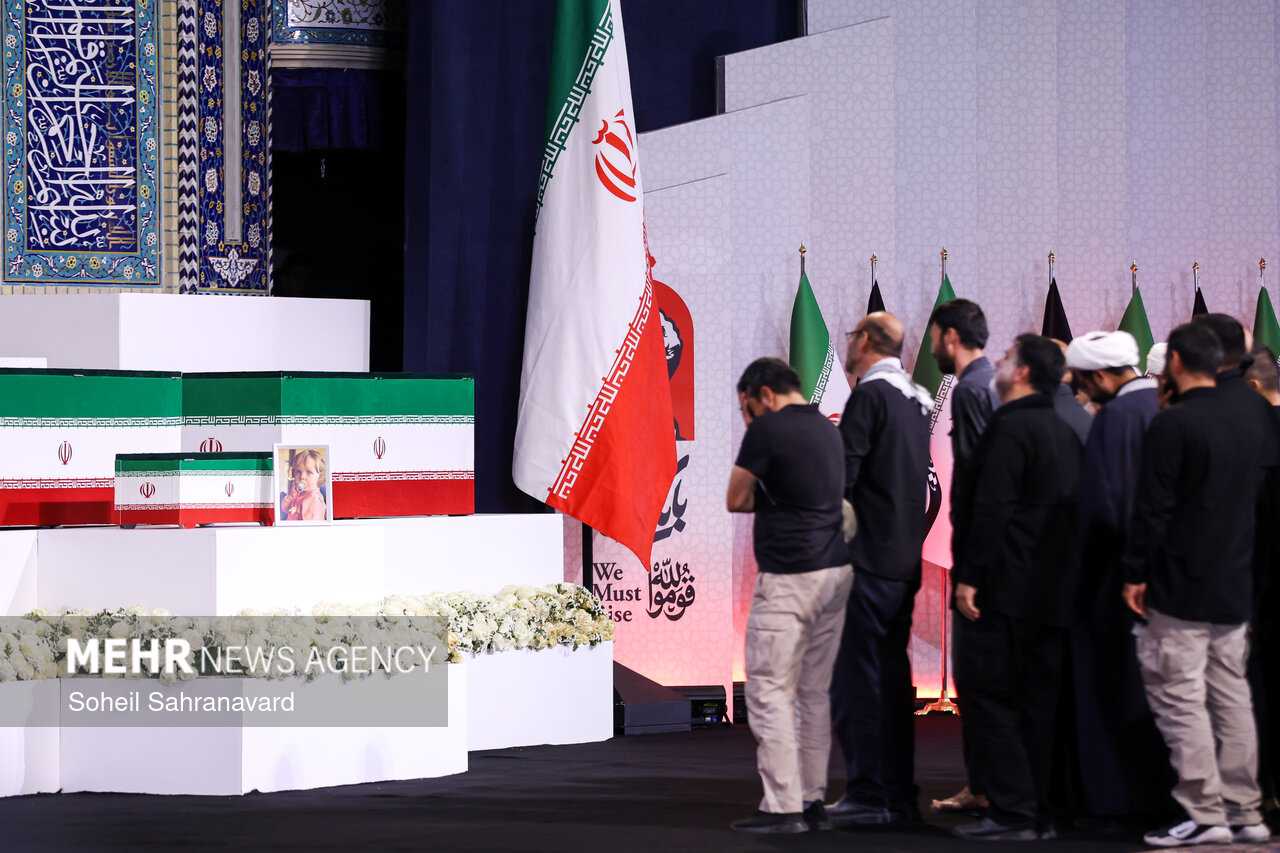
Mojtaba Khamenei did not attend the funeral of Ayatollah Ali Khamenei, held in Tehran from July 3 to 5. Iranian security officials reportedly rejected his request to be present, citing the risk that Israel would kill or track him, according to the Jerusalem Post, Times of Israel, and NBC News. His three brothers appeared publicly at the ceremonies. Mojtaba did not.
The security rationale, even if accurate, is its own concession. A supreme leader whose security apparatus determines he cannot attend a state funeral — his own father’s — is a leader whose condition constrains institutional function. The constraint may be injury, vulnerability to targeting, or both. The distinction matters less than the outcome: the supreme leader was absent from the highest-profile state event since his elevation, and the absence was not his choice.
Vahidi filled the visible role. At Khamenei Sr.’s funeral, the IRGC Commander-in-Chief stood where the supreme leader’s representative would normally stand. The funeral functioned as a mandate-hardening event — Paydari’s “coup” framing of the MOU, AoE members’ declarations, crowd chants for revenge all intensified during the mourning period. The supreme leader whose mandate was being shaped was not in the room.
Thirty countries sent delegations. China dispatched Vice Foreign Minister He Wei. Pakistan’s Prime Minister Sharif and Army Chief Munir attended — the highest-ranking representatives from the Quintet. Saudi Arabia sent neither condolences nor a delegation, a silence calibrated to the office rather than the occupant. But those who attended delivered their condolences to officials acting on behalf of a leader none of them had seen since the day the Assembly of Experts elevated him.
What Does the Medical Gap Mean for the Nuclear Talks?
The MOU expires approximately August 17 — Day 60 of a clock that started ticking on June 17. Forty-two days remain. The July 11 Islamabad talks are confirmed with nuclear issues, sanctions, and frozen funds on the agenda, per Al Hadath and Al Arabiya. Army Chief General Asim Munir brokered the venue after the Doha rounds stalled on the Hormuz fee dispute.
The governance gap runs through the negotiating structure. Treaty-class commitments — nuclear safeguards, sanctions relief schedules, asset repatriation frameworks — require supreme leader authority under Article 110. Ghalibaf can negotiate positions but cannot sign. Pezeshkian can attend summits but cannot commit on defense or nuclear matters without authorization from above. The MOU’s endgame demands a decision-maker whose authority matches the scope of the decisions on the table. That decision-maker has not appeared in 120 days.
The Saudi exposure compounds the timeline. The PGSA reactivates at $5.5 million per day on August 18 if the MOU lapses — $253 million in total Saudi exposure. Riyadh holds zero seats at the negotiating table, no ability to shape the MOU’s renewal, and a quarter-billion-dollar liability contingent on an agreement whose Iranian guarantor is, by the U.S. Defense Secretary’s public assessment, disfigured.
Washington faces its own version of the problem. The United States entered the MOU with Ghalibaf as its primary Iranian interlocutor. If the talks advance to commitments requiring supreme leader ratification — and nuclear safeguards, by definition, do — Washington needs a counterpart empowered to deliver. Mojtaba’s condition raises the possibility that Iran will negotiate, reach provisional frameworks, and then prove unable to ratify because the ratification authority cannot appear to sign, announce, or confirm.
The shuttle format that emerged from the Doha rounds — Iran negotiating through Pakistan, the United States through Qatar — may temporarily mask the gap. Shuttle diplomacy does not require principals to appear on camera or in the same room, and Ghalibaf can conduct sessions through intermediaries without the question of the supreme leader’s physical presence arising at the table. But shuttle formats produce working-group frameworks, not treaties.
The Forced Choice Tehran Cannot Avoid
Iran’s information strategy — four contradictory medical layers, silence on the Hegseth and NYT disclosures, governance by written proxy — amounts to a bet that time will resolve what disclosure cannot. If Mojtaba recovers sufficiently to appear, the absence becomes a recovery story. If the MOU expires or renews through Ghalibaf’s procedural workarounds, the constitutional question recedes. If the AoE declines to invoke Article 111, the incapacity question dies of institutional neglect.
The bet has a shelf life. Hegseth’s statement was not an intelligence leak. It was a named assertion by the U.S. Secretary of Defense at an official Pentagon briefing, reported simultaneously by four outlets. It cannot be dismissed as Western propaganda. The NYT’s four senior Iranian officials — whose account Tehran has not denied — cannot be attributed to hostile fabrication. Iran’s own medical disclosures have traced a trajectory from “stitches” to “ankle and ear” that points toward, not away from, the severity the NYT described.
Each day of continued silence narrows Tehran’s options. Day 18 is manageable. The Islamabad talks are six days away. The PGSA activation is 44 days away. A leader who governs by written proxy can sustain functional authority as long as the institutional calendar cooperates. But the calendar is not cooperating. July 11 demands a negotiating delegation empowered to discuss nuclear terms. August 17 demands a decision on MOU renewal. Neither Ghalibaf nor Pezeshkian holds the constitutional authority the calendar requires.
The forced choice is structural. Iran can confirm the injuries and negotiate from acknowledged weakness — an option that validates Hegseth’s framing and invites AoE scrutiny under Article 111. Iran can deny the injuries and produce a public appearance — an option that, if the NYT’s four sources are accurate, risks visual confirmation more damaging than any Pentagon briefing. Or Iran can continue the silence and hope that the hardliners, the clock, and the institutional machinery produce an outcome that does not require the supreme leader to be seen, heard, or present.
Khamenei Sr. spent 37 years demonstrating that opacity could function as authority. His son’s first 120 days have demonstrated its precondition: the instrument works only when the leader retains the option of appearing. Mojtaba has not exercised that option since March 8. The MOU expires in 42 days.
Frequently Asked Questions
How does Iran’s constitution define supreme leader incapacity?
Article 111 does not specify medical criteria. It authorizes the Assembly of Experts to dismiss the Leader when he becomes “incapable of fulfilling his constitutional duties” or “loses one of the qualifications” required by Articles 5 and 109. Article 109 demands “necessary scientific competence” and “right political and social perspicacity, courage, administrative powers, and adequate capability for leadership.” The absence of clinical standards means incapacity is a political judgment — the AoE can interpret the threshold as broadly or narrowly as factional interests dictate.
Has any foreign government previously made on-record claims about an Iranian supreme leader’s health?
No. Khamenei Sr. faced persistent health speculation — his 2014 prostate surgery, a reported COVID-19 quarantine in 2020, and recurring cancer rumors — but no G7 defense minister or equivalent ever made an on-record public assessment of his physical condition at an official briefing. Hegseth’s March 13 statement is the first instance. The precedent is diplomatic as well as medical: it treats the leader’s body as a matter of acknowledged intelligence rather than unconfirmed speculation.
Has any audio or video of Mojtaba Khamenei surfaced since March 8?
No public audio or video recordings have been released. All communication has been via written statements read by anchors or officials on Iranian state television. NYT sources report Mojtaba participates in governance through audio conferencing with officials, but no such recording has been broadcast or leaked. If Mojtaba could speak clearly, even an audio message — carrying no security risk beyond voice authentication — would neutralize the “disfigured” framing. Its absence is itself a data point.
What is the PGSA and why has the Hormuz fee dispute not been resolved?
The Persian Gulf Surcharge Agreement is Iran’s unilateral fee regime for Strait of Hormuz transit, sanctioned by OFAC on May 27, 2026. The dispute remains unresolved because Iran and the United States disagree on its legal basis. Tehran frames the charges as permissible “service fees” under UNCLOS Article 26(2), which allows coastal states to levy charges for specific services rendered to passing vessels. U.S. Secretary of State Marco Rubio has called the framing a “game of semantics” that will “never be acceptable.” Oman is co-developing a compromise governance framework, but no structure has been finalized. Fee collection was suspended during MOU negotiations and reactivates automatically on lapse.
On July 4, Iran’s ambassador to China resolved part of that ambiguity at the World Peace Forum, declaring fees “definite” and naming China as eligible for “friendly nation” preferential treatment. The fee regime Iran’s ambassador confirmed as definite in Beijing introduces a tiered transit structure that Saudi Arabia — which holds no diplomatic channel to Tehran and no seat at the Islamabad talks — cannot negotiate its way out of before August 18. On July 5, Reuters sources provided the first physical detail: facial disfigurement and leg injuries consistent with the strike that wounded him in March — adding a new evidentiary layer to the 127-day absence this article documented. The same incapacitation that explains the absence also explains why Pezeshkian carries a veto to Islamabad only Mojtaba can lift — a conditional mandate with no resolution mechanism. The same incapacitation gap explains why the Saudi-hosted reconciliation format may have no one to host: Riyadh is preparing a Gulf-Iran summit with no Iranian counterpart who can attend with binding authority.
On Day 127, the absence pattern this article documented continued: Mojtaba issued another written statement — a revenge declaration tied to his father’s death — with no video, no audio, and no verified physical appearance. The forced-choice framework here applied again: the statement neither confirmed nor denied his physical condition. See: Mojtaba Khamenei Called for Revenge After 127 Days Without Appearing.