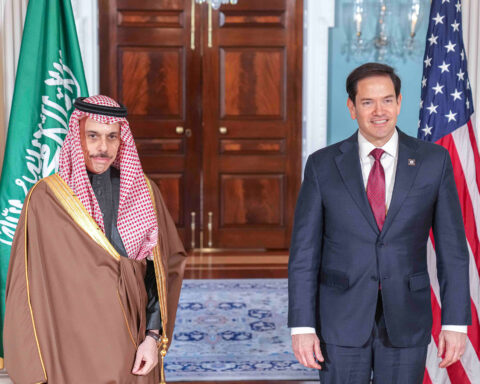
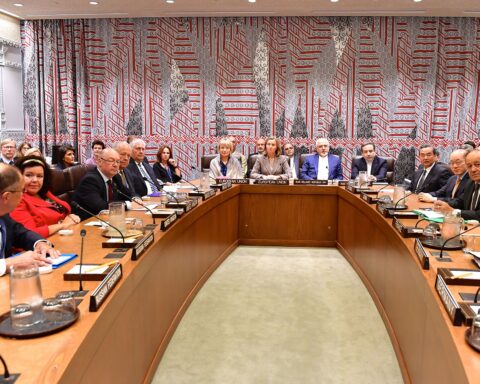
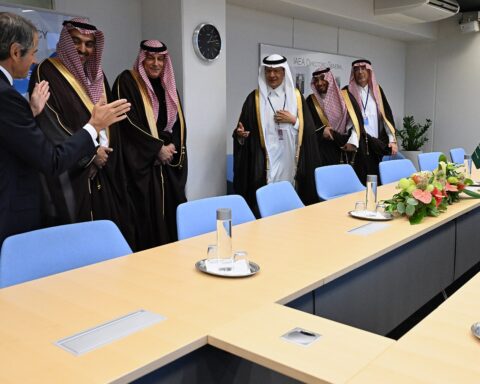
RIYADH — Saudi Arabia is preparing to host a formal Gulf-Iran reconciliation summit — and cannot name a single confirmed participant from either side of the table. A diplomat with knowledge of the arrangements confirmed the meetings would operate independently of the US-Iran talks in Doha and any future Islamabad round, giving Riyadh its first sovereign diplomatic format since the war began in February 2026.
The ambition is clear enough. Iran’s supreme leader, Mojtaba Khamenei, has not appeared publicly in 127 days and governs through handwritten notes delivered by motorcycle courier from an undisclosed location — making it structurally unclear who on the Iranian side could attend with authority to bind the state. The Gulf Cooperation Council requires unanimous consent under Article 9 for substantive collective action, and the Saudi-Emirati strategic alliance that once anchored Gulf coordination has, in the words of Cinzia Bianco at the European Council on Foreign Relations, “collapsed.” Saudi Arabia itself holds zero seats at every active diplomatic mechanism involving Iran: not the Doha talks, not the MOU architecture, not the IRGC-CENTCOM deconfliction cell.
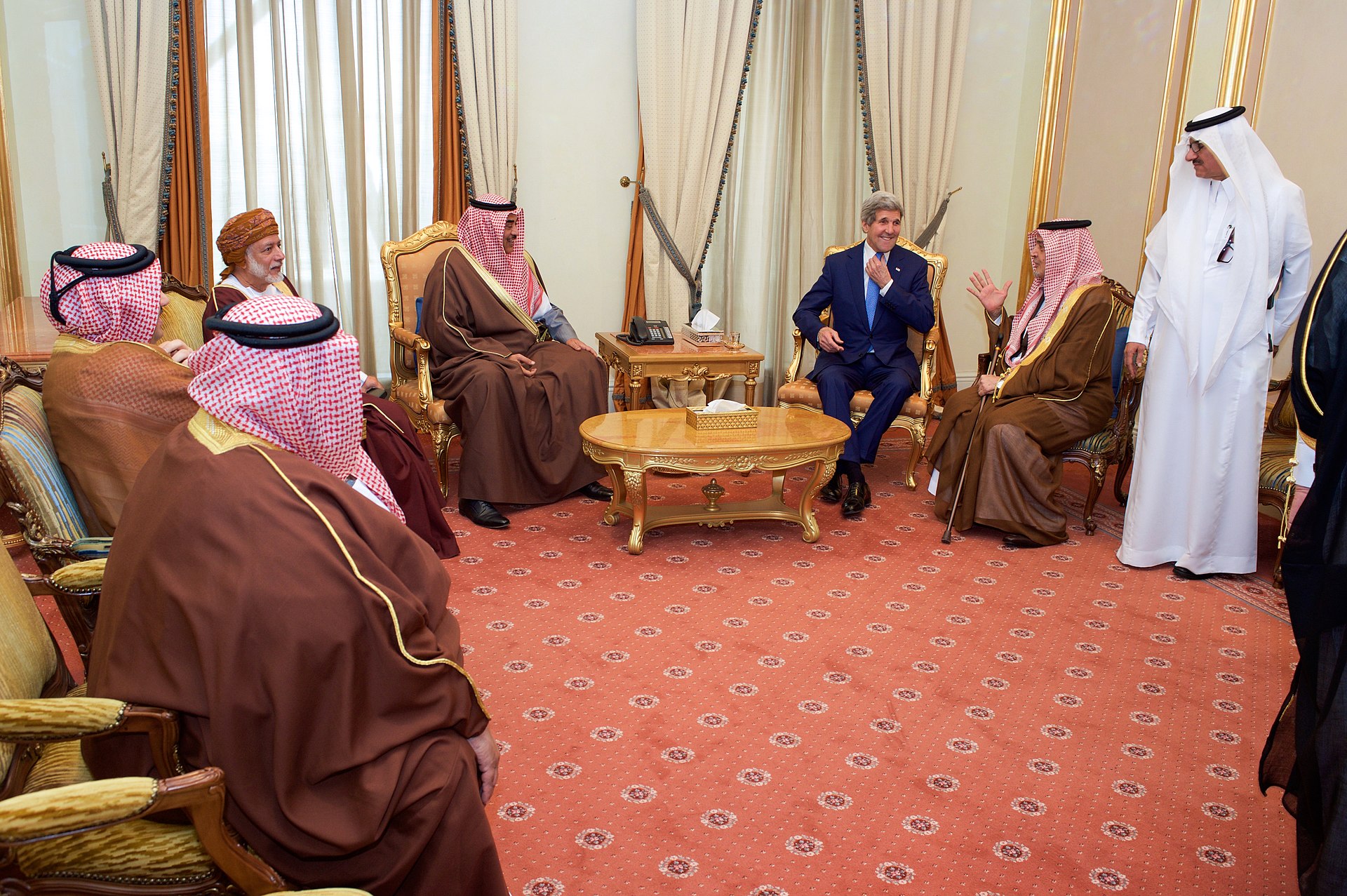
Table of Contents
- The Summit No Format Can Fill
- Who Represents Iran When the Supreme Leader Has Vanished?
- The Coalition That Cannot Agree to Show Up
- What Remains of the Beijing Deal?
- The Quintet Replaced the GCC — but Not Its Authority
- Can Riyadh Host Talks It Cannot Enter?
- Who Pays for Reconciliation When Oil Cannot Cover the Cost?
- Forty-Three Days to August 18
- Frequently Asked Questions
The Summit No Format Can Fill
The summit concept has no precedent in recent Saudi diplomatic practice. Riyadh has convened Gulf leaders before — the April 28 Jeddah GCC summit was the first since the war — but that meeting excluded Iran entirely and produced a communiqué endorsing a “unified Gulf stance” without any operational mechanism to enforce it. What Saudi Arabia is now attempting goes further: a format in which it simultaneously hosts Gulf states it no longer fully leads, and an Iranian government whose internal chain of command may not be able to designate an envoy with binding authority.
Three conditions make the architecture unworkable, and each operates independently. The first is the Iranian counterpart problem: Mojtaba Khamenei has governed since his father’s death without a single public appearance, and his constitutional signature is required for MOU ratification — the 60-day agreement that suspends hostilities reaches Day 19 on July 6. Iran’s elected officials — President Masoud Pezeshkian, Acting Speaker Mohammad Bagher Ghalibaf — hold channels to Riyadh but lack the authority to commit the state on the questions any reconciliation summit would need to resolve: Hormuz transit fees, non-aggression commitments, the future of proxy operations in Yemen.
The second is the Gulf coalition problem. GCC Article 9 mandates unanimous consent for substantive decisions, and the UAE — which absorbed more than 2,800 Iranian missiles and drones during the war, more than any country including Israel — has moved into a de facto strategic partnership with Washington and Tel Aviv. Abu Dhabi’s consent to any Saudi-designed reconciliation format cannot be assumed and has not been requested.
The third is the pressure problem. Saudi Arabia is not a party to any existing mechanism and brings no structural asset to the table beyond the venue itself. With oil prices running well below the kingdom’s fiscal breakeven, Riyadh needs a resolution to the Hormuz crisis more urgently than Tehran does — and every counterpart in the region knows it.
The Middle East briefing 3,000+ readers start their day with.
One email. Every weekday morning. Free.
Dr. Abdulaziz Aluwaisheg, the GCC’s Assistant Secretary-General for Political Affairs, acknowledged the depth of the trust deficit in May, telling Al Arabiya that Iran now faces the “burden of restoring trust with GCC states.” The framing is accurate as far as it goes. The burden falls on an Iranian government that cannot identify, with certainty, who holds final authority to carry it — and on a Saudi host that has not established the preconditions for anyone to try.
Who Represents Iran When the Supreme Leader Has Vanished?
Mojtaba Khamenei has not appeared publicly in 127 days. He was absent from his father’s funeral, governs through a military council of senior IRGC officers who translate his written directives into policy, and holds the sole constitutional authority to ratify international agreements. No Iranian delegate can attend a reconciliation summit with binding mandate while the supreme leader’s location remains undisclosed.
The question carries operational weight. When Saudi Arabia issues invitations, the letter must be addressed to someone authorized to commit Iran’s state apparatus on Hormuz transit fees, on the cessation of proxy operations, on the $253 million PGSA liability that falls due in forty-three days. Under Iran’s constitutional architecture, that authority rests with the Supreme Leader, channeled through the Supreme National Security Council under Article 176.
Three of Mojtaba’s brothers attended their father’s coffin at the Tehran ceremony on July 3; Mojtaba did not. His 20-minute interview with IRINN was censored mid-broadcast, and the Paydari faction — Iran’s hardline parliamentary bloc — has framed the MOU itself as a “coup,” treating Ghalibaf’s negotiating authority as constitutionally illegitimate.
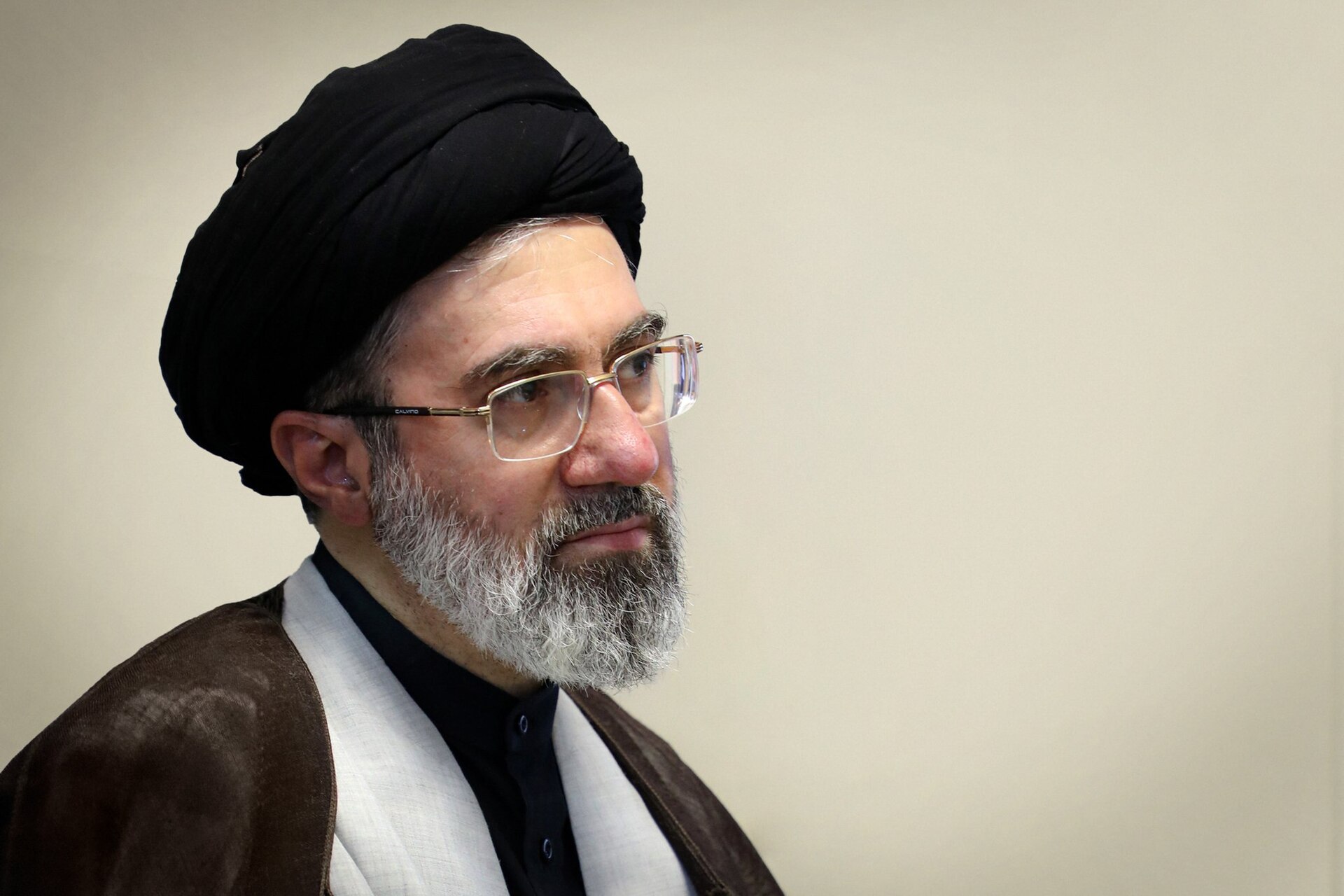
The governance arrangement that has replaced public appearances is, by any diplomatic standard, extraordinary. Saudi Arabia has established channels to Pezeshkian, to Ghalibaf, and to the foreign ministry through Deputy FM El-Khereiji — but it has no channel whatsoever to the office that holds final authority. Any summit invitation issued to Iran’s elected officials reaches the right addresses and the wrong desks.
Ghalibaf’s own position illustrates the constraint. On July 3, he told ISNA that Iran would “resume proportionate actions” if the US and Israel failed to meet MOU commitments — a statement oriented entirely toward the bilateral MOU enforcement track, not toward any Gulf reconciliation format. His threat was aimed past Saudi Arabia, at Washington, from a negotiating position that treats Gulf states as peripheral to the central diplomatic contest.
Riyadh can invite Pezeshkian and it can invite Ghalibaf — any number of Iranian officials who will attend, sit, and speak. None of them can sign. The IAEA has maintained a 121-day inspection blackout while 440.9 kilograms of highly enriched uranium at 60 percent enrichment remain unverified, and the man whose authorization is required to address any of it communicates by courier from a location his own government will not disclose. Even if the counterpart were somehow identified, the coalition waiting to meet him is not unified enough to sit at the same table.
The Coalition That Cannot Agree to Show Up
Even if Iran could designate a representative with binding authority, Saudi Arabia would face a second structural failure: it cannot assemble the Gulf coalition the summit format requires. The Saudi-Emirati alliance that defined GCC diplomacy for a decade has fractured, and Cinzia Bianco at the European Council on Foreign Relations has stated it with unusual directness: “The Saudi-Emirati strategic alliance…has collapsed.”
The Brookings Institution has mapped the divergence in specific terms, noting that “the war has widened differences between Saudi Arabia, which favors accommodation with Iran and Iran-backed regional actors, and the United Arab Emirates, which believes military confrontation with Iran and its allies can produce transformative change.” These are not two positions on the same spectrum — they are two incompatible theories of Gulf security. They produce two incompatible postures toward any Iranian government that might accept a summit invitation, and no communiqué language can paper over the gap between them.
The UAE’s calculation has its own internal logic. Abu Dhabi intercepted 537 ballistic missiles, 2,256 drones, and 26 cruise missiles from Iran during the war, according to the Soufan Center’s May 2026 assessment — absorbing more ordnance than any other country, including Israel, at a cost of 13 Emirati lives and 224 injuries. The response has been to deepen the UAE’s security alignment with Washington and Tel Aviv, a trajectory that places Abu Dhabi in direct opposition to the Saudi accommodationist track the summit would represent.
“Whatever goodwill had been built up between Saudi Arabia and Iran is now out of the window.”
— Andrew Leber and Sam Worby, Carnegie Endowment for International Peace, April 2026
GCC Article 9 gives the fracture operational consequences. Unanimous approval is required for substantive collective decisions, meaning any Gulf-Iran reconciliation format branded as a GCC initiative needs UAE consent that Saudi Arabia has not sought and Abu Dhabi has shown no inclination to grant. Leber and Worby identified the risk of further deterioration: a rhetorical spiral in which “the UAE [paints] the Saudis as eager to partner with extremists, and the Saudis [suggest] the UAE is an Israeli stooge.”
The remaining GCC members offer no path around the blockage. Kuwait, Bahrain, and Qatar are all Hormuz-dependent economies with no bypass pipeline — placing them in the category of states that need a deal with Iran more urgently than they need to support Saudi Arabia’s summit framing. Bahrain has stated publicly that any reconstruction funding “risks rewarding aggression.” Qatar, while a member of both the GCC and the Saudi-led Quintet, hosts the Doha talks from which Riyadh is excluded — making its participation in a competing Saudi format diplomatically uncomfortable at best.
The coalition problem feeds the counterpart problem directly. Iran has no reason to send anyone with authority to a summit where the Gulf side cannot guarantee unified attendance, and the Gulf side has no mechanism to confirm attendance without knowing who Iran will send. The diplomatic architecture is circular, and the framework that once cut through it — the 2023 Beijing normalization deal — was among the war’s first casualties.
What Remains of the Beijing Deal?
The 2023 Beijing-brokered Saudi-Iran normalization agreement is functionally dead. Iran struck Saudi oil infrastructure within days of the February 2026 war outbreak, violating every commitment in the framework. Saudi Arabia expelled Iran’s military attaché and four embassy staff on March 22. Neither side has publicly referenced the deal’s obligations since the war began.
China’s role as broker was the structural element that made 2023 possible. Beijing offered what neither Washington nor Riyadh could: a non-adversarial relationship with both parties, economic weight with Tehran, and no military posture in the Gulf that either side needed to factor into its calculations. The deal produced tangible results — embassies reopened between June and August 2023, Iran committed to stopping Houthi arms flows, and both governments reaffirmed the framework as recently as late 2025.
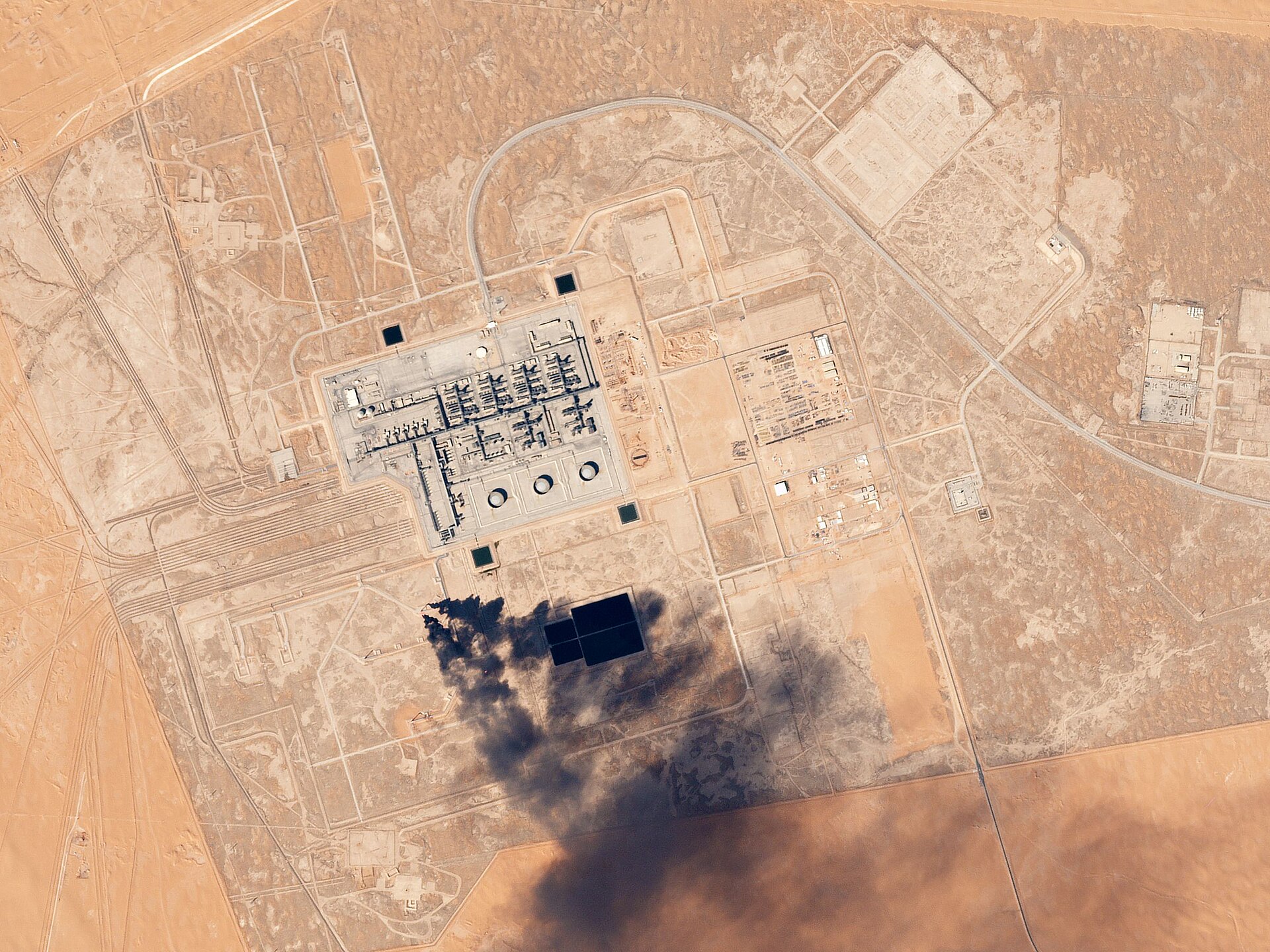
The February war destroyed every pillar in sequence. Iran struck Ras Tanura with drones on March 2, then hit Manifa and Khurais in attacks that disrupted major production capacity. On April 9 — the day after a ceasefire was allegedly agreed — the East-West Petroline pipeline was struck, cutting the kingdom’s primary Red Sea export route. Saudi Arabia declared Iran’s military attaché persona non grata within twenty-four hours of the Yanbu refinery attack, and five embassy staff were expelled by the following morning.
China has not stepped forward to rebuild the framework or to serve as guarantor for a successor. Beijing held a China-Iran-Saudi Trilateral on December 9-10, 2025, chaired on the Saudi side by El-Khereiji, but that format predated the war and has not reconvened since. China sent sub-FM He Wei to the Khamenei funeral — the same diplomatic tier as Saudi Arabia’s El-Khereiji — signaling a preference for maintaining channels rather than assuming brokerage duties for a new deal.
Saudi Arabia’s summit is an attempt to reproduce the 2023 architecture without Beijing’s role as guarantor, without the diplomatic normalization that preceded the original deal, and without an Iranian government capable of making commitments comparable to those the framework contained. The host has changed from a neutral broker to an interested party, and the conditions that made the first deal possible have not returned.
The Quintet Replaced the GCC — but Not Its Authority
Saudi Arabia’s response to the GCC fracture has been to build a parallel coalition entirely outside the Gulf’s institutional architecture. Foreign Policy reported on July 1, 2026, that Riyadh had organized a five-nation consultation mechanism — the Quintet, comprising Saudi Arabia, Qatar, Turkey, Pakistan, and Egypt — that explicitly excludes the UAE and operates with no GCC institutional mandate.
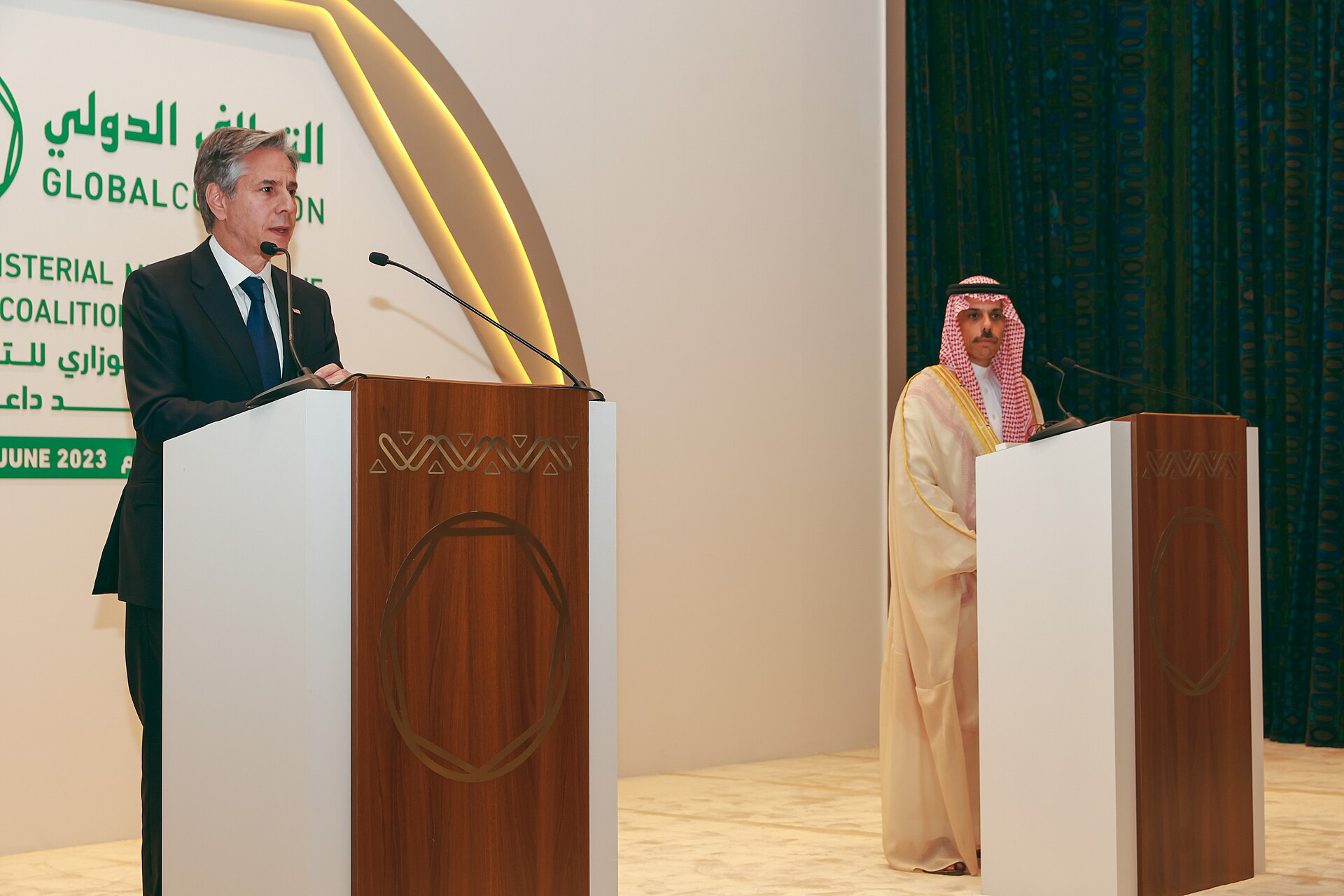
The pace of assembly has been aggressive: four foreign-minister-level meetings in thirty-one days — Riyadh on March 18-19, Islamabad on March 29, deputy ministers in Islamabad on April 14, and Antalya on April 17-19 — produced a working consultation framework without a single GCC signature block. Turkey and Pakistan bring military weight that the GCC alone could not provide: Ankara deployed troops to Qatar in 2017 during the last Gulf crisis, and Islamabad has maintained its own channel to Tehran through PM Sharif’s funeral attendance and Army Chief Munir’s direct engagement with the nuclear dossier.
The Quintet’s limitation is constitutional, not operational. It has no collective-defense treaty, no mutual-assistance clause, no UNSC permanent member among its ranks, and no nuclear deterrent. Turkey is a NATO ally with its own Iran equities that may not align with Saudi positions at a reconciliation summit. Pakistan balances its Saudi relationship against a 900-kilometer border with Iran and a domestic Shia population whose sympathies it cannot afford to alienate. Egypt’s interest is economic — Saudi investment flows — not strategic commitment to a Gulf confrontation it has no direct exposure to. The same constraint applies at the multilateral level: NATO’s Ankara summit placed Hormuz on the Alliance’s collective agenda with four smaller Gulf states in the consultation room and Saudi Arabia — the most exposed and the most powerful Gulf power — absent, a structural exclusion that compounds every diplomatic format Riyadh is now trying to construct independently.
Pakistan’s dual positioning makes it both the Quintet’s strongest connector to Tehran and its most conflicted member. Army Chief Munir attended the Khamenei funeral alongside PM Sharif and FM Dar while simultaneously serving as Pakistan’s conduit to the nuclear track Saudi Arabia cannot enter. Islamabad speaks to both Tehran and Riyadh, but it speaks for neither — and its presence in the Quintet does not substitute for the institutional authority of a GCC charter mandate.
For the summit format, the Quintet creates a specific structural dilemma: it is too narrow to replace the GCC and too broad to function as a Gulf bloc. If Saudi Arabia invites its Quintet partners, the format ceases to be a Gulf initiative and becomes a Saudi-assembled coalition meeting — which Iran has no obligation to treat as equivalent to the GCC framework China brokered in 2023. If Saudi Arabia invites only GCC members instead, it needs UAE consent under Article 9 that it does not have. FM Faisal returned from Beijing on July 1 and El-Khereiji had just finished in Tehran — the diplomatic infrastructure is active, but the question is whether activity without authority produces anything a summit communiqué can contain.
Can Riyadh Host Talks It Cannot Enter?
Riyadh holds no seat at any active diplomatic mechanism involving Iran — not the Doha talks, not the Islamabad round, not the MOU architecture, not the IRGC-CENTCOM deconfliction cell. The exclusion is structural, not accidental. Saudi Arabia designed the summit precisely because every other format is closed to it, and hosting is the one lever it controls.
The exclusion runs through every active track. Iran structured the Doha talks as a bilateral with Washington, channeled through Qatari facilitation, and the MOU that emerged is a US-Iran instrument in which Saudi Arabia holds no signatory status and no implementation role. When the July 11 Islamabad round was confirmed — with nuclear issues explicitly on the agenda — Pakistan’s Army Chief Munir was positioned as a co-signatory and conduit, not as a Saudi proxy.
Riyadh’s response has been to pursue information access where table access has been denied. FM Faisal received a briefing from Pakistan’s FM Dar on the outcomes of the second Doha round, but the briefing was a courtesy, not a consultation right. Saudi Arabia was informed after the fact, not consulted during the process, and every Gulf capital understands the distinction between a participant and a spectator.
The El-Khereiji funeral mission to Tehran exposed both the strength and the ceiling of Saudi diplomatic access. The deputy FM delivered a two-part condolence instrument — oral condolences to Pezeshkian and a written letter addressed to Khamenei — through a channel he had operated since the December 2025 China-Iran-Saudi Trilateral. But the letter was addressed to the late supreme leader’s office, not to Mojtaba directly, and Saudi Arabia retains a channel to Iran’s elected government while holding no confirmed access to the person who now governs the state.
The summit format is an attempt to invert this dynamic entirely: if Riyadh cannot enter the room where decisions are being made, it will build its own room and issue its own invitations. The logic has a certain diplomatic appeal, but the room’s value depends on what its occupants can agree to — and what they can agree to depends on authority none of them currently holds. Saudi Arabia can reach Tehran; it cannot reach the person in Tehran who makes decisions. And even if it could, the question of who pays for any agreement that emerges has no answer the kingdom’s current budget can support.
Who Pays for Reconciliation When Oil Cannot Cover the Cost?
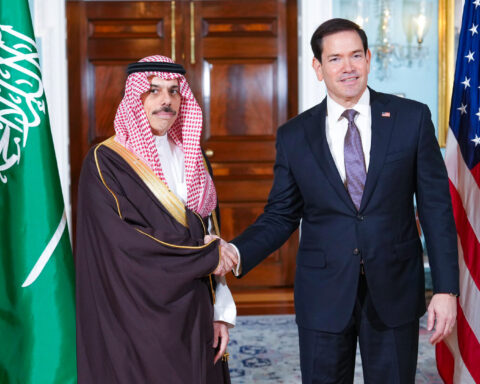
The proposed $300 billion Iran reconstruction fund has been rejected by every major Gulf state. Saudi FM Prince Faisal bin Farhan said Riyadh had “no information” about the fund and would not commit to contributing. Secretary of State Rubio confirmed on June 25 that there had been “no discussion on $300 billion reconstruction fund with Gulf Cooperation Council countries.”
The financial architecture of reconciliation is as fractured as its diplomatic counterpart. Any summit that produces even preliminary agreement will carry an implicit price tag, and the Gulf states positioned to pay it have either refused on principle or cannot absorb the cost at current oil prices.
| Country | Position on $300B Fund | Stated Rationale |
|---|---|---|
| Saudi Arabia | Not committed | “No information”; contributions conditional on trust restoration |
| UAE | Refused | “Risks rewarding aggression and undermining deterrence” |
| Bahrain | Refused | Coalition position: risks rewarding aggression |
| United States | No discussion initiated | Rubio: “No discussion with GCC countries” (June 25, 2026) |
Saudi Arabia’s fiscal position makes the refusal something more than diplomatic posturing. Brent crude closed July 6 at $68.33 per barrel — eighteen dollars below the IMF’s $86.60 fiscal breakeven. OPEC+ has voted its fifth consecutive 188,000 barrel-per-day output increase for August, feeding supply into a market the IEA estimates already carries 3.84 million barrels per day in surplus. Saudi Aramco’s free cash flow covers only 0.85 times its dividend commitment, and the kingdom posted a first-quarter deficit of SAR 125.7 billion.
“The war has so thoroughly hurt trust between Saudi Arabia and Iran that any contributions would have to be conditional.”
— Prince Faisal bin Farhan, Saudi Foreign Minister
The conditionality Faisal described is open-ended — he did not specify what conditions would satisfy Saudi Arabia, and no mechanism exists to evaluate whether they have been met. A summit without a financial framework is a conversation, not a negotiation, and Iran’s attacks left a damage bill that contextualizes the gap: roughly 600,000 barrels per day lost from Manifa and Khurais, another 700,000 barrels per day disrupted when the East-West Petroline pipeline was struck on April 9. Riyadh is being asked to host reconciliation with a government that struck its production facilities, forced the expulsion of its own embassy staff, and expects the Gulf to underwrite a $300 billion reconstruction program.
An unnamed Gulf official speaking to Al Arabiya on July 2 framed the financial dimension directly: Iran’s systematic attacks against Gulf states “will not end with the end of the war and may, in fact, be only the beginning.” Iran will retain, the official added, “the weapons of the strait and the proxies.” Funding reconciliation with a state that keeps its coercive instruments operational is not a financial decision — it is an insurance calculation. No underwriter in the Gulf has offered to quote the premium.
Forty-Three Days to August 18
The summit has no announced date, but the PGSA fee suspension does. On August 18 the suspension expires and $5.5 million per day in Hormuz transit fees auto-activate against Saudi Arabia’s $253 million outstanding liability. The timeline is contractual, not aspirational, and it runs whether or not the invitations have been sent.
Riyadh’s summit concept exists in the gap between a diplomatic aspiration and a fiscal deadline. If the format produces results before August 18, it could provide a framework for Hormuz fee arbitration that the Doha talks have failed to deliver — Secretary of State Rubio dismissed Iran’s fee structure as a “game of semantics” that would “never be acceptable.” If the format produces nothing, the PGSA liability accrues regardless, and Saudi Arabia enters autumn with a compounding daily cost, a widening budget deficit, and no reconciliation architecture to show for the effort.
Chatham House has projected that a deal on the Strait of Hormuz “will eventually emerge” but that the Gulf “will not return to the pre-28 February 2026 status quo.” The analysis carries a quiet implication: whatever format eventually produces a Hormuz resolution will reflect the balance of power at the moment of agreement, not the aspirations of the party that proposed the format. Saudi Arabia is proposing its format at a moment when its oil revenue is falling, its coalition is fractured, and its counterpart cannot be reached — and the terms of any eventual deal will price that weakness in.
Riyadh controls the venue. It does not control the calendar, the guest list, or the authority of anyone who might accept the invitation. The PGSA was designated under OFAC sanctions on May 27 — meaning any payment mechanism requires US sanctions relief Saudi Arabia has not secured, adding a third dependency to a deadline it has not resolved. As of July 6, the invitations have not gone out.
Frequently Asked Questions
Has Iran publicly responded to the Saudi summit proposal?
No Iranian official or state media outlet has publicly acknowledged the Saudi reconciliation summit concept. Tasnim News Agency, which is affiliated with the IRGC, has focused its recent diplomatic coverage exclusively on MOU enforcement and the US-Iran bilateral track — framing the diplomatic contest as one between Tehran and Washington, with Gulf states peripheral. When China brokered the 2023 normalization deal, Iran’s foreign ministry issued a public response within days of the proposal; the absence of any comparable acknowledgment in 2026 points either to institutional incapacity during the governance vacuum following Mojtaba’s succession, or to a deliberate decision to treat the Saudi format as non-credible. The diplomat who confirmed the summit arrangements did not indicate whether formal invitations had been delivered.
Could Oman host Gulf-Iran reconciliation talks instead of Saudi Arabia?
Oman holds stronger structural credentials as a neutral host than Saudi Arabia does. Muscat co-developed the Hormuz fee regime with Tehran, maintained full diplomatic relations with Iran throughout the war, and carries a direct precedent: the 2012-2013 secret US-Iran backchannel talks that eventually produced the framework for the JCPOA were held on Omani territory under Sultan Qaboos. Sultan Haitham bin Tariq has avoided the adversarial posture that makes Saudi hosting diplomatically asymmetric. However, Riyadh’s insistence on hosting reflects a strategic need to control the format’s agenda and membership — a need that would not be met by delegating venue authority to a smaller Gulf state with independent ties to Tehran.
How does the Houthi ground offensive affect summit prospects?
On July 5, Houthi forces attacked the 14th Infantry Brigade (Second Zaraniq Brigade) at Jabal Dabbas in Hodeidah governorate, killing at least 15 government troops — one day after coalition spokesperson Ahmed al-Maliki threatened “unprecedented force” against Houthi-controlled ports including Hodeidah, Ras Isa, and As-Salif. The gap between coalition rhetoric and operational capacity undermines Saudi Arabia’s credibility as a reconciliation host: Riyadh cannot simultaneously propose accommodation with Iran while failing to enforce military threats against Iran’s most active regional proxy. The UNMHA peacekeeping mandate for Hodeidah expired on March 31 without renewal, removing the neutral verification mechanism that once governed the port. Active ground combat in Yemen makes any Iranian non-aggression commitment at the summit table harder to verify and easier for Tehran to define away through semantic distinctions about proxy command structures.
What role does the $253 million PGSA liability play in summit timing?
The Persian Gulf Security Arrangement imposes fees on vessels transiting the Strait of Hormuz, and Iran suspended collection under the MOU framework — but the suspension expires on August 18, at which point $5.5 million per day in fees auto-activate against Saudi Arabia’s $253 million accumulated balance. The PGSA was designated under OFAC sanctions on May 27, 2026, meaning any payment mechanism would require US sanctions relief that has not been negotiated. This creates a three-way dependency: Saudi Arabia needs a deal before the deadline, Iran holds the fee trigger, and the US controls whether payment is legally possible. The summit’s timing suggests Riyadh is aware the August 18 deadline is approaching but has not secured the prerequisites — Iranian participation with signing authority, Gulf coalition alignment, or US sanctions accommodation — to resolve the PGSA question within any format it can control.