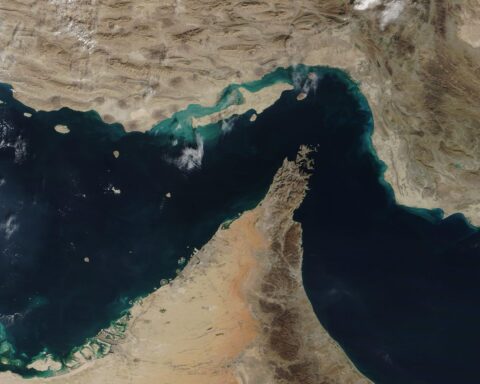

DOHA — Iran’s Revolutionary Guard struck the Al Rekayyat, a Qatari state-owned LNG tanker, with a missile inside the Strait of Hormuz on Monday, hitting the vessel’s port side and starting an engine room fire. The strike came on Day 20 of the 60-day ceasefire Iran signed in Islamabad three weeks ago, and it targeted a vessel belonging to the country whose capital has hosted every round of the US-Iran negotiations that produced it.
Qatar now occupies a position no mediator has held in this conflict: simultaneously the neutral host of the diplomatic process and the owner of the vessel the IRGC chose to hit. Nakilat, Qatar’s state LNG shipping company and operator of the world’s largest LNG carrier fleet, owns the Al Rekayyat outright. Monday’s missile did not strike anonymous commercial shipping — it struck the sovereign commercial infrastructure of the country holding the talks together.
Table of Contents
The Strike
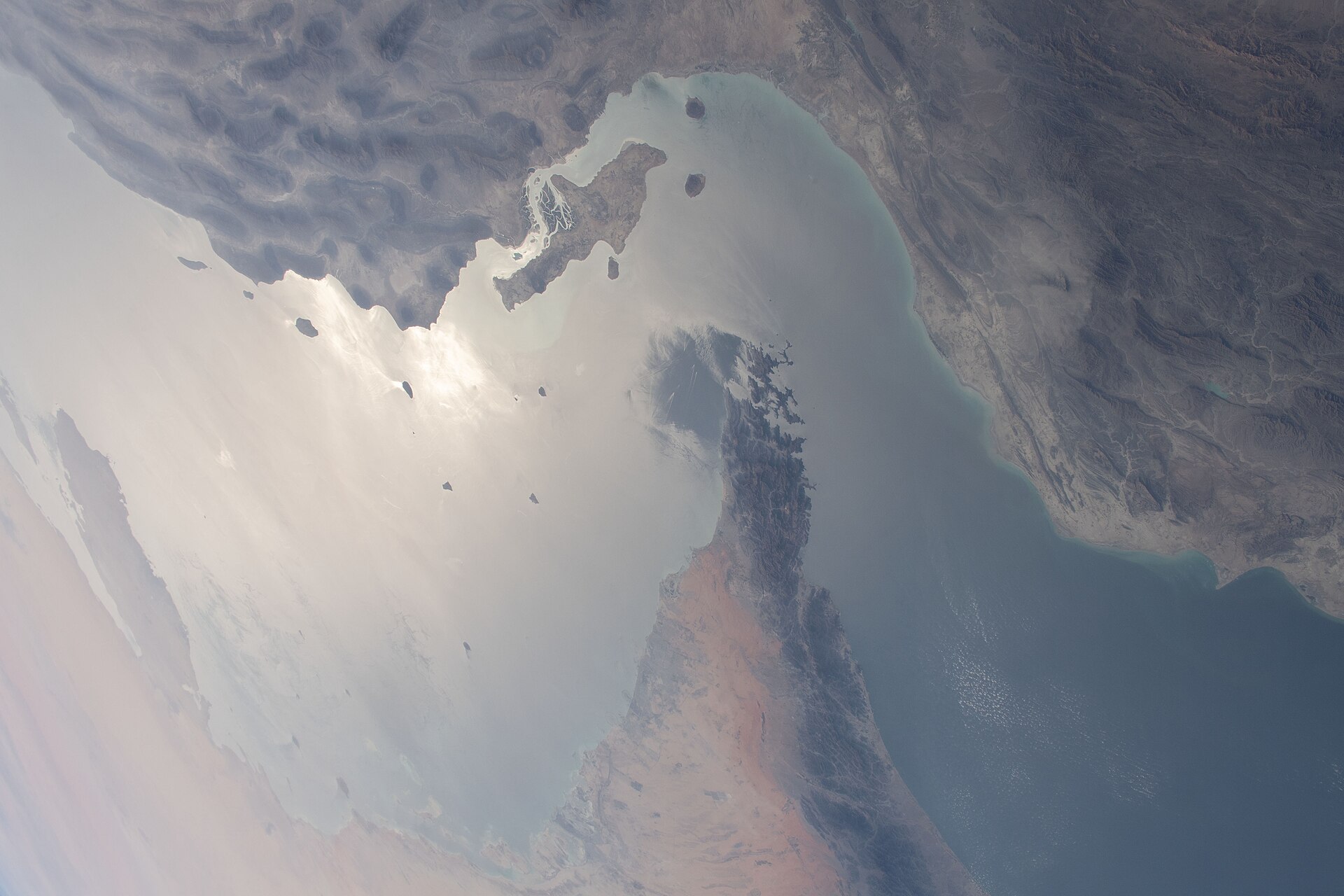
The UK Maritime Trade Operations centre confirmed the attack on Monday, reporting that a commercial vessel travelling southbound through the Strait of Hormuz was struck by an “unknown projectile” on its port side, approximately eight nautical miles east of Oman’s Limah anchor point. The projectile hit at the top of the engine room, starting a fire that forced the master to issue a MAYDAY distress call. UKMTO confirmed zero casualties and no pollution as of its advisory.
A crew audio recording obtained by the Wall Street Journal captured the conditions aboard the vessel after impact. “Engine room fire and full of smoke,” a crew member reported. “Unable to assess further damage. All crew are safe and mustered on the starboard side.”
The Al Rekayyat was not the only target. A US official told Axios that Iran fired missiles at a minimum of two commercial vessels on Monday, with both suffering “significant damage” but no casualties reported from either ship. The identity of the second vessel has not been publicly confirmed.
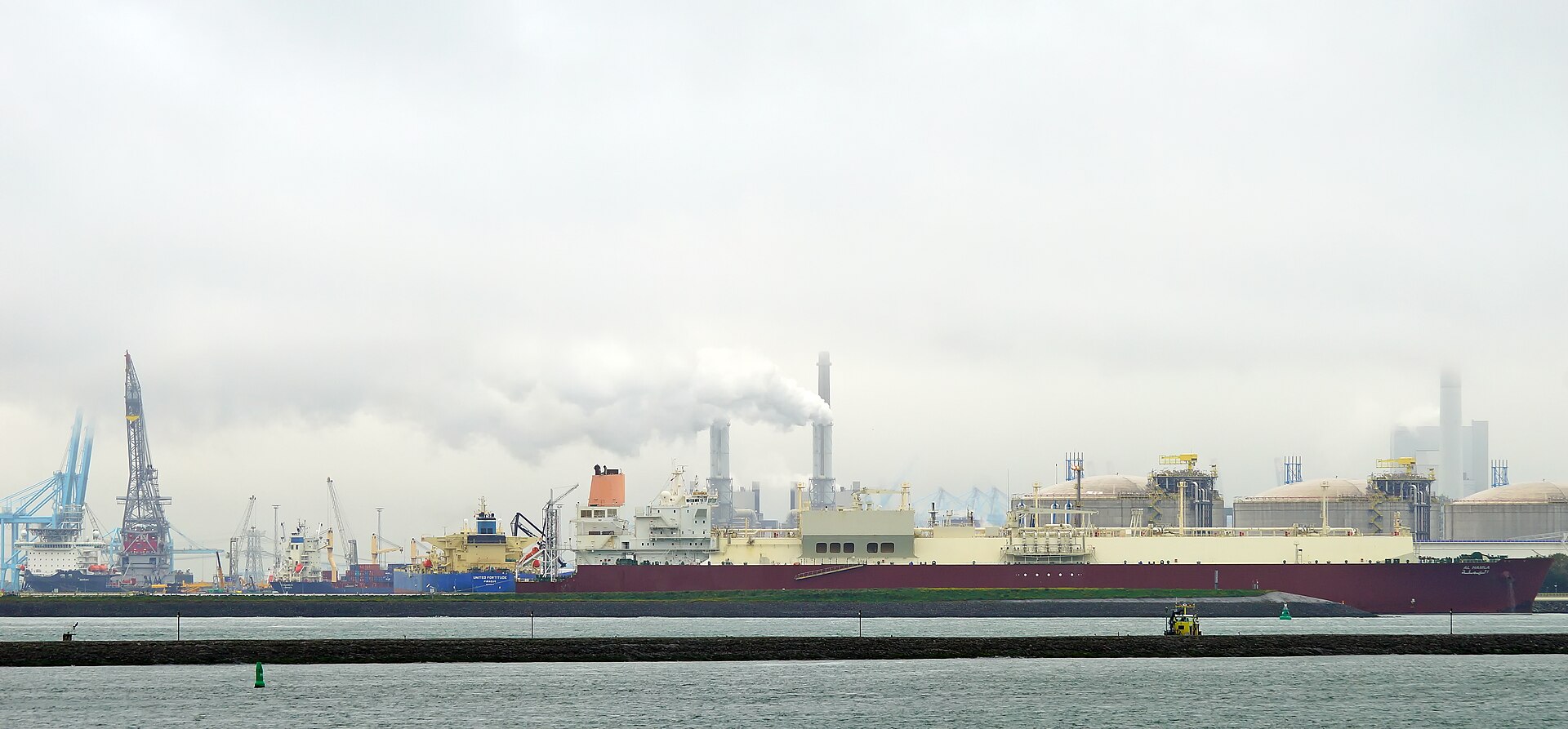
Iran did not officially claim responsibility for the attack. IRIB, Iran’s state television network, implied the strike was carried out by the IRGC, citing the tanker’s alleged failure to comply with IRGC-mandated transit routes, according to the Times of Israel. The pattern — no formal claim, state media framing the target as non-compliant — is consistent with previous IRGC maritime operations in the strait and preserves the operational deniability Tehran has maintained since the Hormuz campaign began.
The Middle East briefing 3,000+ readers start their day with.
One email. Every weekday morning. Free.
Why Did Iran Hit Its Own Mediator’s Ship?
The Al Rekayyat is not a chartered vessel flying a flag of convenience with no sovereign patron. It is a Q-Flex class LNG carrier — 315 metres long, 50 metres across the beam, with a capacity of 216,300 cubic metres of liquefied natural gas and a deadweight tonnage of 107,160 — built by Hyundai Heavy Industries, delivered in June 2009, and registered under the Marshall Islands flag. Nakilat, which owns it outright, operates 69 LNG carriers including 14 of the even larger Q-Max class, making it the largest dedicated LNG fleet on earth.
Qatar hosted Doha round 1 in late June and Doha round 2 on July 1-2, where Qatar’s Prime Minister confirmed “positive progress” toward extending the MOU framework, according to Al Jazeera. The parties agreed to reconvene after the Khamenei funeral pause. At the time of Monday’s strike, Jared Kushner and Steve Witkoff were in Doha for follow-up discussions, according to Bloomberg — the IRGC struck while the American negotiators were sitting inside the mediator’s capital.
Qatar’s double exposure — as the host of the talks and as a Hormuz-dependent LNG exporter whose state-owned ships must transit the strait — gives Tehran a form of coercion no previous round of US-Iran diplomacy has produced. The host’s primary revenue stream now passes through the same waterway that Iran treats as an enforcement zone. Monday’s missile made that dependency visible in a way no diplomatic cable could.
Round 3 has been reported for Islamabad on July 11, with Pakistan as the next host, according to Al Hadath and Al Arabiya. Whether Qatar will continue to provide the diplomatic architecture for future rounds after Monday’s strike is a question the IRGC has now forced into the open, and the answer rests not with Qatar’s foreign ministry but with Nakilat’s insurers.
The Route War
The strike did not arrive without precedent or warning. Over the weekend preceding Monday’s attack, the IRGC Navy broadcast VHF radio warnings to commercial shipping in the strait, stating bluntly: “Our missiles and drones are ready to fire at you.” The warnings targeted vessels using the US and Oman-backed southern corridor, according to PBS NewsHour and Al Jazeera.
The IRGC’s position on transit routes has been consistent and escalatory throughout 2026. On June 25, the IRGC Navy declared in a broadcast statement that “the only authorised transit routes through the Strait of Hormuz are those designated by the Islamic Republic of Iran,” explicitly rejecting the Oman- and IMO-coordinated southern corridor that most commercial vessels had adopted since the MOU enabled a limited resumption of traffic, according to Al Jazeera. The Al Rekayyat was travelling southbound — on precisely that corridor — when the missile struck its port side.
Iran’s framing treats Monday’s attack as enforcement action, not aggression. In Tehran’s reading, the MOU’s Article 5 commitment to use “best efforts” for toll-free commercial passage does not extend to route authority — Iran claims sovereign jurisdiction over transit designations through the strait, and vessels that use the Oman corridor do so at their own risk under the IRGC’s formulation. The distinction between toll-free passage and route compliance has never been tested in arbitration, and Iran has now tested it with ordnance instead.
The route dispute is inseparable from the fee dispute that dominated Doha round 2. On July 4, Iran’s ambassador to China stated that Iran would “definitely” collect Hormuz service fees and hinted at “special treatment” for friendly nations, according to the Times of Israel, the Jerusalem Post, and WION. Secretary of State Marco Rubio dismissed the fee framework after Doha round 2 as “a game of semantics” that “will never be acceptable.” Iran is now enforcing with missiles the route system that underpins the fee regime the United States has already rejected at the negotiating table.
What Does the MOU Actually Protect?
The MOU signed in Islamabad on June 17 was designed to create a 60-day window of de-escalation in the Strait of Hormuz. Article 5 commits Iran to use “best efforts” to ensure toll-free passage for commercial vessels through the strait for the duration of the agreement, according to a UK Parliament research briefing. Monday’s strike came on Day 20 of that window, with 40 days and three major deadlines remaining — including the August 18 PGSA reactivation.
The enforcement mechanism for those commitments is, in practice, nonexistent. Article 12, which governs dispute resolution, requires active arbitrators, and none have been appointed since the MOU was signed. No party has standing to formally invoke a violation, and the agreement contains no snapback provision that would automatically reimpose penalties. The MOU created obligations without consequences, and Iran has now tested whether those obligations constrain anything beyond press statements.
The commercial damage was visible before Monday confirmed it. Strait traffic has collapsed to roughly 35 transits per day, down from approximately 110 per day before the conflict began, according to vessel-tracking data compiled by House of Saud on July 6. War-risk insurance premiums have climbed to roughly 60 times pre-crisis rates, a cost multiplier applied to every cargo that enters the strait. The war premium that had briefly receded after Doha round 2 is now back, and it will reprice Monday’s strike before the diplomats reprice theirs.
The broader financial architecture compounds the exposure. The Persian Gulf Security Agreement carries an outstanding Saudi liability of $253 million, with fees reactivating at $5.5 million per day if the framework lapses on August 18, according to prior House of Saud reporting. The PGSA was designated under OFAC’s Specially Designated Nationals list on May 27. Every day the MOU fails to hold, the cost of its collapse compounds — not in diplomatic abstractions but in dollars that accumulate whether or not anyone in Islamabad, Doha, or Washington is authorized to stop the clock.
Washington Weighs a Response
President Trump called Monday’s attack “foolish,” according to Newsweek — a single word that stopped short of a threat and well short of the “unprecedented force” language that Saudi Arabia’s al-Maliki used on July 4 to describe what the coalition would bring against the Houthis. The White House did not announce any immediate military response, though Outlook India reported that US officials were assessing retaliatory strike options in the hours after the attack.
The restraint reflects the diplomatic calendar as much as strategic calculation. Kushner and Witkoff were in Doha when the missile hit the Al Rekayyat, and Islamabad round 3 is four days away. A US military response risks collapsing the negotiating framework that Washington has spent three rounds and two host countries building. But the absence of a response carries its own signal: the IRGC struck two commercial vessels on a single day during an active ceasefire, and the cost it paid was a one-word adjective from the president of the United States.
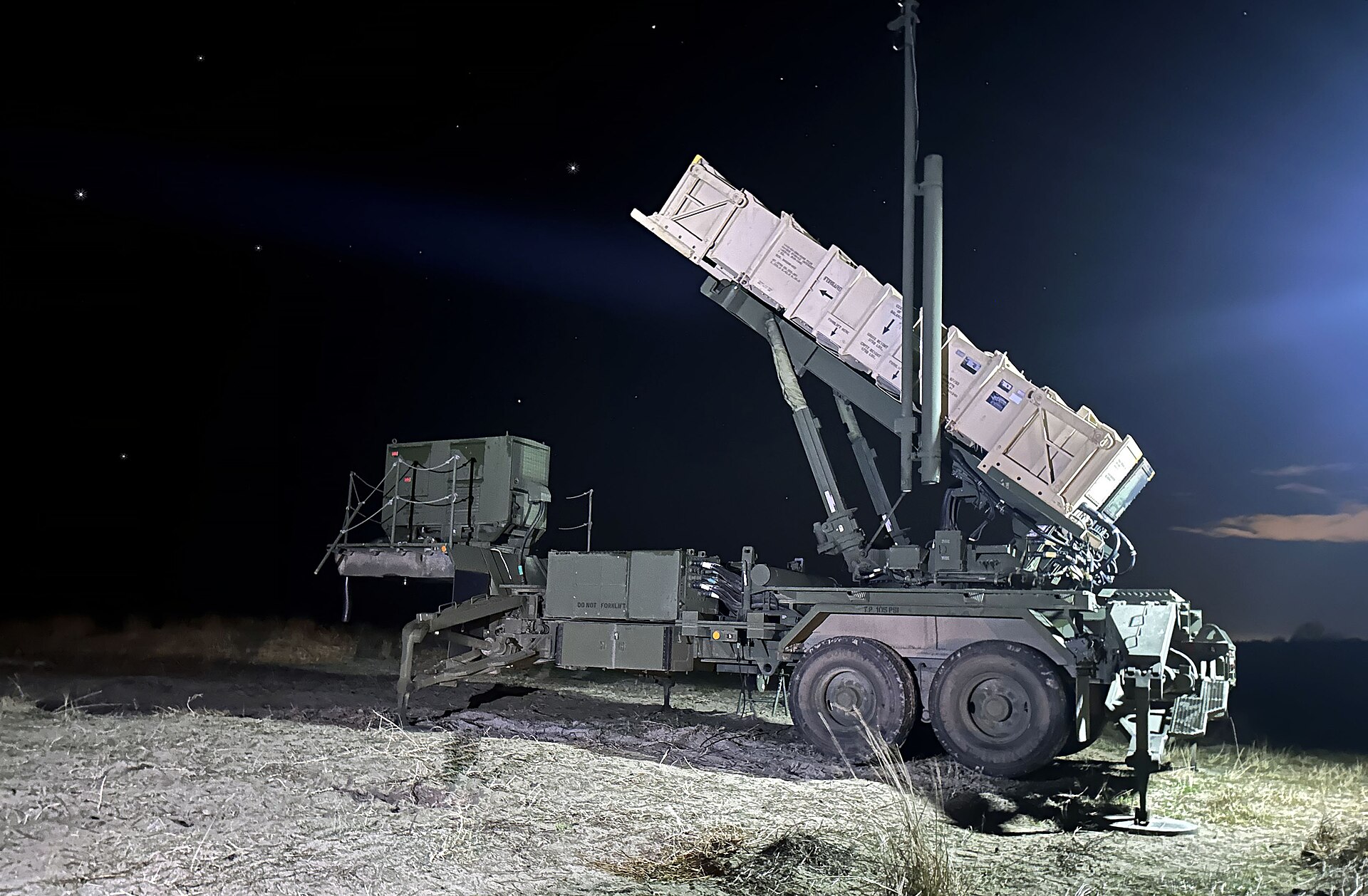
The calculus is further complicated by the degradation of the US and Saudi military posture in the Gulf. Saudi Arabia’s PAC-3 Patriot interceptor stockpile is 86% depleted, with approximately 400 rounds remaining from an original inventory of roughly 2,800. The 2,300 US troops at Prince Sultan Air Base face a drawdown that Saudi Arabia itself triggered with the Project Freedom warplane grounding in May. American capacity to escalate in the Gulf has diminished in ways that were abstract a month ago and operational today, and the IRGC’s willingness to test the ceasefire on Day 20 suggests Tehran has made the same assessment. The structural constraint is geographic as much as military: the US can reach Iranian coastal infrastructure, but sustaining any air campaign requires Prince Sultan Air Base — and Saudi Arabia has already demonstrated that PSAB access is conditional, not a given.
Background
The IRGC’s maritime campaign against commercial shipping in and around the Strait of Hormuz escalated through the first half of 2026. The oil tanker Skylight was struck on March 1, killing two Indian crew members — the first confirmed fatalities of the IRGC’s enforcement of its self-declared Hormuz transit authority. Qatar’s LNG fleet, which must transit the strait to reach markets in Asia and Europe, suspended Hormuz passages in April and May after multiple Nakilat tankers were forced into u-turns by IRGC warnings. The first successful Qatari LNG transit after the MOU was completed in June, using the Oman-coordinated southern corridor that the IRGC has now targeted with missile fire.
Qatar’s LNG infrastructure is exposed in ways that other Gulf producers are not. Nakilat’s 69-carrier fleet is the backbone of Qatar’s gas export capacity, and virtually all of it must pass through the Strait of Hormuz to reach buyers. The Al Rekayyat’s Q-Flex class sits in the middle tier of the fleet — above the 24 conventional carriers, below the 14 Q-Max vessels that carry the largest individual cargoes. Any attack on a Nakilat vessel is a strike against Qatar’s primary revenue stream, and Monday’s was the first confirmed missile impact on a state-owned LNG carrier from a country participating in the Hormuz diplomatic process.
The MOU framework signed on June 17 was meant to give that diplomatic process breathing room. Iran split the negotiating tracks between Doha, which handled maritime and commercial issues, and Islamabad, which was designated for the nuclear and sanctions agenda with Pakistan’s Army Chief Munir serving as a key facilitator. The August 18 PGSA deadline and the absence of any confirmed signatory on the Iranian side — a structural gap House of Saud detailed on July 6 — have turned the 60-day window into a race against deadlines that neither side fully controls.
Monday’s strike occurred on the same day that Khamenei funeral ceremonies concluded in Tehran, ending the July 4-9 diplomatic pause during which Houthi forces sank two commercial vessels and the IRGC’s posture shifted from ceremonial restraint to operational enforcement. The mourning ended on the same morning the missiles resumed — and the vessel they struck belonged to the country that had been holding the negotiations together.
Frequently Asked Questions
What is the Al Rekayyat?
The Al Rekayyat is a Q-Flex class LNG carrier owned by Nakilat, Qatar’s state LNG shipping company. Built by Hyundai Heavy Industries and delivered in June 2009, it is one of 31 Q-Flex vessels in Nakilat’s fleet — larger than conventional carriers but below the 14 Q-Max class ships that represent the fleet’s top tier. It transits the Strait of Hormuz on every voyage to Asian and European buyers.
Was anyone killed or injured?
No. UKMTO confirmed zero casualties, and a crew audio recording obtained by the Wall Street Journal confirmed all personnel were safe and mustered on the starboard side of the vessel after an engine room fire broke out from the missile impact.
Did Iran claim responsibility?
Iran did not issue a formal claim. IRIB, Iran’s state television, implied the IRGC carried out the strike, citing the tanker’s use of a transit route not authorized by Iran, according to the Times of Israel. This pattern of implicit attribution without official claim is consistent with the IRGC’s approach to prior maritime operations in the strait.
What is the MOU and how does it relate to the strike?
The Memorandum of Understanding was signed in Islamabad on June 17, 2026, creating a 60-day ceasefire framework between the United States and Iran. Monday’s strike on Day 20 tests a legal gap the agreement left open: Iran’s position is that route authority is separate from the toll-free passage commitment, a distinction that has never been tested in arbitration and that no appointed arbitrator currently exists to resolve. That structural gap — no arbiter, no treaty, no institutional forum — is the same gap NATO’s Ankara summit began filling from the Alliance side, when the Atlantic Council placed Hormuz on its collective agenda for the first time, leaving Saudi Arabia, the most exposed transit state, outside the room where the new institutional framing of the strait was written.
What happens next in the diplomatic process?
Round 3 is reported for Islamabad on July 11 with Pakistan as host, according to Al Hadath and Al Arabiya. Qatar’s role as a future venue is now in question — Nakilat’s war-risk insurers, not Doha’s foreign ministry, will determine whether Qatar can continue absorbing the cost of hosting a process that just cost it a missile strike on a state-owned vessel.