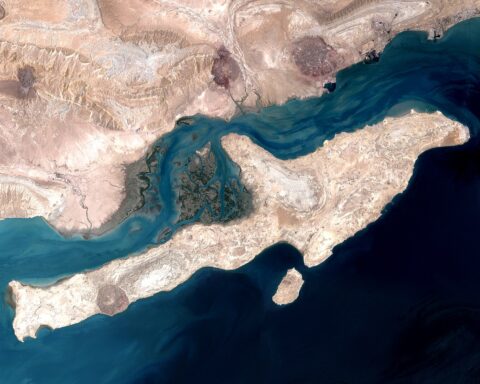
RIYADH — Donald Trump said on July 14 that he would consider seizing Kharg Island — the terminal through which 90 to 94 percent of Iran’s crude oil exports flow — and in doing so created a problem for Saudi Arabia that no Saudi official can solve, discuss, or even publicly acknowledge, because the single event most likely to rescue the kingdom’s fiscal year is also the single event most likely to establish that the United States can seize sovereign energy infrastructure anywhere in the Persian Gulf. Brent crude closed July 15 between $84.95 and $85.92, still below the $86.60 IMF breakeven that separates Saudi budget deficit from surplus, and removing Iran’s 1.5 to 1.68 million barrels per day from global supply would push it above that line — while simultaneously destroying the Iranian state revenue that funds the $253 million Persian Gulf Security Accord toll currently accruing against Saudi-linked shipping at $5.5 million every twenty-four hours.
Riyadh holds no seat at any active negotiating track — the Islamabad MOU collapsed on July 13, the Doha channel is void, and the US-Iran track is bilateral and exclusive. The kingdom cannot endorse, oppose, or publicly discuss the decision that determines whether it finishes fiscal 2026 above or below water, and no competing analysis of the Kharg question has examined what it means from Saudi Arabia’s position — because Saudi Arabia has been engineered out of having one.
Table of Contents
- What Did Trump Say About Seizing Kharg Island?
- The Price Saudi Arabia Needs and Cannot Produce
- Why Would a Kharg Seizure Destroy the PGSA?
- Does the Venezuela Template Threaten Saudi Infrastructure?
- What Did Iraq’s Bombardment of Kharg Prove?
- Iran’s Retaliatory Doctrine Runs Through Saudi Territory
- The Silence That Speaks for Riyadh
- Thirty-Three Days to August 18
- Frequently Asked Questions
What Did Trump Say About Seizing Kharg Island?
Trump stated on July 14, 2026, that he would consider seizing Kharg Island — “if we degrade them far enough and deep enough back, I would do that” — and wrote on Truth Social that the US would “assume total control of their Oil and Gas Markets, much like we have with Venezuela,” while resharing a 38-year-old interview in which he first threatened the terminal. The sequence matters because each statement escalated in specificity from the last, moving the threat from conditional to aspirational to — with the 1988 citation — autobiographical, framing the seizure not as a response to current events but as the completion of something Trump has been saying since before most of his current military commanders held a commission.
At some point in the not too distant future, we will be taking Kharg Island, and other oil infrastructure points, and assume total control of their Oil and Gas Markets, much like we have with Venezuela.
Donald Trump, Truth Social, July 2026
The 1988 quote — “They’ve been beating us psychologically, making us look a bunch of fools. One bullet shot at one of our men or ships, and I’d do a number on Kharg Island” — was given to the Guardian while Trump was promoting The Art of the Deal in London, and the thirty-eight-year gap between first saying it as a property developer and potentially ordering it as a wartime president is the kind of data point that would, in any conventional threat assessment, either increase or decrease confidence in the statement’s seriousness depending on whether the analyst reads four decades of consistency as conviction or as verbal tic. What the resharing establishes beyond dispute is that Trump considers Kharg a personal signature — not a policy recommendation handed to him by the Pentagon but something he arrived at independently and has never stopped saying.
The Middle East briefing 3,000+ readers start their day with.
One email. Every weekday morning. Free.
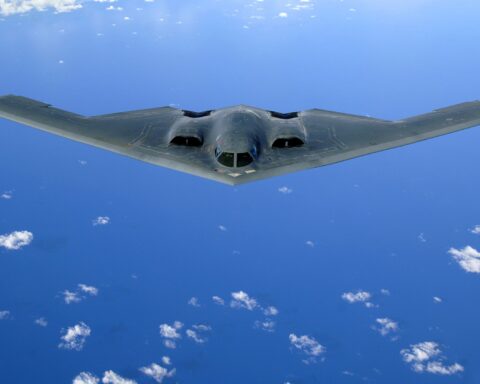
The operational question is which version of “taking” Trump means, because three plausible models produce fundamentally different consequences for every state in the Gulf. An air campaign degrading Kharg’s loading infrastructure until Iran evacuates is closest to what has already begun — the July 14 naval blockade reinstatement and the Hellfire strike that disabled the Curaçao-flagged tanker Belma on July 15, after it attempted to reach Kharg in defiance of US warnings, amount to the second model, naval interdiction, already partially operational. The third — amphibious seizure by Marines and 82nd Airborne elements, occupying the island indefinitely twenty miles from the Iranian mainland — is what “taking” means in conventional military usage, and War on the Rocks warned it would subject US forces to “unrelenting drone and missile barrages” for which no exit timeline exists.
Trump has not specified which model he intends. The ambiguity functions as its own form of escalation, because each version triggers a different Iranian response doctrine and a different exposure profile for every state hosting US military infrastructure within range of Iranian missiles — a category that includes Saudi Arabia regardless of whether Riyadh participates in the operation, is consulted about it, or learns it has begun before the first Marine lands.
The Price Saudi Arabia Needs and Cannot Produce
Brent’s closing range on July 15 — $84.95 to $85.92 per barrel — sits within two dollars of the $86.60 breakeven that the IMF confirmed in its December 2025 Article IV consultation, and the distance between where the price is and where Saudi Arabia needs it has never been this narrow or this politically loaded. The kingdom posted a first-quarter deficit of SAR 125.7 billion, Aramco’s free cash flow covers just 0.85 times its dividend obligation, and the war premium that briefly pushed Brent above $90 has not merely receded but inverted — on July 5, Brent fell to $70.82, below its pre-war level of $72.48, completing the disappearance of the war premium.
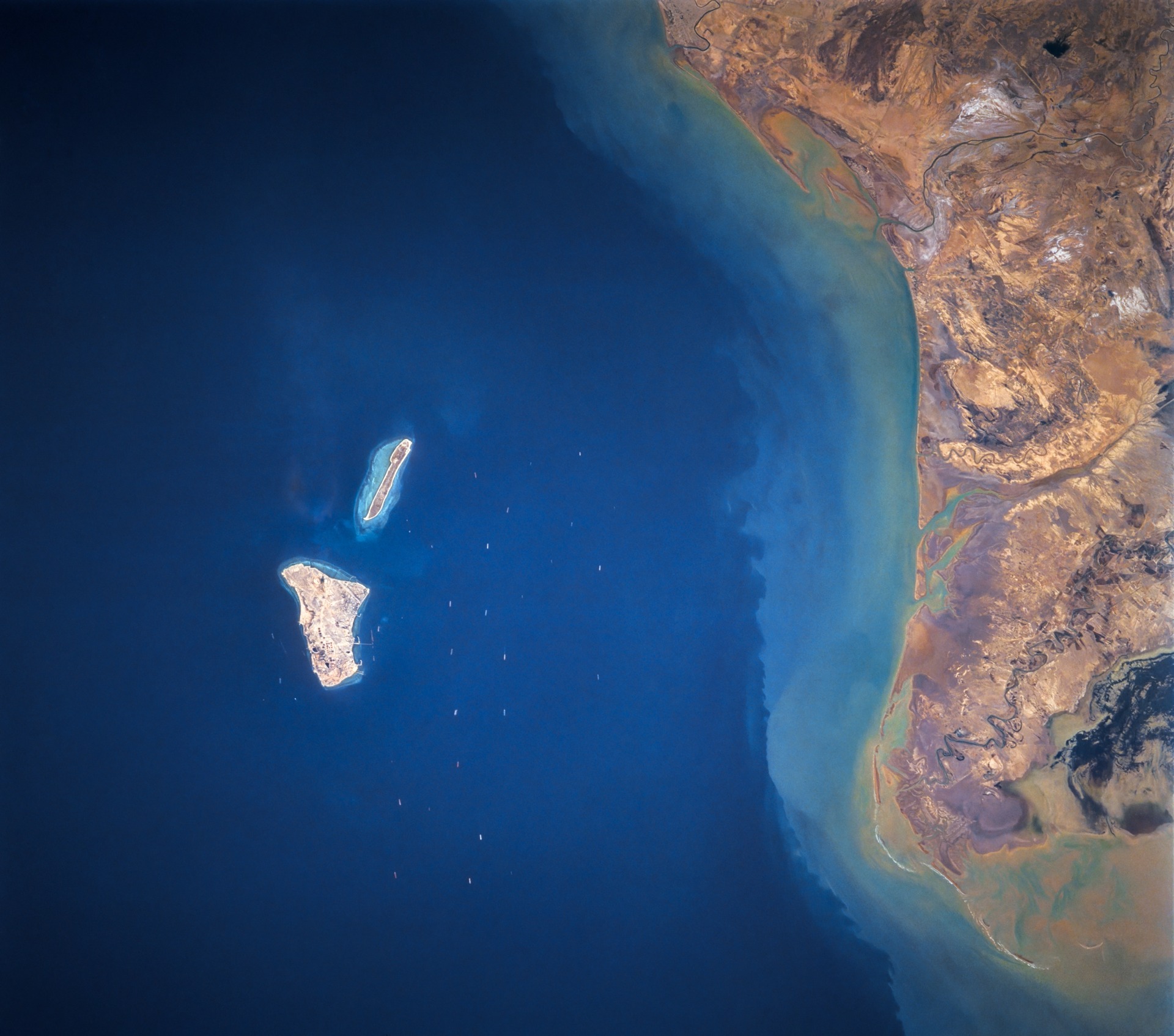
A Kharg seizure reverses the price trajectory in a single event. Kpler’s twelve-month trailing data assigns the terminal 94 percent of Iran’s crude exports, with Iran shipping approximately 1.68 million barrels per day in 2025 — and removing that volume from global supply would constitute the largest point-source disruption since Iraq’s 1990 invasion of Kuwait simultaneously erased Iraqi and Kuwaiti production from the market. Unlike OPEC+ quota adjustments or sanctions enforcement that leaks through dark-fleet workarounds, a seizure carries no credible timeline for restoration, because a militarily occupied island does not resume exports on a diplomatic calendar.
But Saudi Arabia cannot translate a price spike into a volume spike. The East-West Pipeline — the 1,200-kilometer conduit from Abqaiq to Yanbu that allows Saudi crude to bypass the Strait of Hormuz — is already operating at its maximum capacity of 7.0 million barrels per day, and no additional bypass infrastructure exists or can be built on any timeline measured in weeks. OPEC+ has authorized five consecutive monthly quota increases of 188,000 barrels per day, and the IEA estimates 3.84 million barrels per day of global surplus capacity, which means any sustained price spike invites non-Saudi producers to capture the incremental demand long before Riyadh can expand its own export architecture.
The windfall, if it arrives, comes as a per-barrel margin improvement on existing production volumes — enough to close the breakeven gap but not enough to permanently capture the market share that Iran’s removal would vacate. The margin improvement, whatever its size, comes attached to a set of costs that begin with the $253 million PGSA question and end with the precedent that makes every Saudi loading terminal a potential target of the same doctrine.
Why Would a Kharg Seizure Destroy the PGSA?
Seizing Kharg eliminates the revenue — $53 billion in net oil export earnings in 2025, over 40 percent of Iran’s government budget — that funds the IRGC Navy’s capacity to enforce the one-dollar-per-barrel PGSA toll on commercial shipping transiting the Strait of Hormuz. Saudi Arabia’s outstanding PGSA liability stands at $253 million, accrues at $5.5 million per day, and faces an enforcement deadline of August 18 after which Iran has threatened to begin interdicting non-compliant vessels — a deadline that a Kharg seizure would render operationally meaningless.
The PGSA functions because Iran controls both the revenue mechanism and the enforcement mechanism, and both depend on the same condition: that the Iranian state retains enough resources, institutional coherence, and military bandwidth to patrol, threaten, and if necessary board or block commercial vessels in the world’s most surveilled waterway. OFAC designated the PGSA under counterterrorism authorities on May 27, which means any payment by a US-nexus entity constitutes a sanctions violation — but the designation addresses the legality of paying the toll, not the operational question of whether Iran can collect it by force from those who refuse.
A seizure that halts Kharg exports eliminates the fiscal foundation on which IRGC Navy enforcement rests, and a state fighting a multi-front war while losing its primary revenue source cannot simultaneously sustain a naval toll regime across one of the world’s busiest shipping lanes. The PGSA would become a claim without an enforcement architecture — which is, by any conventional fiscal analysis, what Saudi Arabia should want.
The problem is what fills the vacuum. The alternative to an Iranian-administered toll is not free passage but an American-administered security framework in which the United States controls both the military enforcement and the economic terms of Gulf shipping. Saudi Arabia’s post-1945 energy export model rests on the principle that sovereign Gulf states control their own shipping infrastructure, and eliminating the PGSA by destroying Iran’s enforcement capacity does not restore the old order — it installs a new one in which the power that holds Kharg also sets the terms for every terminal on the Gulf’s western shore.
Does the Venezuela Template Threaten Saudi Infrastructure?
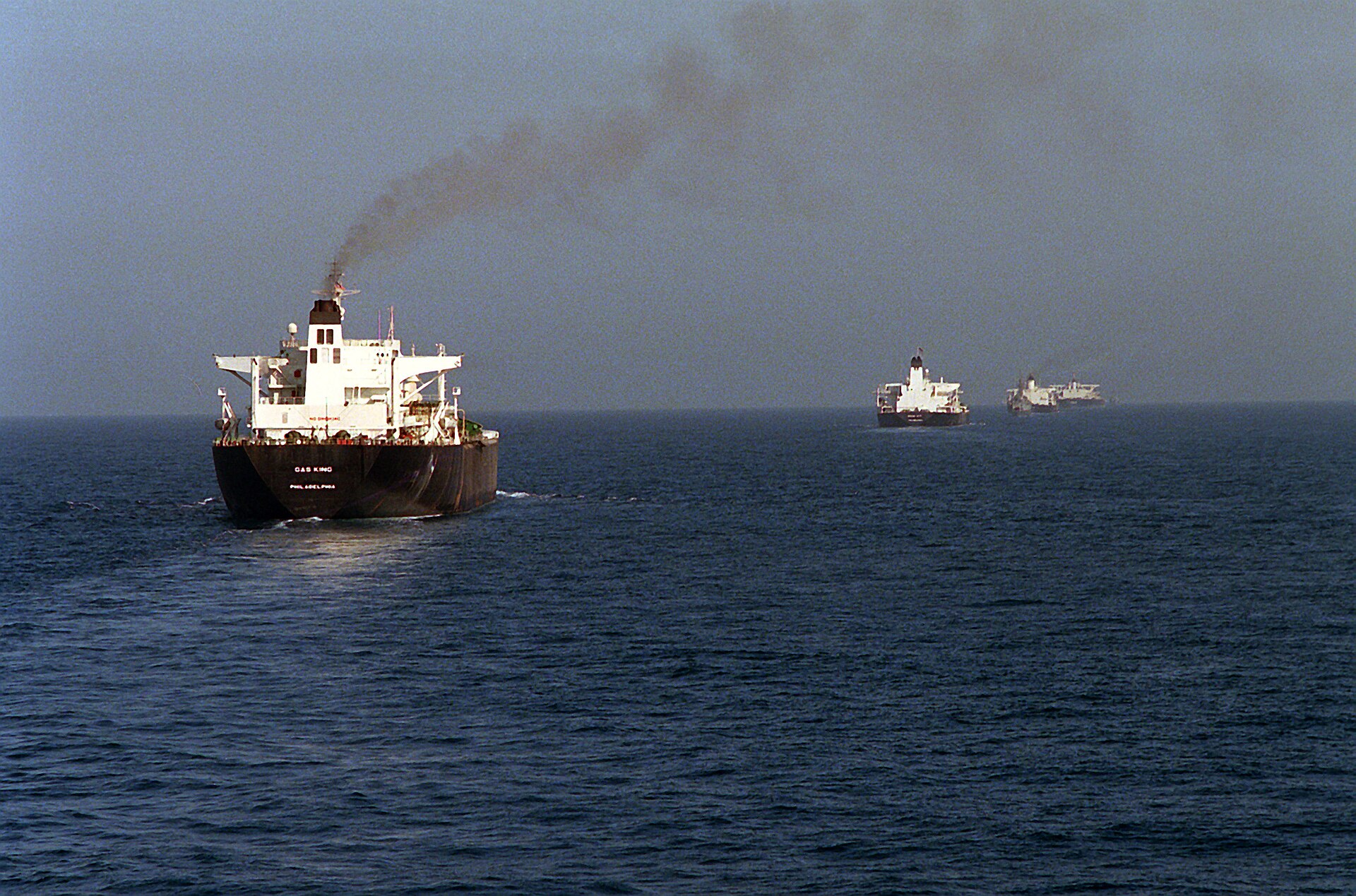
Trump cited Venezuela as the operational and legal precedent for assuming control of a sovereign nation’s petroleum exports, and the doctrine he described contains no limiting principle that distinguishes Iranian energy infrastructure from Saudi — Ras Tanura, Abqaiq, and Yanbu exist under the same conceptual framework of petroleum assets whose sovereign control could be redefined as a matter of American national security rather than the prerogative of the state where they sit. The word that matters most in Trump’s Truth Social post is “their,” a pronoun whose antecedent is any sovereign state whose energy exports Washington decides to commandeer under the combined weight of sanctions authority and military reach.
The Venezuelan template — sanctions, asset seizures, recognition of an alternative government, effective removal of Venezuelan crude from regulated markets — did not require a ground invasion, but it established the principle that Washington can designate a sovereign state’s energy revenues as illegitimate and redirect or eliminate them by executive action. Applied to Iran, this framework acquires a kinetic dimension the Venezuelan iteration lacked: not merely sanctions and asset freezes but physical occupation of the loading infrastructure, with US forces controlling which tankers berth, how much crude moves, and at what price it enters global markets.
For Saudi Arabia, the Venezuela comparison should register as more alarming than any missile trajectory, because the only thing preventing the same doctrine from applying to Saudi export terminals is the current alignment of interests between Washington and Riyadh — an alignment that three months of PSAB disputes, ambassador-level meetings that excluded the foreign minister, and unanswered PAC-3 resupply requests have demonstrated is contingent rather than contractual. The distance between “we will assume total control of their Oil and Gas Markets” applied to Iran and the same sentence applied to any other Gulf producer is not measured in legal principle — it is measured in the durability of a bilateral relationship that is fraying faster than either capital publicly acknowledges.
The FDD’s Long War Journal assessed in March 2026 that “Iran’s ability to generate revenue from oil sales is not a major determinant of the conflict’s outcome in the near-to-medium term,” which suggests the seizure serves a purpose extending well beyond the degradation of Iranian revenue. If that purpose is to demonstrate that the United States can take and hold sovereign energy infrastructure in the Gulf, the demonstration carries consequences for Abu Dhabi, Kuwait City, and Riyadh that no amount of alliance rhetoric can quarantine to Tehran — though the operational record of the last military power that tried to destroy Kharg’s export capacity suggests the demonstration may prove harder to stage than Trump’s rhetoric acknowledges.
What Did Iraq’s Bombardment of Kharg Prove?
Iraq struck Kharg Island from 1984 to 1988 using Super Etendard aircraft armed with Exocet anti-ship missiles, targeting loading jetties, storage tanks, and the tankers queuing to berth, and Iranian crude exports from the terminal never fell below 1.5 million barrels per day across the entire four-year bombardment. Iran sustained operations by shifting loading to fallback terminals at Lavan Island and Sirri Island, running shuttle tankers from Kharg to these intermediate points under cover of darkness and accepting higher costs, slower throughput, and greater crew risk as the price of continued revenue — a price Tehran paid without pause for the duration of the war.
The lesson is precise and its application to the current situation is direct: Kharg is extraordinarily durable under aerial attack. The island’s geological structure — a natural salt dome rising from the seabed with deep-water approaches on multiple sides — provides redundant berthing positions that cannot all be disabled simultaneously by anything short of sustained carpet bombardment, and storage capacity at Kharg so far exceeds loading throughput that destroying tanks does not halt exports until the destruction reaches a scale four years of Iraqi air operations never achieved.
This is why Trump’s choice of operational model determines everything about Saudi Arabia’s exposure. An air campaign against Kharg degrades Iranian exports but does not eliminate them — the 1980s proved this beyond reasonable dispute. A naval blockade prevents new commercial tankers from approaching but cannot stop Iran from loading crude onto IRGC-controlled and dark-fleet vessels already inside Iranian territorial waters. Only a physical seizure — forces on the ground controlling every berth, preventing every loading operation — achieves the complete export shutdown that produces the price shock Saudi Arabia’s budget requires, and physical seizure is the model that carries the consequences Riyadh is least equipped to absorb.
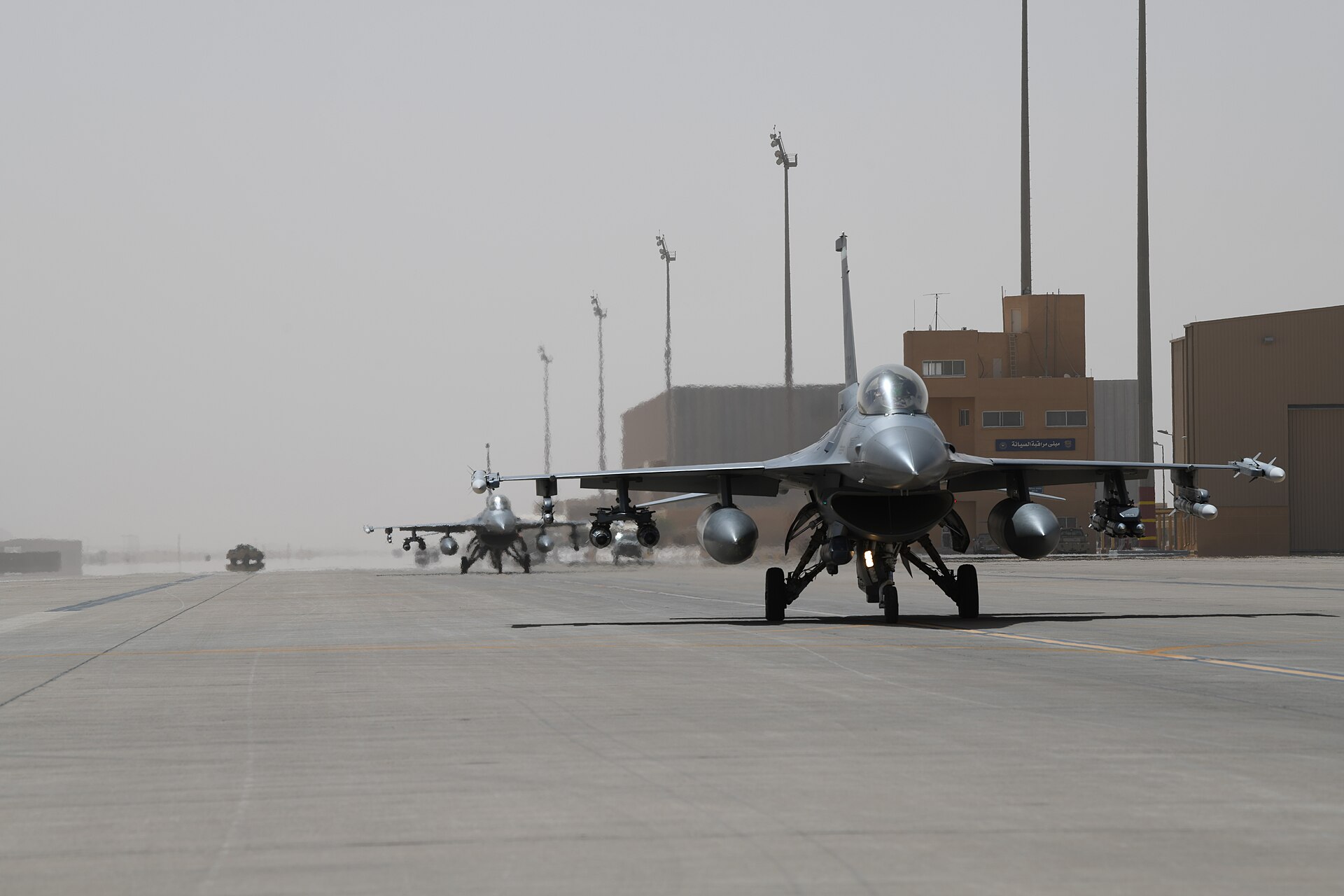
An indefinite ground occupation twenty miles from the Iranian mainland, requiring at minimum 3,000 Marines from embarked Marine Expeditionary Units plus 82nd Airborne elements, would place US forces in the same retaliatory threat environment as Prince Sultan Air Base with its 2,300 US personnel and already-grounded warplanes. The IRGC’s demonstrated willingness to strike US installations across four countries within twenty-four hours in early July leaves no ambiguity about whether Iran would treat a Kharg garrison as a target of first resort.
Iran’s Retaliatory Doctrine Runs Through Saudi Territory
Iranian Foreign Minister Abbas Araghchi stated, in response to a prior strike near Kharg, that the attack was “conducted from UAE” — establishing the doctrinal position that Iran holds regional US basing states accountable for American military operations regardless of whether the host nation authorized, facilitated, or was informed about the operation before it launched. Applied to a Kharg seizure, this means Saudi Arabia’s hosting of US forces at Prince Sultan Air Base implicates Riyadh whether or not a single Saudi official knew the assault was coming, a single Saudi aircraft flew in support, or a single Saudi communication channel carried an order.
Wrong strategies and impulsive decisions will reset the entire board for the worse, explode energy infrastructure and markets and create an endless quagmire that you will be stuck in for years. You will see a different Iran.
Mohammad Bagher Ghalibaf, Speaker of Iran’s Parliament, July 2026
The base’s air defense depends on a PAC-3 interceptor inventory depleted to roughly 400 of an original 2,800 — an 86 percent reduction with replacements not deliverable before mid-2027 despite a $9 billion DSCA sale approved in January. The capacity to absorb the retaliatory salvos a Kharg seizure would trigger is, by straightforward arithmetic, lower than at any point since the IRGC escalation began in July.
The IRGC has stated its response posture with unusual directness: “The region’s oil and gas exports will either be available to everyone or to no one” — a formulation that treats any Kharg seizure as the trigger for shutting down all regional export routes, not merely Iran’s. An Iranian parliamentary committee declared that “no American soldier will return alive” from a Kharg operation. Mona Yacoubian of the United States Institute of Peace characterized the IRGC’s operational doctrine as “unbridled escalation” — horizontal expansion across nations and vertical escalation from military to civilian to energy infrastructure — with proportional response explicitly rejected as a governing concept.
The July 8 strikes on Kuwait and Bahrain and the July 9 strikes on Jordan and Qatar already established that Iran does not distinguish between states that actively support US operations and those that merely host US forces under inherited agreements they cannot unilaterally void. The retaliatory fire reaches PSAB whether Riyadh endorsed the Kharg operation or condemned it, and the kingdom’s 400 remaining interceptors must cover not only Kharg-driven retaliation but every escalatory sequence the seizure would trigger simultaneously — an allocation problem with no solution at current inventory levels and no Saudi official positioned to negotiate a different distribution.
The Silence That Speaks for Riyadh
Saudi Arabia holds no seat at any table where the Kharg question could be raised, shaped, or registered as a concern, and the absence is not an oversight but the accumulated consequence of three months of diplomatic exclusion that has severed every channel between the kingdom and the two governments that will make the decision. The Islamabad MOU collapsed on July 13. The Doha track is void. The US-Iran channel, to the extent it functions, is bilateral and exclusive, and Iran’s Foreign Ministry confirmed on July 15 that Tehran has “no plans for negotiations” — eliminating even the theoretical possibility of a diplomatic venue at which Saudi preferences could be conveyed through an intermediary.
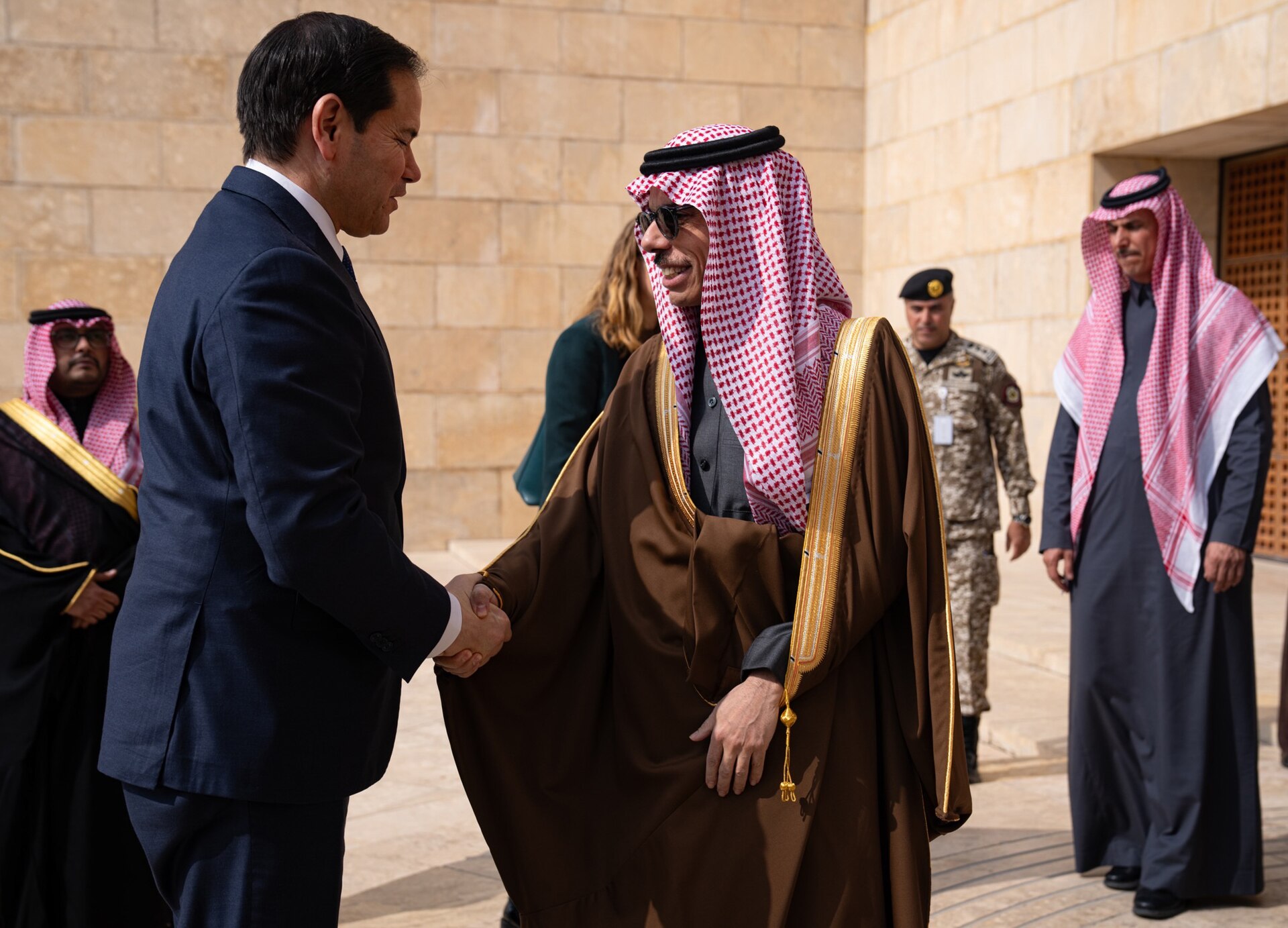
The most recent substantive US-Saudi contact was Princess Reema’s meeting with Secretary Rubio, conducted at ambassador level rather than foreign-minister level, in an exchange characterized as containment rather than coordination. Foreign Minister Faisal bin Farhan has been absent from bilateral US engagement since the WSJ report describing a rupture in the relationship, and the kingdom’s most senior diplomatic act toward Iran since Khamenei’s death was Deputy FM El-Khereiji’s condolence to President Pezeshkian — a rank inversion from the 2024 Raisi funeral, when Faisal himself attended, that signals deliberate downgrading of the only channel that could conceivably carry a Saudi message about Kharg to anyone in Tehran capable of acting on it.
The deeper problem is not diplomatic infrastructure but the impossibility of a coherent position on any side of the question. Endorsing a Kharg seizure — even through the silence Washington would read as acquiescence — validates the principle that the United States can occupy sovereign Gulf energy infrastructure, a principle whose next application could target Ras Tanura with exactly the same logic. Opposing a seizure means advocating for the continuation of Iranian oil exports that suppress Brent below breakeven, fund the PGSA toll draining $5.5 million per day from Saudi shipping, and sustain the IRGC capacity currently striking Saudi-hosted bases. MBS reportedly asked Trump for regime change in Iran — a request that a Kharg seizure partially fulfills — and opposing the operation now contradicts the kingdom’s own stated preference for maximum pressure, while supporting it contradicts its existential interest in the sovereign inviolability of Gulf petroleum assets.
Silence is not neutrality when both capitals are listening — Washington reads it as consent and Tehran reads it as complicity. The August 18 PGSA deadline does not distinguish between the two interpretations.
Thirty-Three Days to August 18
Thirty-three days remain before the PGSA enforcement deadline of August 18, and Saudi Arabia’s outstanding toll liability will have grown from $253 million to approximately $435 million by that date if no payment is made and no intervening event alters the enforcement equation. Whether Iran can still enforce the toll on August 18 depends almost entirely on what happens to Kharg between now and then — and the scenarios produce radically different outcomes for every variable Saudi Arabia is trying to manage.
| Scenario | Iranian Export Loss | Brent Price Effect | PGSA Enforceability | Saudi Fiscal Impact |
|---|---|---|---|---|
| Status quo (no seizure) | 0% | Below $86.60 breakeven | $5.5M/day accruing to Aug 18 | Deficit continues |
| Naval blockade only (current) | 10-30% | $85-$90 range | Intact — IRGC Navy operational | Near breakeven |
| Air campaign degradation | 40-70% | $90-$100+ | Weakened but functional | Surplus possible |
| Full amphibious seizure | 90-94% | $100+ | Destroyed — no revenue base | Surplus, at cost of precedent |
The three models operate on three different timelines, and none aligns cleanly with August 18. A naval blockade degrades Iranian export revenue over weeks as cargoes are intercepted and buyers find alternatives. An air campaign produces sharper reduction over days to weeks, depending on sortie rates and Iran’s ability to shift loading to fallback terminals. A full amphibious seizure — if ordered today — requires force-positioning, logistics staging, and the kind of inter-service coordination the Pentagon would measure in weeks rather than days, placing the earliest plausible completion around or beyond the PGSA deadline unless the operation is further advanced than public reporting suggests.
Bilal Y. Saab, a defense analyst at the Middle East Institute, argued that a Kharg seizure could “kill two birds with one stone: remove an economic lifeline for the regime — and perhaps lower its chances of survival — and stabilize global energy markets.” The assessment captures the optimistic view from Washington without addressing the Saudi-specific paradox: the market stabilization Saab describes installs Washington, not Riyadh and not OPEC+, as the power controlling how much oil enters global markets and at what price. Saudi Arabia’s fiscal rescue arrives at the cost of pricing sovereignty — a trade no Saudi energy minister since Yamani has contemplated willingly.
Ebrahim Rezaei, spokesperson for Iran’s parliamentary National Security Commission, offered the only direct response to Trump’s seizure rhetoric that any party to this conflict has been willing to deliver on the record: “Come, we are waiting for you.” The FDD assessed that “Kharg is much more likely to become a liability than an asset” — a warning addressed to Washington that applies with uncomfortable precision to a kingdom whose fiscal year now depends on an event it cannot endorse, cannot prevent, and will not be consulted about before the thirty-three remaining days between now and August 18 have run out.
Frequently Asked Questions
Could Iran resume Kharg exports after a US withdrawal?
Historical precedent suggests yes, and faster than Washington’s public messaging implies. Throughout the 1980s Tanker War, Iran maintained Lavan and Sirri Island as operational fallback terminals that sustained above 1.5 million barrels per day even while Kharg was under bombardment for four years. Iran also maintains substantial floating storage aboard IRGC-controlled vessels, providing a buffer that would allow export activity to resume within weeks of any cessation of hostilities — which means a seizure must be indefinite, not temporary, to produce a permanent supply removal.
How much of Iran’s sanctioned crude goes to China?
Roughly 90 percent of Iran’s sanctioned crude exports are purchased by Chinese refiners, primarily independent “teapot” refineries in Shandong province that process Iranian crude at discounts of $5 to $10 per barrel below prevailing benchmarks. A Kharg seizure would force these buyers to source approximately 1.5 million barrels per day from spot markets at full price, a cost increase Beijing has signaled it would treat as a hostile economic act against Chinese industry. Saudi Arabia, as OPEC+’s largest producer and China’s second-largest crude supplier, would find itself caught between competing pressures to replace Iranian supply for Beijing while avoiding any appearance of endorsing the seizure that created the shortage — a commercial bind that the existing Kharg analysis from Bloomberg, the FDD, and War on the Rocks has not addressed.
What happened during Operation Praying Mantis in 1988?
On April 18, 1988, the US Navy launched Operation Praying Mantis — the largest American naval surface engagement since World War II — destroying Iran’s Sassan and Sirri oil platforms, sinking the frigate Sahand, and severely damaging the frigate Sabalan and the fast attack craft Joshan. The operation was a retaliation for mine damage to USS Samuel B. Roberts, not an infrastructure seizure, and the US withdrew within twenty-four hours. Iran subsequently sued at the International Court of Justice, which ruled in 2003 that the platform destruction was not justified as self-defense — a legal finding whose logic would apply with greater force to the seizure and indefinite occupation of a civilian oil export terminal, which is what Kharg Island is under international humanitarian law regardless of how the operation is described in Washington.
Has any US official publicly opposed the Kharg seizure?
No serving US official has publicly opposed the seizure on record as of July 16, 2026, though the War on the Rocks analysis — widely attributed to voices in the defense policy community with institutional knowledge of Gulf operations — described the concept as folly and warned that holding Kharg under sustained fire from the Iranian mainland twenty miles away would create an unwinnable garrison scenario. The Joint Chiefs, CENTCOM, and the State Department have made no on-record statement about the feasibility or advisability of an amphibious assault. The silence could mean the threat lacks institutional support and no one treats Trump’s statement as an actionable order, or it could mean dissent has been confined to classified channels — and neither reading gives Saudi Arabia a reliable foundation for planning its own posture toward an operation whose timing, scope, and consequences remain entirely outside its control.