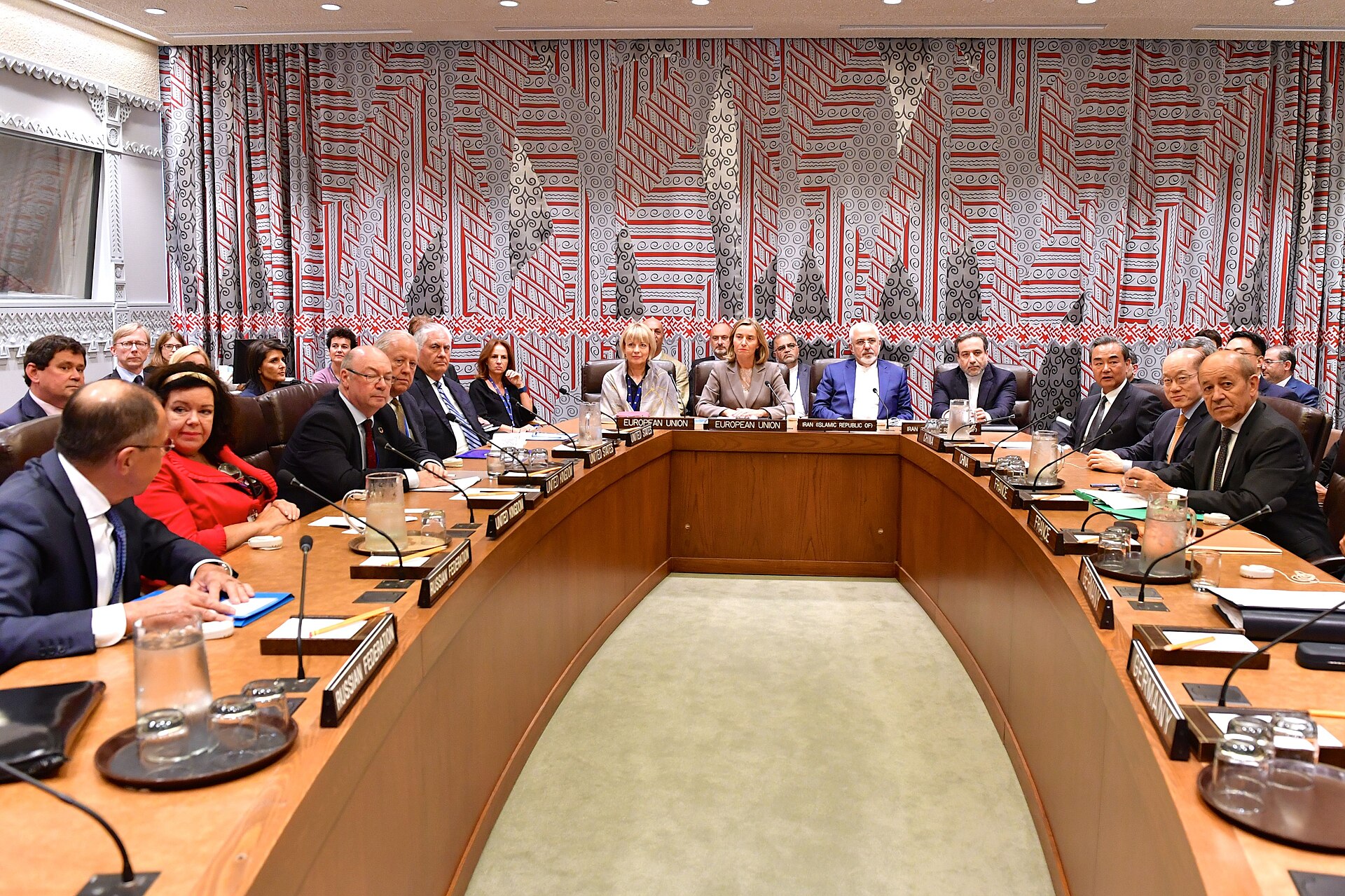

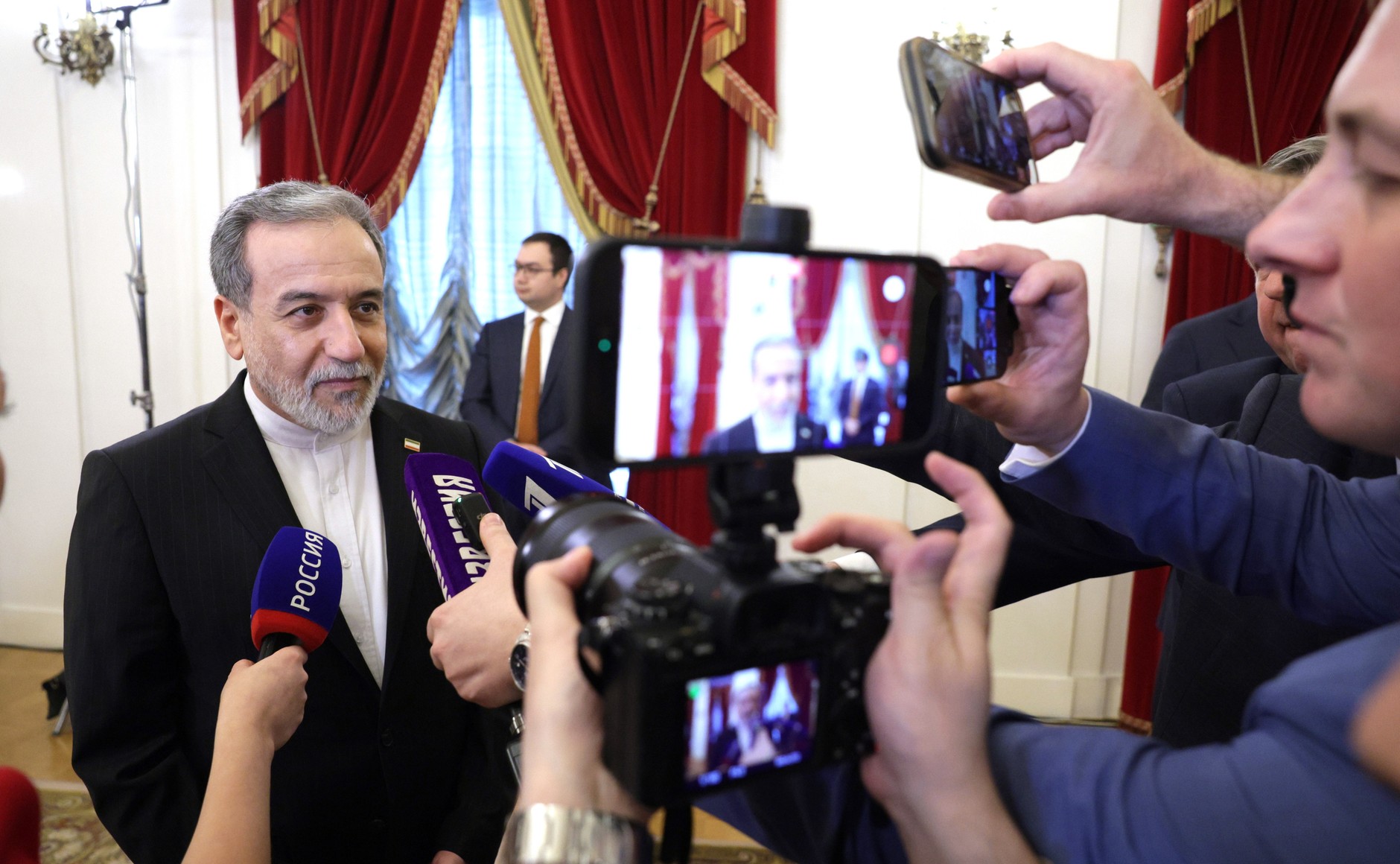
NEW YORK — Iran’s Foreign Minister Abbas Araghchi presented a written sixty-day ceasefire road map to American envoys Steve Witkoff and Jared Kushner on September 22–23 at the United Nations General Assembly, in a session lasting approximately three hours and mediated by Qatar, Pakistan and Egypt. Saudi Arabia — the Gulf state with the most at stake in any Hormuz reopening — was not in the room.
The road map proposes a region-wide ceasefire, a phased reopening of the Strait of Hormuz, and a timetable for broader negotiations to end a conflict now in its two hundred and seventh day. It is the second formal written framework produced in the 2026 war without Saudi participation. The first was the Islamabad Memorandum of Understanding, signed June 17, which listed Riyadh as a facilitating country but not a signatory — and committed the GCC to a $300 billion Iranian reconstruction fund the GCC never formally approved.
Ten days before Araghchi tabled his proposal, Saudi Arabia had requested a postponement of the only multilateral track that could have given Riyadh a seat: Iran-Gulf talks in Oman over a temporary Hormuz shipping lane. Brent crude fell below $100 a barrel on the day the road map was presented.
Table of Contents
- What Did Iran Table at the United Nations?
- The Room Saudi Arabia Was Not In
- Why Did Riyadh Postpone the Only Multilateral Track?
- How Does the Road Map Trap Saudi Arabia?
- What Does a Barrel Below One Hundred Dollars Mean for Riyadh?
- Sixty Days, Twice
- The Mecca Pact Cannot Answer New York
- Who Negotiates Hormuz If Not the States That Border It?
- Frequently Asked Questions
What Did Iran Table at the United Nations?
Iran’s road map, presented through Qatari, Pakistani and Egyptian mediators on September 22–23, proposes three phases: a region-wide ceasefire of up to sixty days, a phased reopening of the Strait of Hormuz contingent on the lifting of the US naval blockade, and a timetable for permanent negotiations covering sanctions, nuclear enrichment and missile limits.
Araghchi’s conditions for reopening the Strait were specific: immediate lifting of the US naval blockade of Iranian ports, immediate release of frozen Iranian assets, and an end to all US and Israeli strikes across what Tehran calls the “resistance fronts.” A senior Iranian official told Reuters on September 22 that Iran could reopen Hormuz within seven days if Washington eased military pressure and lifted the blockade.
The American response was warm in tone and cold in substance. Donald Trump told reporters the meeting was “very good” and “very productive” with “a lot of momentum,” but ruled out lifting the blockade before Iran demonstrated “sufficient goodwill.” Secretary of State Marco Rubio — whose own legislative record on Iran deals has been less than consistent — stated that the talks had not yielded any major breakthrough.
The Middle East briefing 3,000+ readers start their day with.
One email. Every weekday morning. Free.
“Engaged in lengthy talks with the Iranian delegation through the mediators… successfully completed a round of discussions that we hope will prove constructive and promising.”
— Steve Witkoff, US envoy, posting on X, September 23, 2026
The distinction between a written proposal and a verbal one is not procedural. The Islamabad MOU demonstrated that written frameworks generate their own momentum — even after their deadlines expire, they define the terms of the next negotiation. A verbal assurance can be walked back. A written road map becomes part of the institutional memory of the United Nations, circulated among mediators, referenced by member states, inherited by whatever negotiation comes next. Iran presented its document not as an opening bid but as a baseline that future talks would need to address or supersede.
The distance between Witkoff’s “constructive and promising” and Rubio’s “no major breakthrough” is the space in which Saudi Arabia’s problem resides. Enough warmth to sustain a diplomatic track Riyadh cannot shape. Not enough progress to deliver the Hormuz reopening Riyadh needs.
The Room Saudi Arabia Was Not In
While Araghchi sat across from Witkoff and Kushner on the evenings of September 22–23, Saudi Foreign Minister Prince Faisal bin Farhan was elsewhere in the UN complex. He participated in three separate UNGA-week activities: a GCC Ministerial Coordination meeting, a Ministerial Meeting on Maritime Security Cooperation, and a Gaza and Palestinian statehood roundtable co-chaired with France, the United Kingdom and Canada.
Three multilateral meetings. All procedurally legitimate. None in the room where Hormuz was being negotiated.
The mediating trio was not assembled by accident. Qatar has served as the primary interlocutor between Tehran and Washington since the April ceasefire collapsed, maintaining diplomatic relations with Iran throughout the war. Pakistan held the pen on the Islamabad MOU, the only signed framework of the conflict. Egypt’s inclusion insulates the mediation from accusations of being a Gulf-state enterprise. Each carries a specific credibility with Tehran that Riyadh — which secretly conducted RSAF strikes on Iranian drone and missile launch sites during the conflict — does not currently hold.
Prince Faisal stated that Saudi Arabia appreciated President Trump’s decision to pursue diplomacy toward an agreement that would restore Hormuz to its state prior to February 28, 2026. The statement specifies a date — the day the war began — as the only baseline Riyadh would accept.
The Maritime Security Cooperation meeting Faisal attended addressed the same body of water — the Strait of Hormuz — that Araghchi was negotiating over in the other room. The difference was one of agency. Faisal’s meeting discussed what the international community should demand regarding Hormuz. Araghchi’s meeting determined what Iran would offer.
Why Did Riyadh Postpone the Only Multilateral Track?
Saudi Arabia requested a delay of the September 13–14 Iran-Gulf talks in Oman, citing ongoing Houthi attacks after a strike on Khamis Mushait air base that same day. Bahrain ruled out participating entirely. The postponement cancelled the only multilateral forum where Gulf states could have shaped Hormuz terms before Iran arrived in New York with its own written proposal.
The Khamis Mushait strike provided the stated rationale. But it was the East-West pipeline shutdown on September 13 — following drone attacks on pumping infrastructure that halted crude loadings at Yanbu and forced Aramco to cancel European cargoes — that defined the material context. With its only Red Sea export bypass disabled, Riyadh was facing negotiations from a position of acute vulnerability rather than residual strength.
Bahrain’s refusal was more absolute. Manama ruled out participating in the Oman talks entirely, citing Iranian-backed attacks on its territory — a decision that removed the second Gulf voice that might have shaped terms alongside Saudi Arabia. With Bahrain out and Saudi Arabia postponing, no direct Gulf belligerent would have been present even if the talks had proceeded on schedule.
Iran’s Foreign Ministry confirmed the postponement was requested by Saudi Arabia and framed it as evidence of Saudi obstruction. Whether or not that characterisation is fair, the sequence created a documentary record that preceded the UNGA session by ten days. Riyadh arrived in New York already having declined the only multilateral Hormuz track Iran was publicly offering.
The East-West pipeline was restarted at reduced capacity by September 22 — the same day Araghchi presented his road map. The Saudi material position had improved in the ten-day interval. The diplomatic record had not.
How Does the Road Map Trap Saudi Arabia?
The proposal is constructed so that every outcome weakens Riyadh’s position. If the ceasefire succeeds, Saudi Arabia receives Hormuz reopening on US-Iran bilateral terms it did not draft. If it fails, Tehran holds a written record of a proposal tabled while Saudi Arabia was on record as the state that postponed the multilateral alternative.
The trap operates through Tehran’s conditions. Iran linked sanctions relief to Hormuz reopening — not Gulf-state security guarantees. Riyadh gets the Strait back only if Washington gives Tehran what Washington alone can give: the lifting of the naval blockade, the release of frozen assets, the cessation of strikes. Gulf capitals are excised from the chain of concessions entirely. The protection of “Arab neighbours” — a phrase from the road map — is folded into a bilateral Iran-US framework rather than a multilateral arrangement the Gulf states could shape or condition.
The road map generates a paper trail that accumulates regardless of the negotiating outcome. Araghchi arrived at UNGA with a written document. Iran’s Foreign Ministry had already framed the September 13 postponement as Saudi obstruction. The UNGA proposal now sits alongside the Islamabad MOU in a growing archive of written Iranian commitments — each one refreshing the narrative that Tehran is the party willing to put terms on paper.
Saudi Arabia has been unable to afford the war and influence the peace simultaneously since the conflict’s early months. The UNGA road map formalises that condition. Its sixty-day timeline mirrors the Islamabad MOU’s expired window, and its bilateral architecture reproduces the same exclusion. Riyadh has produced no equivalent written framework in two hundred and seven days of war.
What Does a Barrel Below One Hundred Dollars Mean for Riyadh?
Brent crude fell to approximately $97.81 on September 22, dropping below $100 for the first time since early 2026 as the prospect of a Hormuz reopening and Saudi Arabia’s East-West pipeline restart raised market expectations of increased Middle Eastern supply. The decline from a 2026 peak above $126 a barrel exposes a contradiction at the centre of Riyadh’s war economy.
Goldman Sachs estimated that Saudi Arabia’s weekly oil revenue rose approximately ten per cent relative to pre-war levels because higher prices more than compensated for lost Hormuz shipments. The premium was generated not by Saudi pricing power but by the fear attached to Iran’s closure of the Strait and attacks on Gulf infrastructure. A successful Hormuz reopening would eliminate it.
| Indicator | Value | Source |
|---|---|---|
| Brent crude, September 22 | ~$97.81/bbl | The National |
| 2026 Brent peak | >$126/bbl | Bloomberg, May 2026 |
| Saudi crude via Hormuz (6-day avg to Sep 18) | 2.9 million bpd | The National |
| East-West pipeline max capacity | 4 million bpd | Dallas Fed / Bloomberg |
| Saudi weekly revenue change vs pre-war | +~10% | Goldman Sachs / Bloomberg |
| Iran’s stated Hormuz reopening timeline | 7 days | Reuters / The National |
| Islamabad MOU reconstruction fund | $300 billion | Arab Center DC |
Saudi crude moving through the Strait averaged 2.9 million barrels per day over the six days to September 18. The East-West pipeline’s maximum Red Sea diversion capacity is four million barrels per day — and even that channel was disabled for nine days following the September 13 drone attacks. Aramco cancelled European cargoes during the shutdown and only restarted the pipeline at reduced capacity on September 22.
If Hormuz reopens on Iran’s terms — meaning Tehran controls the sequencing and pace — Saudi Arabia loses the war premium that has padded its revenue while gaining back a shipping lane whose availability depends on Iranian compliance with a deal Riyadh did not negotiate. If Hormuz remains closed, Brent likely returns above $100, Riyadh keeps the premium, but forfeits the export capacity that justifies its market share. The IMF cut Saudi Arabia’s 2026 growth forecast to 1.7 per cent, citing Hormuz disruption as the primary driver.
The paradox extends beyond crude. The $300 billion reconstruction fund committed under the Islamabad MOU — to be funded primarily by the GCC — represents a fiscal obligation that only materialises if the war ends on terms that include Iranian compliance. If Brent remains elevated, Riyadh can notionally afford the contribution. If prices fall toward $97 on a reopened Hormuz, the fiscal margin narrows precisely as the payment comes due. Saudi Arabia is paying a war premium on its own future reconstruction obligation.
Sixty Days, Twice
The structural parallel between the Islamabad MOU and the UNGA road map extends beyond the identical sixty-day window.
The Islamabad MOU was signed on June 17 by Pakistani Prime Minister Shahbaz Sharif, committing both sides to a fourteen-point framework covering Hormuz navigation, Iran’s nuclear and missile programmes, and sanctions relief sequencing. Saudi Arabia was listed as a facilitating country but not a signatory.
The MOU committed the GCC to fund a $300 billion Iranian reconstruction package — a figure Vice President JD Vance later confirmed by stating that a “Gulf Coast Coalition,” meaning the GCC, would pay if Iran kept to the deal. Vance’s public confirmation treated the GCC obligation as settled when no GCC foreign minister had signed anything. The consent was announced; it was never obtained.
By September 23 — day two hundred and seven of the war — the MOU’s sixty-day negotiating window had expired without a permanent agreement. Iran’s UNGA road map is the second attempt at a formal written commitment in the same conflict, and it reproduces the same architecture: a bilateral Iran-US framework, multilateral mediators, a fixed timeline, and Saudi Arabia positioned as a beneficiary rather than a negotiating party.
Tehran has established a pattern. Written frameworks at regular intervals, each refreshing the diplomatic record, each preceded by a gesture toward multilateral engagement that Riyadh is unable or unwilling to join. The Oman postponement on September 13 fills the same structural role as Riyadh’s absence from the Islamabad signing on June 17: a gap in the record where Saudi participation should appear. Washington has given Riyadh arms and concessions throughout the conflict, but it has not given Riyadh a pen.
The Mecca Pact Cannot Answer New York
The Mecca Joint Defence Agreement — signed on August 7 by Saudi Arabia, Pakistan and Turkey — was designed to provide Riyadh with the institutional security architecture the conflict had exposed as absent. It was Saudi Arabia’s answer to seven months of strategic exclusion: if Riyadh could not get into the bilateral room, it would build a multilateral structure outside it.
“A major change [in] Middle East geopolitics… the first institutional arrangement of its kind in the region.”
— Steven A. Cook, Council on Foreign Relations, on the Mecca Joint Defence Agreement, 2026
The agreement does not establish a joint command. It does not create standing forces. It does not specify a trigger mechanism. Cook’s assessment describes the political weight of the pact, not its operational readiness — and the distinction matters when the challenge is not a military threat but a written proposal at the United Nations.
Six weeks after the Mecca signing, King Salman chaired a cabinet session that framed the Houthi drone attack on Mecca as a crime against fifty-seven OIC capitals — invoking the Custodian of the Two Holy Mosques title to recast a geopolitical conflict as a religious-civilisational injury. The FM-4 coalition of Saudi Arabia, Egypt, Pakistan and Turkey issued a joint UNGA condemnation invoking Article 51’s “inherent right to self-defence.” The Houthi drone intercepted on September 16 — killing one and injuring two when wreckage fell on Taif — was the second attempted strike on Mecca, after the July 2017 Burkan-1 missile.
The Custodian title dates to King Fahd’s adoption of it on October 27, 1986, following the 1979 Grand Mosque seizure — a frame designed for a different kind of threat.
The Custodian frame and the UNGA road map operate in registers that do not intersect. Iran’s proposal is written in the secular diplomatic language of ceasefires, phased timelines, and conditions-based reopening. The accusation that Saudi Arabia is obstructing a negotiated peace — implicit in Tehran’s framing of the September 13 postponement — is delivered in that same secular language. The Custodian frame cannot answer it. Saudi Arabia invested in institutional architecture in Mecca.
Who Negotiates Hormuz If Not the States That Border It?
The mediating trio of Qatar, Pakistan and Egypt reflects a specific logic: each holds credibility with Tehran that the direct Gulf belligerents — Saudi Arabia, Bahrain, the UAE — do not. But the arrangement means the states most dependent on the Strait are represented by intermediaries in the negotiations determining the Strait’s future.
Five of six GCC states — all except Oman — have issued post-ceasefire statements demanding Hormuz reopening “in accordance with international law” as the centrepiece of any permanent settlement. The consensus on the desired outcome is clear. The representation at the table that decides it is not.
Oman’s exception is itself revealing. Muscat maintained relations with Tehran throughout the war and hosted the September 13 talks that Saudi Arabia postponed. Oman’s absence from the unified GCC demand for unconditional reopening reflects its self-assigned role as a neutral channel — but it also means the Omani-hosted multilateral track, had it proceeded, would have been chaired by the one GCC state that does not share the others’ stated position. The multilateral alternative was never as aligned as it appeared on paper.
Qatar’s interests in the Strait are not identical to Saudi Arabia’s. Doha’s gas exports — primarily LNG shipped from Ras Laffan — follow a different route profile than Saudi crude, and Qatar’s role as mediator requires a studied distance from the economic stakes that drive Riyadh’s position. Pakistan’s interest is in regional stability and its own bilateral relationship with Iran, not in the per-barrel economics of Gulf oil. Egypt’s interest centres on Suez Canal transit fees, which have been disrupted by the war but would recover regardless of the specific Hormuz terms negotiated.
Iran’s road map proposes halting attacks on “Arab neighbours” as part of the phased reopening — placing the protection of Gulf states inside a bilateral framework the Gulf states can name but cannot shape. The Centre for Strategic and International Studies has noted that a shared governance mechanism for Hormuz, diluting unilateral control and fostering long-term cooperation, represents the multilateral alternative Gulf states would prefer. That alternative requires Gulf states at the table.
The International Crisis Group observed that Saudi Arabia’s position is oriented toward preventing war resurgence and achieving unconditional Hormuz reopening, after which structured discussions with Iran should resume. The word “unconditional” does specific work: it means Riyadh wants the Strait reopened without accepting the conditions Iran has attached. The road map delivers the opposite — Hormuz reopening contingent on concessions only Washington can grant, negotiated in a room Riyadh was not invited to enter, on a timeline Riyadh has already seen expire once before.
Frequently Asked Questions
What did Iran’s president say in his UNGA address?
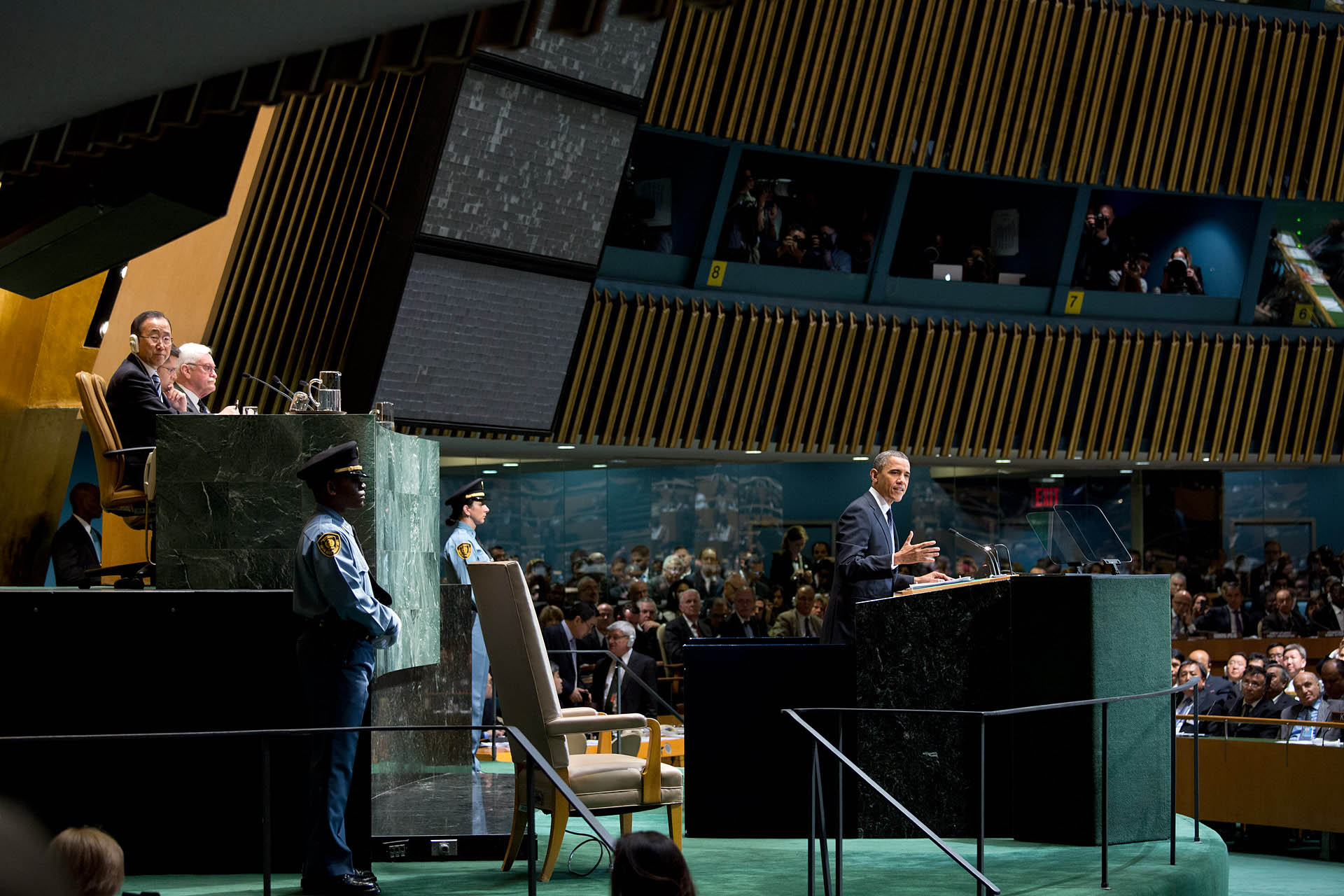
Masoud Pezeshkian told the General Assembly on September 23 that Iran “will not bend at the knee” to American pressure, and defended Tehran’s restrictions on the Strait of Hormuz as a response to what he called “illegal attacks on civilians and infrastructure.” He held up photographs of children he said were killed by US and Israeli bombs — a gesture aimed at the General Assembly audience of 193 member states rather than the bilateral negotiating room where Araghchi had spent three hours the previous evening. The speech framed Iran as the party operating under coercion while seeking diplomacy, a narrative that preceded Rubio’s statement by several hours and shaped the context in which it was received.
Has Iran demanded compensation from Gulf states?
Iranian UN Ambassador Amir-Saeid Iravani demanded compensation from Bahrain, Jordan, Qatar, Saudi Arabia and the UAE for allegedly violating their obligations toward Iran during the conflict. The demand, made through formal UN channels, extends Iran’s diplomatic campaign beyond the ceasefire road map by establishing a parallel legal-political claim against all five states. The inclusion of Qatar — which served as a mediator in the very UNGA session where the road map was tabled — alongside Saudi Arabia and Bahrain means that even states that facilitated diplomacy are named as respondents. The compensation demand and the road map together form a dual-track strategy: negotiate with some Gulf states while holding legal claims against all of them.
What does the Islamabad MOU’s fourteen-point framework cover?
The Islamabad MOU encompasses Hormuz navigation rights, Iran’s nuclear enrichment programme, ballistic and cruise missile development, sanctions relief sequencing, the status of frozen Iranian assets, a framework for Gulf-state engagement, the $300 billion reconstruction fund, and provisions addressing Iran’s network of allied militias across Lebanon, Iraq, Yemen and Syria — the so-called “resistance fronts.” The scope of the fourteen points explains both why the sixty-day window expired without resolution and why Iran returned to UNGA with a narrower, ceasefire-focused proposal. Each of the MOU’s points represents a negotiation that major powers have attempted and failed to conclude in previous decades of diplomacy on Iran’s nuclear and regional programmes.
How does Saudi Arabia view both Iran and Israel in this conflict?
The Arab Center Washington DC observed that the Islamabad MOU gave Saudi Arabia’s strategic assessment — which treats both Iran and Israel as equally revisionist actors destabilising the regional order — “the force of demonstrated fact.” This dual-threat framework shapes Riyadh’s reluctance to join any track that addresses only the Iranian dimension of regional security. Prince Faisal’s co-chairing of the Gaza and Palestinian statehood roundtable at UNGA was not a diplomatic distraction from the Iran room but a parallel expression of the same strategic calculus: Saudi Arabia views the US-Iran bilateral negotiations as inherently incomplete because they do not address Israeli military operations that Riyadh considers part of the same destabilisation.