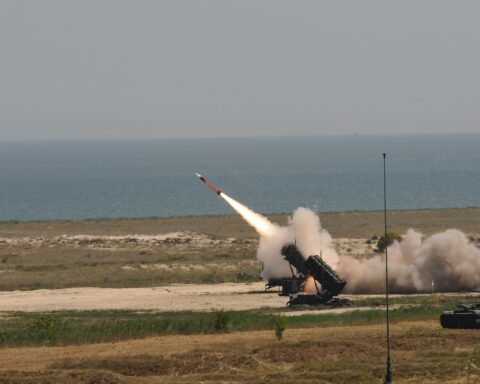
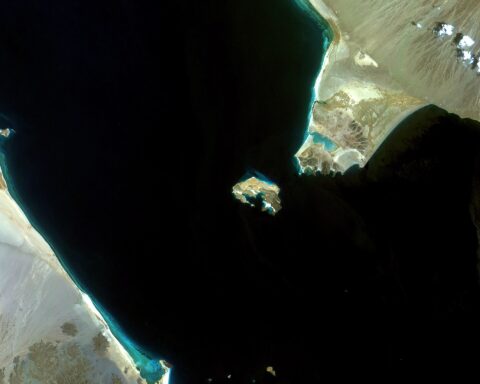
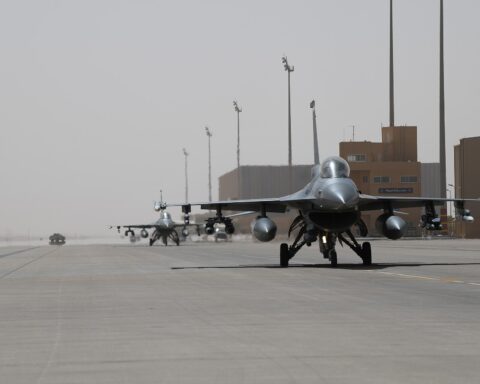
JEDDAH — King Salman bin Abdulaziz Al Saud, ninety years old and largely absent from daily governance, chaired a cabinet meeting in Jeddah on September 22 and called the Houthi drone attack on Mecca “a disgraceful crime” that “provokes the sentiments of Muslims worldwide.” The drone had been intercepted six days earlier — at 6:50 p.m. local time on September 15 — its wreckage falling south of the city, killing one Yemeni resident and injuring two others in Taif. It was the Houthis’ second attempt on Mecca in nine years, the first being a Burkan-1 ballistic missile on July 27, 2017.
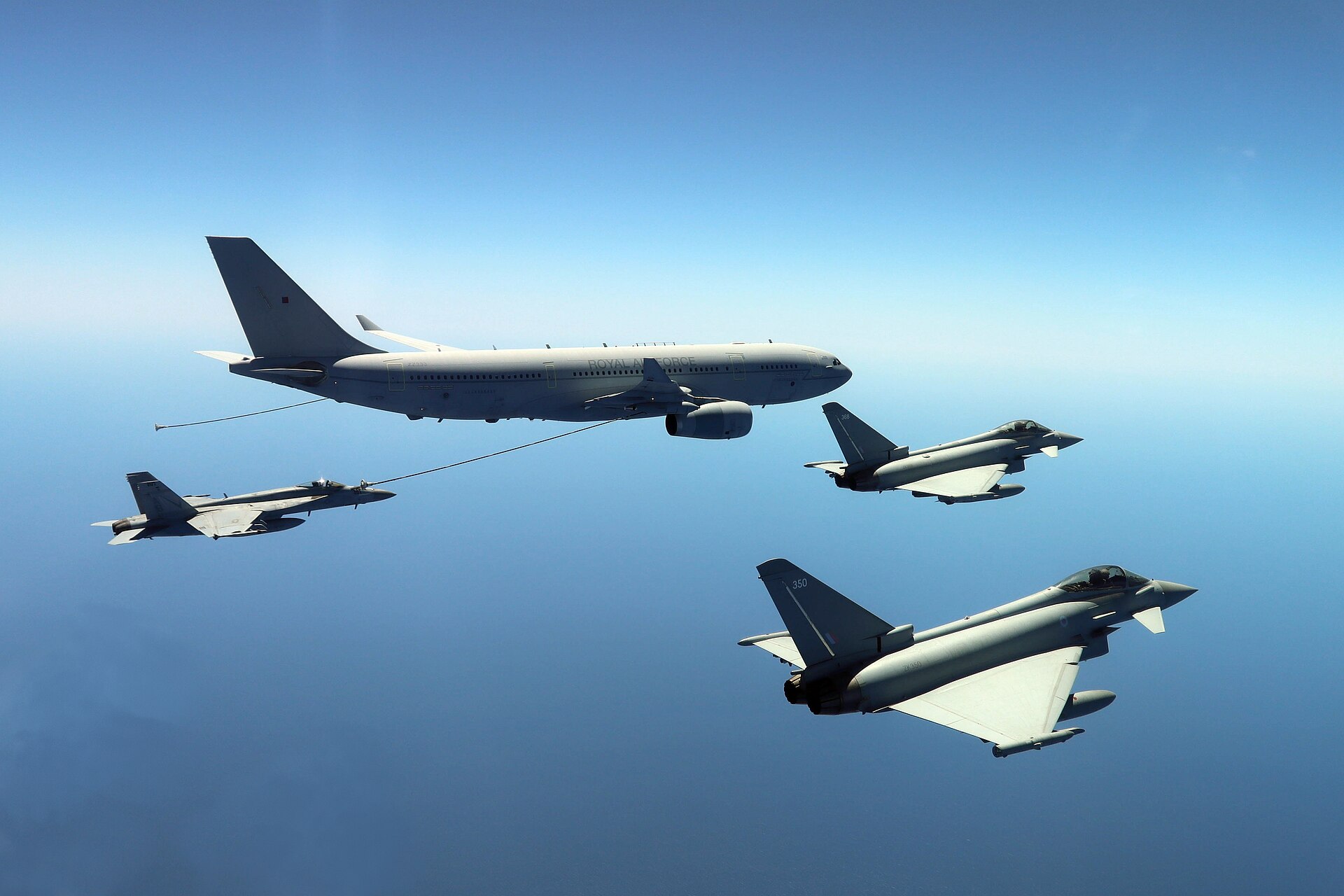
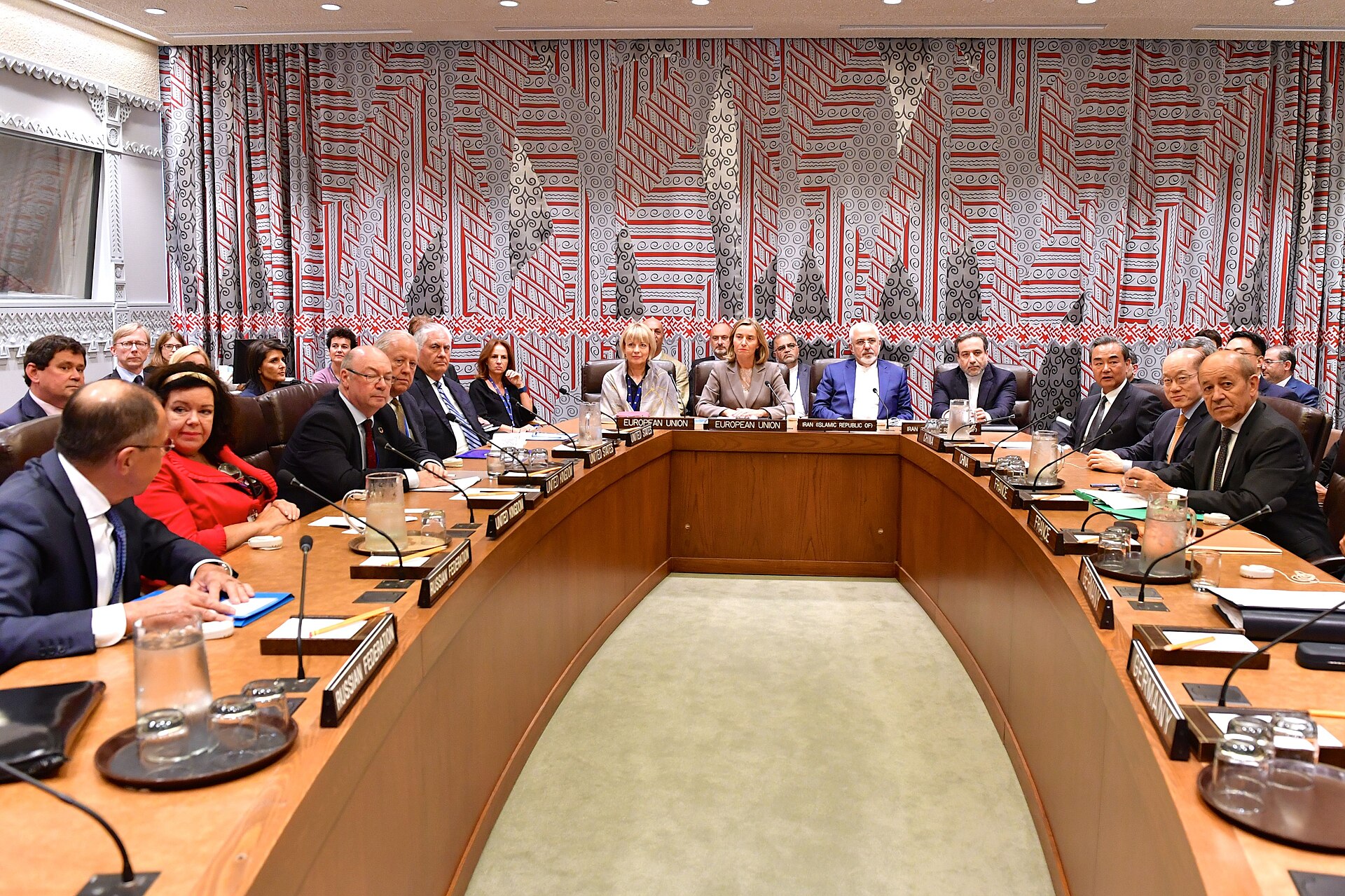
One day later, Saudi Arabia held its 96th National Day under the theme “Our Pride by Nature.” Fighter jets flew formation over Jeddah. Royal Saudi Naval Forces staged parades along the Red Sea coast. A Riyadh Air Boeing 787 made its first public flypast. At the 81st UN General Assembly in New York, foreign ministers of Saudi Arabia, Egypt, Pakistan and Turkey issued a joint condemnation affirming the Kingdom’s “inherent right to self-defence” under the UN Charter — while Iran’s delegation, in the same building, presented its own narrative of “resilience and diplomacy.”
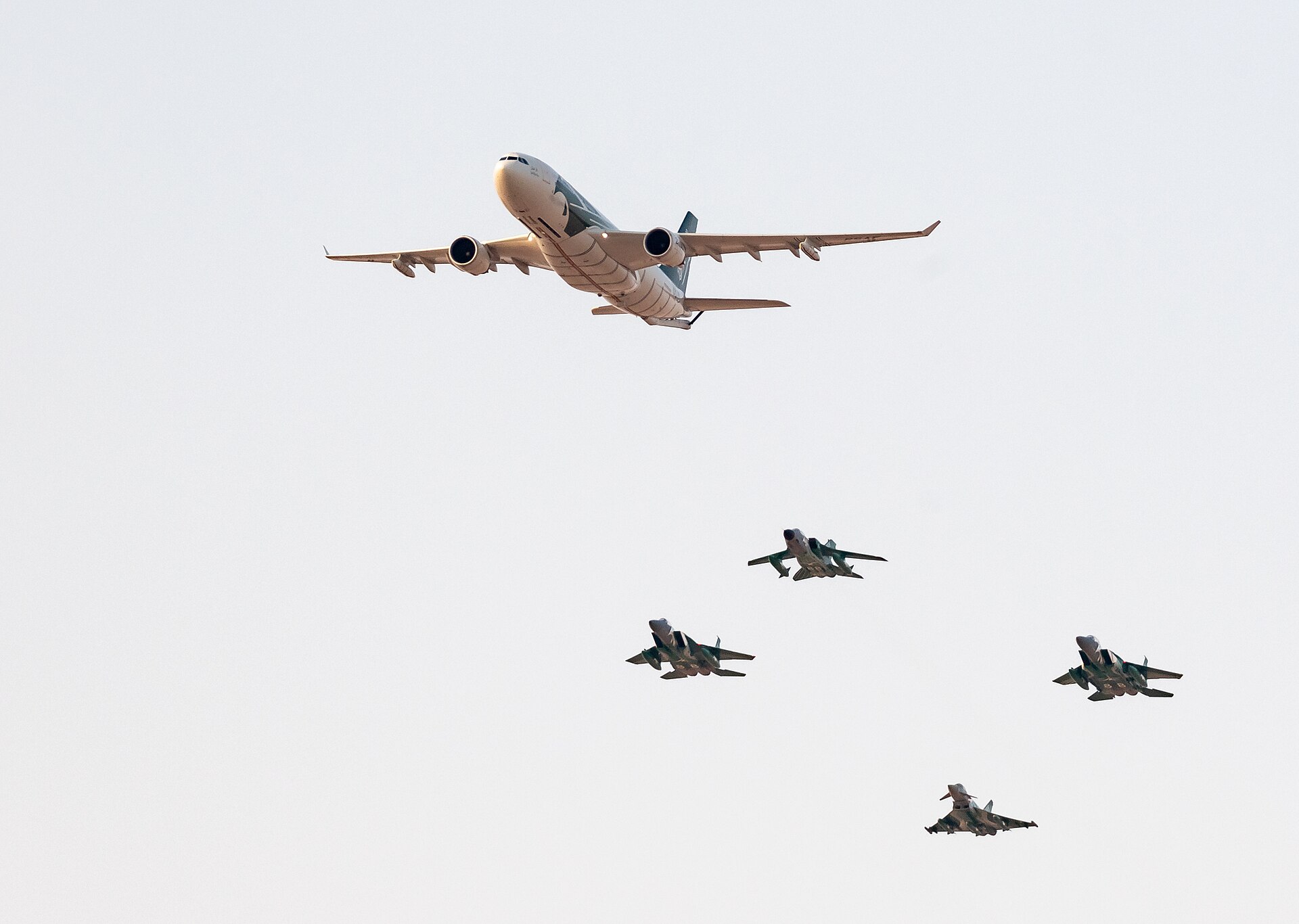
Table of Contents
- What Did King Salman’s Cabinet Statement Signal?
- The Custodian Title Is a Wartime Instrument
- Why Did King Salman Wait Six Days to Speak?
- National Day Under Live Threat
- How Did the Islamic World Respond to the Mecca Drone?
- Iran’s Deflection and the Houthi Denial
- What Does the FM-4 Joint Condemnation at UNGA Mean?
- The 1986 Parallel
- Frequently Asked Questions
What Did King Salman’s Cabinet Statement Signal?
King Salman’s September 22 condemnation invoked his authority as Custodian of the Two Holy Mosques — a title that exists for exactly this kind of crisis. By framing a Houthi drone as a violation of Islamic sanctity rather than a military incident, the king addressed the Organisation of Islamic Cooperation’s fifty-seven member states, not just Saudi citizens. The language — “provokes the sentiments of Muslims worldwide” — is not the language of territorial defence. It is the vocabulary of custodianship, addressed outward.
Multiple outlets — Al Jazeera, TBS News, Nukta — described the intervention as “rare.” Mohammed bin Salman has led day-to-day government for years. King Salman’s public role has narrowed to formal ceremonies and the occasional royal decree. For the king to chair a cabinet session, direct its agenda toward a single military event, and issue language calibrated for an international Muslim audience is a departure from the pattern of the past several years.
“This heinous crime, which violates the sanctity of the holy sites, provokes the sentiments of Muslims worldwide.”
— King Salman bin Abdulaziz Al Saud, Cabinet Session, Jeddah, September 22, 2026
The HOS Daily BriefThe Middle East briefing 3,000+ readers start their day with.
One email. Every weekday morning. Free.
The cabinet also praised the Kingdom’s military and security forces for “defending the Kingdom and confronting aggression against holy sites, pilgrims, citizens and residents,” according to the Saudi Press Agency. Media Minister Salman Al-Dossari told reporters the cabinet stressed “the importance of respecting international law, including state sovereignty, peaceful dispute resolution and safe navigation in international waterways.”
That second phrase — safe navigation in international waterways — had nothing to do with Mecca. It addressed the Strait of Hormuz, where the war has been fought most directly. A statement built around a drone over a holy city folded in the Kingdom’s entire wartime diplomatic agenda: sovereignty, dispute resolution, freedom of navigation. The Custodian frame was the vehicle. The payload was broader.
The Custodian Title Is a Wartime Instrument
King Fahd adopted the title Custodian of the Two Holy Mosques — Khadim al-Haramayn al-Sharifayn — on October 27, 1986, replacing “His Majesty.” The context was not ceremonial. The 1979 seizure of the Grand Mosque by Juhayman al-Otaybi had shattered the assumption that Saudi control of the holy sites was self-evident. The Iranian Revolution, months earlier, had produced a state that explicitly challenged Sunni custodianship of Mecca and Medina. Fahd’s title was an answer to both.
The title has since passed to every Saudi king — Abdullah, Salman — not as an honorific but as the foundational claim of the Al Saud’s right to rule. Other monarchies derive legitimacy from lineage, constitutional settlement, or popular assent. The Saudi monarchy derives it, in large part, from physical stewardship of Islam’s two holiest cities. A drone that enters Mecca’s restricted airspace does not merely breach a no-fly zone. It strikes at the premise of the state.
The premise has been tested before, and the test always produces the same institutional reflex. In 1987, a year after Fahd adopted the title, Iranian pilgrims clashed with Saudi security forces during the Hajj — more than 400 were killed. Fahd’s response was framed entirely through the Custodian role: the king as guardian, the rioters as desecrators. The 2019 Abqaiq-Khurais drone and missile strike damaged half of Saudi oil output but did not trigger the Custodian frame because the targets were industrial, not sacred. Mecca is different. The moment a projectile approaches the Haram, the Saudi state’s entire legitimacy apparatus activates — not as a military chain of command but as a theological one.
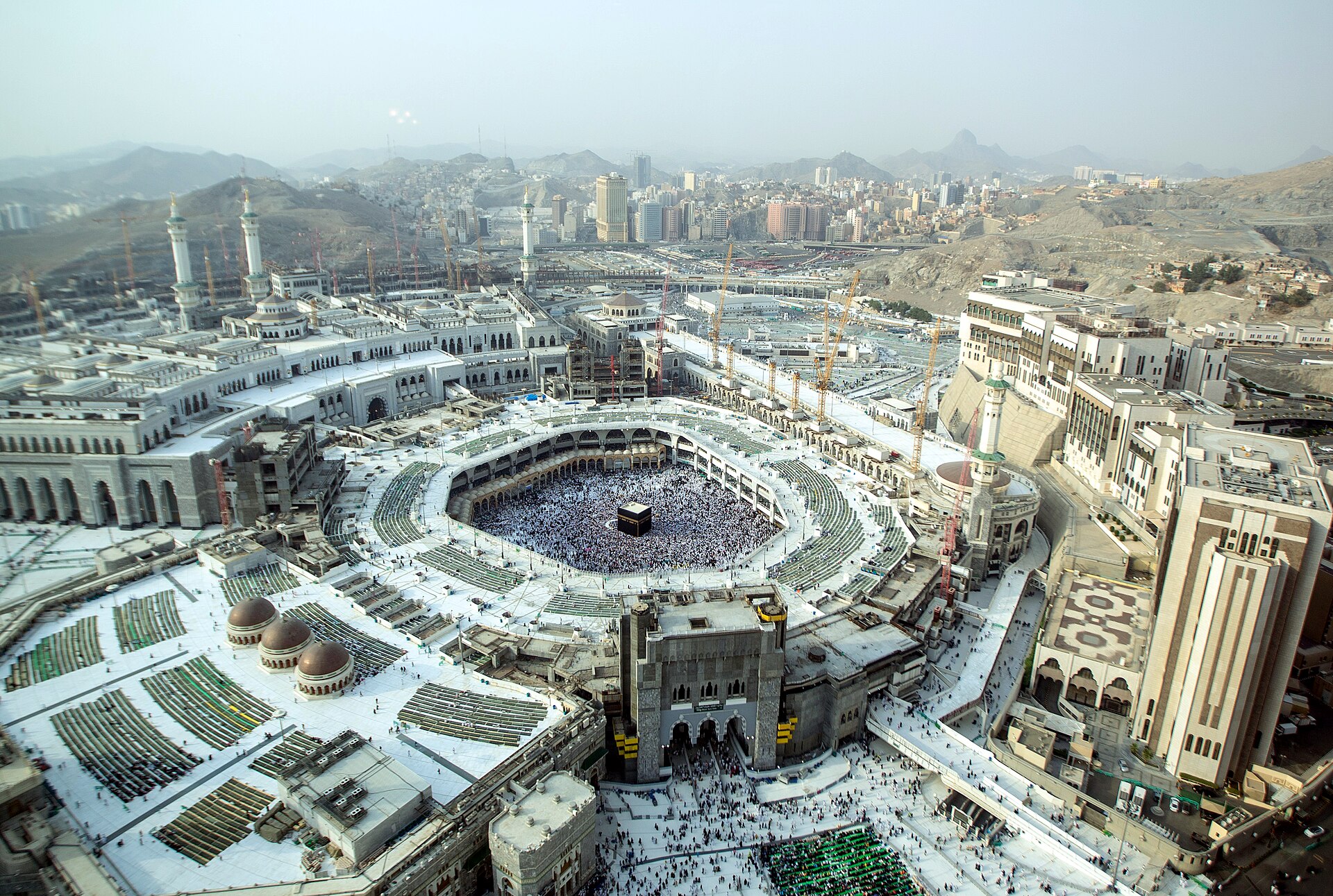
This is why King Salman’s language on September 22 invoked “the sentiments of Muslims worldwide” rather than Saudi sovereignty or territorial integrity. The Custodian frame bypasses the nation-state register. It addresses the ummah. When Saudi Arabia is excluded from ceasefire negotiations and unable to prevent Houthi strikes on refineries in Jazan and Najran, the title offers a form of authority that does not depend on military performance or diplomatic access. It depends on geography — on the fact that Mecca is in Saudi Arabia and nowhere else.
The Hajj season had ended weeks earlier without a major security incident. The September 15 drone arrived after the pilgrims had left, but the timing reinforced the threat: if a drone could reach Mecca in September, it could reach Mecca in June, when two million worshippers fill the Haram. The custodianship claim and the security obligation are inseparable.
Why Did King Salman Wait Six Days to Speak?
The drone interception occurred on September 15. King Salman’s cabinet statement came on September 22 — six days later. The gap was not bureaucratic. September 22 was the eve of Saudi National Day and the opening day of the 81st UN General Assembly’s high-level segment in New York. The condemnation landed at the moment of maximum international audience.
The immediate operational response had been handled already. Coalition spokesman Turki al-Maliki described the September 15 incident on the day it occurred, calling it “the militia’s second attempt to target Mecca, following a ballistic missile launch in July 2017.” Saudi Arabia issued its first Mecca security alert since 2017. The Taif casualties were reported by Al Arabiya on September 17.
What required time was the diplomatic architecture. OIC, GCC and Muslim World League condemnations arrived in the September 16–17 window. The FM-4 grouping — this publication’s shorthand for the Saudi Arabia, Egypt, Pakistan, Turkey coalition that formed at UNGA — needed days to coordinate a joint statement. King Salman’s personal statement came last, layered on top of the institutional condemnations, addressed to the widest possible audience.
| Date | Event |
|---|---|
| September 15 | Drone intercepted near Mecca at 6:50 p.m. local time; wreckage falls south of city |
| September 16 | Coalition confirms second Mecca targeting; Baghaei questions Saudi evidence; OIC and GCC condemn; al-Issa (MWL) denounces Houthi “terrorist approach” |
| September 17 | Al Arabiya reports 1 killed, 2 injured in Taif from wreckage; first Mecca security alert since 2017 |
| September 18–20 | Jeddah three-day airshow |
| September 22 | King Salman cabinet statement; FM-4 joint condemnation at UNGA 81 sidelines; Iran presents “resilience and diplomacy” narrative at same assembly |
| September 23 | Saudi Arabia’s 96th National Day: fighter jets, naval parades, Royal Guard procession |
The operational facts were public within forty-eight hours. The institutional backing took four days to assemble. The king spoke on the sixth day, when UNGA opened. Iran’s delegation arrived in New York on the same day, presenting what its foreign ministry called a narrative of “resilience and diplomacy.” King Salman’s statement was issued from Jeddah at the same hour.
National Day Under Live Threat
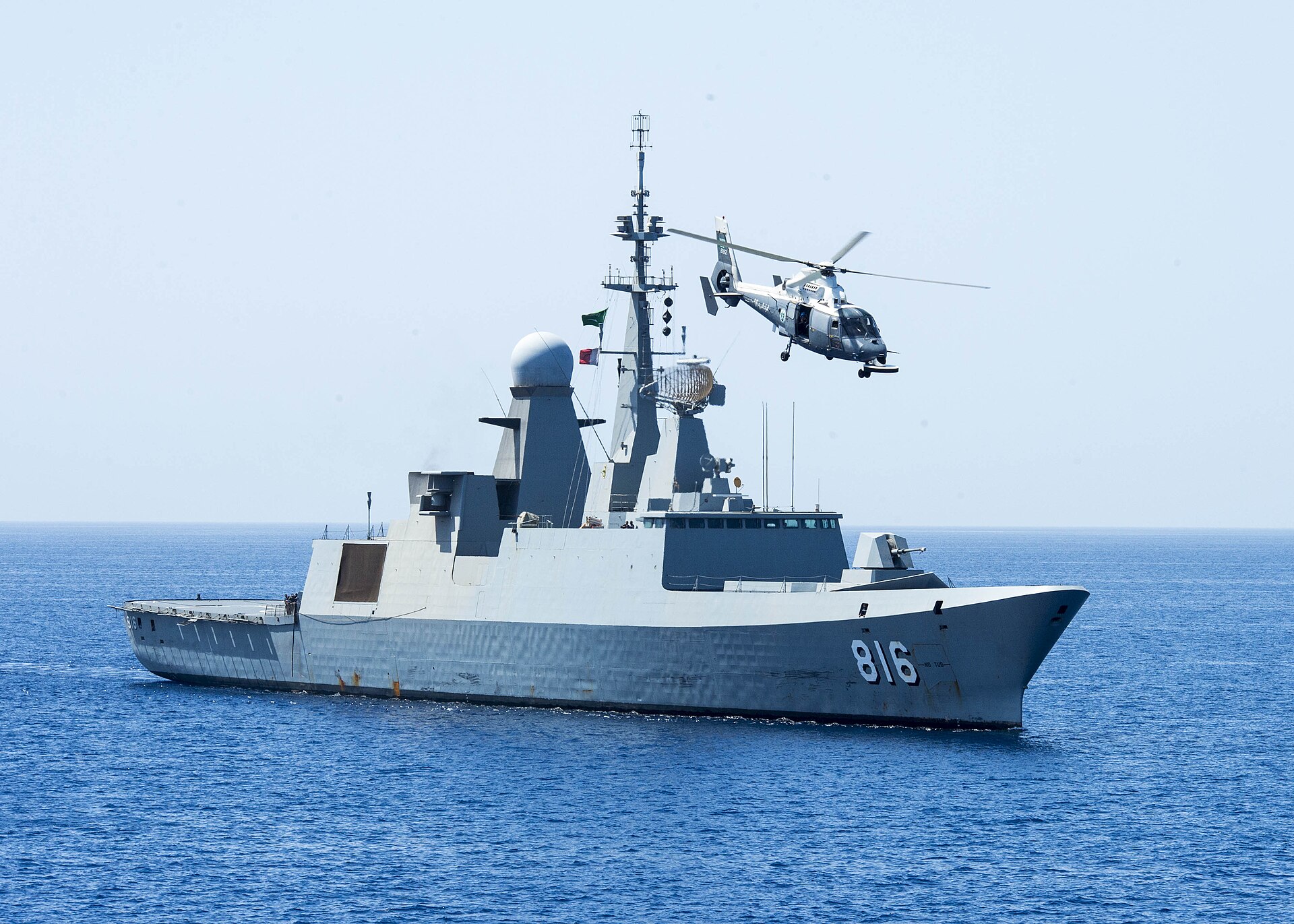
Saudi Arabia’s 96th National Day, September 23, carried the theme “Our Pride by Nature.” The Saudi Press Agency detailed the programme: Royal Saudi Air Force fighter jet formations, Ministry of National Guard helicopter formations, a Security Aviation helicopter carrying the Saudi flag, a Royal Guard procession, Border Guard land and maritime parades at ROSHN Waterfront Jeddah, and Royal Saudi Naval Forces displays along the Red Sea coast. Riyadh Air flew a Boeing 787 over the capital — the airline’s first public appearance.
Jeddah had hosted a three-day airshow from September 18 to 20, four days after the Mecca interception. The airshow, the naval displays and the National Day pageant formed a continuous week of military spectacle that ran from the immediate aftermath of the drone to the national celebration itself. Every formation flight served two registers at once: holiday and demonstration of force.
The preceding weeks had not been celebratory. Houthis struck Aramco facilities in Najran on August 14 and August 20. An Aramco refinery in Jazan was hit on August 18. The September 15 drone over Mecca was the fourth Houthi strike on Saudi territory in five weeks. The broader war had already damaged energy infrastructure, disrupted Hormuz shipping, and drawn Iranian missile strikes against US bases in four Gulf states.
The National Day programme ran eight days after the Mecca interception and five days after the Jeddah airshow closed. The continuous sequence — interception, security alert, airshow, cabinet condemnation, National Day — collapsed a defensive crisis and a national celebration into a single week. Riyadh treated both events on the same footing: the intercepted drone was addressed as a diplomatic matter, the National Day parades as a demonstration that the Kingdom’s military apparatus was intact and visible.
The decision to proceed with full military pageantry was itself a communication. The Royal Guard marched on September 23 as planned. Washington’s security posture had shifted repeatedly in the preceding months, but Saudi Arabia’s National Day calendar did not. The fighter formations over Jeddah flew the same airspace the Houthi drone had transited days earlier over the Hejaz.
How Did the Islamic World Respond to the Mecca Drone?
The OIC condemned the attack as “heinous”; the GCC called it “a terrorist act that crossed all boundaries”; Muslim World League Secretary-General Mohammed al-Issa denounced the Houthis’ “terrorist approach” in targeting holy sites, mosques, schools and civilian facilities. All three statements arrived within forty-eight hours — faster than typical OIC response cycles on contested regional events.
The speed mattered because the Custodian claim depends on consensus. King Salman can frame the drone as a violation of Islamic sanctity, but the claim acquires diplomatic force only when other Muslim-majority states endorse the framing. Fifty-seven OIC members did. The GCC added a security-specific condemnation. The MWL contributed the clerical register. By the time King Salman spoke on September 22, the institutional infrastructure was already in place.
No member state publicly dissented from the OIC statement. Iran’s challenge came through its foreign ministry spokesperson, outside the OIC machinery, and took the form of an evidentiary dispute rather than a defence of the Houthis. The diplomatic isolation that Saudi Arabia faces on the US-Iran ceasefire track — where Riyadh is present in consultations but excluded from direct negotiations — did not extend to the Mecca question. On the sanctity of the holy sites, the Kingdom had its fifty-seven votes. The Custodian frame had done what the foreign ministry and the military could not: it reassembled a coalition around Riyadh at the moment Riyadh was most excluded from the one that mattered.
Iran’s Deflection and the Houthi Denial
Houthi military spokesman Yahya Saree said the group’s targets were “oil facilities and military bases, far removed from the holy places.” He did not confirm or deny the September 15 drone. Hazem al-Assad, of the Houthi politburo, was blunter: “The claims about targeting Mecca are a worn-out lie that has been used before and no longer fools anyone.”
The phrase “used before” is a direct reference to July 2017, when a Burkan-1 ballistic missile was intercepted on a trajectory toward Mecca and the Houthis claimed the actual target was King Fahd Air Base in Taif. The 2026 denial follows the same template: acknowledge nothing, claim a different target, accuse Saudi Arabia of fabrication. The difference is the delivery system. A ballistic missile follows a trackable arc — launch site, apogee, trajectory toward intercept point. A drone flies lower, slower, on a programmable flight path. Its intended target is harder to establish from radar data alone, which gave Iran’s foreign ministry room to question the evidence.
Esmaeil Baghaei, Iran’s foreign ministry spokesperson, said on September 16 that “any aggression against Islamic holy sites” would be “a condemned act,” but added that “a mere claim of intercepting a drone en route to Mecca cannot constitute grounds for accusing a specific party.”
“A mere claim of intercepting a drone en route to Mecca cannot constitute grounds for accusing a specific party.”
— Esmaeil Baghaei, Iranian Foreign Ministry Spokesperson, September 16, 2026
The formulation was precise. Baghaei condemned the hypothetical act, rejected the Saudi evidence, and did not name the Houthis once. Iran is an OIC member. It cannot be seen endorsing an attack on Mecca. The Houthis are Zaydi Shia who themselves revere the Kaaba as sacred — their denial carries a religious dimension that Sunni-Shia framing alone does not capture. Al-Assad’s phrase “no longer fools anyone” signals acute awareness that the Mecca accusation carries reputational damage no amount of diplomatic positioning can easily reverse.
What Does the FM-4 Joint Condemnation at UNGA Mean?
Foreign ministers of Saudi Arabia, Egypt, Pakistan and Turkey met at the sidelines of the 81st UN General Assembly in New York on September 22–23 and issued a joint condemnation of Houthi attacks, affirming Saudi Arabia’s “inherent right to self-defence” under the UN Charter. The grouping has no formal name, no secretariat, and no treaty basis. It is ad hoc — four states choosing to speak together at a specific moment.
Its composition carries the message. Egypt is the Arab world’s most populous state and the dominant conventional military power in North Africa. Pakistan is nuclear-armed, with security ties to Riyadh stretching back decades and a military-industrial relationship that has long been reported to include ballistic missile cooperation. Turkey holds the most powerful conventional military in the Muslim world, a NATO seat, and has been expanding its role in OIC diplomacy. Together, the four represent the preponderance of Sunni political and military weight outside the Gulf monarchies proper.
The joint statement’s invocation of “the inherent right to self-defence” — language drawn directly from Article 51 of the UN Charter — is not decorative. In diplomatic usage, it is the phrase states employ when authorising or endorsing the use of force without requiring Security Council approval. This is language Saudi Arabia has not been able to secure from Washington in the context of the broader US-Iran conflict. Egypt, Pakistan and Turkey provided publicly what the United States would not: an explicit endorsement of the Kingdom’s right to respond with force to the Houthi campaign.
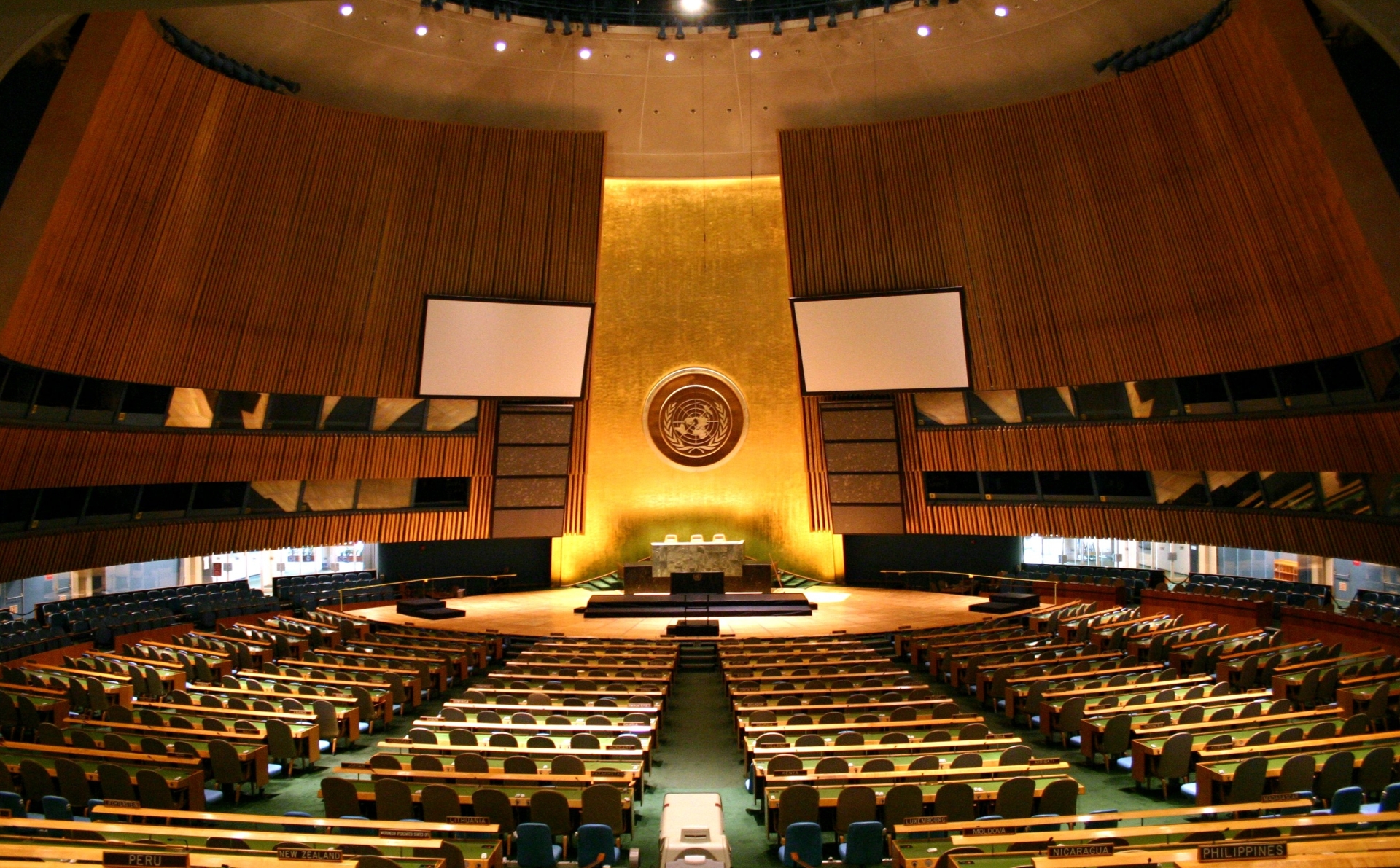
Saudi Arabia remains excluded from direct US-Iran ceasefire negotiations. The FM-4 is a workaround — a coalition that does not depend on Washington’s participation or approval. Whether it survives beyond UNGA week or becomes a standing formation is unresolved.
The timing of the FM-4 statement was not incidental. It was issued within hours of King Salman’s cabinet condemnation on September 22 — the same day Iran’s delegation was presenting its counter-narrative inside the General Assembly. The two statements were aimed at the same audience: the non-aligned, non-Western delegations that make up the majority of the UN and the OIC. King Salman’s Custodian frame and the FM-4’s Article 51 language were different instruments addressed to the same diplomatic market. The Custodian frame asked for solidarity. The FM-4 statement provided its legal basis.
The 1986 Parallel
When King Fahd adopted the Custodian title in October 1986, the House of Saud was facing an existential legitimacy challenge from Iran. Ayatollah Khomeini had called for the “liberation” of Mecca from Saudi control. Fahd’s response was to rest the dynasty’s claim to rule on its role as physical protector of Islam’s holiest places — any threat to those places became, by definition, a threat to the entire Muslim community.
The parallel to September 2026 runs close. Saudi Arabia again faces a threat to Mecca from an Iranian-aligned force. The Kingdom is again diplomatically constrained — in 1986 by a hostile revolutionary Iran and a Cold War–absorbed Washington; in 2026 by a US-Iran negotiating track that does not include Riyadh. And the king again reaches for the Custodian frame to convert a position of military vulnerability into a claim for international solidarity. The instrument is forty years old. The conditions it was built for have returned.
The difference is that Fahd moved pre-emptively. He adopted the title before Iran could act on Khomeini’s rhetoric about the holy sites. King Salman is ninety, rarely heard from, and speaking after the drone has already been intercepted — after the wreckage has already killed a man in Taif. The Custodian claim in 2026 is reactive. It recovers lost ground rather than establishing new ground.
In 2017, the first Houthi missile toward Mecca produced coalition outrage and institutional condemnation. No king spoke personally. MBS, then newly appointed crown prince, was consolidating power and directing the coalition campaign in Yemen. The Custodian frame was not activated at the head-of-state level. Nine years later, a king who has delegated nearly all governing responsibility chose the Mecca drone as the occasion for personal intervention — his first on a military matter in a conflict that has stretched across thirteen nights of US strikes on Iran and months of Houthi escalation against Saudi energy infrastructure.
Frequently Asked Questions
When was the last Houthi attack on Mecca before 2026?
July 27, 2017. A Burkan-1 ballistic missile was intercepted on a trajectory toward Mecca. The Houthis denied the target, claiming they had aimed at King Fahd Air Base in Taif. Saudi Arabia’s coalition stated otherwise. Turkey’s Ministry of Foreign Affairs issued a formal condemnation — one of the few non-GCC governments to respond at the state level to that specific incident. No king made a personal statement in 2017; the Custodian frame was not activated at the head-of-state level, a contrast that makes King Salman’s September 22 intervention notable.
What is the Custodian of the Two Holy Mosques title and when was it adopted?
Khadim al-Haramayn al-Sharifayn was formally adopted by King Fahd on October 27, 1986, replacing the honorific “His Majesty” as the primary form of address for the Saudi monarch. The title responded to twin crises — the 1979 Grand Mosque seizure and the Iranian Revolution’s challenge to Saudi custodianship. It has passed to every subsequent king. The title carries no constitutional power beyond what the monarch already holds, but it reframes the basis of legitimacy from dynastic inheritance to religious stewardship.
What is Riyadh Air and why did its National Day debut matter?
Riyadh Air is Saudi Arabia’s second flag carrier, launched under Vision 2030 as a competitor to Saudia and a signal of the Kingdom’s aviation ambitions. Its first public flypast over the capital on National Day was a deliberate debut — the airline had been announced in 2023 but had not yet entered commercial service. Appearing during a week already heavy with military demonstrations, the Boeing 787 flypast carried a civilian-economic register amid the defence spectacle: the Kingdom’s long-term development agenda running alongside its wartime posture.
Has the OIC ever taken enforcement action following its condemnations of Houthi attacks on Saudi Arabia?
No. The OIC’s condemnatory resolutions carry no enforcement mechanism. Member states can condemn, suspend, or expel — the Houthi movement is not an OIC member, so no formal sanction applies. The practical consequence of OIC condemnations is diplomatic: they deny legitimacy, frame the attacker as violating Islamic norms, and provide political cover for bilateral state responses. Saudi Arabia’s ability to convert OIC condemnations into coalition action has varied; the 2019 Abqaiq-Khurais condemnations produced no military response from OIC partners.
Has the FM-4 grouping (Saudi Arabia, Egypt, Pakistan, Turkey) met before?
The September 22–23, 2026 joint statement at the 81st UNGA sidelines is the first known instance of these four foreign ministers issuing a collective condemnation in this specific configuration. Each bilateral relationship within the four is long-established — Saudi-Egyptian defence coordination dates to the 1990s, Saudi-Pakistani security ties predate the Gulf monarchies’ current form, and Turkish-Saudi diplomatic rapprochement accelerated after the 2021 Erdogan visit to Riyadh — but the quadrilateral formation is new. Its durability as a diplomatic grouping beyond this specific crisis is unproven. The UNGA session where Iran tabled a sixty-day ceasefire road map — a framework Saudi Arabia was not invited to review before it circulated — came one day after King Salman convened the OIC in Riyadh. The sequencing placed the kingdom simultaneously at the centre of Muslim solidarity and outside the room where its war was being negotiated, as detailed in Iran Tabled the Peace Saudi Arabia Postponed.