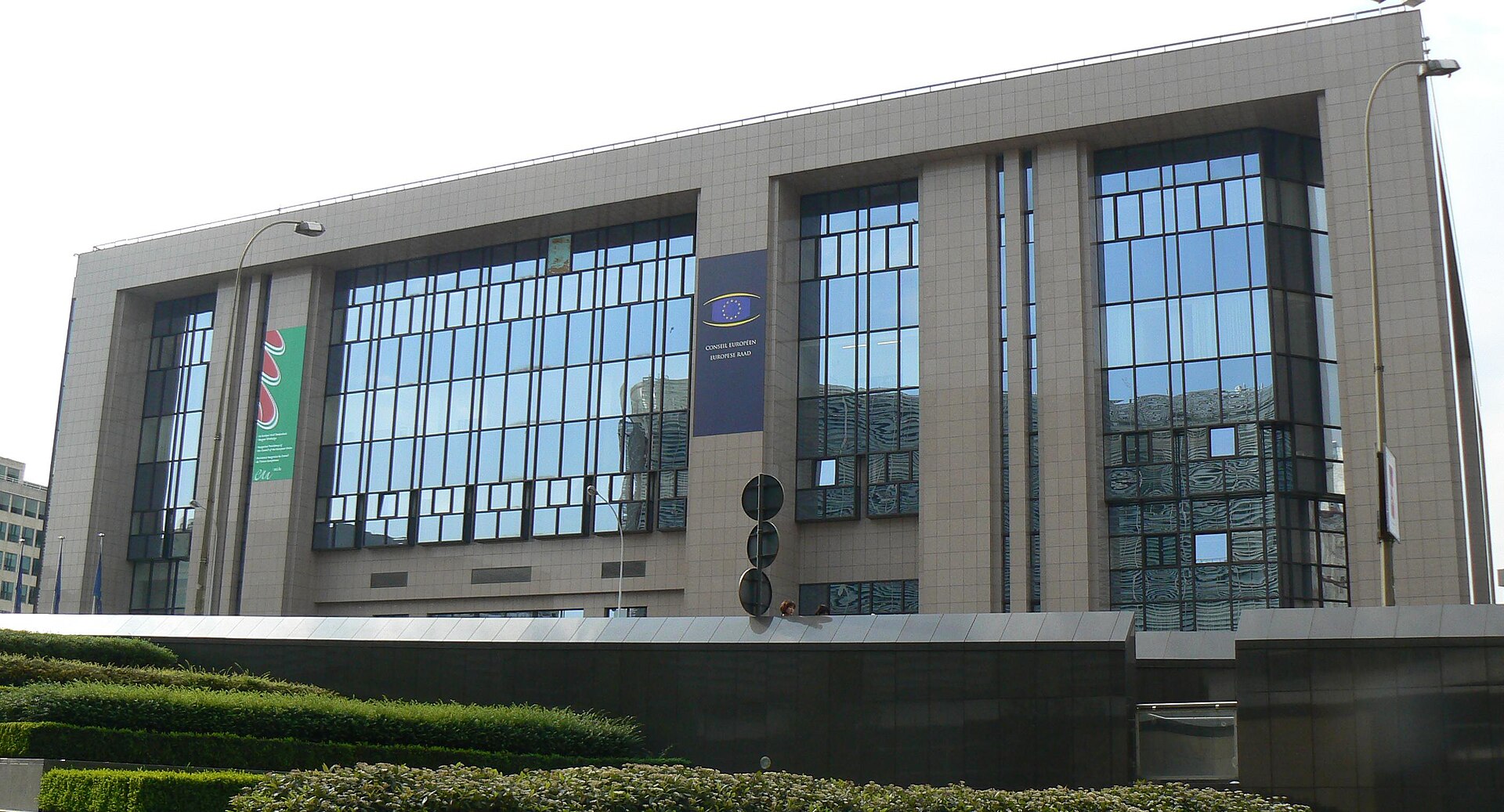
NEW YORK — The United Nations Security Council voted unanimously on 15 October to affirm Saudi Arabia’s “inherent right” to self-defense against Houthi attacks on its cities and energy infrastructure. By the time the presidential statement was read into the record, three facts had already overtaken it: King Khalid International Airport remained closed indefinitely with no confirmed reopening date, the EU-GCC summit scheduled for 24 October in Riyadh was formally postponed, and Houthi forces had struck the Yemeni presidential palace in Aden — killing at least five people.
The statement condemned “in the strongest terms” the escalating campaign that has killed at least 20 people and injured more than 370 across three Saudi airports since early October. It demanded the Houthis halt their military escalation and reaffirmed the obligations of Resolution 2216, the 2015 arms embargo that has done nothing to prevent the group from acquiring the weapons it fires at the Saudi capital. All fifteen members agreed. The language was careful, forceful, and — for the kingdom absorbing the missiles — almost entirely symbolic.
What the Council delivered was political legitimacy. What it withheld, by stopping short of a Chapter VII resolution, was any mandate to escalate beyond what Saudi Arabia could already do under existing international law. And the country whose military actually determines whether the kingdom can respond at scale — the United States — voted yes in New York and said nothing about what it intended to do with the words it approved.
- What Did the Security Council Actually Do?
- The Seventeen Days That Led to Fifteen Votes
- What Does ‘Inherent Right to Self-Defense’ Actually Change?
- The Defense Failure the Council Cannot Fix
- Does Washington’s Vote Commit Washington’s Military?
- Tehran Offered Peace — Sanaa Offered a Target List
- What Does the Kingdom Hold After Fifteen Votes?
- Frequently Asked Questions
What Did the Security Council Actually Do?
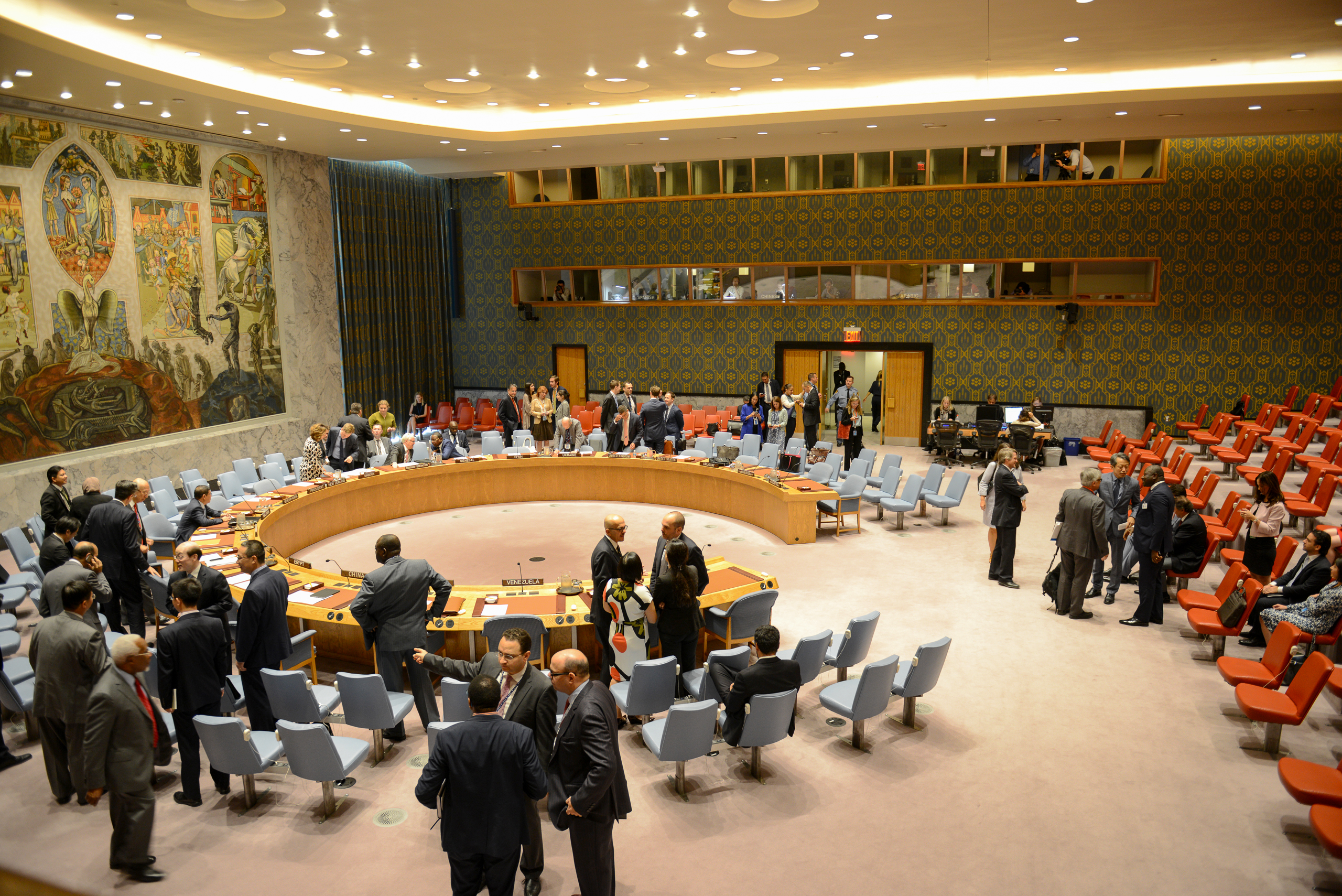
The instrument adopted on 15 October was a presidential statement — not a resolution. The distinction matters more than the Council’s own language suggests. A presidential statement requires the agreement of all fifteen members, is read aloud by the Council president at a public meeting, and enters the formal record. It carries more diplomatic weight than a press statement, which the presidency can issue without convening a session. But it is not a resolution, it does not invoke Chapter VII of the UN Charter, and it authorizes nothing.
The statement cited the strikes targeting King Khalid International Airport on 10 and 11 October, cited fatalities and injuries, and referenced “multiple strikes targeting other airports and Saudi Aramco facilities” — a reference that includes the 13 October attack on Aramco’s headquarters in Dhahran, where a missile struck the administrative complex. It demanded the Houthis “immediately halt their military escalation” and called for full implementation of Resolution 2216, including the prohibition on weapons transfers to the group.
The Middle East briefing 3,000+ readers start their day with.
One email. Every weekday morning. Free.
What the statement did not contain was an Article 39 determination — the finding that a threat to international peace and security exists, which is the legal gateway to enforcement action under the Charter. There was no “all necessary means” language, the phrase that has historically unlocked military intervention from the Korean War to Libya. The self-defense affirmation referred to the “inherent right” under Article 51, a right that exists whether the Council affirms it or not. The Council described the situation in the strongest terms available to it. It did not prescribe a response that went beyond what Saudi Arabia could already lawfully do.
The 15 October presidential statement was the fourth Council instrument on the Houthi-Saudi escalation since the broader conflict reached the kingdom’s cities. Press statement SC/16429 addressed the initial phase. SC/16458, issued on 18 September, condemned Houthi attacks specifically on Saudi civilian and energy infrastructure. An emergency briefing under reference SC/16471 on 9 October heard officials describe 200,000 people displaced since August and a conflict that amounted to full-scale war. Resolution 2826, adopted separately, extended the Secretary-General’s reporting mandate on Houthi Red Sea attacks — a monitoring tool, not an enforcement one. Each instrument since September raised the rhetorical temperature. None raised the enforcement ceiling.
The Seventeen Days That Led to Fifteen Votes
The presidential statement did not emerge from the Council’s initiative. It was the product of a sustained Saudi diplomatic campaign that began at the United Nations General Assembly in late September, when Prince Faisal bin Farhan told delegates that the international community had been “absent” from the conflict. The word was chosen to sting, and it was aimed less at the Houthis — whose behaviour the kingdom has long understood — than at the Council members who had watched three Saudi airports come under missile fire and responded with press releases.
By 9 October, one day before the KKIA strike that killed thirteen people and injured more than three hundred, Saudi Arabia had formally asked the Security Council to act. The request arrived with the backing of a joint condemnation issued on 11 October by Saudi Arabia, Egypt, Pakistan, and Turkey — the four signatories of the Makkah Joint Defence Agreement. The diplomatic signal was unmistakable: the kingdom had partners willing to stand beside it publicly, and it needed the Council to provide the framework for what came next.
“A grave escalation that posed a serious threat to regional security, perpetuates cycles of violence, and complicates even more peace efforts for Yemen.”
Hans Grundberg, UN Special Envoy for Yemen, on the Houthi airport attacks, October 2026
UN Secretary-General António Guterres added his voice on 11 October, calling the KKIA strike “a lethal attack by the Houthis” and saying he was “deeply shocked.” His special envoy for Yemen, Hans Grundberg, described the airport attacks as “a grave escalation” that posed “a serious threat to regional security.” Neither statement moved the Houthis. Both helped move the Council. On the same day, Saudi Arabia, Egypt, Pakistan, and Turkey issued their joint condemnation, building a coalition of pressure that gave the Security Council less room to issue another press statement and call it a response.
It took the Council seventeen days from Prince Faisal’s General Assembly address to produce its reply. The reply contained condemnation, affirmation, and demands — but no enforcement mechanism, no new authority, and no indication that any member intended to do more than agree on a paragraph.
What Does ‘Inherent Right to Self-Defense’ Actually Change?
Saudi Arabia’s Permanent Representative responded to the presidential statement by affirming the kingdom’s “inherent right to defend its territory, assets, and sovereignty as well as the safety of its citizens and residents, and to take all necessary measures to protect its security and deter attacks, in accordance with the Charter of the United Nations and international law.” The language was expansive, deliberate, and — in legal terms — not new. Article 51 of the UN Charter recognizes the inherent right of self-defense if an armed attack occurs against a member state. Saudi Arabia has held that right since the first Houthi missile crossed its border.
The kingdom exercised it when it launched a coalition air campaign in 2015 and continued exercising it when its forces struck Houthi positions in Sanaa this month. The Council’s affirmation on 15 October did not create the right. It placed the right on the formal record with the agreement of all fifteen members, including permanent members Russia and China, whose concurrence on matters involving armed conflict in the Middle East is never automatic.
There is a precedent that shows why this matters less than it sounds. In January 2024, the United States and United Kingdom struck Houthi targets in Yemen to defend commercial shipping in the Red Sea. The legal basis they invoked was not Resolution 2722, which the Council had adopted days earlier to condemn Houthi maritime attacks. The Lieber Institute at West Point found that Resolution 2722 did not authorize the use of force — Washington and London relied instead on the pre-existing right of self-defense under Article 51. The same right the Council affirmed in October 2026 was the same right the US and UK acted on in 2024 without any affirmation at all.
What Saudi Arabia gained on 15 October was political cover — the diplomatic weight of unanimity, valuable in a world where Council consensus on the Middle East is rare. What it did not gain was authorization for anyone else to use force on its behalf, a broader mandate than it already possessed, or any mechanism to enforce the arms embargo that the Houthis have violated for a decade. The Makkah Joint Defence Agreement, signed on 7 August 2026 by Saudi Arabia, Turkey, and Pakistan, already invokes Article 51 to frame its collective defence obligations. The Council statement sits alongside that agreement, not above it.
The Defense Failure the Council Cannot Fix
The Saudi investigation into how Houthi weapons reached the capital has produced findings that explain why diplomatic cover, however unanimous, does not address the kingdom’s operational problem. According to the defence probe, the Houthis opened their attack on KKIA with a wave of drones designed to saturate air defences — forcing Patriot and other systems to expend interceptors on cheap unmanned aircraft that served as nothing more than decoys. Once the defensive shield was degraded, cruise and ballistic missiles followed, some carrying manoeuvring warheads specifically engineered to defeat the intercept geometry that Patriot batteries rely on. The missiles flew more than a thousand kilometres from Yemen to Riyadh.
The cost asymmetry embedded in that tactic is the arithmetic that keeps Saudi defence planners up at night. Each Patriot interceptor costs over one million dollars. The drones it is forced to engage may cost a few hundred dollars apiece. The kingdom is burning through its most expensive munitions to stop its adversary’s cheapest ones, and the equation runs in one direction only. A CSIS analysis confirmed that Gulf states hold fewer than a thousand Patriot interceptors, a figure consistent with the Wall Street Journal’s reporting of “fewer than 1,000.” THAAD inventories — the higher-altitude system designed to catch ballistic missiles above the Patriot’s reach — sit at approximately 250 across the region. Resupply depends on post-conflict American stocks, which means the rate at which Saudi Arabia can reload its batteries is decided not in Riyadh but in Washington.
“The defense ministry faces difficult choices in distributing existing systems with so many installations vulnerable to attack… the Houthis, who may have as many as 350,000 men under arms, are on the front foot.”
CNN analysis, 13 October 2026
CNN reported on 13 October that the defence ministry faces “difficult choices in distributing existing systems with so many installations vulnerable to attack,” estimating the Houthis “may have as many as 350,000 men under arms.” Even if that number is inflated, the scale of the mismatch is not. Saudi Arabia is defending an area larger than Western Europe with a finite number of batteries against an adversary that can afford to lose every drone it sends because the replacement cost is negligible and the supply chain runs through Iran.
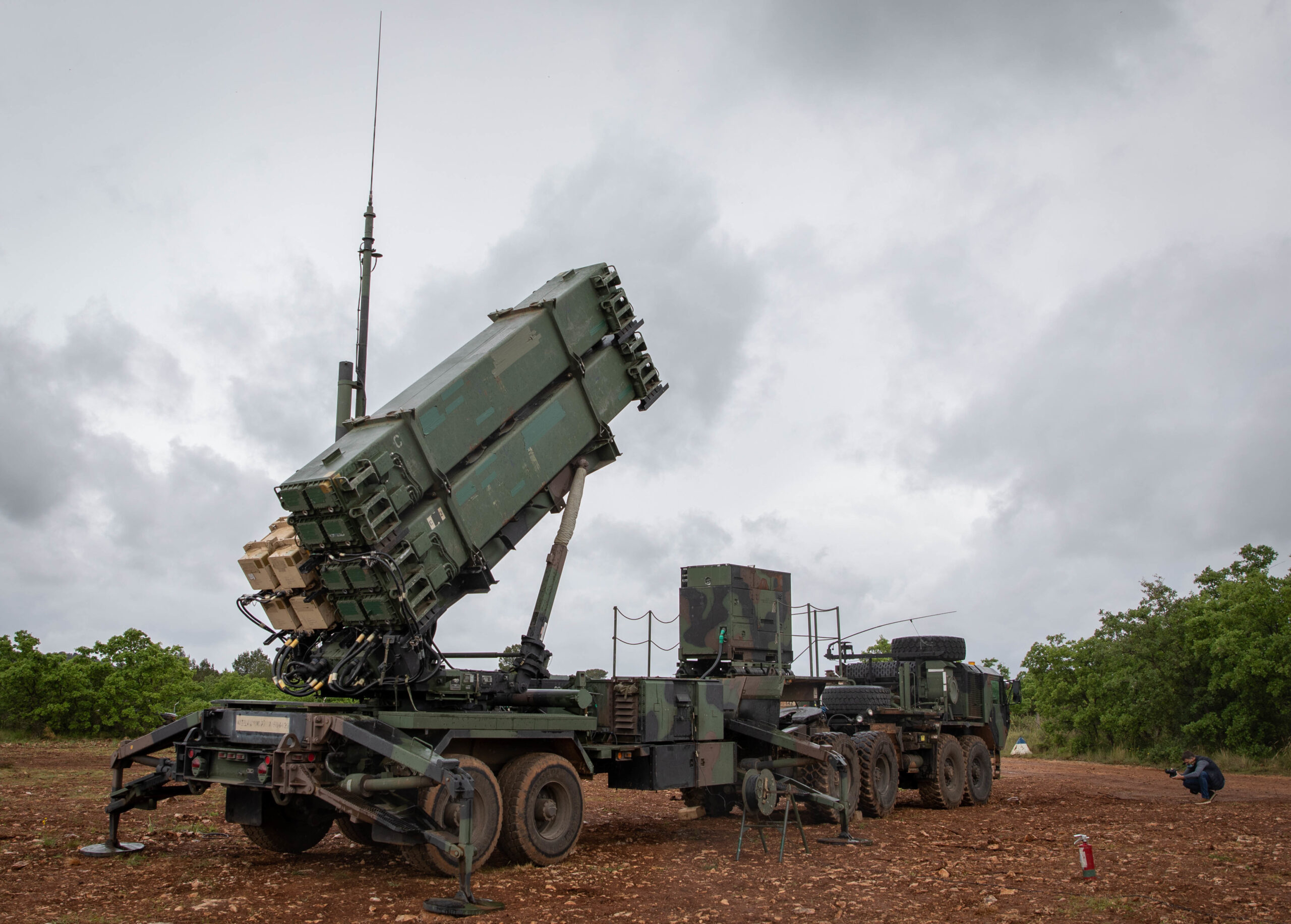
The human cost of what those batteries failed to stop is not abstract. The 10 October strike on KKIA killed twelve people immediately; a thirteenth, an Indian national, died the following day. Al Jazeera reported 309 injured; the BBC reported 308. The dead included four Saudis, two Bangladeshis, and one each from the United States, Jordan, Palestine, Syria, Sudan, and Egypt — victims from twelve nationalities overall. Across the full series of airport attacks between 6 and 12 October, at least 20 people were killed and more than 370 wounded. A presidential statement condemning those deaths does nothing about the tactical problem: the Houthis have found a reliable method for getting missiles past Saudi defences, and the Council’s most forceful language does not reload a single interceptor tube.
Does Washington’s Vote Commit Washington’s Military?
The United States voted for the presidential statement affirming Saudi Arabia’s right to self-defense but has given no indication it intends to exercise that right alongside the kingdom. The distance between the American vote in New York and the American military posture in the Gulf is the distance that defines this war.
President Trump’s response to the 10 October KKIA strike — the deadliest single Houthi attack on Saudi soil — was to call Saudis “good fighters” and, when pressed on whether the US would intervene militarily, to say: “We may. We’re going to look at it.” That was five days before the Council vote. The looking continues. On 8 October, two days before thirteen people died at the airport, the administration had already ruled out strikes on Iran before the 3 November midterm elections. The political calendar runs ahead of the military one, and the Houthis know it.
Michael Ratney, a senior fellow at the Center for Strategic and International Studies, wrote in September that “direct U.S. military engagement is what Saudi Arabia really wants, and what President Trump has reportedly declined to provide.” He noted that the upgraded US-Saudi partnership — Trump designated the kingdom a major non-NATO ally in November 2025 and agreed to sell F-35s under a new strategic defence agreement — “seems to count for little” at the moment Riyadh actually needs it. The CSIS assessment was published before the KKIA strike killed thirteen people. It reads worse after it.
The presidential statement puts fifteen nations on the record — the US alongside Russia, China, France, the United Kingdom, and ten elected members — affirming that Saudi Arabia has the right to defend itself. The question that Prince Faisal raised at the General Assembly was never about whether the kingdom possessed that right. It was about whether anyone would help exercise it against a force that outguns Saudi air defence stockpiles and operates from launch sites that Saudi aircraft can reach but cannot permanently suppress. A yes vote in the Council answers the legal question the kingdom did not need answered. The military question — who supplies the interceptors when the current stock drops below operational minimums, who strikes the Iranian supply chain that feeds Houthi arsenals, who commits aircraft to sustained suppression of missile batteries in Yemen — has not been asked in New York because everybody in the chamber already knows the answer would be silence.
Tehran Offered Peace — Sanaa Offered a Target List
Iran’s response to the escalation that preceded the UNSC statement was to position itself as a mediator in a war its proxies are fighting. Iranian Foreign Minister Abbas Araghchi called Prince Faisal on 12 October — three days before the Council voted — to warn that “insisting on a military approach and disregarding a political solution would only further complicate the situation.” His spokesman Esmaeil Baghaei added that Iran “did not want hostilities to continue between two Muslim countries, especially as the region is already facing tensions caused by the United States and Israel.” Tehran framed the call as peacemaking between Saudi Arabia and a Yemeni force that Iran arms and advises, and nobody on the Council formally challenged the framing.
“Insisting on a military approach and disregarding a political solution would only further complicate the situation.”
Iranian Foreign Minister Abbas Araghchi, in a phone call with Prince Faisal bin Farhan, 12 October 2026
The Houthis dispensed with diplomatic cover entirely. On the same day the Council voted, military spokesman Yahya Saree reiterated his warning to all airlines not to use Saudi airports, calling them “potential targets and sites for operation by our forces” — with exceptions only for the airports of Mecca and Medina. The exemption for Islam’s two holiest cities was presented as magnanimity. In practice, it amounted to the Houthis giving themselves open permission to strike every other civilian airport in the kingdom while the presidential statement was still being distributed to delegations in New York.
Also on 15 October, Houthi forces struck the Yemeni presidential palace in Aden, killing at least five people and wounding sixteen. Saree described the Aden attack as falling “within the framework of the declared policy to strike Saudi troop concentrations.” No Iranian official condemned the strike. No statement from Tehran acknowledged the UNSC presidential statement at all. The distance between Araghchi’s phone call — urging dialogue, warning against military escalation — and the missiles his country’s allies were firing three days later is the distance Iran has maintained throughout the conflict: negotiate with one hand, reload with the other.
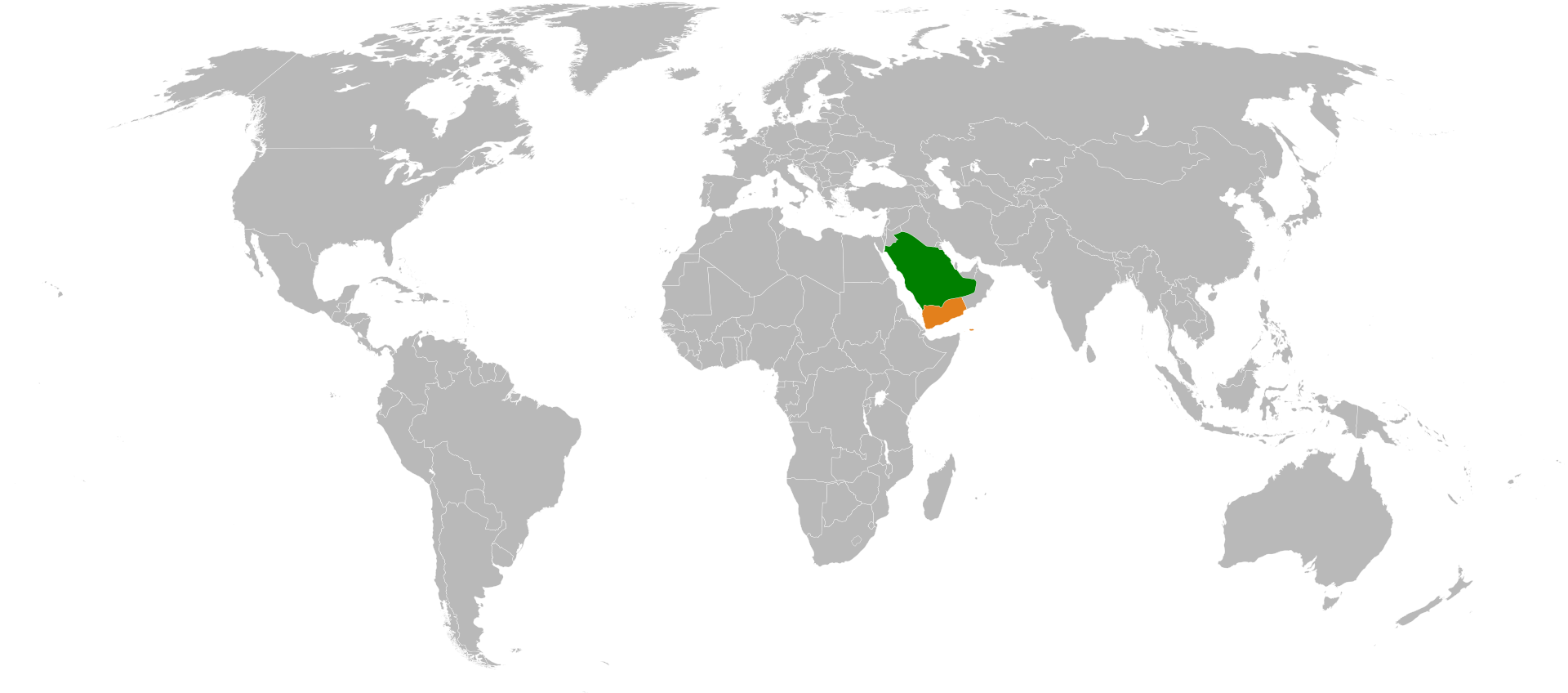
What Does the Kingdom Hold After Fifteen Votes?
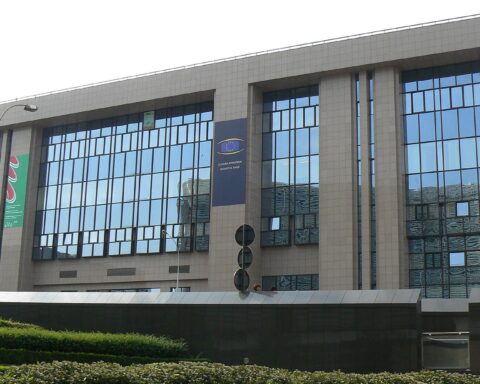
After the Council voted unanimously, Saudi Arabia held the following: a formal affirmation of a right it already possessed under international law, a closed international airport with its NOTAM suspension running to at least 21:00 UTC on 17 October and no confirmed reopening beyond that, and a postponed summit with the European Union. The GCC statement deferring the EU-GCC summit — originally scheduled for 24 October in Riyadh — cited “continued attempts to target the Kingdom of Saudi Arabia” and “the extension of the suspension of operations at King Khalid International Airport.” No new date was announced. The formal postponement landed on the same day as the UNSC vote, compressing two kinds of international failure into a single afternoon: the diplomatic community could not keep Saudi Arabia’s airport open, and it could not keep its own summit calendar intact.
Chatham House analysts wrote in October that “Yemen and the Houthis have become a collective Gulf security challenge, and it would be a mistake to continue treating Yemen primarily as a domestic conflict or a Saudi security problem.” The presidential statement moved in that direction — collective condemnation, shared diplomatic language, unanimous agreement that the attacks must stop. But it stopped well short of collective action. The Makkah JDA’s three military partners have approximately 8,000 Pakistani troops in the kingdom, according to Reuters, and Turkey has offered equipment and intelligence support. Neither country has committed the kind of sustained air defence reinforcement that would change the interceptor balance the CSIS analysis described.
The Future Investment Initiative — its tenth edition — remains on schedule for 26–29 October, ten days after the Council voted. The conference will draw investors and executives to a capital whose main airport cannot receive their commercial flights, in a kingdom whose right to defend itself has just been unanimously affirmed by an institution that provided no means to exercise it. Saudi Arabia will hold FII10 because the alternative — admitting that Houthi missiles can shut down the kingdom’s flagship investment forum alongside its flagship airport — is a concession no government in Riyadh would make willingly. The Council gave the kingdom fifteen votes and a sentence in the formal record, and no vote on whether to reopen the airport.
Frequently Asked Questions
Has the Security Council ever authorized the use of force against the Houthis?
No. Resolution 2216, adopted in April 2015 under Chapter VII by a vote of 14–0 with Russia abstaining, imposed an arms embargo on Houthi leaders and demanded the group withdraw from seized territory, but it did not authorize member states to use military force beyond enforcing the embargo. Asset freezes and travel bans were imposed on named individuals. When the US and UK struck Houthi targets in January 2024 in response to Red Sea shipping attacks, neither cited a Council resolution as legal authority — both relied on the inherent right of self-defense under Article 51. Resolution 2817, adopted in March 2026, condemned Iran’s “egregious attacks” on Gulf states under Chapter VII, but was directed at Iran rather than the Houthis. Resolution 2826, the most recent instrument, extended the Secretary-General’s reporting mandate on Houthi Red Sea attacks — a monitoring function with no enforcement power.
What is the difference between a Security Council presidential statement and a resolution?
A resolution is the Council’s binding legal instrument, adopted by a formal vote requiring at least nine yes votes out of fifteen members and no vetoes from any of the five permanent members — the United States, Russia, China, France, and the United Kingdom. Resolutions can invoke Chapter VII enforcement powers, authorize the use of force, impose sanctions, and create binding obligations on all 193 UN member states. A presidential statement requires consensus among all fifteen Council members but is adopted without a formal vote. It is read into the record at a public meeting and carries more weight than a press statement, which the presidency can issue informally. However, presidential statements cannot invoke Chapter VII, cannot authorize force, and create no new legal obligations. The 15 October statement on Saudi Arabia represents the strongest non-binding instrument the Council can issue below the threshold of a resolution.
What is the Makkah Joint Defence Agreement?
The Makkah Joint Defence Agreement was signed on 7 August 2026 by Saudi Arabia, Turkey, and Pakistan. It expressly links collective defence obligations to the right of self-defense under Article 51 of the UN Charter — the same article referenced in the 15 October UNSC presidential statement. Under the agreement, Pakistan has deployed approximately 8,000 troops to Saudi Arabia in a primarily defensive capacity, according to Reuters. Turkey has provided military equipment and intelligence cooperation, though as of October the Turkish parliament had not formally ratified the agreement. The JDA represents a trilateral military framework operating in parallel with the multilateral diplomatic instrument adopted by the Council. Both rest on the same Article 51 legal foundation, but the JDA commits specific military assets while the Council statement commits none.
Why was the EU-GCC summit postponed on the same day as the UNSC vote?
The second EU-GCC Summit, originally set for 24 October 2026 in Riyadh with Mohammed bin Salman and European Council President António Costa as co-hosts, was formally postponed on 15 October — the same day the presidential statement was adopted — but the two events were coincidental, not causal. The GCC’s postponement statement cited “continued attempts to target the Kingdom of Saudi Arabia” and “the extension of the suspension of operations at King Khalid International Airport.” GACA had suspended operations at KKIA indefinitely, with the NOTAM closure running to at least 21:00 UTC on 17 October and no reopening date confirmed. The practical obstacle was straightforward: the kingdom could not host all 27 EU heads of government and six GCC heads of state in a capital whose international airport was closed to commercial flights and remained under active Houthi targeting. No new date has been set for the summit, which would have been only the second EU-GCC heads-of-state meeting in history.