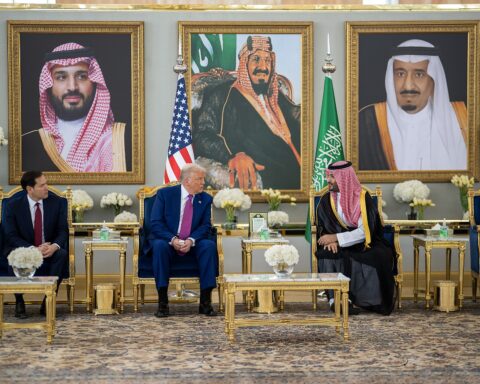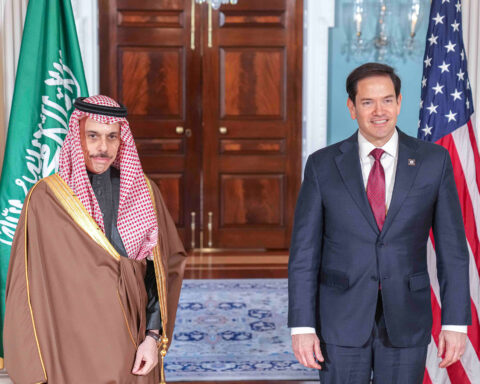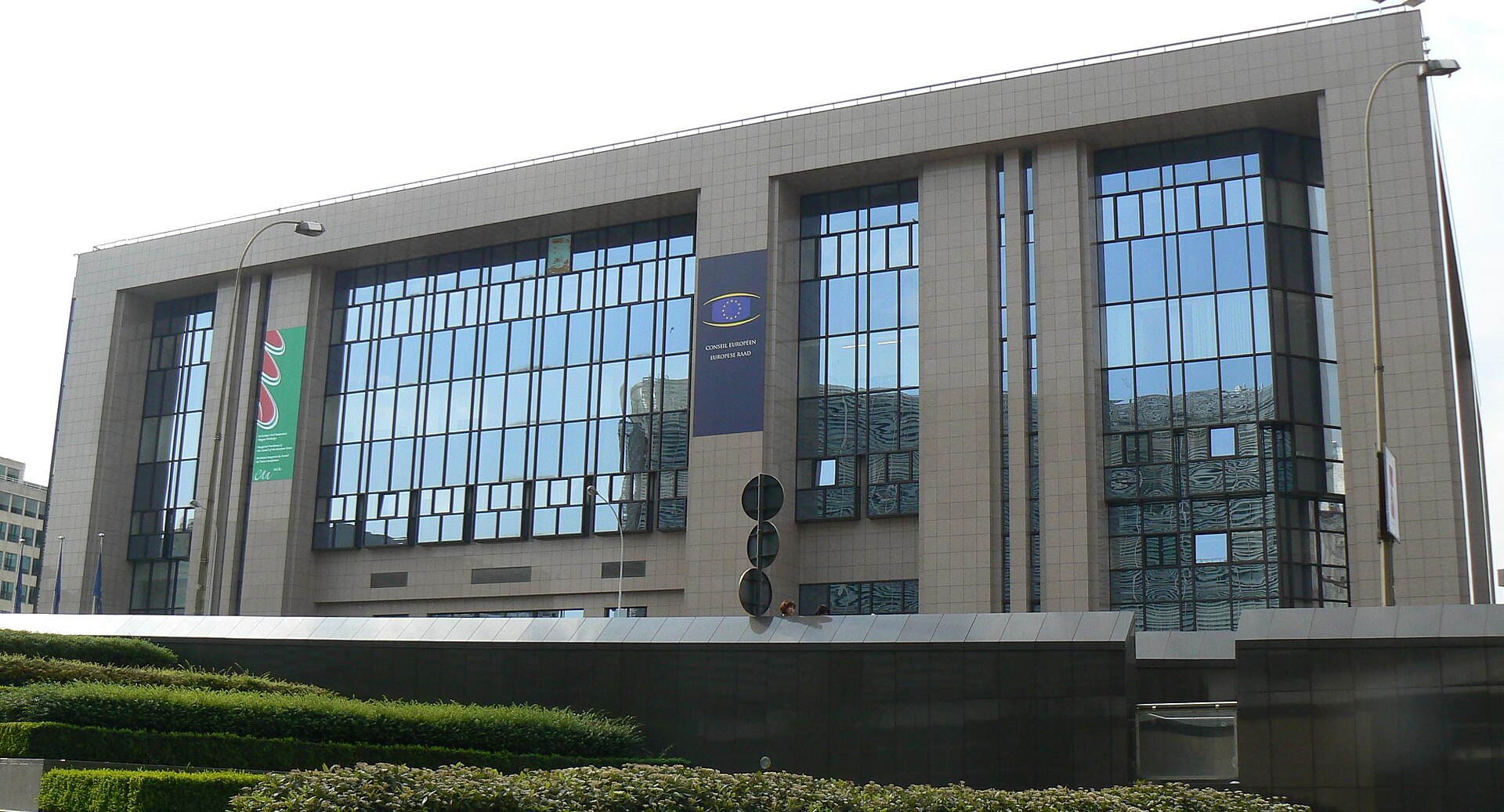

BRUSSELS — The twenty-seven heads of state and government of the European Union are scheduled to fly to Riyadh on October 24 for the second EU-GCC Summit, thirteen days after a Houthi ballistic missile struck King Khalid International Airport, killed twelve people, and injured 309 — the deadliest attack on Saudi civil infrastructure in more than a decade.
Air France and KLM have suspended all Riyadh service until October 24, the same date as the summit. British Airways will not resume flights until November 3. The European Union Aviation Safety Agency expanded its conflict-zone advisory on October 9 to cover Riyadh airspace at all altitudes. And on October 11, Italian Energy Minister Gilberto Pichetto Fratin became the first minister of a co-hosting nation to attend a Riyadh conference by video link rather than in person — a precedent that now hangs over every European capital with a delegation to assemble in less than two weeks.
Table of Contents
Which European Carriers Will Fly to Riyadh on October 24?
The flight suspension calendar tells the story before any government spokesperson does. Air France and KLM, the two flag carriers of France and the Netherlands, have suspended all Riyadh operations until October 24 — a date they chose before it carried diplomatic meaning. British Airways has set its return for November 3, ten days after the summit. Lufthansa Group — Lufthansa, Swiss, Austrian Airlines — suspended service through October 16 and has not confirmed resumption beyond that date. ITA Airways, Italy’s national carrier, has also suspended operations through October 16.
Cathay Pacific extended its suspension until January 31, 2027. Singapore Airlines postponed the launch of its Riyadh route until March 28, 2027. Neither is a European carrier, but both decisions reflect a commercial aviation industry that is pricing Saudi airspace as a conflict zone on a timeline measured in months, not days.
OPSGROUP, a membership organisation of nearly 10,000 aviation professionals, issued a “do not fly” warning for all Saudi Arabia operations, recommending that members avoid Saudi airports even as en-route alternates. The warning cited risks of sustained missile attack and “misjudgement” in defensive responses — language directed not at airlines alone but at charter and government aviation operators of the kind that fly diplomatic delegations.
Heads of state travel on national government aircraft, not scheduled carriers. But government pilots read the same NOTAMs, the same EASA bulletins, and the same OPSGROUP advisories. A British RAF crew, a French Armée de l’Air crew, and a Luftwaffe crew will each need security clearances from their respective defence ministries before filing a flight plan to an airport the Houthis have struck twice in five days.
The Middle East briefing 3,000+ readers start their day with.
One email. Every weekday morning. Free.
EASA Conflict Zone Advisory
The European Union Aviation Safety Agency first issued a Conflict Zone Information Bulletin for Saudi Arabian airspace on September 30, covering southeastern and northwestern border areas. On October 9 — the day after a Houthi missile killed a Saudia Airlines pilot at KKIA — EASA expanded the advisory to include Riyadh, Dammam, Madinah, and Tabuk at all altitudes. Two escalation steps in nine days.
The October 9 bulletin, active until November 16, warned that “recurrent missile and drone attacks, together with the activation of air-defence systems, create an increased risk of misidentification of civil aircraft, as well as risks associated with missile and drone overflights, interception activity and falling debris.” EASA designated two specific sectors of Saudi airspace as avoidance zones — one covering the southeastern approach corridor, one the northwestern — and recommended operators not use Saudi airports as diversion alternates.
The advisory does not prohibit flights. It recommends avoidance. But for twenty-seven EU member states whose own aviation regulator has placed their summit destination in a conflict-zone bulletin, the recommendation carries institutional weight. A government that sends its leader to Riyadh on October 24 will do so in explicit contradiction of its own aviation safety body’s published guidance.
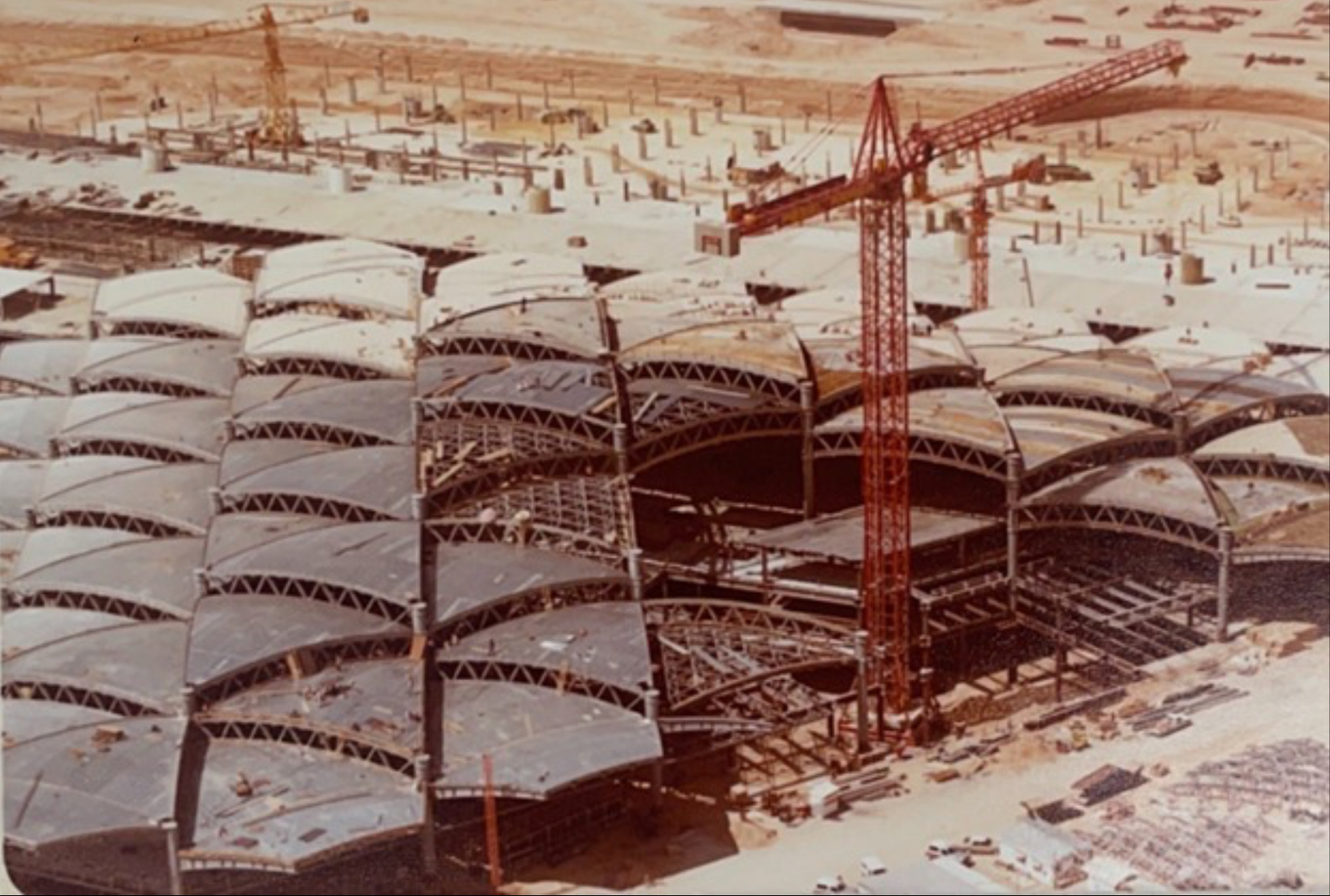
The Pichetto Fratin Precedent
On October 9, Italian Environment and Energy Minister Gilberto Pichetto Fratin announced he would participate in the International Energy Forum’s ministerial meeting at the 25th World Petroleum Congress by video link. Italy co-hosts the IEF alongside Saudi Arabia and Nigeria. Pichetto Fratin cited unspecified “reasons” that prevented personal attendance. He separately conveyed “Italy’s solidarity with Saudi Arabia” following the airport strikes, according to the Italian news outlet Newsbiella.
No minister of a co-hosting nation had previously attended a WPC event virtually. The congress, which opened on October 11 with 25,000 registered delegates, 100 energy ministers, and 500 CEOs, is proceeding in person. Organisers arranged for delegates unable to land at KKIA to fly to Dammam and drive approximately four hours to the venue at Riyadh Front Exhibition and Conference Centre.
A four-hour road transfer from an alternate airport is a workable logistics solution for energy executives. It is not a workable solution for the President of France, the Chancellor of Germany, or the Prime Minister of Italy arriving with security details, motorcades, and bilateral meeting schedules. The WPC reroute demonstrates that Riyadh can host a conference during wartime. It does not demonstrate that Riyadh can host a summit.
EU Response to the KKIA Strike
European Commission President Ursula von der Leyen, who is scheduled to attend the October 24 summit, condemned the KKIA strike on October 11. “These attacks by Iran’s proxies are pushing the region into a spiral of violence,” she said. “They are destabilising crucial global transport and energy nodes with shockwave sent through the world. These murderous attacks at civilians must stop at once.”
EU High Representative for Foreign Affairs Kaja Kallas called the attack “an appalling act of terror” and stated that “there can be no justification for indiscriminate attacks on civilians and civilian infrastructure.” Kallas said she was in close contact with her Saudi counterpart and that stronger cooperation between the EU’s Red Sea naval mission and a Saudi-led maritime coalition was “vital.”
German Foreign Minister Johann Wadephul condemned the attack as “a terrorist act against Saudi Arabia and civil aviation,” according to CBS News and Arab News.
The condemnations were unequivocal. None addressed the question of whether October 24 travel plans had changed. In EU diplomatic protocol, that question falls to the European Council — which meets in Brussels on October 15-16, eight days before the Riyadh summit.
What a Virtual or Partial Summit Would Cost
The EU-GCC Summit carries a specific deliverable beyond communiqué language. GCC Secretary-General Jasem Mohamed Al-Budaiwi told Gulf media in October that citizens of Saudi Arabia, Qatar, Oman, Bahrain, and Kuwait are “very close” to initiating the Schengen visa waiver process, and that he expected “something positive” at the October 24 meeting. The UAE already holds Schengen visa-free access. The remaining five GCC states do not.
A Schengen visa waiver announcement requires political-level endorsement. The EU’s Committee of Permanent Representatives placed the item on its agenda on October 5. A virtual summit — or one attended by deputies rather than leaders — would strip the announcement of the political weight needed to launch negotiations that span passport integrity assessments, border-system evaluations, and data-protection reviews across five countries simultaneously.
The broader diplomatic cost is structural. The first EU-GCC Summit, held in Brussels on October 16, 2024, was a format breakthrough — the first leaders-level meeting between the two blocs after decades of ministerial-only contact. Crown Prince Mohammed bin Salman attended in person. The second summit was designed to reciprocate: Brussels hosted; now Riyadh hosts. A partial or virtual second summit would convert reciprocity into asymmetry. One bloc flew to the other’s capital; the other would not.
The Gulf Research Center, in a commentary published before the KKIA strike, wrote that “the physical presence of the EU’s 27 leaders in Riyadh” would “represent an important signal of support to Saudi Arabia and more widely to Gulf states affected by regional instability.” The assessment was written as advocacy. It now reads as a test.
The October 15 Decision Point
EU heads of state and government meet in Brussels on October 15-16 for a scheduled European Council session. The published agenda includes competitiveness, the multiannual financial framework, Ukraine, and — under “other key topics” — developments in the Middle East. That final item will now absorb a question the agenda drafters did not anticipate: whether twenty-seven leaders will board aircraft for Riyadh eight days later.
The decision will not be made collectively. EU summits of this kind are attended by individual heads of state, each answerable to a national parliament, a national security service, and a national press corps. The French president’s security detail operates under different protocols than the Estonian prime minister’s. The German chancellor’s travel insurance framework differs from Malta’s. Each capital will make its own risk assessment. But each will be aware of every other capital’s decision — and of Pichetto Fratin’s.
The precedent that matters is not the G20. Riyadh hosted the G20 in November 2020, but that summit went virtual because of COVID-19, not conflict. No multilateral summit hosted by a state under active aerial bombardment has proceeded in person in the post-Cold War period. The question facing the European Council on October 15 has no institutional template.
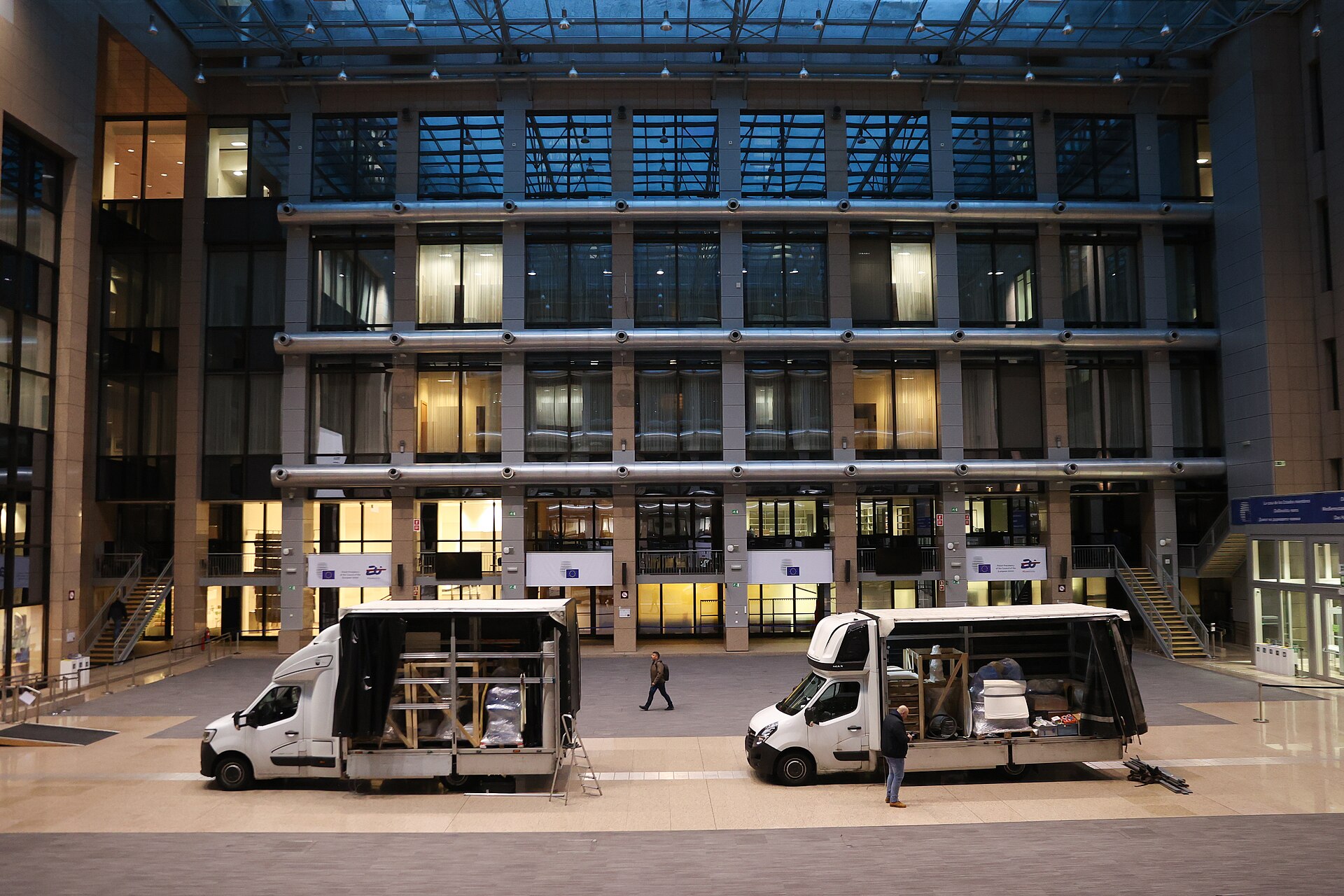
The Houthis have narrowed the decision window. On October 11, Ansarallah renewed a formal warning to all airlines, workers, and travellers to avoid Saudi airports and airspace, designating them “a theatre of operations.” The warning exempted only Mecca and Medina. Ansarallah leader Sayyed Abdul-Malik al-Houthi stated that “Riyadh’s decade-long war to subjugate Yemen has collapsed into a strategic failure,” and warned: “airport for airport, siege for siege.”
The EU’s own extraordinary EU-GCC foreign ministers’ meeting on March 5, 2026 — convened after Iran’s initial strikes on GCC territory — condemned “Iran’s inexcusable attacks against GCC states” and called for immediate cessation. Seven months later, the attacks have not ceased. They have reached the arrivals terminal of the capital’s international airport.
Background
The EU-GCC Summit format was inaugurated in Brussels on October 16, 2024, after years of ministerial-level cooperation under the 1988 EU-GCC Cooperation Agreement. The Brussels summit produced a joint statement covering trade, energy, climate, digital transformation, and security cooperation.
The European Council announced the second summit for Riyadh on September 4, 2026, with King Salman personally issuing invitations, including to UAE President Sheikh Mohamed bin Zayed Al-Nahyan. The summit agenda was expected to advance the strategic partnership into operational cooperation, including the Schengen visa waiver process, maritime security coordination, and energy transition investment.
On October 7 — three days before the KKIA strike — Human Rights Watch sent a letter to European Council President António Costa and Commission President von der Leyen urging them to use the summit to press GCC states on human rights: the UAE’s role in Sudan, political prisoners across the Gulf, Saudi Arabia’s use of the death penalty, labour rights ahead of the 2034 FIFA World Cup, and Houthi detention of UN and NGO staff. The summit was already under political pressure on human rights grounds before the airport attack added a security dimension.
The 25th World Petroleum Congress, running October 11-15 in Riyadh, is the first WPC hosted by Saudi Arabia in the event’s ninety-year history. Its continuation after the October 10 strike demonstrated Riyadh’s determination to maintain its calendar of international events. Whether that determination extends to a summit requiring the simultaneous presence of twenty-seven foreign heads of state is a question of a different order.
FAQ
Has any EU member state officially announced it will not attend the October 24 summit?
No EU member state has publicly confirmed or withdrawn attendance as of October 11. Italy’s decision to send its energy minister to the WPC by video link is the closest precedent, but that was a ministerial event, not a leaders’ summit. The European Council session on October 15-16 in Brussels is expected to be the decision point for most capitals. Diplomatic sources have not indicated whether a fallback format — virtual, hybrid, or reduced-level representation — is under formal discussion.
Could the summit be moved to a different location?
The format’s structure makes relocation difficult on thirteen days’ notice. The 2024 Brussels summit took months to organise and required coordination between the European External Action Service, the European Council secretariat, and the GCC General Secretariat. Riyadh’s hosting is tied to the reciprocity principle — Brussels hosted first, then a GCC capital. Moving the summit to Brussels or a third country would undermine that framework and require Saudi and GCC agreement. No relocation proposal has been publicly discussed.
What happens to the Schengen visa waiver if the summit is downgraded?
The visa waiver announcement requires political endorsement at the leaders’ level. GCC Secretary-General Al-Budaiwi described the five Gulf states as “very close” to beginning formal procedures, and the EU’s Committee of Permanent Representatives had placed the item on its October 5 agenda. A virtual summit could still produce a joint statement, but the waiver process involves technical assessments of passport systems, border infrastructure, and data-protection compliance for each of the five countries. Launching that process without an in-person leaders’ endorsement would weaken its institutional foundation and could delay timelines that the GCC side has publicly described as imminent.
How did delegates reach the WPC after KKIA suspended operations?
The WPC organisers arranged for delegates to fly into King Fahd International Airport in Dammam, on Saudi Arabia’s eastern coast, and drive approximately four hours to the Riyadh Front Exhibition and Conference Centre. The arrangement worked for a conference format. For a leaders’ summit requiring bilateral meetings, secure venues, motorcade logistics, and coordination among twenty-seven advance security teams, the Dammam alternative presents challenges that conference organisers did not face.
What is the Houthi threat posture toward Riyadh ahead of October 24?
Ansarallah renewed its warning on October 11, designating all Saudi airports and airspace except Mecca and Medina as “a theatre of operations.” The group has struck KKIA on October 8 and October 10. Ansarallah leader al-Houthi described the strikes as retaliatory and warned “airport for airport, siege for siege.” The group has not specifically referenced the EU-GCC Summit, but its blanket designation of Saudi airspace as an operational zone covers the timeframe and location of the October 24 event. EASA’s conflict-zone bulletin for Riyadh airspace remains active until November 16.