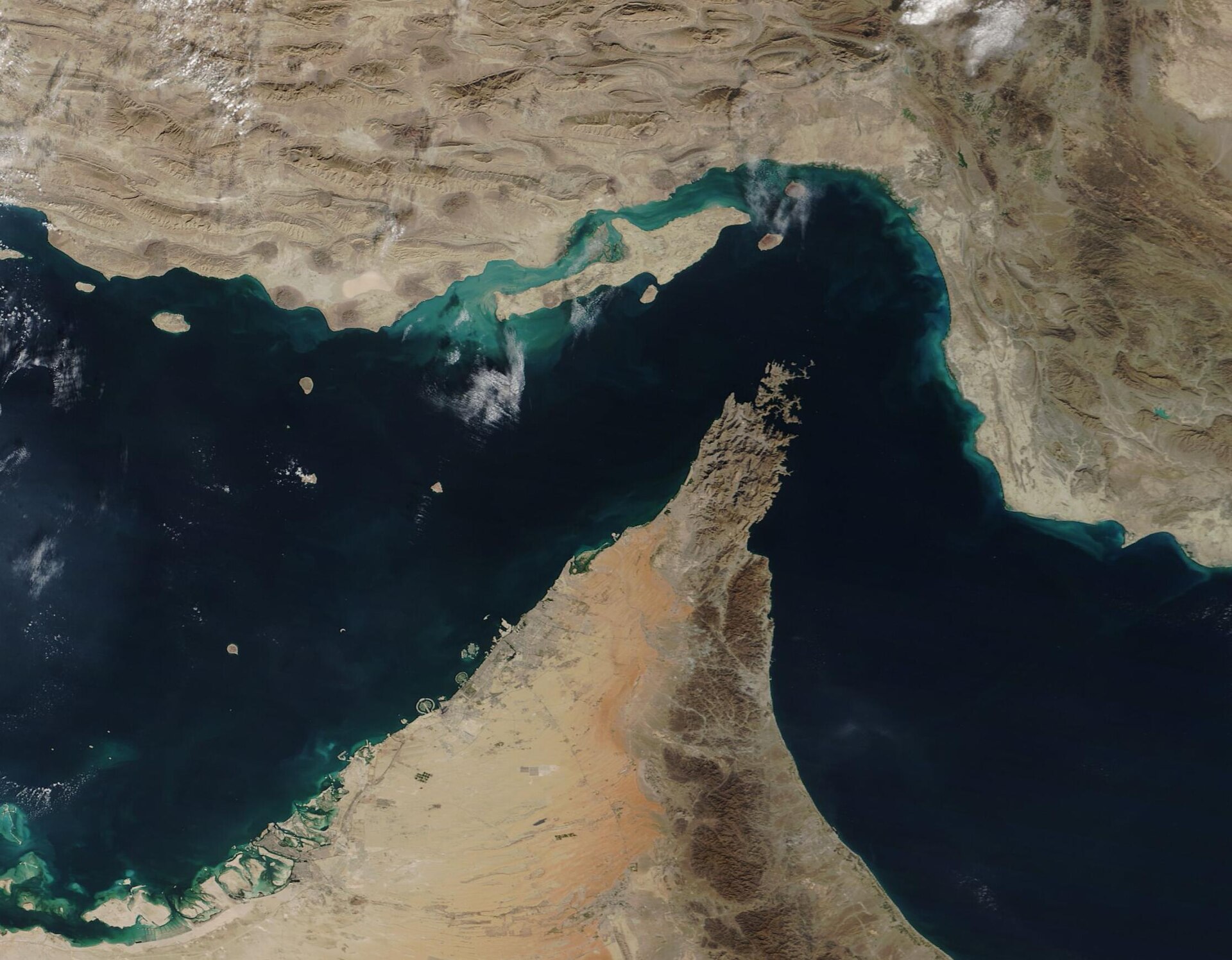

LONDON — Admiral Brad Cooper declared on 27 August that US forces had cleared Iranian sea mines from the internationally recognised shipping lanes in the Strait of Hormuz, and that CENTCOM would not impede freedom of navigation for vessels transiting to and from non-Iranian ports. Seven weeks later, Saudi Aramco told certain European customers they would receive no oil in October under their long-term contracts, according to a Foley Hoag legal alert — not because the strait was physically sealed, but because the insurance market had priced it as though it were.
War risk premiums on Hormuz transits have reached 3 to 10 per cent of hull value, up from 0.15 to 0.25 per cent before the conflict, according to Marsh’s Marcus Baker — a cost that on a $100 million tanker means $3 million to $10 million in additional insurance for a single voyage. QatarEnergy, Shell, Kuwait Petroleum and Bapco have declared force majeure on supply contracts. The Joint Maritime Information Centre rates the threat level at SEVERE, having logged 153 confirmed maritime security incidents across the region since 1 March, according to gCaptain. CENTCOM says the strait is open; the underwriters who decide whether cargo can move through it say the price of proving it is more than most voyages are worth.
Table of Contents
- The Price of Crossing
- What Does CENTCOM’s ‘Open’ Actually Mean?
- Who Pays When a Mine Claim Hits a Policy?
- The Force Majeure Cascade
- How Did Asian Governments Fill the Insurance Gap?
- Can the US Navy Clear the Mines?
- Iran’s Toll and the Legal Void
- When Does the Oil Come Back?
- Frequently Asked Questions
The Price of Crossing
Maritime war risk operates on its own logic, and that logic does not care what a four-star admiral says at a podium. Protection and indemnity clubs — the mutual insurers that cover roughly 90 per cent of the world’s ocean-going tonnage — expressly exclude war risk from their rulebooks, according to Lloyd’s List. Mines fall on the war side of that exclusion line, which means any vessel transiting a strait where mines have been claimed, confirmed or merely rumoured needs a separate war risk policy before the P&I cover even applies. The structure requires a charterer booking a VLCC for a Gulf-to-Rotterdam voyage to secure two layers of cover — the standard P&I for collision, pollution and crew liability, and a separate war risk facility for the transit itself — and the second layer is the one whose cost has moved from a rounding error on the voyage economics to the line item that determines whether the voyage happens at all.
The House of Saud Daily Briefing
Saudi Arabia's news in 3 minutes, every morning. Free. See today's issue
Before the conflict, that additional war risk layer cost charterers around $25,000 a year, according to Lloyd’s List. The war risk buyback now runs to $30,000 a week — a repricing that restructures every commercial decision in the tanker market from the moment a vessel enters the Gulf of Oman. For the owners of the very large crude carriers that once filled the strait with traffic, the premium alone can exceed the freight revenue on a single-leg voyage, and the freight itself has entered territory the market has not seen in decades: the Gulf-to-China VLCC rate hit $1.2 million a day in early October, against roughly $80,000 a day a year earlier, according to LSEG data published by Reuters.
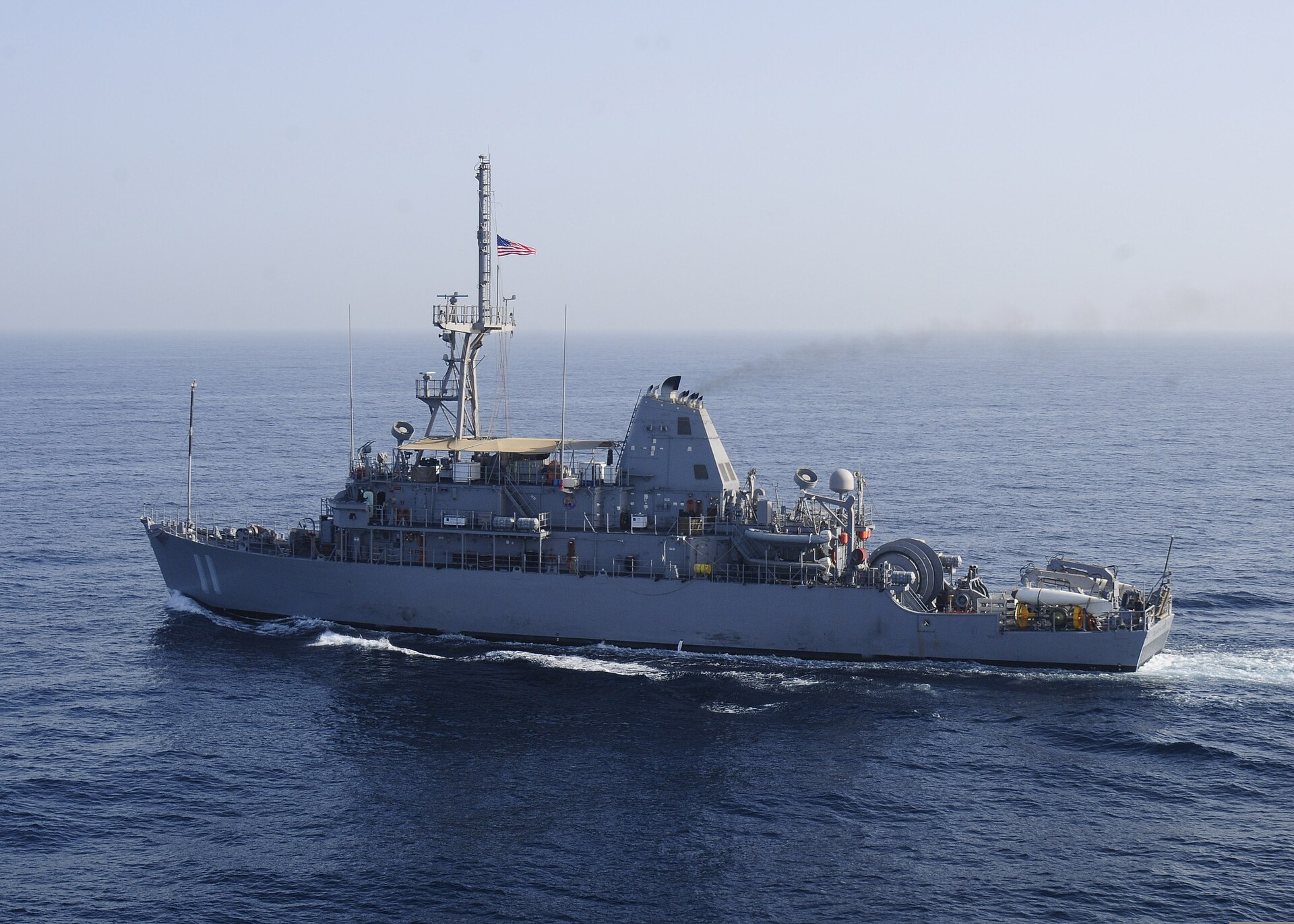
The people still willing to make the crossing know what they are charging for. Fortune reported on 10 October that ship captains transiting the strait were earning so much danger pay that they were “almost being viewed as mercenaries” — and the Joint Maritime Information Centre counted just 254 transits in the week ending 14 October, approximately 70 per cent below pre-war levels, according to gCaptain.
What Does CENTCOM’s ‘Open’ Actually Mean?
CENTCOM declared the Strait of Hormuz open twice — on 27 August and again on 15 October — describing a military assessment of the shipping lanes at a given moment, according to gCaptain. Neither declaration addressed the commercial architecture: the insurance contracts, P&I exclusions and force majeure clauses that collectively determine whether a technically navigable waterway is usable by the commercial shipping that carries Saudi Arabia’s primary export.
The Joint Maritime Information Centre, which provides threat assessments to commercial shipping rather than military status updates, maintained its SEVERE rating through both of CENTCOM’s declarations and warned vessels to watch for attempted mining within and immediately adjacent to the traffic separation scheme, according to gCaptain’s 20 October reporting. The disconnect is a matter of institutional function rather than disagreement — CENTCOM’s mine-clearance announcement describes what US assets found when they swept the lanes, while JMIC’s advisory describes what commercial vessels face going forward — but for the underwriter at Lloyd’s deciding whether to write war risk on a loaded VLCC, the distinction between “was clear” and “will remain clear” is the entire calculation.
The traffic data reflects which assessment the market trusts. CENTCOM said 135 ships had been turned around at the US-led counter-blockade since it began on 14 July, according to CBS News — but the far larger absence is the ships that never departed because no insurer would write the policy. During the first week of August, only 33 vessels transited the strait, down from a pre-war baseline of 130 to 140 a day, according to Reuters.
That gap tells the story of two different closures running simultaneously — a military blockade that CENTCOM imposed on Iran-bound traffic and tracks with precision, and a commercial closure that the insurance market imposed on everyone else and that nobody tracks at all, because ships that do not sail do not generate a data point. The strait can be physically navigable, legally contestable and commercially defunct at the same time, and the third condition is the one that determines whether Saudi crude reaches its buyers.
Who Pays When a Mine Claim Hits a Policy?
The Islamic Revolutionary Guard Corps has announced mine strikes on tankers in the Strait of Hormuz on at least five occasions since 10 October, none confirmed by any independent maritime authority. The insurance market does not require confirmation to reprice risk — it requires the credible possibility, and the IRGC’s announcements provide that in volume.
The claimed sequence, compiled by gCaptain in its 20 October reporting, runs as follows: a supertanker on 10 October carrying an estimated two million barrels of crude, a tanker on 12 October, a containership on 14 October, two supertankers on 17 October, and a supertanker explosion south of the strait on 20 October. None has been confirmed by CENTCOM, UKMTO or JMIC. When the IRGC announced the 17 October strikes, JMIC responded that “there is no substantiation to these claims,” according to gCaptain.
The only confirmed vessel loss is the GFS Pride, a Singapore-flagged containership that caught fire and sank on 13 October after all 21 crew members were evacuated safely. CENTCOM attributed the damage to an IRGC projectile — not a mine — and JMIC concurred, according to gCaptain. For the purpose of naval intelligence, the distinction between a mine and a projectile is material; for the purpose of an insurance renewal on a vessel routing through the same water, it changes nothing about the premium.
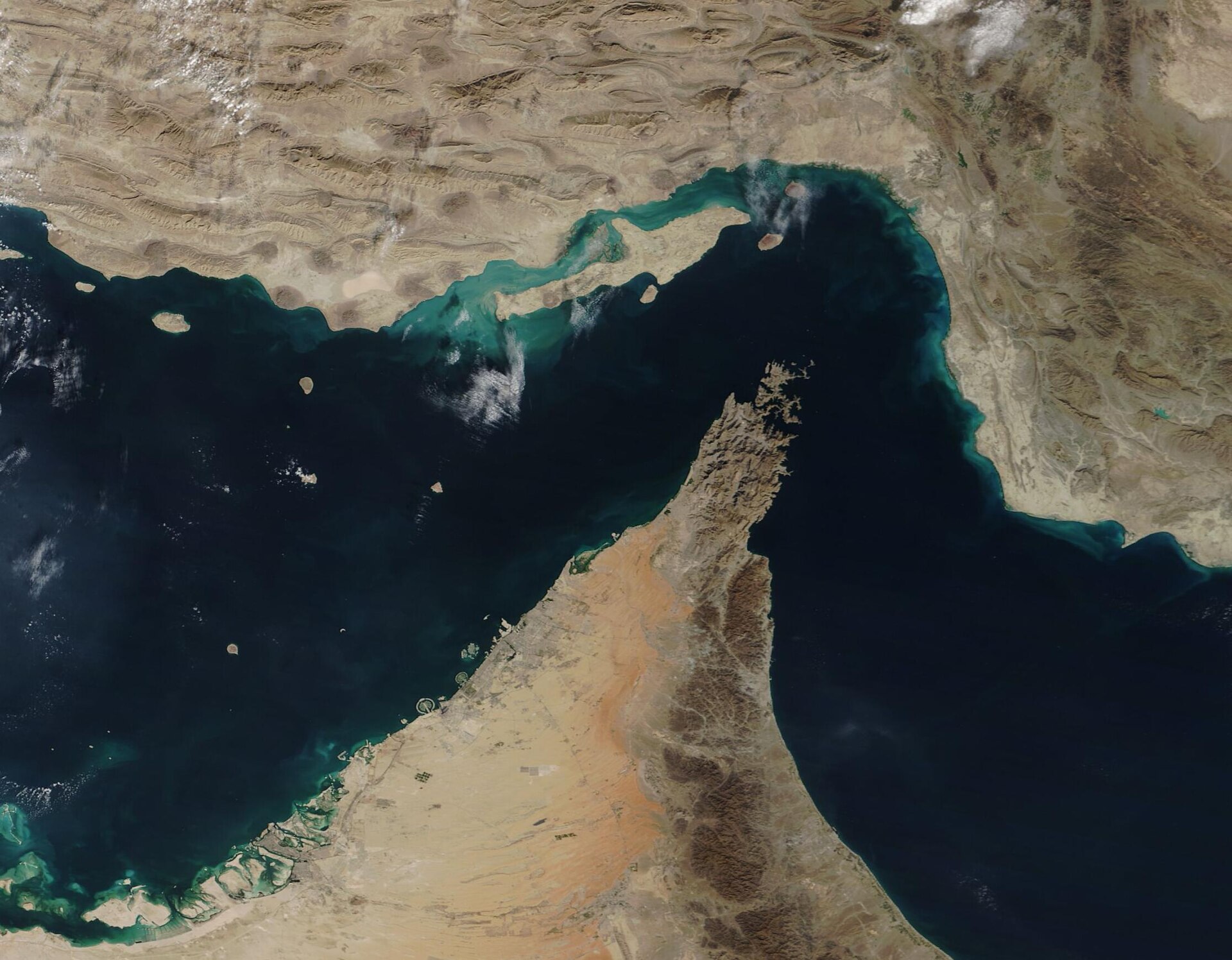
The IRGC’s own framing treats the mine strikes as enforcement rather than aggression. Its 17 October announcement, carried by Al Arabiya, said a tanker had “exploded and caught fire after hitting a naval mine” while “transiting the strategic waterway through a route unauthorized by Iran” — language that positions the Guards as a regulatory authority over strait traffic and that, for an underwriter modelling risk on the next VLCC to enter the Gulf of Oman, functions as a standing threat against every vessel that does not coordinate with Tehran.
The sequence of claims, whether or not each describes a real detonation, has created a pattern that the underwriting market treats as a campaign — and a campaign is priced differently from a series of isolated incidents. gCaptain’s 20 October analysis noted that no vessel name has been independently confirmed as mine-damaged across any of the five IRGC-announced incidents, a degree of evidential absence that would ordinarily invite scepticism, except that JMIC’s SEVERE rating, the confirmed GFS Pride sinking and the reported per-transit toll provide the context in which even unverified claims are treated as operational intelligence by the people writing the policies.
The Force Majeure Cascade
When insurers withdraw, contracts break — and in the third quarter of 2026, they broke across the Gulf’s entire export chain. QatarEnergy declared force majeure on long-term LNG supply contracts with customers in China, Italy, Belgium and South Korea, citing damage to the Ras Laffan facility that had reduced export capacity by approximately 17 per cent, according to legal analysis published by Ontier. Shell, Kuwait Petroleum and Bapco followed with their own force majeure declarations, each invoking the same fundamental disruption — an inability to deliver contracted volumes through shipping lanes that the market had repriced beyond commercial viability.
Saudi Aramco’s approach was different in form but identical in effect. The company told certain European customers they would receive no oil in October under their long-term contracts, according to a Foley Hoag legal alert published on 7 October. CEO Amin Nasser, speaking in early October, made the company’s position explicit: Aramco’s customers “assume the risk of delivery,” he told Fox Business — a statement that shifted the contractual burden onto buyers who cannot insure the delivery at any commercially rational cost.
Aramco’s customers assume the risk of delivery.
Amin Nasser, CEO, Saudi Aramco (Fox Business, October 2026)
The legal terrain underneath these declarations is contested on ground that predates the war itself. Under English law, which governs most international oil and gas contracts, force majeure is “a purely contractual creature,” as Ontier’s analysis noted — meaning the outcome depends entirely on whether the relevant clause requires “impossibility” or covers a lower threshold such as “material impediment.” Iran’s parliament voted to close the Strait of Hormuz in June 2025, more than a year before the blockade began, according to Ontier — a timeline that some lawyers argue makes the disruption foreseeable, which would undermine sellers’ force majeure defences and leave buyers with breach-of-contract claims instead. The parliamentary vote did not close anything, but it may, months later, have closed a legal exit.
How Did Asian Governments Fill the Insurance Gap?
Japan, India and South Korea created sovereign-backed insurance programmes because the private market withdrew and their refineries would have run dry without state intervention. These are not insurance solutions in any commercial sense — they are fiscal backstops that socialise the cost of the Hormuz conflict onto national balance sheets, built at speed because the alternative was an energy supply crisis with no private-sector remedy.
Japan approved legislation to subsidise the additional cost of crude imports and cover hull and cargo claims that commercial underwriters would not write, according to Splash247. India launched a $1.5 billion maritime insurance pool backed by a $1.4 billion sovereign guarantee — making the Indian government the insurer of last resort for tankers carrying crude to Indian refineries, according to The National’s 15 October reporting. South Korea set aside approximately 1.4 billion won to subsidise war risk premiums for nine smaller shipping firms, according to Splash247.
The geography of desperation shows in the shipping data. South Korea, India, China and Japan together accounted for almost 70 per cent of ship-to-ship transfer volume off India’s west coast — the Kutch anchorage area — as Gulf shipping congestion pushed crude into floating storage and improvised redistribution networks, according to Vortexa data reported by The National on 15 October. The transfers are a workaround, not a solution: crude that cannot transit Hormuz on insured vessels instead moves through a chain of smaller, riskier operations that add cost and delay at every stage of the supply chain.
The cascade does not stop at Hormuz. Tankers rerouting through the Red Sea port of Yanbu still face Houthi interdiction at the Bab el-Mandeb strait, which carries its own war risk surcharges — and Saudi Arabia shut down the East-West pipeline as a precaution after drone attacks in September, according to Zawya, temporarily closing the only land-based alternative to the maritime routes that insurers had already repriced.
Can the US Navy Clear the Mines?
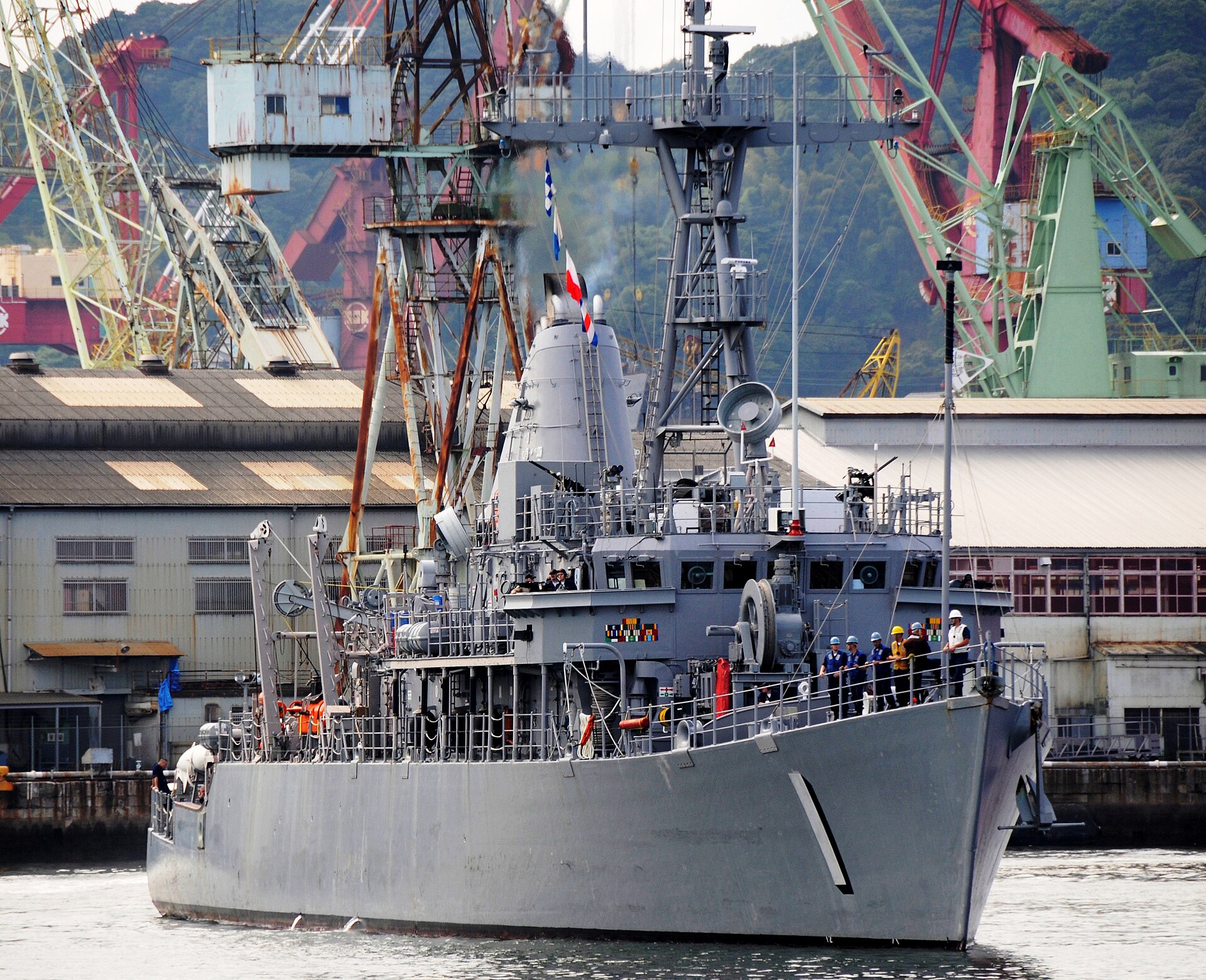
Not reliably. The US decommissioned its purpose-built Avenger-class minesweepers and now relies on mine countermeasure modules aboard Littoral Combat Ships that have faced persistent readiness problems, according to Mark P. Nevitt, a retired Navy JAG Commander writing in Just Security. Europe fields between 150 and 170 mine countermeasure vessels, and Japan operates 20 — but neither has deployed those assets to the Gulf in meaningful numbers.
Cooper’s August announcement implied a sweep-and-hold posture — that US forces could not only clear mines but ensure they stayed clear against an adversary actively relaying them — and the operational question the insurance market asks is not whether the US swept the lanes last month but whether anyone can guarantee them next week.
The 1980s Tanker War provides the closest precedent for what a sustained mine campaign does to the insurance infrastructure of global oil trade. Between 450 and 546 commercial vessels were attacked during that eight-year conflict, according to analyses published by HFW and Insurance Business Magazine, and after the Iran-Iraq ceasefire took effect in 1988, the insurance market did not follow the military cessation of hostilities. War risk assessments on Gulf shipping took well into 1989 to normalise, because mines laid during the war remained on the seabed and the underwriters at Lloyd’s treated every unswept square mile as a live hazard.
The current campaign shows no sign of pausing. On 21 October, the IRGC said via the Malay Mail and AP that Iranian naval mines had halted two or three more tankers in the strait — claims that, like every mine announcement the Guards have made since 10 October, have not been confirmed by CENTCOM or JMIC, and that nonetheless enter the risk models that Lloyd’s syndicates use to price their next set of renewals.
Iran’s Toll and the Legal Void
The IRGC has established what amounts to a parallel toll regime over the Strait of Hormuz, reportedly charging $2 million per transit for vessels using what Iran designates as authorised routes, according to Just Security. Iran requires coordination with IRGC forces before transit and has claimed that vessels using “unauthorised” routes bear the consequences — a framing the Guards repeated explicitly in their 17 October announcement via Al Arabiya, when they described the damaged tanker as having transited a route not authorised by Iran.
The legal basis Iran invokes is not the transit passage regime codified in the UN Convention on the Law of the Sea, which permits uninterrupted passage through international straits without coastal-state interference, but a narrower reading — that “innocent passage,” with its tighter restrictions on navigation, is the applicable standard in Hormuz, according to Nevitt’s analysis in Just Security. No international tribunal has endorsed Iran’s interpretation, and the weight of legal scholarship runs against it, but the practical effect is that Iran is extracting tolls and asserting regulatory authority over a waterway that international law designates as open to all shipping.
The 1907 Hague Convention VIII — the primary treaty governing naval mine warfare — requires belligerents to notify shipping of hazardous zones, take precautions for peaceful commerce, and render mines harmless when they no longer serve a military purpose, as Nevitt outlined. The International Court of Justice’s 1986 Nicaragua ruling held that the United States’ failure to give advance notice of its mining of Nicaraguan waters violated customary international law — a precedent that Nevitt argued cuts directly against Iran’s undeclared campaign. “The breach is continuing until the mines are found and cleared,” Nevitt wrote, a legal conclusion that converts every day of IRGC mining into accumulating liability under international law — liability that, in the absence of any tribunal willing to enforce it, accumulates instead in the premiums that Lloyd’s charges to cover it.
When Does the Oil Come Back?
Amin Nasser framed the supply picture in terms that left little room for optimism when he spoke to investors and media in October. The world entered the current conflict with “almost 10 billion barrels of oil stocks,” he said, according to World Oil, and had since lost “nearly three billion barrels of gross oil supply.” He described the remaining buffer as “scarily thin,” according to World Oil’s 5 October reporting.
Nasser confirmed that the East-West pipeline had reached its maximum throughput of 7 million barrels per day, with approximately 5 million barrels per day available for export through Yanbu, according to Fox Business — the pipeline’s design ceiling, and one that Houthi strikes on Saudi infrastructure have already demonstrated they can threaten. He also warned that “if trade and shipping remain curtailed by more than a few weeks from today, we anticipate the supply disruption to persist, and the market to normalize only in 2027,” according to Fox Business.
The price of crude reflects the constraint Nasser described. Brent hit $111.99 intraday on 20 October before settling at $108.79, according to HNGN. Saudi Arabia’s pre-budget statement, published on 30 September, raised the 2026 deficit estimate to 245 billion riyals and forecast real GDP falling 3.6 per cent on a 21.8 per cent drop in oil activities, according to Reuters via Zawya. The same statement projected a recovery to 12.8 per cent GDP growth in 2027 — a forecast that assumed export routes would reopen and that the insurance market would follow, neither of which has happened.
The last time a belligerent mined the Strait of Hormuz, the insurance market waited more than a year after the ceasefire to normalise its rates. Iran’s foreign minister Araghchi offered Washington a seven-day roadmap to reopen the strait — the Wall Street Journal reported that Trump rejected it — and no other diplomatic track has produced a timeline, a ceasefire or a mine-clearing operation to set against the claims coming daily from the IRGC and the premiums being quoted weekly at Lloyd’s.
Frequently Asked Questions
Does the Lloyd’s Joint War Committee listing affect every vessel transiting Hormuz?
The JWC maintains a list of areas where vessels must declare to their hull war risk underwriters before entering — a designation that triggers additional premiums but does not prohibit transit. Whether the JWC has upgraded the Hormuz designation after the October mine claims is not publicly confirmed, as the committee reviews its listed areas regularly but does not publish changes in real time. Vessels that enter a listed area without notifying their insurers risk voiding their hull war risk cover entirely, regardless of whether a loss occurs during the transit.
Can tankers legally transit Hormuz without war risk insurance?
No law prevents an uninsured transit, but most charter party agreements require war risk cover as a condition of the voyage, and banks financing cargo typically mandate it as a condition of their letters of credit. Port state control authorities in destination countries may flag or detain uninsured vessels arriving from listed areas. In practice, a tanker without war risk insurance cannot collect freight from a charterer, cannot present clean documentation to a receiving terminal, and cannot secure financing for the cargo — making the voyage commercially impossible even if the ship completes it.
Is Saudi Arabia’s East-West pipeline a long-term substitute for Hormuz tanker exports?
No. The East-West pipeline bypasses Hormuz entirely, carrying crude from Saudi Arabia’s Eastern Province to the Red Sea port of Yanbu — but it has already reached its design ceiling of 7 million barrels per day, with roughly 5 million barrels per day available for export. That capacity cannot be expanded quickly, and Yanbu itself faces Houthi interdiction risk at Bab el-Mandeb, meaning the pipeline replaces a Hormuz insurance problem with a different maritime security problem at a different chokepoint.
Has Iran previously charged tolls for Strait of Hormuz transit?
No precedent exists for a formal per-vessel toll in the strait. Iran ratified the UN Convention on the Law of the Sea, which codifies a right of transit passage through international straits that coastal states cannot suspend or charge for. Iran’s parliament and military leaders have periodically asserted authority over Hormuz shipping — including the June 2025 parliamentary vote to close the strait — but no previous Iranian government attempted to implement a per-vessel charge. The reported $2 million toll represents an assertion of sovereign control over an international waterway that no treaty supports and that has no historical parallel in the strait.
The last time a belligerent mined the Strait of Hormuz, the underwriters at Lloyd’s waited well into the year after the ceasefire before they reduced their war risk rates — not because the politics had not been resolved, but because the mines were still on the seabed. Whatever Araghchi and the Trump administration eventually agree, the insurance market will set its own conditions before the first VLCC sails at a normal premium: every unswept square mile stays on the balance sheet until a minehunter proves otherwise, and no diplomatic signature can issue that clearance.
The House of Saud Daily Briefing
Saudi Arabia's news in 3 minutes, every morning. Free. See today's issue