
DHAHRAN — Saudi air defenses intercepted the drone. The interception worked exactly as designed. Two foreign workers died anyway, killed by falling debris from the shootdown that struck a contractor’s vehicle parked outside the Shaybah oil field perimeter in the Empty Quarter. A Filipino national and a Nepali national were confirmed dead; a Pakistani and an Indian worker were injured. The Saudi Ministry of Energy stated on 21 October that the incident “did not affect operations at the oil field.” The statement did not name a perpetrator.
Shaybah sits more than 1,000 kilometres from Houthi-controlled territory in Yemen — one of the most geographically remote major oil installations in the Saudi production system. Its operational model was built on that distance. That assumption, as of this week, has a body count.
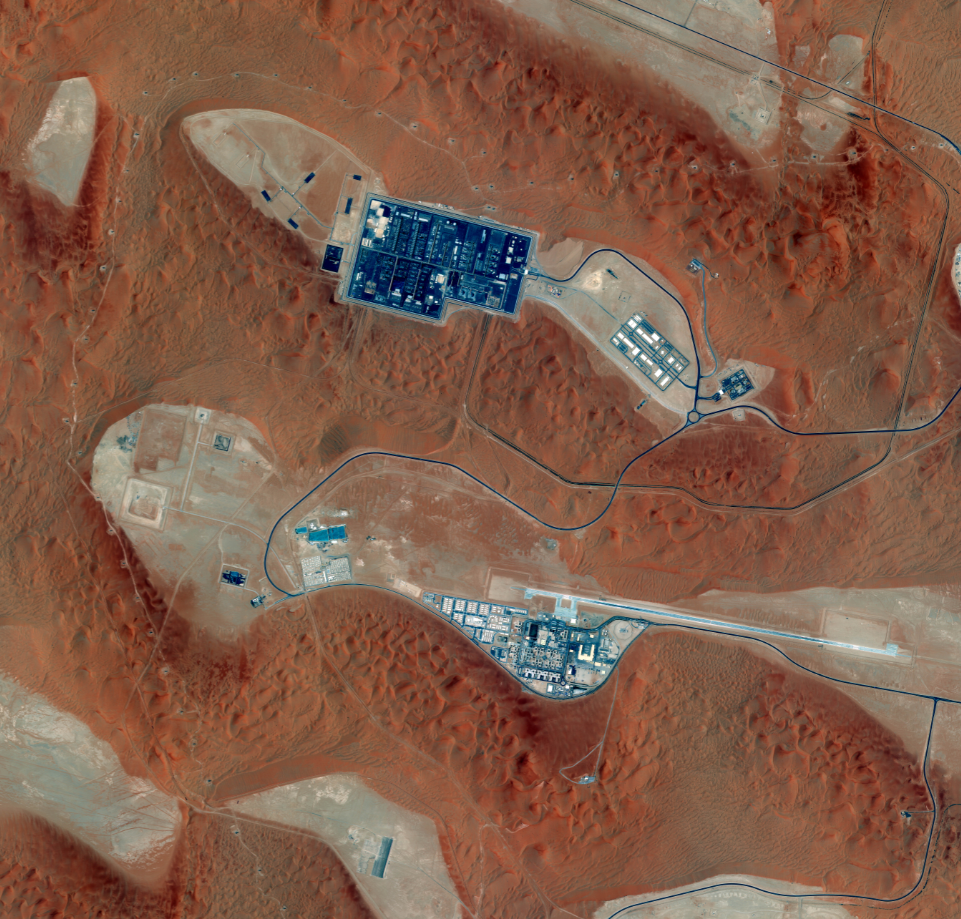
Table of Contents
- What Happened at Shaybah
- How Far Is Shaybah From Yemen?
- The Workforce Model That Just Broke
- What Does Shaybah Produce?
- The Week That Was Supposed to Open Saudi Arabia to Investors
- What Did the Houthis Claim and What Did Riyadh Confirm?
- The 2019 Precedent — Same Field, Different Outcome
- Why Did an Interception Still Kill 2 People?
- Frequently Asked Questions
What Happened at Shaybah
On 21 October 2026, Saudi air defense systems detected and intercepted a drone targeting what the Ministry of Energy described as “a facility” at the Shaybah oil field in the Eastern Province. The interception itself succeeded — the drone did not reach its target. Debris from the destroyed drone fell onto an area outside the facility perimeter, striking a vehicle carrying foreign contractor workers.
Two workers were killed: a Filipino national and a Nepali national. Two others — a Pakistani national and an Indian national — were injured. The contractor company employing them has not been publicly identified. Anadolu Agency and Arab Times Online, citing Saudi authorities, reported the casualty details and nationalities on the same day.
The Ministry of Energy’s statement confirmed the interception and the deaths but did not attribute the drone to any party. It stated that operations at the oil field were unaffected. Aramco CEO Amin Nasser had said in September 2026 that disruptions to Saudi oil infrastructure typically last “days, not weeks or months.” The Shaybah statement suggested the threshold had not even reached days — production figures, the ministry said, had not moved.
That framing is technically correct and practically irrelevant. The two people in the contractor’s vehicle were not part of the production count. They were part of the workforce that makes the production count possible. The distinction matters, because Shaybah’s entire operating model depends on rotating thousands of expatriate workers through a facility in one of the most isolated inhabited locations on earth.
The Middle East briefing 3,000+ readers start their day with.
One email. Every weekday morning. Free.
How Far Is Shaybah From Yemen?
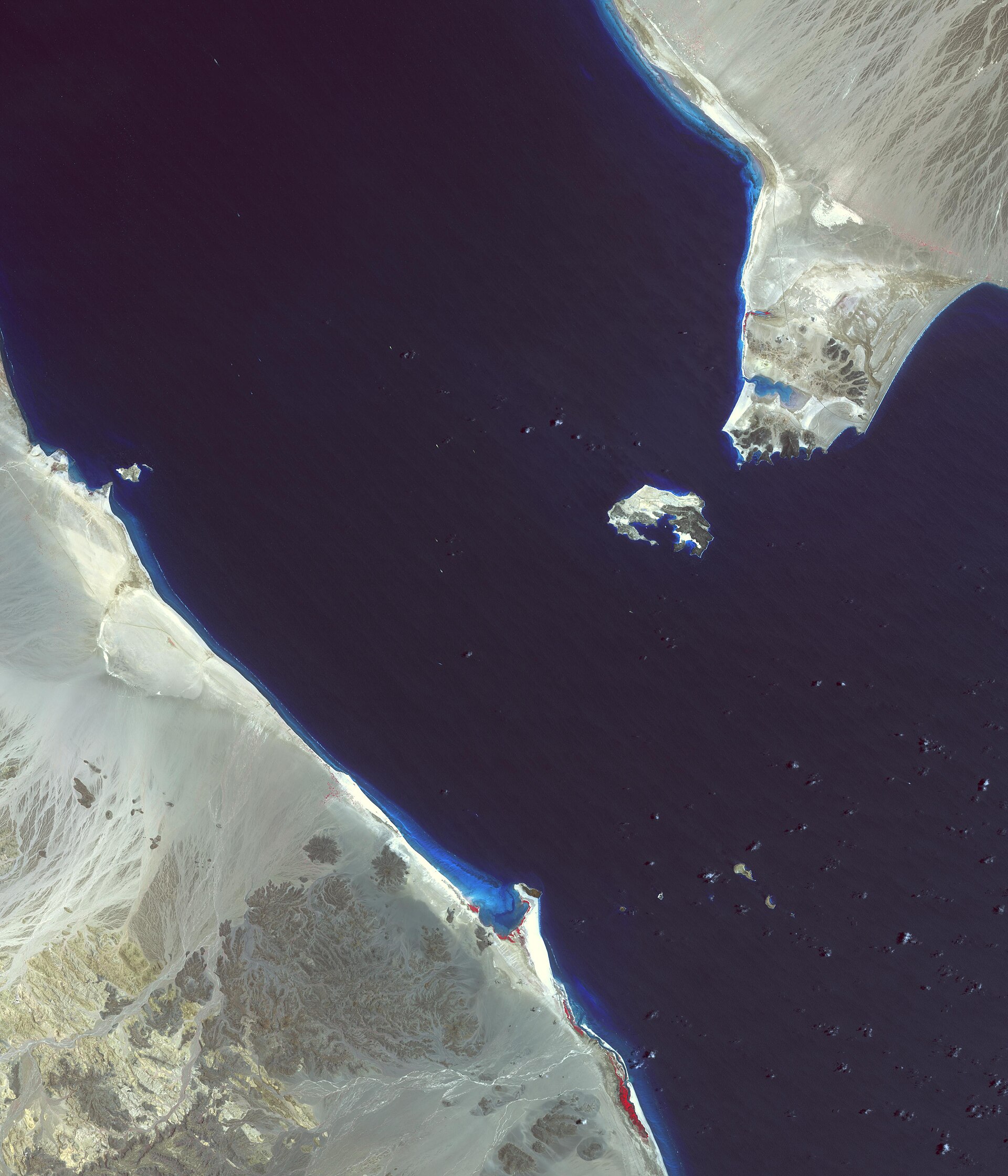
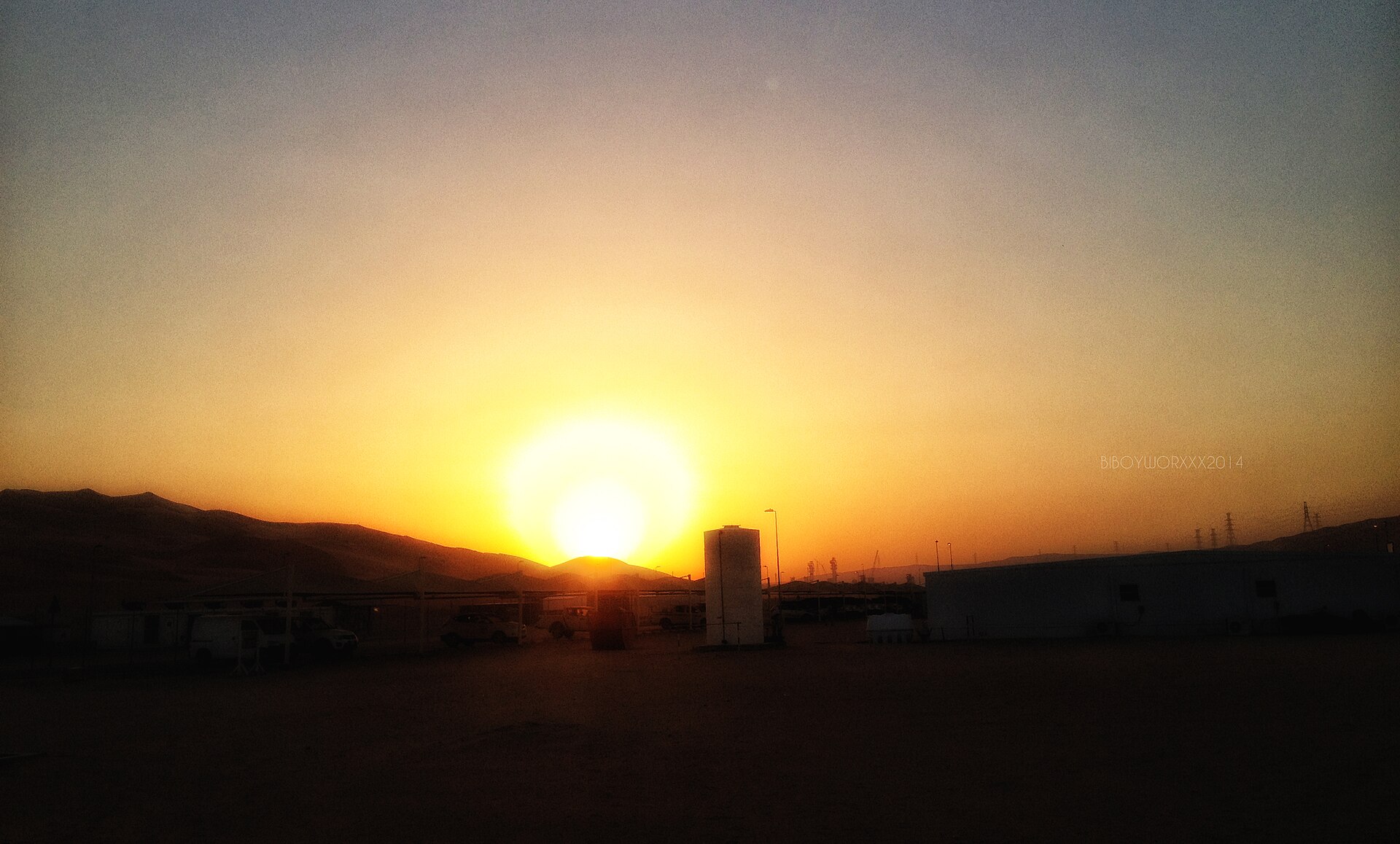
Shaybah sits on the northern edge of the Rub’ al-Khali — the Empty Quarter — roughly 800 kilometres southeast of Dhahran and approximately 10 kilometres south of the UAE border. From Houthi-controlled territory in northwestern Yemen, the distance is more than 1,000 kilometres. PBS NewsHour, covering a 2019 Houthi attack on the same facility, put the distance at approximately 1,200 kilometres. Al Jazeera described it as “more than 1,000 km.”
That distance was not incidental to Aramco’s planning. It was the plan. When Saudi Arabia developed Shaybah in the 1990s, trucking materials 800 kilometres from Dhahran across open desert, the operating assumption was that geographic remoteness provided a form of passive security. The Empty Quarter is not an environment that sustains conventional military operations. There are no population centres nearby from which to stage an attack. The nearest border — the UAE — is a friendly one.
The Houthis’ Sammad-3 drone has a reported range of 1,500 to 1,800 kilometres, according to Wilson Center analysis and the Wikipedia entry for the Samad UAV family. Shaybah, at roughly 1,200 kilometres from Yemen’s Houthi-held northwest, falls well within that envelope. The Long War Journal, covering the August 2019 Shaybah attack, described it as “one of the furthest confirmed Houthi drone strikes.”
The implication is geographic. Every major Saudi oil installation — from the Yanbu terminal on the Red Sea coast to the Abqaiq processing facility in the Eastern Province to Shaybah in the deep desert south — now sits within demonstrated Houthi drone range. There is no Saudi production asset that can rely on distance as a defense. The strike on Dammam’s King Fahd International Airport on 20 October demonstrated the threat to Aramco’s logistics hub. Shaybah demonstrates it extends to the most remote production node in the system.
The Workforce Model That Just Broke
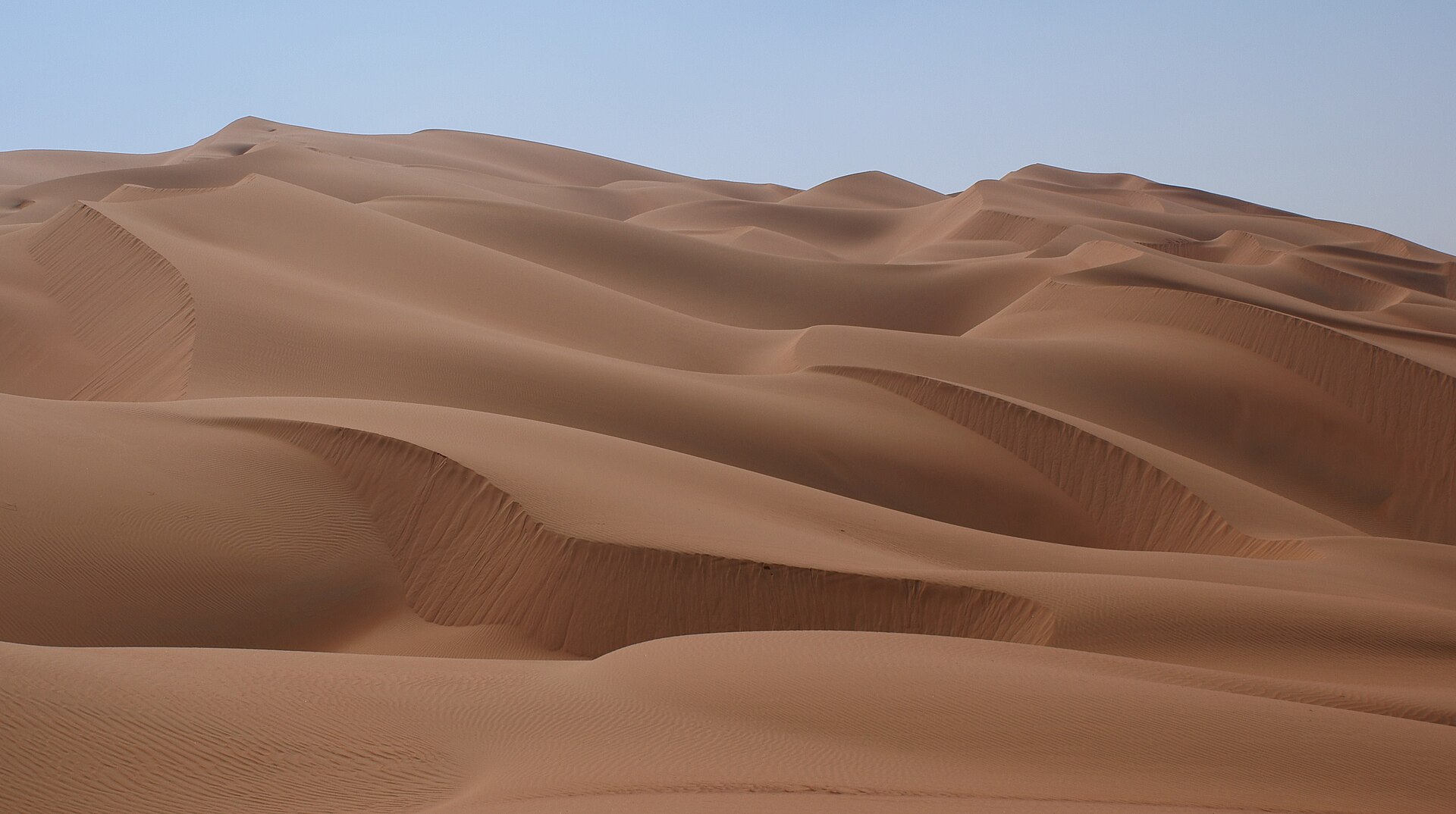
Shaybah is not a commuter facility. It is a residential industrial complex in one of the most inhospitable deserts on the planet. The site includes housing for approximately 1,000 workers — expandable to 2,000 — along with offices, a fire station, workshops, and its own airport. Workers arrive on rotational contracts, fly in and out, and spend their working weeks in a compound surrounded by sand dunes that reach over 200 metres high. The facility’s workforce is overwhelmingly expatriate: engineers, technicians, pipeline operators, logistics staff, and the contractors who support them.
The four casualties on 21 October represented four different nationalities: Filipino, Nepali, Pakistani, Indian. That is not a coincidence. It is a snapshot of Aramco’s staffing model in the remote fields, where workers from South and Southeast Asia fill the contractor and technical-support roles that keep production running. These are the people who drive the vehicles, maintain the equipment, and service the facilities that the production numbers depend on.
The question these deaths pose is not about today’s production — it is about tomorrow’s recruitment. Rotational workers at remote desert facilities accept a set of risks: heat, isolation, distance from home. They did not, until this month, face the risk of being killed by falling debris from a drone interception while parked outside a compound fence. The mine blockade in the Strait of Hormuz has already disrupted Saudi Arabia’s export route. The question now is whether the pipeline of foreign labor into the production system is equally vulnerable to disruption — not by explosions, but by the rational decision of workers and their families that the premium does not justify the exposure.
India issued a safety advisory for its 2.65 million nationals in Saudi Arabia on 20 October, one day before the Shaybah deaths. The advisory stopped short of evacuation. Philippine officials issued condolences following earlier casualties among Filipino workers in Saudi Arabia this month. Manila has not, as of 21 October, restricted deployment of overseas Filipino workers to Saudi Arabia — a step it has taken in other conflict zones under its overseas worker protection laws. A Filipino worker is now dead at Shaybah. The political dynamics in Manila, a government that absorbed earlier casualties without restricting deployments, will be tested again.
What Does Shaybah Produce?
Shaybah produces approximately 1 million barrels per day of Arab Extra Light crude — a 42° API grade that commands a premium in Asian refining markets. The field holds over 14 billion barrels of proven reserves and 25 trillion cubic feet of natural gas. Production expanded from the initial 500,000 bpd when the facility opened in 1998, to 750,000 bpd, and then to the current 1 million bpd in subsequent expansion phases.
Saudi Arabia’s OPEC+ production target for November 2026 is 10.5 million barrels per day. Shaybah’s 1 million bpd represents roughly 9.5 percent of that commitment. The OPEC+ ministerial meeting is scheduled for 1 November — 11 days after the Shaybah strike.
| Metric | Figure | Source |
|---|---|---|
| Shaybah production capacity | 1 million bpd | Wikipedia / Enerdata |
| Grade | Arab Extra Light (42° API) | Wikipedia |
| Saudi OPEC+ November target | 10.5 million bpd | Enerdata, 4 Oct 2026 |
| Shaybah share of target | ~9.5% | Calculated |
| Saudi crude shipments (August) | 6 million bpd | IEA via Trend, 14 Sep 2026 |
| Saudi output drop (August) | -2.6 million bpd | IEA via Trend, 14 Sep 2026 |
The ministry says operations were unaffected. Take them at their word. But the production math at Shaybah exists within a broader Saudi output picture that has already deteriorated. IEA data showed Saudi output fell by 2.6 million bpd in August. Crude shipments had dropped to 6 million bpd — well below the 10.5 million bpd target — as Iran’s closure of the Strait of Hormuz and the suspension of the East-West pipeline (down from 12 September to 22 September) compressed export capacity.
The East-West pipeline, with a design capacity of approximately 7 million bpd, was restored on 22 September but routes crude to Yanbu on the Red Sea coast — where the Houthis have also claimed attacks. Brent crude held near a five-month high on 19 October on Middle East tension, and had reached $102.94 on 9 October. Every barrel that cannot be produced, shipped, or insured at a remote facility feeds directly into a pricing environment that is already stretched.
The Shaybah attack does not change the production math today. The ministry said so, and there is no reason to doubt it. What it changes is the confidence premium that underwriters, insurers, and OPEC+ delegates assign to production commitments at facilities that sit 1,200 kilometres from a proven drone-launch area with no population buffer and a workforce that arrives by air.
The Week That Was Supposed to Open Saudi Arabia to Investors
The Future Investment Initiative — Saudi Arabia’s flagship investor conference, now in its tenth edition — was originally scheduled for 26-29 October in Riyadh. On 19 October, FII CEO Princess Dr. Maha Bint Mishari Al Saud announced the event’s postponement to 2027. The 2018 edition, held weeks after the killing of Jamal Khashoggi, had gone ahead as planned — FII had not been postponed in its nine previous editions.
The named absentees told the story before the postponement made it official. Larry Fink of BlackRock, Jamie Dimon of JPMorgan, David Solomon of Goldman Sachs, Stephen Schwarzman of Blackstone, and Jane Fraser of Citigroup — the Wall Street delegation that Saudi Arabia had spent years cultivating — had already pulled out. An AFP consultant quoted by CNBC on 19 October said: “The executives I’ve spoken with are extremely hesitant about traveling to Riyadh to attend conferences this month.”
Two days after that postponement, on 21 October, two contract workers were killed at Shaybah. The week that was designed to showcase Saudi Arabia as a destination for global capital opened instead with bodies in the Empty Quarter. The FII postponement was an admission that Riyadh could not guarantee the safety of visiting executives. The Shaybah deaths demonstrated that the safety guarantee had also failed for the people who actually live and work at the facilities those executives were being invited to invest in.
The sequence matters. The constraints on Aramco’s logistics have been visible for weeks. The Dhahran headquarters itself sustained a limited fire and four wounded on 14 October. The FII postponement followed the Houthi claim of six operations in 48 hours on 19 October. The Shaybah confirmation arrived on 21 October. Each event narrowed the distance between the conflict and Saudi Arabia’s economic identity.
Saudi real GDP fell 3.6 percent in 2026, driven by a 21.8 percent drop in oil activities, with a revised budget deficit of 245 billion riyals. The FII conference was the centrepiece of the kingdom’s pitch to diversify revenue beyond oil — to convince the Finks and Dimons and Solomons that Saudi Arabia was a place to put money, not just extract it. The postponement conceded that the pitch could not be made while airports were closing. The Shaybah deaths added a different dimension: the workers who make the existing oil revenue possible are themselves now part of the casualty count.
What Did the Houthis Claim and What Did Riyadh Confirm?
On 19 October, the Houthis claimed six attacks on Saudi Arabia “in 48 hours,” naming Shaybah oilfield alongside the Yanbu Aramco facility, King Khalid International Airport in Riyadh, and Abha airport. Newsquawk reported the claims that afternoon. Reuters could not immediately verify them.
Saudi Arabia confirmed the Shaybah deaths approximately 48 hours later, on 21 October at roughly 19:21 UTC. The Ministry of Energy statement confirmed the interception and the casualties but did not name the Houthis or any other group as the perpetrator. Wire reports from Anadolu Agency referenced “escalating hostilities with Yemen’s Houthi group” as context, but the attribution remained editorial rather than official.
The 48-hour gap between Houthi claim and Saudi confirmation follows a pattern that has become familiar in this conflict. The drone interception near Madinah on 21 October — a separate incident on the same day — was confirmed by Saudi sources after a similar delay from the initial Houthi claims. The gap serves two purposes for Riyadh: it allows time for operational assessment before public comment, and it avoids validating Houthi claims in real time.
But the gap also creates an information vacuum. For 48 hours, the only public account of what happened at Shaybah came from the Houthis. Aramco employees and contractors at the facility, their families across South and Southeast Asia, and the oil markets that price Saudi risk were left with a Houthi press release and silence from Riyadh. The families of the Filipino and Nepali workers killed learned the Saudi government’s account two days after the group that sent the drone — or claimed to — announced it to the world.
The Houthi claim on 19 October named three additional targets beyond Shaybah: the Yanbu Aramco facility, King Khalid International Airport in Riyadh, and Abha airport. Reuters could not verify any of the six claimed operations independently. The Saudi Ministry of Energy’s 21 October statement confirmed one — Shaybah — and said nothing about the other five. Whether the remaining claims were exaggerated, whether they referred to interceptions that Saudi Arabia chose not to confirm, or whether they described attacks that never materialised remains unanswered. The information asymmetry benefits both sides: the Houthis claim more than they can prove, and Riyadh confirms less than it can deny.
The 2019 Precedent — Same Field, Different Outcome
This is not the first time Shaybah has been struck. On 17 August 2019, ten Houthi drones hit the facility, causing a fire at the natural gas liquefaction plant. There were no fatalities. Production was unaffected. Al Jazeera covered the strike as a range demonstration — proof that the Houthis could reach a target more than 1,000 kilometres from their territory. The Long War Journal described it as “one of the furthest confirmed Houthi drone strikes” at the time.
Between 2019 and October 2026, Shaybah was targeted again. In March 2026, according to Argus Media, 20 drones in five waves were detected and intercepted at Shaybah with no damage or casualties. The interception system worked. The March attack registered as a success for Saudi air defense. The October attack also counts as a successful interception — the drone did not reach the facility. The difference is that two people are dead from the debris.
What changed between 2019 and 2026 is not the Houthis’ ability to reach Shaybah. They demonstrated that seven years ago. What changed is the frequency and saturation of attacks across the entire Saudi target set — airports, oil facilities, population centres — that has stretched air defense coverage and created the conditions under which even a successful interception produces casualties.
A single drone at an isolated desert facility in 2019 was intercepted cleanly. A drone at Shaybah in October 2026 arrives in the context of simultaneous attacks on Riyadh, Dammam, Madinah, and Abha, when Saudi air defenses are managing dozens of incoming threats per day across thousands of kilometres of airspace. The Abqaiq precedent looms over every Saudi oil facility assessment. On 14 September 2019, an attack on Abqaiq and Khurais disrupted 5.7 million bpd — roughly half of Saudi output and about 5 percent of global supply — and sent Brent crude up approximately 19.5 percent in a single session. It was described as the biggest attack on Saudi oil infrastructure since Iraq’s Scud strikes in 1991. Shaybah’s 1 million bpd is a fraction of Abqaiq’s throughput. But the casualty threshold — zero at Abqaiq in 2019, two at Shaybah in 2026 — has moved in one direction only.
Why Did an Interception Still Kill 2 People?
The mechanism of the Shaybah deaths — debris from a successful interception — is not an anomaly. It is an inherent feature of kinetic air defense. When a Patriot missile or equivalent system destroys an incoming drone, the drone does not vanish. Its fragments, along with fragments of the interceptor, fall to the ground. In an urban environment or near a populated facility, those fragments can be lethal.
Saudi Arabia has dealt with this throughout the current conflict. Interception debris landing in populated areas has been documented repeatedly during this conflict. The calculus in an urban setting is straightforward: intercept the threat, accept the debris risk, because the alternative — a warhead reaching its target — is worse. At Shaybah, the calculus was supposed to be different. The facility sits in open desert. There are no surrounding neighbourhoods, no civilian traffic on adjacent roads. The perimeter was designed with the assumption that falling debris would land on empty sand.
The contractor’s vehicle was parked outside the facility perimeter. The workers were not inside the compound. They were in the zone between the hardened facility and the open desert — a space that, in every previous engagement, had been empty enough to absorb debris without consequences. On 21 October, it was not empty. A vehicle was there, and two people died.
No perimeter fence can be extended far enough to guarantee that every piece of falling debris from every interception at every altitude lands inside a controlled zone. The debris footprint depends on the altitude of the interception, the speed and angle of the incoming drone, the type of interceptor used, and wind conditions. At a facility the size of Shaybah — which includes worker housing, an airport, workshops, and truck-loading areas — the inhabited zone and the debris-risk zone overlap in ways that cannot be fully eliminated.
Frequently Asked Questions
What type of drone was used in the Shaybah attack?
The drone platform used in the 21 October 2026 Shaybah attack has not been publicly identified by Saudi authorities or independent analysts. The Houthis’ Sammad-3 drone, with a reported range of 1,500 to 1,800 kilometres, is capable of reaching Shaybah from Yemen’s Houthi-controlled northwest. However, no specific platform has been confirmed for this incident, and the Ministry of Energy statement did not describe the drone type or origin.
How many times has Shaybah been attacked?
At least three confirmed or claimed attacks are on record. On 17 August 2019, ten Houthi drones struck the facility, causing a fire but no fatalities. In March 2026, Argus Media reported that 20 drones in five waves were detected and intercepted at Shaybah with no damage or casualties. On 21 October 2026, a drone was intercepted and falling debris killed two contract workers and injured two others. The Houthis also named Shaybah in their 19 October 2026 claim of six attacks in 48 hours, though it is unclear whether that claim refers to the same incident confirmed on 21 October or a separate attempt.
Has any country issued an evacuation order for workers in Saudi Arabia?
No country had issued a formal evacuation order for its nationals in Saudi Arabia as of 21 October 2026. India’s 20 October advisory stopped short of evacuation. The Philippines had issued condolences after earlier Saudi casualties this month but had not restricted overseas Filipino worker deployments; the confirmed Filipino fatality at Shaybah directly tests that posture. Nepal, whose national was among those killed, had not issued public guidance as of the confirmation date.
What was the Brent crude price reaction to the Shaybah attack?
No confirmed Brent crude price movement has been specifically attributed to the 21 October Shaybah confirmation as of 21 October 2026. Brent was already at elevated levels driven by broader Middle East tensions before the confirmation. The deaths were confirmed late on 21 October UTC; any market impact would be reflected in subsequent trading sessions rather than in real-time pricing data.
What is Shaybah’s strategic importance beyond oil production?
Shaybah is among the world’s largest oil deposits, opened in 1998 after a construction project that trucked materials 800 kilometres across the Empty Quarter. The field’s Arab Extra Light grade commands a premium with Asian refiners. Beyond output figures, Shaybah represents a proof of concept: that Saudi Arabia can operate a world-class extraction facility in one of the most extreme environments on earth, supplied entirely by truck and air, with a fully rotational expatriate workforce. A sustained threat to the facility challenges not only production volumes but the viability of remote-desert expansion plans across the Empty Quarter.