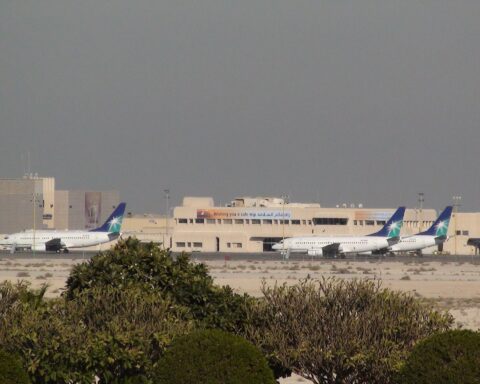

RIYADH — On the same day that a Houthi missile killed one person and injured eight at King Fahd Airport in Dammam, Donald Trump told reporters that the United States is “not negotiating” with Iran — closing, at least rhetorically, the only diplomatic channel that could end the war Saudi Arabia is absorbing. The kingdom now has RAF Typhoons, Pakistani troops, French radar crews and a $24.3 billion F-35 contract that won’t deliver aircraft for years, but it does not have the one thing that would stop the missiles: a ceasefire brokered by a superpower willing to broker one.
Trump’s remark on October 21 was not a formal policy statement. It was an answer to a reporter’s question, six words long, delivered between meetings. But it landed in Riyadh alongside the sound of air-raid sirens, and it confirmed what Saudi officials had been quietly absorbing since September: the president who signed the F-35 deal has twice declined Crown Prince Mohammed bin Salman’s personal requests for American strikes on the Houthis, and now says there are no talks to end the war at all.
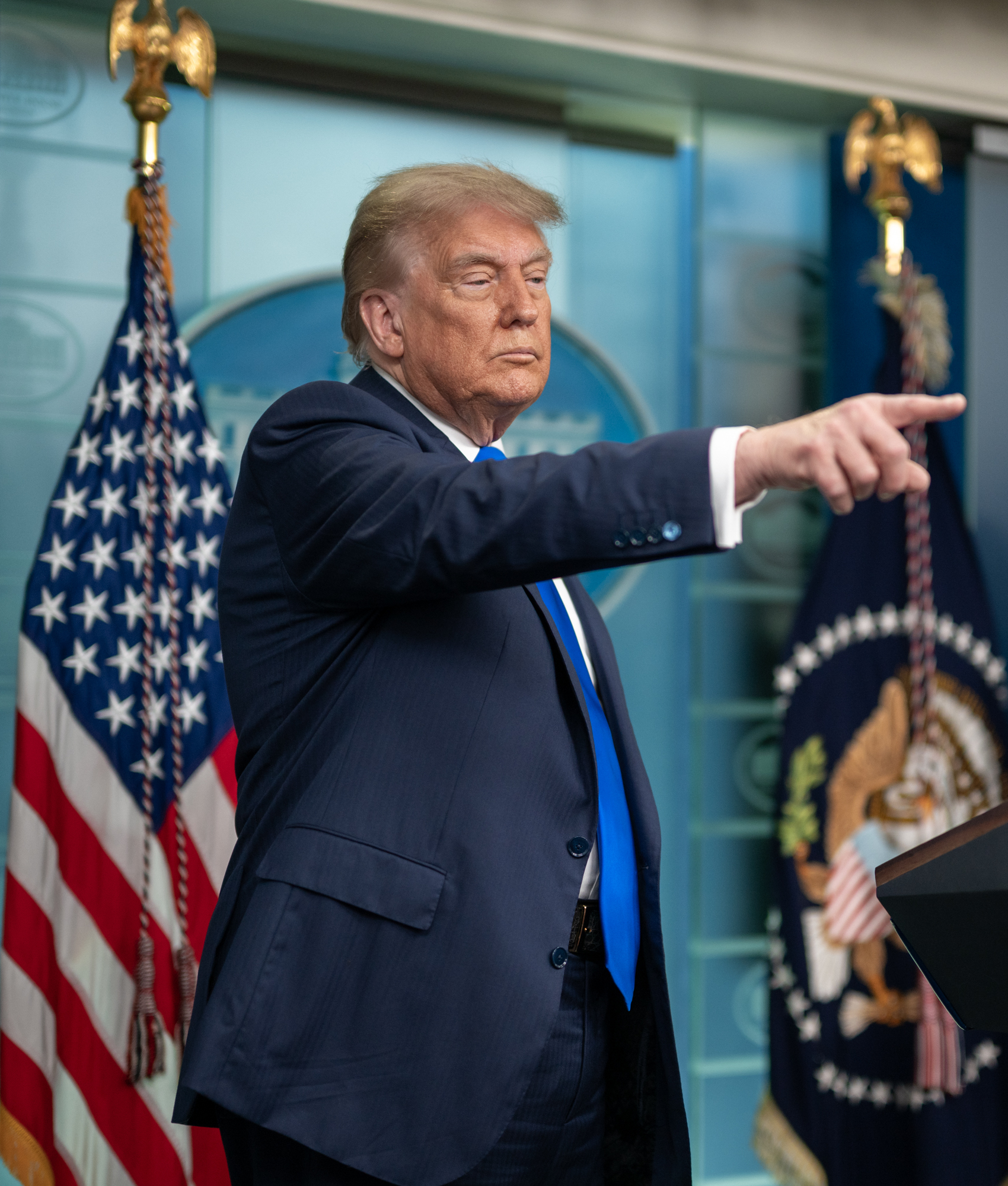
Table of Contents
- What Did Trump Actually Say?
- How Does Saudi Arabia Look Without a Diplomatic Off-Ramp?
- What Is Iran’s Version of This Standoff?
- What Military Partners Does Saudi Arabia Have — and What Can They Do?
- What Does the Economic Damage Look Like?
- Will the US Strike Iran After the Midterms?
- The Perception That Matters
- Frequently Asked Questions
What Did Trump Actually Say?
Asked on October 21 whether the US was negotiating with Iran, Trump said: “No, I think we’re not negotiating.” At a South Carolina rally the same evening, he added: “It’ll end very soon. We could leave now, but we want to make sure it lasts for a long time.” He offered no detail on what “it” was, how it would end, or what “soon” meant. Gulf News and Outlook India both carried the remarks on October 22.
The House of Saud Daily Briefing
Saudi Arabia's news in 3 minutes, every morning. Free. See today's issue
Two weeks earlier, on October 8, the same president had described ongoing contacts with Tehran as “productive discussions” and posted on Truth Social that the US “will not be attacking Iran at any time prior to the midterm elections to be held in the United States on November 3rd.” The Wall Street Journal, citing US officials, reported on September 26 that Trump had rejected Iran’s seven-day Hormuz roadmap and expected to resume bombing after the midterms. So “not negotiating” is either a change of position, a restatement of one, or a third denial of talks that Iran insists are still happening indirectly — the pattern is consistent enough to be its own kind of signal.
This is the third time Trump has denied or downgraded diplomatic contact with Tehran while Iranian officials insist indirect channels remain active. On August 9, he described the process as “only semi-negotiating.” On August 17, he said “No” to extending the Islamabad Memorandum that had briefly reopened Hormuz. Now, on October 21, the denial is total. Each time, the gap between Washington’s stated position and Tehran’s has widened, and each time, Saudi Arabia has been the country standing in the middle of it taking fire.
How Does Saudi Arabia Look Without a Diplomatic Off-Ramp?
The question is not abstract. On October 22, CNBC reported that the US ordered non-emergency staff out of Saudi Arabia while “reportedly readying Iran strikes after midterms.” The same morning, Brent crude rose 2.59% to $111.64 a barrel — up roughly 80% for the year, according to Reuters — and the Houthis had already struck King Fahd Airport that morning, according to GACA. The kingdom is simultaneously hosting a war, losing export revenue, and watching its primary security guarantor pull diplomatic staff out of the country.
Crown Prince Mohammed bin Salman called Trump twice in September to ask for US strikes on the Houthis, CNN reported on October 10. Both times, Trump first ordered the Pentagon to prepare, then reversed himself. Secretary of State Marco Rubio said on October 5 that “the United States has a defence and security agreement with Saudi Arabia and we intend to live by it.” But the November 2025 Strategic Defense Agreement gave Saudi Arabia major non-NATO ally status without a mutual defence treaty — as Max Becker-Hicks of the New Lines Institute wrote in April, “the lack of any codified U.S.-Saudi mutual defense treaty raises the risk of a U.S. disengagement.”
After the October 10 strike on King Khalid International Airport that killed 12 and wounded 309, Trump said, “We may. We’re going to look at it,” and “They’re able to defend. The Saudis are good fighters.” He has not announced a decision. The US has sent more than 100 military advisers for intelligence support, CNN reported on October 11, but advisers are not interceptors, and intelligence does not stop a ballistic missile that has already been launched.
Michael Ratney, a senior non-resident adviser at CSIS’s Middle East Program, wrote on September 23 that US reluctance to intervene “stokes the perception that the United States has abandoned a partner at its moment of greatest need.” He noted that the current trajectory points toward “a diplomatic process that doesn’t necessarily involve the United States” — a polite way of describing what happens when the only country with the leverage to end a war decides not to use it. Allison Minor, also at CSIS, warned around October 16 that “Saudi Arabia risks getting sucked into another long, costly war.”
Philip Gordon at Brookings, writing in June, argued that Gulf states “will have little choice but to reduce their dependence on what they now see as an unpredictable and unreliable United States.” That was a prediction. Trump’s October 21 remarks are turning it into a description of current policy.
What Is Iran’s Version of This Standoff?
Tehran’s position is that it is not the party refusing diplomacy — Washington is. Iran’s Foreign Minister Abbas Araghchi, in a Financial Times op-ed on October 21, said Iran would give diplomacy “another chance” if Washington shows real intent, but that Iran is “fully prepared” for war. The same day, he told CBS News: “It is the American side that is closing the path, not Iran.” Araghchi also claimed the US had accepted Iran’s seven-day Hormuz plan but was seeking additional terms — a claim Washington has not confirmed.
The seven-day plan, presented by Araghchi via Qatar at the UN General Assembly on September 25, required the US to lift its naval blockade on Iranian ports, grant sanctions waivers, and release approximately $12 billion in frozen assets. Hormuz would reopen on day six, and formal talks would begin on day seven. Al Jazeera reported the terms; the WSJ reported that Trump rejected them. Iran says the plan was accepted in principle. Washington says nothing. The gap between those two accounts is where any remaining diplomatic possibility lives, and Trump’s October 21 remark made it narrower.
On October 20, Mohsen Rezaei, secretary of Iran’s Supreme National Security Council, stated that “there will be no negotiations until the United States takes steps to build trust.” He also said “not a single gram” of enriched uranium would leave Iran — a direct rejection of one of the conditions Washington has floated in various channels since the war began. An anonymous Iranian official told Reuters, carried by Outlook India on October 22, that “Iran is preparing for renewed Israeli and US attacks, not for a deal with America to end the war.” That official’s claim is unverified and should be read as one party’s framing, but it aligns with the public posture.
The adversary framing matters because it determines what space exists for a third-party mediator. Qatar’s Ibrahim bin Sultan Al Hashmi said on October 21 that diplomatic efforts to de-escalate and reopen Hormuz are ongoing. On October 22, Qatar and France jointly called for Hormuz to reopen “without constraints or fees,” according to Al Jazeera. Iran’s conditions — sanctions relief, frozen assets, blockade lifted — are not conditions Qatar or France can meet. Only the US can. And the US, as of October 21, says it is not negotiating.
What Military Partners Does Saudi Arabia Have — and What Can They Do?
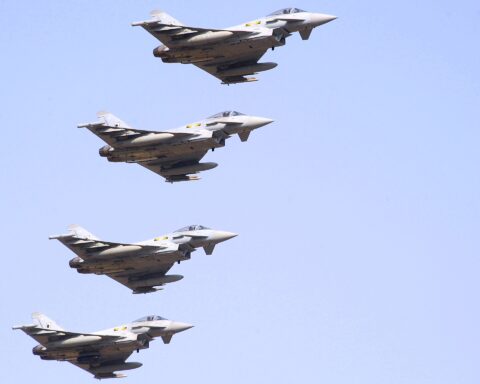
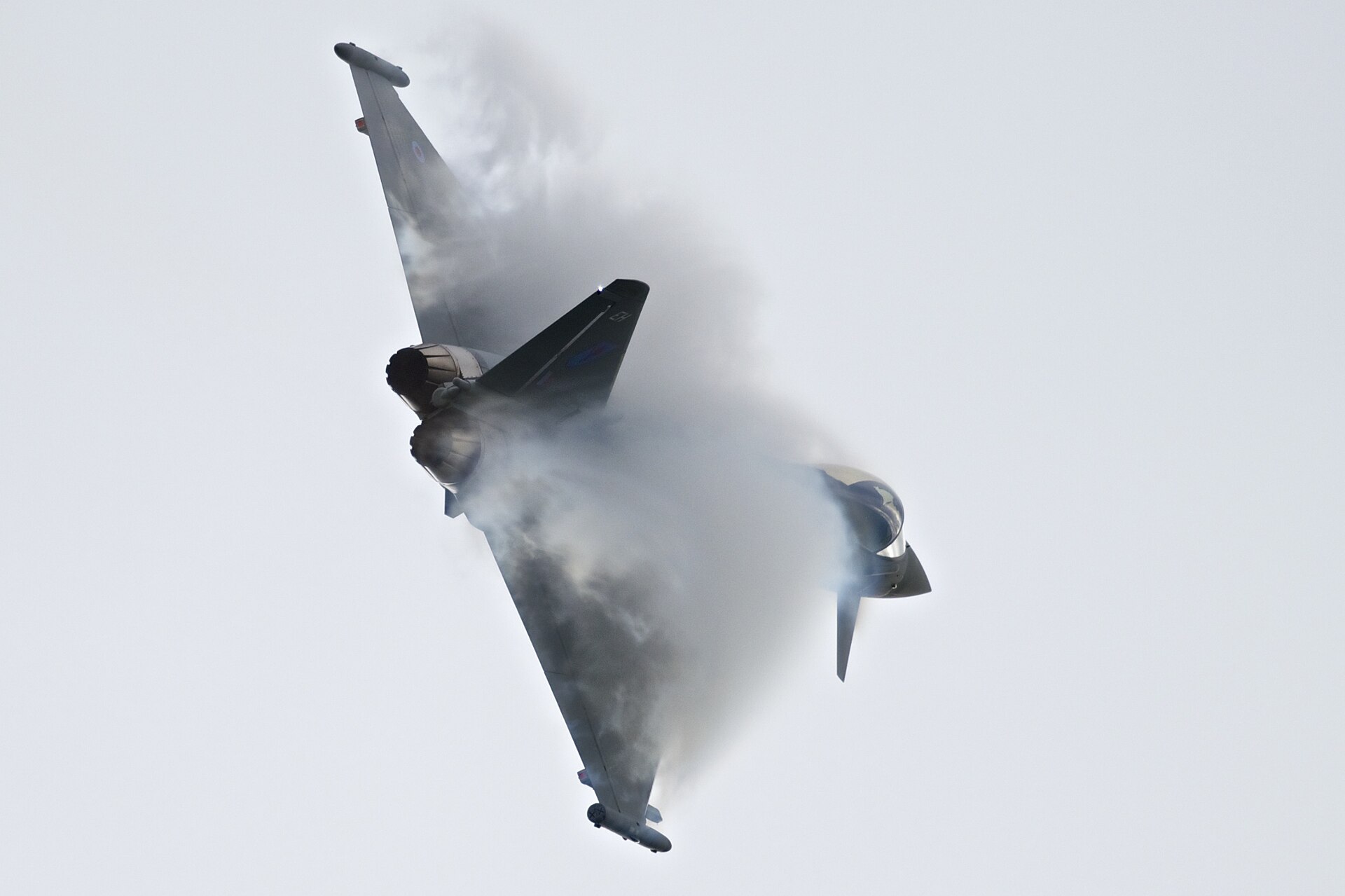
Saudi Arabia has assembled a coalition that would have been unthinkable two years ago. Pakistan has deployed approximately 8,000 troops, 16 aircraft, and two drone squadrons under the Mecca pact, according to Reuters. Britain sent RAF Typhoons and a Voyager tanker. France confirmed troops, radars and air defences for the Yanbu export terminal. Turkey’s military chiefs attended a joint command meeting in Riyadh on September 26, though Turkey’s parliament had not ratified the pact as of the last reporting. On October 22, Egypt’s president Abdel Fattah el-Sisi asked parliament to authorize sending troops to Saudi Arabia.
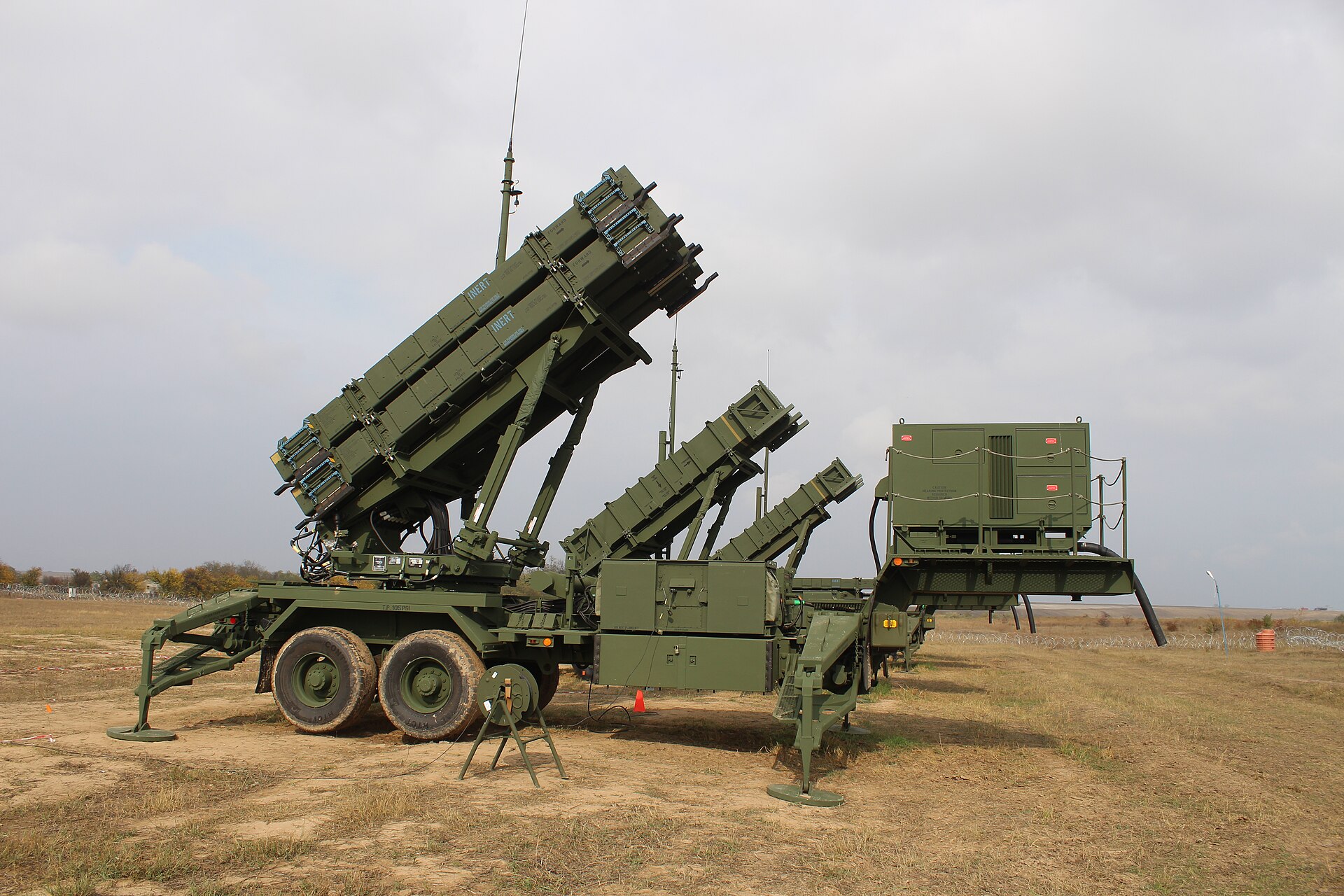
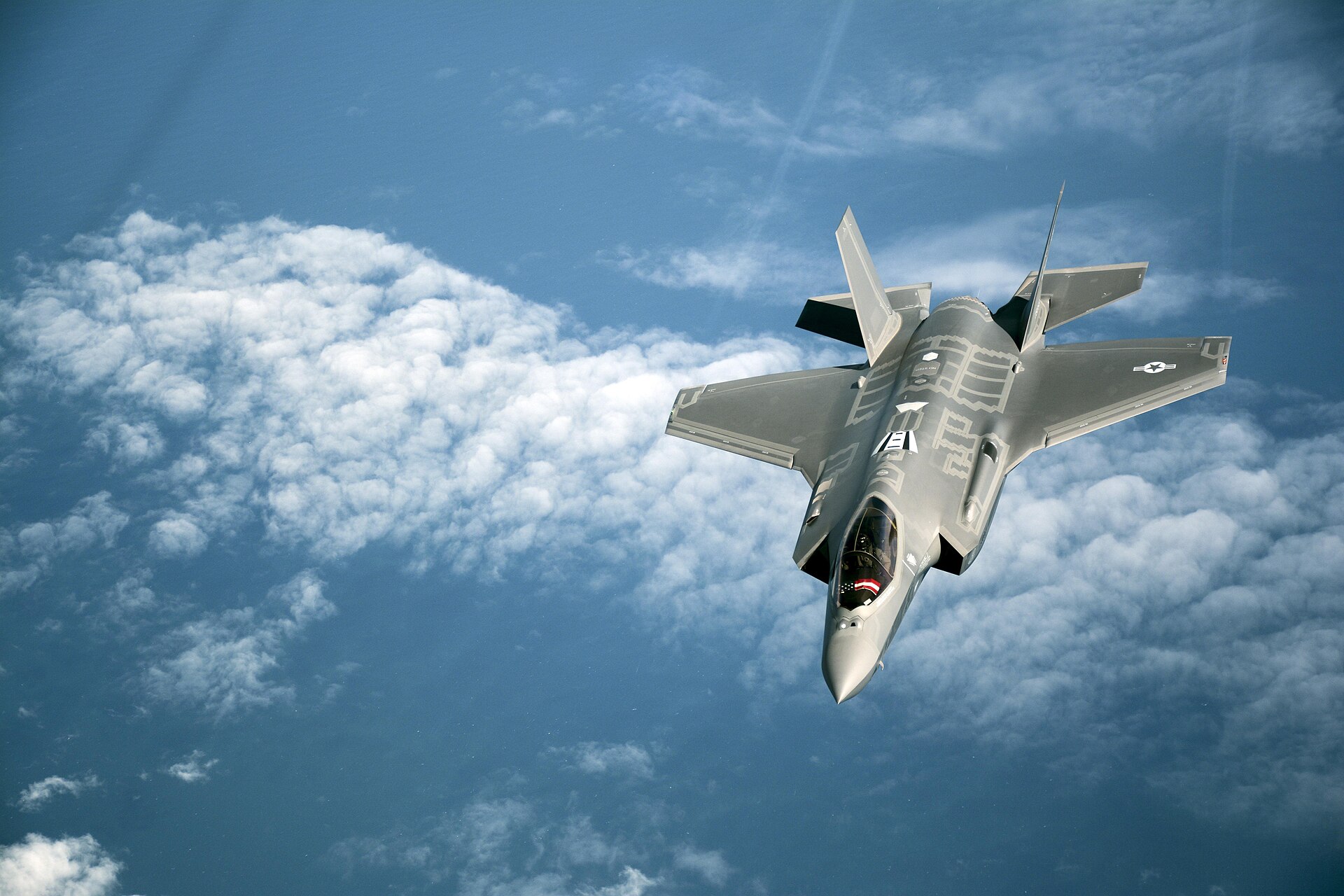
Trump’s view of this arrangement was clear on October 7, when he said of the Turkish and Pakistani deployments: “I think they want to help Saudi Arabia, and I think that’s good.” The comment was cheerful, supportive, and entirely non-committal — the tone of a man watching someone else carry the heavy end of a couch. The US approved the sale of 48 F-35As in September — the largest single fighter deal in Saudi history, per The Aviationist — but the aircraft are years from delivery.
What the coalition partners can do is defend fixed points: Yanbu, the pipeline corridor, specific airports. What they cannot do is end the war. Pakistan’s 8,000 troops are a tripwire and a statement, not an expeditionary force capable of neutralising Houthi launch sites across northern Yemen. The RAF Typhoons are air superiority fighters, useful for patrol and interception but not designed for the kind of sustained ground-support campaign that would push the Houthis back from their missile range. France’s contribution is defensive. Turkey’s is still provisional.
The offensive that exists is Operation “Dawn of Yemen,” launched on October 4 by Yemen’s government forces with coalition air support — the coalition said 100 jets flew, according to the Oman Observer on October 5. Prince Khalid bin Salman, the defence minister, announced on October 5 that the Mecca pact committee had agreed to “activate collective deterrence measures… in response to the attacks and all those responsible for them.” But Pakistan’s own defence minister told Al Jazeera on October 6 that combat “is practically being conducted by Saudi Arabia’s own forces,” while CNN reported on October 11 that Riyadh has stopped “short of any major deployment of its own troops.” The picture is unclear, and intentionally so — but the Houthi strikes on Saudi airports have not stopped.
Becker-Hicks, the New Lines Institute analyst, identified the core dependency in April: the US is “the only viable partner to defend the kingdom.” Everything else — Pakistani troops, British jets, French radar — is layered on top of an American foundation that includes intelligence, satellite feeds, resupply logistics, and the implicit threat that attacking Saudi Arabia means provoking the United States. Without that last element, the coalition is real but incomplete, a defensive perimeter around a country that needs an offensive solution to a war being fought on its territory.
What Does the Economic Damage Look Like?
Saudi Arabia’s pre-budget statement in September revised the 2026 deficit estimate upward to 245 billion riyals — roughly $65 billion — from a budgeted 165 billion riyals. Real GDP is forecast to fall 3.6% in 2026, driven by a 21.8% drop in oil activities, before rebounding 12.8% in 2027, according to Reuters via Zawya on September 30. The 2027 projection assumes the war ends or the export situation improves. Neither is guaranteed.
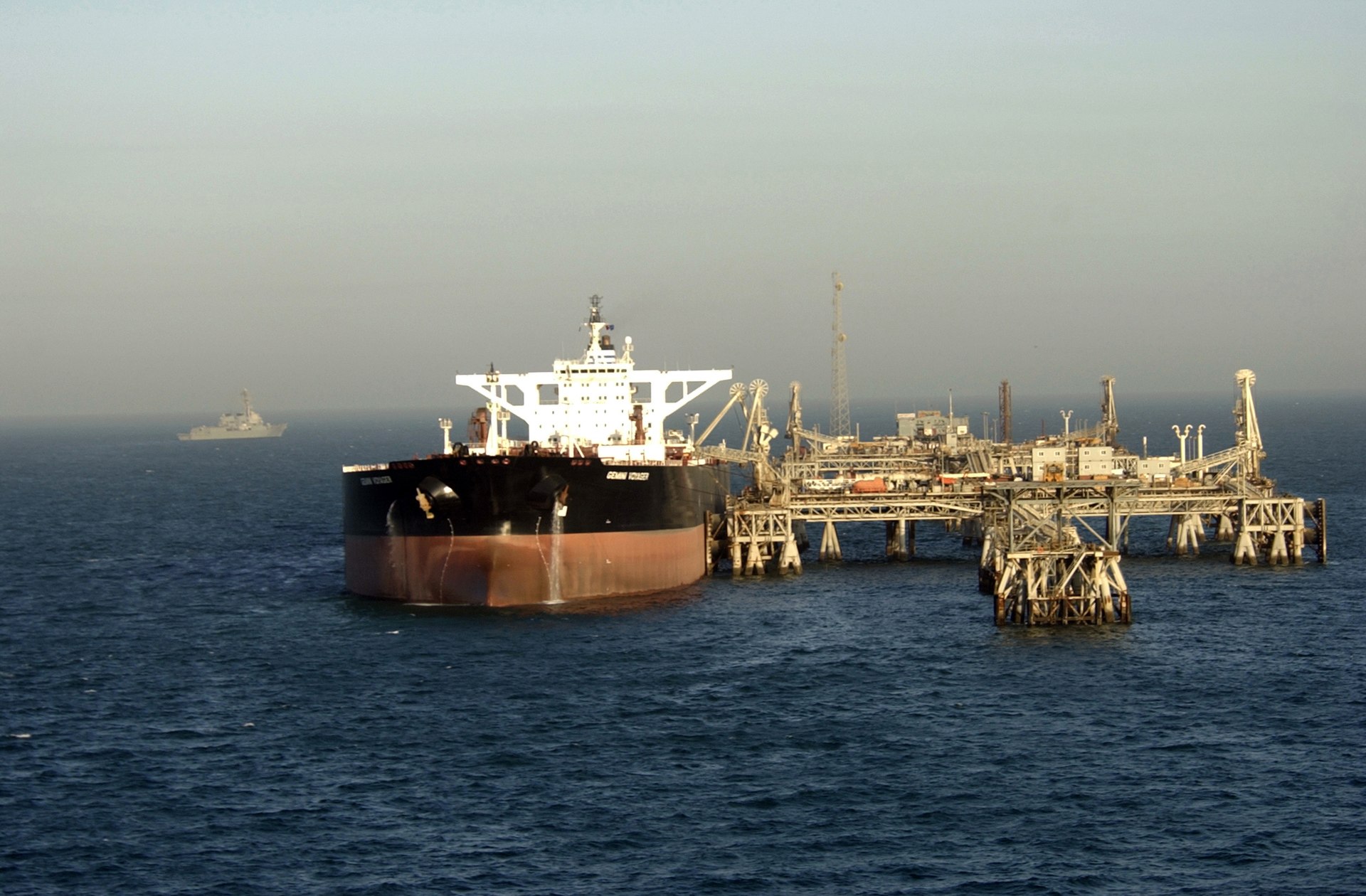
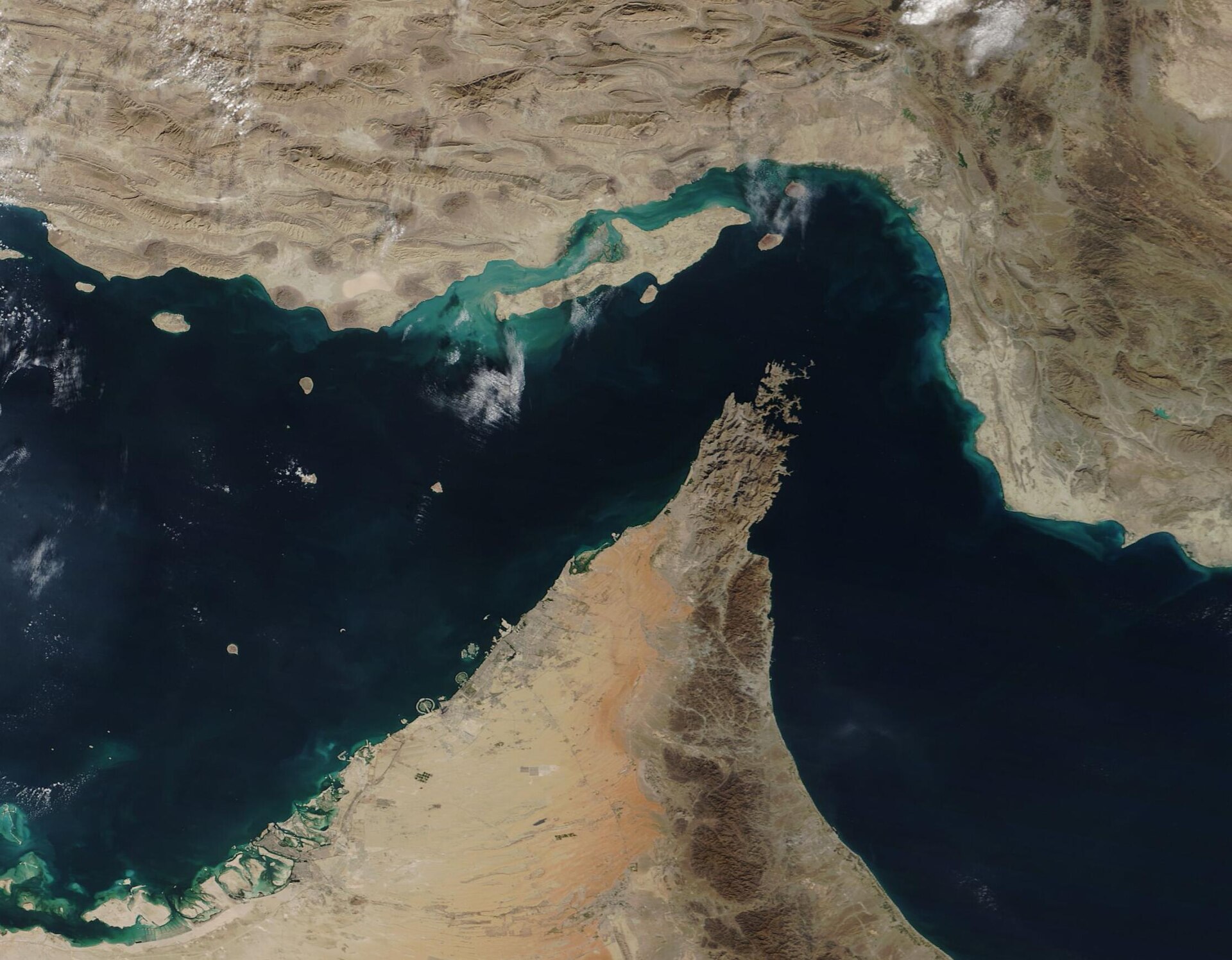
The Strait of Hormuz, through which 130 to 140 ships passed daily before the war according to Reuters, is effectively closed to normal traffic. CENTCOM said 135 ships had been turned around since the US blockade resumed on July 14, per CBS News on October 10. A JINSA analysis put the updated figure at 138 redirected, four disabled, and ten destroyed. Saudi Arabia’s East-West pipeline was pumping 5.8 million barrels per day as of October 6, according to Al Jazeera, with the energy minister saying up to 1.2 million bpd of additional capacity could come online within seven to eight weeks. But Aramco has already told European customers there will be no October oil, a fact reported by Aramco’s own customer advisories and covered on this site.
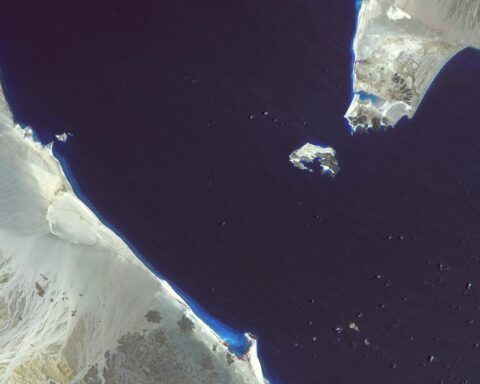
Brent above $111 and WTI near $99 on October 22 — both per Reuters — are good for producers who can still export. Saudi Arabia can, through Yanbu on the Red Sea, but at reduced volumes through a pipeline that was temporarily suspended as a precaution on September 12 and only restarted on September 22. The Houthis, meanwhile, hold Mayyun Island and Bab el-Mandeb transits have fallen 47%. Aramco cut its November Arab Light official selling price to Asia by $3, to $5 below the Oman/Dubai benchmark — the widest discount since June 2020, according to Reuters on October 5. That discount is the market pricing in supply uncertainty, and it means Saudi Arabia is selling less oil, at a lower margin, through a constrained route, while its budget hole widens.
| Indicator | Figure | Source |
|---|---|---|
| 2026 deficit (revised) | SAR 245 billion (~$65bn) | Reuters/Zawya, 30 Sep |
| 2026 real GDP forecast | −3.6% | Reuters/Zawya, 30 Sep |
| East-West pipeline throughput (6 Oct) | 5.8 million bpd | Al Jazeera, 6 Oct |
| Brent crude (22 Oct) | $111.64/bbl (+2.59%) | Reuters, 22 Oct |
| Brent rise in 2026 | ~80% | Outlook India/Reuters, 22 Oct |
| Nov Arab Light OSP discount to Asia | $5 below Oman/Dubai | Reuters, 5 Oct |
The events calendar tells its own story. National Day fireworks were postponed indefinitely. Riyadh Season opened on October 21 under the sound of interceptors. The EU-GCC summit is set for October 24, and the Future Investment Initiative runs October 26 to 29. The New York Times noted on October 10 that the airport strikes threaten Riyadh’s events calendar. Whether foreign executives and European heads of state fly into a city whose airport has been struck repeatedly in the past two weeks will say more about Saudi Arabia’s current position than any official statement could.
Will the US Strike Iran After the Midterms?
Trump’s October 8 Truth Social post created a de facto twelve-day freeze on US military action against Iran — nothing before November 3. The WSJ reported on September 26 that he expects renewed bombing after the midterms, a timeline that aligns with CNBC’s October 22 report that Washington is “reportedly readying Iran strikes.” But “reportedly readying” has been the posture since July, and Saudi airports have been hit throughout.
The pattern is consistent enough to read: Trump wants the option of striking Iran but does not want to do it before an election, does not want to negotiate a deal that limits his options, and does not want to be seen intervening on Saudi Arabia’s behalf in a way that could become domestically expensive. The F-35 sale was approved, the 100-plus advisers were sent, the defence agreement was signed — all of which demonstrate a commitment that stops precisely where the risk of American casualties begins. The one thing that would have changed the trajectory — direct US strikes on Houthi positions — was declined when MBS requested it in September, CNN reported.
For Saudi Arabia, the question of whether the US strikes Iran after November 3 is less useful than the question of what happens in the twelve days between now and then — twelve days in which the Houthis can fire, Iran can mine, Hormuz stays closed, and the sole superpower with the capacity to end the war has publicly stated it is not trying to. Araghchi’s offer to “facilitate dialogue between Saudi Arabia and Yemen,” reported by the BBC on October 11, was Iran’s way of reminding Riyadh that Tehran has a channel to the Houthis and Washington does not, or says it does not, or will not use the one it has.
The Perception That Matters
Ratney’s CSIS analysis used a specific phrase: “abandoned a partner at its moment of greatest need.” That perception — not the formal treaty status, not the F-35 contract, not the hundred-plus advisers — is what determines how Saudi Arabia navigates the next phase of this war. A partner that believes it has been abandoned acts differently than one that believes help is coming. It takes risks it would otherwise avoid, accepts deals it would otherwise reject, and builds relationships with countries it previously kept at arm’s length.
Saudi Arabia, Egypt, Pakistan and Turkey issued a joint condemnation after the October airport strikes, according to CBS News on October 11. That grouping — three Muslim-majority military powers plus the largest Arab state — is a coalition of the available, not of the ideal. Rubio says the US intends to live by its agreement. Trump says there are no negotiations with Iran. Both statements can be simultaneously true in Washington. In Riyadh, where a missile hit King Fahd Airport and two Aramco workers were killed at Shaybah and US diplomats are packing, they describe a country that is being armed but not defended, supplied but not saved.
The Islamabad Memorandum of June 17, which briefly reopened Hormuz in exchange for a US promise to lift its blockade within 30 days and a $300 billion reconstruction plan, expired on August 17 with no successor. The Beijing-brokered Saudi-Iran normalisation of 2023 collapsed when the war began in February 2026. The Araghchi seven-day plan was rejected. The MBS phone calls were declined. Qatar and France are calling for Hormuz to reopen “without constraints or fees,” which is a statement of principle, not a plan. Every off-ramp that has been proposed has been either rejected by the US, rejected by Iran, or left to expire. And now, as of October 21, the US says it is not negotiating at all.
“[US reluctance to intervene] stokes the perception that the United States has abandoned a partner at its moment of greatest need.”
— Michael Ratney, CSIS, September 23, 2026
The Iranian refusal to transfer enriched uranium and the IRGC mine blockade on Hormuz did not happen because diplomacy failed. They happened because diplomacy was never fully attempted — not by this administration, not with the urgency the situation required. Trump’s “not negotiating” is a description of a status that has held, with brief interruptions, since the Islamabad Memorandum expired in August. The difference is that now he’s said it out loud, on a day when Saudi Arabia buried another civilian killed by a missile that diplomacy might have prevented.
Frequently Asked Questions
What is the Islamabad Memorandum and why did it matter?
The Islamabad Memorandum, signed on June 17, 2026, provided 60 days of toll-free passage through the Strait of Hormuz in exchange for the US agreeing to lift its naval blockade on Iranian ports within 30 days and a reconstruction plan worth over $300 billion. It briefly reopened Hormuz to normal shipping, according to Iran International. The memorandum expired on August 17 with no successor agreement, and Iran declared Hormuz closed again. It remains the only framework that successfully, even temporarily, restored transit through the strait since the war began.
Has Saudi Arabia attempted direct talks with the Houthis?
The Jerusalem Post, citing the Lebanese outlet Al Akhbar, reported on September 18 that Saudi Arabia offered a two-week ceasefire to the Houthis via Oman. Riyadh has not confirmed the report. Separately, Iran’s Araghchi offered on October 11 to “facilitate dialogue between Saudi Arabia and Yemen,” according to the BBC — positioning Tehran as a potential intermediary with the group whose missiles are hitting Saudi airports. No confirmed direct Saudi-Houthi channel has been reported since the October escalation.
What happens to Saudi Arabia’s major events if the security situation continues?
Riyadh Season opened on October 21. The EU-GCC summit is scheduled for October 24, co-chaired by Crown Prince Mohammed bin Salman and European Council President Antonio Costa, who set the date in an invitation letter on October 6, according to The National on October 8. The 10th Future Investment Initiative runs October 26 to 29, per Kuwait Times/KUNA. The European Aviation Safety Agency widened its Saudi airspace warning after the October airport strikes, according to Fortune on October 9. No state has publicly withdrawn from either event, but no source confirms full attendance either — the situation is genuinely uncertain.
Are there any indirect US-Iran contacts still happening?
Qatar’s mediator Ibrahim bin Sultan Al Hashmi said on October 21 that diplomatic efforts to de-escalate are ongoing, per Al Jazeera. Pakistan has also indicated that contacts continue. Iran’s Araghchi claimed on October 21 that the US had accepted Iran’s seven-day plan in principle but was seeking additional terms, a claim CBS News reported and Washington has not confirmed. Trump’s “not negotiating” statement contradicts Tehran’s account but does not address whether third-party or indirect channels remain active. The data here is genuinely ambiguous — both sides have incentives to misrepresent the state of talks.
Could Saudi Arabia negotiate directly with Iran to end the Hormuz closure?
Iran’s conditions for reopening Hormuz — lifting the US naval blockade, sanctions waivers, and release of approximately $12 billion in frozen assets — are all conditions that only the United States can fulfil. Saudi Arabia cannot lift American sanctions or end an American blockade. The kingdom can negotiate on Yemen, and may be doing so through Omani channels, but the Hormuz closure is a US-Iran issue in which Saudi Arabia is the collateral damage, not a party with the leverage to resolve it. The 2023 Beijing-brokered Saudi-Iran normalisation, which might have provided a framework, collapsed when the war began in February 2026, according to the New Lines Institute.
The House of Saud Daily Briefing
Saudi Arabia's news in 3 minutes, every morning. Free. See today's issue