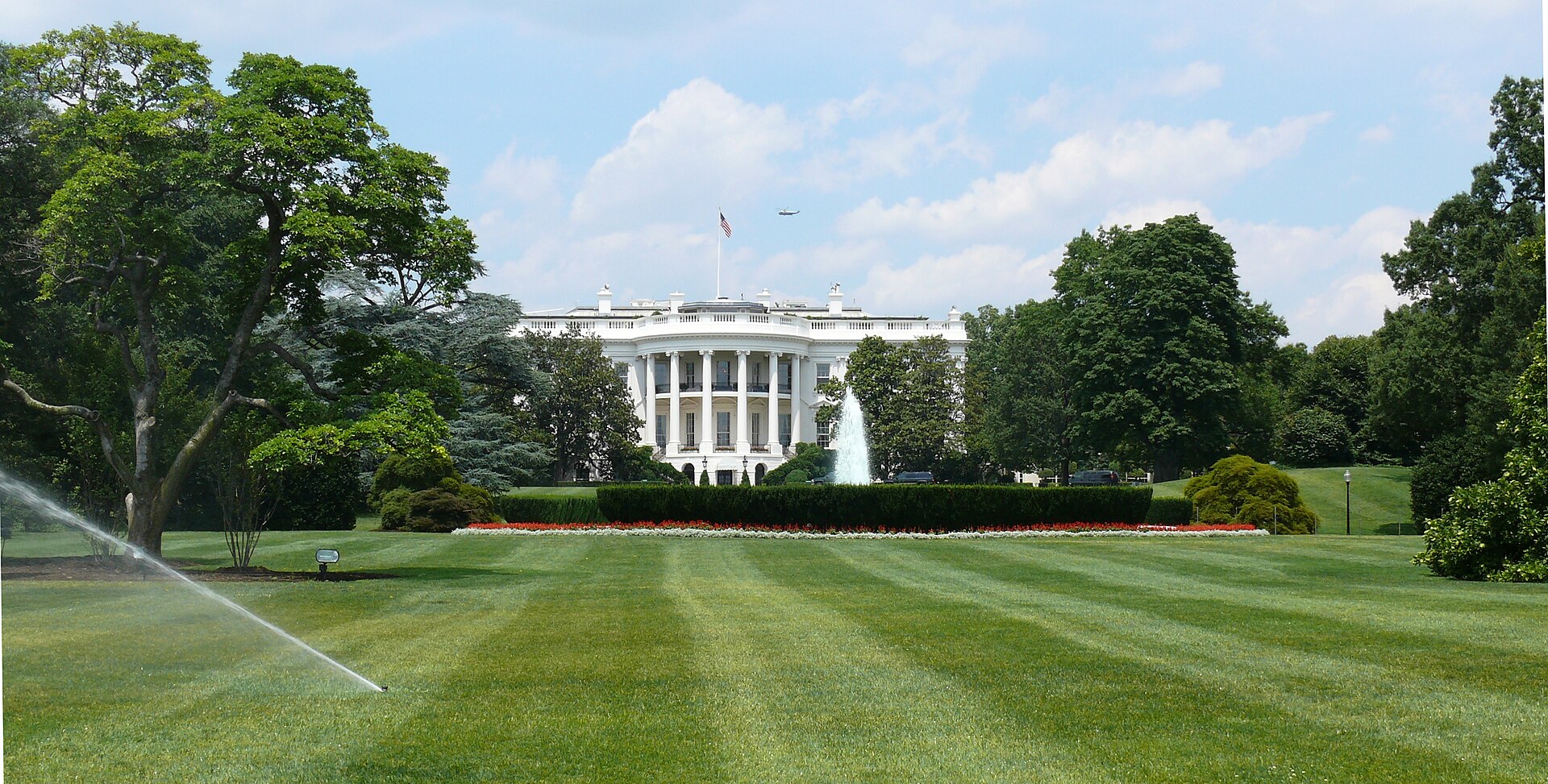

WASHINGTON — The United States has warned Gulf allies that new strikes on Iran could begin as early as November 4, the day after the midterm elections. Three senior Gulf Arab officials gave the date to MSNOW, and the Times of Israel relayed the report on Saturday, October 31. A day earlier, President Donald Trump had told reporters at the White House that Iran wants a deal: “There are talks. They want to talk. They keep talking.”
The two messages came from the same administration in the same week, and Saudi Arabia has to plan for both. The Gulf officials told MSNOW the strikes would be brief but intense. They said Gulf states are pressing Washington to de-escalate because they fear Iranian retaliation on their own territory.
Why it matters: Saudi Arabia has asked the Trump administration for “more time,” according to the Jerusalem Post. It also asked Tehran to spare its oil and gas facilities if fighting resumes, and Iran refused. The kingdom’s energy infrastructure is exposed to a decision being made in Washington. Analysts disagree on whether the dual messaging is a bluff, a plan or a split inside the White House.
The House of Saud Daily Briefing
Saudi Arabia's news in 3 minutes, every morning. Free. See today's issue
Table of Contents
- What Were Gulf Officials Told About November 4?
- Trump and Vance Keep the Talks Track Open
- Is the Dual Track Coercion or Confusion?
- The Military Build-Up Behind the Warnings
- How Has Iran Answered Both Tracks?
- Where Does Saudi Arabia Stand Before November 4?
- Background: How the Midterm Line Was Drawn
- FAQ
What Were Gulf Officials Told About November 4?
The November 4 date is new. It does not appear in the Wall Street Journal’s October 28 report, which first revealed the warning. The WSJ said the US had told several Gulf Arab states to prepare for a short, intense military campaign after the November 3 midterms. House of Saud covered that report in the US warning to Gulf states about a post-midterm Iran campaign.
Both reports rest on unnamed sources. The WSJ cited people briefed on the conversations, while MSNOW cited three Gulf officials. Nothing in either report shows whether these are the same people. That matters, because it decides whether November 4 is fresh intelligence or the same warning with a date attached.
The outlets also disagree on scale. The WSJ called the campaign short and intense, and MSNOW’s sources called it brief but intense. Axios, as relayed by Gulf News on October 29, reported that US and Israeli officials were preparing for a potential seven-day operation. Its targets would be Iran’s leadership, nuclear facilities, energy installations and critical infrastructure, though Gulf News added that Trump “has not made a final decision.”
The White House declined to settle the question. An official told MSNOW that “we do not comment on sensitive military plans that may or may not exist.” The official added that Trump “keeps all options on the table to ensure that Iran can never have a nuclear weapon,” which left room for both tracks.
Trump and Vance Keep the Talks Track Open
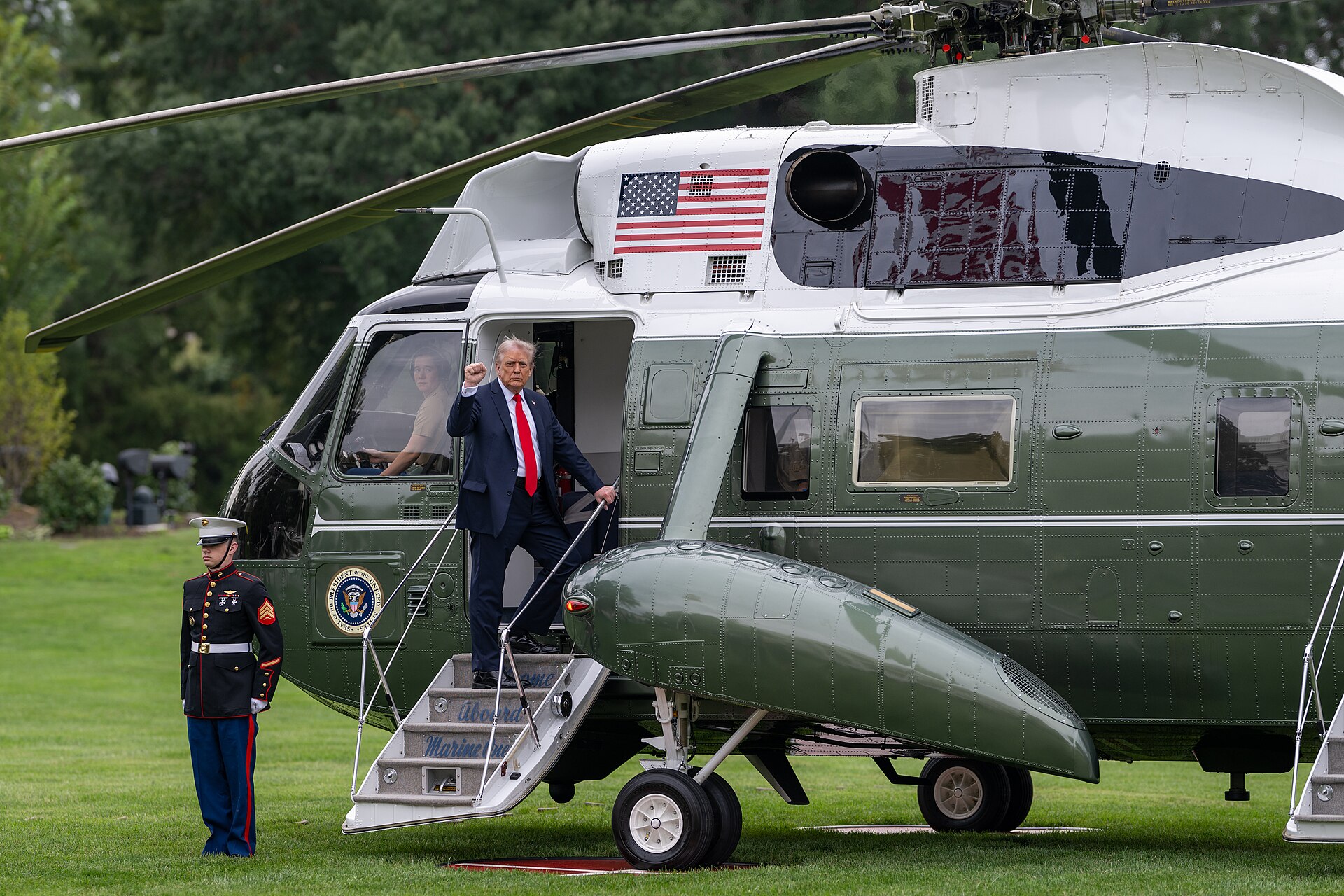
Trump’s remarks at the White House on Friday, October 30, pointed away from an imminent strike. Beyond saying Iran wants to talk, he told reporters, “We have time, frankly,” according to Ynet. Earlier that day he told Kansas City radio station KCMO that the conflict “will end soon.” House of Saud reported those remarks alongside the latest tanker attacks in Trump’s claim that Iran wants to talk.
Behind the public remarks sits a written offer. Vice President JD Vance sent a letter through Qatari mediators to General Mohsen Rezaei, the New York Times reported. It proposed direct talks led by Vance, with Iran’s nuclear programme on the table from the start. Al Jazeera, citing the NYT, said it was delivered on Sunday, and the Washington Post reported that Vance offered to meet Rezaei in person.
Vance has also set out the war’s limits in public. He told Fox News on Thursday that Trump would “never” let the conflict become “a forever war,” according to Al Jazeera. Qatar has carried the diplomatic traffic, and its latest effort is covered in Qatar’s revised US draft for Tehran. Neither Al Jazeera nor Gulf News records a formal Iranian reply to the Vance letter, so analysts are reading the two tracks without Tehran’s answer.
Is the Dual Track Coercion or Confusion?
Analysts interviewed by Al Jazeera on October 30 split three ways. One reads the talks as cover for strikes already being prepared, a second sees genuine doubts inside the administration, and a third sees an old pattern repeating. None described the two tracks as a coordinated carrot-and-stick strategy likely to produce a deal.
Paul Musgrave, associate professor of government at Georgetown University in Qatar, gave the bluntest answer. He said the White House “could be sending signals to coerce Tehran,” but that “the better interpretation is the simplest one.” In his view, “the United States is getting ready to carry out substantial attacks relatively soon.” On that reading, the diplomacy is the noise and the deployments are the signal.
“We’ve seen this pattern of behaviour before from the United States.”
Nader Hashemi, Georgetown University, to Al Jazeera, October 30, 2026
Nader Hashemi of Georgetown University called the pattern “talking diplomacy while preparing for war.” The record supports him. The US and Israel attacked Iran on February 28, 2026, two days after talks in Geneva, according to Al Jazeera. Israel struck Iranian nuclear and military sites on June 13, 2025, two days before a sixth round of US-Iran talks in Oman.
Andreas Krieg, associate professor of security studies at King’s College London, sees an administration arguing with itself. He called CENTCOM commander Admiral Brad Cooper “quite hawkish.” Krieg warned that Cooper could give Trump false confidence “that there is a military way out of it, when in reality there isn’t a military way out of it.” Yet he also said Vance’s offer of direct talks “suggests that the Americans do have second thoughts.”
Rouzbeh Parsi, an Iran analyst affiliated with Lund University, called Vance the “voice of reason” on Iran inside the administration. He then cut the hope short, saying Vance’s position has “never proven to be sturdy enough to actually sway Trump.” Read together, Krieg and Parsi describe real internal disagreement, with the hawks holding the stronger hand.
On timing, the experts are more cautious than the Gulf officials. Krieg said “nothing is going to happen until the 3rd of November.” Wolfgang Pusztai, a security analyst and Austria’s former defence attaché to Libya, called a large-scale attack before the elections “very unlikely.” His forecast runs later than MSNOW’s sources: “Starting in mid to late November, there could be a major wave of attacks aimed at advancing the American agenda.”
The Military Build-Up Behind the Warnings
Whichever date proves right, the hardware is already moving. Ten US military cargo planes landed at the Ovda and Nevatim air bases in Israel’s Negev, Israeli public broadcaster Kan reported. More were sent to Jordan, Saudi Arabia and Qatar, and the US has boosted air defences and munitions in the region, according to Al Jazeera.
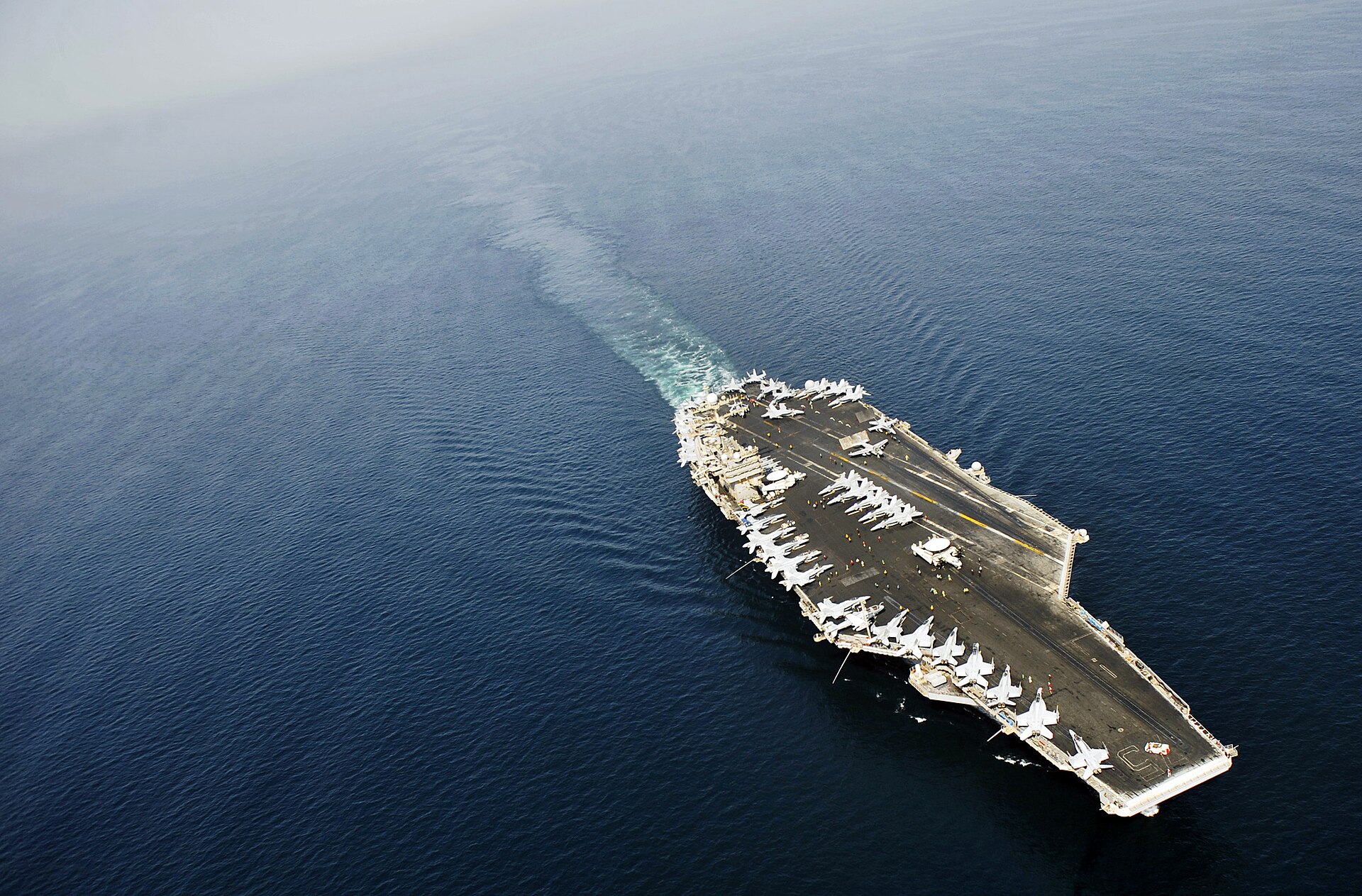
At sea, the Pentagon is deploying the USS Theodore Roosevelt aircraft carrier and amphibious landing ships carrying Marines towards the Arabian Gulf, Gulf News reported on October 29. Citing the Associated Press, Gulf News said the deployment involves roughly 9,000 personnel. The report describes the ships as heading towards the Gulf and does not say they have arrived.
The planning is joint. The US and Israel have drawn up joint plans to attack Iran after the November 3 midterms, the New York Times reported, according to Al Jazeera. Cooper has briefed Trump on options for renewed attacks, the Wall Street Journal reported. Those options run through the region Saudi Arabia defends, which is why the military track dominates House of Saud’s four post-midterm scenarios for Saudi Arabia.
How Has Iran Answered Both Tracks?
Tehran has rejected the premise of the dual track while keeping its negotiators in play. Parliament Speaker Mohammad Bagher Ghalibaf said the “carrot-and-stick approach has no effect on Iran” and that “progress depends on Iran’s seven conditions being met,” Al Jazeera reported.
The deeper problem is trust. Iranian President Masoud Pezeshkian told Al Jazeera in September that Iran no longer trusts negotiations with Washington, because attacks had come during previous rounds of talks. The February and June precedents are Tehran’s case in point. They hang over every round of mediation, including the exchanges covered in Iran’s response to the Qatari draft.
Analysts also question who in Tehran can say yes. Pusztai told Al Jazeera that “there is no doubt that the IRGC [Islamic Revolutionary Guard Corps] currently calls the shots in Iran.” He added that “without the IRGC’s approval, there will be no agreement with Iran.” Hashemi said “Rezaei is just one voice among many,” noting that decisions inside the Islamic Republic are made collectively.
That puts the Vance letter in the hands of an addressee who may not control the answer. Krieg said “some IRGC hardliners do not necessarily see war as a bad thing if it tightens their grip on the Hormuz strait.” For Saudi Arabia, a hardline veto in Tehran and a hawkish briefing in Washington point the same way.
Where Does Saudi Arabia Stand Before November 4?
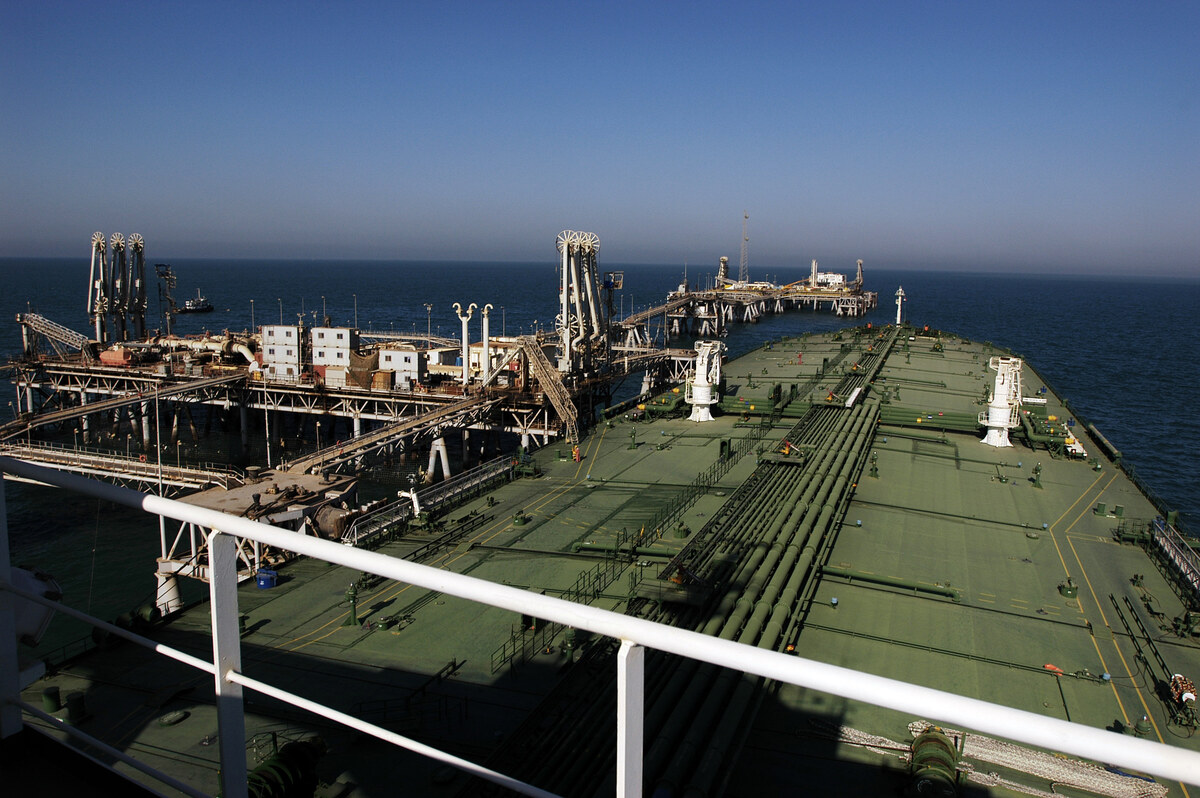
Saudi Arabia has pushed for delay in Washington and asked for restraint in Tehran, and neither capital has publicly committed to either request. Senior Saudi officials asked senior Trump administration officials for “more time” and urged them to “give diplomacy a chance,” two regional sources told the Jerusalem Post on October 30. The Saudis also asked Iran not to target key Saudi oil and gas facilities if the conflict resumes. According to the same sources, “the Iranians refused to make such a commitment.”
The refusal is reported by a single outlet citing unnamed sources, and neither government has confirmed it. It followed contact at the highest level. Saudi Defense Minister Prince Khalid bin Salman was part of the Mecca Joint Defense Agreement delegation to Tehran, the Jerusalem Post reported. Delegations from Saudi Arabia, Pakistan and Turkey met President Pezeshkian on Monday, October 26, according to an Associated Press photo caption.
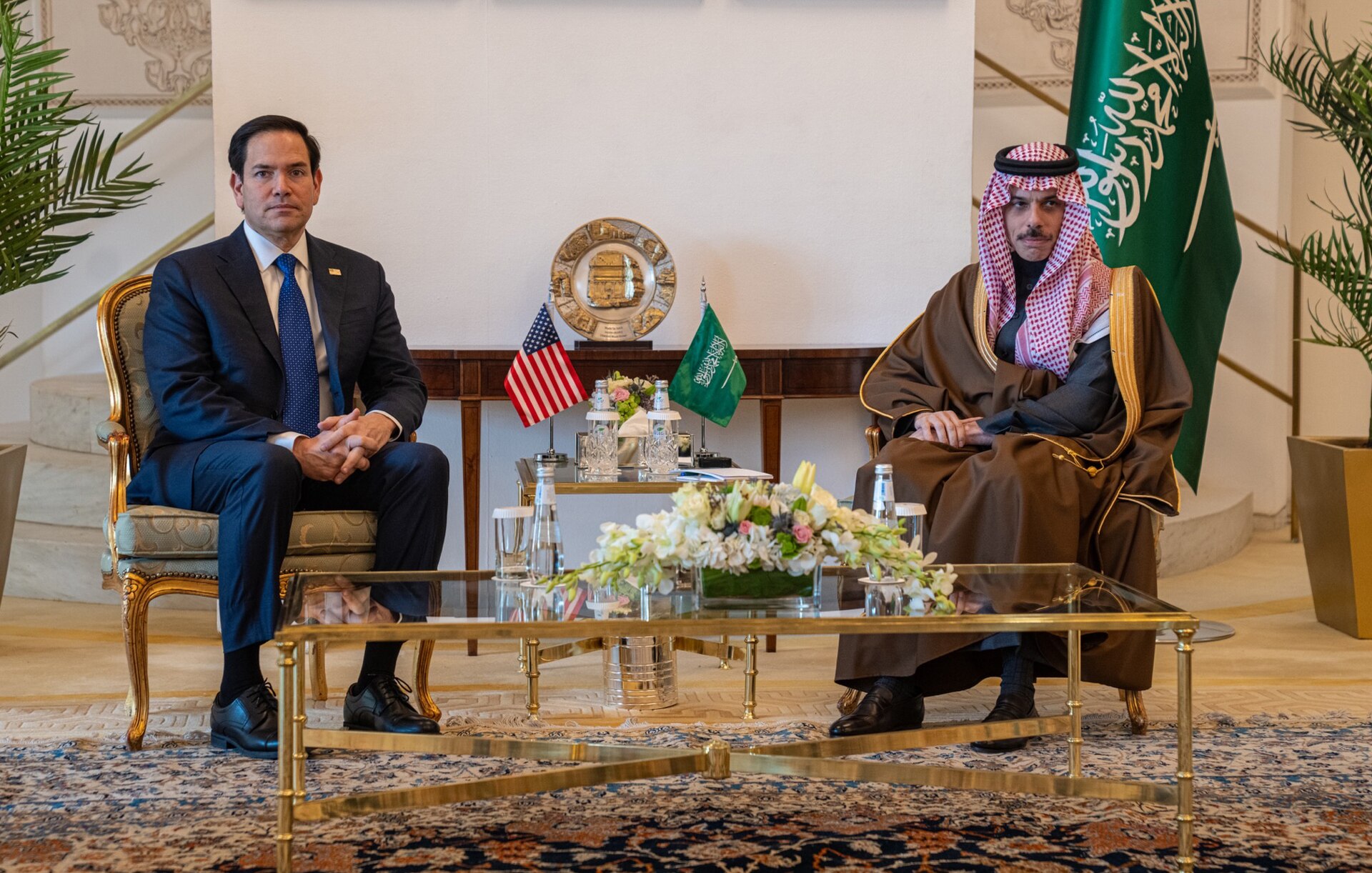
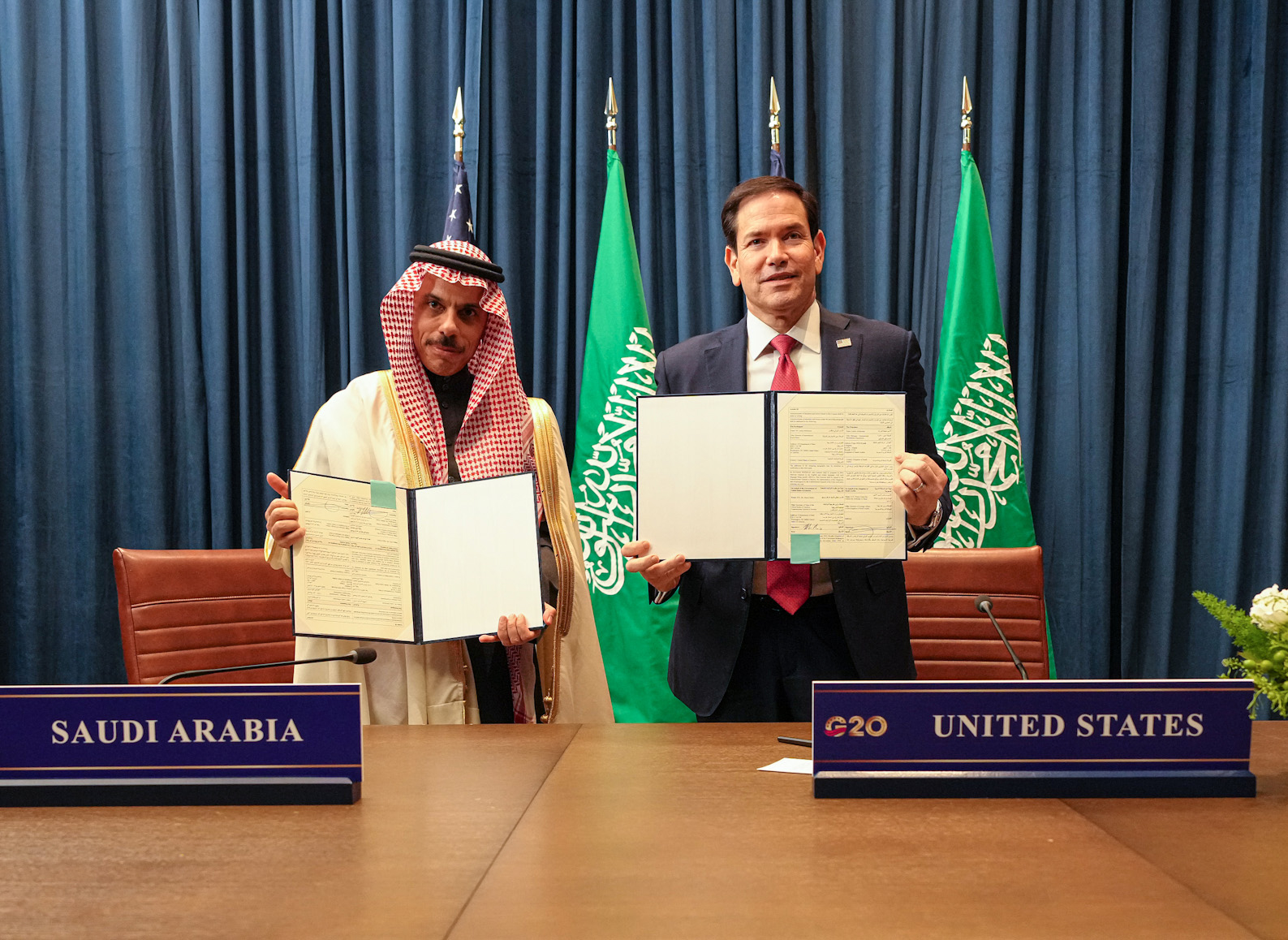
Iranian state media said afterwards that the parties had agreed to continue talks, Arab News reported. On Friday, Foreign Minister Prince Faisal bin Farhan met Secretary of State Marco Rubio on the sidelines of the G20 foreign ministers’ meeting in Atlanta. Rubio said they discussed “ways our countries can continue working together on regional challenges, including the situations in Iran, Sudan, and Yemen,” Saudi Gazette reported. Hours before that meeting, DNI Jay Clayton had conveyed to Rubio an unclassified memo warning that Iranian lethal plots against American officials and diplomats had reached advanced stages, Axios reported on October 24.
The public readouts do not say whether the strike warning came up. House of Saud’s account of the Faisal-Rubio meeting in Atlanta makes no claim about what was said in private. The wider G20 offered no cover either.
The meeting ended without a joint communiqué and relied instead on a chairman’s statement, the Associated Press reported via the Korea Times. The prospect of new US military action in Iran was among the issues dividing ministers. Saudi Arabia goes into November 3 with its requests on record and no public guarantee from either capital. On October 31, as diplomats met in Atlanta and Doha, Saudi coalition air defences intercepted and destroyed a hostile drone over Riyadh — the Houthi air campaign pressing against the kingdom regardless of Washington’s diplomatic or military timeline.
Background: How the Midterm Line Was Drawn
The election date became a military marker because Trump made it one. On October 8 he said the US “will not be attacking Iran at any time prior to the midterm elections” on November 3, The National reported. That pledge explains why both the WSJ and MSNOW reports pivot on the vote.
The diplomatic track has a longer and less successful history. Foreign Minister Abbas Araghchi submitted a seven-day roadmap at the United Nations on September 25, Al Jazeera reported. The next day, the WSJ reported that Trump had rejected the plan and told aides he expects renewed bombing after the midterms, according to Hurriyet.
Iran’s leadership has also changed since the war began. Supreme Leader Ali Khamenei was killed in the US-Israeli strikes of February 28, and the Assembly of Experts named his son Mojtaba Khamenei as successor, the Jakarta Post reported. Pusztai told Al Jazeera that the new supreme leader “simply does not have the influence his father did.” That helps explain why analysts look to the IRGC for Iran’s answer to Washington.
FAQ
When did the US last strike Iran?
The US has not struck Iran since September 1, the Times of Israel noted in its October 31 report on the MSNOW warning. The same report said Trump has reportedly pledged to hold off further attacks until after the midterms. September 1 therefore marks the start of the current lull in direct US strikes.
Could Gulf states refuse to let the US use their bases?
One of the three Gulf officials who spoke to MSNOW said they “would not be surprised” if some Gulf countries opposed the use of US bases. That would cover bases on their own territory being used for the strikes, according to the Times of Israel. No Gulf government has publicly announced such a refusal.
What are Iran’s “seven conditions” for progress?
Al Jazeera reported that the conditions include sanctions relief and an end to the US naval blockade. They also include guarantees against further US-Israeli strikes and the unfreezing of Iranian assets. Ghalibaf did not set out the full list in the remarks Al Jazeera quoted.
What did Araghchi’s seven-day roadmap offer?
Under the plan, Iran would reopen the Strait of Hormuz in return for the US lifting its blockade. Iran also sought sanctions waivers and about $12 billion in frozen assets, Al Jazeera reported on September 25. The plan was presented to Washington via Qatar. By Saturday, Tehran had acted on the channel: Iran’s delegation to Doha arrived for Qatar-mediated talks, and Araghchi called US outreach “a positive step” — a reversal that came fewer than 72 hours before the November 3 moratorium deadline.
The House of Saud Daily Briefing
Saudi Arabia's news in 3 minutes, every morning. Free. See today's issue