
RIYADH — The State Department ordered non-emergency US government employees and their families out of Saudi Arabia effective October 23, leaving the embassy in Riyadh and consulates in Jeddah and Dhahran on a skeleton crew as Donald Trump’s self-imposed moratorium on striking Iran approaches its November 3 expiry.
State Department spokesperson Tommy Pigott confirmed the mandatory “ordered departure” on October 21, the same day a Houthi strike on King Fahd International Airport in Dammam killed two people and wounded eight, Al Arabiya reported. Gulf allies have been briefed on potential US military action as early as November 4, Haaretz reported on October 31, and the diplomatic compound in Riyadh’s Diplomatic Quarter has no Senate-confirmed ambassador, no routine consular services, and a secure work area still bearing damage from the Iranian drone strike that hit the CIA station on March 3.
The House of Saud Daily Briefing
Saudi Arabia's news in 3 minutes, every morning. Free. See today's issue
Table of Contents
What Does the Ordered Departure Cover?
An ordered departure is the State Department’s mandatory evacuation mechanism — personnel named in the order must leave, the government covers the cost, and the decision is not negotiable. It sits one step below the full drawdown that precedes an embassy closure, and well above an “authorized departure,” where staff may choose to go but are not compelled. Pigott’s confirmation on October 21 used the more serious designation.
The order covers “non-emergency US government employees and their family members in Saudi Arabia only,” Pigott said, calling reports of a broader Gulf-wide mandatory departure “inaccurate.” But the reality on the ground appears wider than the official scope suggests. Four unnamed US officials told Reuters that other Gulf missions would also order family members to leave, and CNN reported on October 24 that the US was discreetly adjusting staffing at embassies in Lebanon, the UAE, Qatar, Jordan, Bahrain and Kuwait under a separate “restricted operations” designation.
The embassy’s security alert, updated on October 30, stated that the departure was ordered “due to safety risks.” Saudi Arabia sits at Level 3 — “Reconsider Travel” — on the State Department’s four-tier advisory scale, one step below the “Do Not Travel” designation applied to countries like Syria and Yemen.
The State Department has not disclosed how many personnel were covered by the order or how many essential staff remain at the three posts. What is public is that routine consular services at the Riyadh embassy and the Jeddah and Dhahran consulates are suspended, with only limited emergency assistance available for American citizens.
A Compound Still Scarred From March
The embassy the remaining staff are operating from is not the building the State Department constructed. On March 3, two Iranian drones struck the compound, hitting a secure area that housed the CIA station. The Wall Street Journal, citing current and former US officials, reported that three floors of the embassy’s secure work area were heavily damaged, that the fire burned for approximately half a day, and that one section was left “not recoverable.” Had the attack come during working hours, the Journal reported, the compound would have faced a mass-casualty event.
The Pentagon Inspector General’s September 2026 report put the repair cost for the Riyadh embassy at approximately $11.5 million — a fraction of the $184 million in total damage to US diplomatic facilities across Iraq, Kuwait, Saudi Arabia and the UAE documented in the same report, CNN reported on September 14. Iraq absorbed the largest share at more than $157 million, followed by Kuwait at over $14 million.
Some diplomats had returned to the compound between March and October, partially rebuilding the mission’s operational capacity, according to Scripps News. The October 23 ordered departure reversed that progress, sending the post back to emergency-only staffing months after the rebuild had begun.
Who Stayed Behind?
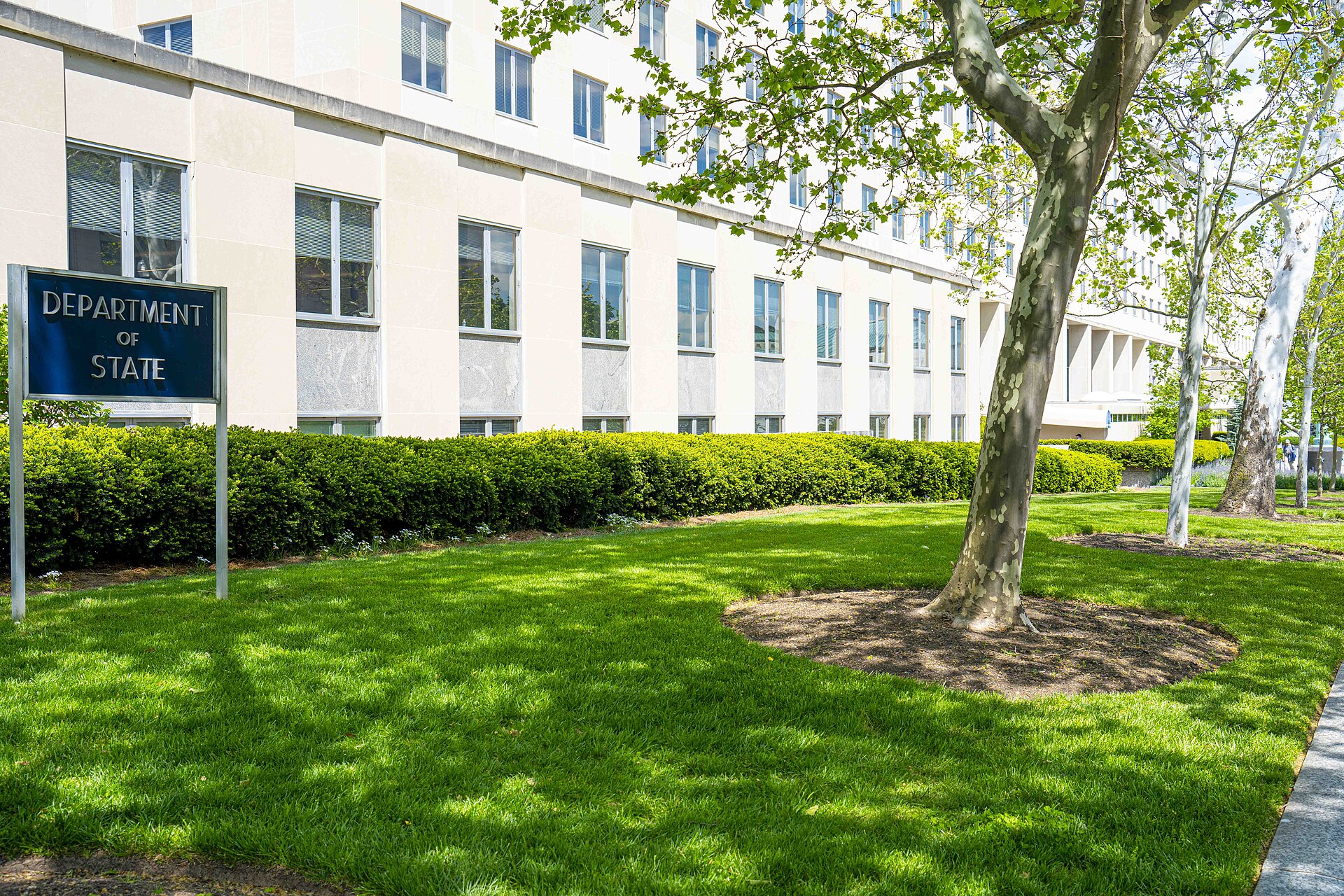
The State Department has not published a breakdown of which positions remain. The mechanics of an ordered departure dictate the rough shape of what is left: the chargé d’affaires, a regional security officer, a skeleton consular team for American citizen emergencies, and whatever intelligence and military liaison personnel the CIA and CENTCOM deem essential to the wartime posture. Everyone else — the economic officers, the public affairs team, the political section that tracked Saudi domestic policy, the consular staff who processed the kingdom’s visa applications — are gone or going.
The practical effect extends beyond consular windows. The economic section that monitored Aramco’s pricing decisions, Saudi investment flows and Vision 2030 procurement — reporting that fed directly into US trade and energy policy — is reduced to whatever the remaining essential staff can manage alongside their primary duties. The political section that maintained relationships with Saudi ministries and flagged shifts in Riyadh’s foreign policy posture is similarly depleted, at a moment when the administration is weighing military action that would directly affect Saudi Arabia’s security, energy exports and diplomatic positioning.
The embassy has no Senate-confirmed ambassador. President Trump nominated Representative Wesley Hunt of Texas for the post in September, but the nomination awaits confirmation from a Senate facing a compressed schedule ahead of the November 3 midterms, Arab News reported. Jennifer Larson, a career Foreign Service officer, has served as chargé d’affaires since mid-August, leading the mission on an interim basis.
Before the war, the mission processed more than 100,000 visa applications a year — roughly 70 percent of them for Saudi nationals, a consular official told Asharq Al-Awsat — and that pipeline is now closed, with applicants redirected to US consular posts in neighbouring countries that are themselves operating under restricted staffing.
The Broader Gulf Drawdown
Pigott insisted the ordered departure applied to Saudi Arabia alone. But CNN reported on October 24, citing diplomatic sources and a State Department official, that Washington had quietly placed embassies in Lebanon, the UAE, Qatar, Jordan, Bahrain and Kuwait under restricted operations. The designation sits below ordered departure but still involves staffing cuts and, in some cases, the removal of family members. A State Department official told CNN the Houthi threat and “Iranian terror plots targeting US officials” were both driving the adjustments.
Families outside Saudi Arabia told AFSA they are being directed to leave without confirmed housing assistance or per diem.
American Foreign Service Association, via CNN, October 2026
A State Department official later said all direct-hire personnel and their families were receiving per diem allowances and lodging support “consistent with government rates,” though the statement did not address whether those rates covered the actual cost of emergency relocation from Gulf posts at short notice.
The March 8 departure order, triggered by the start of the Iran war, had been followed in the days after by expanded drawdowns covering a similar geography — Saudi Arabia, the UAE, Qatar, Kuwait, Bahrain, Iraq and Jordan — according to Reuters and State Department reporting at the time. The October order applies the mandatory designation only to Saudi Arabia but extends informal staffing cuts across a similar geography, with the CNN report noting that the threat of both Houthi attacks and Iranian plots against US officials informed the decisions at each post.
Why Did Washington Move Before the Midterms?
The State Department cited the Houthi threat, and the Houthi threat is real enough on its own terms. The Houthi attack tempo since early October gave Washington ample justification to act. Strikes on King Khalid International Airport and Abha on October 6 and 7 killed three people and wounded 36, Al Jazeera reported. The coalition intercepted two ballistic missiles aimed at Riyadh on October 8.
On October 10, a strike on KKIA killed at least 12, including one American citizen, and wounded more than 300, according to Al Jazeera. A strike on Terminal 4 the next day killed a Pakistani resident and injured 11, CNN reported. By October 21, when Pigott confirmed the departure order hours after the Dammam airport was hit, the threat to Americans at or near Saudi airports had been demonstrated in the most direct way possible.
But the attacks are a proximate cause layered over a deeper one. Trump posted on Truth Social on October 8 that the United States “will not be attacking Iran at any time prior to the midterm elections” on November 3, placing a firm expiry date on the military pause. On October 31, Haaretz reported that the administration was planning to resume strikes as soon as one day after the midterms, and that Gulf allies had been briefed to prepare. The Washington Post reported on October 28 that the administration had warned allies to prepare for “potential” renewed action after the elections.
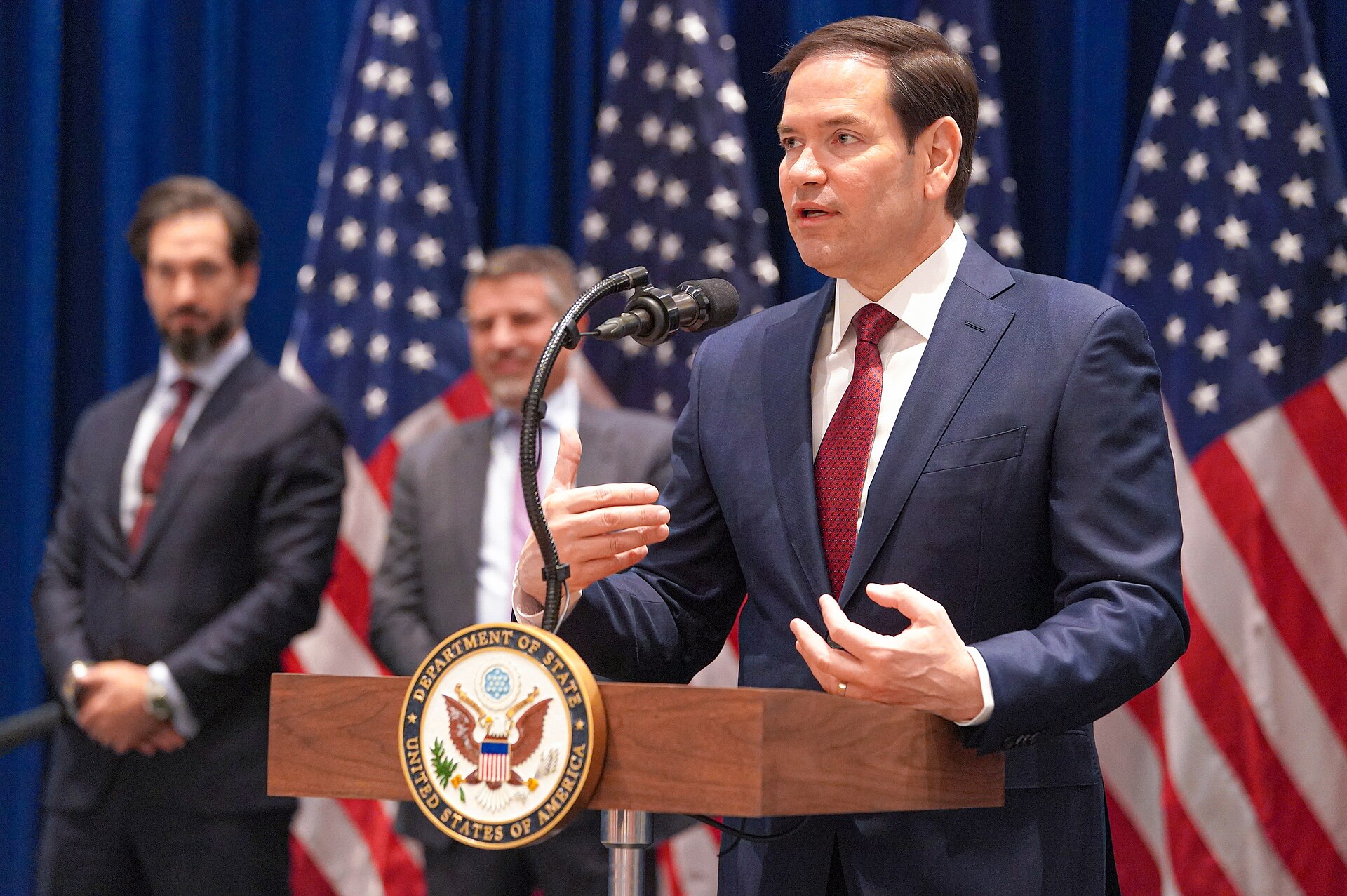
Intelligence assessments reinforced the urgency. CNN reported on October 24 that an unclassified memo to Secretary of State Marco Rubio said US intelligence had found that “Iran has substantially increased efforts to target US personnel.” The Director of National Intelligence’s unclassified October 24 memo, first reported by Axios, warned specifically of Iranian plots targeting US officials and diplomats abroad — the same category of personnel the ordered departure was designed to protect.
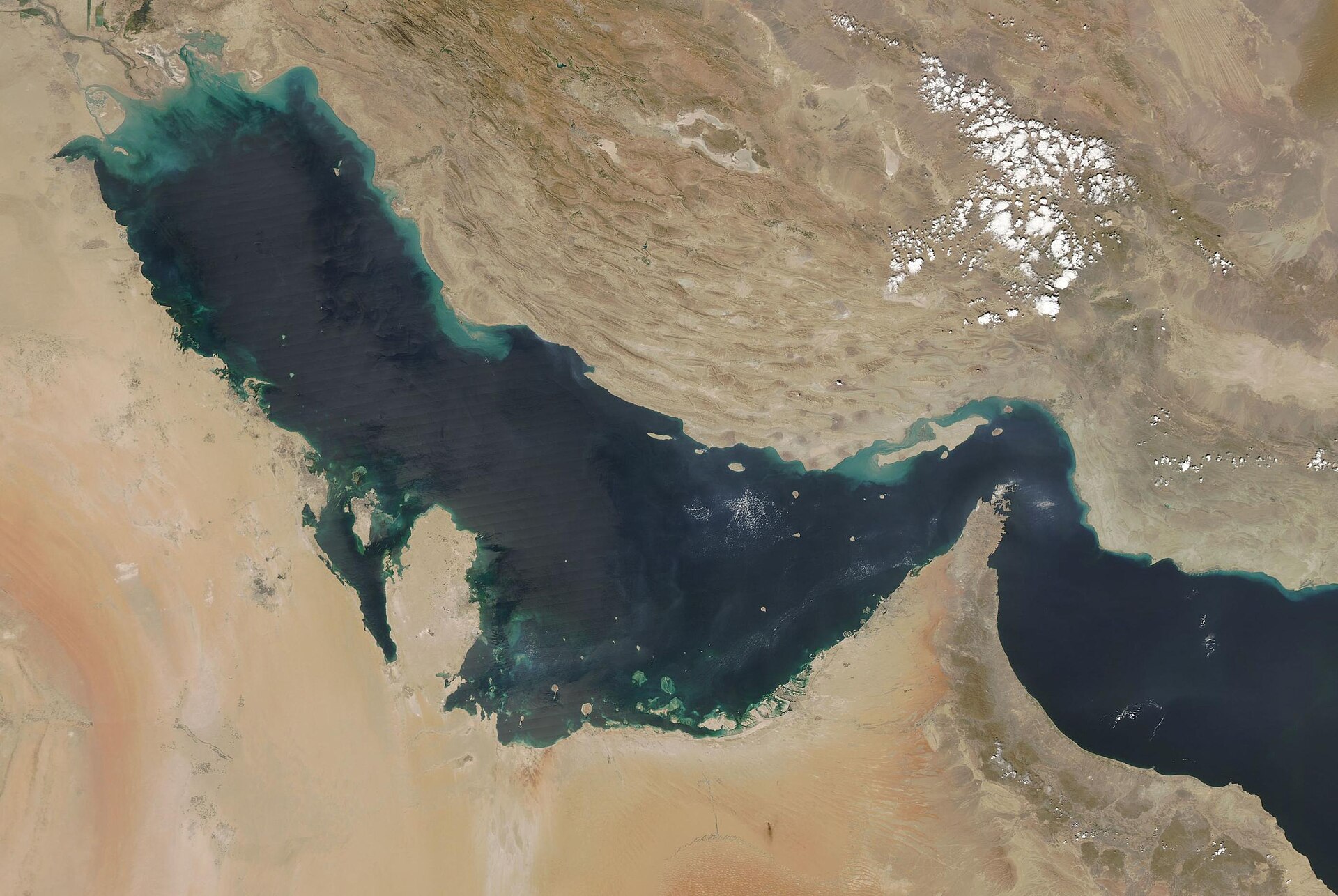
Iran has not directly addressed the departure order. Tehran’s position, conveyed through Pakistani mediators and reported by Iran International on October 25, is that it would consider reopening the Strait of Hormuz if the United States ended its blockade of Iranian ports. Houthi military spokesman Yahya Saree has dismissed coalition accounts of specific operations as “false” but has not commented on the embassy staffing changes.
CNBC reported on October 22 that the departure and the preparation for post-midterm strikes were part of the same operational picture. Qatar’s mediators returned to Tehran on October 31 with a revised draft framework, and parallel diplomatic efforts remained active, but both tracks are running concurrently with the moratorium set to expire on November 3. If strikes resume, the embassy that would normally coordinate the fallout with Saudi Arabia’s government will be staffed by a skeleton crew, led by a chargé d’affaires, in a compound the Iranians hit with drones on March 3.
Frequently Asked Questions
Is the US embassy in Riyadh still open?
The embassy remains open for essential functions and emergency consular assistance for American citizens, but all routine services — including visa processing, notarial services and passport renewals — are suspended. The embassy website advises Americans in Saudi Arabia to enroll in the State Department’s Smart Traveler Enrollment Program for emergency notifications and to monitor the mission’s security alerts, which have been updated at least weekly since October. The Jeddah and Dhahran consulates are operating under the same restrictions.
What is the difference between ordered departure and authorized departure?
Ordered departure, governed by the State Department’s Foreign Affairs Manual at 2 FAM 441, is mandatory: named personnel must leave, and the government covers their travel and provides per diem allowances. Authorized departure, under 3 FAM 3770, is voluntary — employees may choose to leave but are not required to. The October 23 order for Saudi Arabia is the mandatory version, while other Gulf posts have been placed under “restricted operations,” a designation that involves staffing adjustments but does not carry the same compulsory evacuation requirement.
Has the US embassy compound been attacked during the current war?
On March 3, two Iranian drones struck the Riyadh compound in what the Wall Street Journal described as an attack that caused far more damage than initially disclosed. One of the drones was believed to be targeting the residence of the highest-ranking US diplomat in Saudi Arabia, located several hundred feet from the main embassy building, the Journal reported. Saudi authorities initially described the incident as a limited fire with minor material damage, a characterisation the Journal’s reporting contradicted.
When did the US first order diplomats out of Saudi Arabia during this conflict?
The first ordered departure was issued on March 8, five days after the drone strike on the Riyadh compound, covering Saudi Arabia. In the days that followed, the State Department expanded drawdowns to other regional missions — the UAE, Qatar, Kuwait, Bahrain, Iraq and Jordan — according to Reuters and State Department reporting at the time. Some diplomats gradually returned to the Riyadh compound in the months that followed, partially restoring the mission’s capacity before the October order reversed the rebuild. The US and Saudi Arabia have maintained continuous diplomatic relations since 1933.
Are US military personnel also leaving Saudi Arabia?
The ordered departure applies to State Department and other civilian agency staff, not to US military forces, which operate under separate CENTCOM authority. CBS News reported on October 21 that the US was simultaneously reducing its military footprint in parts of the Middle East, though the specifics of any force posture changes in Saudi Arabia have not been disclosed. The State Department’s September approval of a possible $24.3 billion sale of up to 48 F-35A fighters to Saudi Arabia suggests the defence relationship is operating on a separate track from the diplomatic drawdown.
The House of Saud Daily Briefing
Saudi Arabia's news in 3 minutes, every morning. Free. See today's issue