
TEHRAN — Iran has formally exempted India, China, Iraq and Qatar from transit restrictions in the Strait of Hormuz, converting the wartime blockade into a selective pass system that rewards allies and energy customers. Saudi Arabia, the Gulf’s largest oil exporter, is not on the list.
The announcement came on November 3 from Hayat-Moghaddam, vice chairman of Iran’s parliamentary National Security and Foreign Policy Committee, in an interview with the semi-official ISNA news agency. “We have currently exempted India, China, Iraq and Qatar from transit restrictions in the Strait of Hormuz,” Hayat-Moghaddam told ISNA, according to IranWire.
China and India, two of the four exempted nations, together account for roughly 55 percent of all Gulf crude passing through the strait — China at 42 percent and India at 13 percent — according to Kpler analyst Muyu Xu, as reported by Al Jazeera on November 6. The exemptions formalise what had been an ad hoc arrangement since the early weeks of the war, administered through the Persian Gulf Strait Authority Tehran established in May. They mark the clearest signal yet that Iran views the Hormuz chokepoint not as a wartime closure to be negotiated away but as a lever it intends to keep — one that sorts the world into countries that serve Iranian interests and countries that do not.
The House of Saud Daily Briefing
Saudi Arabia's news in 3 minutes, every morning. Free. See today's issue
Table of Contents
The Announcement
Hayat-Moghaddam delivered the exemption statement to ISNA on November 3, the same day Donald Trump’s self-imposed moratorium on responding to Iran’s 2-day reopening offer expired with no American answer, as reported by Euronews. “We are conducting business, and each of these exemptions has a distinct reason,” Hayat-Moghaddam said, according to OilPrice — framing the arrangement not as a concession or the partial lifting of a blockade but as the administration of a regulatory system in which Hormuz transit is a privilege Tehran grants on its own terms.
“We have currently exempted India, China, Iraq and Qatar from transit restrictions in the Strait of Hormuz. Ships from these countries pass freely, and the Americans do not intercept them either.”
Hayat-Moghaddam, vice chairman of Iran’s parliamentary National Security and Foreign Policy Committee, to ISNA, November 3, 2026
The announcement carries a caveat that has received less attention than the headline itself. It came from a parliamentary official speaking to a domestic news agency — not from the IRGC, which controls naval operations in the strait, and not from the Foreign Ministry, which manages Iran’s diplomatic messaging on the war. No official written order, IRGC decree, or published PGSA document codifying the exemptions has been released. Neither Tasnim nor IRNA — the outlets closest to the IRGC and the government respectively — appear to have carried the November 3 statement directly, suggesting the announcement was crafted for foreign audiences rather than issued as a formal domestic policy directive.
That gap between a parliamentary committee official’s interview and formal operational policy matters, because vessels transiting Hormuz under these exemptions are subject to the IRGC Navy’s enforcement on the water, not to parliamentary declarations in Tehran. Wolfgang Pusztai, an Austrian security analyst and former defence attaché to Libya, told Al Jazeera on November 6 that the arrangement contains a practical ambiguity Iran has not resolved: whether “ships of these countries” refers to flag state, ship owner, operator, or some other criterion remains entirely undefined.
Why These Four Countries?
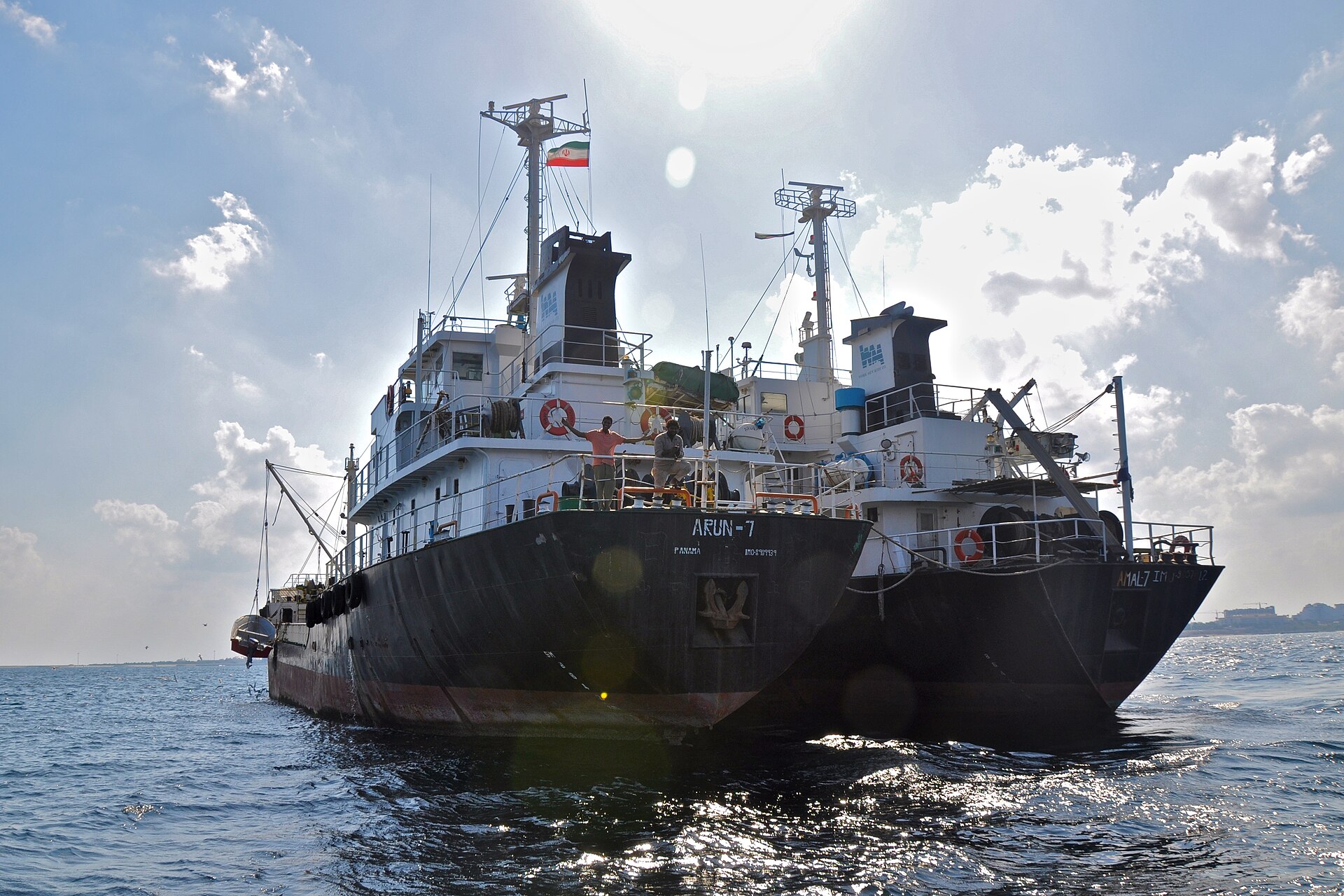
Iran’s exemptions reflect four relationships its wartime economy and diplomacy cannot function without. India supplies medicines under sanctions pressure; China absorbs the bulk of Iranian oil exports and provides political cover; Iraq maintains a longstanding bilateral military relationship; and Qatar has become Tehran’s primary channel to Washington.
Each exemption maps a relationship Tehran considers essential to sustaining its war footing, and the rationales Iran has offered illuminate its priorities with unusual candour. India supplies medicines that Iran cannot source elsewhere under the weight of American sanctions — a framing Tehran has used to cast the arrangement as humanitarian rather than strategic, according to IranWire and India TV News. Roughly 30 percent of India’s crude imports still pass through the strait, down from around 70 percent before the war, and approximately 90 percent of India’s liquefied petroleum gas imports transit Hormuz, according to the Sunday Guardian — giving New Delhi a material incentive to maintain whatever keeps those shipments moving, regardless of what Washington thinks of the arrangement.
China’s exemption rests on political utility: Beijing provides backing for the Islamic Republic that no other major power offers, and roughly 90 percent of Iran’s oil exports go to Chinese buyers, according to Pusztai, speaking to Al Jazeera. The relationship is symbiotic enough that Rouzbeh Parsi, a researcher at Sweden’s Lund University, questioned in the same Al Jazeera analysis whether China views the exemption as “worth the potential political cost” — a question Beijing has answered, so far, by continuing to buy Iranian crude in volumes that dwarf every other customer and by reportedly settling payments in yuan rather than dollars, according to Asia Times.
Iraq’s exemption has the longest operational history of the four, with Iraq’s military command informed in April 2026 that it was exempt under language emphasising “mutual interests” and brotherly ties, according to Al Jazeera and Finwire. Iraq’s crude transits through the strait rose from 1.69 million barrels per day to 2.65 million bpd in October, according to Kpler data cited by Al Jazeera — though the recovery remains partial, with volumes still sitting below pre-war levels, as Asia Times reported.
Qatar occupies a position distinct from the other three. Doha has been the primary intermediary between Tehran and Washington throughout the crisis, carrying Iran’s conditions for reopening to the Americans and transmitting proposals for narrower interim deals that have so far produced no agreement. Iran charges no transit tolls on Qatari vessels, according to Al Jazeera and the Sunday Guardian, and Qatar’s LNG shipments through the strait rose from zero in August to 1.8 million tonnes in October, according to Kpler’s Xu — a recovery that tracks directly with Doha’s deepening role as mediator. Parsi noted that Qatar must balance its relationship with Tehran against its ties to Washington, a tension that makes the toll-free passage both a diplomatic reward and a pressure point Iran holds over a country that needs both relationships to function.
How Much Are Ships Paying to Cross?
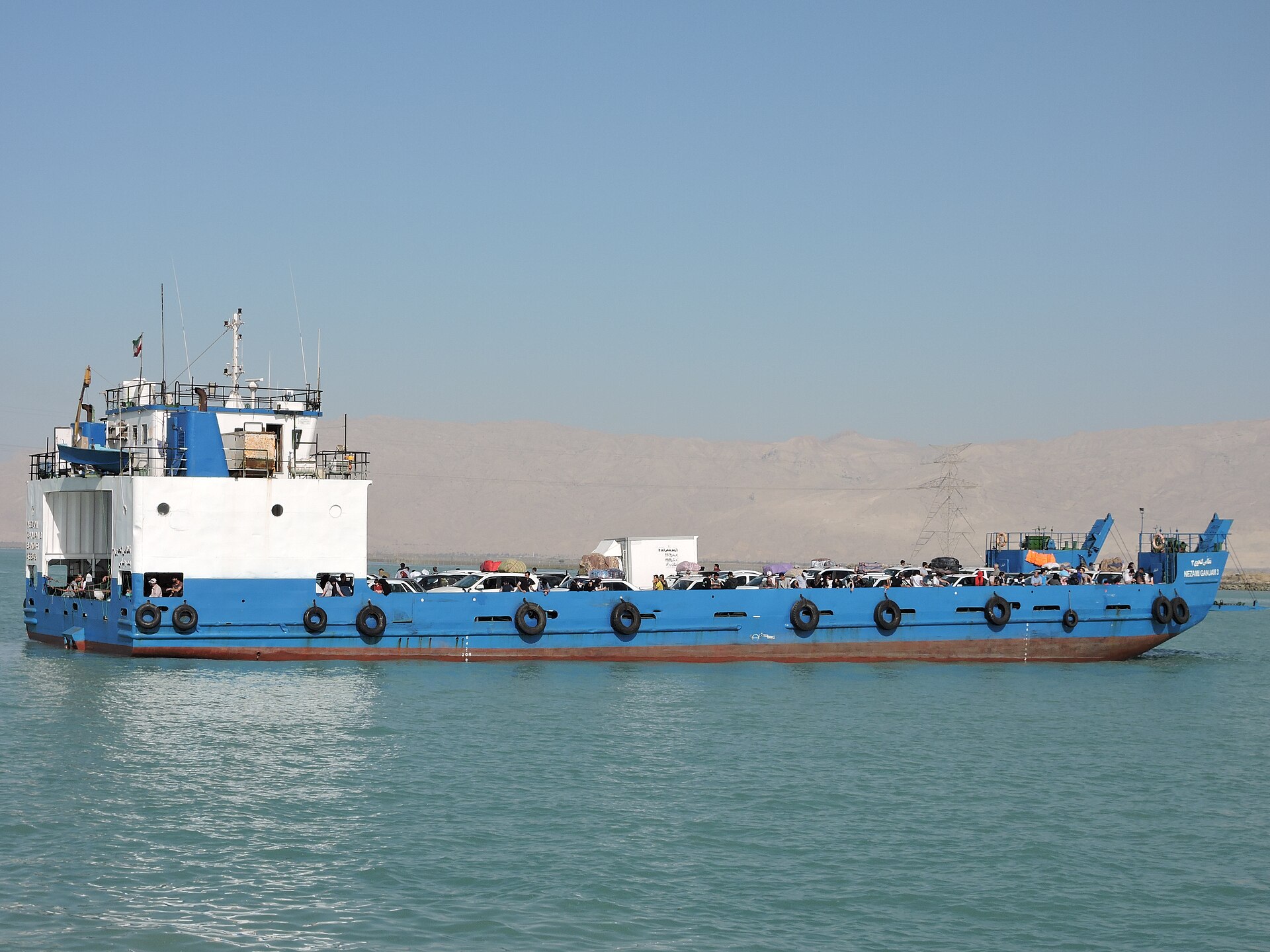
The exemptions do not mean free passage for everyone on the list. Indian and Chinese vessels pay transit fees to Iran, while Qatari ships pass toll-free and Iraq’s fee arrangement has not been publicly disclosed, according to Al Jazeera, the Sunday Guardian and Marine Insight. Iran describes the charges as payment for “navigation and environmental services,” a formulation designed to give the arrangement an institutional character distinct from the protection racket its critics describe, according to Asia Times.
The institutional mechanism behind the system is the Persian Gulf Strait Authority, established in Tehran on May 5 and formally positioned as the permit-issuing body for all Hormuz transit, according to records of the PGSA’s establishment. By early June, more than 300 shipping companies had applied for PGSA permits, the majority for Asian-bound cargo. Bloomberg reported ad hoc fee demands reaching as high as $2 million per voyage, a figure Iran has denied, according to Asia Times — and the US Office of Foreign Assets Control has warned that payments to Iran for passage carry sanctions risk, a warning that has done nothing to prevent the system from operating at scale.
Nader Hashemi of Georgetown University told Al Jazeera that Iran was “most likely charging a transit fee or a percentage of the cargo value,” consistent with the PGSA mechanism but deliberately vague — the exact sums remain opaque enough that no two published estimates agree. Pusztai, for his part, told Al Jazeera that the move “will generate significant revenue for Iran” given China’s dominance as a buyer, adding that the exemption system is “trying to undermine acceptance of Washington’s strategy” by giving major Asian economies a reason to work within Iran’s framework rather than against it.
What Do the Transit Numbers Show?
The Kpler data, presented by analyst Muyu Xu in Al Jazeera’s November 6 analysis, describes a strait that is selectively open rather than categorically closed. Of the 10.23 million barrels per day of Gulf crude transiting Hormuz in October, approximately 42 percent went to China and 13 percent to India — meaning the two largest exempted buyers alone accounted for more than half the strait’s crude throughput, a concentration of traffic that gives Tehran considerable power over the customers it has chosen to protect.
Gulf crude and condensate exports overall averaged 14 million bpd in October, roughly 86 percent of pre-war levels, according to an Asia Times analysis — a figure that suggests the selective exemption system is physically allowing more oil to move than the word “blockade” implies. Xu cautioned, however, that Kpler could not trace up to 2 million bpd of Middle Eastern crude, meaning actual transit volumes may be significantly higher than published data shows, and the true scale of exempted versus restricted traffic remains a matter of estimation rather than certainty.
The exemptions have not made the strait safe. More than 120 commercial ships have been hit since the war began, with October the worst month on record, according to IMO and UKMTO data cited by Al Jazeera, and hundreds of vessels remain waiting on either side of the strait, according to IMO figures. Chris Beauchamp of IG Group told Al Jazeera that the exemptions “make only limited difference at present.” That judgment sits uneasily beside the transit data: the exempted countries’ combined share of Hormuz crude flows is large enough to make Iran’s selective system the de facto operating framework for the strait’s most valuable traffic.
Saudi Arabia’s Absence
Saudi Arabia is not on the exemption list, and no Saudi government or coalition statement responding to the November 3 announcement has been located. There is no Iranian declaration explicitly banning Saudi-flagged vessels either — Riyadh’s exclusion is defined by the absence of the kind of carve-out that India, China, Iraq and Qatar have received, an omission that carries weight precisely because it was left unspoken.
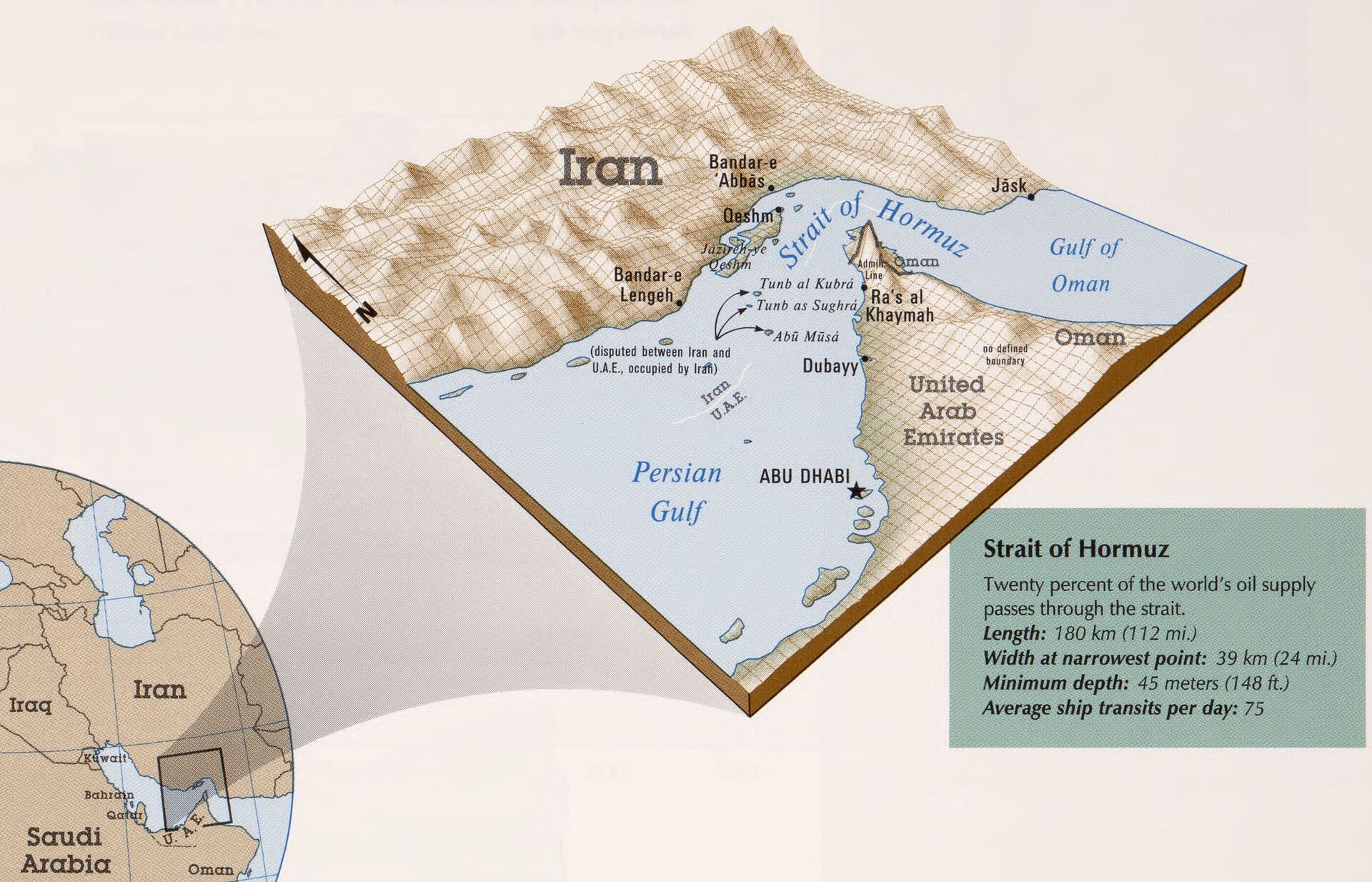
The practical consequence is that Saudi Arabia, the Gulf’s largest crude exporter, must continue routing shipments through Yanbu on the Red Sea and around the Cape of Good Hope to reach Asian customers — a detour that adds weeks to delivery times and compresses the price advantage Saudi crude holds over competitors who can still ship through the strait. The GCC issued a joint statement in July 2026 calling for “sustainable and unconditional reopening” of the strait, according to GlobalSecurity.org, a demand Tehran rejected entirely by asserting that the Strait of Hormuz lies “within the territorial waters of Iran and Oman.”
The exemption system effectively splits the GCC from within. Qatar, a member state, enjoys toll-free passage and a diplomatic role that gives it influence with both sides of the conflict. Saudi Arabia, the bloc’s de facto leader, has neither — and the uncertainty over American policy following the midterm elections, which gave Democrats control of both chambers of Congress, raises the question of whether Washington’s next move on Hormuz will prioritise the kind of unconditional reopening Riyadh wants or the conditional, incremental approach that Tehran is already building on its own.
Background
The Strait of Hormuz has been under varying degrees of Iranian restriction since the US-Israeli strikes on Iran that began on February 28, with the IRGC issuing radio warnings in early March declaring the strait closed to “unfriendly nations.” Foreign Minister Abbas Araghchi named China, Russia, India, Iraq and Pakistan as “friendly nations” with passage rights in those early weeks — a list that has since been narrowed and formalised into the four-country exemption announced November 3, with Russia and Pakistan absent from the latest version.
The Persian Gulf Strait Authority was established as the formal permit body, and an interim truce following the June 17 US-Iran memorandum collapsed in July after strikes resumed, prompting the IRGC to declare the strait closed again — the resumed closure that has been in effect since. Araghchi submitted a seven-condition reopening plan through Qatar on September 25, later compressed into a 2-day reopening offer with multiple conditions that remains unanswered, while the IRGC has continued to claim mine strikes against tankers through November 5.
Pusztai suggested in his Al Jazeera comments that Iran may be attempting to separate the strait and oil-export questions from the nuclear issue — using the exemptions to build bilateral relationships that survive regardless of whether a broader deal with Washington materialises. Whether that calculation holds depends on questions the November 3 announcement did not answer, starting with the one Pusztai himself raised: what “ships of these countries” actually means when an IRGC patrol boat stops a tanker flying one flag, owned by a company registered in a second country, carrying crude bound for a third.
Frequently Asked Questions
Has India or China publicly confirmed the Hormuz exemption?
Neither New Delhi nor Beijing has publicly acknowledged or confirmed the transit arrangement described by Hayat-Moghaddam on November 3. India’s External Affairs Ministry and China’s Foreign Ministry have made no public statements on the matter as of November 6, suggesting both governments prefer to benefit from the exemptions without formally endorsing Iran’s claim to regulate transit through the strait — a posture that preserves their relationships with Washington while allowing their vessels to continue moving through Hormuz under the PGSA framework.
What legal basis does Iran claim for the transit restrictions?
Iran asserts that the Strait of Hormuz lies within Iranian and Omani territorial waters, a position that conflicts with the “transit passage” right established under the United Nations Convention on the Law of the Sea. Bilal Habib Qazi, a research analyst at Islamabad’s Institute of Regional Studies, noted in an Asia Times analysis that Iran’s legal standing is weakened by the fact that Tehran signed UNCLOS in 1982 but has never ratified the treaty, leaving its invocation of sovereign rights over the waterway on uncertain legal footing — a gap between signature and ratification that critics argue undermines Iran’s authority to impose any transit regime at all.
Could other countries join the exemption list?
Araghchi named Pakistan and Russia alongside China, India and Iraq as “friendly nations” with passage rights in March, but neither appears in the November 3 announcement. Pakistan’s membership in the Makkah joint defence pact with Saudi Arabia and Turkey complicates its relationship with Tehran, and Russia’s absence from the updated list is unexplained in the public record. Japan and South Korea, both major Gulf crude importers and US allies, are excluded — a point Qazi framed in his Asia Times analysis as evidence that the exemptions function as a tool to pressure American allies in Asia who depend on Gulf energy but lack any diplomatic channel to Tehran.
How does the 2-day reopening offer relate to the exemptions?
The 2-day reopening plan, transmitted through Qatar and containing multiple conditions including the lifting of sanctions and a reduction in US military presence, addresses the strait’s status as a whole — a full, if temporary, reopening for all traffic. The exemptions operate on a parallel track as a unilateral Iranian arrangement that functions regardless of whether the broader offer is accepted. The coexistence of both suggests Tehran is building a long-term transit regime it controls rather than simply waiting for a deal with Washington to restore the pre-war status quo, and that the exemption system may outlast the current war even if a ceasefire eventually takes hold.
The House of Saud Daily Briefing
Saudi Arabia's news in 3 minutes, every morning. Free. See today's issue