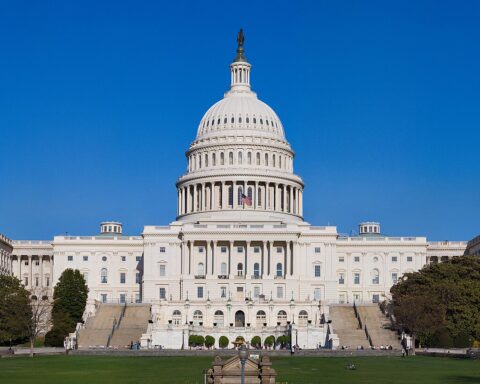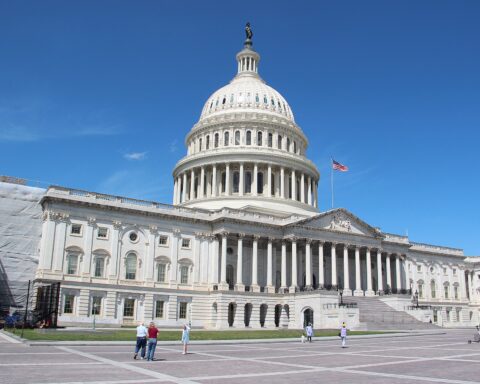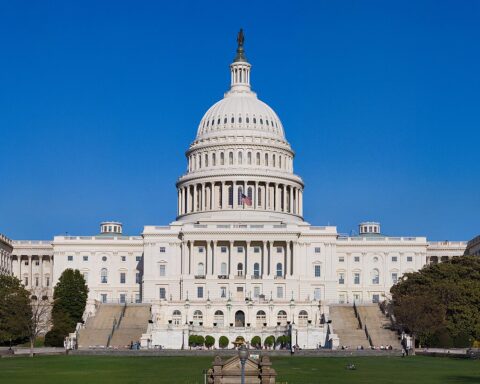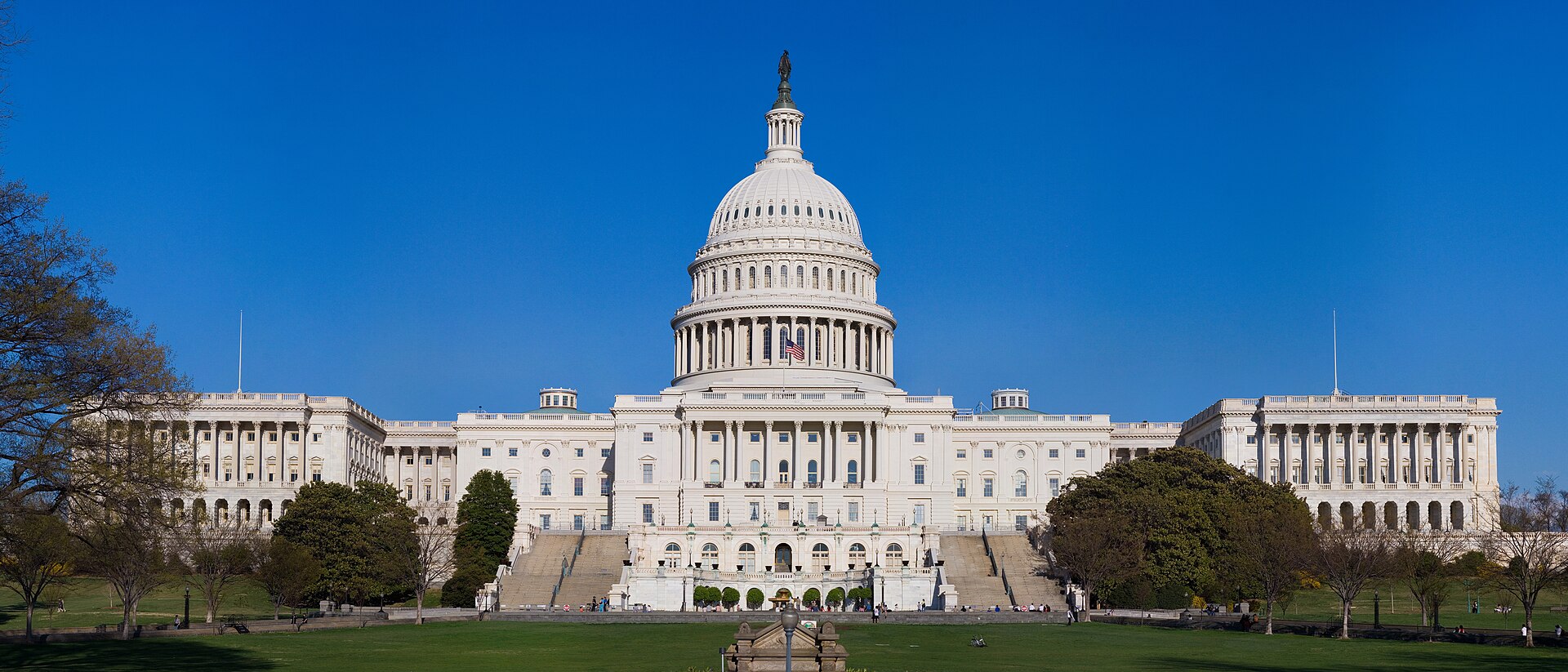

WASHINGTON — Democrats won control of both chambers of Congress on Tuesday, but the 120th Congress does not seat until January 3, 2027 — leaving President Donald Trump with roughly nine weeks of unilateral authority over the Iran war, the unresolved Hormuz blockade, and a $24.3 billion F-35 sale to Saudi Arabia that has passed its congressional review period without a successful disapproval vote.
The gap between election night and the swearing-in ceremony is not ceremonial. It is the period during which every unfinished piece of the Gulf crisis — the Makkah Pact, the Qatari Hormuz initiative, the Saudi defence relationship — must either reach closure or survive a transition in which the incoming majority has promised to end the war. Incoming House Speaker Hakeem Jeffries listed ending the Iran conflict as one of his four stated priorities for the new Congress, according to the Manila Times. Incoming Senate Majority Leader Chuck Schumer told Time the path runs through federal spending: “We are going to end the war.”
Table of Contents
- The 9-Week Window: What Trump Can and Cannot Do
- Why Haven’t 14 Senate Votes Stopped the War?
- The December 11 Deadline and the Cambodia Precedent
- Can Gulf Intermediaries Close a Hormuz Deal Before January 3?
- The F-35 Sale and the Arms Export Control Act
- How Tehran Is Reading the Results
- Background: From February Strikes to November Stalemate
- FAQ
The 9-Week Window: What Trump Can and Cannot Do
The Republican-controlled 119th Congress remains in session until the 120th Congress convenes on January 3, 2027. During that period, Trump retains every executive prerogative he has exercised since launching the Iran campaign on February 28, 2026 — more than eight months ago, according to Newsweek. The Democratic majority that voters delivered on November 5 exists, for now, only on paper.
The House of Saud Daily Briefing
Saudi Arabia's news in 3 minutes, every morning. Free. See today's issue
Jennifer Hendrixson White, a visiting scholar at Carnegie’s American Statecraft Program, framed the constraint plainly: “History suggests, however, that a Congress in opposition to a sitting president faces limited options.” The observation applies doubly during a lame-duck session, when the outgoing Republican majority has no incentive to hand Democrats an early legislative victory on war powers. The Carnegie analysis noted that the Senate has voted fourteen times on Iran war-powers measures during the 119th Congress; only the June 2026 concurrent resolution passed both chambers.
William Figueroa, an assistant professor of international relations at the University of Groningen, told Time that Trump “has little else to lose should he decide to pursue another escalation.” The Wall Street Journal reported that Trump told Gulf allies to prepare for a “brief, high-intensity campaign” after the November elections, according to the Manila Times. In a Financial Times interview published on November 3, Trump offered a different tone: he has “no immediate plans” to renew strikes but said the US is “locked and loaded if we need to go, but there may be no reason for it,” as reported by Arutz Sheva.
The contradiction between those two signals — prepare for intensity, but there may be no reason — is the operating environment for every Gulf capital, every intermediary, and every commander in CENTCOM’s area of responsibility for the next nine weeks.
Why Haven’t 14 Senate Votes Stopped the War?
The Senate’s fourteen war-powers votes during the 119th Congress produced one joint product: H.Con.Res. 86, a concurrent resolution directing Trump to remove US forces from hostilities with Iran. It passed the House 215–208 on June 3 and the Senate 50–48, with both chambers agreeing to final passage on June 23, 2026, according to the American Society of International Law.
The resolution changed nothing on the ground. Because it is a concurrent resolution — passed by both chambers but not presented to the president for signature — it carries no legally binding enforcement power under most constitutional interpretations. The White House dismissed it as unconstitutional and argued it no longer applied because an April 2026 ceasefire had “terminated” hostilities, according to Newsweek and Lawfare. The administration’s position draws support from the Supreme Court’s 1983 ruling in INS v. Chadha, which cast doubt on the constitutionality of legislative vetoes not presented to the president — the mechanism underlying Section 5(c) of the 1973 War Powers Resolution.
Democrats now hold both chambers, but they still lack a veto-proof majority in either one. Any binding legislation to constrain or end the war must survive a presidential veto, requiring two-thirds supermajorities in both the House and Senate. The Carnegie Endowment, Foreign Policy, and Gulf News all assessed this threshold as effectively unreachable with current margins. The arithmetic has not changed since Tuesday; what changed is the calendar.
The December 11 Deadline and the Cambodia Precedent
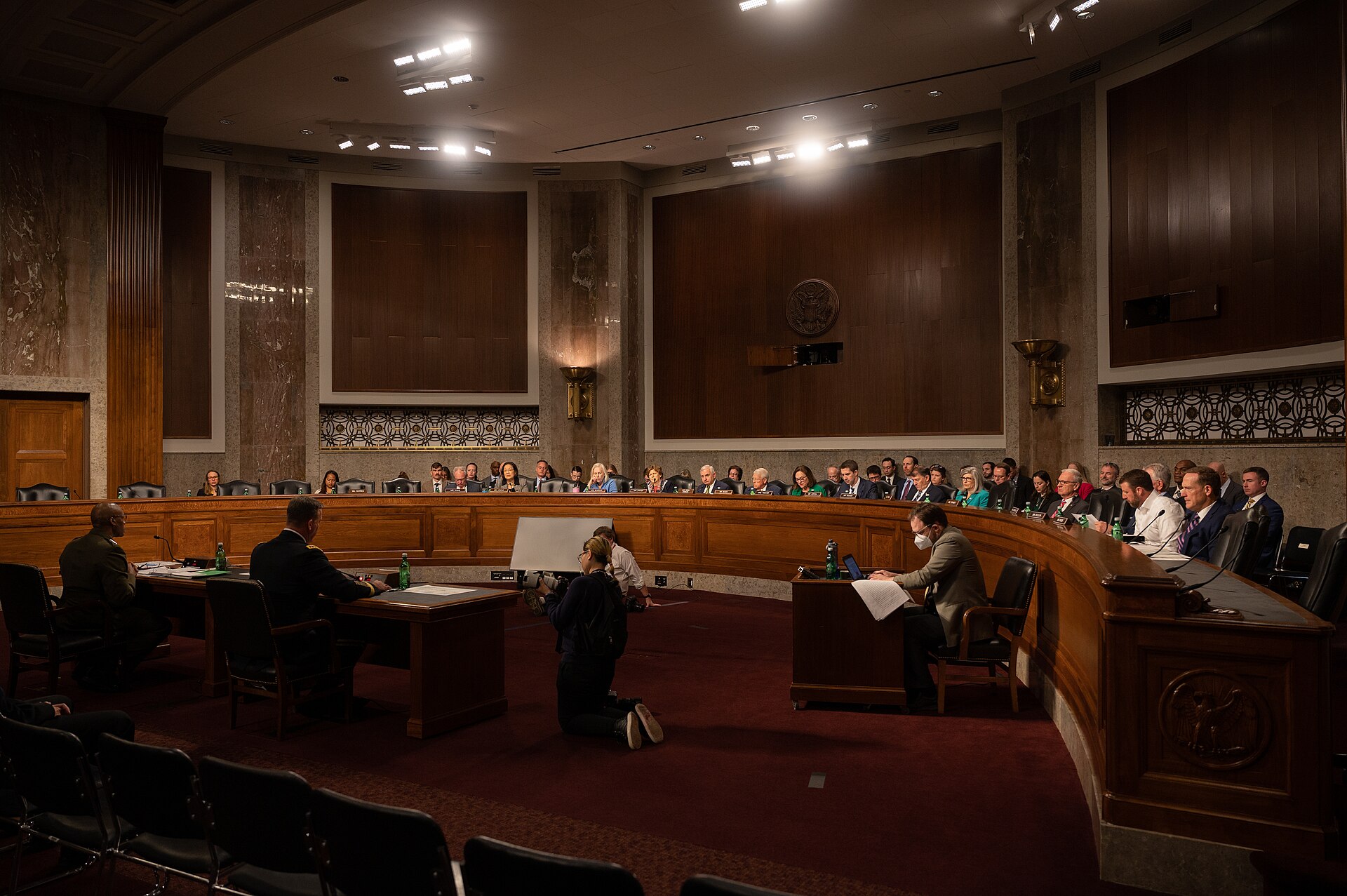
The government’s continuing resolution expires on December 11, and Democrats see it as their first concrete pressure point — weeks before a single new member takes the oath. Brian Finucane, a senior adviser at the International Crisis Group and former State Department attorney adviser, told Foreign Policy that “attaching a funding prohibition to a must-pass piece of funding legislation” is the most effective mechanism available. He cited the historical model directly: in 1973, Congress nearly forced a government shutdown to end Nixon’s bombing of Cambodia.
The Cambodia parallel has limits. Nixon faced a bipartisan revolt after years of escalation; Trump faces a lame-duck Republican majority with no institutional reason to cooperate with incoming Democrats on a funding rider. The 1973 Congress succeeded in the end because the appropriations process gave opponents a vehicle that the president could not ignore — the government needed money to operate. The December 11 deadline offers Democrats an identical vehicle, but they would need either Republican cooperation or enough procedural standing in the lame-duck session to attach Iran-related conditions.
The second vehicle is the National Defense Authorization Act. Senate Democrats blocked the 2026 NDAA in July, largely over Iran-related provisions, according to the Carnegie Endowment. The NDAA has not missed a year in sixty-five consecutive years. If the lame-duck Congress attempts to pass it before January 3, Democrats have a blocking position — and a bargaining chip. Finucane described the current moment as “a generational high point in terms of the political salience of these war powers issues.”
Can Gulf Intermediaries Close a Hormuz Deal Before January 3?
The task for Qatar, Saudi Arabia, and Pakistan is to convert the Makkah framework into a signed interim text before the Republican Congress expires — a reading the Manila Times advanced in its November 6 analysis. No Gulf state official has publicly named January 3 as a diplomatic deadline, but the logic is difficult to escape: a Democratic Congress with war-ending ambitions may impose conditions on any deal that Gulf states would prefer to avoid, and Trump’s willingness to negotiate may evaporate if he concludes the window is closing.
Qatar is already pushing a narrower Hormuz arrangement. Iran’s foreign minister, Abbas Araghchi, called the US reply on Hormuz “not convincing” on November 5, even as Qatar pressed for a scaled-down agreement. Iran’s stated conditions for any Hormuz deal include lifting post-Islamabad memorandum sanctions, reducing US forces in the region, restoring oil waivers, and releasing frozen Iranian funds, according to Antiwar.com. The Makkah Pact still lacks a joint command structure, and Pakistan — which ratified the pact on October 23 — offered cautious optimism through its military spokesman, Lt. Gen. Ahmed Sharif Chaudhry, who told the Manila Times that Pakistan is “cautiously optimistic” but warned that “powerful spoilers” still want the conflict to continue.
Mark Cancian, a senior adviser at CSIS, told Newsweek: “I think the president will give negotiations some time because he always hopes to negotiate a settlement.” The Hormuz Strait, where the IRGC declared a closure on October 26, carried roughly 138 ships per day before the war according to the Joint Maritime Information Center. CENTCOM reported that 135 ships had been turned around since the blockade began, as reported by Gulf News. Saudi oil exports stood at an estimated 5.52 million barrels per day for October, according to Kpler — with both the Hormuz and East-West pipeline routes operating under degraded conditions.
The F-35 Sale and the Arms Export Control Act
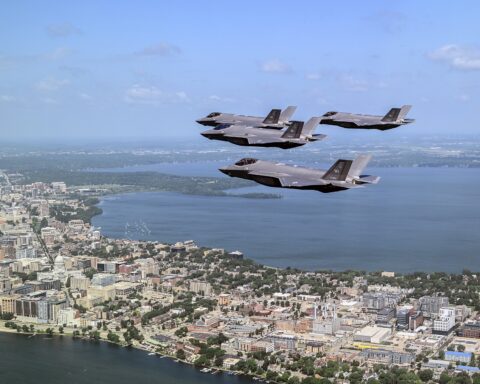
The State Department notified Congress on September 17 of a possible sale of 48 F-35A jets and 49 F135 engines to Saudi Arabia, valued at up to $24.3 billion, according to Breaking Defense. The 30-day congressional review period has passed. Under the Arms Export Control Act, the sale proceeds unless Congress passes a joint resolution of disapproval — which itself would require both chambers and either a presidential signature or a veto override.
Senator Rand Paul introduced a disapproval resolution on September 24, according to Export Compliance Daily. The resolution’s fate in the lame-duck session is uncertain: a Republican majority is unlikely to block a sale that the administration wants, and Democrats — even those who might oppose the sale on human-rights or war-powers grounds — face a procedural clock that favours the executive. For Riyadh, the F-35s are inseparable from the broader security architecture that the Makkah Pact is meant to formalise.
The incoming Democratic Congress could revisit the sale after January 3, but reversing an approved arms transfer is substantially harder than blocking one during the review period. The Arms Export Control Act’s structure gives the advantage to a president who moves quickly — another reason the lame-duck window matters for Saudi defence planners.
How Tehran Is Reading the Results
Iran’s leadership offered two readings of the Democratic victory, and they pointed in opposite directions. Parliament Speaker Mohammad Bagher Ghalibaf wrote on X on November 4: “Conscience or the cost of living, Americans said NO TO WAR, and we endorse this message.” He followed it with a warning: if the US government “betrays their public will, it will learn our NO comes with a Nightmare,” as reported by CNBC.
Supreme Leader Mojtaba Khamenei took a harder line. In a statement posted on X following election projections, he said “the process of the US’s collapse has accelerated” and warned that anyone hoping US political party shifts would change Washington’s behaviour “is gravely mistaken,” according to CNBC. The two statements bracket Tehran’s internal debate: Ghalibaf’s framing treats the election as an opening for a deal; Khamenei’s framing treats it as irrelevant to the fundamental conflict.
Foreign Minister Araghchi confirmed on October 31 that Iran was maintaining “continuing consultations regarding our conditions” on the Qatari initiative but had no plans for direct talks with US officials, the Manila Times reported. The IRGC’s operational posture has not softened in parallel with diplomatic signals: on November 5, the IRGC reported that two tankers and a tugboat caught fire in Hormuz after mines, the latest in a series of such incidents since the blockade resumed on July 14.
Background: From February Strikes to November Stalemate
Trump launched the Iran campaign on February 28, 2026. Pakistan brokered a ceasefire in April, which produced the highest-level direct US-Iran engagement since 1979, hosted in Islamabad. That process yielded a 14-point Islamabad memorandum in June; it lapsed in August, according to the Manila Times. The Araghchi seven-day plan, submitted at the United Nations in New York on September 25, proposed a structured Hormuz reopening that Qatar later tried to compress into a shorter timeline.
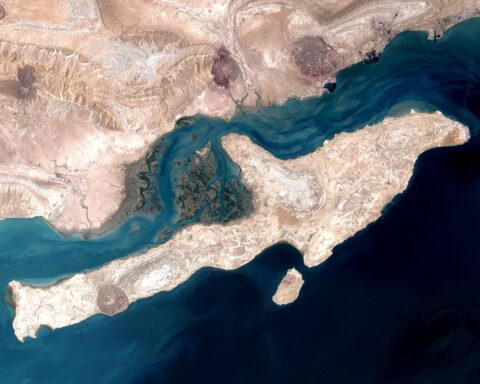
The Makkah Pact — signed by Saudi Arabia, Turkey, and Pakistan on August 7 — created a regional security framework, but it still lacks a joint command. France confirmed soldiers, radars, and defence systems to protect the Yanbu oil terminal in September, according to Al Jazeera. The US struck Iran’s Qeshm Island on November 3, confirmed by Time and multiple outlets. On the American political front, Vice President JD Vance wrote on X that “the reason we lost is the war,” while Trump told Fox News that Iran was “a part” of the reason for the GOP defeat, as reported by the Manila Times.
The question facing every actor in this crisis is whether the nine weeks between now and January 3 function as a cooling period or an accelerant. Democrats cannot legislate until they are seated. Trump cannot ignore that they are coming. Gulf intermediaries cannot assume either side will wait.
FAQ
When does the new Democratic Congress actually take power?
The 120th Congress convenes on January 3, 2027. Until that date, the Republican-controlled 119th Congress remains the sitting legislature. Democrats who won on November 5 are members-elect, not members — they cannot vote, introduce legislation, or chair committees until sworn in. The lame-duck period runs from election day through January 2, and the outgoing majority controls the floor schedule, committee agendas, and any votes that occur during that window.
Could Democrats use the debt ceiling or government shutdown threat to force an end to the war before January 3?
The continuing resolution expires December 11, giving Democrats a blocking position on government funding during the lame-duck session. However, they would need cooperation from enough Republicans — or procedural tools in the outgoing Congress — to attach Iran-related conditions to a must-pass spending bill. The NDAA, which has passed for sixty-five consecutive years, is the second potential vehicle. Democrats blocked it in July 2026 over Iran provisions and could use lame-duck negotiations to extract concessions. Neither path guarantees results before January 3: the outgoing Republican leadership controls the legislative calendar.
What legal authority is Trump using for the Iran war?
The administration has relied on the president’s Article II constitutional authority as commander-in-chief. The concurrent resolution H.Con.Res. 86, passed in June 2026, directed withdrawal from hostilities but lacks binding legal force because it was not presented to the president — a structural weakness rooted in the Supreme Court’s 1983 INS v. Chadha decision, which undermined the concurrent-resolution mechanism in the War Powers Resolution of 1973.
What happens to the Saudi F-35 sale if Democrats try to block it after January 3?
Under the Arms Export Control Act, the 30-day congressional notification period for the $24.3 billion sale has already elapsed. Senator Rand Paul’s September 24 disapproval resolution would need to pass both chambers and survive a presidential veto to block the sale. After January 3, a new Congress could introduce fresh disapproval legislation, but reversing an arms sale that has cleared its review period and potentially begun contract execution is procedurally and diplomatically more difficult than blocking one during the initial window. Saudi Arabia’s defence ministry has treated the F-35 acquisition as foundational to its post-Makkah Pact security posture.
Is Iran likely to agree to a Hormuz deal during the lame-duck period?
Iran’s public position, as stated by Foreign Minister Araghchi on October 31, is that consultations continue but no direct US talks are planned. Tehran’s conditions — sanctions relief, force reductions, oil waivers, frozen funds — represent a package that Trump is unlikely to accept in full, and Iran has shown no willingness to narrow them. The IRGC’s continued mine warfare in Hormuz, including the November 5 tanker fires, suggests the military wing is not operating on the same timeline as the diplomatic corps. Gulf intermediaries, particularly Qatar, are pushing a scaled-down arrangement, but the data here is thin on whether either Washington or Tehran sees the nine-week window as a deadline rather than a parenthesis.
The House of Saud Daily Briefing
Saudi Arabia's news in 3 minutes, every morning. Free. See today's issue