
DUBAI — Iran’s Islamic Revolutionary Guard Corps claimed on Friday that two more oil tankers struck naval mines and caught fire in the Strait of Hormuz, the latest in a series of unverified assertions that no independent maritime authority has confirmed. Brent crude held near $99 a barrel on Friday morning, extending a 3.88 percent rebound from Thursday’s settlement after the steepest weekly plunge in oil prices since 2020.
The IRGC Navy’s statement, posted at 07:58 GMT and carried by Mehr News Agency, alleged both vessels had switched off their transponders and were transiting “unauthorized routes” with US military support. Neither vessel was named, no flag state was disclosed, and CBS News reported there was “no confirmation of any incidents from maritime officials” — extending a pattern in which IRGC mine claims have gone unverified by JMIC, CENTCOM or any flag-state authority since the blockade resumed in July.
The House of Saud Daily Briefing
Saudi Arabia's news in 3 minutes, every morning. Free. See today's issue
Table of Contents
What Did the IRGC Claim on November 6?
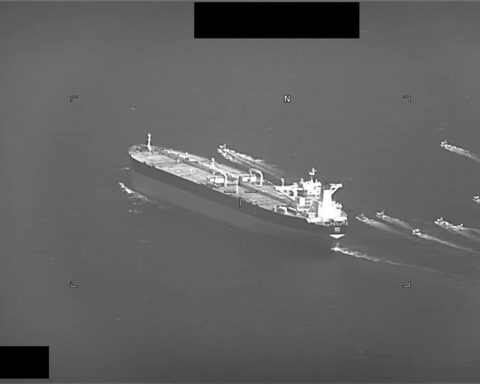
The IRGC Navy said one tanker was struck east of the Strait of Hormuz and a second inside the waterway itself, according to Axar.az citing APA and Middle East Eye. Both vessels were described as attempting to exit via routes the IRGC considered prohibited. The statement accused the tankers of having “turned off all their navigation and identification systems” — a reference to Automatic Identification System transponders — and of operating “with US military support,” Middle East Eye reported.
No cargo type, tonnage, crew nationality or casualty figures accompanied the statement. The IRGC did not explain how it had identified vessels whose transponders it said were dark. “The Strait of Hormuz is closed by God’s grace and the efforts of the IRGC Navy,” the statement read, according to Middle East Eye.
The corps warned that American efforts to push tankers through the area would yield nothing but humiliating failures — a warning relayed by Mehr News, which translated the IRGC statement as promising “further humiliating failures” for US-backed transit attempts. Mehr News separately relayed the IRGC’s position that the strait would remain closed until all seven of Iran’s conditions were met.
The claim followed an IRGC announcement on November 5 asserting that five vessels had struck mines — an incident covered in detail by House of Saud. Shafaq News described Friday’s announcement with the “two more” framing, distinguishing it from the earlier five-vessel claim. On November 5, the IRGC had also claimed two tankers and a tugboat caught fire after hitting mines in the strait.
A Pattern Without Confirmation
The gap between what the IRGC claims and what independent bodies can verify has defined the information environment around Hormuz for months. The Joint Maritime Information Center issued an advisory on October 18 stating there was “no substantiation” for the IRGC’s claim that two supertankers had struck mines on October 17. CENTCOM has gone further, stating at various points during the conflict that “no ships have hit mines in the Strait of Hormuz,” according to gCaptain.
IranWire, an independent Iranian diaspora outlet, noted on November 6 that the latest claim came despite “earlier US assertions that the main shipping lanes had been cleared of mines.” gCaptain’s running analysis of IRGC mine announcements has described the supporting evidence across all claims since at least July as “elusive.”
President Trump has previously accused Iran of “making up” attacks on ships in the strait to drive up oil prices ahead of the midterm elections, CBS News reported. No specific White House statement responding to Friday’s claim was issued during the morning hours. Trump did tell reporters “You will know very soon” regarding a decision on Iran, and called Qatar’s Emir to discuss diplomatic efforts, per the CBS News live blog.
The credibility dispute matters because markets move on the claims whether or not they are later verified. Robin Brooks, a senior fellow at the Brookings Institution, has estimated in his published analysis that the geopolitical fear premium baked into crude prices is worth at least $20 a barrel. That premium responds to the announcement itself, not to whatever happens afterward in the verification chain.
How Did Oil Markets Respond?
Brent crude settled Thursday, November 5, at $98.29 a barrel — up $3.67 or 3.88 percent from Wednesday’s post-midterm crash — according to ADVFN-Equentis data compiled by BigGo Finance. West Texas Intermediate settled at $90.52, gaining $2.40 or 2.72 percent. On Friday morning, Brent traded near $99.42, OilPrice.com reported.
The rebound sits against one of the worst weeks for oil in years. Brent settled Wednesday at $94.62 — down $8.98 or 8.7 percent — its lowest close since August 31. Democrats had swept both chambers of Congress in Tuesday’s midterm elections, and traders immediately priced in expectations that Washington would pursue de-escalation with Tehran. The result was an aggressive selloff that erased weeks of risk premium in a single session.
“Until there is a credible path to safer, cheaper transit through the Gulf, [the market will stay unsettled].”
Tim Waterer, analyst, KCM Trade — via OilPrice.com, November 6, 2026
For the week, Brent was heading toward a loss of 12 to 16 percent — the steepest since the COVID-driven collapse of 2020, according to OilPrice.com, RTE and BigGo Finance. Andy Lipow of Lipow Oil Associates told BigGo Finance that reports of mine strikes and drone attacks on tankers “continue to unsettle the market.” Gelber and Associates described the Thursday rebound as showing “caution about pricing in a rapid normalisation of oil flows” before diplomacy yields dependable shipping.
Analyst expectations for where Brent heads next reflect genuine uncertainty about whether the political shift in Washington will translate into a change on the water. Eurasia Group cut its odds of a US-Iran deal to 10 percent and warned that escalation could push Brent to $110–$125 a barrel, BigGo Finance reported. ING’s research team wrote that “the oil market is likely to continue to slowly give back the risk premium it built in recent months.” Alex Kuptsikevich of FXPro offered a different read: “The Republicans’ defeat in the elections does not mean that the conflict in the Middle East will not escalate,” he told OilPrice.com.
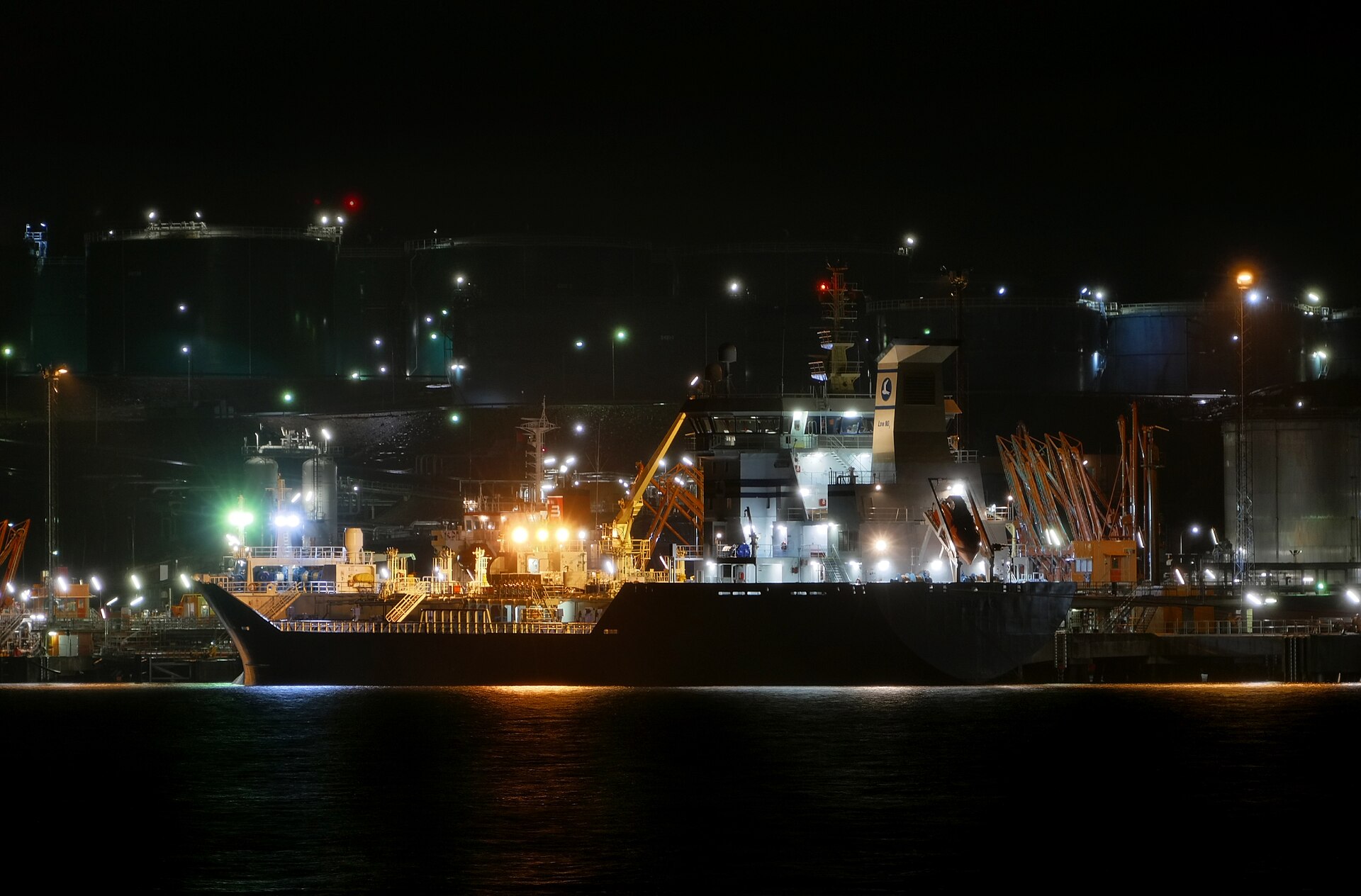
Ole Hansen of Saxo Bank described the market as “exposed to binary geopolitical risks” with no US-Tehran deal in place, telling The National News on November 5 that Middle East crude exports had recovered but refined fuel supplies had not. Paul Donovan of UBS Global Wealth Management put what he called the “fundamental fair value” of oil at $80 to $85 a barrel once the fighting ends, speaking to The National News. Citigroup’s research team warned that the White House, with the midterms behind it, might rely more on executive authority — a path that could escalate the conflict rather than wind it down, according to BigGo Finance.
| Benchmark | Date / Session | Price ($/bbl) | Change |
|---|---|---|---|
| Brent | Wed Nov 4 settlement | 94.62 | –8.7% |
| Brent | Thu Nov 5 settlement | 98.29 | +3.88% |
| Brent | Fri Nov 6 morning | ~99.42 | — |
| WTI | Thu Nov 5 settlement | 90.52 | +2.72% |
| Brent | Weekly (to Nov 6) | — | –12% to –16% |
What Is Known About the MT Velos Sapphire Attack?
While the IRGC’s mine claims remain unverified, a confirmed attack with a fatality occurred in the Persian Gulf on or around November 4–5. The Greek-operated, Marshall Islands-flagged product tanker MT Velos Sapphire — a 75,000-deadweight-ton vessel managed by Velos Tankers — was struck by two unidentified projectiles approximately 50 nautical miles north of Madinat ash Shamal, Qatar, according to Riviera Maritime Media and Business Recorder citing Reuters.
One crew member was killed. The vessel had been sailing unladen toward Bahrain and was towed to Khalifa Bin Salman Port, Business Recorder reported. No party claimed responsibility, and the projectiles were not described as mines — distinguishing this incident from the IRGC’s narrative about its own waterway.
Separately, UKMTO reported a tanker explosion at approximately 22:00 GMT on November 5, roughly 16 nautical miles east of Khasab, Oman, according to Arab News. The vessel remained under its own power and all crew were safe. The advisory did not attribute the blast to mines or name the ship.
The International Maritime Organization had documented 129 incidents in the Strait of Hormuz and the wider Middle East region as of November 6, resulting in 25 seafarer fatalities since the conflict began, Riviera Maritime Media reported. JMIC classifies the current Hormuz threat level as “SEVERE,” according to gCaptain.
Diplomacy and the Two-Day Deal
Iran’s Foreign Minister Abbas Araghchi phoned his Saudi and Qatari counterparts on Thursday to discuss regional stability, Middle East Eye and Iranian state media reported — a signal that the diplomatic track remains open even as the IRGC issues fresh mine claims. Iran’s two-day Hormuz reopening offer, mediated by Qatar, remained on the table as of November 6, though no agreement had been reached, according to CBS News and Mehr News.
The offer carries multiple conditions, including the lifting of the US-led blockade, easing of sanctions and the release of frozen Iranian funds. The IRGC simultaneously maintains that the strait remains closed until all seven conditions are met — a position restated in Friday’s statement. Iran rejected an earlier US response on Hormuz through SNSC Secretary Mohsen Rezaei, who called it “not convincing.”
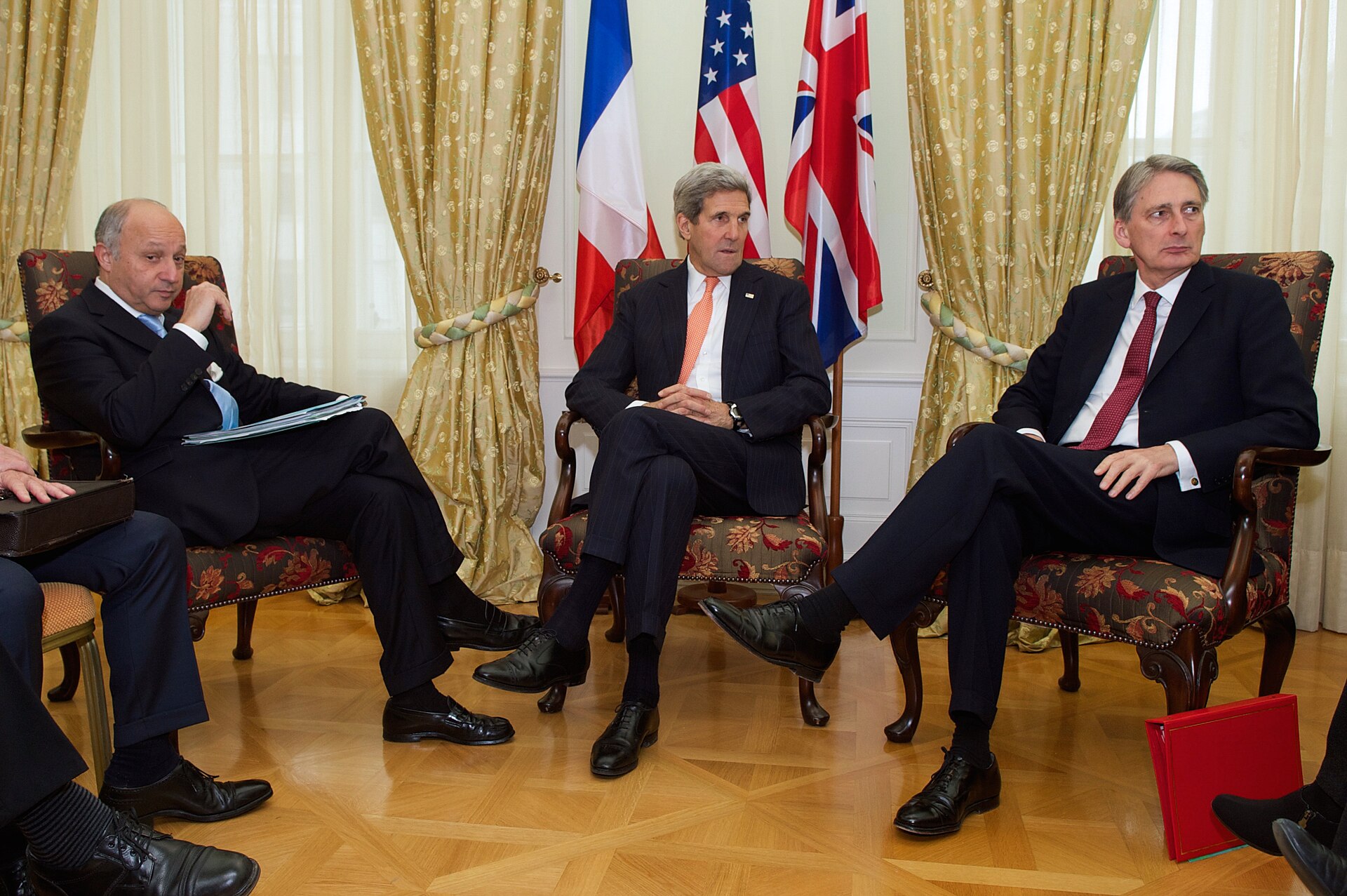
The coexistence of diplomatic outreach from the Foreign Ministry and hardline rhetoric from the IRGC has characterized Iran’s posture throughout the conflict. Iran this week exempted India, China, Iraq and Qatar from Hormuz transit restrictions — a move suggesting selective, managed access to the waterway rather than the total closure the IRGC’s language implies. Kpler preliminary data showed Hormuz flows near 14 million barrels per day, approximately 82 percent of pre-war levels.
Democrats’ sweep of both chambers on Tuesday — and its implications for Trump’s war authority until January 3 — drove Wednesday’s oil crash on de-escalation hopes. But Trump retains executive authority over military operations until the new Congress is seated, and Eurasia Group puts the probability of an actual US-Iran deal at 10 percent.
Background
The IRGC declared the Strait of Hormuz closed on October 26, 2026 — a resumption of the original blockade that began on April 13. JMIC data showed 138 vessels transiting the strait daily before the closure. The corps has made repeated mine-strike claims throughout October and November, none of which JMIC or CENTCOM has confirmed.
Frequently Asked Questions
Has any maritime authority confirmed the IRGC’s mine claims during this conflict?
No. As of November 6, neither CENTCOM, JMIC, UKMTO nor any flag-state maritime authority has confirmed mine strikes on the tankers described in any of the IRGC’s recent announcements. JMIC’s October 18 advisory found “no substantiation” for the preceding claim, and CENTCOM has denied mine incidents throughout the conflict. JMIC does classify the Hormuz threat level as “SEVERE” — an assessment that affects insurance premiums and shipping decisions regardless of whether individual mine claims are verified, because it reflects the cumulative danger of operating in the strait.
Why do unverified IRGC claims still move oil prices?
Shipping insurance underwriters and commodity traders do not wait for official confirmation before repricing risk. A mine claim — even one CENTCOM disputes — raises the theoretical cost of transiting Hormuz, which handles roughly 20 percent of global seaborne oil. War-risk insurance premiums for vessels entering the strait have risen sharply since the blockade resumed, and shipowners pass those costs through in freight rates. The speed of the repricing means the claim itself generates an economic effect independent of the underlying event, which is why the IRGC’s announcements consistently move Brent even when follow-up verification never arrives.
What would happen to oil prices if a Hormuz deal were reached?
Paul Donovan of UBS Global Wealth Management has estimated “fundamental fair value” for oil at $80 to $85 a barrel without the war premium — roughly $15 to $20 below current levels. ING expects crude to “slowly give back the risk premium” as the conflict de-escalates. The key variable, according to multiple analysts, is not just whether a deal is announced but whether it produces verifiable safe passage. Gelber and Associates noted that even Thursday’s partial rebound reflected “caution about pricing in a rapid normalisation” before shipping can reliably resume at pre-war rates.
How do Iran’s transit exemptions square with the IRGC’s closure claims?
Iran announced exemptions from Hormuz transit restrictions for India, China, Iraq and Qatar — four of the strait’s largest users. Kpler preliminary data showed Hormuz flows at approximately 14 million barrels per day, or 82 percent of pre-war levels, suggesting the waterway is partially operational despite IRGC rhetoric about total closure. The exemptions indicate a managed approach in which Iran selectively permits allied or commercially necessary traffic while maintaining the formal position that the strait is closed, a duality that complicates both the IRGC’s credibility and Washington’s counter-narrative.
The House of Saud Daily Briefing
Saudi Arabia's news in 3 minutes, every morning. Free. See today's issue