DUBAI — The United States and Iran traded military strikes near the Strait of Hormuz for the second consecutive week — a cycle of attacks on missile launchers, retaliatory drone strikes on US-linked bases in Kuwait and Bahrain, and Iranian claims that three more oil tankers hit naval mines in the waterway that carries roughly a fifth of the world’s seaborne crude. Despite all of it, Brent crude posted its third consecutive weekly loss, with the Friday settlement on November 20 at $92.57 a barrel.
The gap between escalating violence and falling prices reveals something the headlines alone do not: oil markets have largely priced in the assumption that Hormuz stays contested but never fully closes, that the US naval blockade keeps enough traffic moving, and that alternative Saudi export routes keep enough crude flowing to prevent a supply crisis. Whether that assumption survives another week of mine claims and launcher strikes is a question neither Washington nor Tehran appears interested in settling.
The House of Saud Daily Briefing
Saudi Arabia's news in 3 minutes, every morning. Free. See today's issue
Table of Contents
What Happened Near Hormuz This Week?
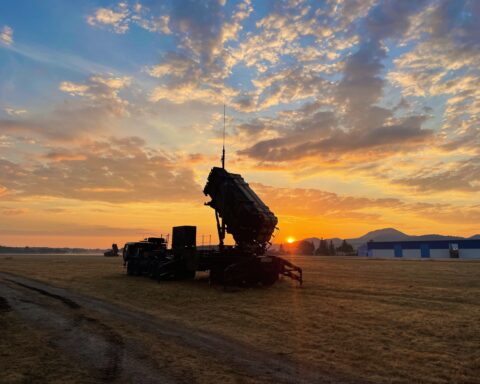
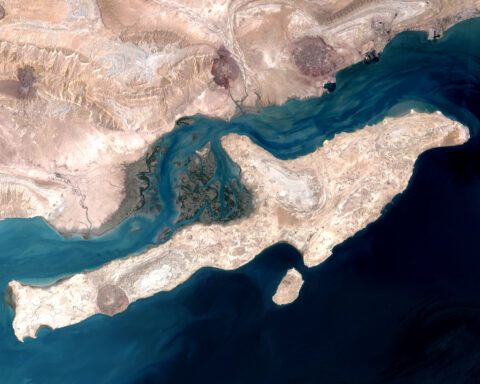
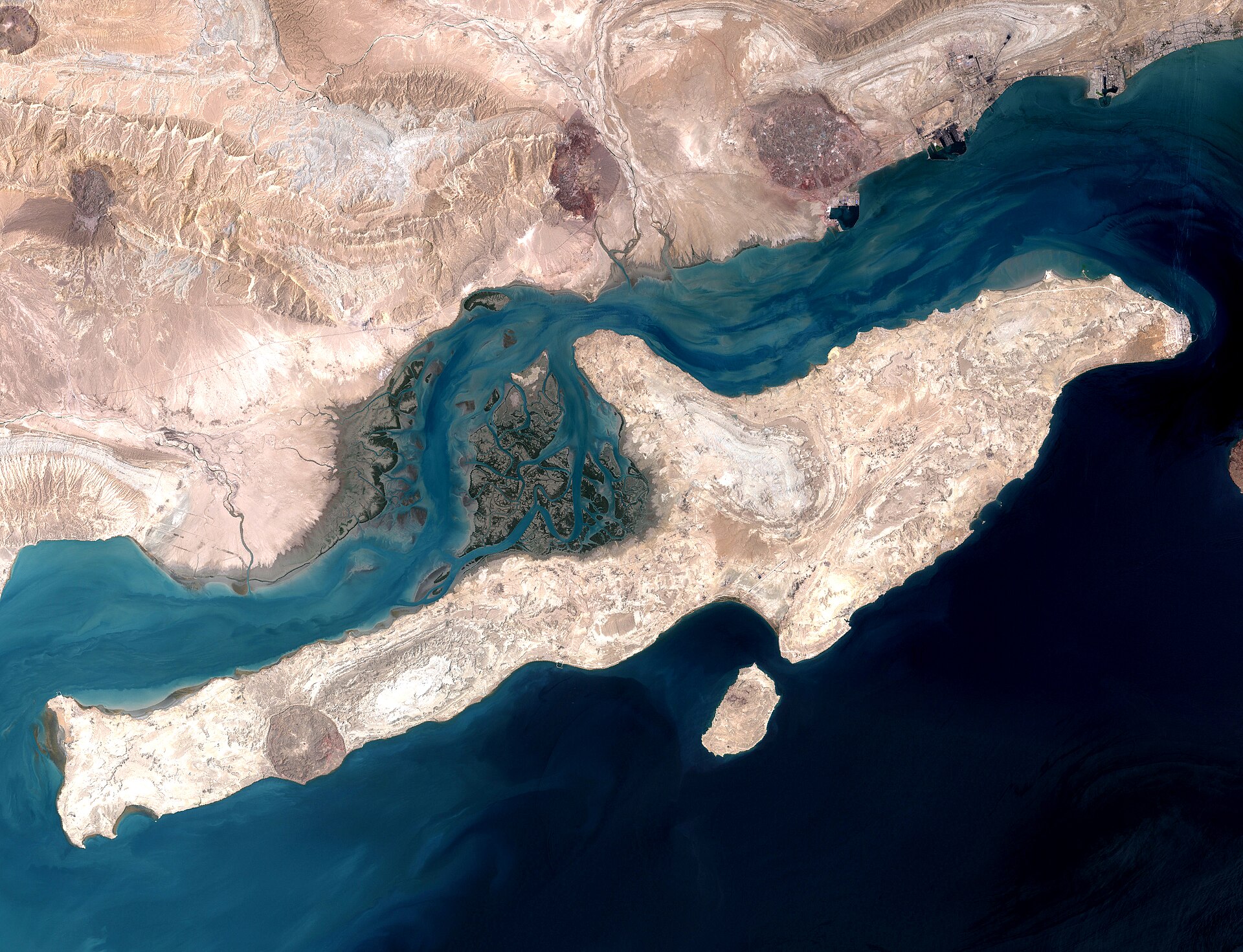
The most recent CENTCOM-confirmed action came on November 17, when US warplanes struck an IRGC missile launch site in the Nariman area of Qeshm Island, the Iranian-controlled territory that sits at the narrowest point of the strait. Two US military officials, speaking to Fox News, described the action as “self-defense… in response to IRGC aggression targeting U.S. personnel and assets,” while Iranian state media said the target was an air defense missile launcher and the deputy governor of Hormozgan province said the strike caused no damage, as reported by IranIntl and The National.
Iran’s answer came within 24 hours and reached well beyond the strait. On November 18, the IRGC widened its Gulf attacks by targeting Ali Al Salem Air Base in Kuwait and several sites in Bahrain, according to the Associated Press. The Kuwait attack was the first Iranian strike on Ali Al Salem since early September, AFP reported via the Express Tribune; Iranian attacks on Bahrain had already resumed on November 13 after a similar lull. Bahrain, which hosts the US Navy’s Fifth Fleet headquarters at Juffair, intercepted the attacks and called them “criminal,” according to Al Jazeera.
By November 21, the IRGC claimed it had struck US Patriot air defense systems at the Al-Riffa and Awali bases in Bahrain — a claim Bahrain disputed. Bahrain said the actual target was a civilian industrial site on Sitra Island, where two people were wounded: one Bahraini in stable condition, one Pakistani resident in critical condition, according to AFP and The New Arab.
On November 23, the IRGC claimed three oil tankers suffered “a severe explosion and fire after hitting naval mines” in the strait, attributing the tankers’ presence to “violating US support,” as reported on Al Jazeera’s liveblog. No independent confirmation of the tanker claims has emerged — a pattern consistent with previous IRGC mine announcements, several of which have gone unverified by UKMTO or other maritime monitoring bodies.
DW reported on November 24 that US forces had launched fresh strikes on Iranian assets near Hormuz, though the report could not be independently verified at the time of publication, and CENTCOM had already denied conducting any new Qeshm strike after Iranian media reported an explosion on the island on November 20, according to SSBCrack. What is confirmed: a week that produced a CENTCOM-acknowledged strike on an IRGC launch site, Iranian retaliatory attacks on at least two US-allied Gulf states, an IRGC claim of Patriot strikes that Bahrain says hit civilians, and unverified assertions that three more tankers were mined.
Why Is Oil Falling as Attacks Intensify?
At 09:00 GMT on November 23, Brent traded at $91.99 a barrel, up $1.11 from Friday’s close, as markets reacted to the overnight IRGC tanker claims, Engine Online reported. By the Friday settlement on November 20, Brent had closed at $92.57, down for a third straight week, while WTI had settled at $83.98, according to Oil Monitor weekly data.
The contrast with earlier in the month tells the story. When US forces struck Qeshm on November 2–3, in what officials described as “defensive strikes,” Brent jumped to approximately $106, a gain of about 1.7 percent, as The National and QZ reported. Three weeks later, a comparable cycle of strikes, retaliatory attacks and mine claims moved prices in the opposite direction — down rather than up, with the morning spike erased before London traders went home.
“Iran’s attacks on oil tankers transiting the Strait of Hormuz are getting more intense.”
Daniel Hynes, senior commodity strategist, ANZ Bank — Engine Online, November 23
But intensity alone no longer sustains a risk premium when the market sees those attacks producing the same outcome each time: claims without confirmed damage, blockade patrols that keep redirecting traffic, and no signs that either side is about to close or reopen the strait in a way that changes physical supply. Vandana Hari, founder of Vanda Insights, was paraphrased by Engine Online as saying Trump appeared inclined to resume the Iran war in the new year if no deal materialises — a scenario that could push prices down rather than up, because it implies a resolution by force rather than an indefinite slow bleed of Hormuz attacks.
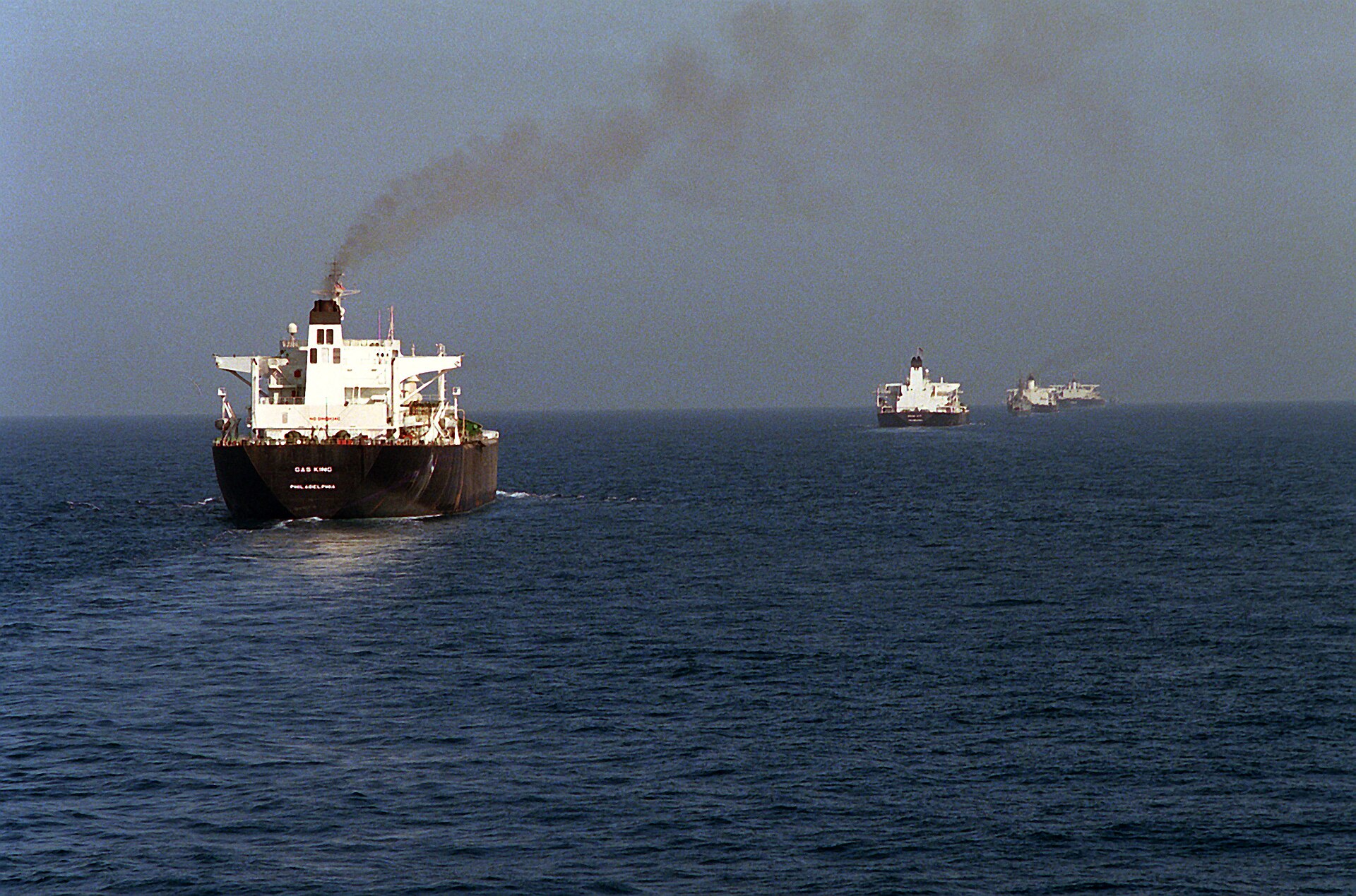
The blockade’s own numbers underpin the market’s assumption. Since June, CENTCOM has redirected 147 merchant vessels and disabled five ships that refused to comply, Gulf News reported. Admiral Brad Cooper, the CENTCOM commander, said in October that US forces had escorted more than 1.5 billion barrels of crude through the strait since the operation began. Those figures describe a contested waterway, not a closed one — and contested waterways, as the insurance and shipping markets have learned, eventually get priced in.
The 10-Week Lull That Broke
The current escalation did not begin in a vacuum. Iranian strikes on US-linked Gulf targets had run through the spring and summer before stopping in early September — a lull that lasted roughly 10 weeks, according to AFP via the Express Tribune. During that pause, Washington’s strategy of limited strikes on Iranian launchers and mine-laying infrastructure appeared to be working: the August 30 strike on Larak Island, which destroyed two IRGC rocket launchers being loaded with sea mine warheads, had bought time, and commercial shipping through the strait continued under US escort as the broader Gulf security picture absorbed the strain.
What ended the lull on November 13 is not entirely clear from the public record, but the IRGC had lifted its self-imposed 2,000-kilometre missile range limit on November 7, and CENTCOM created Task Force Iron Gate — a task force to disrupt Iran’s land-based weapons supply routes and Caspian Sea transit — the same day. When Iranian strikes resumed, they came with a tempo and geographic spread that exceeded the pre-lull pattern, hitting not only Hormuz-adjacent targets but bases in Kuwait and Bahrain that had been quiet for months.
From Launchers to Mines: The Infrastructure War
The November 17 Qeshm strike fits a pattern that began on Larak Island on August 30, when CENTCOM confirmed it had destroyed two IRGC rocket launchers as they were being prepared to fire mines into the strait. “IRGC forces were observed preparing to launch rockets with sea mines into the Strait of Hormuz,” Captain Tim Hawkins, CENTCOM’s spokesman, said at the time, as reported by The War Zone.
The launchers used truck-mounted MLRS systems loaded with Fajr-5 rockets — a 333mm-calibre round that can reportedly travel 75 kilometres carrying a warhead of between 90 and 170 kilograms, depending on the payload, according to Behnam Ben Taleblu, a senior fellow at the Foundation for Defense of Democracies. The significance was not the rockets themselves but what was strapped to them: sea mine warheads that gave the IRGC the ability to reseed Hormuz from shore without exposing boats to US naval patrols. Ben Taleblu told The War Zone that the use of a rocket launcher “signals that the regime is sensitive to cost and risk” — a truck is cheaper and more disposable than a minelaying vessel.
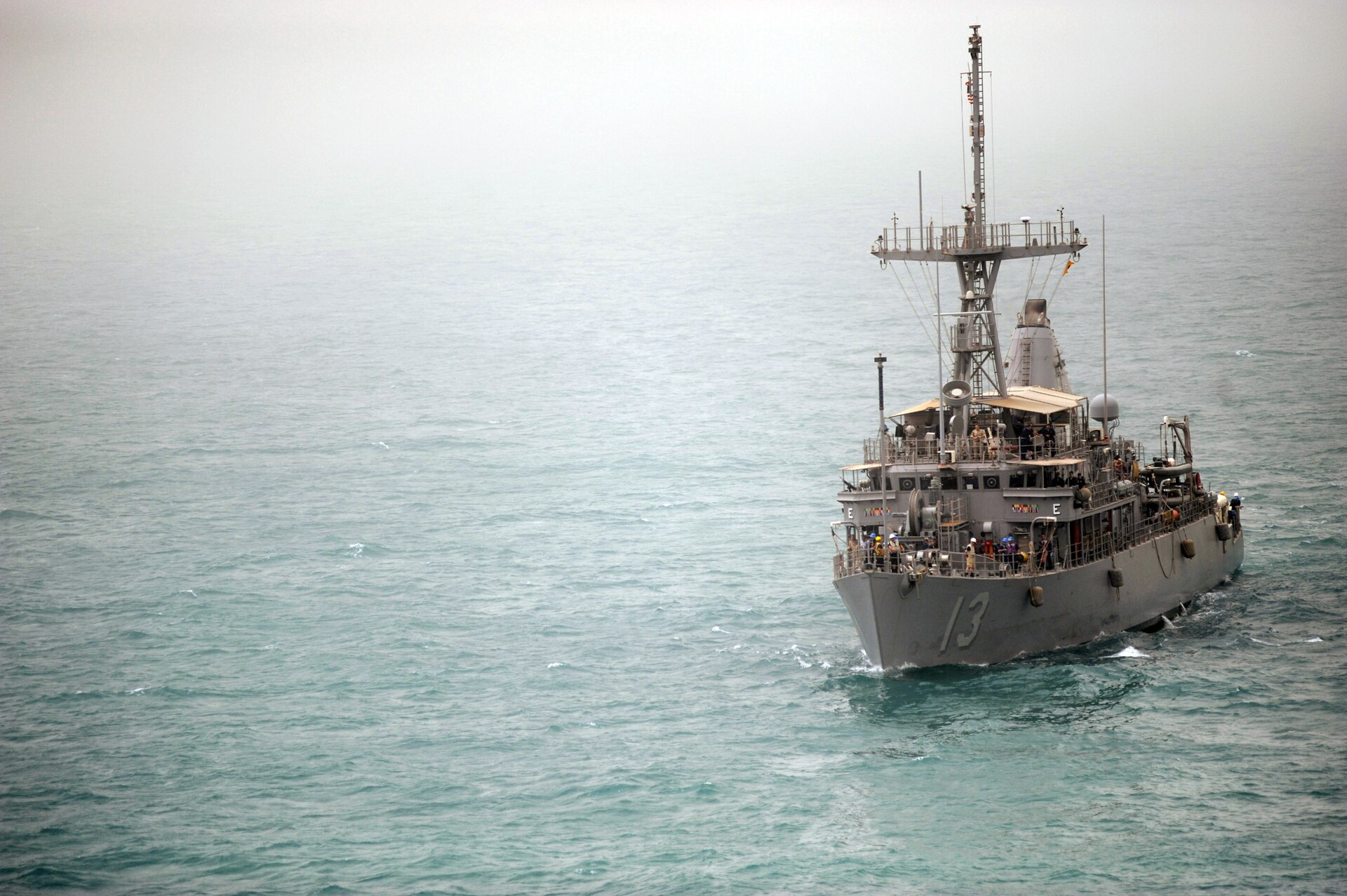
The strategic logic behind the US approach, as an official described it to Axios, amounts to “mow the lawn” — repeated strikes to degrade Iran’s attack capacity without crossing into the kind of wider war that would send oil above $120 and kill whatever remains of the diplomatic track. The Larak strike, the official said, “bought at least a month” of reduced threat for commercial shipping.
Whether the November 17 Qeshm strike bought a comparable window is less clear, given that Iranian retaliatory attacks on Kuwait and Bahrain followed within a day and the IRGC’s mine claims resumed within a week. CENTCOM had completed clearing Hormuz mines the week before the August 30 strike, according to The War Zone, and no equivalent clearance has been announced in connection with the November action.
Does This Escalation Open or Close a Path to a Hormuz Deal?
Iran’s parliament speaker Mohammad Bagher Ghalibaf said on November 24 that Tehran “will not hold talks or take action” until Washington implements Iran’s seven conditions for reopening the strait, warning of “a decisive response and a wider battlefield,” according to Al Jazeera’s liveblog. The conditions, rooted in the Islamabad Memorandum of Understanding, include the lifting of the US naval blockade and the return of frozen Iranian assets — though Tehran has not publicly released an authoritative numbered list of all seven demands.
The day before, Iran’s foreign ministry spokesman Esmaeil Baqaei invoked Article 51 of the UN Charter, telling reporters that Iran “will use all available means to counter U.S. aggression,” as recorded in the CBS News liveblog — the kind of statement that reads as routine diplomatic language until you notice it came the same week Tehran’s parliament speaker was rejecting the phased approach Iran’s own foreign minister had floated.
That phased approach, outlined by Foreign Minister Araghchi on November 21, envisioned Hormuz reopening within seven days if the US accepted Iran’s conditions, with the strait coming first and nuclear talks following, according to Hindusthan Samachar. Ghalibaf’s statement three days later appeared to narrow that offer rather than widen it, tying any reopening to the full Islamabad MOU framework — a harder ask that the US has shown no interest in accepting.
Trump, for his part, escalated his own rhetoric over the weekend. On Truth Social on November 22, he wrote that “Iran has launched more drones and missiles in the last week than at any time for over a year, but they’ve all been knocked down, and done no damage,” according to CBS News. He also claimed oil had “dropped by a record level since the election.” The following day, he warned that Iranian vessels attempting to breach the blockade would be “at the bottom of the sea like the rest of Iran’s navy,” as reported by Antiwar.com and IranIntl.
CBS News reported on November 20 that the US and Israel were considering “a new assault on Iran in the short term” mountable within two to four days, with Mossad director Gofman in Washington for meetings with CIA Director Ratcliffe. “The head of the Mossad, who hardly leaves the country, didn’t go for a brief in and out, but for a couple of days,” Erez Winner, chair of the Israel Defense and Security Forum, told CBS News. “It’s a serious matter on the table.”
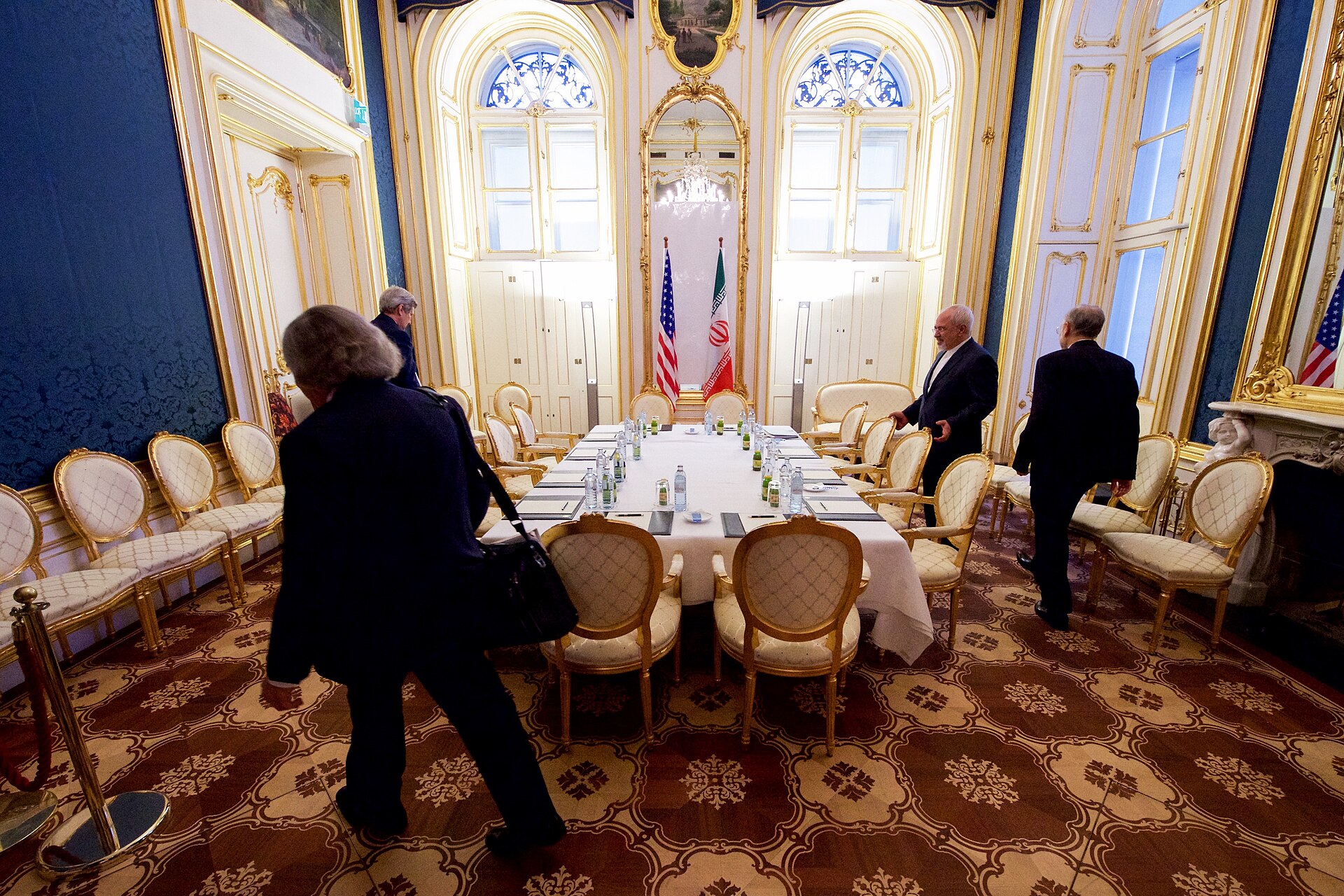
On Monday morning in London, Brent spiked to $91.99 on the overnight tanker claims before giving much of it back by the weekly close. The market has decided this war is priced in, and so far it has been right, which is not the same as being right next week.
Frequently Asked Questions
What is CENTCOM’s Task Force Iron Gate?
Task Force Iron Gate is CENTCOM’s task force to disrupt Iran’s land-based weapons supply routes and Caspian Sea transit, established on November 7, 2026. It operates within a broader US presence that CBS News described on November 20 as “tens of thousands of forces and two aircraft carriers” in the region.
What was the June 2026 memorandum of understanding?
The US and Iran signed a memorandum in June 2026 intended to end hostilities, but the agreement collapsed on July 7 when Iran initiated attacks on commercial vessels in Hormuz, triggering the US to reimpose its naval blockade on July 14. The separate Islamabad MOU referenced by Ghalibaf is a framework tied to Iran’s conditions for reopening the strait — a document the US has not acknowledged as a basis for negotiation.
How many tankers has the IRGC claimed hit mines in Hormuz?
The IRGC has made repeated mine claims throughout the conflict, including two supertankers on November 17, as Tasnim News reported, three tankers on November 23, as Al Jazeera reported, and a claim of six tankers burning on November 16, according to the Times of India. The cumulative total varies by Iranian outlet, and most claims have not been independently confirmed by UKMTO, the UK Maritime Trade Operations centre that monitors shipping incidents in the strait.
The House of Saud Daily Briefing
Saudi Arabia's news in 3 minutes, every morning. Free. See today's issue