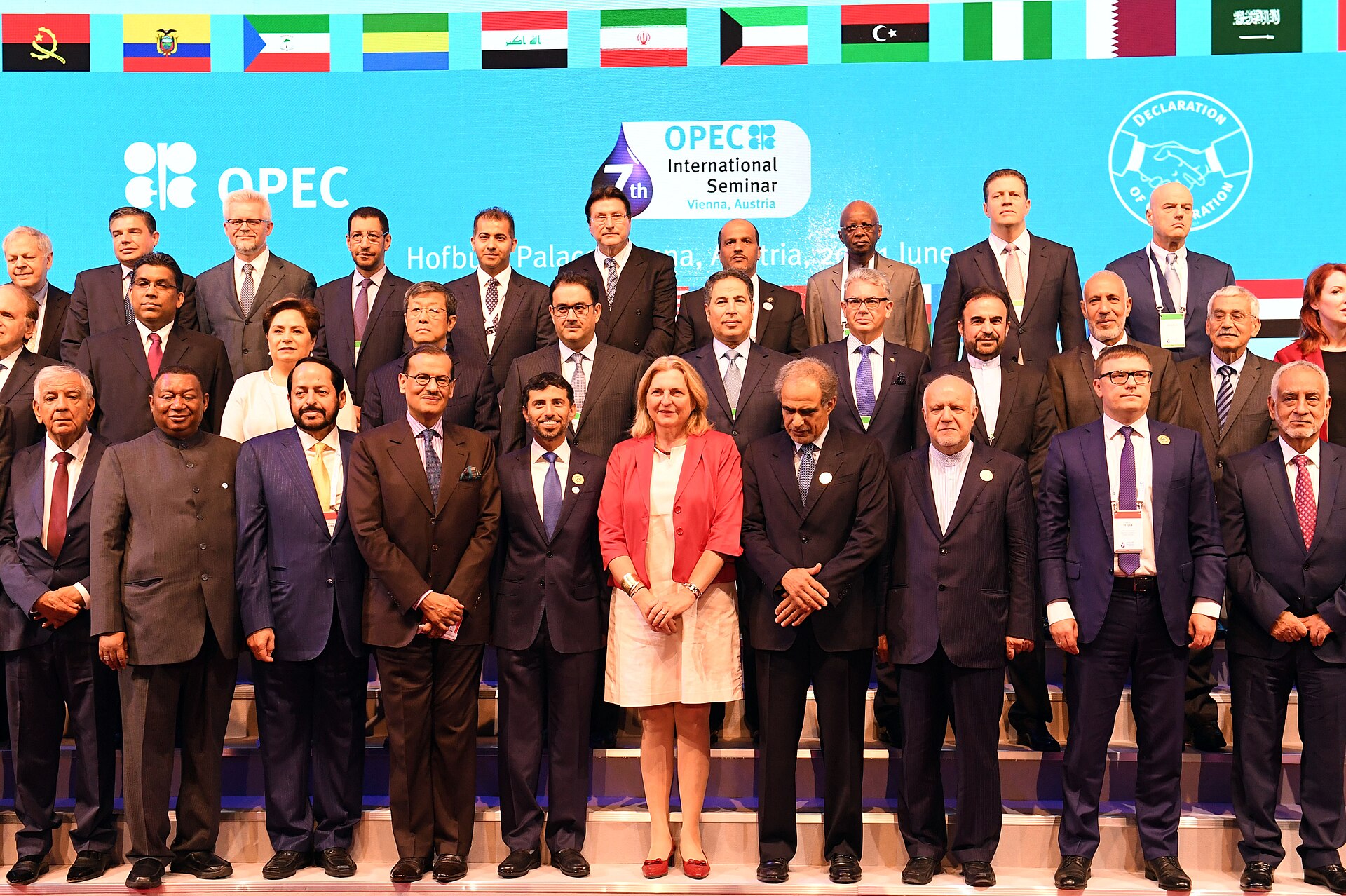

DHAHRAN — OPEC+ ministers will meet on Sunday, November 29, to set production baselines for 2027, a decision that arrives with no authorized output framework beyond December 31 and a sweeping capacity audit — the first of its kind — landing on the table the same day. The 42nd OPEC and non-OPEC Ministerial Meeting, running alongside the 69th Joint Ministerial Monitoring Committee session, brings together all 21 remaining members after the United Arab Emirates’ departure on May 1, and every 2027 quota decision has been explicitly deferred to this single session, according to the group’s November 1 communiqué.
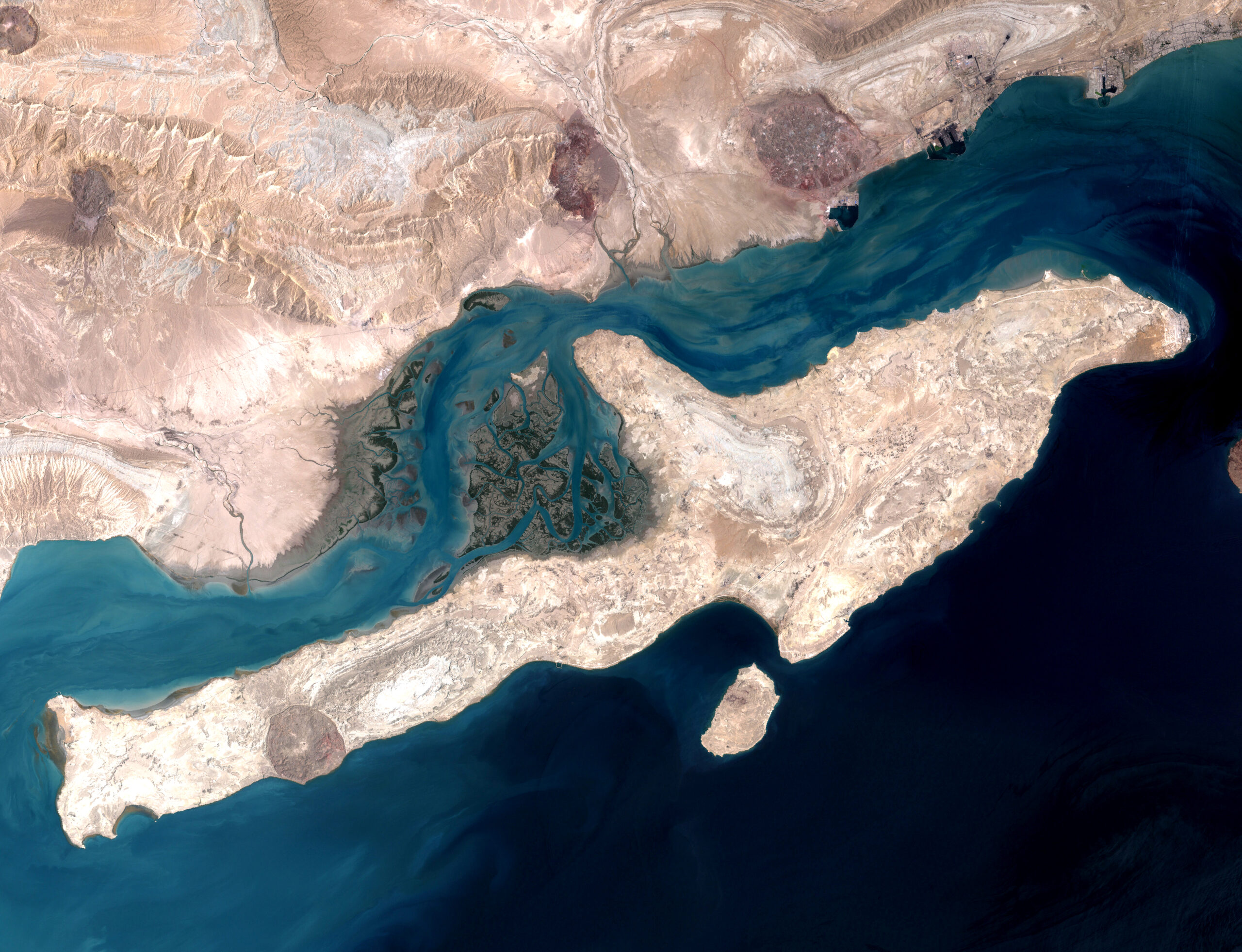
The meeting follows three consecutive months in which the seven-core producing countries — Saudi Arabia, Russia, Iraq, Kuwait, Kazakhstan, Algeria, and Oman — held their combined quota steady at 31.01 million barrels per day, refusing to move while the Iran war scrambled supply signals and Hormuz oil flows dropped to approximately 10 million barrels per day by mid-November from 13.4 million at the start of the month, per Kpler data reported by Bloomberg. Brent crude settled at $92.57 on November 20 — its third straight weekly decline, down 3.41 percent from $95.84 a week earlier, according to ICE data reported by FinanceFeeds — and Rystad Energy’s Jorge Leon told Reuters that the November 29 session is “the much more important test for the group,” a verdict that none of the competing forecasts from Goldman Sachs, Morgan Stanley, or the EIA appear to dispute.
The House of Saud Daily Briefing
Saudi Arabia's news in 3 minutes, every morning. Free. See today's issue
Table of Contents
What Happens if Nov 29 Ends Without a Deal?
The arithmetic is blunt: OPEC+ has no authorized output framework after December 31, 2026, according to an Admiral Markets preview published November 20. The group’s current production agreement, negotiated in stages since 2022, expires at year-end, and without a new accord each member would revert to producing at will — a scenario that last played out during the 2020 Saudi-Russia price war, which sent Brent to multi-decade lows within weeks.
Complicating the deadline is a tranche of approximately 2 million barrels per day in cuts, originally imposed in 2022, that are scheduled to expire at year-end, according to CNBC and industry analysis tracked by Birrmetrics. A separate layer of 1.65 million barrels per day in voluntary reductions was already fully unwound by September 2026, meaning the remaining 2-million-barrel tranche is the last structural restraint holding group output below capacity. OPEC Secretary General Haitham Al Ghais has called the capacity review process underpinning the meeting a “historic milestone,” according to FinanceFeeds, but that language obscures the fact that failure to agree on November 29 would leave the market without guardrails heading into a year that multiple major forecasters project will see significant oversupply.
The Capacity Audit Arrives
For the first time, OPEC+ will anchor its quota negotiations to independently verified production capacity numbers rather than self-reported figures that members have long used to inflate their claims. The group approved the verification process on November 30, 2025, tasking Dallas-based consultancy DeGolyer and MacNaughton with auditing the maximum sustainable capacity of 19 of the 22 participating countries, according to Reuters as reported by Egypt Oil & Gas. Russia and Venezuela are being assessed separately by Shri Chandra Energy & Data Processing, while Iran has been excluded entirely — its 2027 baseline will be set at the average of its August-to-October 2026 output as measured by OPEC’s secondary-source panel.
The audit’s findings, originally due by end of September, slipped because of Iran-war disruptions and are now expected to be presented at the November 29 session, per Reuters. Saudi Energy Minister Prince Abdulaziz bin Salman has described the mechanism as “a turning point” and “the most detailed, the most technical, transparent approach,” according to The Arab Weekly and Reuters, while analyst Tim Callen predicted to Al-Monitor that the audit “will likely show that there is little spare production capacity outside of Saudi Arabia.” If Callen’s assessment is correct, the audit will formalize what the market already suspects — that Saudi Arabia’s leverage within the group is structural rather than merely political, and that members demanding higher baselines will have to justify them against hard numbers rather than aspirational targets.
Saudi Arabia’s 1.37 Million Bpd Question
The gap between what Saudi Arabia says it produces and what OPEC’s own monitors measure has become the most politically charged data point heading into Sunday’s session. Riyadh reported October output at 10.563 million barrels per day — a 26-percent jump from 8.372 million in September — but OPEC’s secondary-source panel, the independent estimates that actually determine compliance, put the figure at 9.194 million barrels per day, a discrepancy of 1.369 million barrels per day, as reported by TokenPost and OPEC data. Bloomberg’s survey landed close to the secondary-source number, estimating Saudi marketed supply at approximately 9.2 million barrels per day.
The discrepancy matters because it determines where Saudi Arabia’s 2027 baseline lands. The kingdom’s current OPEC+ quota stands at 10.478 million barrels per day, according to OPEC, but its trajectory since the Iran war began tells a more complicated story: output peaked at 10.882 million barrels per day in February 2026 before the conflict began, according to Reuters, then cratered to 6.238 million in August — the lowest Saudi figure since 1990, per Gulf News — before the partial recovery to the contested October numbers. The IEA’s August Oil Market Report estimated Saudi maximum sustainable capacity at 12.11 million barrels per day, implying approximately 2.2 million barrels per day in spare capacity, according to IEA estimates — a cushion no other OPEC+ member can match.
What Riyadh actually wants from the November 29 session remains the meeting’s biggest unknown. No official or leaked Saudi position on a preferred 2027 baseline has surfaced, and the kingdom’s public posture has been limited to Prince Abdulaziz’s characterization of the audit as “fair and transparent,” per Reuters. The October output data suggests Saudi Arabia is rebuilding production capacity after the war-driven collapse, but whether the kingdom pushes for a baseline reflecting its theoretical ceiling or accepts one anchored to its war-constrained reality will shape every other member’s allocation.
Can Iraq Get the Baseline It Wants?
Iraq has staked out the most aggressive position of any OPEC+ member heading into Sunday, requesting a 2027 output baseline of 6 million barrels per day — more than 35 percent above its current quota of 4.431 million barrels per day, according to Bloomberg as reported by The Trading Report. Baghdad dispatched both its oil minister and finance minister to Saudi Arabia on August 21 to press the case, a diplomatic doubling-down that underscored how much Iraq’s fiscal planning depends on the outcome. The problem is that the IEA estimates Iraq’s sustainable production capacity at approximately 4.9 million barrels per day, per Bloomberg — a number that would still represent a meaningful increase from the current quota but falls more than a million barrels short of Baghdad’s demand.
Iraq’s negotiating position is further weakened by its compliance record, which has been a persistent source of tension within the group; Baghdad has chronically overproduced relative to its assigned quota in recent years, and the capacity audit was designed in part to impose external discipline on exactly this kind of behavior. A generous Iraqi allocation would almost certainly compress the room available for Saudi Arabia’s own baseline, turning what looks like a bilateral dispute between Baghdad and the OPEC+ secretariat into a direct test of Riyadh’s willingness to absorb constraints so that a less disciplined producer can claim a larger share of the market.
Russia’s Numbers Face a Different Auditor
Moscow enters the November 29 meeting with a quieter but potentially more destabilizing problem: the IEA estimates Russia’s sustainable production capacity at 9.3 million barrels per day, which sits below Russia’s current OPEC+ quota of 9.949 million barrels per day. If the audit confirms that Russia cannot physically meet its own quota, the implications ripple outward — it would mean the group’s second-largest producer has been allocated output it cannot deliver, inflating the theoretical ceiling and distorting the collective restraint on which price support depends.
The credibility question is sharpened by the fact that Russia and Venezuela are being assessed by Shri Chandra Energy & Data Processing rather than DeGolyer and MacNaughton, the firm handling the other 19 members, as confirmed by Reuters via Egypt Oil & Gas. No public explanation has been offered for the split, and no Russian official has made a public statement about Moscow’s preferred 2027 baseline. The absence of a position is itself telling — Russia’s leverage within OPEC+ has historically rested on its willingness to cooperate with Saudi Arabia on production restraint, and a capacity audit that formally establishes Russian output below its own quota would redefine that partnership by revealing it as structurally asymmetric.
Where Does Brent Go After Nov 29?
The price environment heading into Sunday’s meeting is pulling in two directions simultaneously, with the Iran war compressing supply through Hormuz while the broader demand outlook signals oversupply by mid-2027. Brent traded at $92.32 on Monday morning at 06:32 GMT, per FinanceFeeds, extending a slide that has seen the January contract fall more than $3 in ten days despite Persian Gulf exports running at approximately 15 to 16 million barrels per day — well below the pre-war level of 22 to 24 million barrels per day, as Goldman Sachs estimated in a note reported by The Trading Report.
The major forecasting houses are broadly aligned on the direction: Goldman Sachs, in a November 15 note, projected Brent averaging $88 in 2027 and falling to $78 by December of that year; Morgan Stanley put its 2027 average at $86.30 on November 16; and the EIA forecast Brent at approximately $100 through November and December 2026 before dropping to an $86 average next year, per its November 10 outlook reported by Admiral Markets. The IEA’s projection is starker still, forecasting a 2027 supply surplus of approximately 3.8 million barrels per day, according to data reported by Birrmetrics. Vandana Hari of Vanda Insights told Reuters that prices would likely stay “broadly rangebound unless either side takes more concrete steps towards escalation,” a view that implicitly bets on OPEC+ maintaining enough discipline to prevent an uncontrolled output surge into an already loosening market.
Aramco cut its Arab Light official selling price for November Asia cargoes to $5 below Oman/Dubai — the widest discount since June 2020, per Reuters — signaling that the kingdom’s commercial arm is tracking demand erosion even as the war keeps Hormuz volumes depressed. The question for the market is whether OPEC+’s November 29 decision treats the war-driven tightness as temporary — in which case a cautious baseline protects price — or as a new structural reality that justifies higher quotas and faster ramp-ups, which would accelerate the surplus the IEA projects and push Brent toward the sub-$80 range Goldman Sachs sees by year-end 2027.
Background
The OPEC+ capacity verification process was approved on November 30, 2025, with the goal of replacing self-reported output data with independently audited maximum sustainable capacity figures as the foundation for production allocations, according to Oilprice.com. OPEC plans to run the assessment annually going forward, making the 2027 round the template for all future baseline negotiations — a structural shift that members accepted in principle but will now have to live with in practice.
The last major baseline dispute within OPEC+ erupted in 2021, when the UAE objected to what Abu Dhabi considered an unfairly low reference production level that did not reflect its capacity investments. The disagreement delayed a planned output increase by several months before the UAE ultimately secured a higher baseline, according to Oilprice.com, but the episode foreshadowed a deeper fracture — Abu Dhabi, having invested to reach approximately 5 million barrels per day of capacity while constrained to a quota of 3.5 million, exited OPEC entirely on May 1, 2026, according to Modern Diplomacy and Oilprice.com. Angola’s departure from OPEC effective January 2024, also driven by a quota dispute per Discoveryalert.com, reinforced the pattern: when the gap between capacity and allocated output grows too wide, members leave rather than accept what they view as a structural subsidy to less productive rivals.
Frequently Asked Questions
What exactly is maximum sustainable capacity and how is it measured?
Maximum sustainable capacity, the metric at the center of the November 29 negotiations, is defined by OPEC and the audit consultants as “the average maximum crude output a country can bring online within 90 days and sustained for one full year, including all planned maintenance activities,” per OPEC data reported by Project Fifty-4 and Oilprice.com. The 90-day window is designed to exclude theoretical capacity that would require years of infrastructure investment to reach, while the one-year sustainability requirement filters out short-term surges that could not be maintained without damaging reservoirs or infrastructure. DeGolyer and MacNaughton, a Dallas-based consultancy with more than 90 years of petroleum engineering experience, is conducting the assessments for 19 of the 22 OPEC+ members.
Why was Iran excluded from the capacity audit?
Iran was excluded from the DeGolyer and MacNaughton assessment because the ongoing war and international sanctions make an independent on-the-ground capacity review impractical, according to Reuters as reported by Egypt Oil & Gas. Instead, Iran’s 2027 production baseline will be calculated as the average of its August-through-October 2026 output as measured by OPEC’s secondary-source panel — the same independent monitors that track all members’ compliance. This approach effectively freezes Iran’s baseline at its war-constrained output level rather than its pre-conflict capacity, which was substantially higher.
Has a quota dispute ever caused a member to leave OPEC?
Yes, twice in recent years. Angola departed OPEC effective January 2024 after refusing to accept a lower production quota that it said did not reflect its output capacity, per Discoveryalert.com. The UAE followed on May 1, 2026, leaving after years of frustration over a quota that Abu Dhabi considered disproportionate to its investment — the Emirates had built production infrastructure capable of approximately 5 million barrels per day while constrained to a quota of roughly 3.5 million, according to Modern Diplomacy and Oilprice.com. Both departures underscore the risk that the November 29 baseline decisions carry: set quotas too far below verified capacity and members may again choose exit over compliance.
What is Saudi Arabia doing to reduce its dependence on Hormuz?
Aramco CEO Amin Nasser confirmed on the company’s third-quarter earnings call on November 3, 2026, that work has begun to expand the East-West Pipeline — which carries crude from eastern oil fields to the Red Sea export terminal at Yanbu — from its current design capacity of 7 million barrels per day to 10 million, according to Al-Monitor. Nasser said “this work has already started” and estimated the expansion would take two to three years. As of October 6, the pipeline was operating at 5.8 million barrels per day, or 83 percent of its current design capacity, per The National. The expansion would allow Saudi Arabia to route the majority of its export volumes around Hormuz entirely, a hedge against the kind of disruption that has defined the Iran war’s impact on global oil flows since February 2026.
The House of Saud Daily Briefing
Saudi Arabia's news in 3 minutes, every morning. Free. See today's issue