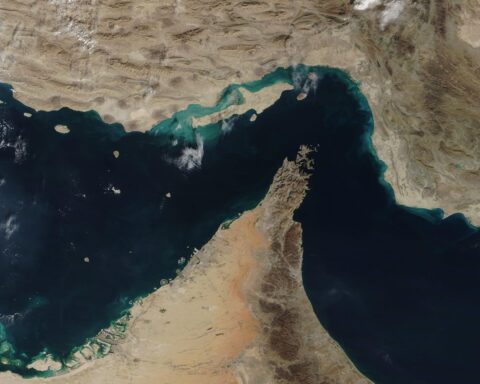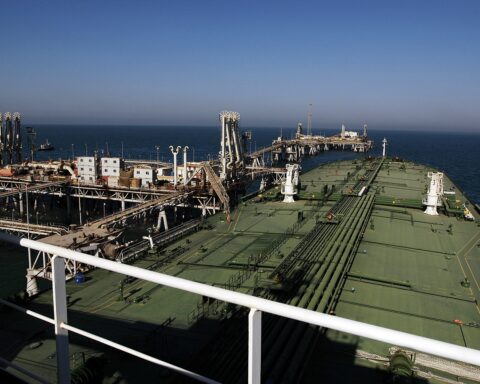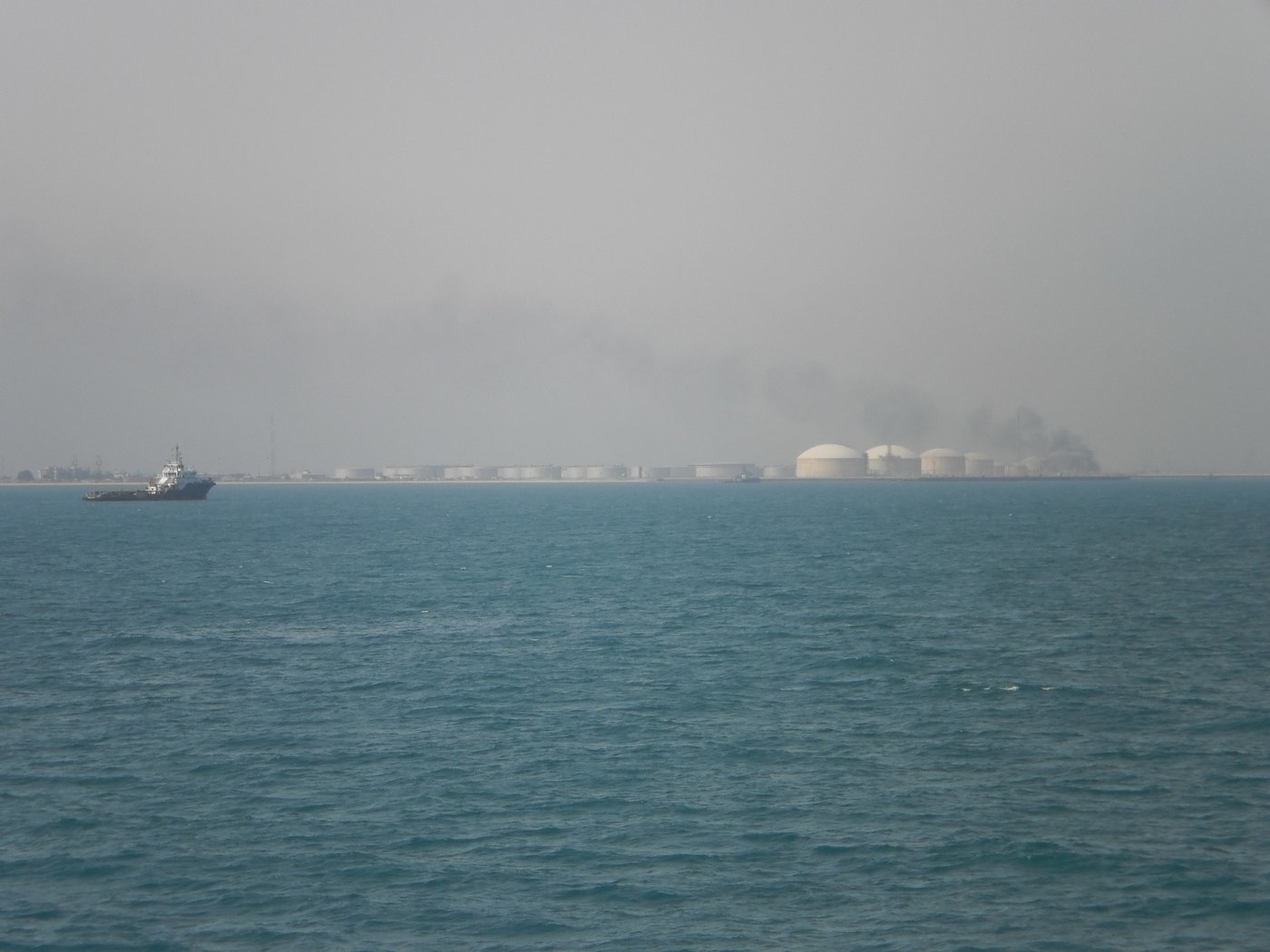

DHAHRAN — Saudi Aramco produced roughly one in six fewer barrels in the third quarter of 2026 than a year earlier, yet its reported net profit rose 34.5% to $36.3 billion, the company said in results published on November 3. The money came from the far end of the pipe, where Aramco’s refining and chemicals business more than tripled its earnings as war around the Strait of Hormuz tightened global fuel supply.
The numbers matter well beyond Dhahran because the Saudi state is Aramco’s dominant shareholder and dividend recipient, and the kingdom’s economy shrank 3.8% in the same quarter. The war around Hormuz is draining the business Saudi Arabia was built on, moving crude out of the Gulf, while enriching the business it spent a decade buying into, turning that crude into fuel and chemicals. How long that trade-off holds will shape Riyadh’s finances well into 2027.
Table of Contents
- How Did Aramco’s Profit Rise While Its Output Fell 17%?
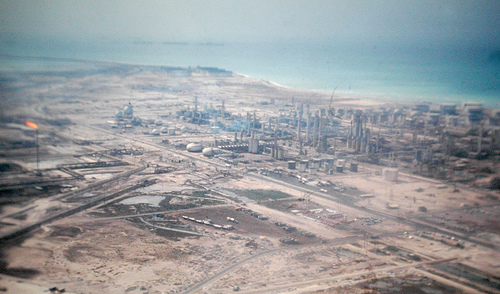
- Downstream Earnings Triple as Hormuz Squeezes Fuel Supply
- What Is Inside the $36.3 Billion Headline Figure?
- Can the East-West Pipeline Carry Aramco Around Hormuz?
- Dividend Holds as Riyadh Absorbs a Shrinking Economy
- Background: Aramco’s Wartime Year
- Frequently Asked Questions
How Did Aramco’s Profit Rise While Its Output Fell 17%?
Aramco’s total hydrocarbon production averaged 11.05 million barrels of oil equivalent per day in the third quarter, down from 13.3 million a year earlier, according to the company’s figures as reported by Asharq Al-Awsat and Reuters. Liquids output fell to 8.7 million barrels per day from 10.8 million. That gap of 2.1 million barrels a day adds up, over a 92-day quarter, to roughly 193 million barrels of liquids that were not produced, by House of Saud’s calculation.
The House of Saud Daily Briefing
Saudi Arabia's news in 3 minutes, every morning. Free. See today's issue
Price cushioned part of the blow without closing the hole. Aramco’s average realised crude price was $95.2 a barrel in the quarter against $70.1 a year earlier, a rise of about 36%, according to Reuters. Even so, upstream adjusted earnings before interest and taxes (EBIT) fell to $46.8 billion from $51.5 billion, roughly 9% lower, according to an Investing.com summary of the company’s results slides, which means the higher price per barrel could not make up for the barrels that never moved.
The swing came from downstream. Aramco said downstream adjusted EBIT rose 234% year on year, which Zawya and Asharq Al-Awsat put at $10.3 billion against $3.1 billion in the third quarter of 2025, and the company attributed the jump to “stronger refining margins.” By House of Saud’s calculation, refining and chemicals went from under 6% of Aramco’s combined upstream and downstream EBIT a year ago to about 18% this quarter.
Downstream Earnings Triple as Hormuz Squeezes Fuel Supply
The scale of the third-quarter downstream result is clearest against Aramco’s own recent history. Downstream EBIT for the whole first half of 2026 was $11.7 billion, itself up 144% from $4.8 billion in the first half of 2025, according to Investing.com’s summary of the company’s half-year slides. The third quarter alone came within $1.4 billion of that six-month total, and chief financial officer Ziad Al-Murshed told analysts on the earnings call that the quarter’s downstream EBIT was nearly as large as the previous two quarters combined, according to an Investing.com transcript.
The market backdrop explains why margins widened. Oil moving through Hormuz has fallen to 54% of prewar levels, House of Saud reported on November 28, taking crude and refined products off a market that had relied on them. When fewer cargoes reach buyers, refineries operating outside the disruption can earn more on each barrel they process.
“Geopolitical uncertainty and attacks on key energy facilities continued to amplify the global energy supply crisis.”
Amin H. Nasser, President and CEO, Aramco, third-quarter 2026 results statement
Aramco does not publish downstream earnings broken out by subsidiary, so the split between its refineries and chemical plants is not public. Its international footprint, however, includes Motiva Enterprises, the wholly owned US company that runs the 630,000-barrel-per-day Port Arthur refinery in Texas, and a roughly 63% stake in South Korea’s S-Oil, which inaugurated its $7 billion Shaheen complex in November 2026. Those plants sit outside both the Gulf and the Red Sea, so they can buy crude, run it and sell fuel without passing through either chokepoint.
Chemicals are the other piece of the downstream bet. Aramco paid $69.1 billion in 2020 for a 70% stake in SABIC, a holding that contributed little in 2024 and 2025 as petrochemical margins stayed weak. Aramco has not said how much of the third-quarter surge came from SABIC, but the purchase now sits inside the one segment growing fastest while the upstream shrinks.
What Is Inside the $36.3 Billion Headline Figure?
The reported profit of $36.25 billion carries a one-off. In September, Aramco completed the sale of its 50% interest in Pengerang Refining and Petrochemical Co. (PRefChem), its Malaysian refining and petrochemical joint venture, to PETRONAS, and Saudi Gulf Projects and Oil & Gas Middle East put the resulting gain at about $6.9 billion. Aramco’s adjusted net income, which strips out that gain and other items, rose a more modest 9% to $31.2 billion from $28.6 billion, according to the company’s press release.
The timing produces its own irony. Aramco sold its half of a Southeast Asian refining complex in the same quarter that refining became its fastest-growing source of earnings, booking a capital gain on the way out while its remaining refineries more than tripled their segment profit. Analysts reading the headline number should keep the adjusted figure in view, since the PRefChem gain will not recur in the fourth quarter.
The quarter-on-quarter comparison also cuts against intuition. Reported net profit rose from $32.7 billion in the second quarter, according to Reuters, even though the average realised crude price fell from $108.1 a barrel to $95.2. Over nine months, reported net income reached $101.5 billion, up 34.2% from $75.6 billion, while nine-month adjusted net income was $98.4 billion, Zawya reported.
| Metric | Q3 2026 | Q3 2025 | Change |
|---|---|---|---|
| Reported net profit | $36.25bn | $26.9bn | +34.5% |
| Adjusted net income | $31.2bn | $28.6bn | +9% |
| Upstream adjusted EBIT | $46.8bn | $51.5bn | about -9% |
| Downstream adjusted EBIT | $10.3bn | $3.1bn | +234% |
| Total hydrocarbon production | 11.05 mmboed | 13.3 mmboed | about -17% |
| Liquids production | 8.7 mbpd | 10.8 mbpd | about -19% |
| Average realised crude price | $95.2/bbl | $70.1/bbl | about +36% |
| Free cash flow | $28.2bn | $23.6bn | about +19% |
| Base dividend | $21.9bn | $21.1bn | +3.5% |
Sources for the table are Aramco’s press release, Zawya, Asharq Al-Awsat, Reuters and Investing.com, with percentage changes marked “about” calculated by House of Saud from the reported figures. Read down the columns and the paradox is plain: every line tied to volume went down, and every line tied to price or processing went up.
Can the East-West Pipeline Carry Aramco Around Hormuz?
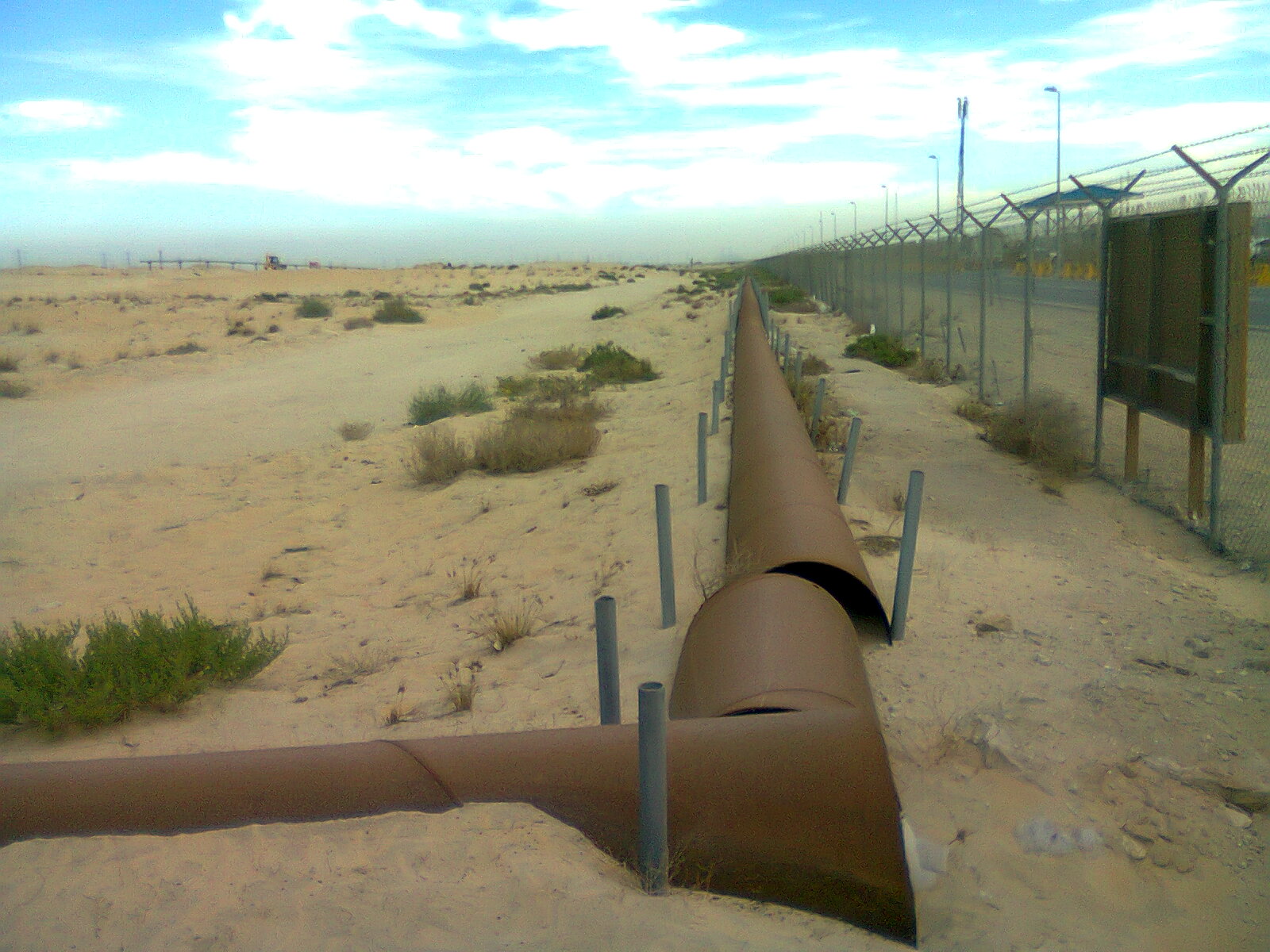
The East-West Pipeline, which carries crude from the Eastern Province to Red Sea terminals, is the reason Aramco’s output fell by a sixth rather than collapsing. It has a rated capacity of 7 million barrels per day, of which about 5 million is exportable, and flows ramped up after the war began in late February, according to Reuters. Nasser called the line a “critical lifeline,” and Aramco said its supply reliability was achieved “despite some disruptions to the East-West Pipeline,” which has come under attack several times.
Those disruptions show up in the year-to-date numbers. Aramco’s nine-month output fell 13.7% as pipeline attacks left Yanbu below 3 million barrels a day, House of Saud reported on November 25. The third quarter still marked a partial recovery, with output up about 15% from the second quarter as the Zuluf crude oil increment began producing, according to the Investing.com earnings call transcript.
Aramco is now studying a larger bypass. Preliminary engineering studies are under way to expand the pipeline from 7 million to 10 million barrels per day, and Saudi Energy Minister Prince Abdulaziz bin Salman said the work would take two to three years, according to Fortune. No final investment decision has been announced, and the company’s results statement said only that the pipeline “continued to provide export flexibility, with additional overseas storage and new export routes being explored.”
The national picture remains well below prewar. Saudi oil output was about 8 million barrels per day in September, according to secondary sources cited in OPEC’s monthly report, compared with slightly more than 10 million before the war, Reuters reported. That gap is part of why OPEC+ set 2027 quotas against output baselines that House of Saud found could not be independently verified.
Dividend Holds as Riyadh Absorbs a Shrinking Economy
Aramco declared a third-quarter base dividend of $21.9 billion, up 3.5% from $21.1 billion a year earlier, with payment scheduled for November 25, according to Zawya and Economy Middle East. No performance-linked dividend was declared for the quarter, according to Aramco’s results slides as summarised by Investing.com. Free cash flow of $28.2 billion, up from $23.6 billion, and operating cash flow of $38.7 billion left roughly $6.3 billion above the base payout, by House of Saud’s calculation.
The payout lands in an economy under strain. Saudi Arabia’s third-quarter GDP fell 3.8%, House of Saud reported on November 28, a contraction that tracks the lost barrels Aramco’s upstream division could not ship. A dividend that rises while national output falls shows how much of the kingdom’s wartime income now rests on Aramco’s balance sheet and downstream earnings rather than on crude volumes.
Aramco has also cut prices for its largest customers. The company cut its November official selling price for Arab Light to Asia by $3 a barrel from the previous month, to a six-year low, and cut Arab Medium and Arab Heavy by $5 each, Reuters reported. Those cuts reduce what Asian refiners pay for every Saudi barrel at a time when the risks of the Hormuz route remain live, including an incident this week in which Iran’s army said a US drone struck a fishing boat off Hormuz.
“Global demand forecasts are not the only factor determining future results.”
Mohammed Al-Farraj, Arbah Capital, speaking to Asharq Al-Awsat
Al-Farraj’s caution points to the weakness in the third-quarter structure. The downstream windfall depends on the same disruption that is cutting Aramco’s crude exports, so a reopening of Hormuz would likely restore volumes while narrowing the refining margins that rescued this quarter. Until then, the company that once made its money by moving the most oil is making more of it by refining what it can still deliver.
Background: Aramco’s Wartime Year
Aramco entered 2026 from a weaker base, reporting a third-quarter 2025 profit of $26.9 billion that was down slightly on lower oil prices, according to the Associated Press. The war that began in late February then upended both sides of its business, as the Strait of Hormuz was closed and reclosed by Iran and Aramco’s Gulf export route gave way to pipeline flows west to the Red Sea.
Iran first moved to shut the strait in the opening days of the war, between February 28 and early March, then closed it again on April 18 and on July 12, according to House of Saud’s reporting over the course of the year. Each closure pushed more of Aramco’s export load onto the East-West line and the Red Sea terminals at Yanbu, the same route that has since come under repeated attack and that the company now wants to expand by 3 million barrels a day.
The company had spent the previous decade building a refining and chemicals arm abroad and at home, from Motiva in Texas to S-Oil in South Korea and its controlling stake in SABIC. For most of 2024 and 2025 that strategy looked like an expensive hedge, with weak petrochemical margins holding back returns. The third quarter of 2026 is the clearest case yet of that hedge paying for the barrels the upstream lost.
Frequently Asked Questions
Did Aramco’s third-quarter results beat analyst expectations?
Yes, on the adjusted measure the market tracks. Aramco’s adjusted net income of about $31.2 billion came in above the median estimate of $30.66 billion from 12 analysts, according to Reuters.
How much debt is Aramco carrying?
Aramco’s gearing ratio, which measures net debt against total capital, fell to 5.5% as of September 30, 2026, from 6.2% as of June 30, according to the company’s press release. The ratio fell during a quarter in which output was still well below prewar levels, leaving the company room to borrow if the war drags on.
How reliably did Aramco deliver oil to customers during the quarter?
Aramco reported supply reliability of 97.8% in the third quarter, according to Reuters. That compares with 99.9% a year earlier and 98.4% in the second quarter of 2026, and Aramco said the figure was achieved despite disruptions to the East-West Pipeline.
What new production is coming online?
Aramco said production has begun at the Zuluf crude project, which is expected to process up to 600,000 barrels per day of oil by the end of 2026, according to Reuters. Phase two of the Jafurah unconventional gas project is due for completion next year and remains on track to reach 2 billion standard cubic feet per day of gas by 2030.
The House of Saud Daily Briefing
Saudi Arabia's news in 3 minutes, every morning. Free. See today's issue