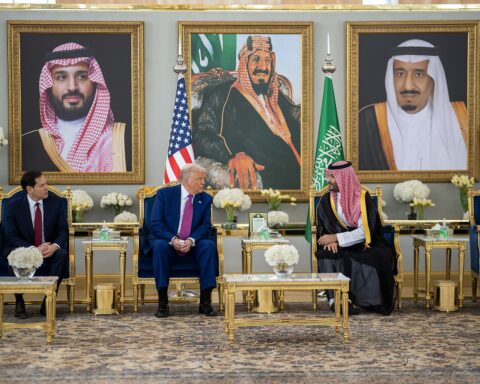
ISLAMABAD — Donald Trump told reporters on April 16 that he would fly to Pakistan to sign an Iran deal — the first US presidential visit to Islamabad in twenty years — and in doing so confirmed what Riyadh has spent $11 billion trying to prevent: that the war destroying Saudi Arabia’s economy will end in a ceremony where Mohammed bin Salman is not in the room. Saudi Arabia bankrolled the mediator, absorbed the strikes, deployed the mediator’s army on its own soil, and will now watch the man it is paying $8 billion in active deposits take credit for ending the conflict on Pakistani territory, in a Pakistani-branded “Islamabad Process,” with a Pakistani military chief who has a closer personal relationship with Trump than MBS does.
The kingdom cannot object. To publicly resist the deal framework is to appear to sabotage the ceasefire its own population desperately needs. To demand a seat at the table is to collapse Iran’s trust in the venue — trust built precisely on Saudi exclusion. MBS is trapped inside the architecture he financed, and the signing photo will be the proof. On April 18 — as Trump’s Islamabad visit was being confirmed — Secretary Rubio called Saudi Foreign Minister Faisal to brief Riyadh on four simultaneous crises, none of which included a Saudi seat in the nuclear negotiation.
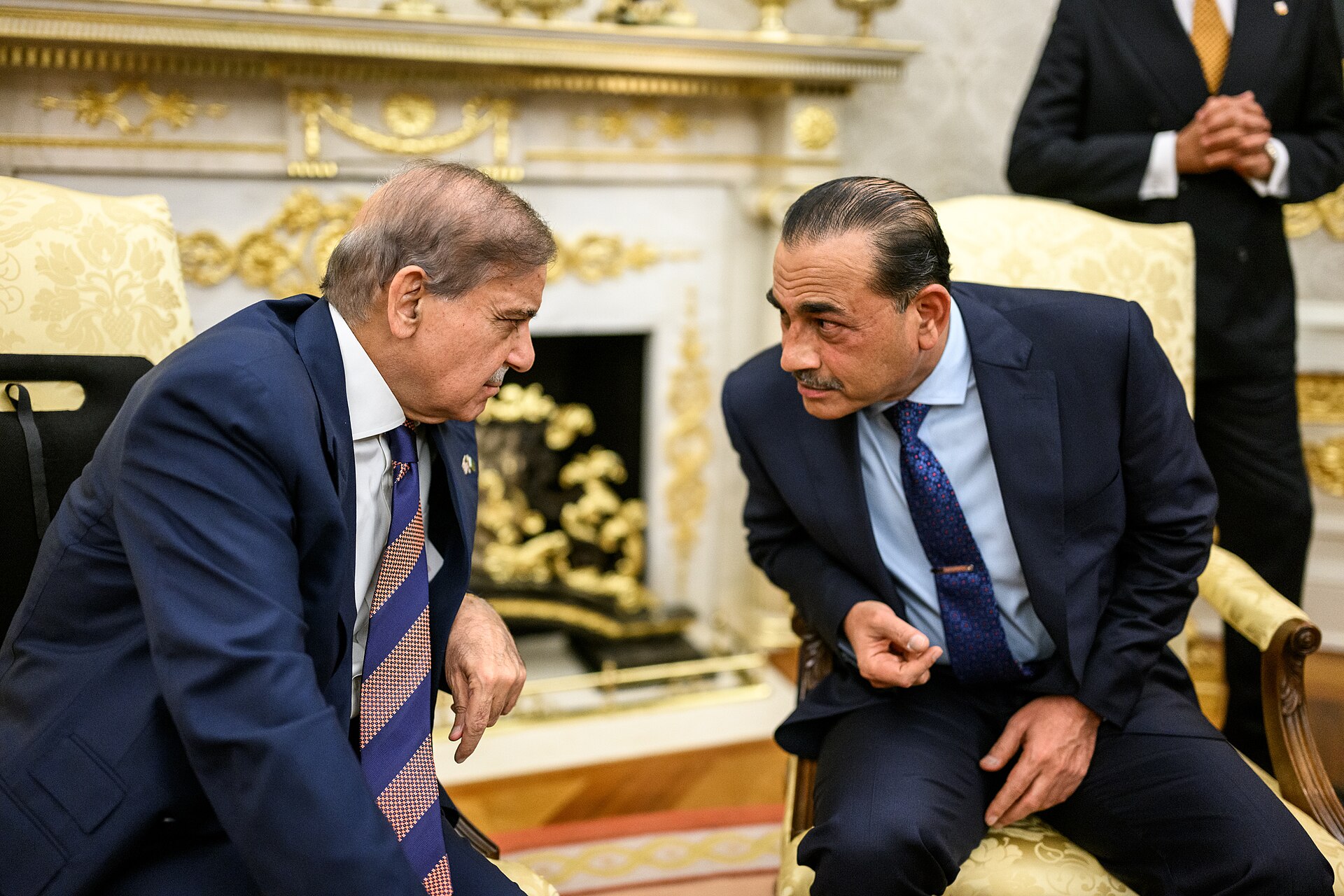
Table of Contents
- The Signing Ceremony MBS Cannot Attend
- What Has Saudi Arabia Paid for Its Own Exclusion?
- Trump and Munir: The Channel That Bypasses Both Capitals
- The JCPOA Playbook — Worse the Second Time
- Why Does Iran Trust Pakistan and Not Saudi Arabia?
- The Antalya Consolation Prize
- The Objection Saudi Arabia Cannot Make
- The Numbers Behind the Silence
- What Dayton Tells Us About Islamabad
- Frequently Asked Questions
The Signing Ceremony MBS Cannot Attend
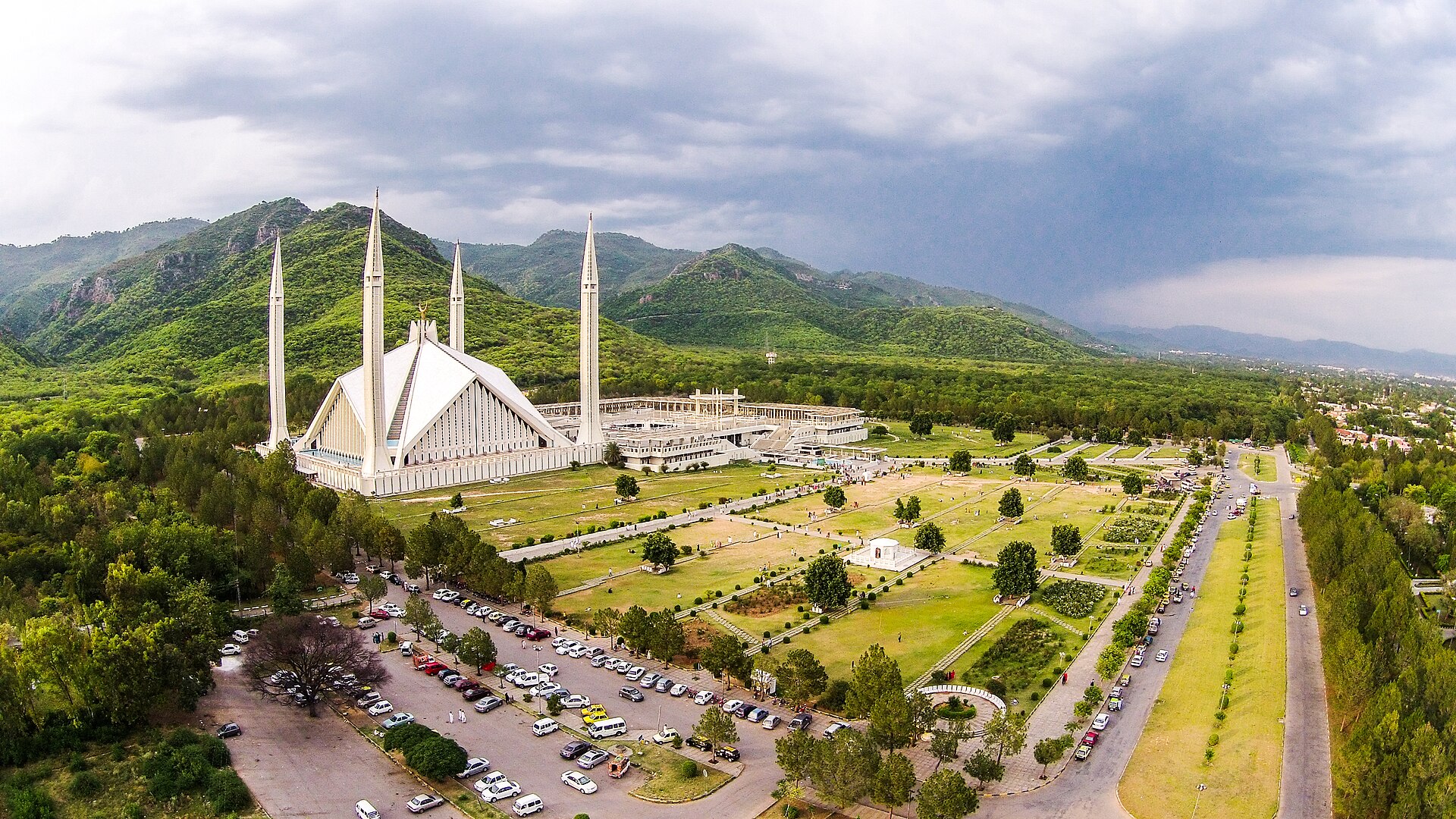
“I would go to Pakistan, yeah. Pakistan has been great. They’ve been so good. If a deal is signed in Islamabad, I might go.” Trump’s exact words, delivered to White House reporters on April 16, were characteristically casual for a statement that rearranges the diplomatic map of the Middle East. The last American president to visit Pakistan was George W. Bush, who landed at Islamabad’s military airport on March 4, 2006, under such extreme security that his motorcade route was not disclosed to Pakistani officials until minutes before arrival.
Trump is volunteering to go — not out of obligation, but because the optics serve him. Two decades of presidential absence, when finally broken, would be broken in the service of a deal that excludes America’s most important Gulf ally from the frame and from the photograph.
A presidential signing ceremony in Islamabad would produce the most consequential diplomatic photo since the Abraham Accords. Trump on one side, Pakistani Prime Minister Shehbaz Sharif on the other, Iranian representatives across the table — and the country that absorbed more physical and economic damage from this war than any other party not represented in the frame. The photo would circulate as proof that Trump ended the Iran crisis. It would circulate as proof that Pakistan’s mediation delivered a result the United Nations, the European Union, and the Gulf Cooperation Council could not. It would not circulate as proof that Saudi Arabia mattered.
This is not an accident. This is how the architecture was designed. Iran’s ambassador to Pakistan stated the logic plainly: “We will do talks in Pakistan and nowhere else, because we trust Pakistan.” That trust has a precondition: Pakistan condemned American and Israeli strikes on Iran; no US military base operates from its soil; and Saudi Arabia — Iran’s regional adversary — is not at the table.
The Middle East briefing 3,000+ readers start their day with.
One email. Every weekday morning. Free.
Remove any of those conditions and the venue collapses. The signing ceremony requires Saudi absence the way a courtroom requires the absence of the defendant from the jury.
What Has Saudi Arabia Paid for Its Own Exclusion?
The financial architecture is staggering in its clarity. On April 15-16, the same days Army Chief Asim Munir was visiting IRGC headquarters in Tehran as the ceasefire’s enforcement liaison, Shehbaz Sharif was in Jeddah briefing MBS on the framework Saudi Arabia had no role in shaping. During that visit, Saudi Arabia signed a $3 billion fresh deposit to Pakistan’s State Bank — on top of the $5 billion existing deposit, extended through 2028.
On April 11 — the day 13,000 Pakistani troops and 18 fighter jets landed at King Abdulaziz Air Base under the Saudi-Pakistan Mutual Defense Agreement — Saudi Arabia and Qatar jointly announced a $5 billion financial package for Islamabad. Saudi Finance Minister Mohammed al-Jadaan flew to Pakistan for the announcement.
Total Saudi active deposits in Pakistan now exceed $8 billion. The $11 billion long-term commitment includes infrastructure investments, energy sector partnerships, and what amounts to a 2028 option on Pakistan’s continued ceasefire neutrality. Every dollar reinforces the same structural paradox: Saudi financial patronage is a necessary precondition for Pakistan’s credibility as a neutral mediator, and every dollar that sustains that credibility deepens the architecture that locks Riyadh out of the room where the war ends.
Jadaan’s Islamabad visit captured the dynamic in miniature. Saudi Arabia’s finance minister traveled to the capital where peace talks were underway — not to participate in the talks, but to write the cheque that kept them going. He received briefings on the negotiations as a courtesy, not as a participant. Azeema Cheema of Verso Consulting, an Islamabad-based advisory firm, framed the deployment as transactional: “The invocation of the SMDA is the price of the significant restraint shown by the Saudis.” The restraint she described is not military patience. It is the restraint required to fund your own exclusion and smile while doing it.
Trump and Munir: The Channel That Bypasses Both Capitals
The deal architecture does not run through the Pakistani Prime Minister’s office or the Saudi Royal Court. It runs through two men: Donald Trump and Asim Munir. Trump hosted Munir at the White House for a one-on-one lunch in 2025 — the first time a sitting US president had hosted a Pakistani military chief who was not simultaneously head of state. At a Gulf ceasefire summit later that year, Trump publicly called Munir “my favourite field marshal,” a title Pakistan’s army chief does not actually hold but which Trump’s audience — heads of state, defense ministers, senior diplomats — understood as a signal of personal endorsement that no Pakistani civilian leader had received from Washington in decades.
This personal channel is the operating system of the Islamabad Process. Munir visited IRGC headquarters in Tehran on April 15-16, meeting commanders whose forces have been striking Saudi infrastructure for six weeks. He did this while Pakistani troops were deployed inside Saudi Arabia under a mutual defense agreement. A former Pakistani general who spoke to Al Jazeera on condition of anonymity identified the core vulnerability: “Iran’s perception, not Pakistan’s intent, will determine whether trust survives.” Pakistan can maintain its dual role as Saudi defender and Iranian interlocutor “only if the deployment remains strictly defensive, time-bound, and transparently limited.”
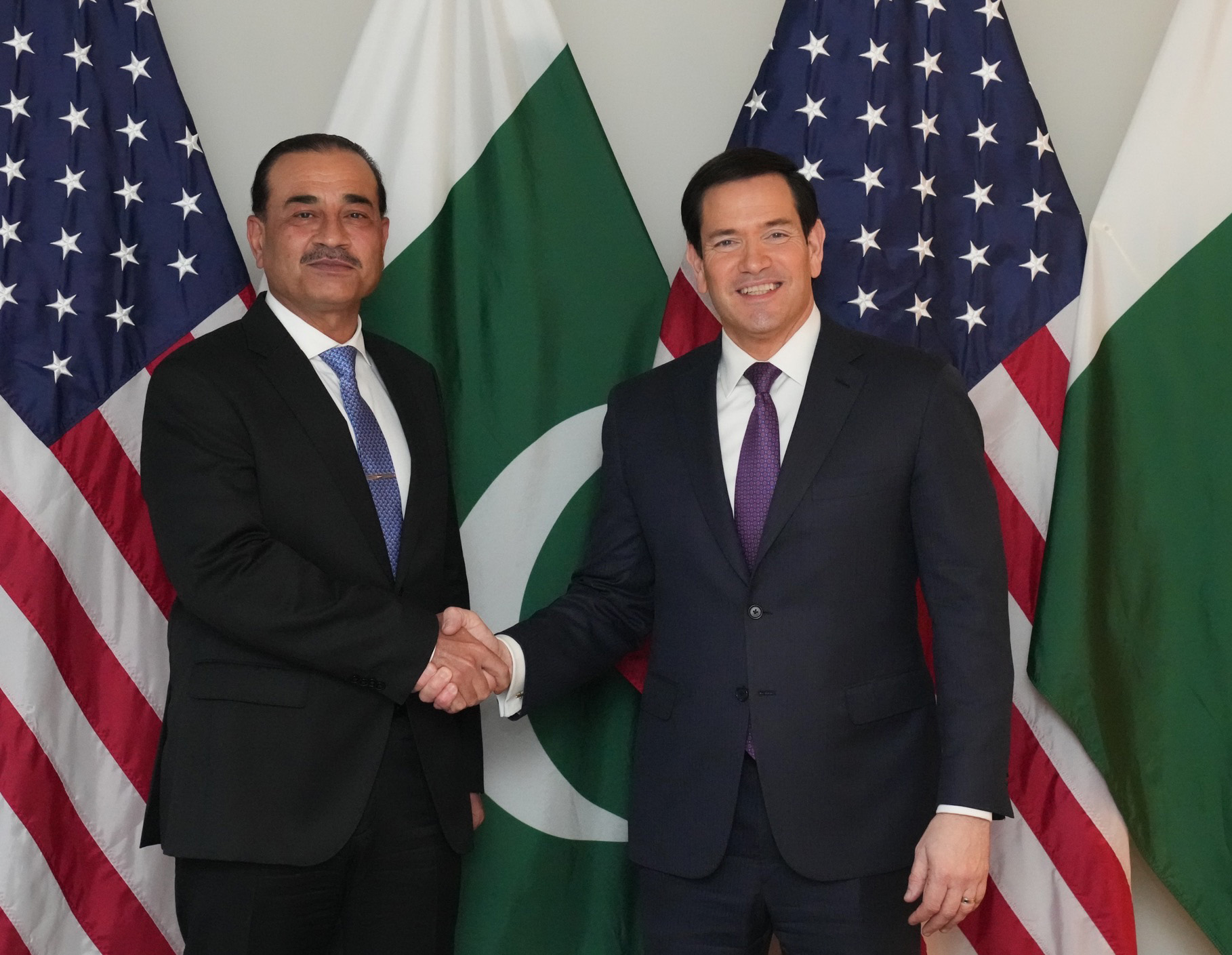
For MBS, the Trump-Munir relationship represents something more threatening than exclusion from a single set of negotiations. It represents the emergence of a parallel command channel for Middle Eastern security that treats Saudi Arabia as a variable rather than a constant. When Trump considers flying to Islamabad, he is not weighing Saudi sensitivities. He is calculating domestic political returns — the triumphant dealmaker landing in a country no president has visited in twenty years, signing the agreement that ended a war — against zero cost. MBS has no leverage to impose a cost, because objecting to the deal means objecting to the ceasefire, and objecting to the ceasefire means owning the next round of IRGC strikes on Saudi oil infrastructure.
The JCPOA Playbook — Worse the Second Time
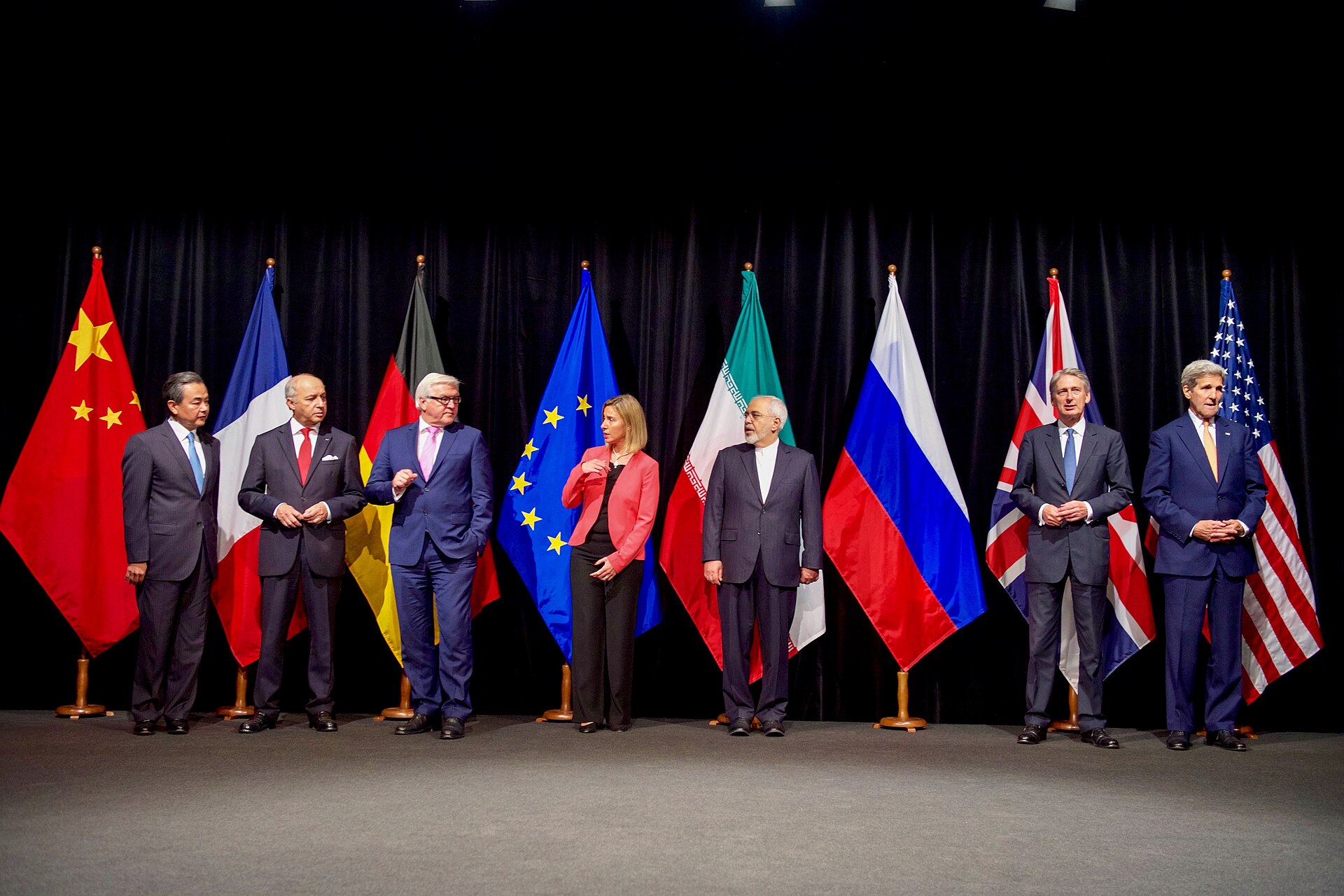
Saudi Arabia has been here before. In 2015, the P5+1 nuclear deal with Iran excluded every regional state from the negotiating format. Saudi demands — IRGC constraints, proxy financing mechanisms, ballistic missile limitations — were absent from the final JCPOA text. King Salman’s response was precise and public: he sent Crown Prince Mohammed bin Nayef to the May 2015 Camp David summit that Obama convened to reassure Gulf allies, a deliberate rebuff that communicated displeasure at the head-of-state level. Saudi state media, as the Washington Institute documented at the time, “did not attempt to soften” the message.
The 2026 exclusion is structurally worse. In 2015, Saudi Arabia was excluded from a deal negotiated by the five permanent members of the UN Security Council plus Germany — a format whose composition predated the Iran nuclear crisis and could be explained as great-power prerogative. Saudi Arabia’s absence was a feature of the P5+1 structure, not a condition demanded by Iran. In 2026, Saudi Arabia is excluded from a deal whose venue exists because Iran specifically demanded Saudi Arabia not be present, mediated by a country Saudi Arabia is paying $8 billion to keep solvent, defended by troops Saudi Arabia invited onto its own territory. The JCPOA Gulf exclusion is repeating — with Saudi Arabia bearing more of the cost and holding less of the leverage.
Sahar Khan, a Washington DC-based South Asia analyst, identified what both sides need from Islamabad: “It’s not really a shift but more or less back to the JCPOA status quo. Both sides need a ‘win’ on the nuclear issue, and something they can sell.” The gap remains enormous — the US proposed a twenty-year enrichment moratorium, Iran countered with five years — but the shape of a compromise is visible. Iran holds 440.9 kilograms of highly enriched uranium at 60 percent, according to the last IAEA assessment before access was terminated on February 28, 2026. What happens to that stockpile is being negotiated without input from the country that sits across the Gulf from Iran’s enrichment facilities at Natanz and Fordow.
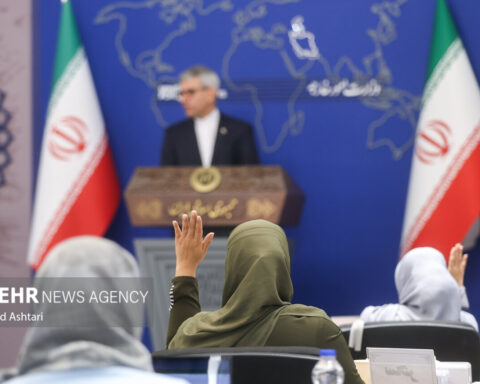
Iranian FM spokesman Esmail Baghaei stated Tehran’s baseline: Iran “based on its needs, must be able to continue enrichment.” This position intersects directly with the draft US-Saudi 123 Agreement on civilian nuclear cooperation — a deal that, as currently written, does not prohibit Saudi enrichment. The asymmetry is explosive. The US is simultaneously pressuring Iran to accept enrichment constraints while negotiating a nuclear cooperation agreement with Saudi Arabia that imposes no equivalent restriction. That contradiction will be resolved, if it is resolved at all, without Saudi Arabia in the room where Iran’s enrichment future is being decided.
Why Does Iran Trust Pakistan and Not Saudi Arabia?
Iran’s commitment to Islamabad as the exclusive venue is not a preference. It is a structural requirement rooted in specific Pakistani actions during the war. Qamar Cheema of the Sanober Institute in Islamabad identified the turning point: “When Pakistan condemned American strikes, that was where Pakistan won over the Iranians as well.” Pakistan’s public condemnation of US and Israeli strikes on Iranian territory — a position no other state hosting US military assets adopted — gave Tehran something it had not had since the war began: a mediator that had criticized the side Iran was fighting.
Three conditions sustain Iran’s trust, and all three require Saudi exclusion. First, Pakistan has no US military base on its soil — unlike Qatar (Al Udeid), Bahrain (NSA Bahrain/Fifth Fleet), Kuwait (Camp Arifjan), and the UAE (Al Dhafra). Second, Pakistan condemned the strikes that Saudi Arabia facilitated by hosting the aircraft that flew them. Third, Pakistan’s Army Chief personally visited IRGC headquarters — a gesture no Saudi official could replicate without collapsing the kingdom’s alliance with Washington. Sina Azodi of George Washington University went further, suggesting the Saudi deployment of Pakistani troops “targets Israel more than Iran” in its deterrence design — a framing that, whether accurate or not, reveals how Islamabad is selling the dual role to Tehran.
The anonymous former Pakistani general laid out the fragility: the dual role survives only while the deployment “remains strictly defensive, time-bound, and transparently limited.” The 13,000 troops at King Abdulaziz Air Base are operating air defense systems — PAC-3 batteries, surveillance radar, point defense — not offensive platforms. But the distinction between defensive and offensive deployments is a diplomatic fiction that holds only as long as Iran accepts it. Kaitlyn Hashem of the Stimson Center identified the deeper problem: “Pakistan’s initiative is undermined by its own political limitations vis-à-vis both Iran and the United States.” Pakistan cannot enforce terms it did not negotiate. It cannot guarantee outcomes over which it has no authority. And it cannot indefinitely maintain a position that requires Tehran, Washington, and Riyadh to simultaneously believe contradictory things about what Pakistan’s role actually is.
Asif Durrani, Pakistan’s former ambassador to Tehran from 2016 to 2018, defined the ceiling: “Pakistan is facilitating this meeting, and the most it can do is suggest certain things that mediators can offer in their capacity.” The mediator’s power ends at facilitation. The enforcement power — the ability to compel compliance with ceasefire terms — belongs to the parties and their patrons. Pakistan sent its mediator to Tehran and its tanks to the Saudi border on the same day, and the question is how long that duality holds before one side demands a choice.
The Antalya Consolation Prize
Saudi Arabia’s formal role in the deal architecture consists of one mechanism: the “quad” foreign ministers meeting alongside Turkey, Pakistan, and Egypt, convened on the sidelines of the Antalya Diplomacy Forum on April 17, 2026. This is a support coordination mechanism. It is not a negotiating format. The distinction matters because it defines what Saudi Arabia can and cannot do within the structure.
A negotiating seat means input on terms, language, sequencing, and redlines. A coordination seat means being informed of terms others have drafted and asked whether you can live with them. Saudi FM Prince Faisal bin Farhan’s April 13 phone call to Iranian FM Araghchi — placed the same day the US naval blockade of Iranian ports began — reveals the gap between the formal architecture and the informal diplomacy Riyadh is conducting outside it. Saudi Arabia is running a parallel channel to Tehran that it cannot formalize, because formalizing it would require Iran to acknowledge Saudi Arabia as a negotiating partner, which would collapse the premise that Islamabad is a venue Iran trusts precisely because Riyadh is excluded.
Umer Karim of the King Faisal Center for Islamic Research — a Riyadh-based institution — identified the instability: “Pakistan is walking a tightrope” between mediation duties and Saudi defense commitments. “This ploy may work till US-Iran talks continue” but may collapse if hostilities restart. The word “ploy” from a Riyadh-based analyst is revealing. Saudi-funded researchers do not typically describe Saudi-financed diplomatic arrangements as ploys. Karim’s language suggests that even within the kingdom’s own analytical infrastructure, the Islamabad arrangement is understood as temporary, structurally unsound, and likely to fracture under renewed pressure.
The Antalya quad gives Saudi Arabia a flag in the process. It does not give Saudi Arabia a pen. When the deal is signed — if the deal is signed — the signatories will be the United States and Iran, with Pakistan as guarantor and witness. Saudi Arabia will receive a briefing from its finance minister, who will have been in Islamabad writing the cheque.
The Objection Saudi Arabia Cannot Make
The signing-ceremony trap operates through a simple mechanism: any Saudi objection to the framework is functionally an objection to the ceasefire. And Saudi Arabia cannot survive the political or economic consequences of appearing to obstruct its own ceasefire. Grace Wermenbol, a former US National Security Council official, offered the diplomatic baseline: “The ceasefire is an important first step. But we have been here before.” The caveat is accurate — ceasefire frameworks in this region have a failure rate that approaches certainty — but it is irrelevant to Saudi Arabia’s immediate problem.
The kingdom needs the war to stop. The war stops only if the Islamabad Process produces a result. The Islamabad Process produces a result only if Saudi Arabia is not in the room.
MBS’s Jeddah meeting with Sharif on April 15-16 demonstrated the trap in action. Sharif briefed MBS on the ceasefire framework — terms that Saudi Arabia had no role in drafting. Sharif praised Saudi Arabia’s “exemplary restraint.” MBS received the briefing. The Saudi readout emphasized “brotherly” relations and “coordination.” What it did not contain was any indication that Saudi Arabia had modified, objected to, or conditioned any element of the framework being negotiated in its name but without its participation. Riyadh wasn’t invited to Islamabad, and the Jeddah meeting was the consolation round — the briefing you receive when you are paying for everything and deciding nothing.
The Abraham Accords offer the nearest precedent for Saudi Arabia managing exclusion from a framework it broadly supports. In 2020, Bahrain’s participation in the normalization agreements with Israel served as a signal of Riyadh’s approval without requiring a direct Saudi signature. But the Abraham Accords were an expansion of a club Saudi Arabia chose not to join publicly. The Islamabad Process is the resolution of a war that is destroying Saudi Arabia’s fiscal position, its oil infrastructure, and its regional deterrence credibility. The difference between declining to join and being denied entry is the difference between strategy and humiliation, and MBS cannot afford to let that distinction become visible.
The Numbers Behind the Silence
Saudi Arabia’s inability to resist the framework is not principally diplomatic. It is economic. The war has inflicted damage that makes continued fighting more expensive than exclusion from the peace.
| Metric | Pre-War | Current | Change |
|---|---|---|---|
| Saudi oil production | 10.4M bpd (Feb 2026) | 7.25M bpd (March 2026, IEA) | -30% |
| Brent crude price | $109 (peak) | $90-96/bbl range | Below $108-111 fiscal break-even |
| Budget deficit (Goldman, war-adjusted) | 3.3% GDP (official) | 6.6% GDP | Doubled |
| Asia oil exports | Baseline | -38.6% (Kpler) | Largest recorded decline |
| Active Saudi deposits in Pakistan | $5B (pre-war) | $8B+ ($3B fresh + $5B extended) | +60% |
| Pakistani troops in Saudi Arabia | 0 | 13,000 + 18 fighter jets | Largest foreign deployment since 1991 |
Saudi March oil production of 7.25 million barrels per day — down from 10.4 million in February — represents the largest single-month production collapse in the kingdom’s history, exceeding even the 1990 disruption during Iraq’s invasion of Kuwait. The IEA called it “the largest disruption on record.” Brent crude hovering between $90 and $96 is below the $108-111 per barrel that Bloomberg calculates as the PIF-inclusive Saudi fiscal break-even. Goldman Sachs estimates the war-adjusted budget deficit at 6.6 percent of GDP — double the official projection of 3.3 percent. The $3 billion Saudi Arabia rolled over to Pakistan five days before the ceasefire expires is money the kingdom is borrowing against a fiscal position that deteriorates every day the war continues.
These numbers explain why MBS cannot obstruct the Islamabad Process even if he wanted to. The revenue cost of 3.15 million barrels per day in lost production — at current Brent prices, approaching $280 million per day in gross export income foregone — compounds with every week of continued hostilities. Every week brings the risk of another IRGC strike on infrastructure that cannot be replaced quickly: Khurais, at 300,000 barrels per day, remains offline with no restoration timeline announced.
The Yanbu bypass via the East-West Pipeline caps effective export capacity at 4-5.9 million barrels per day, well below the pre-war Hormuz throughput of 7-7.5 million. The structural gap of 1.1-1.6 million barrels per day is the permanent cost of the war even under optimistic pipeline assumptions. Saudi Arabia needs this war to end more than it needs a seat at the table where it ends.
What Dayton Tells Us About Islamabad
The historical parallel that should worry Riyadh is not the JCPOA. It is Dayton. The 1995 Bosnia agreement — brokered by the United States at Wright-Patterson Air Force Base in Ohio — ended a war by freezing the conditions that produced it. The ethnic partition lines that Dayton codified were drawn by violence, and the agreement’s genius was not resolving the underlying conflict but making continued fighting more expensive than accepting an imperfect peace. Thirty years later, Bosnia’s constitutional structure still reflects the ceasefire lines of 1995, and the country’s EU accession remains blocked by the very divisions Dayton institutionalized.
The Islamabad Process carries the same risk. A deal concluded without Saudi participation will reflect the interests of the parties at the table — the United States, Iran, and Pakistan — and will freeze the conditions of Saudi exclusion into the post-war architecture. What gets decided in that room becomes the baseline: enrichment terms Saudi Arabia did not negotiate, Hormuz transit provisions Riyadh had no hand in drafting, IRGC constraints that may fall short of what the kingdom demanded and that the 2026 format, with full knowledge of the JCPOA’s failures, still chose to set without Saudi input.
Ghalibaf, leading Iran’s 71-member delegation at the first round, stated the Iranian position after the talks concluded: “The US has understood Iran’s logic and principles, and it’s time for them to decide whether they can earn our trust or not.” The framing is bilateral — US and Iran — with Pakistan as host and guarantor. Saudi Arabia does not appear in Ghalibaf’s formulation because Saudi Arabia does not exist in the negotiating architecture. The war’s most damaged party is absent from the peace’s design, and the signing ceremony Trump is contemplating in Islamabad would make that absence permanent and photographable.
“Pakistan is walking a tightrope. This ploy may work till US-Iran talks continue — but may collapse if hostilities restart.” — Umer Karim, King Faisal Center for Islamic Research, Riyadh
Pakistani authorities have already begun rebranding the talks as the “Islamabad Process” — language that claims permanent venue status, not a one-off hosting arrangement. CBS News reported the terminology shift in April 2026. The rebranding serves Pakistan’s domestic rehabilitation narrative — from a state associated with terrorism financing, IMF bailouts, and political instability to the capital of global peace diplomacy — and it serves Iran’s requirement for a trusted venue. It does not serve Saudi Arabia, because permanence means the exclusion is not temporary. If Islamabad becomes the Geneva of the Iran crisis, Riyadh becomes the party that is structurally outside every future negotiating round.
The Photo That Outlasts the Deal
Deals fail. The JCPOA lasted three years before Trump withdrew. The 45-day ceasefire framework being discussed in Islamabad — Axios reported it from four sources — envisions a Phase 1 ceasefire with Hormuz and enrichment deferred to a Phase 2 that may never arrive. The ceasefire expires April 22. No extension mechanism exists, as the Soufan Center confirmed.
But signing photos do not expire. If Trump flies to Islamabad — and his language on April 16 was conditional but enthusiastic, the phrasing of a man who has already decided and is managing the announcement — the image of that ceremony will define the war’s conclusion regardless of whether the deal holds. It will show Trump as peacemaker, Sharif as host, Munir as architect, and the absence of MBS as the permanent record of who mattered and who did not.
Five US presidents have visited Pakistan: Eisenhower, Lyndon Johnson (Karachi, 1967), Richard Nixon (Lahore, 1969), Bill Clinton (Islamabad, 2000), and George W. Bush. Obama never went. Trump never went in his first term. Biden never went. A 2026 visit would carry the weight of two decades of presidential absence, deployed in service of a deal that excludes America’s most important Gulf ally from the frame.
MBS’s strategic position after the signing ceremony — assuming it happens — would be defined by a single, unanswerable question: if Saudi Arabia was important enough to absorb the strikes, fund the mediator, host the mediator’s army, and sustain the mediator’s economy, why wasn’t it important enough to be in the room? The answer is that Saudi Arabia’s importance to the war is precisely what disqualifies it from the peace. Iran will not negotiate its nuclear future, its regional posture, or its Hormuz policy in front of the country it has been bombing for six weeks.
The mediator’s neutrality depends on the patron’s exclusion. Trump does not need MBS in the photo — he needs the photo itself, and the story it tells without any Saudi face in the frame.
Sharif praised Saudi “exemplary restraint” in Jeddah. The restraint is real. What Sharif did not say is that the restraint extends to accepting a peace architecture that treats the war’s primary victim as a bystander. Somewhere in Riyadh, a finance minister is preparing another wire transfer to Islamabad, and the ceasefire it purchases will arrive with a photograph of the people who ended the war — none of whom are Saudi.
Frequently Asked Questions
When was the last US presidential visit to Pakistan?
George W. Bush visited Islamabad on March 4, 2006 — twenty years ago. The visit was conducted under extraordinary security, with the motorcade route classified until minutes before arrival and Bush arriving on Air Force One with all window shades drawn. Five US presidents have visited Pakistan in total: Eisenhower, Lyndon Johnson (Karachi, 1967), Richard Nixon (Lahore, 1969), Bill Clinton (Islamabad, 2000), and Bush.
Barack Obama visited India twice but never Pakistan. Neither Trump in his first term nor Biden visited. A 2026 Trump visit would break two decades of presidential absence and would be the first conducted in the context of an active Gulf war ceasefire.
What is the Saudi-Pakistan Mutual Defense Agreement (SMDA)?
The SMDA was signed on September 17, 2025, approximately five months before the Iran-Saudi war began. It provides the legal framework for the deployment of 13,000 Pakistani troops and 18 fighter jets to King Abdulaziz Air Base in Saudi Arabia, which began on April 11, 2026. The agreement’s significance extends beyond military cooperation: it was signed while Pakistan was already positioning itself as a potential mediator with Iran, creating the dual-role architecture — defender and neutral broker — that now defines Pakistan’s position. Pakistan’s 27th Constitutional Amendment, passed in late 2025, concentrated diplomatic authority in Army Chief Munir’s office rather than the elected government, meaning the SMDA and ceasefire mediation are both effectively Munir’s operations.
Could Saudi Arabia join the Islamabad talks?
Not without collapsing the framework. Iran’s ambassador to Pakistan stated that Tehran “will do talks in Pakistan and nowhere else, because we trust Pakistan.” That trust is built on three conditions Saudi inclusion would violate: Pakistan condemned US-Israeli strikes on Iran (strikes launched from Saudi-hosted bases), Pakistan hosts no US military installations, and Saudi Arabia — Iran’s direct adversary — is absent from the negotiations. Adding Saudi Arabia would require Iran to negotiate across the table from a country it is actively bombing, something Tehran has refused in every prior format. The Antalya quad mechanism (Turkey, Pakistan, Egypt, Saudi Arabia) exists as the maximum Saudi proximity the framework can tolerate — coordination, not negotiation.
What nuclear terms are being negotiated without Saudi input?
The US has proposed a twenty-year enrichment moratorium. Iran has countered with five years. Iran holds 440.9 kilograms of highly enriched uranium at 60 percent — approximately 25 days from weapons-grade material using its IR-6 centrifuge cascades, according to pre-war IAEA assessments (access terminated February 28, 2026). Trump claimed on April 16 that Iran had agreed to hand over its enriched uranium stockpile — a claim Iran immediately disputed. The enrichment terms interact directly with the draft US-Saudi 123 Agreement on civilian nuclear cooperation, which as currently written does not prohibit Saudi enrichment, creating an asymmetry that Iran has flagged and that could complicate both negotiations if resolved without coordination between them.
What happens if the ceasefire expires on April 22 without a deal?
The ceasefire has no extension mechanism — the Soufan Center confirmed none exists. April 22 is also the date Indonesia’s 221,000 Hajj pilgrims begin departing for Makkah, creating a convergence of diplomatic deadline and religious obligation that raises the cost of resuming hostilities. If fighting restarts, Pakistan’s dual role as Saudi defender and Iranian mediator becomes untenable. Umer Karim of the King Faisal Center warned the arrangement “may collapse if hostilities restart.” Saudi Arabia would then face the worst possible outcome: having paid for the mediation, hosted the mediator’s army, and been excluded from the talks — only for the talks to fail and the war to resume with Saudi Arabia’s air defenses partially dependent on troops from a country that just failed to deliver the peace Riyadh was financing. The Lebanon ceasefire component of that architecture was already fracturing on day one: French UNIFIL soldier Staff Sergeant Florian Montorio was shot dead in southern Lebanon on April 18, underscoring how little enforcement capacity exists for the truce Saudi Arabia spent its diplomatic capital to engineer.
How does the “Islamabad Process” branding change Saudi Arabia’s long-term position?
Significantly. By claiming permanent venue status rather than positioning as a one-off mediation, the “Islamabad Process” framing — adopted by Pakistani officials and reported by CBS News in April 2026 — institutionalizes Saudi exclusion rather than treating it as a temporary condition of the current crisis. If Islamabad becomes the established format for any future Iran-related negotiation, Saudi Arabia’s absence is no longer an exception but the rule. The kingdom would be structurally outside every subsequent round of diplomacy on the conflict that is most directly damaging its economy and security architecture.
For analysis of how Saudi Arabia’s seat in the Antalya Quadrilateral fits this pattern of permanent exclusion, see The Quartet That Cannot Reach Iran. That Saudi exclusion from the negotiations it finances extends even to the ceasefire response Iran delivered via Islamabad — the diplomatic architecture that routes Iran’s answer through Jeddah is analysed in Iran’s Ceasefire Response Reached Jeddah. Saudi Arabia Had No Hand in Shaping It.
How Saudi Arabia built its parallel diplomatic track at Antalya — securing a place at the Muslim multilateral table while keeping a direct line to Washington — is the subject of The Quad That Survives the Ceasefire. The private dealmaking that will determine whether a second Islamabad round produces a signed framework — and the $6.16 billion in Gulf sovereign wealth that Kushner is managing while conducting those negotiations — is examined in Kushner Returns to Islamabad With $6 Billion in Gulf Money and 72 Hours Before the Ceasefire Dies. That absence is not powerlessness: the mechanisms through which MBS shapes the ceasefire outcome without a seat at the table are examined in MBS Has No Seat at the Table and Controls the Table Anyway.