
CAIRO — Egypt’s Foreign Minister Badr Abdelatty confirmed on November 10 that Egyptian troops have been stationed in Saudi Arabia “for a few months” at Saudi Arabia’s request, the first public acknowledgment of an active military deployment. By the minister’s own timeline, the deployment appears to have begun before Egypt’s parliament voted to authorize it on October 26.
Speaking to France 24 on the sidelines of the G7 foreign ministers’ meeting in Paris, Abdelatty said the forces were deployed “following the attacks and assaults on Saudi Arabia during the escalation with Iran” and that Egypt was now reinforcing the presence, according to Jordan News and Xinhua. The disclosure opens a constitutional question that has gone unaddressed in Cairo: if the deployment started months before the October 26 parliamentary vote that authorized it, Egyptian soldiers were serving on foreign soil without the approval that Article 152 of the constitution requires for overseas combat missions.
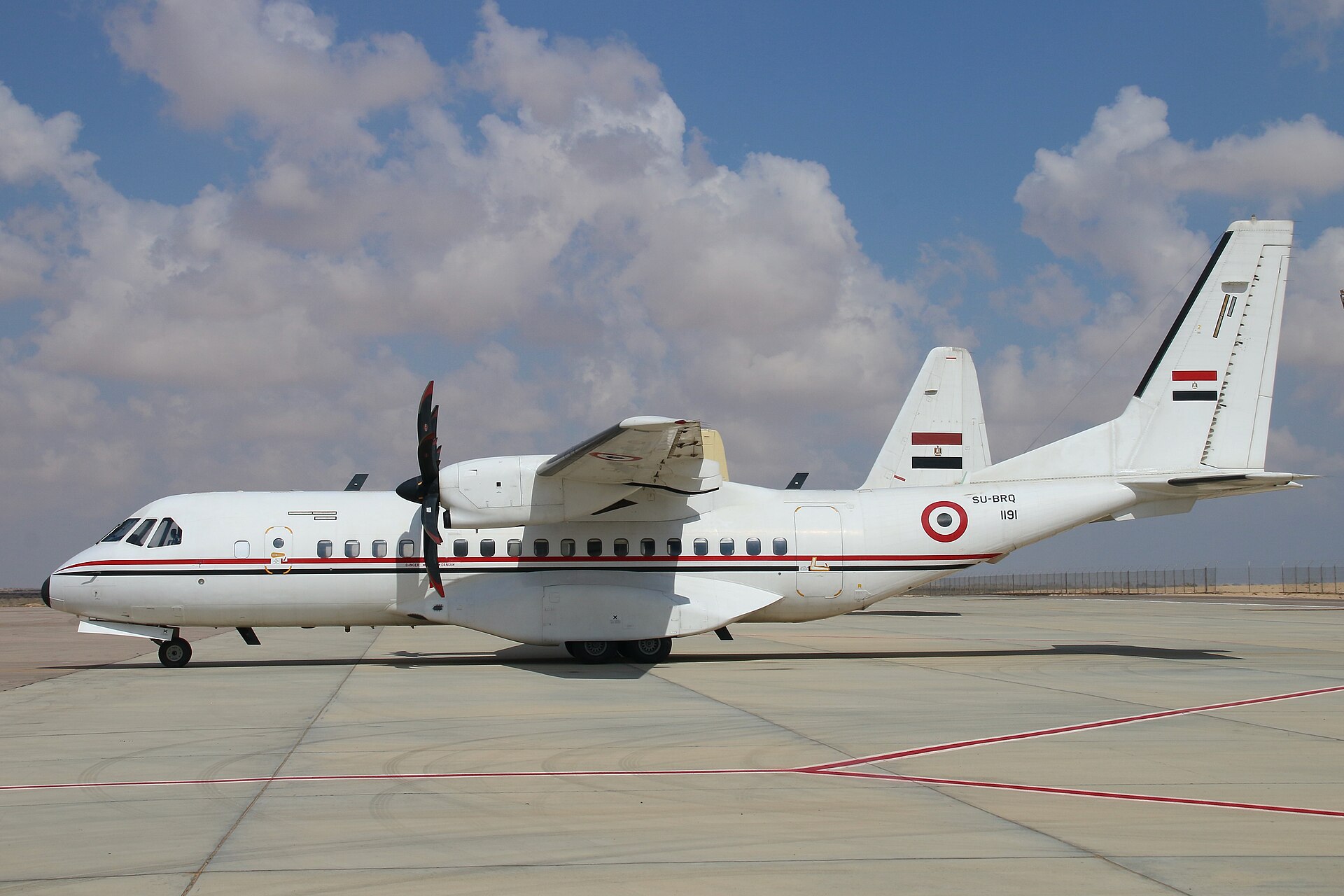
Table of Contents
What Did Egypt’s Foreign Minister Say in Paris?
Abdelatty made the remarks during a France 24 interview at the G7 foreign ministers’ gathering in Paris on November 9-10, where the war between the United States and Iran and the Houthi campaign against Saudi Arabia dominated the agenda. “We already have a military presence there at the request of Saudi Arabia,” he told the network, adding that Cairo was “working to reinforce it,” as reported by Jordan News on November 10.
The House of Saud Daily Briefing
Saudi Arabia's news in 3 minutes, every morning. Free. See today's issue
“We already have a military presence there at the request of Saudi Arabia. We are working to reinforce it.” — Badr Abdelatty, Egyptian Foreign Minister, France 24
The foreign minister described the deployment as “strictly defensive and limited to Saudi territory,” ruling out any cross-border operations into Yemen, according to Xinhua and Turkiye Today. He said the mission was focused on air defense, covering sensitive sites “including, of course, the holy sites and others,” a reference to Mecca and Medina, which have come under repeated Houthi drone and missile fire since the spring of 2026. “Saudi Arabia’s security is part of Egypt’s security,” he said, in a phrase that captured the strategic logic behind the move, Xinhua reported.
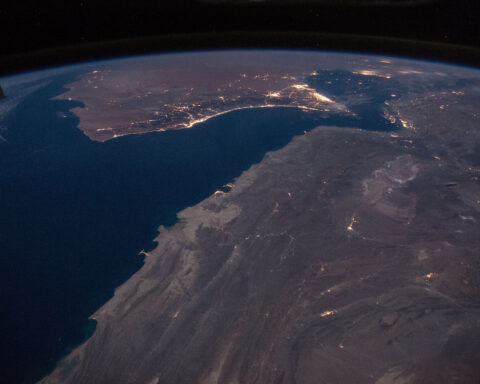
He did not disclose troop numbers, unit identities, or the specific locations of Egyptian forces, and neither Egypt nor Saudi Arabia has released those details. The timing he gave — “a few months ago, following the attacks and assaults on Saudi Arabia during the escalation with Iran” — places the start of the deployment somewhere in mid-2026, when Houthi strikes on Saudi airports and energy infrastructure were intensifying and the confrontation over the Strait of Hormuz was escalating toward open war.
No previous Egyptian or Saudi official statement had acknowledged the presence of Egyptian combat forces on Saudi soil. The October 26 parliamentary vote that authorized President Abdel Fattah el-Sisi to take “necessary measures” to defend Saudi Arabia was reported at the time as a forward-looking authorization, not a ratification of a deployment already under way.
Did the Deployment Begin Before Parliament Approved?
The sequence of events is difficult to reconcile with the constitutional process that Article 152 lays out for foreign combat deployments. That article requires the president to consult the National Defence Council and obtain a two-thirds vote of the House of Representatives before sending forces abroad on a combat mission. Sisi made his public request for parliamentary authorization on October 17 at a Military Academy graduation ceremony, as The National News reported, and the National Defence Council met the following day, October 18, pledging “all necessary and possible forms of support” to Saudi Arabia without explicitly announcing a troop deployment, according to Egyptian Streets and Al-Arabiya English.
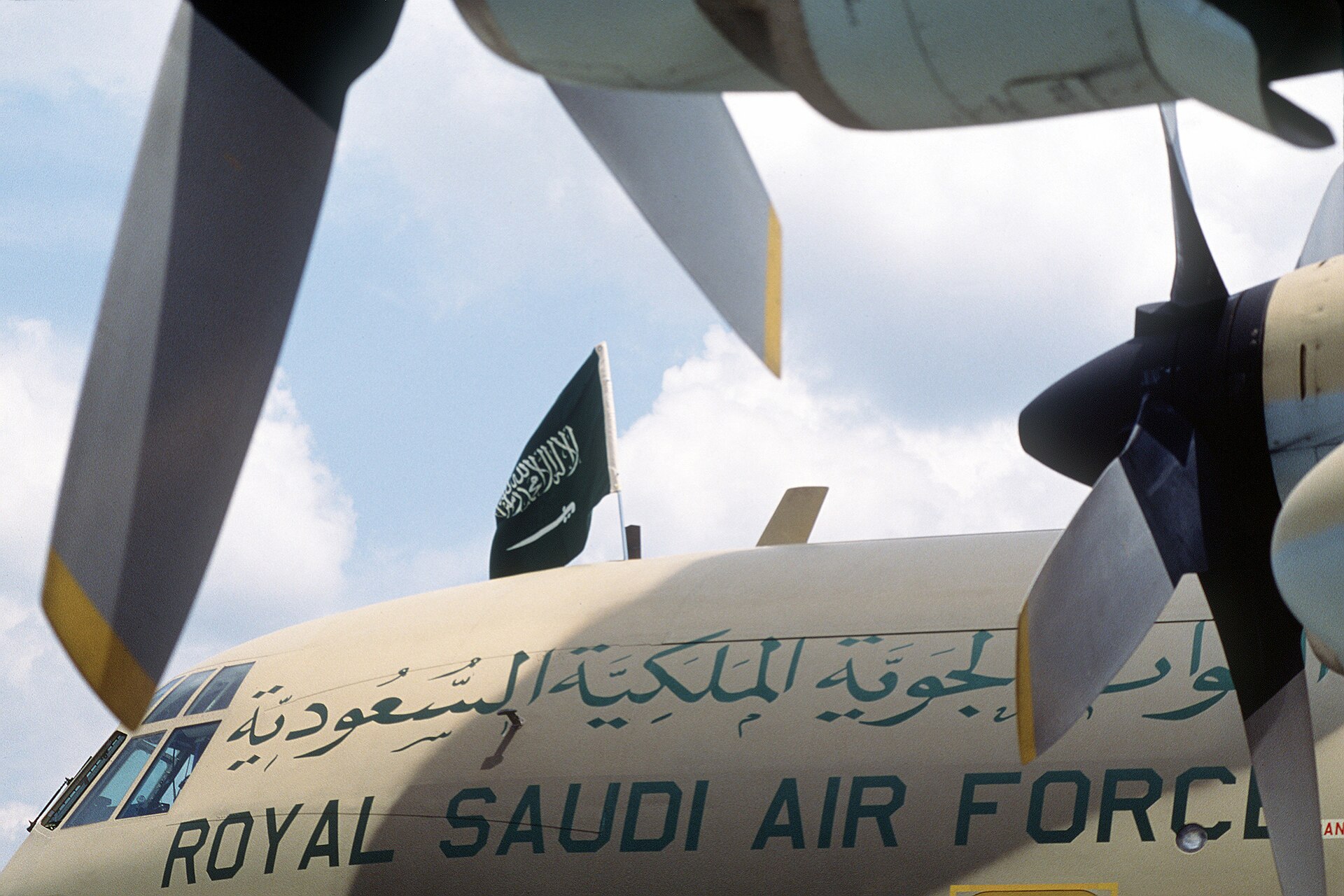
On or around October 18 — the same day as the NDC meeting — at least two Egyptian Air Force C-130H transport aircraft reportedly landed at King Fahd Air Base in Taif, Saudi Arabia, according to Kurdistan24 and open-source intelligence accounts, though neither Egypt nor Saudi Arabia confirmed those flights. Parliament did not vote until October 26, when it passed the authorization in a closed session by the constitutionally required two-thirds majority of 596 members, The National News and Egypt Independent reported.
Abdelatty’s statement that the deployment began “a few months” before his November interview pushes the timeline further back, well before October. Jordan News, which published one of the most detailed accounts of the France 24 interview, flagged this directly: it was “unclear whether lawmakers knew forces were already stationed in Saudi territory at the time of the vote.” If the deployment predates not just the vote but also Sisi’s October 17 request to parliament, then the constitutional sequence ran in reverse — forces first, authorization afterward.
Egyptian officials have not addressed the discrepancy, and no journalist at the G7 gathering appears to have pressed Abdelatty on whether parliamentary approval was obtained before the first soldiers departed. The distinction matters under Egyptian law: Article 152 does not provide for retroactive authorization, and the opposition Egyptian Social Democratic Party, which abstained from the October 26 vote, cited the lack of information about objectives, scope, duration, and costs as its reason for withholding support.
What Happened in the Closed October 26 Session?
The parliamentary session that authorized the deployment was held behind closed doors by roll-call vote, an arrangement that limited both public scrutiny and the opposition’s ability to challenge the government’s case. The Egyptian Social Democratic Party abstained rather than approving a mandate it said lacked basic parameters, The National News reported on October 26.
What the government put before parliament was a broad authorization for Sisi to take “necessary measures” to defend Saudi Arabia’s “territory, sovereignty and holy sites against external aggression,” language drawn from The National News and Egypt Independent coverage of the session. The text was not, on its face, a request to approve a deployment that had already happened. Mostafa Bakry, a parliamentarian and television host with close ties to the state, had said on X following the October 18 NDC meeting that the council had approved sending forces to Saudi Arabia on “a defensive mission,” as Egyptian Streets summarized — the first semi-official acknowledgment that a deployment was in motion, though it came from a loyalist commentator rather than a government statement.
Saudi Arabia’s formal request for Egyptian military support had not been publicly disclosed at the time of the vote, according to Breitbart, which cited unidentified sources. Abdelatty’s November 10 statement that the troops are present “at the request of Saudi Arabia” confirms that such a request was made, but neither government has said when it was submitted, whether it was in writing, or what it asked for. The procedural opacity is consistent with how Egypt’s security establishment has handled sensitive military matters under Sisi, but it leaves open whether parliament authorized a deployment or ratified one.
Egypt Joins a Growing Saudi Defense Network
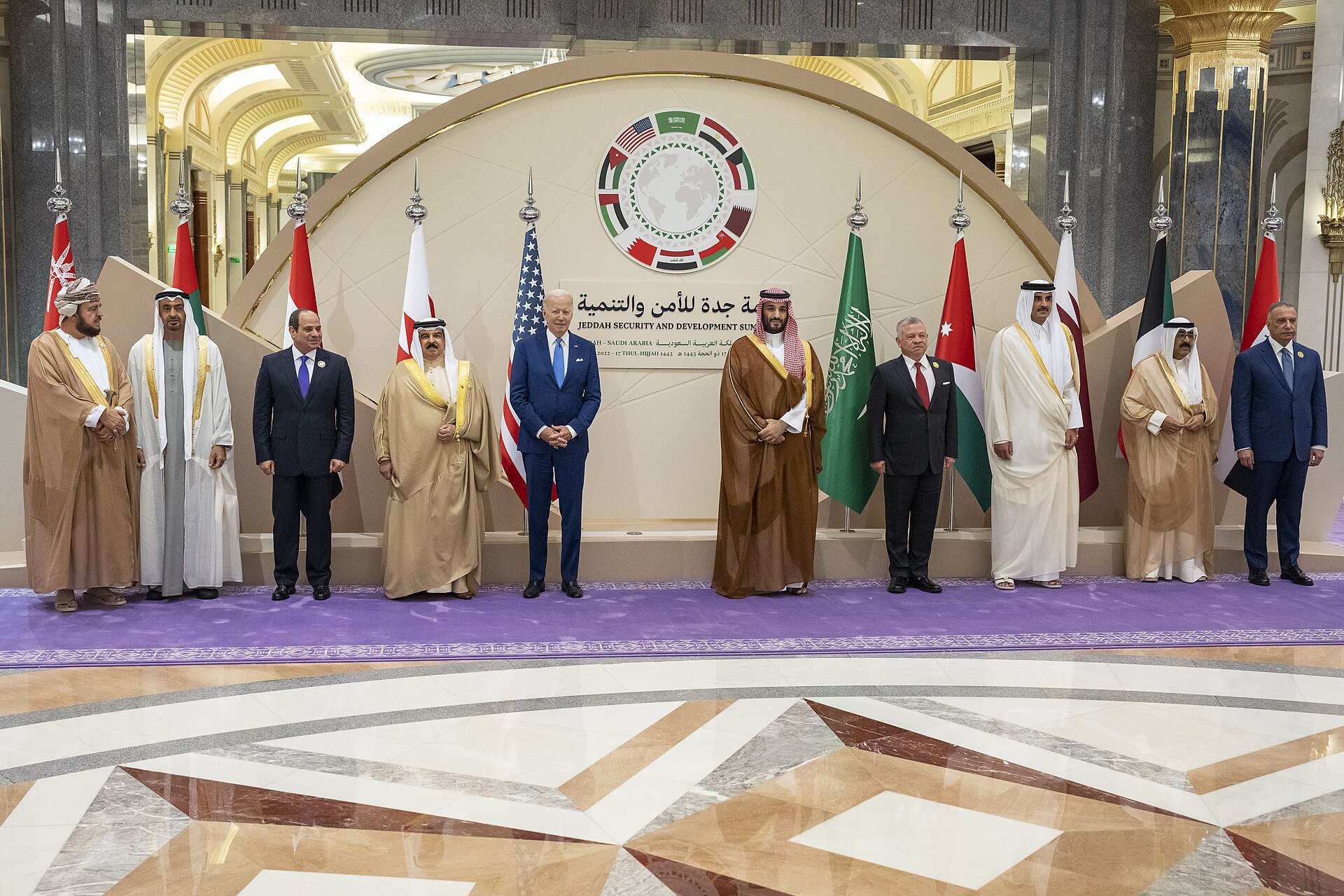
Abdelatty’s disclosure makes Egypt the latest in a growing list of countries that have committed military forces to Saudi Arabia’s defense since the Houthi escalation began, though Egypt’s legal footing is distinct from the others. Pakistan, which signed a Strategic Mutual Defence Agreement with Saudi Arabia, has deployed approximately 8,000 troops to the kingdom, according to Reuters. Turkey ratified the Makkah Pact on November 5 by a vote of 279 to 119 in its parliament, following Pakistan’s ratification on October 23. France has sent troops, radars, and air defenses to Yanbu, as Reuters and Western military media reported in September 2026. Syria announced on November 10 that it was sending military advisers to Saudi Arabia under a defense pact signed days earlier, and Canada’s Prime Minister Mark Carney condemned the Houthi attacks in a call with Crown Prince Mohammed bin Salman on November 9.
Egypt, however, has no formal bilateral defense pact with Saudi Arabia and has not joined the Makkah Pact, the mutual-defense agreement between Saudi Arabia, Pakistan, and Turkey. Al Jazeera reported on October 18 that Egypt was considering membership but had not formally applied. That makes the deployment something closer to an ad hoc arrangement between two allied governments than a treaty obligation, and it explains why the parliamentary authorization was framed in broad language about “necessary measures” rather than as the activation of a standing defense commitment.
The operational focus that Abdelatty described — air defense for “the holy sites and others” — aligns with what analysts expected before the deployment was confirmed. Thomas Bonnie James, a security analyst, told Al Jazeera on October 18 that Egypt’s contribution would likely center on air and missile defense, drone interception, naval escort, and intelligence sharing. Alexandru Hudisteanu, a military analyst, told the same outlet that counter-drone and anti-missile support was “highly likely.” The need for additional air defense capacity is not abstract: Saudi Arabia has been intercepting Houthi ballistic missiles, cruise missiles, and drones at an accelerating pace, including a cruise missile intercepted over Riyadh on November 7 and six Houthi operations targeting Aramco facilities, King Khalid International Airport, and a Najran National Guard camp the same day.
The Houthi campaign has inflicted measurable economic damage beyond the human toll. Airlines cancelled more than a third of Saudi flights after strikes on airports, and the broader US-Iran war — including American strikes on Iranian positions near Qeshm Island — has kept the entire Gulf on a war footing that makes Egypt’s defensive contribution a practical necessity rather than a symbolic gesture.
How Have the Houthis Responded?
The Houthi movement in Yemen treated Egypt’s parliamentary vote on October 26 as a hostile act before the full extent of the deployment was known. Mohammed Ali al-Houthi, a member of the Houthi Political Council, posted on Telegram the day after the vote, calling the authorization a “declaration of war against Yemen,” the Times of Israel and Israel Hayom reported on October 27. Yahya Ali al-Ra’i, speaker of the Houthi-controlled parliament in Sanaa, warned separately that Egyptian involvement “could threaten Egypt’s national security and domestic stability,” according to Al Hurra.
“A declaration of war against Yemen.” — Mohammed Ali al-Houthi, Houthi Political Council member, on Egypt’s parliamentary authorization
The Houthi warnings invoke a historical parallel that weighs heavily in Egyptian strategic thinking. In the 1960s, President Gamal Abdel Nasser committed tens of thousands of troops to the North Yemen Civil War in what became a years-long quagmire with heavy casualties — an experience so scarring that it is sometimes called Egypt’s Vietnam. Abdelatty’s emphasis that the current deployment is “strictly defensive and limited to Saudi territory,” with no operations inside Yemen, reads as a direct effort to separate this commitment from that legacy. Mohamed Hegazy, a former Egyptian assistant foreign minister, told Al Hurra that Egypt’s stance “should not be read as a move toward war.”
Iran’s response to the November 10 disclosure has been muted. Ahram Online reported that Iranian Foreign Minister Abbas Araghchi called Abdelatty on October 27 to discuss “the latest regional developments,” but no direct Iranian government statement on the Egyptian deployment was found in IRNA, PressTV, or Tasnim coverage as of November 10. The silence may reflect Tehran’s preference for treating the US-Iran confrontation and the Houthi war in Saudi Arabia as separate tracks, or it may simply mean a formal response has not yet been issued.
Egypt and Saudi Arabia: A Military History
Saudi Arabia has been one of Egypt’s principal financial backers for decades, and the military relationship between the two countries runs deep even without a formal defense treaty. Egypt contributed naval and air forces to the Saudi-led coalition against the Houthis when it launched in 2015, though Cairo pulled back from active participation as the campaign ground on. The two countries held joint military exercises in 2024, and Egypt became a founding member of the Multinational Maritime Defence Coalition that Saudi Arabia launched in July 2026 to protect Red Sea and Bab al-Mandeb shipping, as Al Jazeera reported.
The political alignment tightened as the Houthi threat intensified through 2026. Crown Prince Mohammed bin Salman met President Sisi in Cairo on September 15, and Egypt’s presidency declared afterward that “Saudi and Gulf security is inseparable from Egypt’s,” Asharq Al-Awsat reported — the same language Abdelatty would use in Paris nearly two months later. On October 11, Saudi Arabia, Egypt, Pakistan, and Turkey issued a joint statement condemning the attacks as a “flagrant violation of the Kingdom’s sovereignty and territorial integrity,” according to the group’s joint communiqué published by the Turkish Foreign Ministry, and the Saudi, Pakistani, and Turkish military chiefs met in Riyadh on September 25 to coordinate what had become a multinational defense architecture, per Gulf News.
On November 10, Egyptian forces were operating in Saudi Arabia under an arrangement that had a parliamentary vote behind it but no treaty framework, no publicly stated timeline, and a start date that — by their own foreign minister’s account — came before the authorization that was supposed to precede it. Whether Egypt would take the next step and formally join the Makkah Pact was a question Abdelatty chose not to answer in Paris.
Frequently Asked Questions
How many Egyptian troops are in Saudi Arabia?
Neither Egypt nor Saudi Arabia has disclosed troop numbers, unit identities, or base locations. Abdelatty confirmed only that forces are present and being reinforced. For comparison, Pakistan has approximately 8,000 troops in the kingdom under a Strategic Mutual Defence Agreement, according to Reuters, and France has deployed troops, radars, and air defense batteries to the port city of Yanbu, according to Al Jazeera.
What equipment has Egypt sent?
Abdelatty described the mission as focused on air defense, covering “the holy sites and others,” but did not identify specific systems or platforms. Kurdistan24 and open-source intelligence accounts reported that at least two Egyptian Air Force C-130H transport aircraft landed at King Fahd Air Base in Taif on or around October 18, though this has not been officially confirmed by either government. Security analysts Thomas Bonnie James and Alexandru Hudisteanu told Al Jazeera in October that Egypt’s contribution would likely include air and missile defense systems, counter-drone capabilities, naval escort assets, and intelligence-sharing arrangements.
Is Egypt part of the Makkah Pact?
No. The Makkah Pact is a mutual-defense agreement between Saudi Arabia, Pakistan, and Turkey. Pakistan ratified it on October 23, and Turkey followed on November 5 with a 279-to-119 parliamentary vote. Al Jazeera reported on October 18 that Egypt was considering joining but had not formally applied as of November 10. France and the United Kingdom, which have their own bilateral military support arrangements with Saudi Arabia, are also not parties to the pact. Egypt’s deployment operates under its own parliamentary authorization rather than a treaty obligation.
What is Article 152 of Egypt’s constitution?
Article 152 requires the president to consult the National Defence Council and obtain approval from two-thirds of the House of Representatives — a threshold of 398 out of 596 members — before deploying Egyptian forces on a combat mission abroad. The article does not provide for retroactive authorization. The October 26 vote met the two-thirds threshold, but Abdelatty’s statement that troops had been present “a few months” before his interview raises the question of whether the constitutional process was completed before the deployment began.
Has Iran officially responded to the Egyptian deployment?
No public statement from Iran’s government on the deployment was found as of November 10 in IRNA, PressTV, or Tasnim News Agency coverage. Ahram Online reported that Iranian Foreign Minister Abbas Araghchi called Abdelatty on October 27 to discuss “the latest regional developments,” but the call was not publicly tied to the troop deployment specifically. Iran’s state media has focused its coverage on the Strait of Hormuz standoff and direct US-Iran military exchanges rather than the buildup of foreign forces in Saudi Arabia.
The House of Saud Daily Briefing
Saudi Arabia's news in 3 minutes, every morning. Free. See today's issue