DHAHRAN — Saudi Arabia pumped 9.2 million barrels per day in October, up 970,000 bpd from September, according to a Bloomberg production survey published on November 7. The rebound drove total OPEC crude output to 22.8 million bpd — roughly 88% of what the cartel produced in February, the last full month before Iran closed the Strait of Hormuz.
The number looks like a recovery, but Saudi Arabia is still producing about 1.28 million bpd below its OPEC quota of 10.478 million bpd. That gap is the product of export routes that remain under attack: Hormuz is running at a fraction of its pre-war capacity, the East-West pipeline was hit again on November 9, and Brent crude has slipped below $100 for the first time in weeks. What Saudi Arabia does with those missing barrels — and when — is the question that will define the November 29 OPEC ministerial meeting, where ministers set 2027 output targets for the first time since the war upended the cartel’s production framework.
The House of Saud Daily Briefing
Saudi Arabia's news in 3 minutes, every morning. Free. See today's issue
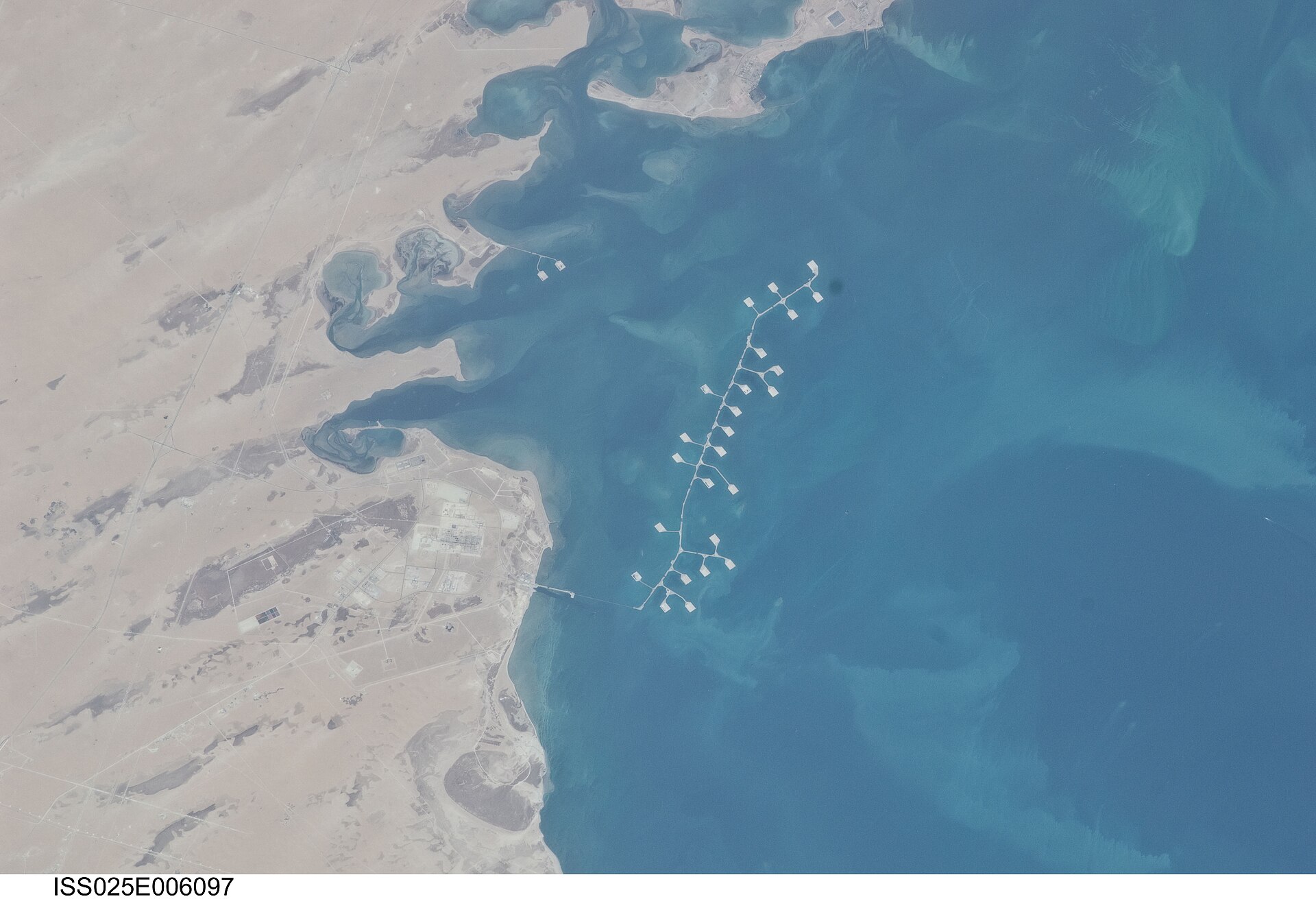
Table of Contents
OPEC’s October Recovery, by the Numbers
Bloomberg’s monthly survey put OPEC’s total October output at 22.8 million bpd, up 930,000 bpd from September. A Reuters survey, published on November 9, gave a slightly higher figure of 22.87 million bpd — up 1.38 million bpd from the previous month. The two estimates frame the same picture: OPEC produced between 88% and 90% of its February baseline of 25.48 million bpd, according to the respective surveys.
Saudi Arabia accounted for the largest single recovery. Its 970,000 bpd month-on-month increase dwarfed Iraq’s gain of 140,000 bpd, which brought Baghdad to 4.15 million bpd, and Kuwait’s 130,000 bpd rise to 2.0 million bpd — both per Bloomberg’s survey. The three countries together added more than 1.2 million bpd in a single month, the kind of swing that in peacetime would dominate the trading week.
But Saudi Arabia remains roughly 800,000 bpd below its early-year output rates, per the Bloomberg data, and nothing about the security picture suggests a smooth climb back. A tanker was reported on fire off Khasab, Oman on November 7-8, according to Critical Threats’ Iran update of November 8 — the latest in a series of IRGC Navy attacks on commercial vessels in and around the Strait of Hormuz. For every barrel Saudi Arabia claws back in production, the question of how it reaches a buyer remains open.
Where Are the Missing Barrels?
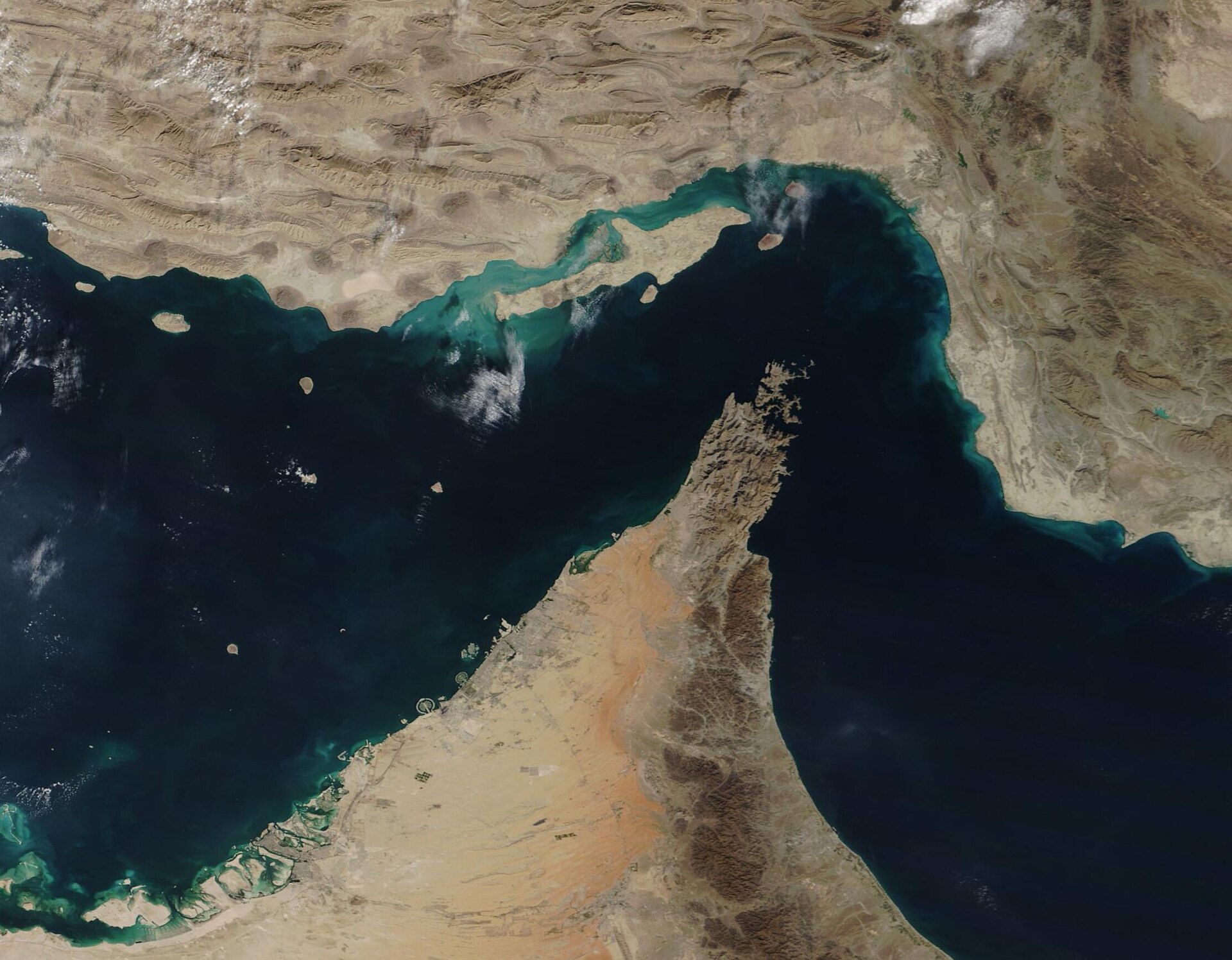
Saudi exports in October averaged 7 million bpd, according to Bloomberg’s survey — a figure that comes with a wide margin of uncertainty. Tanker-tracking services disagree on the actual volume: Kpler estimated 5.72 million bpd, while TankerTrackers.com put the number at 7.9 million bpd. The spread reflects how difficult it has become to track crude leaving the kingdom when the main export artery, the Strait of Hormuz, is running at roughly 20% of its pre-war traffic levels, according to The National on November 8.
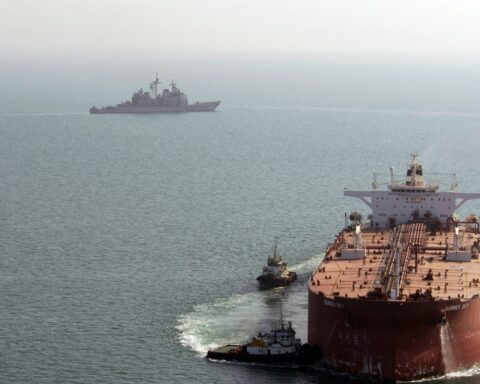
Before Iran declared the strait closed, Hormuz handled about 138 ships per day, per the Joint Maritime Information Center. That baseline has collapsed. The IRGC Navy continues to mine and attack vessels, and on November 9 an IRGC navy official claimed that “oil smuggling” through the southern Hormuz route had been fully halted after navigational aids were destroyed, according to Middle East Eye. The claim is unverified and comes from the force responsible for the mine-laying — but it tracks with the chaos in the tracking data.
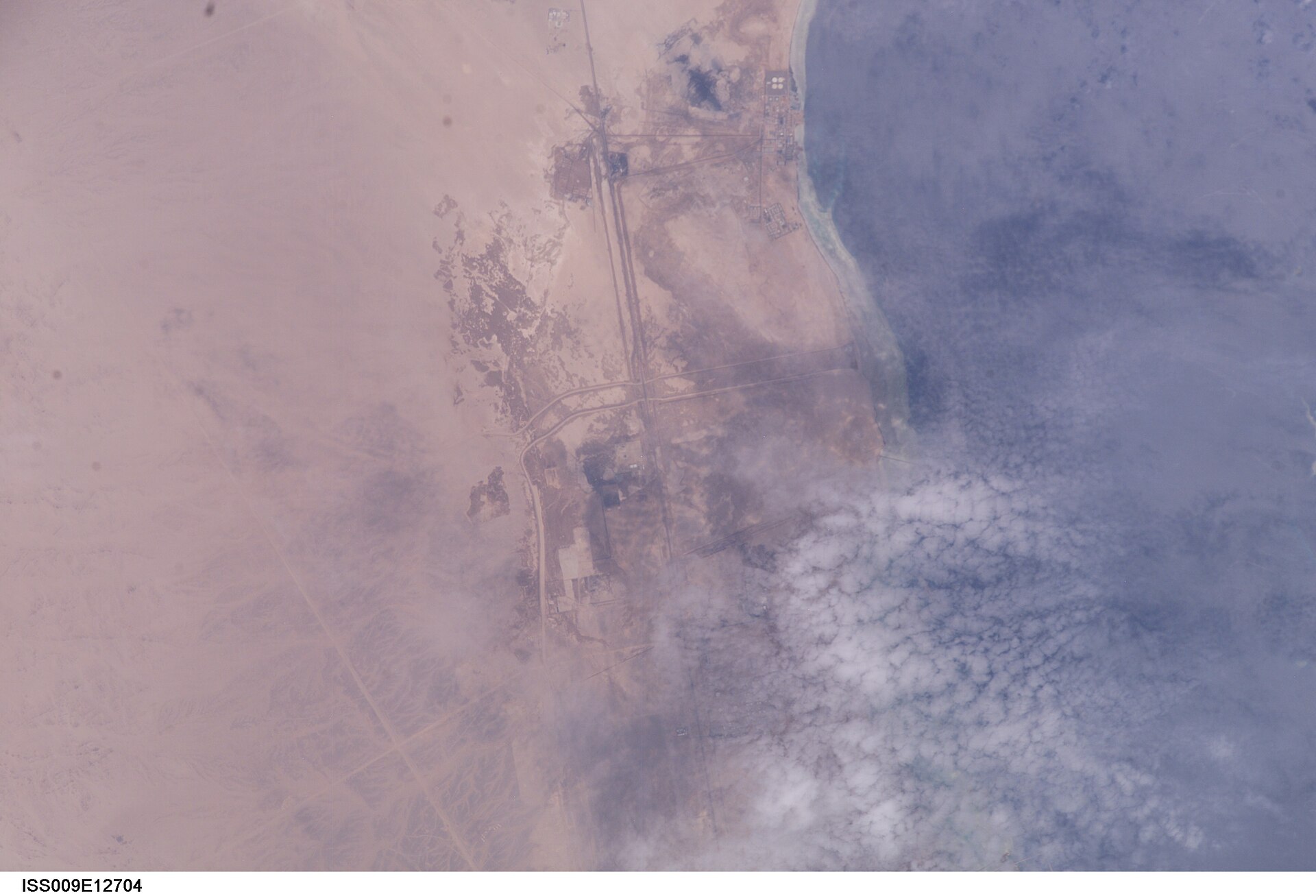
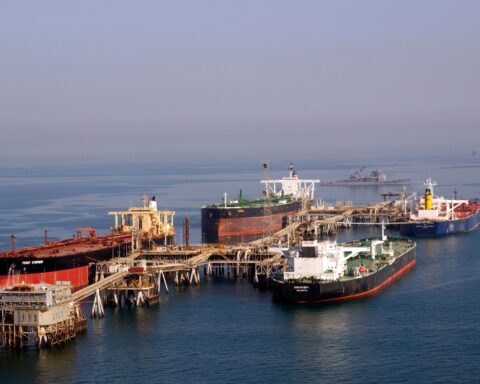
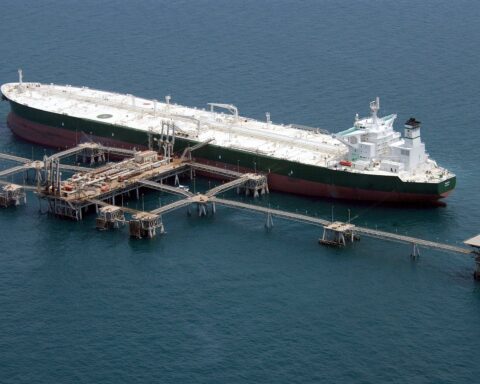
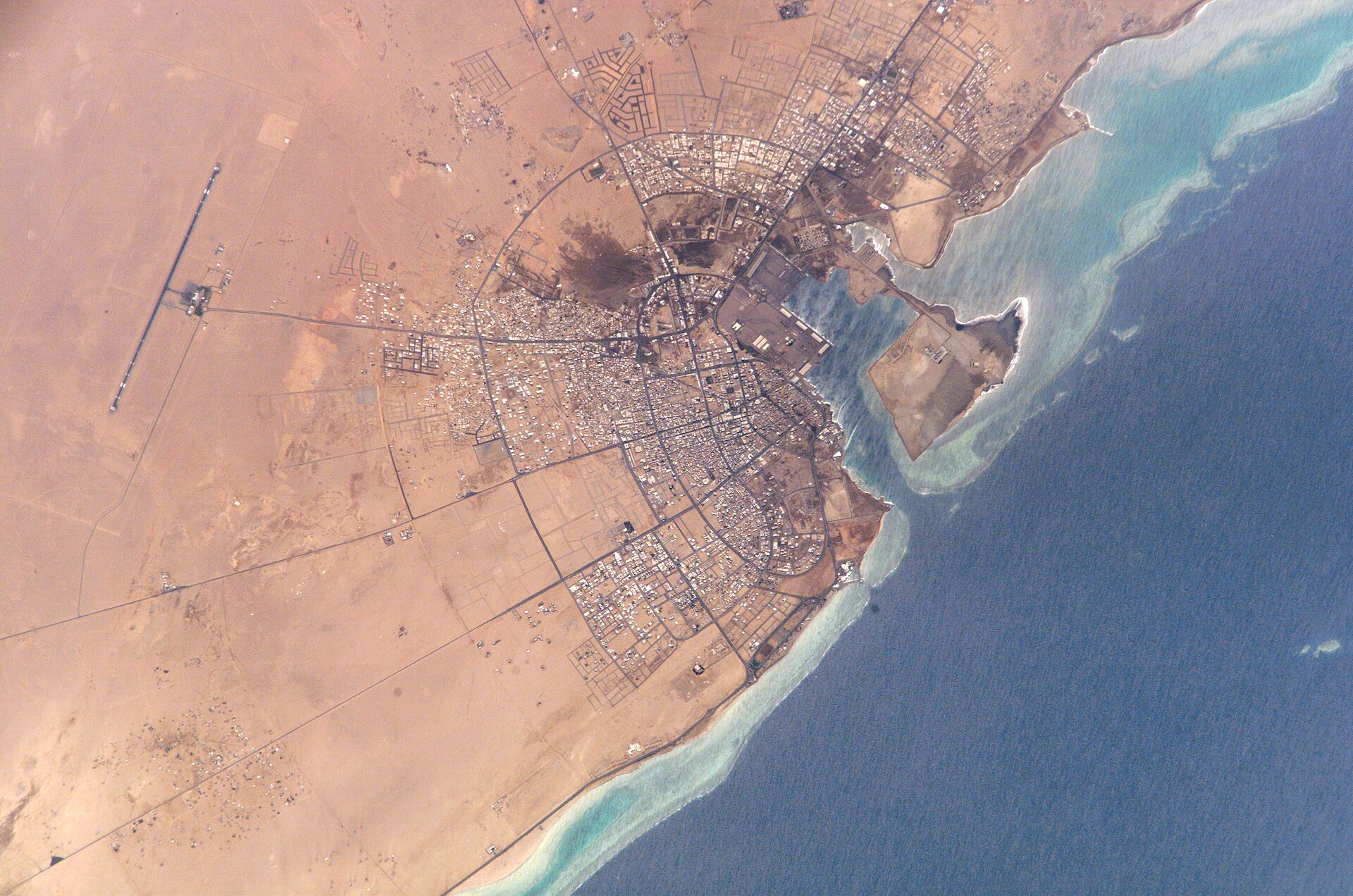
Yanbu, on the Red Sea coast at the western terminus of the East-West pipeline, has become Saudi Arabia’s primary alternative. Vortexa estimated the terminal handled approximately 2.5 million bpd in October, according to Gulf News — record throughput for a loading point that before the war was secondary. The pipeline feeding Yanbu was attacked in the Medina region on November 9, though the Energy Ministry said via the Saudi Press Agency that operations were not disrupted and no casualties were reported. A limited fire broke out and was extinguished.
Iran’s Output Hits a 37-Year Low
While Saudi Arabia was recovering barrels, Iran was losing them. Bloomberg’s survey put Iranian output at 1.9 million bpd in October, down 120,000 bpd from September — the lowest figure in the survey’s monthly data series, which stretches back to 1989. No tankers have been sighted at Kharg Island, Iran’s main crude export terminal, since late August, according to the Bloomberg data.
Iran closed Hormuz to choke the US and its Gulf allies, and the country bleeding production fastest is Iran itself. The US naval blockade, combined with the physical hazards Iran’s own IRGC has sown in the strait, has cut Tehran’s remaining export routes. Iran’s army spokesman said on November 7 that Hormuz will stay closed until the US meets seven conditions, but every week of closure costs Tehran revenue it cannot replace from any other source.
Virginie Bahnik, an analyst at Petro-Logistics, told Baird Maritime in late October that total volumes transiting the Strait of Hormuz “have fallen by 2-3 million bpd” from earlier October peaks. That drag affects Iraq and Kuwait as well — both countries export through Gulf terminals — but neither faces the combined weight of sanctions, blockade and self-inflicted closure that has pushed Iran to its lowest output in nearly four decades.
Can the East-West Pipeline Replace Hormuz?
The East-West pipeline, also known as the Petroline, has a design capacity of roughly 7 million bpd, according to Saudi Gazette via Zawya. In the first quarter of 2026, before the war, Aramco pushed it to record throughput. After Houthi drone attacks forced a suspension on September 11, the line restarted on September 22 at reduced capacity, with full restoration expected to take six weeks or more, per Baird Maritime and Reuters.
The November 9 attack on the pipeline in the Medina region — a limited fire extinguished without disrupting operations, per the Energy Ministry via the Saudi Press Agency — is a reminder that the alternative route is not a safe one. The Houthis have repeatedly targeted Saudi energy infrastructure, and the pipeline’s roughly 1,200-kilometre span across the Arabian Peninsula offers an extended target set. Saudi Arabia is channelling a growing share of its exports through a single corridor that both the Houthis and Iran have every incentive to hit.
Aramco CEO Amin Nasser, speaking in Abu Dhabi, told Bloomberg on November 7 that the company would “maximize production going forward in the fourth quarter.” At an Energy Intelligence conference on October 5, Nasser said Aramco can make its maximum sustainable capacity of 12 million bpd available “within days,” adding: “Our system is intact,” as reported by BOE Report. The production machinery may be ready, but the export infrastructure between the wellhead and the buyer is under sustained pressure from two directions — IRGC mines and naval interdiction in Hormuz, and Houthi drones and missiles along the western pipeline route.
What Does November 29 Decide?
The seven-member OPEC+ subgroup that met virtually on November 1 kept December output quotas unchanged, according to World Oil, Saudi Gazette and TASS. That was housekeeping. The substantive decision comes on November 29, when OPEC holds a full ministerial meeting to set 2027 output targets, per OilPrice.com — the first time the cartel has attempted long-range planning since the Hormuz crisis tore up its production framework.
The numbers give Saudi Arabia leverage. The kingdom’s actual October output of 9.2 million bpd leaves about 1.28 million bpd between its production and its OPEC ceiling of 10.478 million bpd, according to Enerdata and World Oil data from early November. In normal conditions, that kind of headroom is a tool of market management, a tap Riyadh can open or close to steer prices. In wartime, it means something different — the capacity to push more than a million additional barrels per day onto global markets the moment export routes open, without breaking a single OPEC rule.
That prospect shapes the November 29 agenda. Other OPEC members, particularly those whose own output is recovering, will want assurance that any Saudi increase is coordinated and phased. The fact that Nasser is already talking about maximizing production in Q4 suggests Riyadh is not inclined to wait for a cartel consensus before it acts.
The Revenue Squeeze
The production rebound has not fixed Saudi Arabia’s finances. The kingdom’s revised 2026 deficit stands at SAR 245 billion, raised from a budgeted SAR 165 billion in the pre-budget statement published on September 30, according to Reuters via Zawya. The third-quarter deficit alone hit SAR 84 billion — up 145% from the prior quarter — with oil receipts falling about 23% year on year to roughly SAR 116 billion, per the Finance Ministry (Arab News, 4 November 2026).
Brent crude stood at approximately $97.65 per barrel on November 9 at 07:30 ET, down from $100.31 the previous day and $106.94 a month ago, according to Fortune. The slide below $100 removes a floor that Gulf producers have relied on to offset lower export volumes. Aramco has already cut its November Arab Light official selling price to Asian buyers to $5 below the Oman/Dubai benchmark — the widest discount since June 2020, per bdnews24 and Reuters.
More barrels at lower prices will not close a SAR 245 billion deficit. Saudi consumer prices and wholesale costs rose in October, squeezing consumers at a time when government revenue is contracting. The GCC Gulf Railway agreement signed in Bahrain on November 8 may signal long-term ambitions for the bloc’s infrastructure, but the short-term fiscal picture is the most strained since the pandemic. At Yanbu, tankers queue at a Red Sea terminal that twelve months ago was a secondary loading point — now it carries the weight of a kingdom’s export economy, while 1,200 kilometres to the east, the strait that once moved the bulk of Saudi crude sits at a fifth of its normal traffic.
Frequently Asked Questions
How does Saudi Arabia’s October output compare to its maximum capacity?
Aramco’s maximum sustainable capacity is 12 million bpd, a figure CEO Amin Nasser reaffirmed at the Energy Intelligence conference on October 5, as reported by BOE Report. October’s actual output of 9.2 million bpd means the kingdom was operating at roughly 77% of its technical ceiling — a gap of 2.8 million bpd that reflects export constraints, not production limits.
Why do tanker-tracking services disagree on Saudi export volumes?
Ship-tracking relies on AIS transponder data, satellite imagery and port loading reports. With Hormuz effectively contested — traffic at about 20% of its pre-war 138 ships per day, per JMIC and The National — vessels frequently go dark, reroute or load at unexpected terminals. Kpler’s estimate of 5.72 million bpd and TankerTrackers.com’s figure of 7.9 million bpd for October reflect different methodologies applied to a strait where normal tracking has broken down.
What is the status of Iran’s Kharg Island terminal?
No tankers have been sighted at Kharg Island since late August, according to Bloomberg’s survey data. Kharg handled the vast majority of Iran’s seaborne crude exports before the conflict. With Iranian output at 1.9 million bpd — the lowest in Bloomberg’s data going back to 1989 — most of what Iran produces now appears to go to domestic refining or overland routes, though precise data on those flows is limited.
What did OPEC+ decide about December quotas?
The seven-member OPEC+ subgroup that met virtually on November 1 kept December output quotas unchanged, according to World Oil, Saudi Gazette and TASS. Saudi Arabia’s quota stands at 10.478 million bpd, per Enerdata. The next substantive decision comes at the full ministerial meeting on November 29, which will set 2027 production targets for the first time since the Hormuz crisis began.
How much oil does the East-West pipeline handle compared to Hormuz?
The pipeline has a design capacity of roughly 7 million bpd, according to Saudi Gazette via Zawya. In October, Yanbu — the pipeline’s Red Sea terminus — handled approximately 2.5 million bpd, per Vortexa data cited by Gulf News. The pipeline serves only Saudi crude, and even at full capacity it cannot replace what a functioning Hormuz carries for the broader region — a strait that before the war served the full range of Gulf exporters, not Saudi Arabia alone.
The House of Saud Daily Briefing
Saudi Arabia's news in 3 minutes, every morning. Free. See today's issue