
DHAHRAN — Aramco’s July Official Selling Price to Asia collapsed by $6 per barrel to a $9.50 premium over the Oman/Dubai benchmark — the steepest single-month reduction in four years and a full dollar beyond what traders expected. The cut is not a demand story. It is a Hormuz credibility story, priced into every barrel Aramco needs to sell to prevent Asian refiners from locking in permanent supply-chain switches to Russian ESPO Blend, and it lands on a fiscal position already bleeding from insurance costs that the US-Iran MOU has done nothing to resolve.
Two months ago, Arab Light commanded a $19.50 premium — an all-time high. That premium has shed $10 in sixty days. This is the revenue side of a fiscal vice whose cost side was already documented in the mass cancellation of P&I war-risk extensions that preceded it. Aramco can restart Ras Tanura, but it cannot restart the pricing power that Hormuz uncertainty has destroyed.
Table of Contents
- The $10-Per-Barrel Collapse in Six Weeks
- Why Did Aramco Cut Deeper Than the Market Expected?
- What Is the ESPO Switching Threshold — and Has Aramco Crossed It?
- Ras Tanura Restarted — the Revenue Did Not
- How Do Insurance Costs and OSP Cuts Form a Fiscal Vice?
- The Breakeven Gap Aramco Cannot Close
- The 1986 Warning Aramco Knows by Heart
- Who Is Buying What Aramco Is Losing?
- Can the MOU Fix What Pricing Has Already Broken?
- Frequently Asked Questions
The $10-Per-Barrel Collapse in Six Weeks
Aramco’s Official Selling Price mechanism is the instrument through which the world’s largest oil exporter translates geopolitical conditions into commercial reality. The OSP does not track spot markets passively — it is a monthly signal from Dhahran to every refiner in Asia, Europe, and the Americas about what Saudi Arabia believes its crude is worth relative to its competitors. Since May 2026, that signal has been in freefall.
In May, Arab Light’s premium to the Oman/Dubai benchmark reached $19.50 per barrel, an all-time high that reflected both the immediate Hormuz closure premium and the pricing power of the world’s only spare-capacity producer operating through its Red Sea alternative at Yanbu. By June, Aramco had already trimmed $4, bringing the premium to $15.50. The July cut — $6, to $9.50 — was nearly double the June reduction and exceeded trader expectations by a full dollar.
The trajectory matters more than any single month. A $10 collapse in premium over two months is not a pricing correction. It is a structural repricing of what Asian buyers believe Hormuz transit is worth — and what they are willing to pay for crude that may sit in a VLCC unable to move, or arrive via a 12-to-15-day detour around Africa that S&P Global has documented adds measurably to voyage costs. Aramco’s all-time-high OSP in May reflected a seller’s market born of crisis scarcity. The July OSP reflects a buyer’s market born of crisis fatigue, where the risk has not diminished but the willingness to pay for it has.
| Month | Arab Light OSP to Asia ($/bbl premium over Oman/Dubai) | Month-on-Month Change | Cumulative Change from May Peak |
|---|---|---|---|
| May 2026 | +$19.50 (all-time high) | — | — |
| June 2026 | +$15.50 | −$4.00 | −$4.00 |
| July 2026 | +$9.50 | −$6.00 | −$10.00 |
The last time Aramco cut the Asian OSP by this magnitude in a single month was during the June 2022 drawdown from Russia-Ukraine war highs, when Arab Light had peaked at $9.35 above benchmark in May 2022. That comparison is telling: the July 2026 premium of $9.50 is nearly identical to the May 2022 peak — except in 2022 it was the ceiling, and in 2026 it is the floor that Aramco is desperately trying to defend against further erosion.
The Middle East briefing 3,000+ readers start their day with.
One email. Every weekday morning. Free.
Why Did Aramco Cut Deeper Than the Market Expected?
The Bloomberg survey of Asian traders and refiners, published June 8, 2026, showed an average expectation of a $5 per barrel reduction for the July OSP. Aramco exceeded that consensus by a dollar — a deliberate overshoot that signals defensive pricing rather than market-following. The question is what Aramco saw that the traders did not, or what Aramco feared that the traders had already begun to act on.
The answer sits in the shipping data. TD3C freight rates on the benchmark Middle East Gulf-to-China VLCC route have surged from roughly $3 per barrel before the conflict to approximately $11 per barrel currently, with some individual voyage fixtures running $13 to $15 per barrel according to S&P Global’s Platts shipping assessments. That freight cost is not Aramco’s problem in the narrow sense — FOB pricing puts it on the buyer — but it is Aramco’s problem in the structural sense, because it makes the total delivered cost of Arab Light to a Shandong refinery dramatically less competitive against Russian ESPO Blend loading at Kozmino, which faces no Hormuz transit risk, no JWC war-risk surcharge, and no 12-day routing detour.
When Aramco’s OSP premium plus the freight differential plus the war-risk insurance surcharge pushes the landed cost of Arab Light past a threshold that S&P Global has identified at $5 to $7 per barrel above Russian ESPO, Asian refiners do not simply complain — they switch. And that switching, as S&P Global documented in April 2026, is not temporary. Refiners that reconfigure crude slates, renegotiate term contracts, and adjust refinery yields for a different crude grade do not casually reverse those investments when the spread narrows. The $6 cut is Aramco’s attempt to keep the spread below the switching threshold before the switching becomes irreversible.
What Is the ESPO Switching Threshold — and Has Aramco Crossed It?
The ESPO switching threshold is the price differential at which Asian refiners — particularly China’s independent “teapot” refineries in Shandong province — begin semi-permanent migration from Arab Light to Russian Eastern Siberia-Pacific Ocean Blend. S&P Global’s commodity research has placed this threshold at a $5 to $7 per barrel spread in ESPO’s favor, accounting for crude quality differentials, freight economics, and refinery configuration costs.
In April 2026, the Arab Light-to-ESPO spread reached $5.50 per barrel in ESPO’s favor — inside the switching threshold, according to S&P Global. Bloomberg reported on April 13, 2026 that Saudi crude sales to China were “set to halve” during the disruption period, as Chinese buyers pivoted to West African, Russian, and US grades that carried no Hormuz risk premium. The mechanism is straightforward: a Chinese state refiner can buy ESPO from Kozmino with a five-day voyage, no war-risk surcharge, no JWC designation premium, and no uncertainty about whether the cargo will actually arrive. Arab Light, even at the reduced July premium, still carries all of those costs on top of the OSP itself.
Bassam Fattouh of the Oxford Institute for Energy Studies has documented extensively that the OSP mechanism gives Aramco control over the effective buyer price without relying solely on OPEC+ production cuts. But that control has limits. The OSP can chase a competitor’s price downward, but it cannot eliminate the structural cost disadvantage that Hormuz transit risk imposes. Every dollar Aramco shaves off the premium is a dollar of revenue forgone — and it may still not be enough if the total delivered cost, including freight and insurance, remains above the ESPO alternative.
The $6 July cut brings Arab Light’s premium to $9.50 — a level that pulls the ESPO spread back from the April danger zone. But the cut also reveals what Aramco’s pricing desk already knows: the problem is not the OSP in isolation. The problem is that Hormuz transit adds $8 to $12 per barrel in combined freight and insurance costs that did not exist before March 2026, and no OSP adjustment can absorb that entire penalty without destroying the revenue-per-barrel economics that Saudi Arabia’s fiscal position requires.
Ras Tanura Restarted — the Revenue Did Not
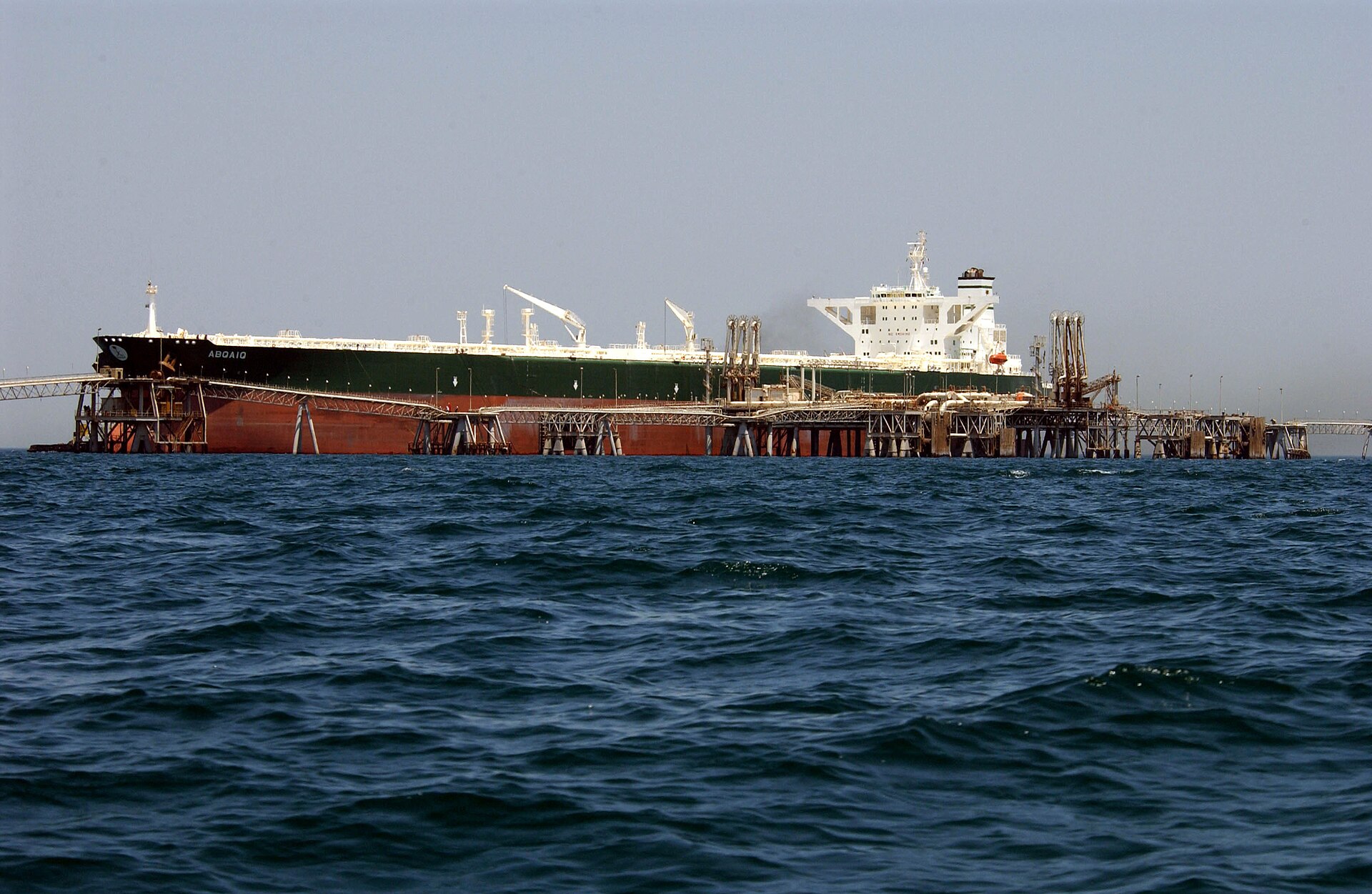
On June 27, two Bahri-owned VLCCs began loading at Ras Tanura, ending a 111-day idle period at the world’s largest offshore oil terminal that stretched from the March 8 Hormuz closure through late June. The physical restart mattered — the terminal had sat dark since the first week of the conflict, its loading berths empty while eight million barrels waited in storage with nowhere to go. But the commercial terms on which those barrels are now moving tell a different story from the operational one.
At the May OSP of $19.50 premium, a two-million-barrel VLCC cargo of Arab Light carried roughly $39 million in premium revenue above the Oman/Dubai benchmark. At the July OSP of $9.50, the same cargo carries $19 million — a $20 million reduction per vessel. Ras Tanura can handle approximately 6.5 million barrels per day at full capacity. Even assuming a gradual ramp-up to half capacity, the revenue per barrel flowing through that terminal has been halved in the two months since loading stopped, before accounting for the freight and insurance costs that the buyer — or in some cases, Aramco itself through its Bahri fleet — must absorb.
The Yanbu alternative on the Red Sea, which handled the rerouted export load through the East-West Pipeline during the Ras Tanura shutdown, operates at an effective export capacity of approximately four million barrels per day according to Argus Media, against pre-war Hormuz exports of seven to seven-and-a-half million barrels per day. That permanent capacity gap of approximately three to three-and-a-half million barrels per day while Hormuz remains operationally compromised means Ras Tanura is not optional — it is structurally necessary. But structurally necessary does not mean commercially viable at any price.
The terminal’s restart coincided with the steepest OSP cut of the cycle. That is not a coincidence. Aramco needed to bring Ras Tanura cargo back to market, and the market told Aramco what that cargo was worth under current transit conditions. The answer was $10 per barrel less than it was worth two months ago.
How Do Insurance Costs and OSP Cuts Form a Fiscal Vice?
Insurance costs and OSP cuts form a fiscal vice because they act simultaneously on opposite sides of the revenue ledger: insurance raises the delivered cost of every barrel that transits Hormuz, while the OSP cut reduces what Aramco receives per barrel. Each jaw tightens independently, and neither responds to the other.
On the cost side, all twelve International Group P&I clubs issued 72-hour cancellation notices on March 5, 2026 for charterers’ liability war-risk extensions covering Hormuz transit — a mass withdrawal that preceded Iran’s physical closure by days and that the MOU has not reversed. War-risk insurance premiums surged from a pre-war baseline of 0.02 to 0.25 percent of hull value to peak-conflict rates of 2.5 to 8 percent — translating to $3 million to $8 million per VLCC transit, according to Howden Re’s March 27, 2026 analysis. Post-MOU rates have settled at roughly one percent of hull value, renewable every seven days, according to S&P Global and Caixin Global reporting.
On the revenue side, the OSP premium collapse has stripped $10 per barrel from Aramco’s pricing power since May. These two forces compound: a VLCC loading at Ras Tanura now faces an insurance surcharge that did not exist in February, a freight rate nearly four times the pre-conflict level, and an OSP premium roughly half what it was at the May peak. The buyer absorbs most of these costs at FOB pricing — but the buyer’s willingness to absorb them is precisely what the OSP cut reflects. Aramco is cutting prices because the total cost of taking Saudi crude through Hormuz has made that crude uncompetitive against alternatives that face none of these surcharges.
The Joint War Committee’s designation of the entire Persian Gulf and Strait of Hormuz as a Listed Area on March 3, 2026 is the structural anchor of this problem. JWC delisting, as Insurance Business has reported, requires “sustained evidence of incident-free passage, settled geopolitical picture, and formal JWC delisting” — a process measured in months at minimum, more likely years based on historical precedent. China Pandi, the Chinese P&I club, published its own loss-prevention notice (LP 08/2026) tracking the same JWC designation, confirming that Chinese insurers are pricing the same risk permanence into their calculations. The MOU’s “best efforts” safe passage clause, which Chatham House has assessed “does not constitute a firm legal obligation,” has not altered the JWC’s position or the insurance market’s pricing.
The Breakeven Gap Aramco Cannot Close
Saudi Arabia’s fiscal breakeven price — the oil price required to balance the government budget — sits at $96 per barrel according to the IMF, with IEA and analyst consensus ranging from $80 to $91 and domestic-spending-inclusive estimates reaching $108 to $111 per barrel when Vision 2030 capital commitments are included. Brent crude closed June at approximately $72 — a gap of $24 to $39 per barrel depending on which breakeven estimate applies.
That gap was already dire before the OSP collapse. The $6 July cut makes it worse in a way that production volume cannot fix. At five million barrels per day of exports, each dollar of OSP reduction costs approximately $5 million per day, or $150 million per month. The $6 cut translates to roughly $900 million in forgone monthly revenue — revenue that Aramco was collecting at the May premium and that has evaporated without any reduction in the underlying fiscal commitments it funds.
Aramco’s own Q1 2026 financials illustrate the compression. Free cash flow for the quarter was $18.6 billion against dividend obligations payable on June 9 of $21.89 billion — a $3.3 billion shortfall that produced a coverage ratio of 0.85x, according to AGSI data. Aramco was already borrowing to pay its dividend before the OSP cuts accelerated. The OPEC+ production cheating that Saudi Arabia punished through its output surge compounded the volume-price problem: more barrels at lower prices into a market where the premium itself is collapsing. When OPEC+ approved its fifth consecutive 188,000 bpd hike on July 5, the fiscal logic tightened further — see The Hike Saudi Arabia Cannot Afford for the full analysis of how the vote compounds the treasury crisis.
Saudi Arabia’s Q1 2026 fiscal deficit reached $33.5 billion — 76 percent of the full-year $44 billion target consumed in three months, according to AGSI. The OSP trajectory suggests that Q2 and Q3 revenue per barrel will be materially lower than Q1, when the premium was still at or near its peak. The fiscal math does not have a solution within the current pricing environment.
Aramco can cut the OSP to retain volume, or hold the OSP and lose volume to ESPO and West African competitors. Both paths lead to the same destination: less revenue per barrel than the budget requires.
By July 2, the broader Brent benchmark confirmed the structural nature of the repricing: the war premium was fully erased, with prices falling below the pre-war February 27 level — updating the OSP collapse figures documented here with a definitive market verdict.

The 1986 Warning Aramco Knows by Heart
In 1985, Saudi Arabia produced 10.1 million barrels per day and served as OPEC’s swing producer, absorbing production cuts while other members cheated on their quotas. By 1986, fed up with carrying the cartel, Riyadh adopted netback pricing — a mechanism that guaranteed refiners a fixed margin and transferred all price risk to the producer. The result was a 66 percent collapse in Brent, from $26.69 in July 1985 to $9.15 in July 1986, as every OPEC member flooded the market under contracts that rewarded volume over price discipline.
The OSP mechanism that replaced netback pricing after the 1986 disaster was designed specifically to prevent that outcome — to give Aramco granular, monthly control over the price signal to each regional market without surrendering to a race to the bottom. As Fattouh documented, that evolution became the foundation of Saudi pricing power for four decades: the instrument through which Riyadh could defend revenue per barrel even when it chose to defend market share.
The July 2026 cut raises the structural question that 1986 answered catastrophically: at what point does defending market share through progressive OSP reductions become indistinguishable from the netback logic that destroyed pricing power the last time Saudi Arabia tried it? The answer depends on whether the reductions stop. If the July premium of $9.50 holds through Q3, Aramco has executed a painful but contained repricing. If the premium continues falling toward the $5 to $7 ESPO switching threshold, Aramco will face the same choice it faced in 1986 — accept structurally lower revenue per barrel, or cut production and hope that OPEC+ discipline holds where it historically has not.
The difference between 1986 and 2026 is that in 1986, Saudi Arabia was responding to competitor cheating within a cartel framework. In 2026, Aramco is responding to a geopolitical risk premium that it did not create and cannot control through any pricing mechanism. Hormuz transit risk is not a competitor undercutting on price — it is a structural cost that sits on top of every barrel Saudi Arabia ships through the Gulf, and no OSP adjustment removes it.
Who Is Buying What Aramco Is Losing?
The volume that Aramco’s OSP cuts are trying to defend is migrating to competitors who face none of the Hormuz risk premium. Russian ESPO Blend, loading at Kozmino on the Pacific coast, reaches Chinese refineries in five days with zero war-risk surcharge, zero JWC designation premium, and no routing detour.
Reuters and The Standard (Hong Kong) have reported that Chinese state refiners are actively considering resuming Iranian crude imports, with the National Iranian Oil Company using ESPO itself as a pricing benchmark — a convergence in which Aramco’s two principal competitors are pricing against each other rather than against Arab Light.
China’s independent “teapot” refineries in Shandong province have been buying Iranian crude through yuan-settled networks that bypass the insurance constraints entirely, as Al Jazeera documented through April and May 2026. These refiners operate outside the Western insurance framework — they do not need P&I coverage from International Group clubs, they do not price war-risk through London or Bermuda markets, and they do not care about JWC designations. For them, the Hormuz premium that Aramco is trying to offset through OSP cuts is irrelevant, because their supply chain was never routed through it.
The competitive reality facing Aramco is therefore not simply a price war with Russia. It is a structural bifurcation of the Asian crude market into two tiers: a Western-insured tier where Hormuz risk is priced at $8 to $12 per barrel in combined freight and insurance costs and where Aramco must slash its premium to remain competitive, and a parallel tier operating through Chinese and Iranian financial networks where those costs do not exist. Aramco cannot compete in the second tier without abandoning its own compliance with Western sanctions frameworks. It can only compete in the first tier by absorbing a growing share of the Hormuz penalty through lower OSPs — which is precisely what the July cut represents.
Bloomberg’s framing of the cut as reflecting “Asian demand weakness” and OilPrice.com’s coverage attributing it to cyclical demand factors miss this structural dimension entirely. Asian demand has not weakened in aggregate — China’s crude imports held steady through Q2 2026. What has weakened is Asian demand for crude that transits Hormuz, because the strait’s traffic collapsed to as few as four vessels in a single day after the IRGC’s June 28 strikes, and the PGSA pre-clearance system has institutionalized Iran’s control over transit in a way the MOU has not dismantled.
Can the MOU Fix What Pricing Has Already Broken?
The MOU cannot fix what pricing has already broken because the insurance and freight markets that determine Aramco’s competitive position do not respond to diplomatic text — they respond to sustained evidence of safe transit, which the Gulf has not produced. The MOU’s “best efforts” clause names no enforcement mechanism, and both sides cited the MOU to justify violating it.
The MOU, signed June 17, included a safe passage clause meant to provide the diplomatic foundation for commercial normalization. Eleven days later, the IRGC struck four US bases in the Gulf. Article 12 names no arbitrator. Article 14 references a UNSC resolution that is not yet binding. The credibility of what Doha agreed to has collapsed along with the OSP premium it was supposed to restore.
The insurance market has rendered its verdict independently of the diplomatic track. The JWC Listed Area designation remains in place, P&I war-risk extensions remain cancelled or available only on seven-day renewable terms at roughly one percent of hull value, and freight rates remain at three to four times pre-conflict levels. None of these market conditions respond to diplomatic communiqués — they respond to incident-free passage, which has not occurred in any sustained period since March 2026. Wood Mackenzie’s scenario modeling placed the upper oil price range near $170 per barrel if the strait had remained fully closed for an extended period, but that ceiling-price scenario is irrelevant to the discount-price reality: the strait is nominally open, practically constrained, and commercially punitive for every barrel that transits it.
Aramco’s OSP cut is the market’s answer to the question the MOU posed but could not resolve. Diplomacy promised safe passage, and insurance markets priced the absence of it. Aramco absorbed the difference — not because it chose to, but because the alternative was losing Asian market share to competitors whose supply chains never depended on a strait that Iran has demonstrated it can close, reopen, and toll at will. The $10 premium collapse is the market’s permanent repricing of Hormuz credibility, embedded in every barrel Aramco sells until the JWC delists, the P&I clubs restore coverage, and the freight rates return to levels that make Gulf-origin crude competitive on a delivered-cost basis against alternatives that face none of these constraints.
Aramco’s July OSP for Arab Heavy — its second-most-traded grade to Asia — fell to $5.50 above Oman/Dubai, implying that the discount pressure is not limited to the flagship crude. Every grade in the Saudi export basket is repricing downward, and the trajectory has not yet found a floor that the insurance market, the freight market, and the refiner switching calculus will simultaneously accept. The two clocks — Ras Tanura’s physical restart and its commercial viability — are running at different speeds, and neither is synchronized to the diplomatic calendar that the MOU’s sixty-day Phase 2 window assumes.
Frequently Asked Questions
How does Aramco’s OSP mechanism differ from OPEC+ production cuts as a pricing tool?
OPEC+ production cuts reduce supply to support the global benchmark price (Brent or WTI), benefiting all producers equally. Aramco’s OSP operates on a different axis — it adjusts the premium or discount specific to Saudi grades relative to regional benchmarks, allowing Aramco to target individual markets. An OSP cut to Asia does not affect European or US pricing, and it does not require coordination with other OPEC+ members. This makes it a faster and more precise instrument, but one that directly reduces Saudi revenue per barrel rather than distributing the cost across the cartel. The distinction matters in July 2026 because OPEC+ has not agreed to production cuts that would support Brent toward Saudi breakeven — leaving the OSP as Aramco’s only lever, and one that can only move in the wrong direction.
Could Aramco route all exports through Yanbu to avoid the Hormuz premium entirely?
The East-West Pipeline connecting Eastern Province fields to the Yanbu terminal on the Red Sea has a nameplate capacity of seven million barrels per day, but effective Yanbu export capacity is approximately four million barrels per day after accounting for domestic refinery feedstock and terminal constraints. Pre-war Saudi exports through Hormuz ran seven to seven-and-a-half million barrels per day. Even at maximum Yanbu throughput, a permanent gap of approximately three to three-and-a-half million barrels per day remains — barrels that must transit Hormuz or stay in the ground. Additionally, Yanbu-routed cargoes to Northeast Asian destinations add approximately 12 to 15 sailing days via the Suez Canal or Cape of Good Hope compared to direct Gulf loading, increasing voyage costs and reducing the competitiveness advantage of avoiding Hormuz insurance surcharges.
What would need to happen for the OSP premium to recover to May 2026 levels?
Recovery to the $19.50 May premium would require three conditions that currently show no trajectory toward fulfillment: the JWC would need to formally delist the Persian Gulf and Strait of Hormuz from its Listed Areas, which Insurance Business has described as requiring months of incident-free passage and a settled geopolitical picture; the International Group P&I clubs would need to restore standard war-risk extensions rather than the current seven-day renewable policies; and Brent itself would need to rise toward the $90-plus range where the absolute price makes premium tolerance easier for Asian refiners. None of these conditions is within Aramco’s control, and the JWC has never reversed a major listing in less than twelve months based on historical precedent from previous Gulf conflict designations.
Are other Gulf producers facing the same OSP pressure as Saudi Arabia?
Kuwait, Iraq, and the UAE all use comparable OSP mechanisms for Asian term contract sales and face the same Hormuz transit penalty. Kuwait Petroleum Corporation and Iraq’s SOMO both reduced July Asian OSPs in the same pricing cycle, though by smaller absolute amounts reflecting their different grade positioning. Abu Dhabi’s ADNOC, which exports Murban crude — now a futures-traded grade on the ICE Futures Abu Dhabi exchange since 2021 — has somewhat less OSP flexibility because Murban pricing is partially market-determined. However, Bahrain’s sovereign carrier Bahri VLCCs face the identical P&I coverage gap, and no Gulf producer has found a mechanism to offset the JWC designation’s cost impact through pricing alone.
How does the current OSP trajectory compare to the 2020 Saudi-Russia price war?
In March 2020, Saudi Arabia slashed the Arab Light Asian OSP by $6 to a $1.70 discount below the Oman/Dubai benchmark — the first discount in over a decade — as part of a deliberate volume-war strategy against Russia after the OPEC+ alliance collapsed. That cut was offensive: Riyadh chose to flood the market to punish Moscow for refusing production discipline. The July 2026 cut is defensive: Aramco is reducing the premium not to gain market share but to prevent losing it to ESPO and other alternatives that carry no Hormuz risk cost. The 2020 price war lasted approximately five weeks before Saudi Arabia reversed course. The 2026 OSP erosion has now persisted for two months with no reversal in sight, because the underlying cause — Hormuz transit risk — is structural rather than strategic, and Aramco cannot unilaterally resolve it the way it could end a price war by simply agreeing to cut production. That structural calculus has since hardened: Iran’s Assembly of Experts declared Hormuz reopening a strategic mistake, adding a constitutional-body veto to the list of factors Aramco cannot price away.
That OSP erosion took a further concrete form when Aramco made its first confirmed spot crude sales since the conflict began: six million barrels on three supertankers to South Korea, Japan, and China via the Oman corridor, priced below an already-slashed benchmark as Sinopec moved to zero Saudi liftings. The mechanics of that transaction are documented in Aramco Sells Six Million Barrels at a Discount to Keep Asia Buying.
The buyer calculus shifted further on July 1, when Beijing’s linguistic shift on Hormuz freedom of navigation — co-endorsed with Saudi Arabia — signaled that China was pricing strait risk into its bilateral posture, not just its spot crude decisions. The OPEC enforcement trap deepened further when Baghdad signalled it may follow Abu Dhabi out of the cartel rather than accept deeper cuts — a threat that would leave Saudi Arabia as the sole enforcer of a quota system its own fiscal position cannot support; the full analysis is in Iraq’s OPEC Exit Threat Leaves Saudi Arabia Defending a Cartel Alone. The revenue compression deepened further in July: Aramco cut its Arab Light OSP to Asia by an additional six dollars per barrel — a $900 million monthly revenue sacrifice — as Saudi Arabia’s fifth consecutive output hike locked in another 188,000 bpd of August production, extending the market-share defense at the cost of the treasury.