Table of Contents
- What Happens When P&I Clubs Withdraw War Risk Cover?
- How Did the London Market Close the Strait Before Iran Did?
- Why Doesn’t the $20 Billion DFC Facility Fix the Gap?
- What Is the PGSA Sanctions Trap?
- Can Saudi Arabia Export Oil Without the London Market?
- What Would It Take to Rebuild the Insurance Architecture?
- Frequently Asked Questions
LONDON — On March 5, 2026, all twelve International Group of Protection and Indemnity clubs issued seventy-two-hour cancellation notices for war risk extensions covering Persian Gulf voyages, and within twenty-four hours — before Iran had fired a shot at a commercial vessel, before any naval blockade had been operationally enforced, before a single IRGC fast-boat had challenged a tanker in the strait — traffic through the Strait of Hormuz collapsed by eighty per cent. The strait was not closed by a warship or a decree from Tehran; it was closed by a reinsurance clause exercised in London, a contractual mechanism that the Irregular Warfare Journal subsequently described as “a self-executing weapon system” in which “the adversary does not have to enforce the closure — the system enforces it on itself.”
That was four months ago. The MOU has been signed, Iran has issued an oral stand-down, and Bahri tankers have loaded crude at Ras Tanura. But the insurance market that made the strait commercially navigable — the interlocking structure of hull cover, cargo cover, war risk premiums, and P&I liability indemnity that allows a charterer to contract a vessel, a bank to finance a cargo, and a port to accept delivery — has not been reconstituted. The London market did not raise the price of transit; it withdrew the contractual infrastructure that made transit possible, and the distinction between those two things is the difference between a market that is functioning expensively and one that has structurally failed.
What Happens When P&I Clubs Withdraw War Risk Cover?
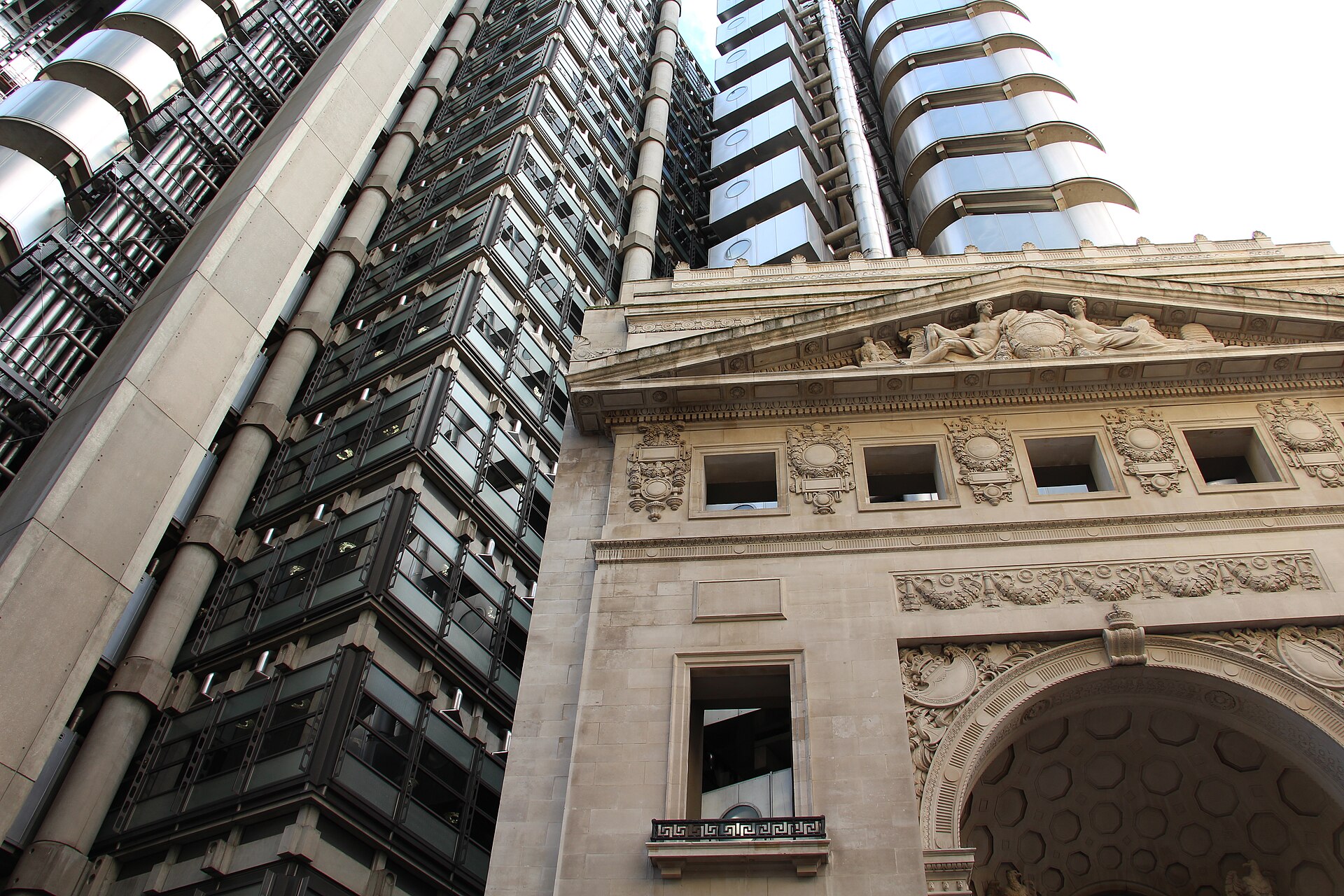
When P&I clubs cancel their charterers’ liability war risk extensions, the commercial chain that connects a loaded tanker to a paying buyer breaks in three places simultaneously — charter party seaworthiness warranties, letter-of-credit insurance requirements, and personal liability exposure — none of which can be repaired by hull insurance alone or by diplomatic communiqués from Doha. The industry’s formal line, advanced by the Lloyd’s Market Association and by Chris Jones of the International Underwriting Association (“IUA members are continuing to provide cover”), is that P&I cover has not been cancelled, and in the narrow technical sense this is true: the core mutual indemnity that clubs provide — the pooled liability cover for pollution, crew injury, and cargo claims — is contractually non-cancellable. But what was cancelled, on seventy-two hours’ notice, was the charterers’ liability war risk extension, a fixed-premium product that is reinsured separately from core P&I, that cannot be pooled across the club’s membership, and that is the specific contractual instrument on which every standard charter party’s war-risk allocation depends.
Simon Lockwood of Willis told Lloyd’s List in March that “war risk coverage remains available,” and for hull and machinery cover that is broadly correct — the war risk market repriced violently but did not entirely shut down. The charterers’ liability extension is different because its withdrawal does not merely increase costs; it eliminates the contractual mechanism by which a charterer’s liability for ordering a vessel into a war zone is indemnified by the club. Under English maritime law, the shipowner retains recovery rights against a charterer who ordered the voyage into a designated war risk area — and without the extension, the charterer carries that exposure personally, with no mutual indemnity backstop.
The Irregular Warfare Journal, in a May 2026 analysis that remains the most complete treatment of the crisis, described the insurance requirement as a “three-gate” system: hull and machinery, P&I liability cover, and additional war risk premiums must all be in force for a voyage to proceed. “Without all three,” the journal concluded, “ports refuse entry, banks withhold cargo financing, and charterers will not contract the vessel.” A cargo buyer’s letter of credit goes further: it requires a clean insurance certificate confirming that hull, cargo, war risk, and P&I are all current — four distinct confirmations, not three — and without the P&I certificate, the bank will not release payment and the cargo cannot be financed. The vessel is not blocked by a minefield or a naval cordon; it is blocked by the absence of a document that a port state control officer requires before a tanker can berth.
How Did the London Market Close the Strait Before Iran Did?
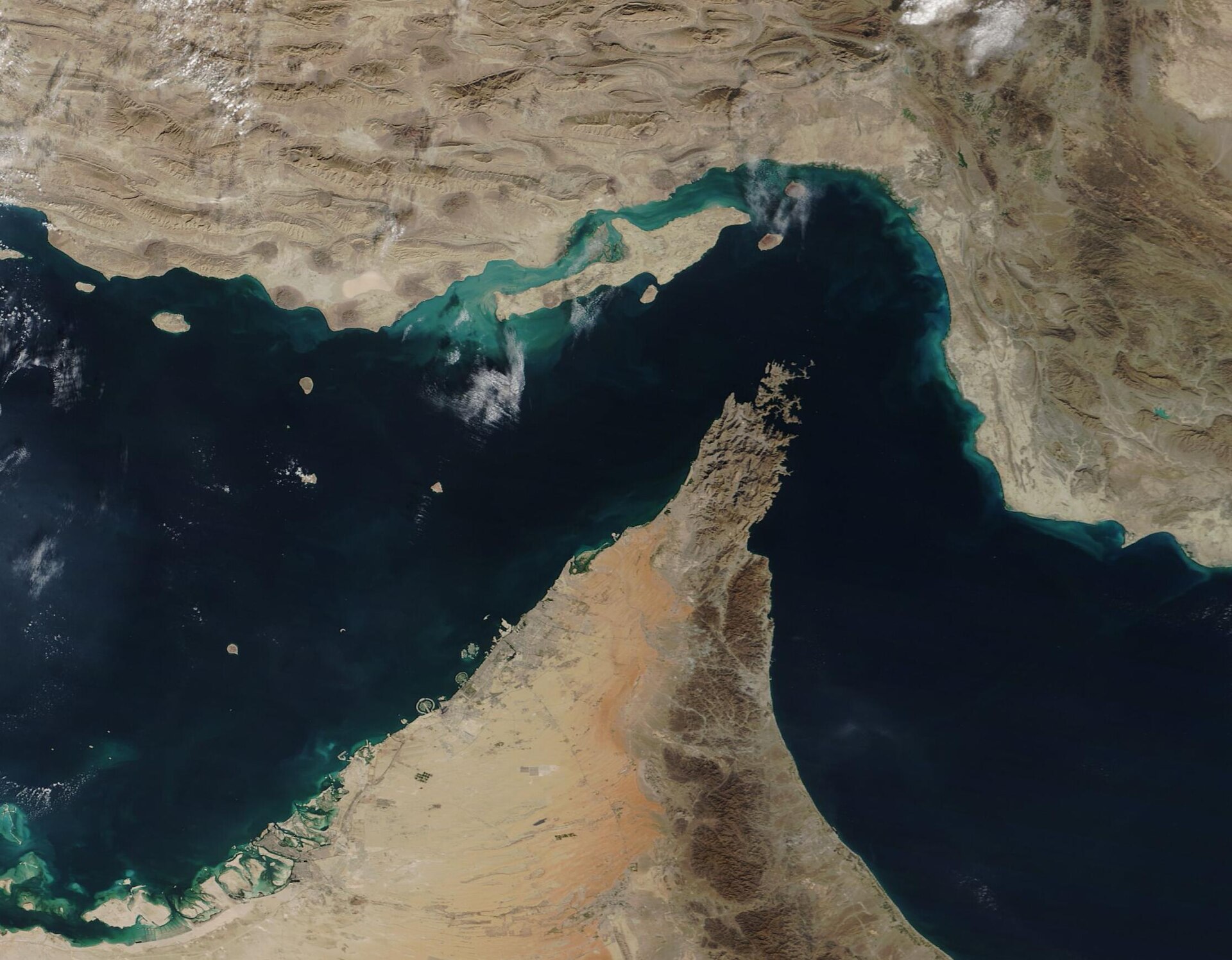
The insurance market determined the timeline of the closure, not the Iranian military, and the sequence is worth reconstructing because it reveals how a contractual cascade in London and Bermuda outpaced every weapon system in the IRGC’s arsenal. On February 28, 2026, US and Israeli strikes hit Iranian nuclear facilities. On March 1, reinsurers — not P&I clubs, not underwriters, but the reinsurers who backstop the entire structure — exercised their contractual exclusion rights for Persian Gulf war risk exposure, triggering the withdrawal notices that would force the clubs’ hands. On March 3, the Lloyd’s Joint War Committee expanded its Listed Areas designation to include the entire Arabian Gulf as a conflict zone, an administrative classification that automatically triggers premium surcharges, notification requirements, and coverage restrictions across every insurance product touching the region.
The Middle East briefing 3,000+ readers start their day with.
One email. Every weekday morning. Free.
War risk premiums surged from roughly $150,000 per transit for a large crude carrier to $3.6 million within forty-eight hours — a 2,400 per cent increase documented by the Globe and Mail’s Mussio and Lomas, whose reporting remains the single best account of the closure mechanism. A five-year-old VLCC worth $138 million could require $10–14 million in war risk cover alone for a single Hormuz transit at peak pricing, according to Lloyd’s List, with vessels carrying US, UK, or Israeli commercial connections facing triple the standard rate. One-year time-charter rates, running at $93,000–$105,000 per day before the crisis, spiked to $423,736 per day on the Middle East–China route.
The architecture that absorbed four years of the Tanker War could not absorb four weeks of this conflict.
Mussio and Lomas, Globe and Mail
But the premium surge is not the structural story, because premiums can be paid — they make transit expensive, not impossible. The structural story is the withdrawal, the moment when the product ceased to exist at any price. Julian South of Wilson Europe told Lloyd’s List that clubs were “scrambling to find buyback options” from reinsurers but warned of “reinsurers being opportunistic by seeking to apply some quite restrictive warranties.” Pippa Atkins of Lockton PL Ferrari quantified the buyback market: rates of 0.04 to 0.05 per cent applied to the limit purchased (not hull value), with limits available only up to roughly $200 million — a fraction of the exposure a laden VLCC in a conflict zone generates. Skuld’s official statement was blunter: “It is already evident that reinsurers’ appetite for war risk exposure is tightening, and in practical terms, it will result in reinsurers withdrawing capacity at short notice.”
The Tanker War comparison illuminates how much more fragile the modern system is. From 1984 to 1988, over four hundred ships were attacked, war risk premiums rose from under 0.1 per cent to over five per cent of hull value, and total insurance claims reached approximately $2 billion, half of which fell on the Lloyd’s market. But the 1980s architecture was not as tightly coupled: Solvency II capital requirements for reinsurers did not exist, the JWC Listed Areas system did not trigger automatic cascading restrictions across product categories, and digital real-time withdrawal rights — the mechanism by which a reinsurer in Bermuda can void a P&I club’s war risk extension in London within seventy-two hours — had not been engineered into the contractual infrastructure. The market’s speed and interconnectedness, designed to manage risk more efficiently, turned out to be catastrophically more fragile.
Why Doesn’t the $20 Billion DFC Facility Fix the Gap?
The Trump administration’s $20 billion Development Finance Corporation maritime reinsurance facility, announced on March 6, 2026, with Chubb as lead underwriter, covers hull and machinery, cargo, and war risk — but explicitly excludes P&I insurance, the specific category of cover that port states require for vessel entry, banks require for letter-of-credit compliance, and cargo receivers require before accepting delivery. The DFC solves for the ship and the cargo but not for the consequences of something hitting the ship and the cargo: an Iranian missile striking a loaded crude carrier would generate pollution cleanup costs, environmental damage claims, and third-party lawsuits running into tens of billions of dollars, all falling on the shipowner without mutual indemnity from any club.
Benjamin Serra, Senior Vice President at Moody’s Ratings, assessed the facility as “useful, but it’s probably not enough currently to solve the situation,” adding that shipowners remain unwilling to assume the risk “at least today, as long as the situation is not safe.” The verdict is generous. The $352 billion in total insurance exposure that the private market stopped providing — the approximate gap documented by gCaptain — includes precisely the liability tail that makes a loaded VLCC in a conflict zone an uninsurable proposition rather than merely an expensive one. Patrick Tiernan, CEO of Lloyd’s of London, acknowledged to the Insurance Journal that “shippers seeking insurance for tankers going through the strait is pretty rare at the moment because people are focused on safety and security,” which is a diplomatic way of saying that the London market’s own clients have largely stopped asking for cover because the product does not exist in a form that makes a commercial voyage viable.
The DFC’s P&I exclusion is not a drafting oversight but a structural limitation: P&I is a mutual indemnity product with an actuarial profile fundamentally different from hull or cargo insurance, and no US government agency has ever underwritten it. Expanding the DFC to cover P&I reinsurance would require Congressional authorisation, new actuarial modelling for liability categories — pollution, wreck removal, crew injury, passenger claims — that the facility was not designed to assess, and a willingness by the US government to backstop the kind of open-ended environmental liability that a catastrophic incident in the world’s most important oil chokepoint would generate. None of that is under discussion, and none of it was mentioned in the facility’s announcement.
What Is the PGSA Sanctions Trap?
The insurance gap operates independently of anything Iran chooses to do, but Iran has engineered a parallel mechanism — the Persian Gulf Security Authority — that makes the gap functionally permanent for any shipowner attempting to comply with both Western sanctions law and Iranian transit requirements simultaneously. The PGSA, an IRGC-linked body founded on May 5, forty-three days before the MOU was signed, published its operational rulebook on June 19, requiring all vessels to file a forty-category “Vessel Information Declaration” — ownership chains, charterer details, crew nationalities, cargo manifests, and critically, P&I club affiliations — forty-eight hours before transit, in exchange for a single-use permit valid for five days. Passage without PGSA authorisation, Iran has stated, “will be considered illegal.”
The trap is a dual impossibility, and as far as publicly available legal analysis can determine, it is structurally inescapable. The PGSA was sanctioned by the European Union on June 8, 2026, and any payment to a sanctioned entity constitutes a prohibited transaction under secondary sanctions law — meaning a Western shipowner cannot legally pay the PGSA for transit authorisation. But transit without authorisation is, under Iran’s framework, illegal, and the PGSA pre-positioned a liability disclaimer on social media before striking vessels, explicitly claiming that ships not registered with the authority bear their own liability for damage in Iranian-claimed waters. Paul Morgan, an analyst quoted by gCaptain, identified the core of the problem with precision: “In shipping, an unanswered legal question is often as commercially paralysing as a definitive prohibition.”
In shipping, an unanswered legal question is often as commercially paralysing as a definitive prohibition.
Paul Morgan, analyst, gCaptain
The forty-category declaration has a function beyond regulation: it tells Iran exactly which vessels are operating without valid war risk liability cover, because P&I club affiliation is a required disclosure field. No other regulatory filing in maritime history has served this dual purpose — administrative compliance and targeting intelligence in a single form. Iran has also launched Hormuz Safe, a parallel insurance entity offering what Argus Media described as “fast, verifiable digital insurance” with “payments settled in cryptocurrency,” a product that bypasses the Western banking system entirely but that shows, as Argus noted, “no indication that Hormuz Safe policies extend beyond Iranian ships and cargoes.” The PGSA requires paperwork that the US has told vessels to ignore and has maintained its pre-clearance apparatus intact even as Iran’s oral stand-down has paused the shooting but not the tollbooth.
Can Saudi Arabia Export Oil Without the London Market?
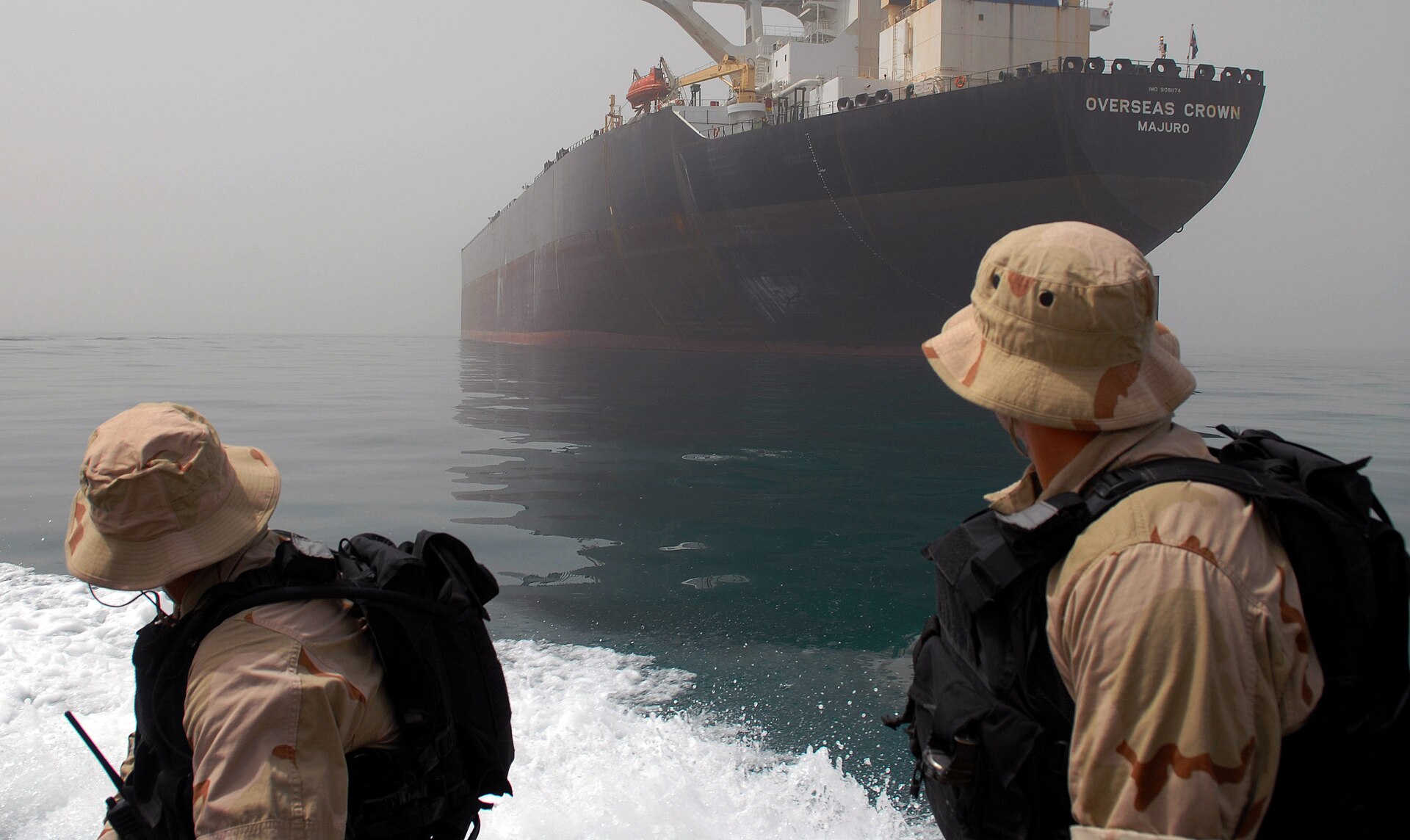
Saudi Arabia has no sovereign war-risk insurance pool — not a gap that Riyadh has yet to address but a structural absence that reflects four decades of dependence on London and Bermuda reinsurance markets for the commercial infrastructure of oil export. Bahri, the Saudi National Shipping Company, is a state-controlled carrier operating under what Howden Re describes as “sovereign risk tolerance that differs from commercial fleet calculus,” meaning the Saudi government can absorb losses that would bankrupt a private shipowner. But sovereign risk tolerance does not solve the documentation chain: Bahri vessels still require P&I certificates for port state control, Bahri cargoes still require clean insurance certificates for letter-of-credit compliance, and Asian refiners still require cargo liability backstops before accepting delivery of crude they cannot verify is covered for the liabilities a missile strike would generate.
The Ras Tanura loading paradox illustrates the problem with uncomfortable clarity. In late June, two Bahri VLCCs loaded approximately four million barrels at Ras Tanura — the terminal where fourteen people were killed in a helicopter crash days earlier — and the Bahri convoy of June 18 (the Shaden, Jaham, and Awtad, carrying roughly six million barrels) had already transited the strait, implying PGSA payment of approximately $6 million, though neither Aramco, Bahri, nor the Saudi Ministry of Foreign Affairs confirmed whether any fee was paid. Whether those cargoes have valid letter-of-credit-compliant P&I certificates for delivery to Asian refiners remains unresolved in public reporting. The core paradox — that barrels can be loaded at Ras Tanura but cannot commercially move past Hormuz — has not been demonstrably resolved by the June loadings so much as repeated at higher volumes.
The alternative — routing through Yanbu on the Red Sea coast, bypassing Hormuz entirely — runs into hard ceilings on both ends. The East-West Pipeline has a published capacity of approximately 7.0 million barrels per day, but operational throughput and Yanbu’s terminal loading infrastructure cannot absorb the full volume of Saudi exports that would otherwise transit the strait. And the Red Sea carries its own insurance burden: Houthi attacks in 2024 drove premiums up sharply, and post-ceasefire rates never returned to pre-conflict levels — a documented “ratchet effect” in which war risk premiums rise fast and decline slowly. Asia-Europe Suez Canal rates were still running well above the pre-Houthi baseline as of June 2026, meaning Saudi Arabia’s bypass route feeds into a corridor that is itself operating under a persistent risk premium the London market has not unwound.
The Yanbu ceiling is the cost side of the same fiscal vice. The revenue side — what Aramco actually receives per barrel when it does find buyers willing to pay the war-risk premium and navigate the PGSA pre-clearance requirement — compressed separately: Aramco’s July Official Selling Price to Asia collapsed by $6 per barrel, a $10 decline in sixty days, as Asian refiners priced Hormuz credibility risk directly into the discount they demanded from Saudi crude.
What Would It Take to Rebuild the Insurance Architecture?
Reconstituting the commercial insurance architecture for Hormuz transit would require one of three things, none of which is currently on offer: Congressional authorisation for the DFC to expand into P&I reinsurance (a product category the US government has never underwritten); a sovereign Gulf-backed insurance pool capitalised jointly by Saudi Arabia, the UAE, Kuwait, Bahrain, Qatar, and Oman at a scale sufficient to absorb the liability tail of a catastrophic incident; or a change in military conditions so fundamental that the JWC removes its Listed Area designation, reinsurers restore Gulf war risk appetite, and P&I clubs reinstate charterers’ liability extensions. The JWC designation, made on March 3, 2026, “historically takes years to unwind,” as gCaptain reported in June — meaning that even if the MOU holds, even if the oral stand-down becomes permanent, the insurance market’s administrative infrastructure will continue to impose conflict-zone pricing on every vessel touching the Arabian Gulf for years.
The MOU itself did not address insurance, and its “best efforts” clause — tested and found hollow when a drone struck a vessel in the corridor eight days after signing — names no enforcer, defines no routes, and provides no mechanism by which a shipowner can demonstrate to a London underwriter that the risk profile has changed. Operation Earnest Will, the 1987–88 US Navy escort operation routinely invoked as precedent, was a reflagging operation that substituted sovereign military escort for commercial insurance by moving Kuwaiti tankers under the US flag — not an insurance reconstitution. The US has not offered that mechanism in 2026, and Project Freedom, its closest analogue, lasted fewer than forty-eight hours before being discontinued.
Munro Anderson of Pen Underwriting assessed Iran’s posture as “those of a state preparing for a protracted conflict” and warned of “growing potential for risk divergence across the region,” language that suggests the reinsurance market views the current disruption not as temporary but as a structural repricing of Gulf sovereignty risk. MOL, one of the world’s largest shipping companies, stated that it “will not resume normal Hormuz transit until the US-Iran deal is material and safety is demonstrated in practice on the water, not merely promised in a diplomatic communiqué.” CMA CGM “signalled it will not assume a return to pre-conflict conditions even once the strait formally reopens.” The commercial traffic through the strait — which fell to as few as four vessels after the most recent spike — is not a market finding equilibrium; it is the residual flow of state-backed carriers, sanctioned operators, and vessels sailing with incomplete cover, none of which constitutes a functioning commercial market.
The question that no one in Riyadh, Doha, or Washington has publicly answered is not whether ships can physically sail through the strait — they can, and some do, and Bahri has proved it. The question is who carries the liability when something hits them, and right now the answer from every International Group club and every reinsurer in the London market is the same: not us.
Frequently Asked Questions
Is P&I insurance the same as war risk insurance?
No — they are separate products underwritten through different mechanisms. P&I is a mutual liability product covering third-party claims (pollution, cargo damage, crew injury, passenger liability), while war risk is a fixed-premium product covering damage to the vessel from hostile acts. The confusion arises from the “charterers’ liability war risk extension,” a hybrid product offered through P&I clubs that covered charterers’ war-risk liability within the P&I structure. It was this specific hybrid, not either standalone category, that was withdrawn on March 5, and its absence is what breaks charter party seaworthiness warranties even when hull war risk cover remains available.
Could a shipowner self-insure to fill the P&I gap?
In theory, a shipowner with sufficient capital reserves could post a bond or letter of guarantee, but the International Maritime Organization’s conventions — particularly the 2001 Bunker Oil Pollution Damage Convention and the 2007 Nairobi Wreck Removal Convention — require insurance certificates from “approved providers,” which in most port states means International Group P&I clubs. A self-insured vessel would face port entry refusals across Asia, specifically in Singapore, Fujairah, and the major Chinese and Japanese refinery ports where the largest Saudi crude buyers take delivery. No major Asian port authority has publicly indicated it would accept a non-club guarantee as P&I-equivalent documentation.
Has any international port accepted Iran’s Hormuz Safe insurance?
No international port authority or cargo receiver outside Iran has, as of June 30, 2026, publicly accepted a Hormuz Safe certificate as valid P&I or cargo liability cover. The product settles in cryptocurrency, placing it outside the correspondent banking infrastructure on which letters of credit depend, and its lack of recognised reinsurance backing means it fails the regulatory standards that port state control authorities require for vessel entry. The product’s practical function appears limited to Iranian-flagged vessels and Iranian-origin cargoes operating within sanctions-insulated trade networks, primarily the Iran-China “dark fleet” corridor that predates the current crisis.
How long did Red Sea insurance premiums take to normalise after the Houthi ceasefire?
Red Sea additional war risk premiums peaked at 0.7–1.0 per cent of hull value during Houthi attacks in 2024, a 500 per cent increase from the 0.05 per cent pre-conflict baseline. After the ceasefire, premiums declined over months but never returned to pre-conflict levels: Kpler’s November 2025 analysis documented a persistent “ratchet effect” in which premiums rise rapidly during conflict but decline slowly during incident-free periods. As of June 2026, Asia-Europe Suez rates remain 25–40 per cent above pre-Houthi baseline — a precedent that suggests Hormuz insurance normalisation, if it occurs at all, will be measured in years, not weeks or diplomatic cycles. The political risk premium has since deepened: 62 Assembly of Experts members classified Trump as Mahdur al-Dam on MOU Day 14, signalling to underwriters that the clerical establishment — not just the IRGC — regards the strait as a tool of state rather than a transient bargaining chip. The governance question behind that signal — who exercises toll authority after the MOU’s Day 60 fee waiver expires — is examined in Who Votes on Day 61?