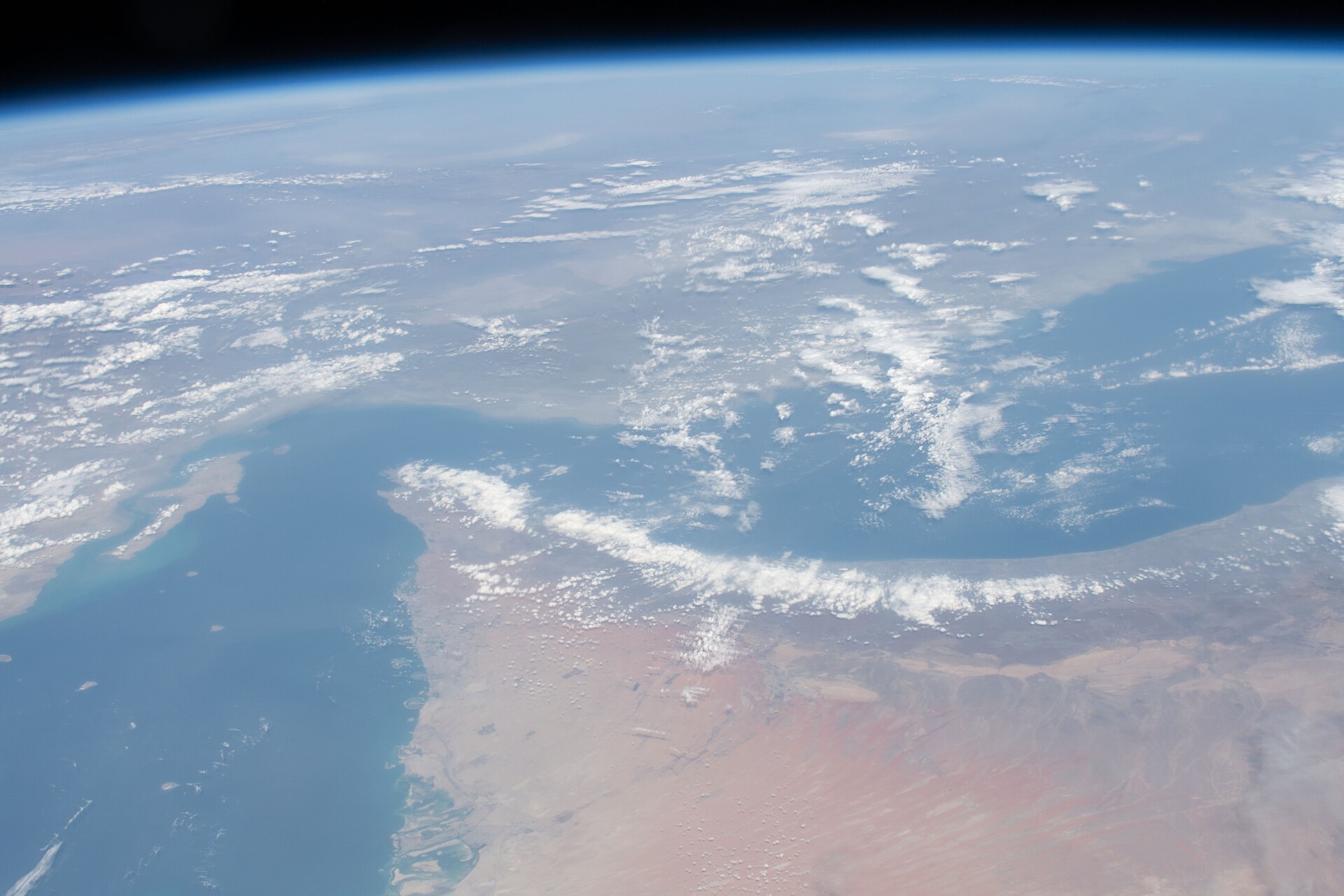
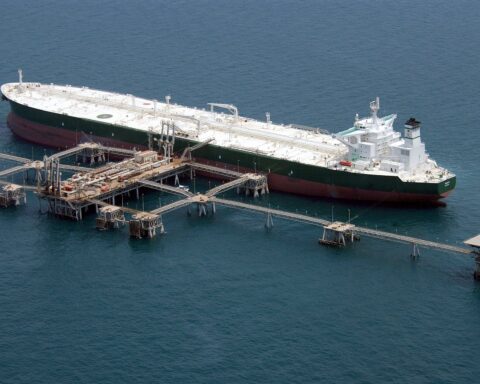
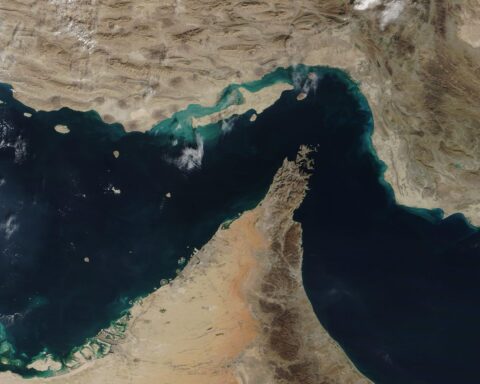
DUBAI — The United States and Iran have issued simultaneous, incompatible directives governing passage through the Strait of Hormuz — and the ships now testing the waterway are discovering that neither instruction protects them. The White House declared on June 29 that “both sides will stand down for now and vessels can move freely.” Hours earlier, Iranian Foreign Minister Abbas Araghchi stated that “the Strait of Hormuz remains under the total oversight and management of Iran throughout the coming 30 days.” The two declarations address the same 21-nautical-mile corridor, the same vessels, and the same clock — yet they prescribe opposite compliance regimes. Ship operators face a binary trap with no neutral option: follow the US verbal assurance and transit without Iranian clearance, or file a 40-category declaration with Iran’s Persian Gulf Strait Authority and legitimize the administrative tollbooth the MOU was negotiated to prevent.
Four AIS-visible vessels were transiting the strait on the morning of June 29, according to HormuzTracking.com — down from roughly 93 daily transits under pre-crisis conditions. The traffic collapse did not begin with the IRGC’s June 28 strikes. It began weeks ago, when Iran’s PGSA started requiring pre-clearance through a bureaucratic architecture that predates the US-Iran MOU by 43 days.
Table of Contents
- Two Doctrines, One Waterway, No Enforcer
- What Does the PGSA Require of Ship Operators?
- The PGSA Existed Before the MOU — by Design
- Why Can’t Shipowners Simply Comply With Both Sides?
- Who Is Going AIS-Dark in the Qeshm-Larak Corridor?
- How Does This Compare to Operation Earnest Will?
- Iran’s Enforcement Capacity Is Administrative, Not Just Kinetic
- Markets Are Not Buying ‘Move Freely’
- Araghchi’s 30-Day Clock and the Day 61 Fee
- FAQ
Two Doctrines, One Waterway, No Enforcer
The White House statement — carried by Fox News, The Hill, and Time — was not issued as a bilateral instrument. It was a US verbal characterization of the oral stand-down brokered by Qatar’s Emir Tamim in Doha on June 29, ahead of the Doha talks scheduled for June 30. No written addendum to the MOU accompanied it. No CENTCOM operational order committed naval assets to escort.
Araghchi’s counter-declaration, delivered via Al Jazeera and Middle East Eye on June 28, was structurally different. It asserted ongoing sovereign authority: “This responsibility rests on the Islamic Republic of Iran. There is no other party or state in this respect.” The language was not conditional. It did not reference the US stand-down. It treated Iranian oversight as a continuous fact, not a negotiated outcome.
Marc Weller of Chatham House’s Global Governance and Security Center identified the structural problem in the MOU itself: the agreement “obliges Iran to use ‘its best efforts’ to allow the safe passage of commercial vessels with no charge for 60 days only.” Beyond that window, the instrument could be read as “an implied licence for Iran and Oman to impose a fee for the administration of passage.” The phrase “best efforts” — a term of art in international law that falls short of a binding guarantee — names no enforcer and prescribes no remedy if those efforts fail.
“There is in fact little agreement and there seems little prospect the gaps in the MoU can be filled over the next 60 days, with much left impossibly vague.”
The HOS Daily BriefThe Middle East briefing 3,000+ readers start their day with.
One email. Every weekday morning. Free.
— Chatham House, MOU analysis, June 2026
The result is a compliance vacuum that neither side’s verbal declarations can fill. The White House says ships can move freely. Iran says ships must file for Iranian authorization. The MOU itself commits neither government to ensure that either instruction is honored on the water.
What Does the PGSA Require of Ship Operators?
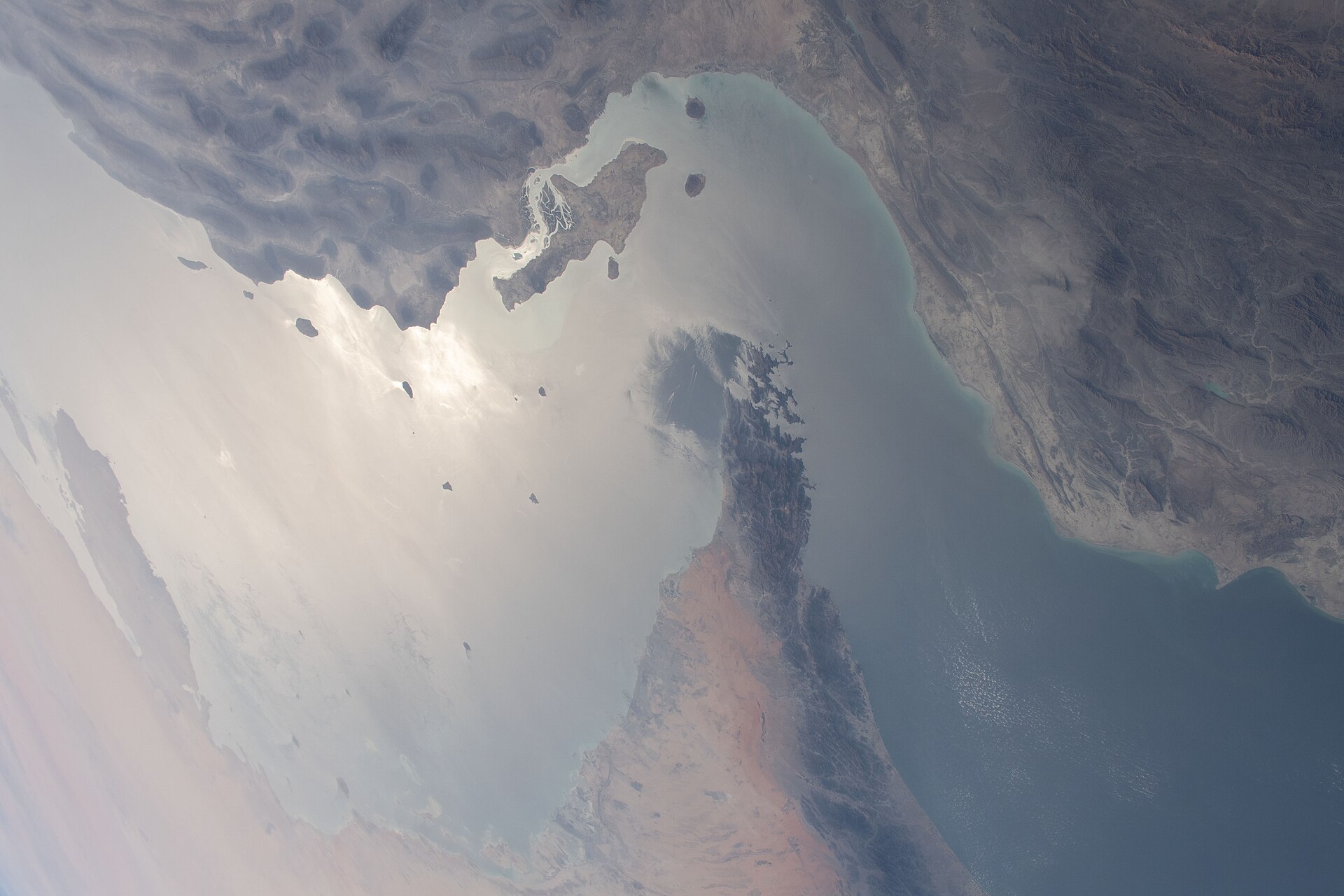
The Persian Gulf Strait Authority requires every transiting vessel to file a “Vessel Information Declaration” covering 40 categories of data — vessel identity, ownership chains, charterer details, crew nationalities, cargo manifests, and P&I club affiliations — 48 hours before entering the strait. Both corridor legs, inbound via Qeshm-Larak and outbound south of Larak, lie entirely within Iran’s claimed 12-nautical-mile territorial sea.
The Washington Institute for Near East Policy described the PGSA as “the most ambitious evolution of Tehran’s decade-long ‘smart control’ concept” — a framework requiring that operators “coordinate transit in advance, obtain permits, submit to inspections, provide financial guarantees, and pay ‘insurance’ fees via Iran’s ‘Hormuz Safe’ cryptocurrency platform.” The fee structure is $1 per barrel of cargo — approximately $2 million per fully loaded VLCC — settled in Chinese yuan. Bitcoin transfers to IRGC-linked wallets have also been documented by Windward AI.
The PGSA’s liability disclaimer, posted to its X/Twitter account before each of the June 26-28 IRGC strike waves, warned that transit outside its designated routes “will not be covered by the guarantee of safe passage” and that “consequences arising from passage through unauthorised routes shall be the responsibility of the owner, operator, and vessel commander.” This language was not rescinded after the June 29 oral stand-down. No Iranian source has issued a suspension of the 40-category filing requirement.
| PGSA Requirement | Detail | Source |
|---|---|---|
| Vessel Information Declaration | 40 categories, filed 48 hours before transit | Maritime Executive |
| Corridor routing | Inbound Qeshm-Larak, outbound south of Larak — both within Iran’s claimed 12nm territorial sea | Maritime Executive, Windward AI |
| Fee | $1/barrel cargo (~$2M per loaded VLCC); Chinese yuan or crypto | Windward AI, Lloyd’s List |
| Liability disclaimer | “Unauthorised routes” = no safe passage guarantee | PGSA.IO (X/Twitter) |
| Post-60-day fee | Iran reserves right to introduce formal insurance fees after ~August 17 | Windward AI |
The PGSA Existed Before the MOU — by Design
The PGSA was formally founded on May 5, 2026. The US-Iran MOU was signed 43 days later, on June 17-18 in Islamabad. The PGSA had its own X/Twitter account, its 40-category transit form, its Larak corridor architecture, and its liability disclaimer framework all operational before any ceasefire instrument existed.
This sequencing matters. The PGSA is not an implementation mechanism of the MOU. It is not a response to the MOU. It is an independent Iranian jurisdictional claim that the MOU was then layered over without resolving. The MOU’s “best efforts” language does not reference the PGSA, does not require its dissolution, and does not prohibit Iran from continuing to operate it during the 60-day window.
Windward AI characterized the result: “The chokepoint is now being governed administratively, with bilateral carve-outs for selected partners and coercive interdiction held in reserve for everyone else.” The PGSA’s pre-clearance system — which Iran has not suspended — functions regardless of whether the US verbally declares vessels “free to move.” A verbal declaration does not dissolve a bureaucratic architecture. It does not invalidate the 40-category form. And it does not withdraw the hundreds of IRGCN fast craft that Windward AI has documented in the southern Hormuz zone — an enforcement presence positioned precisely where the PGSA corridor enters Iranian-claimed waters.
Why Can’t Shipowners Simply Comply With Both Sides?
The EU designated the PGSA under sanctions on June 8, 2026. Approximately 95% of the global tanker fleet carries EU-backed insurance. This creates a compliance paradox that no verbal stand-down resolves: paying the PGSA fee risks sanctions exposure under EU regulations; refusing to file PGSA clearance risks Iranian enforcement action under Iran’s claimed sovereign authority over the corridor.
Fortune reported on June 20 that the US-Iran deal was “already sowing confusion” for shipping companies, and that shipping companies — not the US or Iran — would decide when the strait was truly open. The sanctions overlap ensures that individual compliance officers, not governments, bear the cost of the dual-doctrine paradox. A P&I club must choose. An underwriter must choose. A ship captain entering the Qeshm-Larak corridor must choose. Neither the White House statement nor the MOU provides a mechanism for that choice.
The US Department of Transportation’s Maritime Administration (MARAD) formalized the kinetic dimension in advisory 2026-001, documenting “Iranian illegal boarding, detention, and seizure.” Two vessels — HUI CHUAN and EDRIS — were boarded near Fujairah 8-12 hours after Iran issued warnings to the UAE. A tanker was seized in the Gulf of Oman in May 2026 citing “attempts to disrupt its oil exports.” The advisory did not reference the PGSA by name, but the documented seizure pattern maps precisely onto the PGSA’s enforcement framework: vessels that did not file pre-clearance through the designated corridor.
Who Is Going AIS-Dark in the Qeshm-Larak Corridor?
Baird Maritime reported on June 29 that three tankers bound for India and China “went dark” on their AIS transponders and cleared the Strait of Hormuz. The transponder blackout occurred at the Qeshm-Larak corridor segment — the exact zone where the PGSA’s jurisdictional claim is strongest and where Iran’s claimed 12-nautical-mile territorial sea encompasses both inbound and outbound lanes.
The AIS-dark behavior carries two mutually exclusive interpretations, and both confirm the compliance paradox. If the vessels filed PGSA clearance and switched off transponders on Iranian instruction — as Polestar Global has documented in other cases — they have legitimized the administrative regime the US says should not exist. If they transited without authorization and went dark to reduce enforcement risk, they tested a gap in Iranian control that hundreds of documented IRGCN fast craft are positioned to close.
Polestar Global’s analysis of the AIS layer during the crisis documented a separate dimension of the access problem. The AIS destination field, Polestar found, had been “repurposed into an improvised signalling layer through which vessels disclosed identity, cargo purpose, or political legibility in order to move. Operators who understood that grammar often advanced. Those who did not, or whose signals were contradictory, stalled.” The strait is not simply open or closed. It is selectively permeable, and the filter is administrative.
Baird Maritime also reported that two stranded supertankers passed through Hormuz on the day of the stand-down, along with four LNG tankers “controlled by Qatar” heading into the Persian Gulf. The Qatari vessels represent a distinct compliance category: Qatar, as the stand-down broker, may operate under bilateral carve-outs that do not extend to other flag states. The supertankers’ compliance posture — whether they filed with the PGSA, paid the fee, or relied solely on the White House “move freely” declaration — has not been disclosed.
How Does This Compare to Operation Earnest Will?
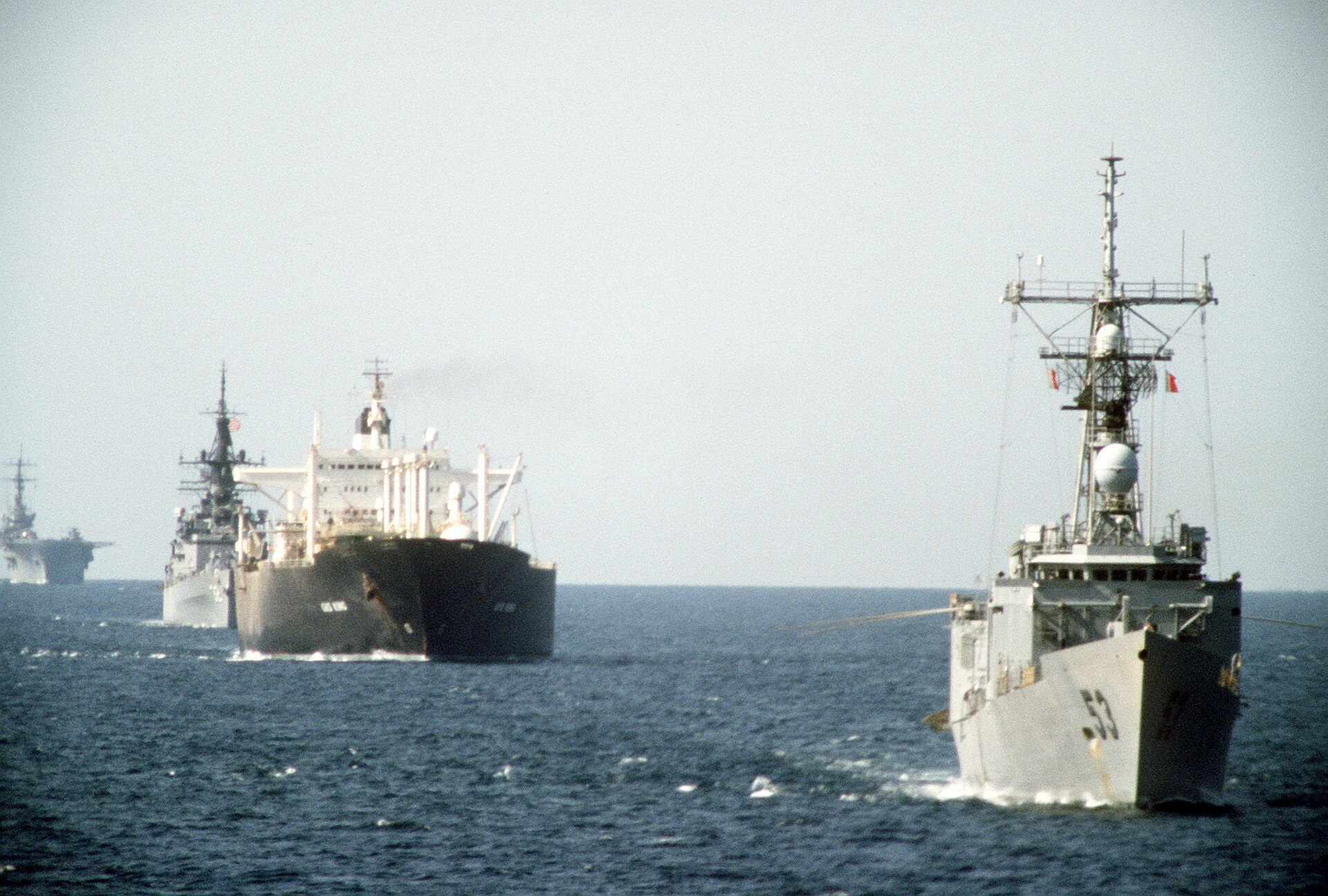
The structural difference between 1987 and 2026 is not the scale of the naval threat. It is the nature of what Iran is doing to vessels that attempt to transit. Operation Earnest Will — the largest US naval convoy operation since World War II, running from July 24, 1987 to September 26, 1988 — deployed 30 or more warships to the Persian Gulf. Kuwait’s tankers were re-registered under the US flag. The Navy escorted ships through Iranian minefields and IRGCN attack zones.
The threat in 1987-88 was kinetic. Iran was attacking vessels. The response was physical protection. There was no “dual clearance” trap because there was no Iranian administrative authorization framework claiming legitimacy. The ship captain in 1987 faced a threat calculation: will Iran fire on my convoy? The answer to that calculation was a warship formation.
The 2026 ship captain faces something categorically different. Iran’s PGSA is not a threat framework. It is an administrative framework with a veneer of bureaucratic legitimacy — filing forms, paying fees, receiving corridor clearance. The captain must choose between following a US verbal assurance backed by no operational commitment and filing paperwork with an Iranian agency that claims sovereign administrative authority and may withhold passage authorization rather than fire missiles. A warship formation does not resolve a compliance-office decision.
The current MOU explicitly does not commit CENTCOM to escort operations. The “best efforts” clause names no enforcer. Project Freedom — the brief US-escorted convoy operation — lasted fewer than 48 hours on May 4-5 before being suspended. CENTCOM denied Saudi requests for renewed escort. The Bahri VLCCs loaded at Ras Tanura in late June navigated the same jurisdictional gap without US naval escort.
Iran’s Enforcement Capacity Is Administrative, Not Just Kinetic
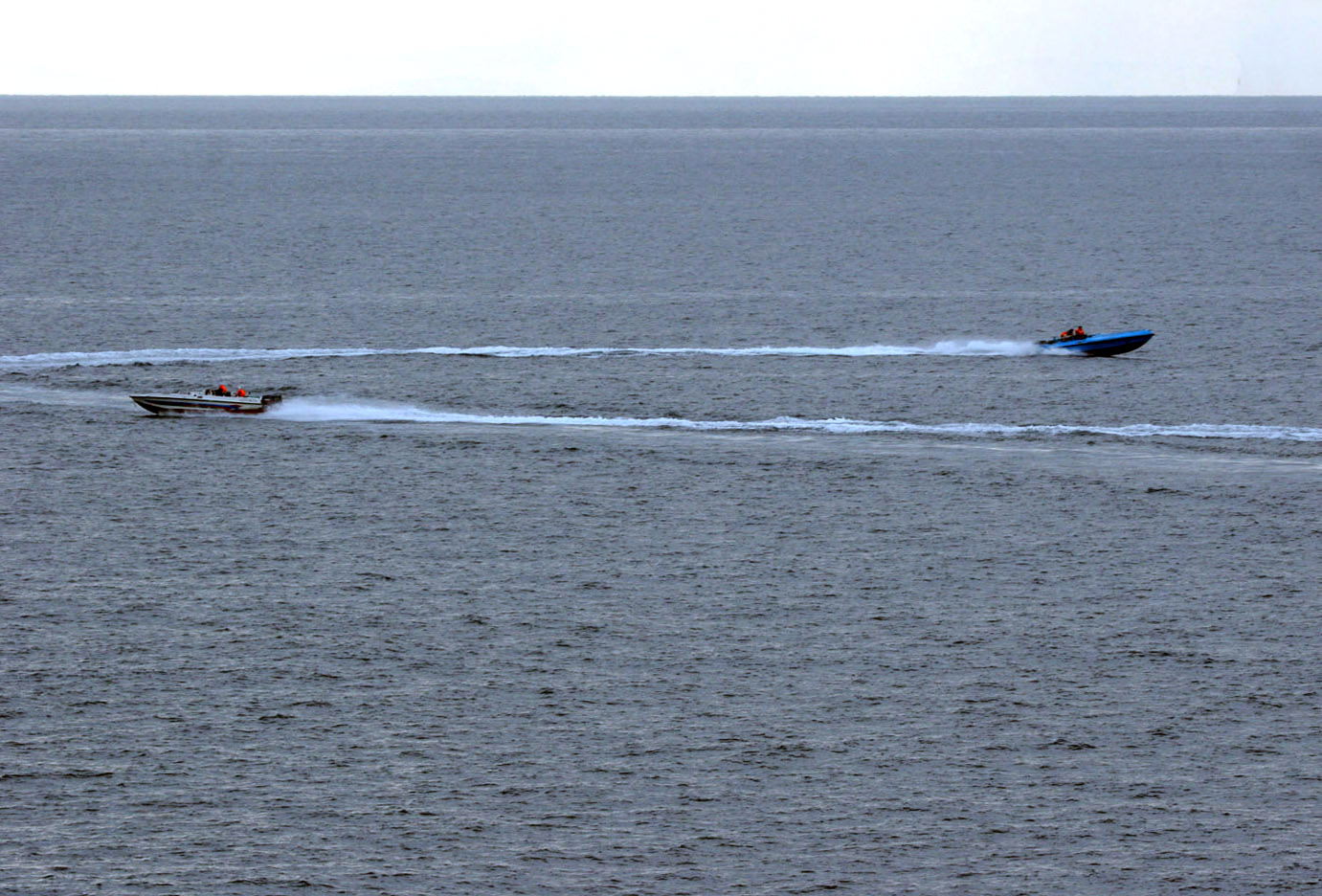
Windward AI’s satellite imagery from May 17 captured 392 unique IRGC-linked high-speed craft at sea, with 369 concentrated in a single polygon in the southern Hormuz zone. On May 31, approximately 73 IRGCN craft were clustered against a single 220-meter container vessel hull. The deployment pattern is not random patrol. It is targeted interdiction capability, positioned precisely where the PGSA corridor enters Iran’s claimed territorial waters.
Iran’s deputy foreign minister for legal affairs stated in June 2026 that “demining the Strait of Hormuz would only be carried out by Iran… demining is carried out solely by Iran and by no other country.” Demining was included in the MOU as a task, but the deputy FM’s statement reinterprets it as an expression of sovereign authority — the same pattern applied to every MOU provision that appears neutral on paper. That reinterpretation moved from implicit to explicit on June 29, when Iran used the same language to reject Macron’s France-Oman coalition; the legal mechanism behind the Macron demining coalition being rejected is the same Article 5 exclusivity Iran invoked against paperwork-filing vessels a day earlier.
The IRGC drone strike on the Ever Lovely — an 8,500-TEU Singapore-flagged Evergreen Marine container vessel — on June 25 demonstrated the enforcement architecture in action. The vessel was struck 7.5 nautical miles southeast of Dahit, inside the Oman/IMO corridor. Iran’s argument: the Ever Lovely was never inside MOU scope because it was on a corridor Iran had not authorized. The PGSA’s pre-published disclaimer had already shifted liability to the vessel operator before the drone launched.
Windward AI described the result: “The Strait of Hormuz has structurally shifted from a transit corridor with disrupted flow to a tanker holding queue with administrative governance layered on top.” The holding queue did not dissolve on June 29 when the White House said ships could move freely. The four AIS-visible vessels that morning suggest the queue’s logic persists.
Markets Are Not Buying ‘Move Freely’
Brent crude closed at approximately $71.99 on June 28. Following the “move freely” declaration and the Qatar-brokered stand-down on June 29, Brent traded at roughly $73.41 intraday before closing near $72.01 — effectively flat. A stand-down that structurally resolved the access question would move oil prices. This one did not.
The market’s reading aligns with the operational evidence. US Energy Secretary Chris Wright cited 20 million barrels exiting Hormuz in a single 24-hour period in late June. CNBC reported that 35 million barrels of stranded tanker cargo exited after the original MOU signing on June 17-18. But post-MOU exits occurred under PGSA-administered conditions — vessels filed, paid, and were cleared through Iranian-supervised corridors. The exit of stranded cargo confirmed the PGSA’s functional authority, not its dissolution.
War-risk premiums remain at 2-3% of hull value, according to Lloyd’s market data — compared to the 0.1% pre-war baseline. At those rates, a standard VLCC (hull value approximately $120 million) carries an additional $2.4-3.6 million in per-voyage insurance costs on top of the PGSA’s $2 million fee. The combined surcharge exceeds $4 million per transit — a cost absorbed into global crude pricing that the White House declaration does not address. The structural insurance failure that keeps Saudi tankers stranded goes deeper than premium levels: it is the absence of the contractual P&I infrastructure that port states require for vessel entry, banks require for letter-of-credit compliance, and cargo receivers require before accepting delivery.
| Indicator | Value | Date | Source |
|---|---|---|---|
| Brent crude close | $71.99 | June 28 | Trading Economics |
| Brent intraday (stand-down) | ~$73.41 | June 29 | Fortune |
| Brent close (post-stand-down) | ~$72.01 | June 29 | Trading Economics |
| War-risk premium | 2-3% hull value | June 2026 | Lloyd’s List |
| Pre-war risk baseline | ~0.1% hull value | Pre-crisis | Lloyd’s List |
| AIS-visible Hormuz transits | 4 vessels | June 29 AM | HormuzTracking.com |
| Pre-crisis daily transits | ~93 | Normal | Industry baseline |
| Post-closure transits | 43 → 12 | May-June 2026 | Windward AI |
Araghchi’s 30-Day Clock and the Day 61 Fee
Araghchi’s “30 days” formulation was not accidental. It maps exactly to the first half of the MOU’s 60-day window — Phase 2, which began June 17 and expires approximately August 17. By framing the current period as one in which Iran exercises “total oversight” for 30 days, Araghchi positioned the second half of the MOU window as subject to reassessment. Any new developments, he warned, “will result in exacerbating the situation and also delaying the opening of the strait.”
The MOU itself supports this reading. Iran has reserved the right to introduce formal insurance fees after the 60-day window closes. The $1-per-barrel PGSA fee — currently waived during the MOU period, according to Iranian statements — reverts by default on Day 61. At pre-war Saudi export volumes of roughly 5.5 million barrels per day through Hormuz, the implied PGSA daily revenue would be $5.5 million, or approximately $2 billion annually.
Chatham House’s Weller identified the deeper problem: “Although President Trump has said passage through the Strait will be ‘permanently toll-free’, the deal allows Iran to work with Oman… to ‘define the future administration and maritime services’ in the Strait.” The MOU’s own language, in other words, contradicts the White House’s verbal assurance about permanent toll-free transit. The written instrument authorizes exactly what the verbal statement says will never happen.
The East Asia Forum warned on June 28 that “Iran’s Strait of Hormuz claim must not become a precedent” — noting that even temporary acquiescence by vessel operators creates a de facto recognition of Iranian administrative authority that outlasts the MOU. Every VLCC that files a PGSA declaration during the “stand-down” contributes to that precedent. Every vessel that pays the fee in yuan or bitcoin reinforces it. The oral stand-down paused the war but did not pause the precedent-setting.
The Bahri VLCC convoy — Shaden, Jaham, and Awtad, carrying approximately 6 million barrels — transited Hormuz on June 18, the first Saudi crude through the strait since February 28. AIS transponders were switched off during the Qeshm-Larak corridor segment. Neither Aramco, Bahri, nor Saudi MOFA has confirmed whether the PGSA fee was paid. No Iranian state source confirmed receipt. Two additional Bahri VLCCs loaded at Ras Tanura on June 26-27 now face the same undeclared compliance decision — and the June 29 “move freely” declaration did not change the terms of that decision. The question is not whether Bahri vessels can transit. The question is under whose authority they do so, and whether that authority survives the MOU’s expiration.
FAQ
Has Iran agreed to let ships pass without PGSA clearance during the stand-down?
No Iranian government source, military channel, or PGSA account has issued a formal suspension of the 40-category Vessel Information Declaration requirement as of June 29. The PGSA’s liability disclaimer — warning that “unauthorised routes” void safe passage guarantees — remained posted and unretracted. Iranian state media (PressTV, IRNA, Tasnim) have consistently avoided the phrase “open strait,” instead describing the situation as Iran “managing” or “supervising” transit. The stand-down is an oral arrangement; the PGSA filing infrastructure is institutional.
What happens to PGSA fees after the MOU’s 60-day window expires?
The MOU’s Phase 2 window expires approximately August 17, 2026. Iran has reserved the right to formalize insurance and transit fees after Day 60. The Chatham House analysis found the MOU’s own language allows Iran and Oman to “define the future administration and maritime services” in the strait — language that Chatham House’s Weller read as “an implied licence” for fee imposition. At pre-crisis Saudi volumes, the $1-per-barrel fee would generate approximately $730 million per year from Saudi cargo alone, based on roughly 2 million barrels per day of Saudi eastbound exports through Hormuz.
Can UNCLOS be invoked to override Iran’s PGSA requirements?
UNCLOS Article 38 grants vessels “unimpeded transit passage” through international straits with no requirement for prior authorization. Article 44 imposes a duty on bordering states not to hamper or suspend that passage. Iran, however, has not ratified UNCLOS. Iran argues it need only grant the more limited right of “innocent passage” — which under the Convention can be suspended for security reasons. The PGSA’s Qeshm-Larak corridor routes vessels through waters Iran claims as territorial under its own non-UNCLOS framework, placing the legal dispute in a jurisdiction Iran does not recognize. The EU sanctions designation of the PGSA (June 8, 2026) rejects the body’s legitimacy but does not provide an enforcement mechanism — sanctions are a refusal, not an override.
Has the US provided shipping companies with written guidance to disregard PGSA requirements?
No. The White House declaration of June 29 that “vessels can move freely” was an oral political statement, not a written maritime advisory. MARAD advisory 2026-001 documented Iranian boarding and seizure risks but did not instruct operators to bypass PGSA clearance. The US has issued no formal written instruction — letter of comfort, diplomatic circular, or updated MARAD advisory — telling compliance officers, P&I clubs, or underwriters that transiting without PGSA authorization is legally protected. The gap between the White House’s verbal declaration and the absence of any written indemnification is precisely why shipping companies, not governments, bear the compliance risk.
How many IRGCN enforcement assets are deployed in the Hormuz zone?
Windward AI’s electro-optical and synthetic aperture radar imagery from May 17, 2026 captured 392 unique IRGC-linked high-speed craft at sea, with 369 (94%) concentrated in the southern Hormuz zone. A follow-up imagery sweep on May 31 documented approximately 73 IRGCN craft clustered against a single 220-meter container vessel hull — a formation consistent with interdiction-capable positioning rather than routine patrol. No post-stand-down imagery has confirmed whether IRGCN assets withdrew from the corridor on June 29. The IRGC has historically maintained Hormuz deployments through every prior ceasefire and negotiation period.
The same PGSA administrative architecture visible in the Clause 11 frozen-assets dispute was on display in Doha on June 30 — where Iran and the US could not agree on whether they were even holding the same meeting. For that definitional breakdown, see Iran Says It Came to Doha for Frozen Funds, Not Nuclear Talks.