
DHAHRAN — Saudi Arabia just approved a production quota increase it cannot physically deliver — Hormuz remains closed, actual output sits at 7.01 million barrels per day against a quota target of 10.291 million — while Brent crude traded at $72.40 on June 30, roughly $36 below the kingdom’s domestic-spending-inclusive fiscal breakeven. The fourth consecutive OPEC+ output hike, adding 188,000 barrels per day to quotas for July 2026, is not a market-share play: it is a coercive cartel instrument designed to punish Iraq, Kazakhstan, and Russia for years of chronic overproduction, and the country absorbing the most damage from that instrument is Saudi Arabia itself.
In Q1 2026, Riyadh ran a deficit of $33.5 billion — consuming 76 percent of its $44 billion full-year forecast in ninety days — while Aramco’s free cash flow covered only 85 cents of every dollar it declared in dividends and government expenditures climbed 20 percent year-on-year, driven by wartime spending. The IEA’s June Oil Market Report projects a surplus exceeding two million barrels per day through 2026 and warns of a structural glut deepening through 2027, meaning the pricing environment Saudi Arabia has helped engineer will not recover to breakeven even if Hormuz reopens tomorrow.
Table of Contents
- What Did OPEC+ Approve for July?
- The Discipline Thesis
- Why Is Saudi Arabia Paying the Highest Price for Its Own Strategy?
- The Hormuz Paradox
- Can the 2027 Baseline Review Hold the Cartel Together?
- Aramco at 0.85x
- The 1985 Echo — and Why This Round Is Worse
- What Happens When Hormuz Reopens?
- Frequently Asked Questions
What Did OPEC+ Approve for July?
Seven OPEC+ members — Saudi Arabia, Russia, Iraq, Kuwait, Kazakhstan, Algeria, and Oman — agreed to raise collective production quotas by 188,000 barrels per day for July 2026, the fourth monthly increase since the group began unwinding voluntary cuts in April. The increment was originally 206,000 bpd, calibrated for eight participating nations, but dropped to 188,000 after the UAE formally exited OPEC on May 1, removing the only member whose production capacity and strategic alignment had made Saudi enforcement credible across the previous three years.
OPEC’s official statement described the decision with a phrase worth holding in mind against the data that follows: the seven participating countries reaffirmed their “dedication to market stability.” Brent had just posted its worst quarterly decline since the 2020 price war — down roughly 30 percent across Q2 2026 — and WTI touched $69.23 on June 28, its first dip below $70 since late February. Neither the remaining six members nor the commodity desks pricing the announcement appear to have read the word “stability” as anything more than diplomatic filler.
Jorge Leon, a Rystad Energy analyst and former OPEC official, described the physical disconnect in terms the communiqué did not. “An OPEC+ production increase means very little while the Strait of Hormuz remains closed,” he told CNBC. “When the Strait of Hormuz reopens, the market could move very quickly from fear of shortage to fear of surplus.”
The Discipline Thesis
The question that no OPEC communiqué has addressed — and no energy minister has been asked on the record — is why Saudi Arabia keeps raising quotas into a price environment that is destroying its own fiscal position. The answer is not in the supply data but in the compliance data, and the compliance data is damning.
The Middle East briefing 3,000+ readers start their day with.
One email. Every weekday morning. Free.
OPEC+ production compliance averaged 67 percent in the first quarter of 2025 — before the Hormuz closure disrupted physical production across the group — with total overproduction running at 1.2 million barrels per day. Iraq, Kazakhstan, and Russia accounted for 890,000 bpd of that excess, three countries that had signed compensation pledges and then, to varying degrees, ignored them. Of all compensation commitments made by overproducers since mid-2024, only 41 percent were fully executed; nearly a third were completely ignored, according to OPEC’s own internal monitoring.
| Metric | Figure |
|---|---|
| Production compliance, Q1 2025 | 67% |
| Total overproduction | 1.2 million bpd |
| Iraq + Kazakhstan + Russia share of excess | 890,000 bpd |
| Compensatory cuts fully executed | 41% |
| Compensatory cuts completely ignored | 30% |
OPEC has no enforcement mechanism beyond reputational cost — no fines, no expulsion triggers, no binding arbitration, no escrow system for quota violations. Proposals for blockchain-based production tracking and penalty structures have been raised at ministerial level and rejected, largely by Russia and several African members who understood that transparent enforcement would constrain them first. The Astana Times, in a May 2026 report on Kazakhstan’s Tengiz expansion, captured the compliance architecture with unintentional precision: “more theoretical than enforceable.”
The UAE’s departure on May 1 did more than subtract barrels from the hike calculation — it removed the only OPEC member that had consistently aligned with Saudi Arabia on both production discipline and enforcement credibility. Abu Dhabi’s exit was driven by the same frustration Riyadh now faces from Iraq: a capacity expansion programme — ADNOC targeted five million barrels per day by 2027 — constrained by quotas that rewarded chronic cheaters by never penalising them. The UAE, in leaving, validated the argument that Saudi Arabia’s enforcement model generates asymmetric cost for the enforcer while non-compliant members free-ride on the restraint, which is precisely what Iraq, Kazakhstan, and Russia have been doing since the voluntary cuts began in 2023.
Saudi Arabia’s only remaining enforcement lever, with the UAE gone and no institutional penalty mechanism to fall back on, is price itself. By voting for quota increases that signal additional supply to commodity algorithms and futures desks, Riyadh depresses the price of the barrels its competitors are cheating to produce — making overproduction less profitable in theory, but at the cost of depressing the price of its own barrels at the same time. The logic is that of a landlord torching his own building to punish tenants who stopped paying rent, except the tenants, because of the Hormuz closure, are not currently in the building at all.
Why Is Saudi Arabia Paying the Highest Price for Its Own Strategy?
Saudi Arabia’s fiscal breakeven oil price — the level at which oil revenues cover government spending — sits at $80-85 per barrel according to the IMF’s most recent estimate, $94-96 in Bloomberg Economics’ consolidated figure, and $108-113 when domestic Vision 2030 commitments and wartime expenditure are included. With Brent at $72.40 on June 30, every version of that breakeven is underwater, and the gap between the price Riyadh needs and the price it is helping to engineer grows with each monthly hike.
The quota mechanics are only one side of the revenue compression. On the pricing side, Aramco’s $6 per barrel OSP reduction for July Asian deliveries — a $10 collapse in sixty days — documents what the quota table cannot: Asian buyers are pricing Hormuz credibility risk directly into the discount they demand, and Riyadh’s ability to set the price of its own crude has eroded in lockstep with its ability to guarantee delivery.
The IMF conducted its 2026 Article IV consultation mission to Saudi Arabia between April 28 and May 13, and the resulting assessment — released June 3 — documented what the deficit numbers already made plain: lower oil price realisations combined with the surge in government expenditure have created a fiscal trajectory that assumes either a substantial oil price recovery or a sustained drawdown of reserves. The Q1 deficit arrived at a pace of fiscal erosion that has accelerated since March — and shows no sign of reversing at current Brent levels.
| Metric | Figure |
|---|---|
| Oil revenues | SR144.72B ($38.6B) |
| Oil revenue change, YoY | −3% |
| Government expenditure change, YoY | +20% |
| Q1 deficit | SR125.7B ($33.5B) |
| Full-year deficit target | SR165B ($44B) |
| Q1 as percentage of full-year target | 76% |
The asymmetry is what makes the strategy self-defeating rather than merely expensive. Iraq, the primary target of quota-discipline pressure, derives 88 percent of its government revenues from oil according to World Bank data — the highest concentration among OPEC members — but its fiscal breakeven is substantially lower than Saudi Arabia’s, its government spending is not inflated by Vision 2030 megaprojects or a $16 billion NEOM termination liability, and its wartime expenditure profile is a fraction of Riyadh’s. Kazakhstan’s breakeven is lower still, and its overproduction is driven by Chevron-operated infrastructure that Astana has limited ability to influence, meaning the price signal Riyadh is sending cannot reach the entity making the production decisions.
Saudi Arabia is absorbing the worst price damage from a strategy whose stated purpose is to discipline countries that are either unable to comply, unwilling to comply, or structurally incapable of compliance because the production decisions are made by a foreign operator. The cost of each monthly hike accumulates in the Saudi treasury, not theirs.
The Hormuz Paradox
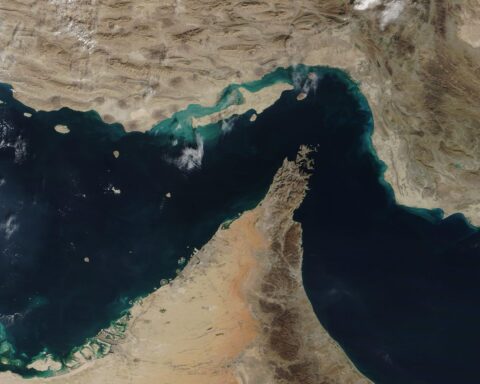
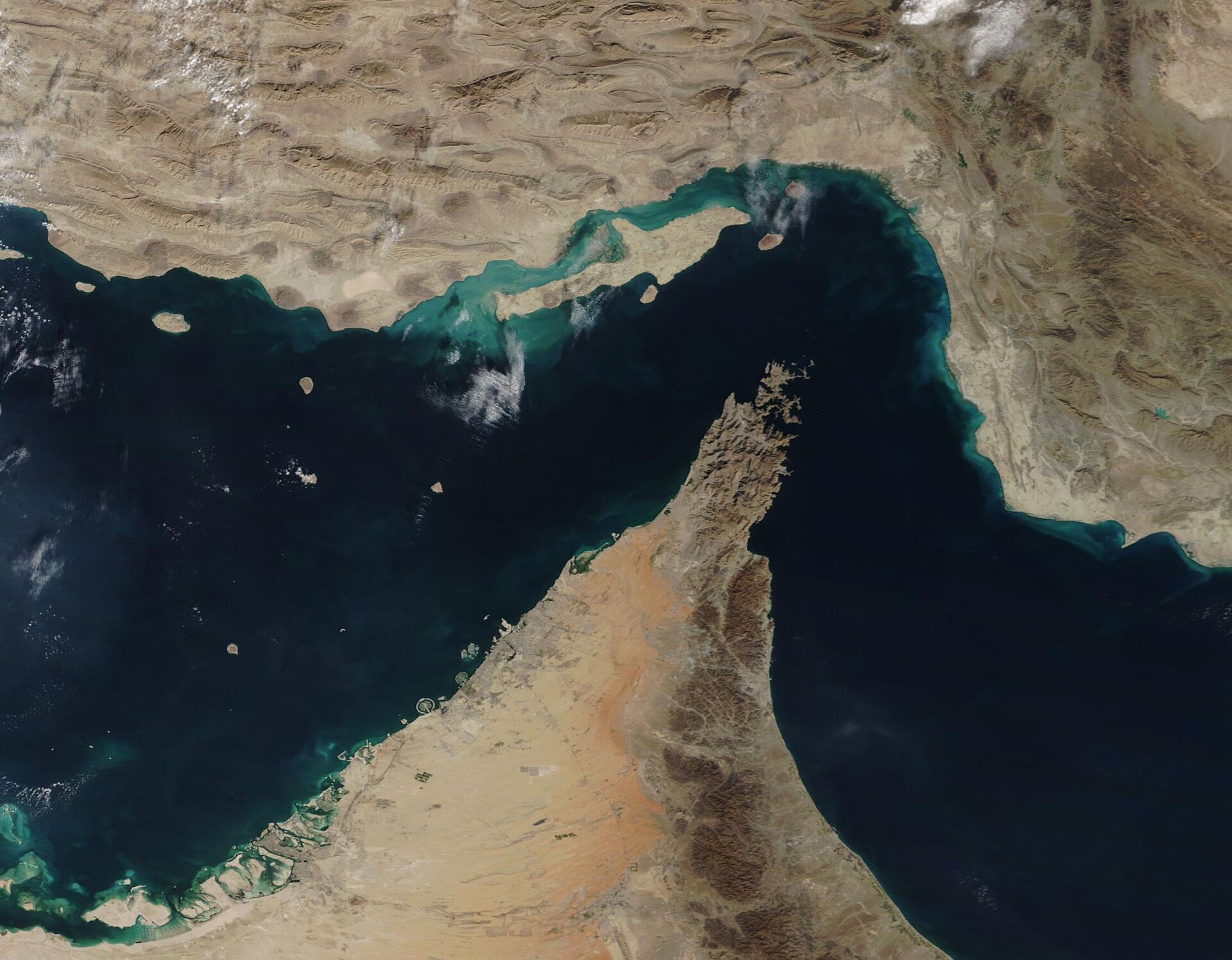
The most clarifying number in the OPEC+ data set belongs to Iraq. In May 2026, Baghdad physically pumped approximately 1.48 million barrels per day against a July quota of 4.378 million bpd — a gap of nearly 2.9 million barrels per day that has nothing to do with discipline and everything to do with geography, because Iraq’s southern export infrastructure runs through Basra and out through Hormuz, and Hormuz has been effectively closed to commercial tanker traffic since March.
The compliance mechanism is punishing Iraq for overproduction that occurred in 2024 and early 2025, when Baghdad consistently exceeded its quota by approximately 184,000 barrels per day and submitted compensation plans it never fully honoured. The punishment takes the form of lower prices, engineered through quota increases that signal supply abundance to a market already saturated with bearish sentiment. Iraq cannot currently overproduce even if it wanted to — the barrels have nowhere to go — and when Hormuz reopens, the compliance gap will immediately return, not because Baghdad lacks the will to comply but because its production infrastructure will snap back to full capacity while the discipline rationale dissolves with every additional barrel loaded at Basra.
Kazakhstan’s situation is equally incoherent as a target of cartel discipline. The Tengiz field expansion, a $49 billion Chevron-operated project, added 260,000 barrels per day of crude capacity and is designed to bring total output to approximately 950,000 barrels per day — volumes that Astana has no sovereign capacity to restrain because the field operates under a production-sharing agreement that predates Kazakhstan’s OPEC+ membership. A January 2026 fire at the Tengiz power station temporarily took more than 600,000 barrels per day offline, creating an involuntary compliance window, but that window will close as repairs progress and the valves will reopen under Chevron’s operational authority, not OPEC’s.
Russia, the third chronic overproducer, submitted compensation plans in July 2024 that it has followed with the fidelity Moscow typically brings to international commitments — selectively, when convenient, and with no visible consequence for non-compliance. Moscow takes a 62,000 bpd share of each monthly hike increment while producing above its quota for reasons entirely disconnected from Saudi Arabia’s discipline rationale. The pattern of defiance from all three countries is structural, not behavioural, and structural overproduction does not respond to price signals the way a pricing cartel’s enforcement models assume.
Can the 2027 Baseline Review Hold the Cartel Together?
OPEC+ launched an independent audit of maximum sustainable production capacity for all participating members in January 2026, with results due by September and intended to set 2027 production baselines — the permanent quotas around which future allocation decisions will revolve. A U.S.-based consulting firm is conducting the assessment for nineteen of twenty-two members, with Russia and Venezuela using a non-U.S. firm due to sanctions, and Iran’s baseline derived from the average of secondary-source production estimates for August through October 2026.
Iraq has been explicit about what it expects from this process. Iraqi officials have pursued a target of approximately five million barrels per day as a permanent baseline, with longer-term ambitions of seven million bpd tied to ongoing infrastructure investment — a figure that would represent a 14 percent increase over Iraq’s current official quota and a number that, if granted, would permanently loosen the production discipline that the quarterly hikes were designed to enforce. On June 25, Iraq’s Oil Ministry told Bloomberg that “a decision will have to be made regarding whether to remain in or withdraw” from OPEC if the quota is not raised, before the ministry subsequently clarified that exit “hasn’t been proposed” as an official government position.
“A decision will have to be made regarding whether to remain in or withdraw from OPEC.”
— Iraq Oil Ministry statement, reported by Bloomberg, June 25, 2026
The threat was calibrated, not empty. Iraq’s June 25 posture — formal exit threat followed by a careful walk-back — is the standard negotiating pattern of a member that knows its bargaining position strengthens with every passing month of the capacity audit. If the September results confirm that Iraq can sustainably produce five million barrels per day, Riyadh will face a binary choice: grant the higher baseline and accept that OPEC+ will absorb an additional 600,000-plus barrels per day of Iraqi production into a market already in surplus, or refuse and risk Iraq’s departure, which would remove the last pretence of coordinated production management from a cartel that has already lost the UAE.
The structural contradiction is plain: the quarterly hikes are meant to enforce discipline on overproducers, but the 2027 baseline review is simultaneously offering the largest overproducer a permanent higher ceiling as the price of staying in the organisation. If Iraq receives its five-million-barrel baseline, Saudi Arabia will have depressed Brent by $30 over a quarter to win a concession that loosens supply caps.
Aramco at 0.85x
The fiscal consequences extend from the Saudi treasury into the balance sheet of the institution that funds it. Aramco’s Q1 2026 results, released in May, disclosed free cash flow of $18.6 billion against a declared dividend of $21.89 billion — a coverage ratio of 0.85x, meaning the company paid out $3.3 billion more in dividends than it generated in free cash flow for the quarter. Gearing rose from 3.8 percent to 4.8 percent in the same period, a one-percentage-point increase that reflects the beginning of debt-financed dividend payments rather than the cash-generative model on which Aramco’s 2019 IPO was built.
The base dividend was increased 3.5 percent year-on-year in Q1 2026, continuing a pattern of annual increases — 12.8 percent cumulative since 2021 — that has been maintained regardless of oil price movements and, now, regardless of whether free cash flow covers the payout. Aramco’s cash position is a function of crude price, and at $72 Brent that position is eroding while the dividend obligation rises. The progressive dividend policy made strategic sense at $80-100 Brent; at $72, with gearing climbing 26 percent in a single quarter, it is a fiscal commitment consuming the company’s balance sheet flexibility quarter by quarter.
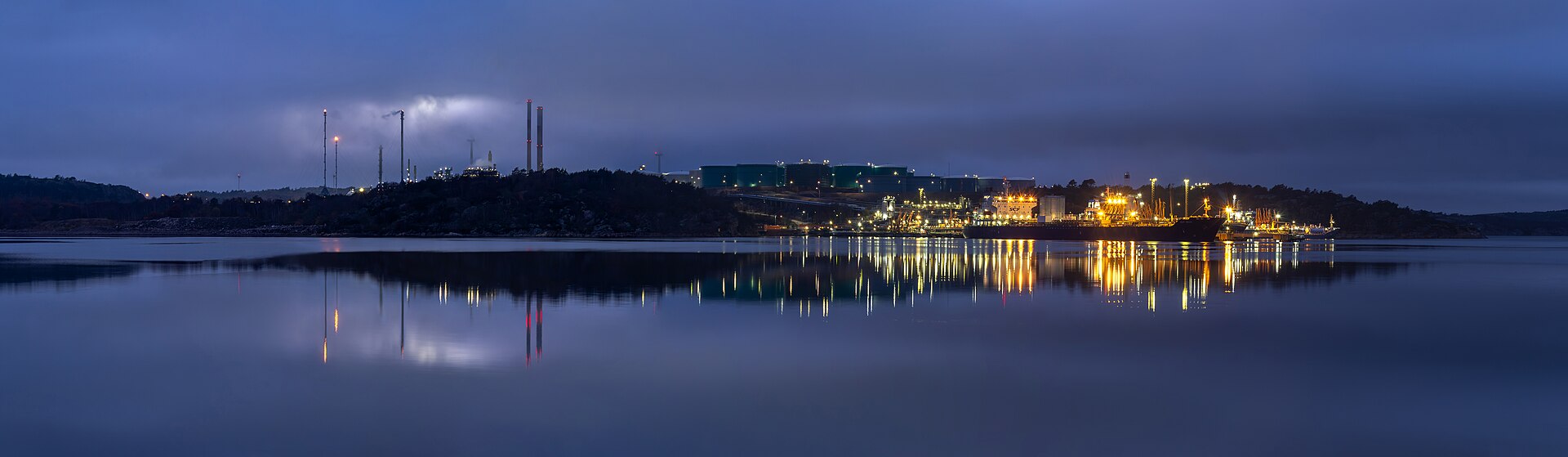
The downstream amplification compounds the picture. Sadara Chemical, the $20 billion joint venture between Aramco (65 percent) and Dow (35 percent) at Jubail, has had all 26 manufacturing units offline since March 31 — more than ninety days of zero revenue as of late June — with $3.7 billion in guaranteed senior debt whose grace period expired on June 15. Sadara is not a rounding error on Aramco’s consolidated position; it is a credit event unfolding at a facility designed to demonstrate Saudi downstream diversification, sitting idle while the upstream business that funds the entire kingdom runs at a coverage ratio below one.
The 1985 Echo — and Why This Round Is Worse
Saudi Arabia has executed this playbook before, and the record of how it ended deserves attention from anyone treating the current hike sequence as sustainable strategy. In late 1985, after years of absorbing the cost of propping up OPEC prices by cutting its own production from 10 million barrels per day to 2.3 million, Riyadh reversed course and flooded the market to punish quota cheaters and reclaim lost share. The result was a collapse of nearly 70 percent — Brent fell from $28 per barrel in November 1985 to $8.55 by July 1986 — that cut OPEC’s collective revenues by $50 billion in a single year and pushed Saudi government debt toward 100 percent of GDP by the end of the decade.
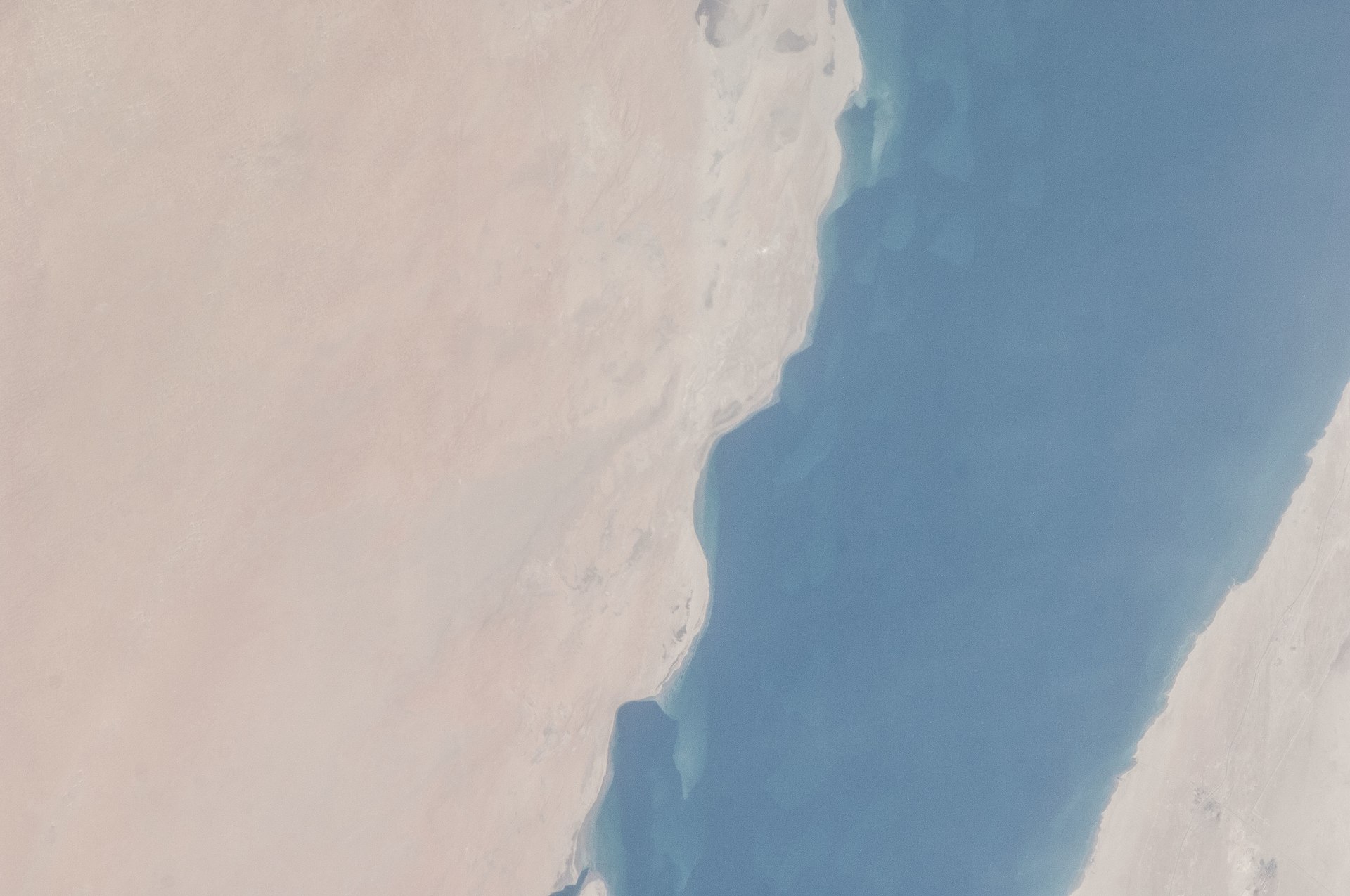
The pattern is recognisable — a Saudi-led volume signal designed to impose discipline through price pain — but the structural conditions in 2026 are worse along every dimension that matters. In 1985, Saudi Arabia had spare capacity and open export routes; it could physically deliver the flood it promised, and the threat was credible because the barrels were real. In June 2026, Saudi production sits at 7.01 million barrels per day against a 10.291-million-barrel quota — a gap of 3.28 million barrels per day that exists not because Riyadh chose restraint but because the export route is physically closed.
The reserve position appears comparable on paper — SAMA held approximately $491 billion when the 2020 price war began, versus approximately $475 billion today — but the expenditure profile makes the comparison misleading. Government spending is 20 percent higher year-on-year, NEOM carries a $16 billion termination liability, and the kingdom is simultaneously funding a war that has closed the very export infrastructure it needs to survive a price confrontation. In 1985, Riyadh controlled the timing and volume of its market intervention; in 2026, the punishment barrels exist only as quota announcements on paper, and the price damage from those announcements lands on Saudi revenues while the physical supply constraint prevents any competitive benefit.
What Happens When Hormuz Reopens?
The current market structure contains a concealed second shock that no OPEC+ communiqué has addressed. Every production quota increase approved since April 2026 — four consecutive months, adding more than 750,000 barrels per day in cumulative quota — will convert from paper announcements to physical supply the moment commercial shipping through Hormuz resumes. Iraq will ramp toward its 4.378-million-barrel quota and almost certainly beyond it, Kazakhstan’s Tengiz expansion will push Chevron-operated output toward one million barrels per day, and Russia will continue producing at whatever level maximises revenue, compensation plans notwithstanding.
The IEA’s June 2026 Oil Market Report projects a global surplus exceeding two million barrels per day through the end of the year, with Q2 deliveries already down five million barrels per day year-on-year because of the Hormuz-driven supply disruption. ING Think characterised the outlook as “bearish” with a “significant overhang emerging in 2027” — language that describes a market in which the current supply constraint is masking a structural glut that will become visible the instant the constraint lifts. Leon, the former OPEC official at Rystad, put the transition in terms every Saudi fiscal planner should absorb: the market could move “very quickly from fear of shortage to fear of surplus.”
The accumulated hike schedule also creates a commitment problem for Saudi planning, because each approved quota increase — April, May, June, July — becomes a production target the market prices against, and any attempt by Riyadh to reverse course and cut production would be read as both a policy failure and a supply-tightening event that benefits the same cheaters the hikes were designed to punish. Saudi Arabia is locked into a quota trajectory that pushes prices lower regardless of whether physical barrels flow, and reversing it would hand Iraq and Kazakhstan exactly the production restraint they refused to deliver voluntarily.
Brent has already shed a third of its value since the conflict began. If Hormuz reopens into a surplus market with four months of accumulated quota increases hitting the water simultaneously, Saudi Arabia will discover that the bill for disciplining OPEC’s cheaters was always going to arrive — and that it was always addressed to Riyadh.
Frequently Asked Questions
How large is each OPEC+ member’s share of the 188,000 bpd July hike?
The allocation follows each country’s proportion of the original 1.65 million bpd voluntary cut agreed in 2023, with Saudi Arabia taking the largest share at approximately 73,000 bpd and Russia at approximately 62,000 bpd, according to CNBC calculations based on OPEC allocation ratios. Iraq’s share is roughly 20,000 bpd, which makes the disproportion between its allocation and its exit threat acute — Baghdad is leveraging a 20,000-barrel monthly increment to push for a permanent 600,000-barrel baseline increase in the 2027 review.
Has any OPEC member left the organisation during an active production dispute?
Qatar withdrew on January 1, 2019, but that exit was driven by a Saudi-led diplomatic blockade rather than quota disagreement, and Qatar’s production at the time — roughly 600,000 bpd — was too small to affect market structure. The UAE’s departure on May 1, 2026 is the more relevant precedent: Abu Dhabi left because its capacity expansion was constrained by a quota system it no longer believed served its interests, removing approximately 3.2 million barrels per day of aligned production capacity from the Saudi-led enforcement bloc. If Iraq follows in 2027, the combined loss of UAE and Iraqi coordination would strip OPEC+ of roughly 7.5 million bpd of nominal production — more than a quarter of the participating bloc’s combined quota.
What is the “maximum sustainable capacity” definition used in the 2027 audit?
OPEC defines maximum sustainable capacity as the average maximum crude production a country can bring online within 90 days and sustain for one continuous year — a definition that captures installed infrastructure and operational readiness but excludes surge capacity or short-term peak rates. The definition is consequential for Iraq because Baghdad’s five-million-barrel target depends on counting infrastructure investments, including the Karbala refinery and Fao Grand Port expansion, that have not yet achieved sustained operation. The U.S.-based auditing firm’s interpretation of “sustained for one year” will likely determine whether Iraq’s baseline rises to five million or stays closer to its current 4.378 million.
How does Saudi Arabia’s SAMA reserve position compare to previous oil-price confrontations?
SAMA foreign reserves stood at approximately $475 billion in mid-2026, compared to $491 billion at the start of the March 2020 price war and approximately $737 billion in August 2014 before the 2014-16 downturn — a trajectory that has been declining in real terms for more than a decade. The reserves-to-expenditure ratio is the more consequential metric: government spending in Q1 2026 was 20 percent higher year-on-year, PIF assets sit at approximately $941 billion but are overwhelmingly illiquid (real estate, venture capital, sports investments), and total government debt-to-GDP has risen to approximately 25 percent — manageable by international standards but a marked shift from the near-zero ratios of the pre-2014 era.
What would happen if Saudi Arabia reversed the hikes and cut production instead?
Cutting production would send a signal that the discipline strategy failed, inviting Iraq and Kazakhstan to resume overproduction without consequence and rewarding the non-compliance that the hikes were designed to penalise. A Saudi cut would tighten supply and push Brent higher — improving Riyadh’s fiscal position in the short term — but that revenue lift would flow equally to the overproducers whose behaviour necessitated the hikes. The game-theory trap is that Saudi Arabia’s only credible threat is one that damages itself more than anyone else, and withdrawing the threat after four months of escalation would establish that OPEC+ members can outlast Saudi discipline cycles by simply waiting. The 1985-86 price war ended the same way: Riyadh eventually abandoned the flood, agreed to new quotas, and accepted a lower price floor — a precedent that Baghdad’s negotiators in the 2027 baseline review almost certainly have in mind. That precedent has deepened further: Iraq has since threatened to exit OPEC entirely rather than accept enforced cuts, a development that would leave Saudi Arabia as the sole enforcer of a cartel it cannot sustain alone — the full enforcement-trap analysis is in Iraq’s OPEC Exit Threat Leaves Saudi Arabia Defending a Cartel Alone.