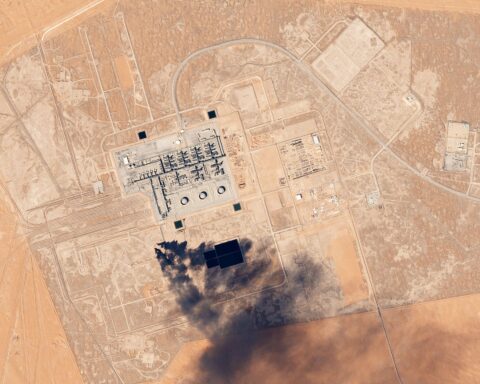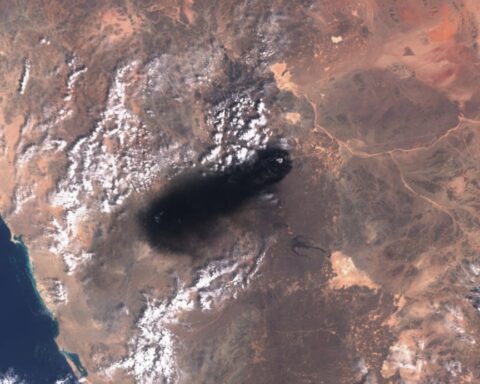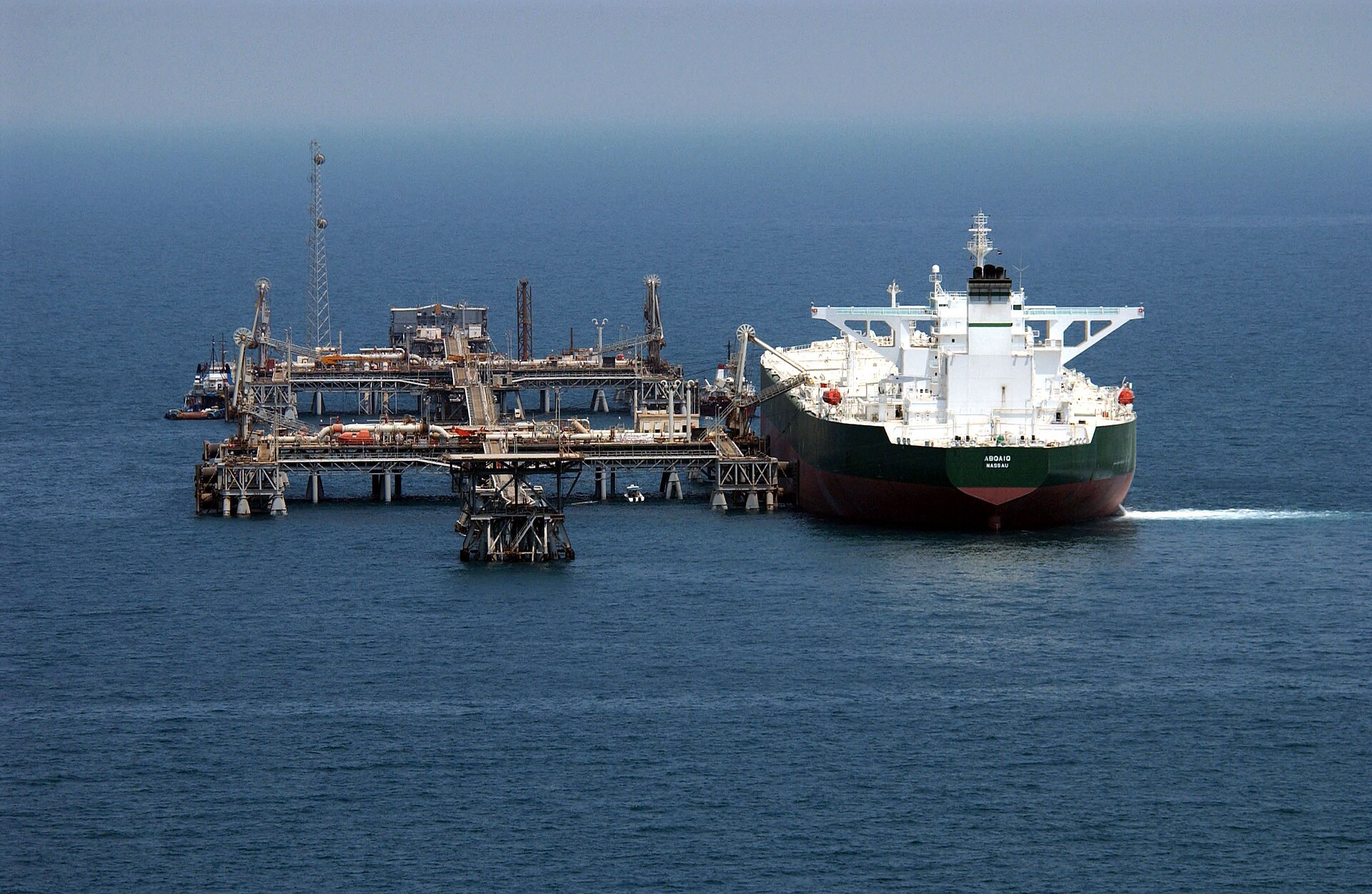

DHAHRAN — Saudi Arabia’s government raised its 2026 budget deficit projection to SAR 245 billion ($65.3 billion), 48% above the original figure, even as Brent crude trades above $112 a barrel — because the war that pushed oil prices to those levels has simultaneously cut the kingdom’s export volume by roughly half. The fiscal paradox is structural: Riyadh needs oil revenue to fund a conflict that is destroying the infrastructure and chokepoints through which that revenue flows.
The pre-budget statement published on 30 September forecast real GDP falling 3.6% in 2026, driven by a 21.8% contraction in oil activities (Zawya/Reuters, 2026-09-30). First-half defence outlays already exceeded $33 billion, more than $3 billion above the prior year (AGBI, September 2026). And the kingdom’s showpiece national oil company, Saudi Aramco, ordered staff to evacuate its Dhahran headquarters on 21 October (Reuters, 2026-10-21). What follows is the arithmetic of a government fighting a war on its own revenue base.
Table of Contents
- How Did the 1973 Oil Weapon Turn Against Saudi Arabia?
- How Much Oil Can Saudi Arabia Actually Export?
- What Does $112 Oil Yield at Half the Export Volume?
- Where Is the Budget Deficit Going?
- Can Aramco’s Dividend Survive Wartime Cash Flow?
- What Happens to Vision 2030 Without the Revenue?
- How Long Can Saudi Arabia Keep Borrowing?
- Does $112 Oil Leave Saudi Arabia Better or Worse Off?
- FAQ
How Did the 1973 Oil Weapon Turn Against Saudi Arabia?
In October 1973 Saudi Arabia led the Arab oil embargo that quadrupled crude prices from roughly $3 to $12 a barrel in a matter of months (Baker Institute, 2023). The logic was simple: the kingdom controlled the chokepoint between global supply and global demand, and it turned the tap off. Buyers — the United States, Western Europe, Japan — had no immediate alternative. Riyadh dictated terms.
The House of Saud Daily Briefing
Saudi Arabia's news in 3 minutes, every morning. Free. See today's issue
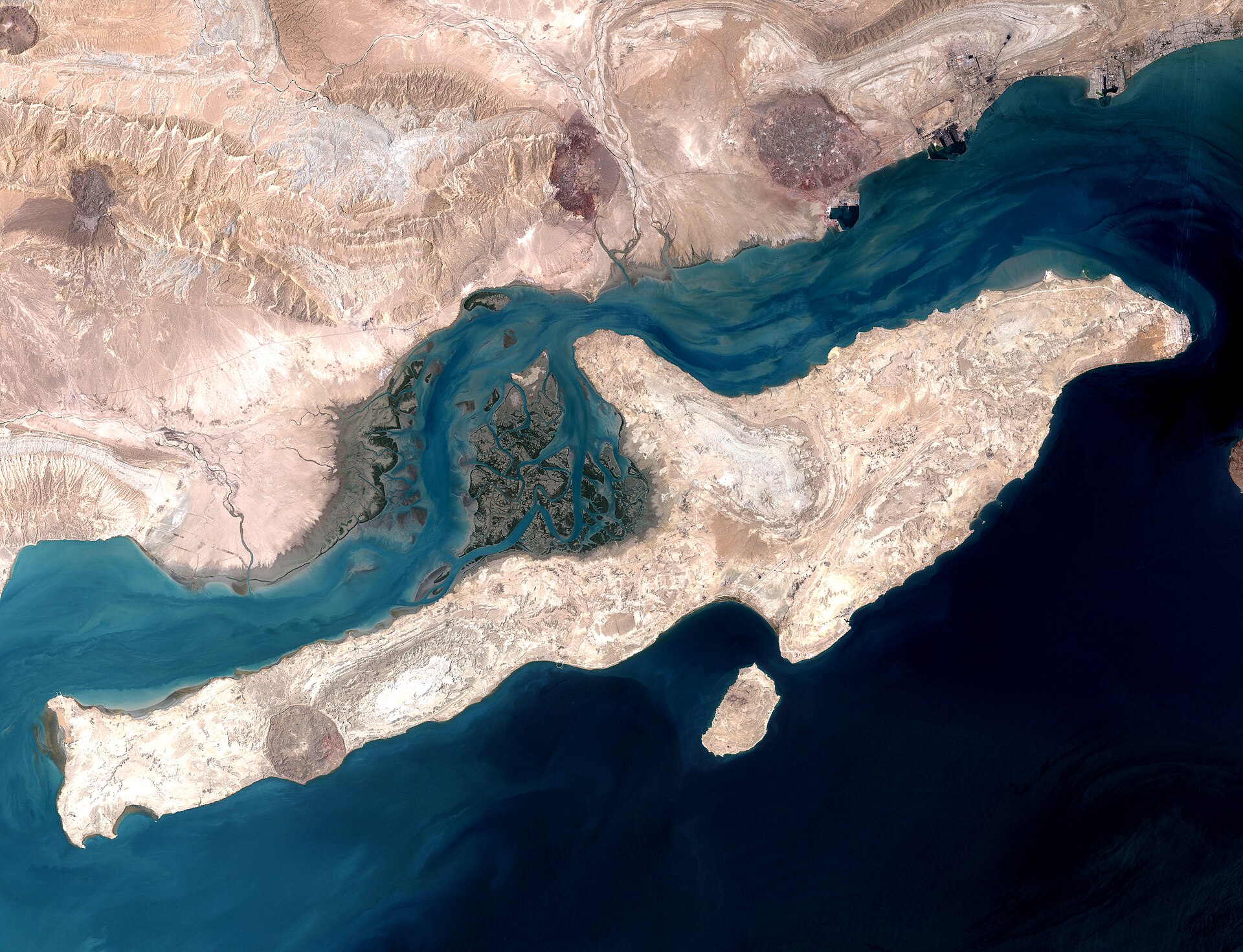
In 2026 the geometry is inverted. Iran’s IRGC mine-laying campaign reduced Strait of Hormuz tanker transits from roughly 85 a day to approximately 4 (HOS/IEA data, October 2026). The Houthis declared a maritime blockade of Saudi ports on 20 July and have struck airports, pipeline infrastructure and Aramco facilities from Riyadh to Shaybah. A “senior Iranian official” told US News that the attacks were part of an effort to “reshape regional power by hitting energy infrastructure and shipping routes” (US News, 2026-10-15).
The weapon is the same — control of chokepoints to constrain oil flows. The target has changed. Between 1967 and 1973 Saudi Arabia built itself into the world’s swing producer, accumulating the spare capacity that made the embargo effective. It took six years to assemble the leverage that changed global energy politics in six months (Baker Institute, 2023). In 2026, Iran and its proxies did not need spare capacity — they needed mines, drones and missiles, and a willingness to use the same geography that once protected Saudi exports.
The asymmetry runs deeper than logistics. The 1973 embargo cost Saudi Arabia nothing in infrastructure. The kingdom turned off the taps, collected a permanently higher price floor when it turned them back on, and emerged richer. In 2026 the attacks are destroying physical assets — the SATORP refinery, pipeline pumping stations, the Dhahran headquarters itself. The cost of resuming full exports, whenever that becomes possible, will include reconstruction spending that did not exist on any budget line in December 2025.
How Much Oil Can Saudi Arabia Actually Export?
Saudi Arabia’s OPEC+ production target for October 2026 is 10.478 million barrels per day (Gulf News, 2026-09-07). Actual output has been falling since February, when OPEC data put Saudi crude production at 10.882 million b/d (Hellenic Shipping News, 2026-04-15). By March it had dropped to 6,967 thousand b/d — a 36% decline in a single month. The IEA measured 5.97 mb/d in August (IEA, 2026-09-11). The collapse was not voluntary; it was the direct consequence of attacks on export infrastructure and the Iranian closure of the Strait of Hormuz.
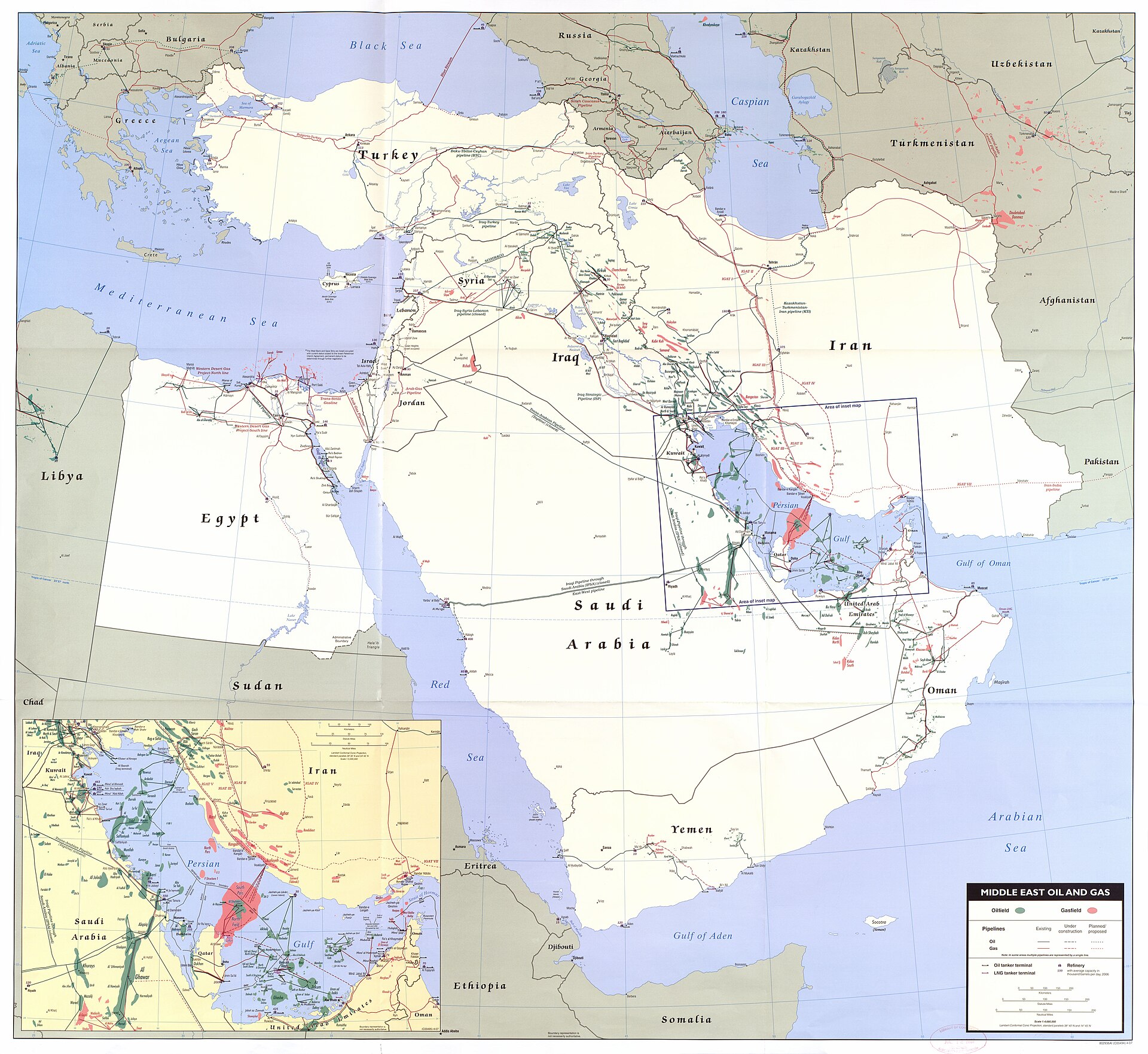
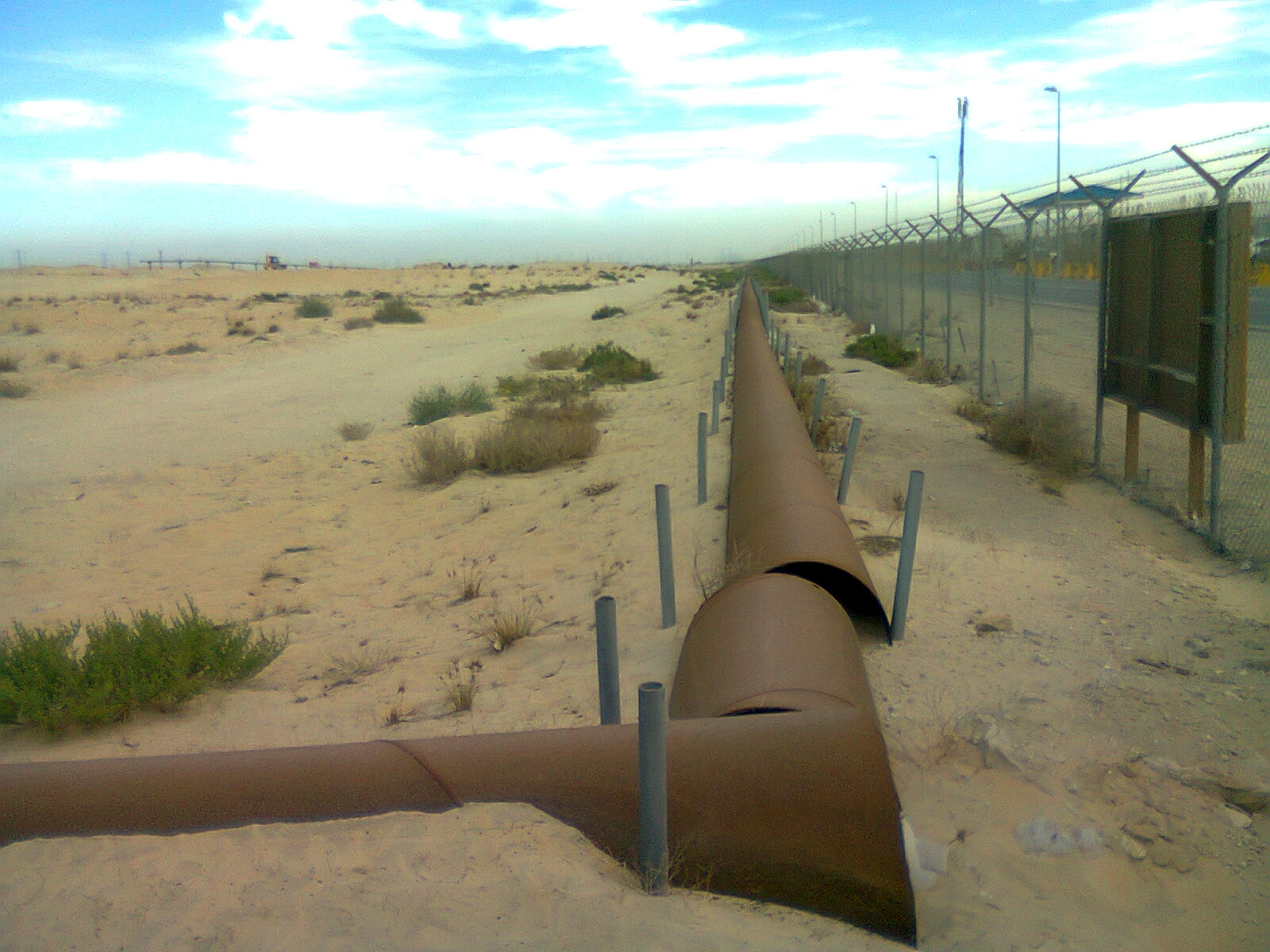
The kingdom’s primary workaround is the East-West pipeline, which runs from the Eastern Province across the Arabian Peninsula to the Red Sea port of Yanbu. Aramco says the line can carry up to 7 mb/d, with approximately 5 mb/d available for export after supplying west-coast refineries (Reuters, 2026-03-25). Energy Minister Prince Abdulaziz bin Salman said on 6 October that flows had returned to 5.8 mb/d (Al Jazeera, 2026-10-06), and Bloomberg put the figure near 6 mb/d around the same period (Bloomberg, 2026-10-02). Of that, roughly 4.5 mb/d was available for export (Bloomberg, 2026-10-02).
But the pipeline has been hit before. A 9 April attack on a pumping station cut flows by 700,000 b/d (The New Arab, 2026-04-10). The line was shut entirely as a precaution on 12 September and took ten days to restart (Saudi Gazette/Zawya, 2026-09-25). Al-Monitor reported that full capacity could take six to eight weeks to restore (Al-Monitor/Reuters, 2026-09-25). The 5.8 mb/d figure is now 17 days old. Whether it still holds after the mid-October attack wave is an open question.
The refinery picture compounds the problem. The 465,000 b/d SATORP refinery at Jubail closed after overnight attacks on 7-8 April (context extract). The 400,000 b/d Jazan refinery shut on 27 July following a Houthi strike and has not confirmed a restart (Hydrocarbon Processing, 2026-08-11). Together those two facilities represent 865,000 b/d of combined refining capacity. Every barrel that does not reach a refinery does not generate the higher-value product revenue that subsidises the crude export margin.
The price of moving the crude that does leave the kingdom has itself become a cost centre. VLCC charter rates from the Gulf to China reached $1.2 million a day in early October, against roughly $80,000 a year earlier (bdnews24/LSEG, 2026-10-05). Insurance premiums for Hormuz-routed cargoes — already elevated — effectively priced Saudi Gulf-terminal loadings out of the market. Aramco cut its November Arab Light price to Asia by $3, to $5 below the Oman/Dubai benchmark, the widest discount since June 2020 (bdnews24/Reuters, 2026-10-05). At the same time, it raised northwest European prices by $3 (bdnews24/Reuters, 2026-10-05) — a transparent attempt to redirect buyers toward Yanbu-loaded cargoes routed through the Suez Canal.
| Export Route | Pre-War Capacity | Current Status (Oct 2026) | Source |
|---|---|---|---|
| Strait of Hormuz (Gulf terminals) | ~7-8 mb/d Saudi crude | ~4 tanker transits/day total, effectively closed to Saudi exports | HOS/IEA |
| East-West Pipeline to Yanbu | ~7 mb/d design, ~5 mb/d exportable | 5.8 mb/d throughput (Oct 6); ~4.5 mb/d for export | Aramco; Al Jazeera; Bloomberg |
| European term contracts | Normal allocation | Zero October crude to European customers | Al-Monitor/Reuters |
Aramco told European term customers they would receive no Saudi crude in October 2026 (Al-Monitor/Reuters, 2026-09-25). The kingdom’s total crude exports in September were estimated at 5.4 mb/d by Kpler; Standard Chartered put the figure higher at approximately 6.9 mb/d (multiple tracking services, September 2026). Either way, the number is roughly half the OPEC+ target.
What Does $112 Oil Yield at Half the Export Volume?
Brent closed at $112.96 on 22 October, the highest since May 2018 (Flux Markets, 2026-10-23). But the kingdom cannot collect a price premium it cannot ship.
The crude arithmetic is not as punishing as the volume loss suggests — because price and volume move in opposite directions. At 5.4 mb/d of exports and $112 a barrel, annualised crude export revenue runs at roughly $221 billion. At the pre-war rate of about 7 mb/d and the budget’s implied price of approximately $72 a barrel (AGSI estimate), annualised revenue would have been about $184 billion. The war appears, at first glance, to have increased crude revenue.
Robin Brooks, a senior fellow at the Brookings Institution, made this case in late September. He estimated Saudi annualised oil export revenue at approximately $210 billion, against roughly $150 billion before the war. Brent would need to fall “well below $75” for the kingdom to be financially worse off, he argued (Substack/Fortune, 2026-09-28).
The problem is that Brooks’s calculation was published before the October escalation. The drone strike that killed two Aramco workers at Shaybah on 21 October (Saudi Gazette, 2026-10-21), the seven tankers damaged overnight in Hormuz on the same day, and the forced Dhahran evacuation all postdate his estimate. And his figure addresses revenue alone, not the spending side — where the war has opened an entirely separate deficit.
Where Is the Budget Deficit Going?
The 2026 budget, approved in December 2025, projected revenues of SAR 1,147.4 billion, spending of SAR 1,312.8 billion, and a deficit of SAR 165.4 billion — 3.3% of GDP (Argaam, 2025-12-02). Seven months of war later, every line has moved in the wrong direction.
The first quarter produced a record deficit of SAR 125.71 billion. Spending rose 20% year on year. Oil revenue fell 3% despite rising prices, because volumes had already begun to drop. Military outlays rose 26% (Argaam, 2026-05-05; AGBI, 2026-05-07). In a single quarter Saudi Arabia consumed 76% of the originally budgeted annual deficit.
The second quarter was less severe. The deficit narrowed to SAR 34.3 billion as oil revenue rose 22% to SAR 185.1 billion, reflecting the price surge and partial pipeline restoration (Investing.com/Asharq Al-Awsat, 2026-07-30). But the first-half total still reached SAR 160 billion — already 97% of the original full-year projection (Asharq Al-Awsat, 2026-07-30).
| Period | Deficit (SAR bn) | Oil Revenue Change (YoY) | Defence Spending Change (YoY) | Source |
|---|---|---|---|---|
| 2026 Budget (original) | 165.4 | — | — | Argaam, Dec 2025 |
| Q1 2026 | 125.71 | -3% | +26% | Argaam, May 2026 |
| Q2 2026 | 34.3 | +22% | Not separately disclosed | Asharq Al-Awsat, Jul 2026 |
| H1 2026 | 160.0 | — | $33bn total (H1) | Asharq Al-Awsat, Jul 2026; AGBI, Sep 2026 |
| Revised full-year 2026 | 245.0 | — | — | Zawya/Reuters, Sep 2026 |
The pre-budget statement revised the full-year deficit to SAR 245 billion (Zawya/Reuters, 2026-09-30) — a 48% increase from the December figure. It simultaneously projected real GDP contracting 3.6% in 2026, driven by a 21.8% decline in oil activities. The second quarter alone saw GDP fall 4.8%, with oil activity down 24.7% (TradeArabia/GASTAT, 2026-08-19). These are depression-level numbers in the oil sector, papered over by a non-oil economy that managed 0.6% growth.
The kingdom has not disclosed whether a supplemental war-spending authorization has been issued beyond the budgeted SAR 273 billion defence allocation. If one has, it does not appear in the published accounts.
Can Aramco’s Dividend Survive Wartime Cash Flow?
Saudi Aramco reported second-quarter adjusted net income of $33.4 billion and paid a base dividend of $21.9 billion (QNA/Aramco, 2026-08-04). The dividend looks comfortable against earnings. It does not look comfortable against cash.
Aramco’s second-quarter free cash flow was $12.3 billion, after a $13.6 billion working-capital build (Zawya/Aramco, 2026-08-04). The base dividend exceeded free cash flow by $9.6 billion. That gap must be funded by drawing down cash reserves or by increasing debt. Aramco CEO Amin Nasser told investors that disruptions typically last “days, not weeks or months” (Saudi Gazette/Zawya, 2026-09-25). The disruptions have now lasted months.
The dividend matters to the state because the government holds 98.5% of Aramco and depends on its distributions to fund the budget. A cut to the base dividend would signal fiscal distress in a way no spreadsheet revision can. So far, Aramco has not indicated any change. But Q3 and Q4 free cash flow under wartime export constraints — with the Dhahran HQ evacuated, European customers receiving no crude, and tanker charter rates from the Gulf at wartime highs — will test the arithmetic that currently supports the payout.
What Happens to Vision 2030 Without the Revenue?
The Public Investment Fund entered 2026 with assets under management exceeding $900 billion and a 2025 net profit of $17 billion — more than double the prior year (Asharq Al-Awsat, 2026-08-17). PIF accounts for 11% of non-oil GDP. Its 2026-2030 strategy described a shift “from rapid expansion to consolidating efficiency” (Jawlah, 2026-08-12), language that preceded the worst of the war by two months.
The giga-project retrenchment that began before the conflict has accelerated under it. NEOM terminated the Trojena ski-village steel and dam contracts in March, citing “geopolitical developments” (MEED, 2026-03-26). Semafor reported in May that NEOM had halted further work on The Line until at least after 2030 and cut its 2030 population target to 100,000 (Semafor, 2026-05-22). The kingdom postponed its flagship Future Investment Initiative to 2027 — though the 10th edition is still nominally scheduled for 26-29 October (Kuwait Times/KUNA, 2026-08-04), whether delegates will attend a conference in a country whose airports are under regular missile attack is a separate question.
No formal PIF project cancellations have been announced. But the fund’s capacity to deploy capital depends on the government’s ability to fund it, which depends on oil revenue, which depends on export volumes the war has halved. The fiscal breakeven price that includes PIF spending commitments — estimated at $108-113 a barrel by Bloomberg Economics and AGSI — is now brushing against the current Brent price. At half the export volume, the effective breakeven doubles. The kingdom postponed its National Day fireworks and drone shows indefinitely (Khaleej Times, 2026-09-23) — a small item, but one that signals a government conserving cash for priorities that fireworks cannot address.
Aramco’s own second-quarter results carried a clue about the direction of capital allocation. The company reported an average realised crude price of $108.1 a barrel (Zawya/Aramco, 2026-08-04) — a price that should have produced exceptional returns. Yet free cash flow fell short of the base dividend by $9.6 billion, a gap that reflects higher security spending, rerouted logistics, and the working-capital build of an export system running at half capacity through unfamiliar routes.
How Long Can Saudi Arabia Keep Borrowing?
Saudi Arabia completed approximately 90% of its 2026 financing plan by mid-year, front-loading its borrowing before the fiscal picture deteriorated further (Fitch/Zawya, 2026-10-13). The Q1 deficit of SAR 125.71 billion was fully financed by debt (Gulf News, 2026-05-05). Public debt reached about SAR 1.685 trillion by mid-2026 (Asharq Al-Awsat, 2026-07-30).
Fitch Ratings, in its 13 October assessment, projected the 2026 deficit at 4.9% of GDP and forecast government debt reaching 41.3% of GDP by end-2028 (Zawya, 2026-10-13). The agency acknowledged that “Saudi Arabia’s economy and public finances have demonstrated resilience, partly due to diversified oil export pipelines,” but added that “projected budget deficits have been revised upwards” (Zawya, 2026-10-13).
The trajectory is manageable at current levels. Saudi Arabia is not facing a solvency crisis. Government debt below 42% of GDP is moderate by global standards, and the kingdom retains access to international bond markets at investment-grade rates. The pre-budget statement projected a 2027 deficit of SAR 191 billion on spending of SAR 1.39 trillion and revenue of SAR 1.20 trillion, with real GDP growth rebounding to 12.8% (Zawya/Reuters, 2026-09-30). That rebound assumes the war ends or its effects diminish — an assumption, not a forecast.
The risk is not imminent default. It is the compounding effect of a war with no clear end date, a deficit that grows with every month of disrupted exports, and a development programme that requires sustained capital inflows the budget can no longer guarantee.
Iran has said Hormuz stays shut until the United States accepts its terms — a seven-day roadmap involving sanctions relief and the return of approximately $12 billion in frozen assets (Al Jazeera, 2026-09-25). Washington rejected the plan (WSJ, 2026-09-26). No diplomatic resolution is expected before the 3 November US midterm elections (The National, 2026-10-08). Every week without resolution adds to the deficit.
Does $112 Oil Leave Saudi Arabia Better or Worse Off?
The IMF’s regional director said on 22 October that the Houthi campaign’s economic effect had been “limited so far” (Hespress/IMF, 2026-10-22). Brooks’s September estimate put annualised revenue $60 billion above pre-war levels. Both assessments contain a version of the truth — and both are increasingly out of date.
The revenue argument holds if three conditions are met: the price stays above $100, export volumes stay near 5-6 mb/d, and the spending increase remains contained. The first condition held through October — Brent has not fallen below $100 since it first crossed that mark on 8 March at $101.19 (AP/Boston.com, 2026-03-08), and touched $126.41 on 30 April before settling into a $100-113 band (Aletihad/Reuters). The second is under pressure from Iran’s declared offensive doctrine and the expanding Houthi target set, which now includes the defence ministry in Riyadh (HOS, 2026-10-22). The third condition failed in Q1, when military outlays rose 26% (Argaam, 2026-05-05).
Michael Knights, a Washington-based analyst, framed the dynamic from the adversary’s perspective: Tehran and the Houthis, “unable to change Washington’s course directly, are striking Riyadh at its economic weak point” (US News, 2026-10-15). The weak point is not the oil price — it is the infrastructure that converts a price into a cargo, and a cargo into revenue.
The budget’s implied oil price assumption was approximately $72 a barrel (AGSI estimate). The IMF-style fiscal breakeven is $80-85. Bloomberg Economics puts it at $96. Add PIF spending, and the breakeven reaches $108-113 (AGSI/Bloomberg Economics). At full pre-war production of 10.5 mb/d, $112 Brent clears all but the highest of these thresholds. At 5.4-6.9 mb/d of actual exports, the price needed to balance the same budget roughly doubles — to a range that no current forecast supports.
Brent has not returned to its April peak. If it does, the revenue gap narrows. If the pipeline is hit again — or if the Houthis make good on their warnings to target Aramco production sites directly (PressTV, 2026-10-13) — the gap widens regardless of price. This is the asymmetry the 1973 comparison makes visible: Saudi Arabia weaponised scarcity when it controlled the supply; in 2026, scarcity is being imposed on it by adversaries who do not need Saudi Arabia’s revenue to function.
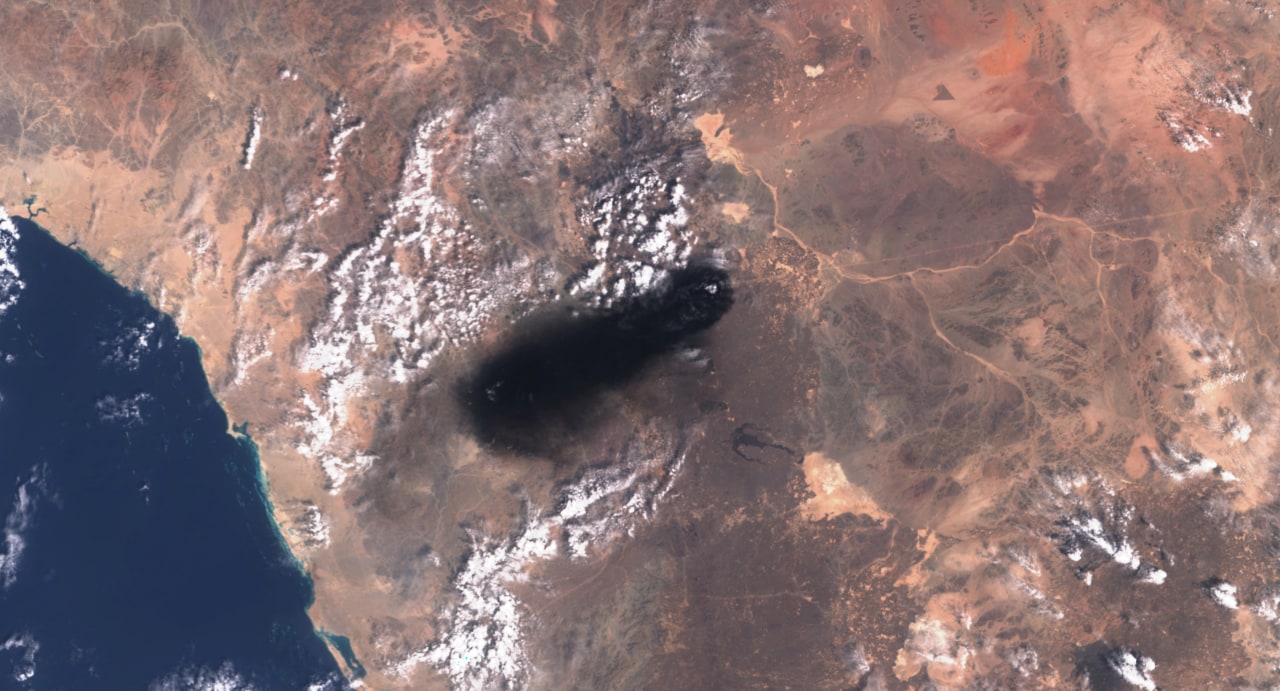
In 1973 the embargo lasted five months before the kingdom restored flows and collected the windfall of a permanently higher price floor. In 2026 Saudi Arabia cannot restore flows until the Strait of Hormuz reopens, the pipeline is secured, and the Houthi drone campaign either stops or is defeated. None of those conditions is within Riyadh’s unilateral control. The travel advisories now covering the kingdom — Australia telling citizens to stockpile food, the United States pulling non-emergency diplomats — are not a fiscal indicator. But they are a measure of how far the war has moved from the budget’s assumptions.
FAQ
What is Saudi Arabia’s fiscal breakeven oil price in 2026?
Estimates range from $80-85 a barrel using standard IMF methodology to $96 according to Bloomberg Economics. When PIF spending commitments are included, the breakeven rises to $108-113 (AGSI/Bloomberg Economics). These estimates assume pre-war production volumes of roughly 10.5 mb/d. At current export levels of 5.4-6.9 mb/d, the effective breakeven price needed to balance the budget is substantially higher — an adjustment no major institution has publicly recalculated for wartime conditions.
Has Saudi Arabia drawn down its sovereign reserves to fund the deficit?
SAMA (the Saudi central bank) has not published second-half 2026 reserve data as of 23 October. The Q1 deficit of SAR 125.71 billion was described as fully financed by borrowing (Gulf News, 2026-05-05), and Fitch noted the kingdom had completed roughly 90% of its 2026 debt issuance plan by mid-year (Zawya, 2026-10-13). Whether sovereign reserves were tapped alongside borrowing — or held as a backstop — remains undisclosed.
How does the 2026 fiscal position compare to the 2015-2016 oil price crash?
In 2015-2016 Saudi Arabia ran deficits exceeding 15% of GDP when oil fell below $30 a barrel. The 2026 deficit of SAR 245 billion, projected at 4.9% of GDP by Fitch, is smaller in relative terms. But in 2015-2016 the kingdom’s oil infrastructure was intact and its production capacity was fully available. The 2026 crisis combines a fiscal deficit with a physical supply disruption — a compound problem Riyadh has not faced since the 1991 Gulf War.
Will Aramco cut its dividend in 2026?
Aramco has not signalled any change to its $87.6 billion annual base dividend. But Q2 2026 free cash flow of $12.3 billion was $9.6 billion below the quarter’s $21.9 billion dividend payment (QNA/Aramco, 2026-08-04; Zawya). If wartime export volumes persist through Q3 and Q4, the cash-flow gap will widen, and Aramco may need to increase debt or draw on reserves to sustain the payout — neither of which it has disclosed plans for.
What would happen to the Saudi budget if Brent fell below $90?
At pre-war export volumes of roughly 7 mb/d, a $90 Brent price would still exceed the budget’s implied $72 assumption and produce a manageable deficit. At current wartime volumes of 5-6 mb/d, $90 Brent would yield annualised crude export revenue in the $164-197 billion range — below Brooks’s $210 billion estimate and potentially below the pre-war revenue baseline. Combined with the 26% increase in military spending and the absence of any announced ceasefire, a sustained drop below $90 would likely force either a supplemental borrowing programme, a drawdown of SAMA reserves, or both. The IMF’s July growth forecast of 1.7% for 2026 (News24, 2026-07-08) was issued before the worst of the October escalation and before the revised SAR 245 billion deficit figure.
The House of Saud Daily Briefing
Saudi Arabia's news in 3 minutes, every morning. Free. See today's issue