RIYADH — Donald Trump told reporters in the Oval Office on June 11 that he had made “a great settlement of the war with Iran,” described a signing ceremony that might happen “in Europe” within days, and posted on Truth Social that he had “cancelled the scheduled strikes and bombings against Iran this evening” — all while Iran’s foreign minister was posting on X that there is no agreement, the IRGC was firing on two vessels attempting to transit the Strait of Hormuz, and Brent crude was falling to $90.38 a barrel on the assumption that a deal no one has confirmed might crash Saudi Arabia’s oil revenue below a fiscal breakeven Riyadh cannot meet. What separates June 11 from the April 8 ceasefire — which collapsed in 72 hours and produced nothing but a transit toll regime and a wave of resumed strikes — is what Saudi Arabia signed earlier the same day: a GCC ministerial communiqué declaring that “any attack against one of them is an attack against them all,” the first explicit collective defense invocation in the bloc’s 45-year history, binding Riyadh to defend Kuwait and Bahrain with interceptors it does not have, under a legal framework it never built, and through diplomatic channels that no longer function.
The timing is not coincidental — it is structural. Saudi Arabia committed to collective defense in the morning and discovered by evening that the war it pledged to fight may have been declared over by a president who did not consult it, in a deal the adversary denies making, while the strait its oil must transit remains closed under a universal shoot-on-sight order the IRGC has not rescinded. The April 8 ceasefire cost Saudi Arabia credibility. The June 11 version may cost it solvency, because this time Riyadh is not merely a bystander watching a fake peace unravel — it is a signatory to mutual defense obligations it cannot fulfill, at an oil price that guarantees monthly losses north of $5 billion, with 400 interceptor rounds standing between it and a war the other party says never stopped.
Table of Contents
- What Did Trump Actually Announce on June 11?
- Iran’s Two-Word Rebuttal
- Why Is June 11 Structurally Worse Than April 8?
- The Collective Defense Obligation Riyadh Cannot Meet
- How Many Interceptors Does Collective Defense Cost?
- The Fiscal Trap at $90 a Barrel
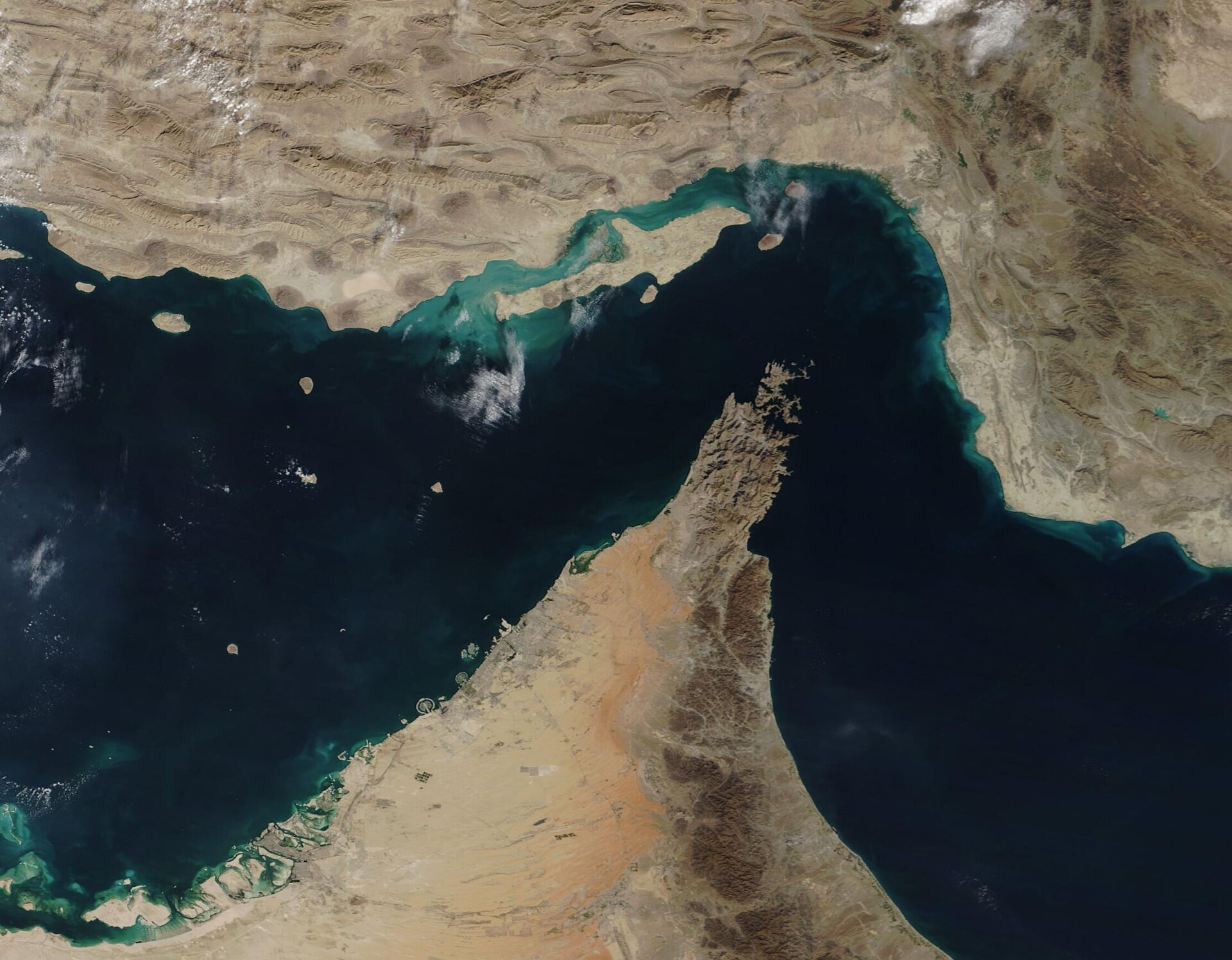
- Can a One-Sided Ceasefire Reopen Hormuz?
- Four Days Until Sadara’s Grace Period Expires
- What Happens When This Ceasefire Fails?
- Frequently Asked Questions
What Did Trump Actually Announce on June 11?
Trump announced the cancellation of scheduled strikes on Iran and claimed an agreement approved at “the highest level of Iranian leadership.” No jointly released text exists, no signing ceremony has occurred, no Iranian official has confirmed participation in any finalized deal, and the US naval blockade on Iranian oil remains in force by Trump’s own explicit declaration on Truth Social.
Trump made three distinct claims within a span of hours, each describing a different version of the same event. In the Oval Office, he told reporters the discussions had been “brought to the highest level of Iranian leadership and approved,” framing it as a capitulation extracted by force — “they’ve taken a pounding like very few people could take.” On Truth Social, he announced the cancellation of “scheduled strikes and bombings” but specified that “the Naval Blockade will remain in full force and effect until this Transaction is finalized.” And in subsequent remarks, he described a future signing ceremony “maybe in Europe” — language that concedes what he announced is a framework for future negotiations, not an executed deal, and the gap between “great settlement” and “subject to finalization of documents” is exactly where the April 8 ceasefire lived for 72 hours before it collapsed entirely.
That Truth Social post also named Saudi Arabia — alongside Israel, the UAE, Qatar, Turkey, Pakistan, Bahrain, Kuwait, Jordan, and Egypt — as among those who had “approved” the deal. Saudi Arabia has not confirmed, denied, or publicly acknowledged that attribution in any form.
Netanyahu’s office added another layer of fracture: “Israel was not a party to the memorandum of understanding but appreciated commitments regarding Iranian enrichment and missile limits.” Whatever Trump signed — if he signed anything — the country that triggered the war by striking Iran is not bound by it, which means the trigger for renewed hostilities remains in Israeli hands, outside the ceasefire’s jurisdiction, and beyond Saudi Arabia’s influence. Earlier the same day, Trump had threatened to seize Kharg Island before reversing within hours — a pattern of maximum escalation followed by maximum reversal that has now repeated often enough to constitute a doctrine of its own, one that produces market volatility Saudi Arabia cannot absorb at current oil prices.
The Middle East briefing 3,000+ readers start their day with.
One email. Every weekday morning. Free.
Iran’s Two-Word Rebuttal
Abbas Araghchi did not wait for back-channel negotiations or a carefully worded statement routed through intermediaries. He posted directly on X, in English, with his own emphasis: “As of now, there is NO ‘agreement’ on any ceasefire or cessation of military operations.” The capital letters were his; the scare quotes around “agreement” were his; and the message was aimed not at Trump but at every government currently making policy, pricing cargo insurance, and repositioning military assets on the assumption that a deal exists.
“As of now, there is NO ‘agreement’ on any ceasefire or cessation of military operations.” — Abbas Araghchi, Iranian Foreign Minister, X post, June 11, 2026
This is a material difference from April 8, and the difference runs in one direction — worse. When Trump declared that ceasefire, Araghchi issued a conditional acknowledgment: “If attacks against Iran are halted, our Powerful Armed Forces will cease their defensive operations.” The conditional was weak — it required Israel to stop strikes that Israel had no intention of stopping — but it was an acknowledgment that something had been agreed to, however fragile, however certain to fail. On June 11, the Iranian foreign minister issued an unconditional denial, and that distinction matters for every downstream calculation Saudi Arabia must now make: there is no condition to meet, no framework to test, no ambiguity to exploit, no face-saving language to build a pause on.
That denial arrived while the IRGC was enforcing the same-day universal Hormuz closure order — covering every flag and every cargo without exception — and while two ships were being struck in the strait hours after Trump’s announcement. The shoot-on-sight directive has not been rescinded, modified, or even publicly addressed in the context of Trump’s “settlement.” Iran had already suspended message exchanges with the US through intermediaries on June 1, ten days before Trump claimed his deal had been “approved” at the highest levels of Iranian leadership — meaning the announcement was made through a channel Iran says it shut down, describing an agreement Iran says does not exist, about a ceasefire that is contradicted by ongoing kinetic operations in the very waterway it was supposed to pacify.
Why Is June 11 Structurally Worse Than April 8?
The April 8 ceasefire featured a conditional Iranian acknowledgment, no binding Saudi defense obligations to any ally, and oil prices that remained elevated because the market refused to believe the announcement. The June 11 version features an explicit Iranian denial, a same-day Saudi commitment to collective defense of Kuwait and Bahrain under the first “attack on one” invocation in GCC history, oil prices falling because the market chose to believe it, and a Hormuz closure order that supersedes the limited March restrictions with universal shoot-on-sight authority.
On April 8, the market was right to be skeptical: oil barely moved because traders assumed the ceasefire was performative, and it was — Israel struck Lebanon within 72 hours, Iran imposed transit tolls instead of reopening Hormuz, and the entire exercise dissolved into a series of mutual accusations that Trump tried to paper over by “extending” the ceasefire “indefinitely” on April 21, citing Iran’s “seriously fractured” government. On June 11, the market was wrong to be credulous — Brent dropped roughly 3% to $90.38 on the word “settlement” — and that credulity immediately translated into fiscal damage for a country that needs $108–111 per barrel to balance its budget. The difference between market skepticism and market credulity is approximately $162–189 million a day in additional fiscal shortfall, or between $4.9 and $5.7 billion a month that Saudi Arabia loses to the perception of peace while the conditions of war persist unchanged.
The second structural difference is the one no competing outlet has examined. On April 8, Saudi Arabia was a bystander — it had no formal commitment to any ally’s defense, and the ceasefire’s collapse affected it primarily through oil markets and diplomatic embarrassment. On June 11, Saudi Arabia woke up as a signatory to a GCC communiqué from the 167th Ministerial Council in Manama that could not have been more explicit: “The security of the GCC states is indivisible, and any attack against one of them is an attack against them all.” Prince Faisal flew to Manama to co-sign it. Hours later, a president who did not consult Riyadh declared the war over, in a deal the adversary denies, and the obligations Saudi Arabia assumed that morning did not dissolve when the announcement hit Truth Social. If the ceasefire collapses the way April 8 did — and Iran’s categorical denial suggests the timeline may be shorter, not longer — Saudi Arabia will face a resumed conflict as a treaty-bound defender of allies it lacks the capacity to protect.
The Collective Defense Obligation Riyadh Cannot Meet
The GCC Joint Defense Agreement, signed in December 2000 and ratified by all six member states, was modeled loosely on NATO’s Article 5 — loosely being the operative word, and the word that matters. No automatic mobilization trigger exists; each member state retains the sovereign right to determine its own response; and the agreement’s full text has never been publicly released, which means the precise obligations it imposes remain subject to political interpretation rather than legal enforcement. Crown Prince Abdullah, who presided over its signing, was characteristically blunt about the gap between aspiration and architecture: “It was absurd to talk about a unified military front in the absence of a unified and cohesive political front.”
Twenty-six years later, the political front is less cohesive than it was in 2000, and the military front is more fractured than at any point since the Gulf War. Saudi Arabia committed to defending Kuwait — which was struck by IRGC ballistic missiles on June 10, wounding 15 Americans at Ali Al-Salem Air Base — and Bahrain, where Iranian Army drones hit the NSA Bahrain compound housing the US Fifth Fleet headquarters. But Saudi Arabia’s own defense perimeter operates under a 1977 USMTM memorandum of understanding, not a Status of Forces Agreement, which means Riyadh lacks the legal architecture that Kuwait and Bahrain use to coordinate with US forces during exactly the kind of attack the GCC communiqué now obligates Saudi Arabia to treat as an attack on itself.
“The security of the GCC states is indivisible, and any attack against one of them is an attack against them all.” — GCC 167th Ministerial Council Communiqué, Manama, June 2026
Saudi Arabia has signed a collective defense commitment to two allies whose US military partnerships operate at a treaty level it has never achieved — allies that have SOFAs, Section 36 emergency drawdown pathways, and integrated command architectures with CENTCOM that Prince Sultan Air Base, operating under a memorandum drafted during the Carter administration, simply does not possess. If Iran resumes strikes on Ali Al-Salem or Sheikh Isa — and Araghchi’s categorical denial makes this plausible within days, not weeks — Saudi Arabia would be bound by its own communiqué language to respond, using interceptors it cannot replace, through a command architecture it does not share, in defense of bases that have evacuation treaties its own principal base lacks.
How Many Interceptors Does Collective Defense Cost?
Saudi Arabia has approximately 400 PAC-3 MSE interceptors remaining — 14% of the 2,800 it held before the war began in March. Restoring pre-war readiness requires approximately 2,400 additional rounds, representing nearly four years of full output from the sole manufacturing facility in Camden, Arkansas, assuming Saudi Arabia receives every round produced and no other buyer in a queue that already stretches seven years deep gets a single one.
The collective defense commitment makes this arithmetic worse, not better, and it does so in a way that is quantifiable rather than theoretical. Before June 11, Saudi Arabia’s interceptor deficit was a national problem — 86% depleted, replacement timeline measured in years — but it was at least bounded by Saudi Arabia’s own threat perimeter, its own airbases, its own cities. The GCC communiqué extends that perimeter to include Kuwait and Bahrain, both of which have their own depletion crises (Kuwait purchased PAC-3 systems in a $3 billion emergency buy eleven days after the war began; Bahrain’s inventory is estimated at roughly 8 rounds) and both of which absorbed IRGC strikes in the June 10–11 exchanges that preceded the communiqué’s signing.
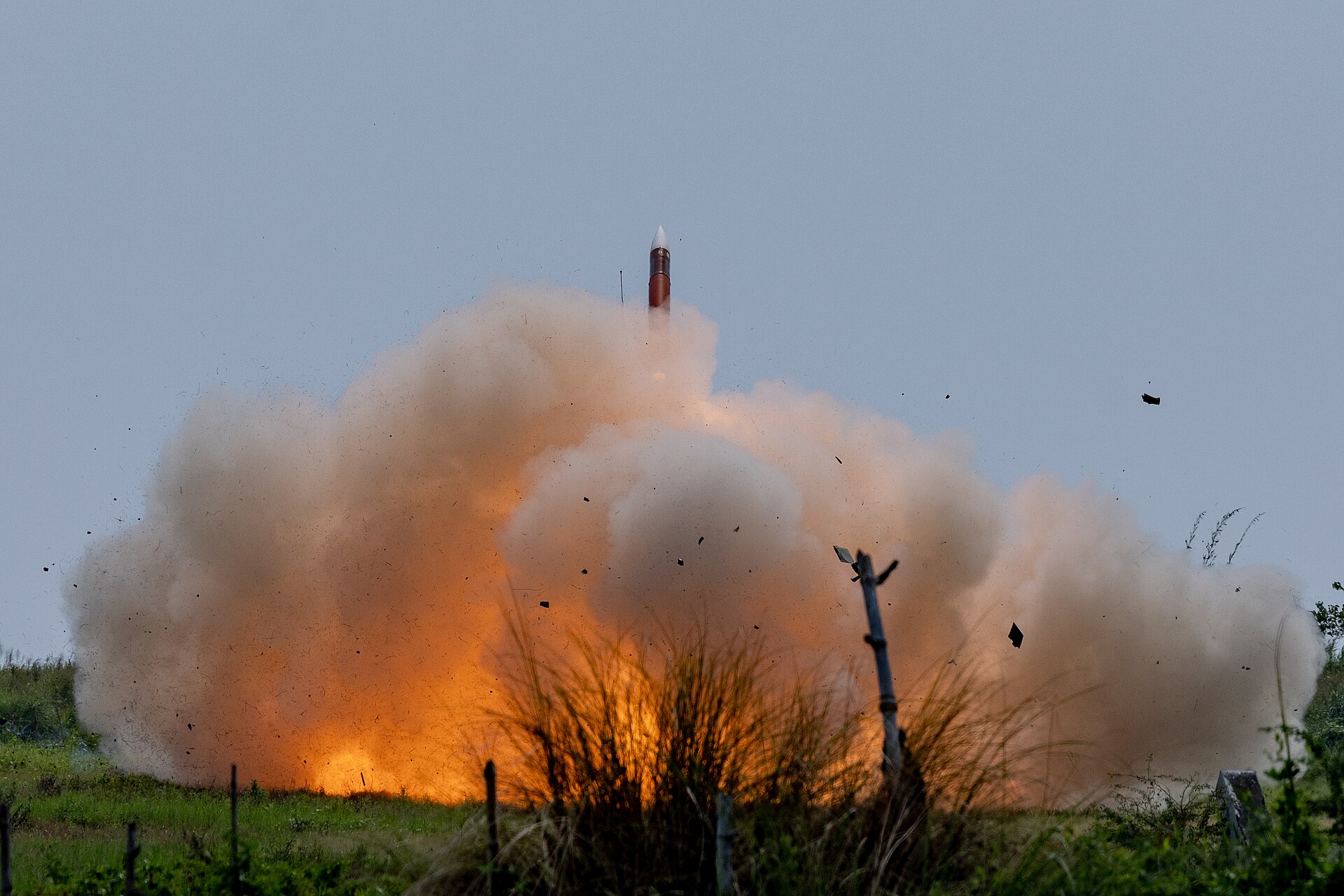
Camden produces 620 PAC-3 MSE rounds per year at current capacity and is not scheduled to reach 2,000 rounds annually until 2030. The Pentagon’s FY2027 budget claims 2,798 rounds at $12.2 billion — effectively the entire Camden ramp through the end of the decade — and the Foreign Military Sales backlog already exceeds 4,300 rounds, which at current production rates represents seven years of output spoken for before Saudi Arabia’s order moves. Saudi Arabia has no Section 36 emergency drawdown pathway because it has no SOFA, which means it cannot access the expedited procurement channel that Kuwait and Bahrain — the very allies it just pledged to defend — can use. The collective defense clause commits Riyadh to a fight it cannot sustain for more than a handful of salvos, defending partners who have better access to the ammunition Saudi Arabia needs than Saudi Arabia does.
The Fiscal Trap at $90 a Barrel
The market heard “ceasefire” and sold oil with the speed and confidence of a consensus that did not exist twelve hours earlier. Brent closed at $90.38, down roughly 3% from pre-announcement levels, and Goldman Sachs’ base-case forecast for a genuine deal — $80–90 for the second half of 2026 — suggests that if Trump’s “settlement” gains even marginal traction, prices will fall further toward a range that would be catastrophic for a government already running the largest deficit in its modern fiscal history. For Saudi Arabia, which needs $108–111 per barrel to balance a budget that was already in crisis before the war’s first missile struck Prince Sultan Air Base in March, every dollar below breakeven translates directly: at $90, the gap is $18–21 per barrel, producing an additional fiscal shortfall of $162–189 million per day, or $4.9–5.7 billion per month on top of obligations that were already outrunning revenue.
Goldman Sachs estimates the full-year 2026 deficit at SAR 300–330 billion ($80–90 billion) — nearly double the government’s official SAR 165 billion projection — and that estimate was calculated before Brent dropped $9 in a single session. The Q1 deficit alone reached SAR 125.7 billion, consuming 76% of the full-year official target in a single quarter, and Q2 will compound it because Aramco’s dividend structure is now eating into reserves rather than generating them: the $21.89 billion dividend paid June 9 exceeded Aramco’s Q1 free cash flow of $18.6 billion, producing a coverage ratio of 0.85x that means the company is paying out more than it earns. PIF cash sits at $15 billion — a six-year low already below the $16 billion earmarked for NEOM contract terminations through 2030 — and there is no fiscal mechanism visible that can simultaneously fund a defense buildup, honor collective defense commitments to allies under fire, and sustain the dividend the government budget depends on.
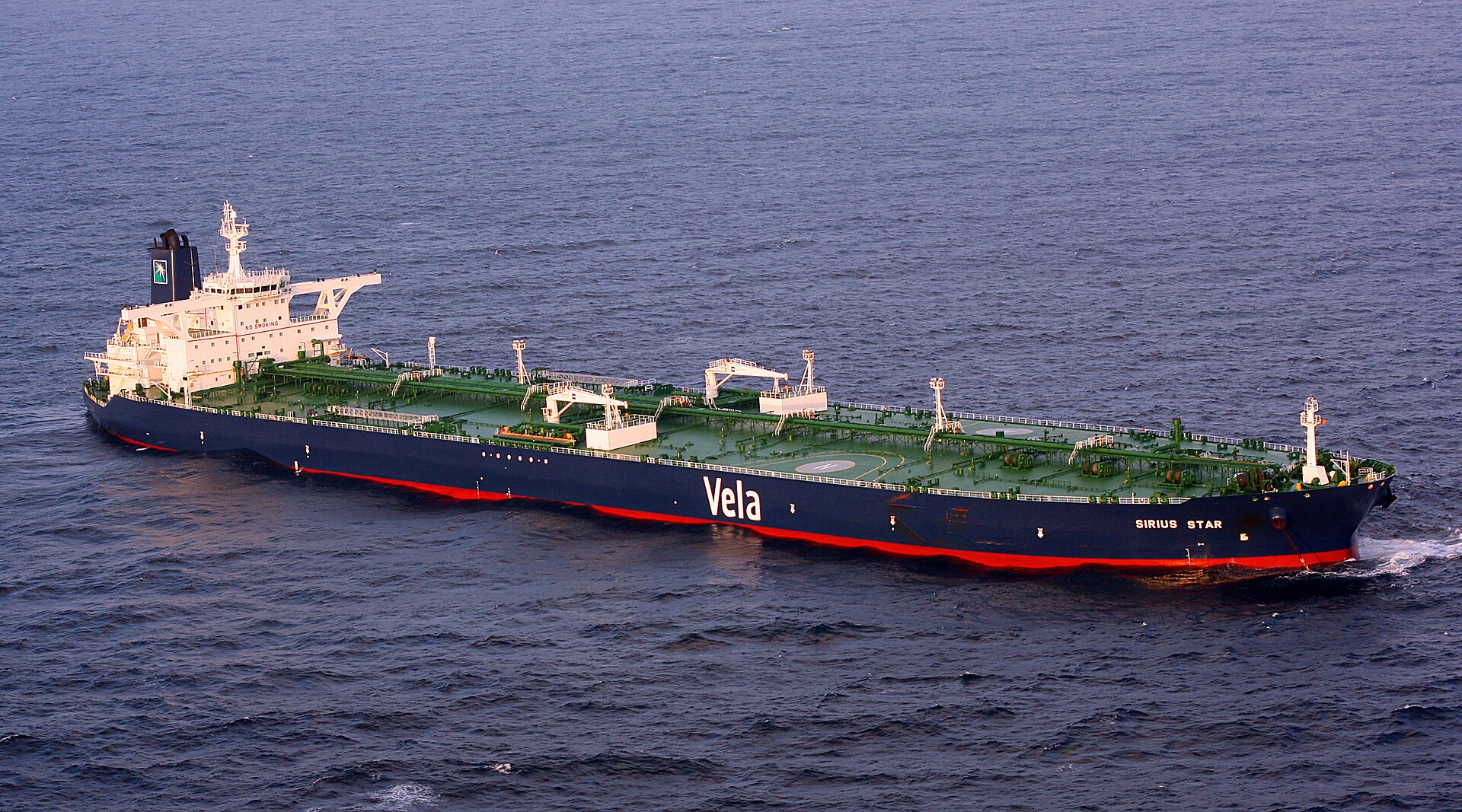
The ceasefire-that-isn’t produces a specific kind of fiscal damage that active combat does not, and the mechanism is worth understanding because it will repeat. A credible ceasefire suppresses oil prices because markets price in peace, but a non-credible ceasefire maintains war-level costs because the IRGC has not stood down, Hormuz remains closed, and Saudi Arabia just expanded its defense perimeter to include two allies that are absorbing strikes. Saudi Arabia is paying the costs of war at the revenues of peace, and the spread between those two numbers — roughly $5 billion a month that did not exist before Trump’s Oval Office performance — will persist for as long as the market prices the announcement faster than it prices the denial.
Can a One-Sided Ceasefire Reopen Hormuz?
No, and the insurance market has answered this question more honestly than any government is prepared to. The IRGC’s June 11 Hormuz closure order is universal — all flags, all cargoes, all vessel types — and supersedes the limited March 27 order that targeted only US, Israeli, and allied-port-bound shipping. Two vessels were struck on June 11 after Trump’s announcement. No IRGC statement has acknowledged, modified, or rescinded the shoot-on-sight directive in any context.
P&I clubs issued 72-hour termination notices for war risk extensions in early March, then repriced coverage from approximately $25,000 per year to $30,000 per week — a 60-fold increase that no club has reversed after Trump’s June 11 announcement. The US Development Finance Corporation established a political risk reinsurance facility to keep vessels moving, but that facility prices in war, not peace, and its existence is itself an admission that the US government does not believe its own president’s ceasefire claim is sufficient to normalize shipping conditions through a strait where vessels are still being fired upon. When underwriters who carry no political agenda and a fiduciary obligation to assess risk correctly refuse to treat a ceasefire as a ceasefire, they are pricing something the headlines have not caught up to: Hormuz has no ceasefire to reopen under.
For Saudi Arabia, which routes the majority of its seaborne crude through the strait, a closed Hormuz under a “ceasefire” is worse than a closed Hormuz under declared hostilities — because under open war, the insurance market prices the risk transparently and commerce adapts around it, but under a declared ceasefire that the adversary denies, the uncertainty premium compounds both the base risk and a credibility discount that grows every time a vessel is struck after a president says the war is over. Buyers who locked in Aramco’s already-discounted Official Selling Prices — Asia at minus $6 per barrel, Europe-Med at minus $10 per barrel as of June 8 — are now navigating a strait where the shooting continues under a ceasefire that exists exclusively on one president’s Truth Social feed, and they are doing so against a rate structure the insurance market has not moved to unwind.
Four Days Until Sadara’s Grace Period Expires
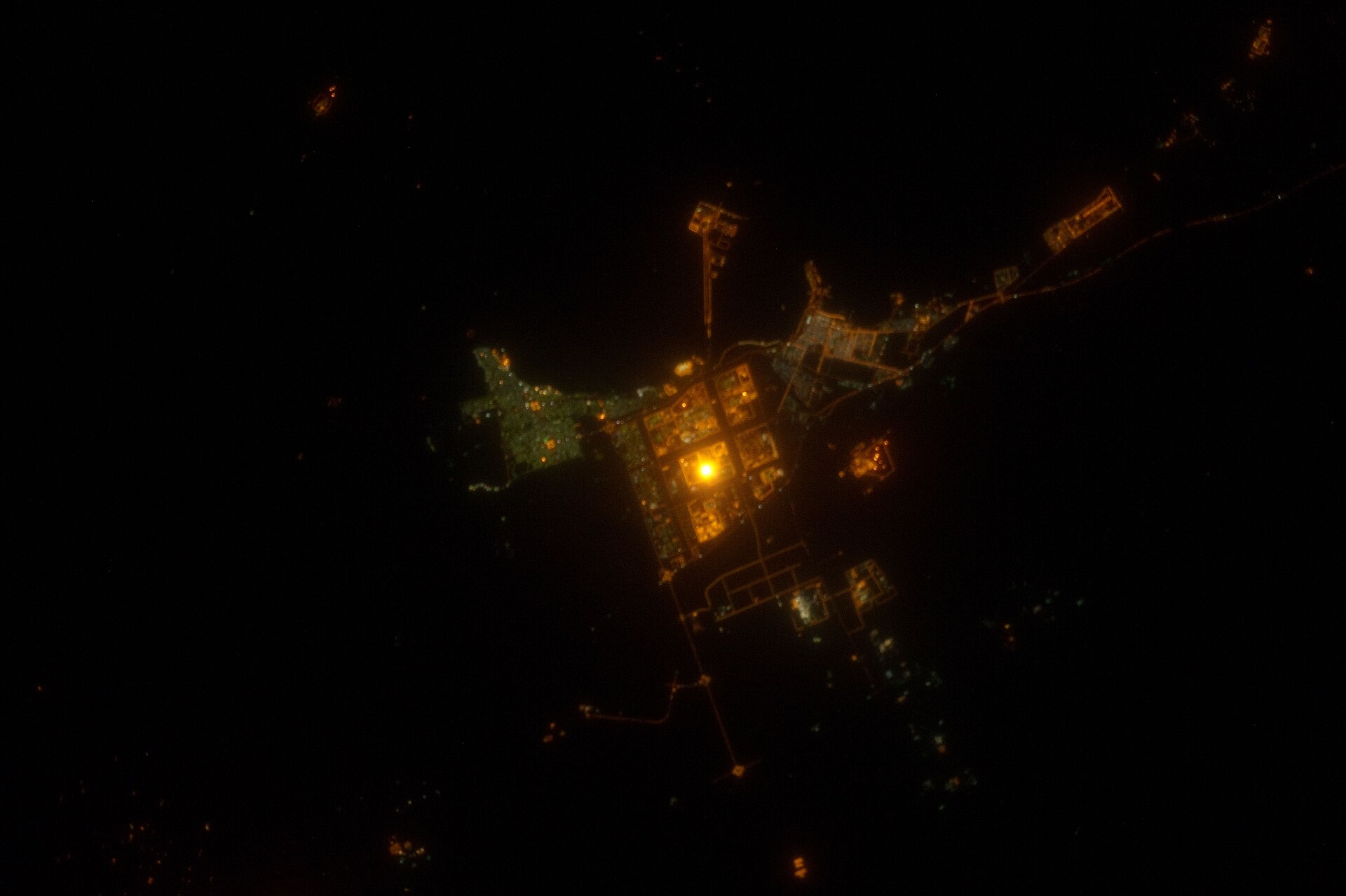
Sadara Chemical Company’s $3.7 billion debt grace period expires on June 15 — four days after a ceasefire that has not been confirmed, under which the Jubail industrial complex where all 26 Sadara units sit remains offline and has been since the IRGC struck the area in late March. Aramco guarantees $2.405 billion of that debt, Dow Chemical guarantees $1.295 billion, and 25-plus lender banks hold exposure across syndicated facilities that have received no creditor communication of any kind in public filings since the facilities went dark. Aramco told regulators in April that it “cannot provide, at the present time, an estimate for the return to production” — a statement that has not been updated, clarified, or contradicted in the two months since, and that sits in the public record like a deposition that no one has moved to strike.
The June 15 deadline does not recognize ceasefires, confirmed or otherwise. If Sadara’s creditors accelerate — and the silence from both Aramco and the lending syndicate suggests either negotiations are happening outside public disclosure or the parties are preparing for a default scenario — Aramco’s guarantee converts from a contingent liability to a cash call at a moment when its free cash flow cannot cover its existing dividend, its parent government’s sovereign wealth fund holds less cash than it needs to exit a single megaproject, and the ceasefire that supposedly ended the war has done precisely nothing to reopen the industrial infrastructure the war shut down. Trump’s announcement changes the spot price of crude; it does not change the fact that Jubail’s desalination, power, and feedstock infrastructure took kinetic damage and has not been repaired, and it does not change the date on a grace period that expires Sunday.
What Happens When This Ceasefire Fails?
If the June 11 ceasefire collapses — and Iran’s explicit denial, the IRGC’s continuing Hormuz enforcement, Israel’s non-party status, and the severed US-Iran back-channel all point in that direction with unusual consensus — Saudi Arabia faces a resumed conflict under materially worse conditions than existed before the announcement. Lower oil prices will be slow to recover, binding collective defense obligations that did not exist in April will constrain every decision, a market that has already been fooled once will be slower to re-price risk upward, and a depleted interceptor inventory that has not gained a single round since March will be expected to carry the weight of a broadened alliance perimeter.
The April 8 ceasefire established a template that June 11 is now repeating at higher stakes. Trump announced a deal; Iran issued a conditional acknowledgment (which it did not do this time); Israel struck Lebanon within 72 hours; Iran imposed transit tolls on Hormuz rather than opening it; and Trump extended the ceasefire “indefinitely” on April 21 while hostilities continued without interruption. The June 11 version skips the conditional acknowledgment entirely — Iran’s denial is categorical and public — which means the collapse, when it arrives, will be faster, the credibility deficit deeper, and the market adjustment delayed, because traders who bought the April 8 ceasefire and got burned will overlay that skepticism onto legitimate peace signals whenever they eventually arrive, meaning the crying-wolf cost compounds on both sides of the trade.
But the GCC communiqué creates a variable that did not exist in the April cycle, and it is the variable that makes June 11 qualitatively different from every other false ceasefire in this war. If Iran strikes Kuwait or Bahrain again — and the June 10 three-capital salvo that prompted the communiqué in the first place demonstrates both capability and intent — Saudi Arabia confronts a choice it did not have to make three months ago: honor the collective defense commitment it signed hours before the ceasefire was announced, using 400 interceptors against an adversary that has demonstrated the ability to overwhelm GCC air defenses with multi-axis saturation salvos, or fail to respond and demonstrate that the first “attack on one is attack on all” declaration in GCC history was as hollow as the ceasefire it preceded. Either path — military response with depleted assets, or inaction that voids the pact — damages Saudi Arabia’s position in ways that Trump’s June 11 announcement did nothing to prevent and everything to accelerate. The ceasefire, real or fake, handed Saudi Arabia obligations it cannot meet at a price it cannot survive — and the GCC communiqué means it cannot even decline to try.
Frequently Asked Questions
Did Iran agree to any ceasefire terms on June 11?
No. Iranian Foreign Minister Abbas Araghchi denied any agreement in a public X post within hours of Trump’s announcement. Iran had suspended its message exchange channel with the United States through Omani intermediaries on June 1, which means Trump’s claim that discussions had been “brought to the highest level of Iranian leadership and approved” describes communication through a channel that Iran says it closed ten days earlier. Araghchi had separately told CNBC in early June that the US naval blockade of Iranian oil “is an act of war,” a characterization that remains Iran’s official framing and is incompatible with any ceasefire that leaves the blockade — as Trump’s own Truth Social post specifies — “in full force and effect.”
What is the GCC Joint Defense Agreement and why does June 11 matter?
The agreement was signed in December 2000, contains 12 articles modeled loosely on NATO’s Article 5, and has been ratified by all six GCC member states — but the full text has never been publicly released, and the Washington Institute for Near East Policy described it at the time as “an exercise in ambiguity.” What makes June 11 different is not the agreement itself but the ministerial communiqué language: the 167th session in Manama was the first time in 45 years that GCC foreign ministers used the explicit phrase “any attack against one of them is an attack against them all,” which goes beyond the agreement’s original framework and into territory the bloc has spent a quarter century avoiding.
Why did oil prices fall if Iran denied the ceasefire?
Markets responded to Trump’s announcement faster than they processed Iran’s denial, and algorithmic trading amplified the initial headline move before the contradicting information was widely disseminated. The April 8 precedent suggests the price impact is asymmetric: Brent fell ~3% on June 11 but the April 8 precedent suggests repricing may take 5–10 trading sessions, meaning Saudi Arabia absorbs the fiscal damage immediately while the correction lags. Goldman Sachs’ $80–90 base-case forecast for a genuine H2 2026 deal creates an additional overhang: if any portion of the market continues to price in even a partial agreement, prices remain depressed regardless of whether the ceasefire holds.
Can Saudi Arabia fulfill its collective defense obligation with current military capacity?
The gap between commitment and capability is measurable. With approximately 400 PAC-3 MSE rounds (14% of pre-war inventory), no Status of Forces Agreement enabling expedited US resupply, and a sole-source manufacturing bottleneck at Lockheed Martin’s Camden facility that is fully allocated through 2030, Saudi Arabia’s ability to sustain defensive operations beyond a small number of IRGC salvos is constrained by industrial capacity on a different continent. The IRGC has demonstrated a cost-exchange ratio of 40:1 to 60:1 (missile cost versus interceptor cost), which means attrition economics favor the attacker at a rate that no collective defense communiqué can alter without physical interceptors in the magazines.
What is the timeline for ceasefire confirmation or collapse?
Trump described “finalization of documents” within “the next few days” and a potential signing “in Europe,” but no venue, date, or Iranian counterpart has been named. The April 8 ceasefire collapsed within 72 hours when Israel struck Lebanon; the June 11 version may not need an external trigger to fail because Iran has already declared it nonexistent. The nearest structural deadline is Sadara’s $3.7 billion debt grace expiry on June 15, which will test whether lenders treat the ceasefire as material information — and their answer will reveal whether the financial system regards Trump’s announcement as a fact or a headline.